文/(印)Sandeep Budki
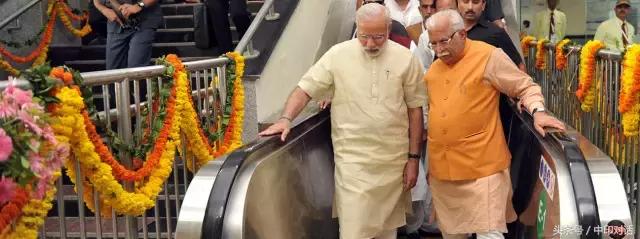
△ 印度总理莫迪参观德里地铁新建成的Badarpur-Faridabad地铁站。
印度首都德里的城市污染在不断加重, 甚至到了危险的程度。面对如此情形,印度高等法院呼吁中央政府和德里地方政府制定具体的计划以应对污染问题。
Delhi, the national capital of India, has seen many cold winters. The city, known for its rich heritage, not only saw a late arrival of winter but it also saw pollution levels rising to dangerous levels. The situation prompted the Supreme Court of India to exhort the state and Central governments to come up with a concrete plan to curb pollution levels.
不久,德里政府就提出了“单双号限行机制”来配给道路资源,但这一提议却饱受争议,引起舆论一片哗然。好在德里人还可以选择搭乘另一种非常可靠的交通工具——德里地铁。自投用以来,德里地铁的乘客人数一直保持着两位数的增长。
Soon, the state government came out with a very controversial “even-odd scheme” for road rationing. A hullabaloo ensued, but Delhiites had a very reliable transport service at their disposal – the Delhi Metro, which has seen double-digit growth in its ridership ever since its inception.
同德里这座城市一样,德里地铁也颇有些年头了。
Like the city, Delhi Metro also has a history.
德里地铁的诞生
FOUNDATION
德里地铁的诞生可以追溯到1969至1970年对“德里旅游交通特点”的研究。这项研究开启了众多委员会对德里地铁应采用的技术、路线规划,尤其是管理权归属的思考。
The foundation of Delhi Metro can be traced back to the ‘Study of traffic and travel characteristics of Delhi’ in 1969-70. It led to the commissioning of different committees to dwell on issues of which technology should be used, what kind of routes formulated and, above all, under who’s jurisdiction would it fall.
1984年,德里发展局和城市艺术委员会提出建立多式联运的交通系统,新建三条大型的地下地铁线路,扩充已有的城郊铁路和道路交通网。
In 1984, the Delhi Development Authority and the Urban Arts Commission came up with a plan for developing a multi-modal transport system, which would consist of constructing three underground mass rapid transit corridors as well supplementing the city’s existing suburban railway and road transport networks.
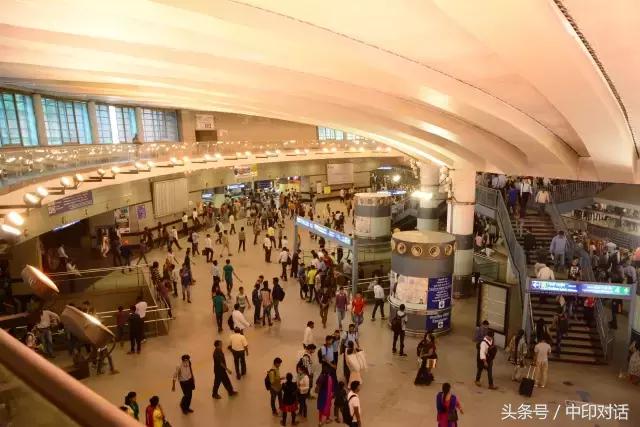
△ 拉吉夫广场,德里地铁的重要枢纽之一。
历经11个年头,印度中央政府和德里政府终于在1995年5月等量出资成立了国有的德里地铁公司,以打造德里及其卫星城法里达巴德、古尔冈、诺伊达和加济阿巴德的地铁系统。被称为“地铁通”的斯克林哈兰担任德里地铁公司总裁一职,肩负起建设德里地铁的重任。
And finally after 11 years, Delhi Metro Rail Corporation (DMRC), a state-owned company with equal equity participation from the Government of India and the Government of Delhi, was incorporated in May 1995 to create a metro system for Delhi and its satellite cities of Faridabad, Gurgaon, Noida and Ghaziabad. Mr. E. Sreedharan, who is popularly known as the “Metro Man,” was entrusted with the responsibility to make Delhi Metro a success story in the capacity of managing director.
德里地铁的修建始于1998年,其近20年的发展经历了四个阶段。德里地铁的一期和二期工程分别长达65公里和125公里,先后在2006年和2011年完工。三期工程在今年竣工,四期工程则将持续到2021年。目前,德里地铁的五期工程项目仍在筹备当中,正处于讨论阶段。
The construction work on Delhi Metro started in 1998, and the development was divided into four phases spread over around 20 years. Phase I which targeted 65 km was completed in 2006 while Phase II that covered 125 km was completed in 2011. Phase III is expected to be completed by 2016, and Phase IV is scheduled to be completed by 2021. Phase V, though in the pipeline, is in the discussion stage.
德里地铁的挑战与对策
CHALLENGES AND SOLUTIONS
德里地铁公司首先要面临的挑战是如何避开政治权力对大型工程项目的经常性干预。不过,印度政府在该公司成立初期便解决了这个问题。印度政府赋予了德里地铁公司在重大问题上完整的自治权,公司总裁掌握财权。但在2000年,印度政府和德里地铁公司之间爆发了一场争论。斯克林哈兰希望德里地铁使用全球通用的标准轨距车厢,但印度政府铁道部却希望德里地铁像印度其他地区的铁路网一样使用宽轨距车厢。在这场争论中,印度政府的多位部长都对铁道部表示了支持。在反复商议之后,“地铁通”斯克林哈兰最终同意了政府的要求,采用了宽轨距车厢。
The first challenge of DMRC was to avoid political interference which is usually seen in a large scale project. The Government of India addressed this at the company formation level itself. It gave DMRC complete autonomy in all major matters, with financial powers vested in the managing director. But, in 2000, a dispute erupted. Mr. Sreedharan wanted to use coaches of standard gauge – used by metros globally –for Delhi Metro, while the Railway Ministry wanted to use broad gauge, like the rest of the rail network in India. The issue went to a group of ministers, which favoured the Railway Ministry. Finally, after long deliberations, the Metro Man agreed to the government’s demand and went ahead with the use of the broad gauge.
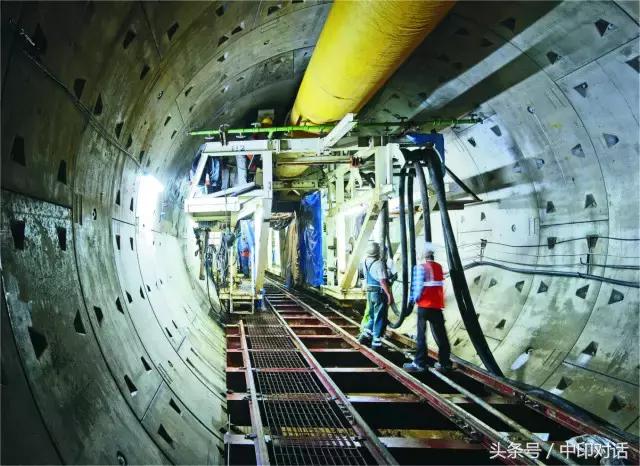
△ 德里地铁文化遗产线的隧道正在开掘中。
德里地铁公司面临的第二个挑战是如何防止土地征用中的困难阻碍工程的进展。2002年颁布的《德里地铁轨道(运营和维护)法案》很好地解决了潜在的问题。这个法案取代了德里的市政法规,能够防止地方法院向德里地铁公司发出限制令。德里地铁公司方面也做出了努力,不仅成立了一支法务团队专门处理土地征用案件,而且及时为搬迁人口搭建了临时住所。尽管如此,还是有几个案子耗费了很长时间才解决。
The second hurdle was preventing land acquisition challenges from disrupting the project. The Delhi Metro Railway (Operations and Maintenance) Act of 2002 came handy in taking care of this potential challenge. It superseded local municipal laws and barred lower courts from issuing stay orders. On its part, DMRC formed a legal team to handle land acquisition cases, and timely temporary accommodations were built for relocated people. But again, a couple of case took a long time to get sorted out.
修建地铁常常会给公众带来不便。为了防止这种情况发生,早在地铁正式施工之前,德里地铁公司便与当地的市民部门和警察局联合制订了行动计划。所幸的是,这从没有给建设工程造成困难。
Inconvenience to the general public as a result of construction was always expected. And, to take care of it, an action plan was formulated along with local civic agencies and police departments way ahead before the actual construction started. Thankfully, this never cropped up as an obstacle again.
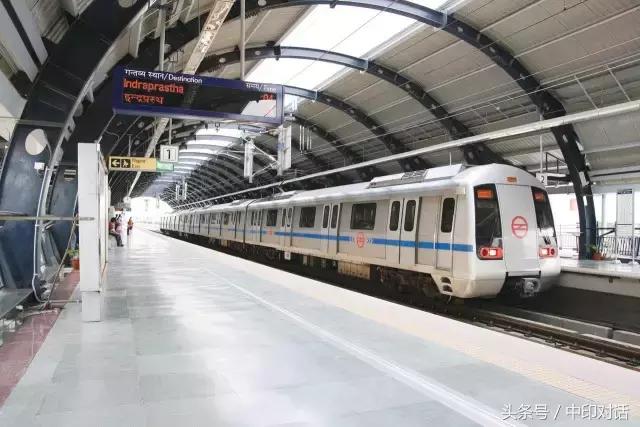
△ 德里地铁的蓝线。德里地铁采取了一项环保措施,将蓝线上大部分的地铁站都纳入了雨水收集系统。
对于德里地铁公司而言,如何获得最先进的技术才是最大的挑战。为了实现这个目标,跨国合作是必须的选择。德里地铁公司的员工与香港地铁轨道交通公司一同参加培训。德里地铁公司采用了全球竞标咨询方式,其结果是来自日本、澳大利亚、法国、德国、韩国、葡萄牙、西班牙和瑞典的工程公司都参与到了工程当中。为德里地铁公司生产列车的印度国营地面车辆有限公司也运用了一家韩国公司转让的车厢制造技术。
But the mother of all challenges for DMRC was to get best-in-class technology, and for that international cooperation was required. DMRC employees were trained with the Hong Kong Metro Rail Transit Corporation. A global bidding program was adopted for the consultancy that resulted in project participation by multinational engineering firms from Japan, Australia, France, Germany, Korea, Portugal, Spain, and Sweden. Coach manufacturing technology was also transferred from a South Korean firm to Bharat Earth Movers Limited for manufacturing the metro cars for DMRC.
德里的地铁线路繁多,地铁信号系统是个重要问题。德里地铁公司采用了集中的自动化列车控制系统,该系统由自动运行、自动保护和自动通信模块组成。摩托罗拉、西门子和庞巴迪公司都供应这一套技术和设备。
Signalling was another challenge that DMRC had to take care of because multiple lines were involved. To address it, Delhi Metro uses a centralised automatic train control system consisting of automatic train operation, automatic train protection and automatic train signalling modules. The technology and the equipment for the same have been provided by Motorola, Siemens Transportation Systems, and Bombardier Transportation.
德里地铁与中国企业的合作
COLLABORATION WITH CHINA
德里地铁公司在修建地铁时与众多中国企业进行了合作。初次合作是在2010年,中国大型列车制造商中国南车集团的子公司株洲电力机车有限公司为德里地铁生产了15辆列车。中国南车是世界上最大的电力机车制造商,也是中国领先的高铁制造商。在2013年,中国南车又为德里地铁生产了21辆列车。
DMRC has collaborated with different Chinese firms during the making of Delhi Metro. The first cooperation was in 2010 with CSR Zhuzhou Electric Locomotive, a subsidiary of major Chinese train manufacturer CSR Corporation, to supply 15 metro cars to the Delhi Metro. For those who don’t know CSR, it is the world’s largest manufacturer of electric locomotives and is China’s leading bullet-train maker. Again in 2013, CSR supplied 21 cars to Delhi’s metro rail system.
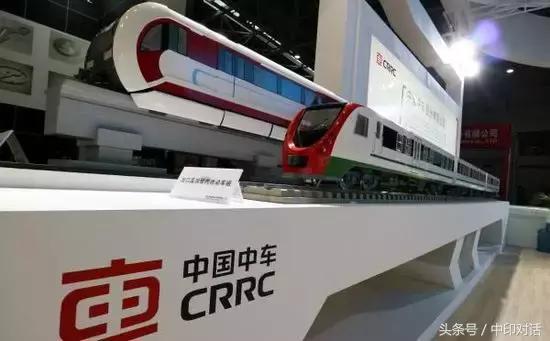
△ 中国中车与德里地铁公司签订诺伊达地区地铁线车辆采购合同,合同总额达1.09亿美元。
同年,德里地铁公司也与上海城建集团合作开掘了隧道。上海城建集团负责将重达300吨的大型隧道挖掘机下沉到曾是一个公园的大坑里,这个公园就在德里的主清真寺——位于旧德里的贾玛清真寺附近。随后,上海城建集团的工程师们又修建了德里地铁中央秘书处至克什米尔门段。这条线路长9.37公里,附近有众多历史遗迹,因此也被称为文化遗产线。上海城建集团也承建了德里地铁公司的二期项目新德里高架地铁。2009年,上海城建集团还为德里地铁机场快线修建了隧道。为了承接建设项目, 上海城建集团还与印度拉森特博洛集团共同成立了合资企业,拿到了德里地铁公司不少的工程。
Again in the same year, DMRC partnered with Shanghai Urban Construction Group (SUCG) for tunnelling. The engineers of SUCG were entrusted with the task of lowering a massive 300-tonne tunnel boring machine (TBM) into a crater that was once a park near the city’s main mosque – Jama Masjid in old Delhi. Later on, the engineers helped in building Delhi Metro’s 9.37 km Central Secretariat-Kashmiri Gate corridor, which is also called the Heritage Line because of its proximity to many monuments, construction of New Delhi Elevated Subway (viaduct) for the second phase of DMRC’s project, and, in 2009, in the construction of the tunnel section for the Delhi Metro Airport Express. To undertake the construction work, SUCG had formed a joint venture (JV) with Indian conglomerate L&T that has been awarded different projects by DMRC.
德里地铁的资金来源
Funding
在德里地铁的一期工程中,大约60%的项目资金由日本政府提供, 主要来自日本国际协力银行,现在称为日本国际合作署的软性*款贷**。
In Phase I, about 60 percent of the project cost was financed by the Government of Japan by way of a soft loan from the Japan Bank for International Cooperation (JBIC), now called the Japan International Cooperation Agency (JICA).
德里地铁公司的一位发言人称,“除了通过次级*款贷**支付占项目资金总额5%的土地征用费用外,印度中央政府和德里政府还通过股权出资共同投入项目所需资金的28%。另外7%的项目资金,来自德里地铁公司地产开发的所得。”
According to a spokesperson of DMRC, “The Central Government and the State Government jointly financed 28 percent of the project cost through equity contributions in addition to providing a subordinate loan to cover the cost of land acquisition which roughly worked out to 5 percent of the project cost. The balance of 7 percent funds were internally generated through property development.”
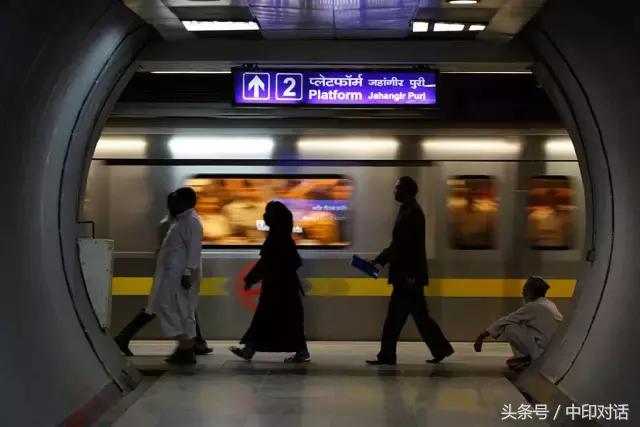
△ 到2016年底,德里地铁将成为全世界第七大高运量城市轨道交通地铁系统,日均客流量预期可达400万人次。
在二期工程中,日本国际合作署提供的*款贷**占项目资金总额的54.47%,印度中央政府和德里政府各自持有的股份均增长到16.39%。德里机场快线是德里地铁首次采用公私合资模式运行的项目,印度中央政府和德里政府共同出资39%,另有46%由特许经营者出资。
In the second phase of Metro construction, the JICA loan contributed 54.47 percent of the funding. While the equity from the Governments of India and Delhi increased to 16.39 percent each. For the construction of the Airport Express link, 39 percent was contributed by the Governments of India and Delhi and 46 percent by the concessionaire as this was the first ever project of the Delhi Metro on the public-private partnership model.
德里地铁三期扩建工程的预算大约是4107.9亿卢比,日本国际合作署将提供48.57%的资金,印度中央政府和德里政府将各出资10.04%。
The total estimated expenditure for Phase III expansion is INR 41,079 crores. JICA is going to provide 48.57 percent of the total fund required while the Government of India and the Government of Delhi will pay 10.04 percent each.
德里地铁的未来
WAY FORWARD
印度中央道路研究所的一项研究发现,德里地铁2014年减少了大约40万辆汽车上路。随着“单双号限行机制”等污染治理措施在德里的全面实施,这个数字还可能会急剧增长。再加上人口的不断增加,德里地铁的乘客将只增不减。
A study by Central Road Research Institute (CERI) says that the metro helped keep around 4 lakh cars off roads in 2014. The numbers may increase exponentially if the anti-pollution measure like ‘odd-even scheme’ is implemented in the city fully. Also with rising population, the ridership will only increase in future.
为了保障交通需求,到2021年德里地铁四期工程完工时,德里地铁的全长将增至434公里,超过拥有140年历史全长402公里的伦敦地铁。那时,德里地铁将拥有世界上里程第三长的地铁网络,仅次于538公里的上海地铁和465公里的北京地铁。
By 2021 when DMRC completes Phase IV, the total length of Delhi Metro network would go up to 434 kilometres exceeding London’s 140-year-old Tube which has a length of 402 kilometres. With this, Delhi Metro will become the third largest metro network in the world after Shanghai (538 km) and Beijing (465 km).
随着德里地铁运营成本的增加,地铁票价可能会有所调整。但目前,德里地铁公司总经理Mangu Singh表示,德里地铁涨价还为时尚早。
Delhi Metro is also expected to strongly pitch for a fare revision owing to a significant rise in its operational costs. Currently, Mr. Mangu Singh had said that a fare hike is “long overdue.”

本文作者Sandeep Budki为印度私人科技新闻网站“移动印度人”执行编辑、驻德里记者。
The author is a Delhi-based journalist and Managing Editor of The Mobile Indian, a personal technology news portal.

本文为《中印对话》独家稿件,欢迎分享,媒体转载请联系我们。
This article is exclusive to China-India Dialogue. Feel free to share this article. To reprint this article, please contact us for permission.

以中印为方法 以世界为目的
From China and India
to the world as a whole
中印对话网站:www.chinaindiadialogue.com