本期《跟着天津茱莉亚听音乐|线上音乐厅》,我们选择了一首普朗克为木管五重奏和钢琴所做的《六重奏》。
请移步以下链接欣赏 :
线上音乐厅|普朗克《六重奏》 第二乐章
线上音乐厅|普朗克《六重奏》第三乐章
为了大家更好的欣赏作品,我们还邀请了学院音乐理论教师尼科洛·安森(Niccolo Athens)撰写了曲目介绍,并摘录了青年乐评人高建在北京音乐会后撰写的乐评文章,希望为大家带来更全面的音乐体验。
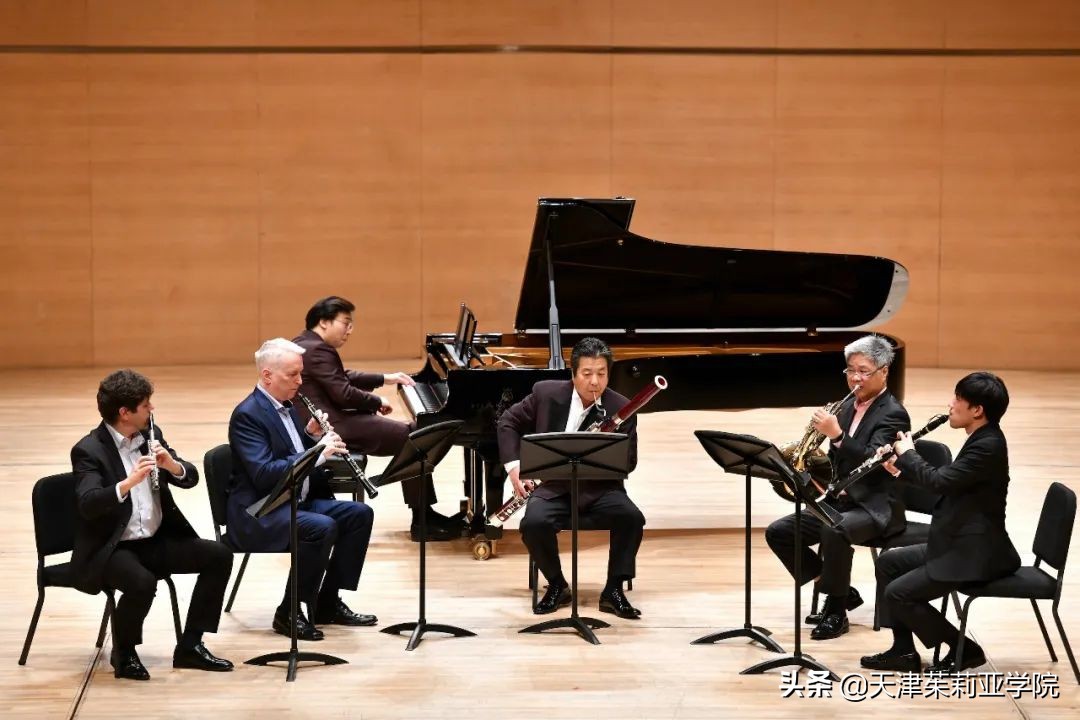
盖尔盖伊·伊采什、斯科特·贝尔、朱傲文、小山昭雄、韩小光和周相宇|天津大剧院提供
演 出 曲 目
弗朗西斯·普朗克(1899-1963)
六重奏
Ⅱ. 幕间舞:小行板
Ⅲ. 终曲:最急板
朱傲文,钢琴
盖尔盖伊·伊采什,长笛
斯科特·贝尔,双簧管
周相宇,单簧管
小山昭雄,大管
韩小光,圆号
——
Francis POULENC (1899-1963)
Sextet
Ⅱ. Divertissement: Andantino
Ⅲ. Finale: Prestissimo
Alvin Zhu, Piano
Gergely Ittzés, Flute
Scott Bell, Oboe
Xiangyu Zhou, Clarinet
Akio Koyama, Bassoon
Chang Chou Han, Horn
曲 目 介 绍
普朗克:六重奏
Poulenc: Sextet
弗朗西斯·普朗克在职业生涯之初是法国青年作曲家团体“六人团”的成员。六人团将音乐怪杰埃里克·萨蒂奉为精神领袖,而萨蒂的毕生追求就是让音乐回归装饰性地位。在六人团作为一个团体存在的那些年里,其成员作品的主要特征是讽刺、与新古典主义的疏离,以及频繁的运用流行体裁,这些都与萨蒂让音乐走下神坛的追求一脉相承。这种追求很好地诠释了普朗克青年时期的作品,它们极尽荒唐,又无忧无虑。然而,随着年龄增长,普朗克重新发现了他的天主教信仰,他对艺术的追求也随之变得严肃起来。他后来的成熟作品,主要特点是精妙细腻的和声,既可以称之为新浪漫主义,也可以简单地说成是保守派。不过,即使在那些作品中,也保留了一丝戏谑的讽刺意味,延续着他年轻时的那种轻松和昂扬。普朗克曾说,他最著名的宗教音乐作品《荣耀经》有部分灵感来自于某次看到修士们在踢足球,那个画面既是一种神圣,又是一种*渎亵**。
这首《六重奏》是普朗克在六人团时期创作的,采用的是木管五重奏加钢琴的独特组合。作品整体上风格轻快,但也不乏丰满的细节和些许阴霾。第一乐章大体上具有一个三段体的轮廓。第一部分十分简洁,凛冽的氛围与普罗科菲耶夫颇有几分相似。一段大管的华彩乐段之后,进入长长的、自成一体的中段。不同的木管乐器在这一段中彼此对话,形成一种未得解决的浪漫。随后,第一段简短重现,继而转入有些顽劣的进行曲,它是一个略长的尾声,第一乐章以此结束。作品的第二乐章较短,但也是三段体结构,前后两段较慢,中段速度快一些。这一乐章的开头段落舒缓如歌,双簧管奏出的旋律呈现出莫扎特式的优雅。接下来的中段又是一个类似进行曲的风格,但不带任何侵略性,只有单纯的快乐和华丽。第三部分依照常规,是第一段的再现,但却令人意外地以小调结束。作品的第三乐章,也是最后一个乐章就不太符合常规了。它有两个主题,一个节奏鲜明,另一个旋律感强。两个主题都频繁转调,乐句短小,是典型的普朗克风格。这个乐章没有继续采用三段体的结构,而是由相对独立的段落组成。最令人意想不到的是其中的最后一段。这段音乐速度很快,好像没有完结,实际上却在一个不谐和的和弦上突然结束了。普朗克并没有给它写出一段巧妙而充满活力的尾声,而是以一段既甜蜜又苦楚的摇篮曲,让作品结束在了一种不同寻常的紧张感当中。=
——
Francis Poulenc began his career as a member of “Les Six,” a group of young French composers who took the droll Erik Satie, who had made a career of attempting to return music to its ornamental status, as their spiritual forefather. In as much as they ever truly cohered as a group, their work was characterized by irony, neo-classical detachment, and frequent references to popular genres, all related to the continuation of Satie’s de-sanctifying mission. This all describes very well the absurdist, carefree work of the young Poulenc. As he aged, however, Poulenc rediscovered his Catholic faith, and his artistic aims became more serious. His mature style is characterized by an exquisite harmonic refinement, and might be called neo-Romantic, or simply conservative. Nevertheless, an element of mischievous irony remained, echoes of the composer’s youthful high spirits. Poulenc once said that his Gloria, his most well-known sacred work, was in part inspired by the sight of Benedictine monks playing soccer, an image which suggestively combines the sacred and profane.
This sextet for the unique combination of woodwind quintet plus piano dates from the Les Six years, and is for the most part a lighter work, although rich in refined detail and not without touches of melancholy. Its first movement follows a roughly ternary outline. The terse opening section has a biting quality reminiscent of Prokofiev. A short bassoon cadenza leads into a lengthy central episode with its own compelling shape, a kind of unsettled romance with the different wind instruments in dialogue. An abbreviated reprise of the initial section is then followed by a cheeky march which serves as an extended coda. Although briefer, the second movement of the sextet also follows a ternary plan, this time with two slow outer sections surrounding a central episode in a faster tempo. Tender and song-like, the movement’s opening passage features a melody of almost Mozartian grace beginning in the oboe. The central section which follows is again a kind of march, but this time without any bite – the music is pure gaiety. The expected reprise of the initial section which follows concludes on a surprising minor tonality. The sextet’s final movement is more unpredictable. It’s two initial ideas, one rhythmic and one lyrical, are both characterized by rapid modulation and short phrases, signatures of the composer’s style. Instead of another ternary layout, however, the music is more episodic. It is the final episode that is the most unexpected of all: the fast music, seemingly unfinished, expires suddenly on a dissonant chord. In place of a witty and energetic coda, Poulenc instead appends a kind of bittersweet lullaby, ending the work on a wonderfully poignant note.
曲目介绍由尼科洛·安森博士撰写
Program Notes by Dr. Niccolo Athens
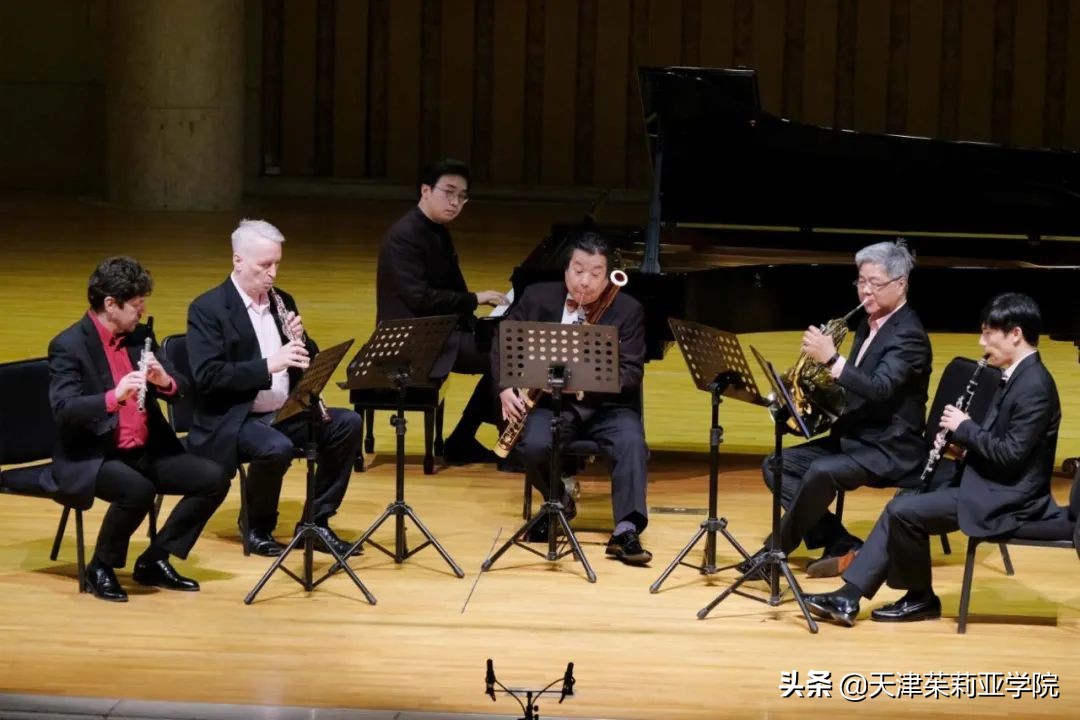
天津茱莉亚室内乐团音乐会现场|中山音乐堂提供
现 场 回 声
11月19日晚,由天津茱莉亚学院的优秀教师们组成的天津茱莉亚室内乐团在北京中山公园音乐堂为观众们奉献了一场别开生面的当代作品音乐会,演出的四部作品分别出自四位欧美音乐家的笔下,其中的三位还在世。对于笔者而言,比年代感更为值得关注的是艺术家们如何处理当代音乐作品中普遍存在的抽象、理性风格和室内乐演奏传统中那种富于交流和对话的内在气质之间的平衡,这几乎直接决定着一场室内乐表演的成败。
……
当双簧管吹奏的甜美怡人、又略带感伤的旋律将法国作曲家普朗克《六重奏》的第二乐章娓娓道来时,一种对逝去时光和浪漫情愫的深切回望在音符中浮现,观众们的听觉体验也再一次回到了熟悉的调性世界——但经过了这样的旅程,每个人显然已经准备好接受和尝试更多,因为大家都感受到了音乐对于当下世界的描摹依然具有不可替代的美感和新意,也因为这样高水准的室内乐演奏所特有的私密感和亲切感。显然,天津茱莉亚室内乐团的“冒险”,成功了。
青年乐评人高建撰稿
请通过【了解更多】,获取关于天津茱莉亚室内乐团成员的介绍,