"Memorial and New Life" -- Talk about Qingming Culture(3)
风俗习惯
manners and customs
荡秋千
Swing.
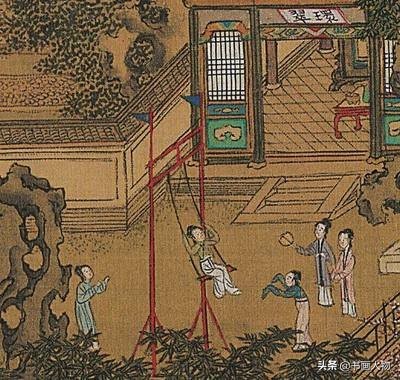
这是中国古代清明节习俗。秋千,意即揪着皮绳而迁移。它的历史很古老,最早叫千秋,后为了避忌讳,改之为秋千。古时的秋千多用树桠枝为架,再拴上彩带做成。后来逐步发展为用两根绳索加上踏板的秋千。荡秋千不仅可以增进健康,而且可以培养勇敢精神,至今为人们特别是儿童所喜爱。
This is one of customs on Tomb-Sweeping Day in ancient China. The swing literarily means to moving with the leather rope in Chinese. It can be traced back a long history. It was first called Qianqiu (which happens to be the same characters with a blessing for an emperor). In order to avoid the taboos, it was changed to the Qiuqian (swing). In ancient times, the swing was made of tree branches and then tied with ribbons. Later, it gradually developed into a swing with two ropes and a pedal. Playing on the swing can not only improve your health, but also cultivate courage. And so far, it is popular with people, especially with children.
蹴鞠
Cuju( Playing Polo).
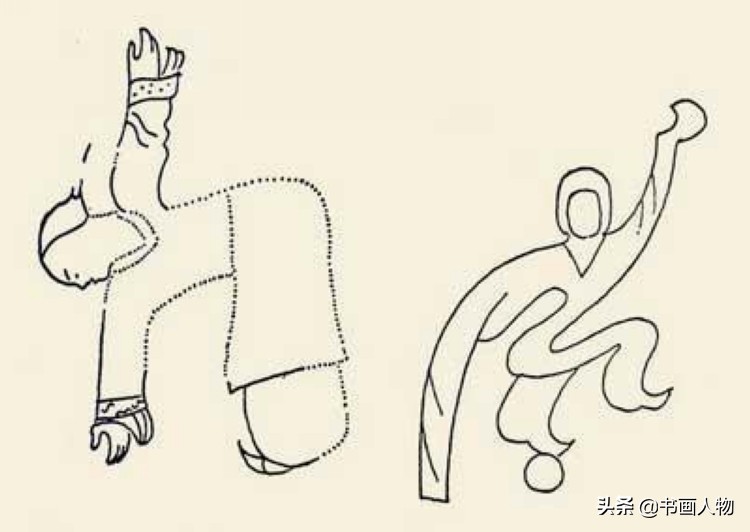
西汉马王堆《导引图》上的蹴鞠
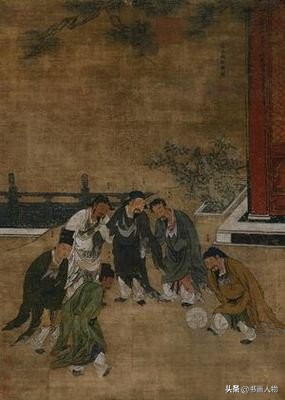
《宋太祖蹴鞠图》·元·胡廷晖
鞠是一种皮球,球皮用皮革做成,球内用毛塞紧。蹴鞠,就是用足去踢球。这是古代清明节时人们喜爱的一种游戏。相传是黄帝发明的,最初目的是用来训练武士。打马球,也是端午之戏之一。马球,是骑在马上,持棍打球,古称击鞠。
三国曹植《名都篇》中有“连翩击鞠壤”之句。唐代长安,有宽大的球场,玄宗、敬宗等皇帝均喜马球。章怀太子墓中《马球图》,画出了唐代马球的兴盛:画上,二十多匹骏马飞驰,马尾扎结起来,打球者头戴幞巾,足登长靴,手持球杖逐球相击。《析津志》记辽国把打马球作为节日的传统风俗,于端午、重九击球。《金史·礼志》也记金人于端午击球。宋代有“打球乐”舞队。至明代,马球仍流行。
《续文献通考·乐考》记载明成祖曾数次往东苑击球、射柳。明《宣宗行乐图》长卷中绘有宣宗赏马球之场面。当时的官员王直写的端午日观打球的诗:“玉勒千金马,雕文七宝球。鞚飞惊电掣,伏奋觉星流。炎页过成三捷,欢传第一筹。庆云随逸足,缭绕殿东头。”北京白云观前也有群众骑马击球之典。清代天坛一带也还有马球运动,直至清中叶之后,马球才消失了。1965年开始西安市又出现了仿古马球运动,使这一古老的体育运动在绝迹多年后重又出现在中华大地上。现在的足球就是由蹴鞠变化而来的。
Ju is a kind of leather ball, whose skin is made of leather, and stuffed with enough feather to make a full ball. Cuju is to play football with your feet. This is a popular game during the ancient Tomb-Sweeping Day. It was said that the Yellow Emperor invented it. The original purpose was to drill warriors. Playing polo is also one of plays on the Dragon Boat Festival. Playing Polo is playing a leather ball with a stick, while riding on a horse. In the period of Three Kingdoms, Cao Zhi ( a famous poet) once wrote a verse line in his "Famous Capital", as "playing a leather ball with a stick continuously to make dusty earth around." In the Tang Dynasty, Chang 'an had a large stadium. The emperors Xuanzong and Jingzong all liked playing polo. In the tomb of Prince Zhang Huai, the remaining fresco "Playing Polo" draws the prosperity of playing polo in the Tang Dynasty: In the painting, there are more than 20 horses galloping with horses' tails tied up. On each house, a player is wearing a scarf on the head, boots on the feet, and holding a stick to play a polo. "The history of Jin" records that Kindom Liao regard Polo as a traditional custom for festival. The polo was played both at the Dragon Boat Festival and Double Ninth Festival. "The history of Jin" records that people of Jin played polo at the Dragon Boat Festival. In the Song Dynasty, there was a dance team called "playing polo music". Until Ming Dynasty, playing polo was still popular."
"Sequel to Literature Textual Research • Music Textual Research" records Emperor Chengzu had played polo and shooting willow at Dongyuan several times in Ming Dynasty. In the long roll painting of "Leisure Activities of Emperor Xuanzong", there is a scene in which Xuanzong is watching at playing polo. At that time, the official Wang Zhi wrote a poem about watching at playing polo at the Dragon Boat Festival: "Yuleqianjinma, carved seven treasures. Fei Fei shocked the electric shock, Fu Fen feels the star flow. Yan pages into three victory, happy first. Qingyun followed the foot and wrapped around the east of the temple. "There is also a story about playing polo in front of the Beijing Baiyun Temple. There was also a polo played around the area of the Temple of Heaven in the Qing Dynasty. It was not until after the middle of the Qing Dynasty that the polo disappeared. In 1965, the antique polo movement appeared again in Xi'an, making this ancient sport appear again on the Chinese land after many years of extinction. Today's football is origined from Cuju.
踏青
Going for a walk in the country in spring

图为莫高窟第112窟-群童*花采**(中唐)。
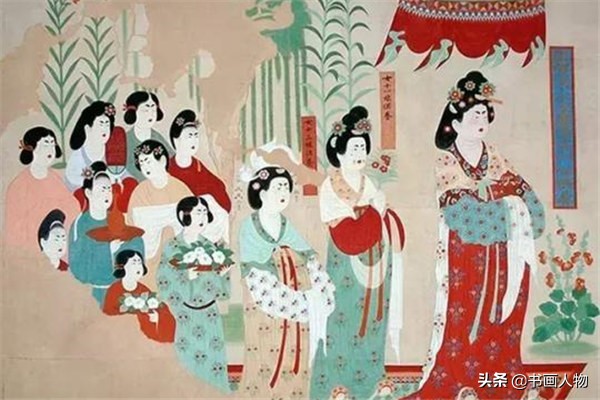
图为莫高窟第130窟-都督夫人礼佛图。
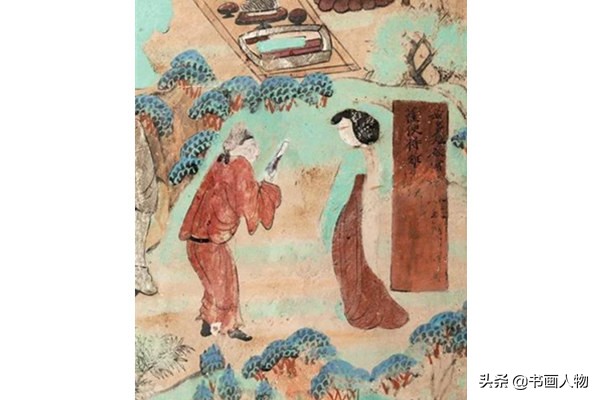
图为莫高窟第45窟-观世音菩萨普门品(盛唐)所描绘的“离欲”画面。
踏青又*春叫**游。古时叫探春、寻春等。四月清明,春回大地,自然界到处呈现一派生机勃勃的景象,正是郊游的大好时光。
Going for a walk in the country in spring is also called exploring spring and seeking for spring. The Clear and Bright In April, spring comes back to the earth, the nature takes on a scene of seethed and teemed with life everywhere, it is just the good season for outings.
植树
Tree Planting
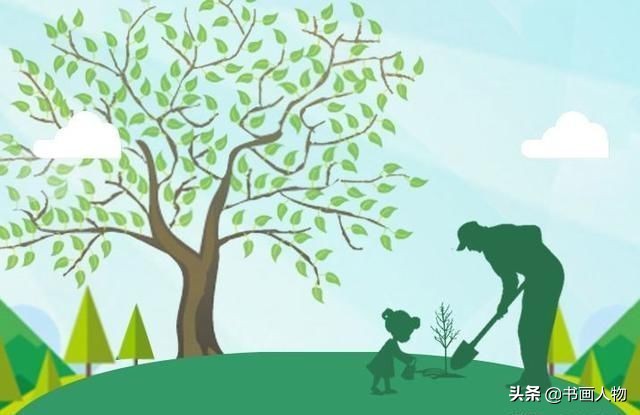
清明前后,春阳照临,春雨飞洒,种植树苗成活率高,成长快。因此,自古以来,中国就有清明植树的习惯。有人还把清明节叫作“植树节”。植树风俗一直流传至今。
清明节植树的习俗,发端于清明戴柳插柳的风俗。关于清明戴柳插柳,有三种传说。最古老的传说,是说为了纪念教民稼穑耕作的祖师—神农氏,后来由此发展出祈求长寿的意蕴。再晚点的传说与介子推有关。据说晋文公率众臣登山祭奠介子推时,发现介子推死前曾经靠过的老柳树死而复活,便赐老柳树为“清明柳”。更晚点的传说是唐太宗给大臣柳圈,以示赐福驱疫。
Around the Clear and Bright, spring sunshine shines on the earth, the spring rain showers, and the survival rate of planting seedlings is high and the growth is fast. Therefore, in ancient times, China has had the custom of planting trees in the Clear and Bright. Some people also call Tomb-Sweeping Day "Tree Planting Day." The custom of planting trees has been circulating till now so far.
The custom of planting trees on Tomb-Sweeping Day originated from the custom of wearing wickers. There are three kinds of legends about wearing wickers. The oldest legend is that in order to commemorate Shennong, the founderof farming who taught the people farming. He later developed the meaning of praying for longevity. The later legend is related to Jie Zitui. It is said that when Jin Wengong led the ministers to climb to pay homage to Jie Zitui, he discovered that the old willow tree that Jie Zitui had leaned against before his death of Jie was revived, and he give the old willow tree name "Qingming Liu". The later legend is that Tang Taizong gave the minister Liu Liu to show his blessing.
放风筝
Kite Flying
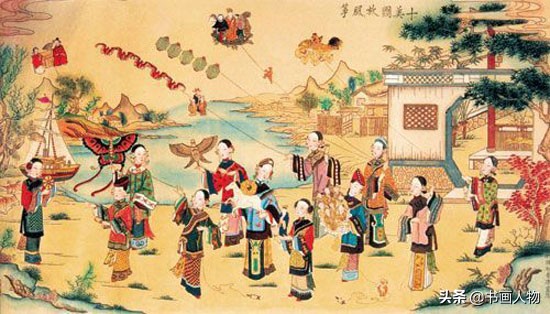
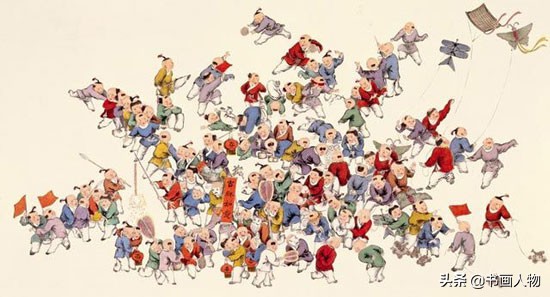
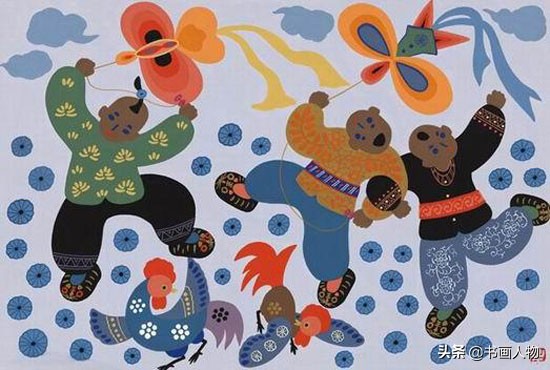
放风筝也是清明时节人们所喜爱的活动。每逢清明时节,人们不仅白天放,夜间也放。夜里在风筝下或风稳拉线上挂上一串串彩色的小灯笼,像闪烁的明星,被称为“神灯”。过去,有的人把风筝放上蓝天后,便剪断牵线,任凭清风把它们送往天涯海角,据说这样能除病消灾,给自己带来好运。
Flying kites is also a favorite activity in the Qingming period. Every Qingming season, people not only let go by day, but also by night. At night, a string of colored lanterns is hung under a kite or on a wind steady pull line. Like a flashing star, it is called a "God lamp." In the past, some people put the kite on the blue days, they cut the cable, let the breeze send them to the ends of the earth, it is said that this can eliminate diseases and bring themselves good luck.
扫墓
Tomb Sweeping
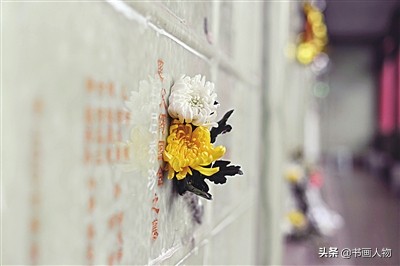
清明扫墓,谓之对祖先的“思时之敬”,其习俗由来已久。明《帝京景物略》载:
“三月清明日,男女扫墓,担提尊榼,轿马后挂楮锭,粲粲然满道也。拜者、酹者、哭者、为墓除草添土者,焚楮锭次,以纸钱置坟头。望中无纸钱,则孤坟矣。哭罢,不归也,趋芳树,择园圃,列坐尽醉。”其实,扫墓在秦以前就有了,但不一定是在清明之际,清明扫墓则是秦以后的事。到唐朝才开始盛行。《清通礼》云:“岁,寒食及霜降节,拜扫圹茔,届期素服诣墓,具酒馔及芟剪草木之器,周胝封树,剪除荆草,故称扫墓。”并相传至今。
On the Clear and Bright people’s tomb sweeping is called the "respecting for the ancestors" and its custom has a long history. In Ming Dynasty "Beijing Scenery" contains:
" On the Clear and Bright in March, men and women swept the tombs and took the honor. After the sedan chair, they hung ingots. The worshippers, monks, crying people, and those who add grass to the tomb, burn lozenges and use paper money to set the grave. In the hope that there is no paper money, there is a solitary grave. Cry, and do not return, and turn to the trees, and choose gardens, and sit drunk. In fact, the tomb sweeping was there before the Qin Dynasty, but it was not necessarily at the time of the Clear and Bright. The custom of the tomb sweeping on the Clear and Bright was after the Qin Dynasty. It was not until the Tang Dynasty that it became popular. "Qing Dynasty’s ceremonial observances in general" mentions: "At the age of four, cold food and frost festival, worship and sweep, the period of Prime service tomb, with wine and cutting tools for cutting vegetation, Zhou Wei sealed the tree, cut off Jing Cao, so called the tomb. "And the customs are handed down so far.
插柳
Willow Planting
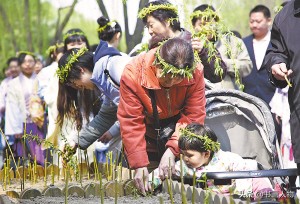
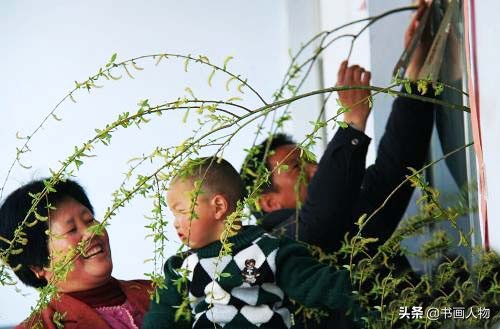
清明节,中国民间有插柳习俗。专家介绍说,清明插柳习俗,其来源普遍存在三种说法。
天津市天文学会理事赵之珩介绍,据说,插柳的风俗,是为了清明与柳纪念“教民稼穑”的农事祖师神农氏的。有的地方,人们把柳枝插在屋檐下,以预报天气,古谚有“柳条青,雨蒙蒙;柳条干,晴了天”的说法。杨柳有强大的生命力,俗话说:“有心栽花花不发,无心插柳柳成荫。”柳条插土就活,插到哪里,活到哪里,年年插柳,处处成荫。
清明插柳戴柳还有一种说法:中国人将清明、七月半、十月朔看作是三大鬼节。清明节正是百鬼出没频频、索讨多多的时节。受佛教的影响,观世音手持柳枝蘸水普度众生,许多人便认为柳条有驱鬼辟邪的作用,把柳枝称为“鬼怖木”。北魏贾思勰《齐民要术》中写道:“取杨柳枝著户上,百鬼不入家。”清明既然是鬼节,值此柳条发芽时节,人们便纷纷插柳戴柳以辟邪了。
At Tomb-Sweeping Day, Chinese folk has the custom of planting willow. Experts said that there are three kinds of arguments about the origin of the custom of it. Zhao Zhiheng, director of the Tianjin Astronomical Society, introduced that the custom of planting willow is for the sake of Shen Nong, who is the agricultural founder of "teaching the people to produce crops." In some places, people plant willow branches under the eaves to forecast the weather. The ancient proverb has "Willow leaves turn green, rain is coming; willow leaves are dry, clear the sky. " The willow has a strong vitality. As the saying goes: " A watched flower never blooms, but an untended willow grows. "As soon as you insert a wicker into the soil, it will grow, where it is inserted, where it grows, it is inserted every year, and it grows everywhere.
The second saying is that the Chinese people regard the Clear and Bright, Chinese lunar mid-July and end-October as the three ghost festivals. The Clear and Bright is a season of hundreds of ghosts appearing and frequently asking for food. Influenced by Buddhism, Goddess Guanyin held the willow twig to deliver all living creatures from torment. Many people thought that the wicker had the effect of driving away the evils and called the willow twig "ghost wood." In Jia Sixie's "Qi Min Yao Shu", in the period of Beiwei, he wrote: "Insert willow twig in the yard around the house, no ghost enters." Since the Clear and Bright is a ghost festival, which is the just the time of wicker sprouting season, people get to insert and wear wickers to scare off the evils.
另外一种说法是,此俗是为了纪念介子推。介子推为明志守节而焚身于大柳树下,让晋文公和群臣百姓痛心不已。第二年,晋文公亲率群臣爬上山来祭拜介子推时,发现当年被烧毁的那棵老柳树居然死而复生。晋文公当下便将老柳树赐名为“清明柳”,并且当场折下几枝柳条戴在头上,以示怀念之情。从此以后,群臣百姓纷纷效仿,遂相沿成风。清明插柳戴柳成为纪念介子推的一种象征。
The last argument is that this custom is to commemorate Jie Zitui. Jie Zitui was burned under a big willow tree for his justicial identity, which distressed Jin Wengong and his ministers. In the second year, Jin Wengong led the ministers to climb the mountain to pray at the Jie Zitui, and found that the old willow tree that had been burned was actually resurrected. Jin Wengong immediately gave the old willow tree the name "the Clear and Bright Willow" and took off several willow sticks on the spot to put on his head to show his nostalgia. Since then, the people and the ministers have followed suit. On the Clear and Bright people inserting and wearing wickers has been a symbol of memorializing Jie Zitui.
戴柳
wearing wickers
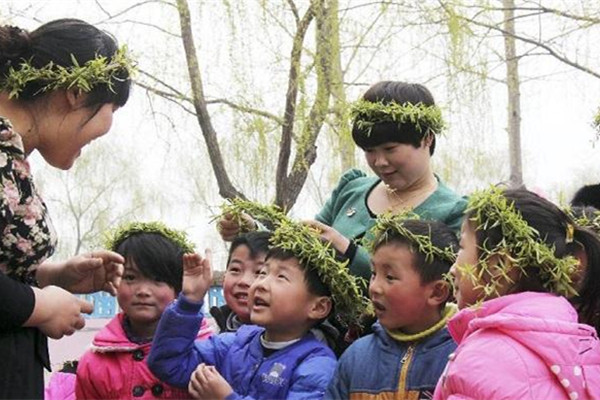
清明戴柳,有将柳枝编成圆圈戴在头上者,也有将嫩柳枝刮结成花朵而插于头髻者,还有直接将柳枝插于头髻者。明朝田汝成《西湖游览志余》提到,清明时节“家家插柳满檐,青茜可爱,男女或戴之”。
On the Clear and Bright people wear wickers, some people plait wicker into a circle and put on their heads, and some people scrape the tender willow branches into flowers and insert them in the plait, some people directly insert willow branches in the plait. Tian Rucheng’s "West Lake Tour Directions" mentioned that in the Clear and Bright season in the Ming Dynasty, "every family’s eaves are full of willow, green leaves look lovely, some men and women wear them on the heads."
民间谚语说:“清明不戴柳,红颜成皓首。”、“清明不戴柳,死后变黄狗。”、“清明不戴柳,来世变猪狗。”说明戴柳有辟邪功用,清明戴柳之俗遍见各地。
The folk proverb says: "On the Clear and Bright girls who do not wear wickers, and their hair will be quickly to get white.". "On the Clear and Bright people who do not wear wickers, and they will turn into yellow dogs after the death.". "On the Clear and Bright people who do not wear wickers, and they will turn into a pig or a dog." It shows that wearing wickers has the function of caring off the evils, and this custom can be seen everywhere.
清朝戴柳,在中国大部分地区都是为辟邪之用,但在一些地方有纪年华之义,有所谓“清明不戴柳,红颜成皓首”之说。这种习俗是宋代“寒食”冠礼的遗存。宋代将男女成年行冠礼的时间统一定在“寒食”节,而不论生时年月,“凡官民不论大、小家,子女未冠笄者,以此日上头。”(《梦梁录》)戴柳即为成年标志。据此,后世便有“纪年华”之遗俗,并演化成妇女戴柳球于鬓畔以祈红颜永驻的习俗。在此,青青春柳,又有象征青春之义。时值春季妇女戴柳,则表现出对青春年华的珍惜与留恋。
On the Clear and Bright people wear wickers to scare off the evils in most parts of China. However, in some places, it has the meaning of getting young, as it puts in "On the Clear and Bright girls who do not wear wickers, and their hair will be quickly to get white." This custom is the legacy of the crown ceremony of "cold food festival" in the Song Dynasty. During the Song Dynasty, the time for boys and girls (who are above 14 years old) to perform adult crown ceremony, which must be held in the "cold food festival", regardless of the month of their birth. "No matter their families are the officials or the common people, all the children are crowned(wearing a scarf on the head) on this day. ("Meng Liang Records") wearing wickers is an adult symbol. Since then, later generations had had the custom of "keeping young", which means that women wear willow balls on the side of one temple to pray for eternal beauty. The willow has the meaning of the symbol of youth. At the time of spring, the woman wear wickers showing their cherish and nostalgia for their youth.
黄巢起义时规定,还曾以“清明为期,戴柳为号”。
During the Huang Chao Uprising at the end of Tang Dynasty, it was stipulated that "The Clear and Bright is the time to go uprising , wearing wickers is the symbol."
射柳
shooting willow.
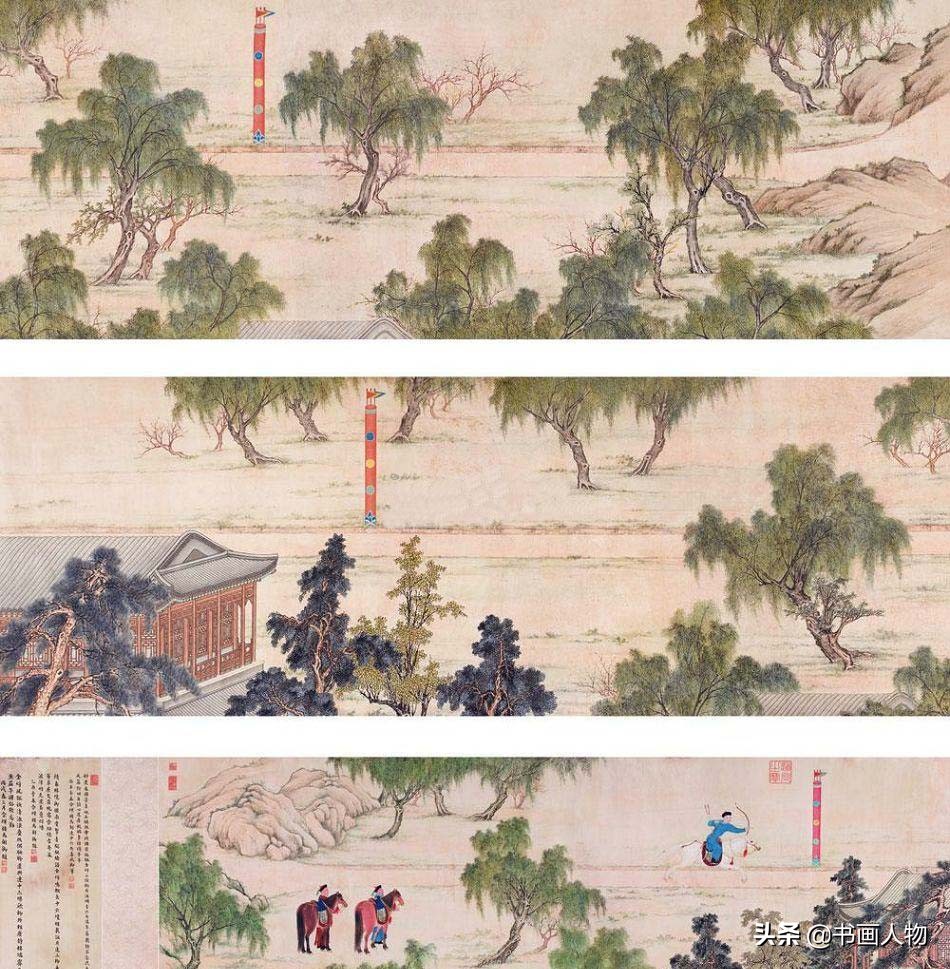
射柳:这也是一项时尚高雅的活动。在细长摇曳的柳枝上,拴上一缕红绸,即是被射的目标。大多是青年男子,骑马挽弓,在百步以外,用特制的前头分杈的箭,射断那枝柳条,待柳条落地之前,飞马前往,将柳条接住。是考验骑射真功夫的一项运动。
shooting willow: This is also a fashionable and elegant activity. On the slender swaying willow branch, a strand of red silk is tied, which is the target of the shooting. It is quite common that young man, riding on a horse with his bow shot the branch with red silk. He used special arrow whose top has a fork to break off the targeted wicker. Before the wicker dropped on the ground, he just arrived there to catch the wicker. It is a sport that tests the true skills of riding and shooting.
斗鸡
Cock fighting game
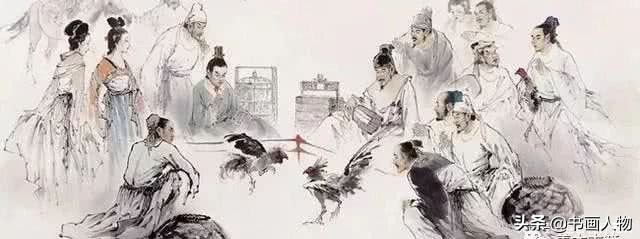
古代清明盛行斗鸡游戏,斗鸡由清明开始,斗到夏至为止。中国最早的斗鸡记录,见于《左传》。到了唐代,斗鸡成风,不仅是民间斗鸡,连皇上也参加斗鸡。如唐玄宗最喜斗鸡。
In ancient times, on the Clear and Bright it is popular that cock fighting games began from on the Clear and Bright to the Summer Solstice. The earliest Chinese cockfighting game record is found in Zuo Zhuan. In the Tang Dynasty, cockfighting became popular with not only fork people, but even the emperor. For example, emperor Tang Xuanzong likes cockfighting most.
蚕花会
Silkworm temple fair
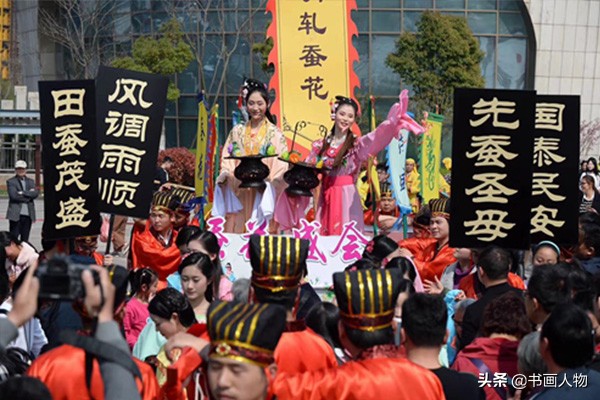
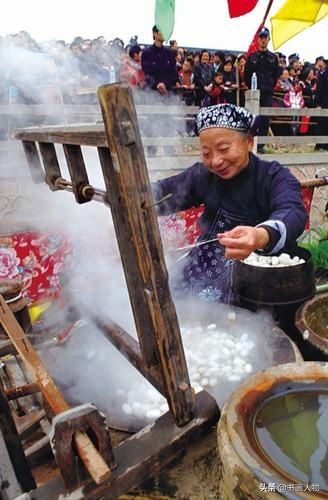
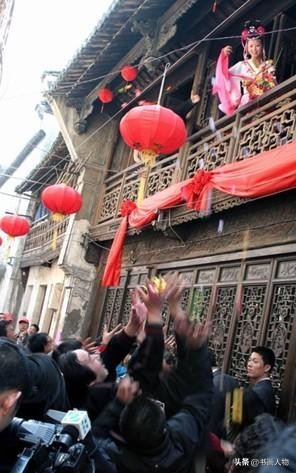
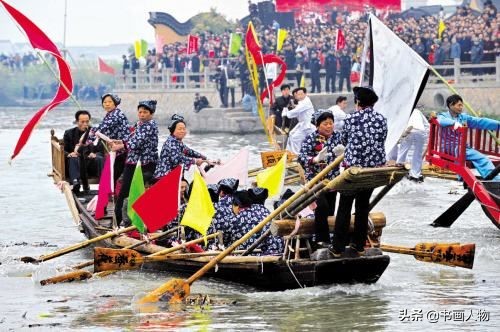
“蚕花会”是蚕乡一种特有的民俗文化,过去清明节期间,梧桐、乌镇、崇福、洲泉等地都有此项民俗活动。其中以洲泉的马鸣庙和青石的双庙诸的蚕花会最为精彩隆重。马鸣庙位于洲泉镇西,在当地有“庙中之王”之称,每年蚕花会人山人海,活动频繁,有迎蚕神、摇快船、闹台阁、拜香凳、打拳、龙灯、翘高竿、唱戏文等十多项活动。这些活动有的在岸上进行,绝大多数在船上进行,极具水乡特色。
The "silkworm temple fair" is a unique folk culture in Silkworm Townhood. During the Clear and Bright in the past, this folk custom activity was held in Wutong, Wuzhen, Chongfu and Zhouquan. Among which, the silkworm temple fair in the Maingmiao in Zhouquan and Shuangmiaozhu in Qingshi had the most wonderful and grand scene. Maingmiao is located in the west of Zhouquan Town. It is known as the "Top of temple fair " in the area. Every year, the silkworm temple fair will be crowded with people. There are more than a dozen activities such as, welcoming the Silkworm God, shaking the fast boat, celebrating wedding pavilion, worshipping stools, boxing, and dragon lanterns, walking on stilts, performing drama. Some of the activities are carried out ashore, mostly on ships, and are highly characterized with township by water side.