专升本词汇量
英语专业VS非英语专业
1.非英语专业,专升本的词库有三千多个单词,四级词汇量差不多没问题。
2.英语专业要求相对高一点,专业四级的难度,8000到10000。
关于专升本英语词汇的相关情况,并没有官方出台的词汇专用书,需要的学习者可以将大学四级的词汇作为学习的主要对象。
专升本英语词汇量太少?
一、选择一本高质量的单词书
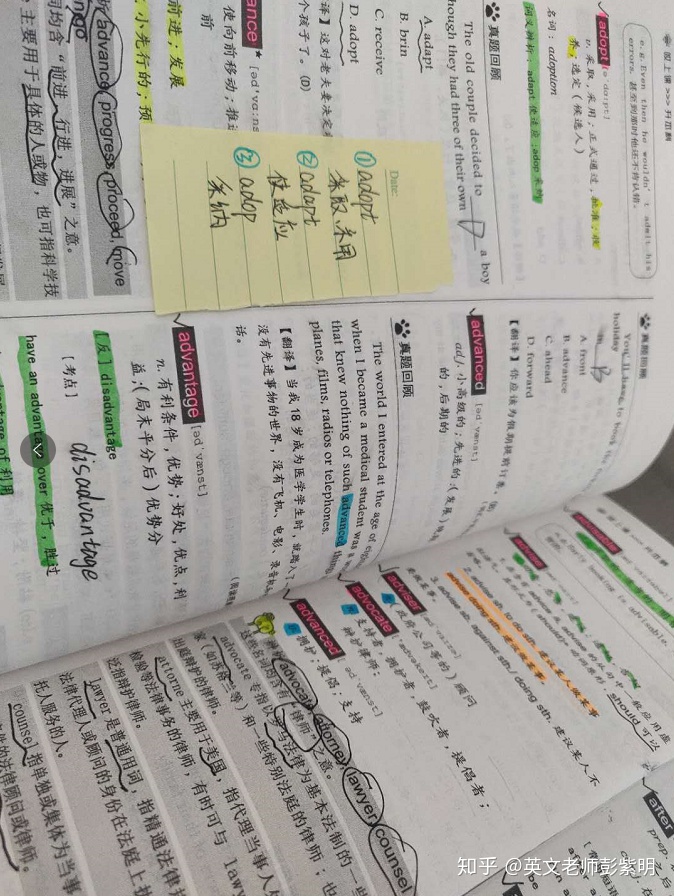
我们在市面上可以看到的参考书有很多。单词书是必选书目之一。如何选择一本单词书,是很多同学比较纠结的事。在这里,建议大家选择真题单词覆盖率较高的单词书。
为什么?
其实,许多人的词汇量是一片混沌,没有系统,完全是一个一个单词去记,忽略了词汇之间的关联和变化。你可以想想,一个房间“一片狼藉”,要你去找“剪刀”在哪里,你可能一下子很难找到。单词也是这样,没有建立起单词之间的网络,你要说英语或者写英语时,就会出现“短路”情况,找不到合适的词,来完成表达。
怎么做?
用英文思维去记单词。这需要你首先要搞清楚英文单词的特点:
1.一词多义
2. 单词扩展性
3.同义词区分
举个例子:
例如“run”可以表示”奔跑“,也可以表示“经营管理“。它有名词形式,也有动词形式。作为动词时,又分为”及物动词“和”不及物动词“,作为及物动词时,表示“经营管理”,作为不及物动词时表示“跑”。而run搭配不同介词时,意思又更加丰富了,run away, run off, run over, run into诸如此类。通过添加前缀后缀,这个词有可以玩出新花样,例如runner, front-runner, run-away等。由此可见,记单词绝对不是那本词汇书背或者用背单词软件随便抽空刷刷就好。
此外,英文单词也是具有可扩展性的,例如:
perform-outperform-underperform
supply-oversupply-shortsupply
estimate-overestimate-underestimate
诸如此类,记住了一个词,如果进行适当的扩展,意思就可以成串。
再者,英文单词也有很多同义词,是需要进行区分的,才能确保用词更加准确,例如:
1.area:(城市、国家或世界的一个)地区,但不指行政区划;也可指面积。
2. region 指较大的行政单位。
3.district指行政划分的区,比region小,通常指市镇内的一区。
4.zone(有某种重要或典型特征的)地区,地带。
只有不再孤立的背单词,词汇量才能真正的扩大。
二、列出复习计划并严格执行
单词只是英语复习的一部分,且最后没有直接考单词的试题。除了背诵记忆词汇,你需要合理分配时间——复习语法、阅读练习、写作练习、模拟考试等,需要你有一个详细的复习计划。先预估自己用在英语学科上的时间是多少,然后去分配时间,做出计划后,严格按照复习计划进行。

三、词本无意,意由境生
在学习单词的时候,切忌孤立背诵记忆。词本无意,意由境生。结合具体的语境来背诵,才是背单词的正解。最好是每个单词都可以记住一个例句,或是记住一个词组,这样就有语境联系了。
那最好的语境是什么?由于备考时间比较紧凑,建议不要去拓展补充例句,最好的语境就是历年真题。你可以把历年真题当成是最好的材料,结合语境来记忆。
同时还要提示各位、不要机械重复诵读单词,更不要用抄写的方式去学习。复读机和复印机可以做完的事,不必浪费时间。
记忆词根词缀
很多单词中,我们经常会见到一些常见的词根词缀,有时候虽然单词数量多,但是大多数都是由一个我们知道的单词加上特定的词根词缀来合成的。如果我们识别了这样的词缀,那么生词的数量对于我们来说将会大大下降,那我们的记忆不也就轻松了许多吗?比起记忆浩如烟海的单词来说,记忆几个词根词缀就算不了什么了。
我们常见的词根词缀主要有以下一些:
re-表示原词的动作或者意义的重复,比如locate-relocate(搬家),move-remove(删除),write-rewrite(重写),cite(引述)-recite(反复引述-背诵);
ex-,表示向外出去的,有时候也表示前任……,比如export,就是进口的意思,或者前女友ex- girlfriend;
-ology表示学科,比如geology, biology, sociology(社会学),psychology(心理学),meteorology(气象学),anthropology(人类学)等等。
act-表示“行动,做”,比如
act 行为
acting演技
activity活动(act+ivity状态→活动状态)
activate使…活动,起动(act+ivate使…→使…活动)
actualize实现(actual实际的+ize化→实际化→实现)
enact实施,颁布(en+act→使〔法律〕动→实施法律)
exact强求;精确的(ex出+act→[要求]做出来→强求)
exacting苛求的(exact+ing)
interact相互作用(inter相互+act→相互动→相互作用)
react反应;反抗(re反+act→*动反**;反应)
transact做交易;办理(trans横+act→横向动→互相贸易或交易)
counteract抵抗;抵消(counter反+act→反着动→力量对抗→抵消)
inactivity不活跃(in不+activity活跃)
更多词汇小技巧或者资料可以后台私信我。
二、专升本语法
1.第一句话:原始起源
英语是一门逐渐发展演变的语言,早在远古时期,英语的结构其实只有以下这两种,即简单句的原始结构。
主+谓+宾
主+系+表
1.主语是一个句子所叙述的主体,一般位于句首。在原始的简单句中,主语可由名词、代词、数词、名词化的形容词表示。例如:
During the 1990s, American country music has become more and more popular.(名词)
We often speak English in class.(代词)
One-third of the students in this class are girls.(数词)
The rich should help the poor.(名词化的形容词)
2.谓语(动词):谓语说明主语所做的动作或具有的特征和状态。动词在句中作谓语,一般放在主语之后。谓语的构成如下:
1.简单谓语:由一个动词或动词短语构成。如:He practices running every morning.
2.复合谓语:(1)由情态动词或其他助动词加动词原形构成。如:You may keep the book for two weeks. He has caughta bad cold. (2)由系动词加表语构成。如:We are students.
在英语中一个简单句只能有一个谓语动词(知道为什么吗),而且,我们平时学习的时态是针对谓语动词来说。如果以do为例,do, did ,have done, will do, had done, is/am/are doing, was/were doing, would do。在简单句中,谓语动词和主语是句子的核心,是不可以随意删掉的。
3.宾语:宾语表示动作的对象或承受者,一般位于及物动词和介词后面。例如:
They went to see an exhibition(展览)yesterday.(名词)
The heavy rain prevented me from coming to school on time.(代词)
How many dictionaries do you have? I have five.(数词)
They helped the old with their housework yesterday.(名词化形容词)
4.表语:表语用以说明主语的身份、特征和状态,它一般位于系动词(如be, become, get, look, grow, turn, seem等)之后。表语一般由名词、代词、形容词、分词、数词。
Our teacher of English is an American.(名词)
Is it yours?(代词)
The weather has turned cold.(形容词)
The speech is exciting.(分词)
Three times seven is twenty one?(数词)
2、第二句话:第一次飞跃
在简单句中,只要满足上面两种结构,就可以把一件简单的事说清楚,但随着英语的逐渐演变,又演变出两种新的成分,可以对句子进行修饰和补充,我们称之为定语和状语。
1.定语:修饰名词或代词的词为定语。定语可由以下等成分表示:(在汉语里,定语可以翻译成…的)
Guilin is a beautiful city.(形容词)
China is a developing country; America is a developed country.(分词)
There are thirty women teachers is our school.(名词)
His rapid progress in English made us surprised.(代词)
2.状语:修饰动词、形容词、副词或整个句子,说明动作或状态特征的句子成分,叫做状语。
状语在高中是一个相对抽象的概念,在简单句中状语一般由副词充当,修饰动词和形容词为主,除此之外,介词短语在简单句中也喜欢扮演状语的作用,这个语法点主要存在于我们的语法填空和短文改错中。
3、第三句话:第二次飞跃
随着英语的逐渐演变,在某些简单句中,相对应的句子成分不能用单词进行描述。
主(多喝水)+ is great for your health.
I love 宾(踢足球).
My hobby is 表(玩电脑游戏).
I has bought a book(王先生写的).
我们发现,在上面的模型里,没有办法用一个单词进行描述,所以在演变的过程中,出来一个新的语法成分,叫做非谓语动词短语(to do ,doing, done,注意done与did的区别)
1、只加不定式作宾语的动词:plan, demand, promise, help, prepare, decide, refuse, choose, wish/hope, expect, fail, pretend, manage, determine, beg, arrange, threaten, claim, hesitate, happen等。
2、只加动名词作宾语的动词:admit, avoid, consider, escape, imagine, mind, miss, practice, suggest, advise, allow, permit, risk, prevent, resist, deny, forbid,advocate, forgive, acknowledge, postpone, delay, fancy, recall,finish/complete, acknowledge等
3、下面这些短语只能加doing作宾语:be addicted to, be accustomed to, get down to, lead to ,contribute to, devote oneself to , object to, look forward to, owing to, become/get/be used to, pay attention to等等。
4、既可以加to do, 也可以加doing的动词,且意思很相近的动词:intend, attempt, continue, begin, start等。
5、接to do 和doing 作宾语意义差别很大的动词:mean, forget, try, go on等。
To swim in the river is a great pleasure.(不定式)
Smoking does harm to the health.(动名词)
He pretended not to see me.(不定式短语)
I enjoy listening to popular music.(动名词短语)
Our monitor is always the first to enter the classroom.(不定式短语)
The boy playing football(动名词短语) is my brother
The dog killed by a car(过去分词短语) is very fierce.
注意:非谓语动词短语作定语时,要放在修饰词的后面,形容词做定语时,放在修饰词的前面。
非谓语动词短语是一个全新的语法概念,因为与我们汉语语法思维差别很大,所以同学们对此不是很理解,所以在学习时需要转换下思维。它的出现解决了英语单词扮演不了的功能,英语进入了一个崭新的发展时期。
从句的到来,随着英语的进一步发展,非谓语动词短语的功能逐渐衰退。
主(我们所需要的东西)+is +much knowledge I know宾(Tom 什么时候回来)
My question is (是否我们需要好好学英语) I love a place(有很多鲜花和绿树的地方)
我们会发现,这时出现了一个句子来扮演成分的功能,所以也就有日后大家学习的宾语从句,主语从句,表语从句,定语从句相关概念了,而且我们知道在改错和语法填空里,例如that,wh—词是高频考点。状语从句在这里暂时不提。
一.一般现在时
一般 + s; 在以ch, sh, s, x 或 o 结尾的词后 + es (teaches, goes, washes, fixes, guesses); 在以“辅音字母 + y”结尾的词后,变y为i后再加-es (studies, tries)
1. 表示现在反复发生的动作或存在的状态,常与every day, once a week, often,
always, usually, sometimes, seldom等时间状语连用:
-We go there twice a month.
-Industrial buyers are responsible for supplying the goods and services that an
organization required for its operations. (d. required - requires)
2. 表示主语的特征、性格、能力等:-He has great concern for others.
-Matter exists in three states.
3. 表示客观事物或普遍真理:-Light travels faster than sound.
-Japan lies to the east of China.
4. 表示安排或计划好的将来的动作:-The plane takes off at five.
5. 在时间或条件状语从句中表示将来的动作(when, after, before, as soon as, until;
if, unless):
-If it is fine tomorrow, we will have a football match.
二.现在进行时
study-studying; come-coming; sit-sitting (forget-forgetting); die-dying
通常不能用于现在进行时的常见动词如下:
see, hear, smell, taste, know, find, forget, notice, suggest, be, love, like, want, hope,
wish, prefer, hate, understand, remember, believe, have, consist, seem.
1. 表示此时此刻(说话时)正在进行的动作:
-The students are running to the sports-field.
2. 表示现阶段正在进行的动作,但此刻不一定在进行:
-He is writing a novel this year.
3. 可表示将来发生的动作,这一用法常用于go, come, leave, start等动词,后面也
常用表示较近的将来时间状语,如tomorrow, tonight, this coming Friday等,表
示安排或计划好的事情:
-Those visitors are leaving for Wuhan tomorrow.
4. 用来给习惯性动作加上赞赏或讨厌等感情色彩:
-The boy who is sitting beside me is always asking me a lot of whys and hows.
三.现在完成时
1.表示动作现在刚完成:
-His son has finished his homework.
2. 表示过去做的动作对现在仍有影响:
-It's so cold in here. Who has broken the window?
3. 过去某时开始的动作一直延续到现在(这时常和since 或for 短语连用)
-Li has studied English for twenty years.
四.一般过去时
时间状语有: yesterday, ago, in 1978, once, last week (month, year), at that time,
just now等,以及由when等引导的句子。
1. 表示某一确定的过去时间发生的动作或存在的状态:
2. 表示过去某一段时间内经常发生或习惯的动作:
五.过去进行时
表示过去某一时刻或某个阶段正在进行的动作或正发生的历史事件。
六.过去完成时
1.结束性动作--即“已完成”,表示在过去某一时间之前就已完成了的动作。
常有by, before, until, as soon as, when, because等引导的短语或从句,表示过去
的时间。
1. 在There be 结构中:
-There is a box of matches in the kitchen.
-There seems to be little time left.
2. 在主谓倒装结构中:
-After the exams is the time to relax.
-Here come the nine noisy children from next door.
-Here comes the bus. 但 Here they are.
-Here is a pen, a few envelops and some paper in the drawer.(邻近一致)
二.主语与谓语之间有修饰语时,主语的数不受修饰语的影响:
-Unemployment as well as taxes influences votes.
以下均不影响主语的数:
accompanied by, along with, together with, as well as, but, except, in addition to,
including, instead of, like, more than, no less than, not to mention, rather than (而不是).
-John, together with his family, is flying to London.
-Taxes, not to mention unemployment, influence votes.
三.单数主语。
1.不定式短语、动名词和名词从句作主语时,谓语用单数:
-To become doctors is their ambition.
-Reading without comprehension is no good.
-What that country needs is more jobs and lower taxes.
2.事件、国名、机构名称、书籍及其他作品的名称作主语时,谓语用单数:
-The United Nations was formed in 1945.
-The Daily News says it's going to rain.
3. 下列或限定词作主语或修饰主语时,谓语用单数:
every, each (of), everyone (everybody), one of (+复数), either, neither.
-Every silver knife, fork, and spoon has to be counted.
-Each book and magazine is listed in the card catalog.
-Neither (one) is satisfactory.
(-Many a college student wishes to return the easy days of high school.
-A great / good many books have been written on the subject.)
四.复数主语。
下列不定代词作主语时,谓语用复数:
both (of), few (of), many, several
-Several of the regular members were absent.
五.一些表示数量的短语作主语。
1. a lot of, all of, any of, most of, some of, none of 谓语取决于of 后名词的数。
-The number of students in the class is fifteen.
-A number of students were late.
六.复合主语。
1.由and 或both ... and ...连接两个主语时,谓语一般用复数。
但:His friend and manager of the company was cool to his suggestion.
a French and Chinese dictionary; a French and a Chinese dictionaries
单数名词前有两个并列的形容词修饰时,谓语常用复数。
-Social and political freedom are limited there. (=Social freedom and political freedom)
2.当or, either ... or, neither ... nor或not only ... but also连接一个单数主语和一个复
数主语时,谓语用“毗邻一致”原则。
-Neither the quality nor the prices have changed.
Neither the prices nor the quality has changed.
七.集体名词用作主语:
-The family is the basic unit of our society.
The family are always quarreling.
常用的集体名词有:army, audience, band, board, class, club, committee, crew,
crowd, family, firm, flock, gang, government, group, jury, majority, minority,
orchestra, party, public, staff, swarm, team, troop等。
八.在定语从句中的主谓语一致:
-That is one of those remarks that are intended to start arguments.
-She is the only one of those girls who is willing to take a make-up exam.
九.表示时间、金钱、距离、体积、数字等以总量计时,谓语用单数:
-Eight hours of sleep is enough.
-Five hundred thousand dollars is quite a large sum of money.
-Three thousand miles is to far to travel.
Cf. -Their last four years have been full of surprises.
-There are two silver dollars in each of the stockings.
十.以 -ces或s结尾的名词作主语,谓语一般用单数。
physics, economics, electronics, mathematics, civics (公民学), ethics (伦理学),
politics, statistics, etc.
但用来表示“活动”或“个别、具体”事实时,谓语用复数:
-Statistics is a field of study. Cf. The statistics in that report are not accurate.
十一.+ the 与不+the 意义不同时:
-Chinese is a difficult language. The Chinese are kind and friendly.
-French is spoken in many countries. The French are famous for their good wines.
十二.“The +形容词/-ed 分词"作主语时,谓语用复数:
-The injured were taken to hospital.
代词一致:-Neither Lynne nor Bess has her keys with her.
-Neither the Browns nor the Greens like their cars. (邻近原则)
somebody...,anyone...,something...,either(neither),each, one, no one作主语时,代词一般用单数。 性:无法确定时用阳性.-A person needs to see his dentist twice a year.