
© TLS
2020年6月29-30日,深圳湾超级总部基地中央绿轴与片区景观系统设计评审会成功举办。评审委员会通过听取设计机构汇报、答疑及讨论,逐轮投票-选出3名优胜方案。经深圳湾超级总部基地开发建设指挥部审议,TLS + AZPML联合体的“超级校园”方案为第一名中标方案。
The Proposal Evaluation Meeting of International Consultation for Landscape Design of Shenzhen Bay Super Headquarters Base (Central Green Axis and the Base Area) was held on June 29 & 30, 2020. After the presentation, Q & A session, discussion and voting, the jury committee recommend three finalists. After deliberation by the Shenzhen Bay Super Base Construction Headquarters Offic, the "Super Campus" program of the TLS + AZPML consortiumwas the first winner.
视频加载中...
▲《超级校园》多媒体 ©TLS
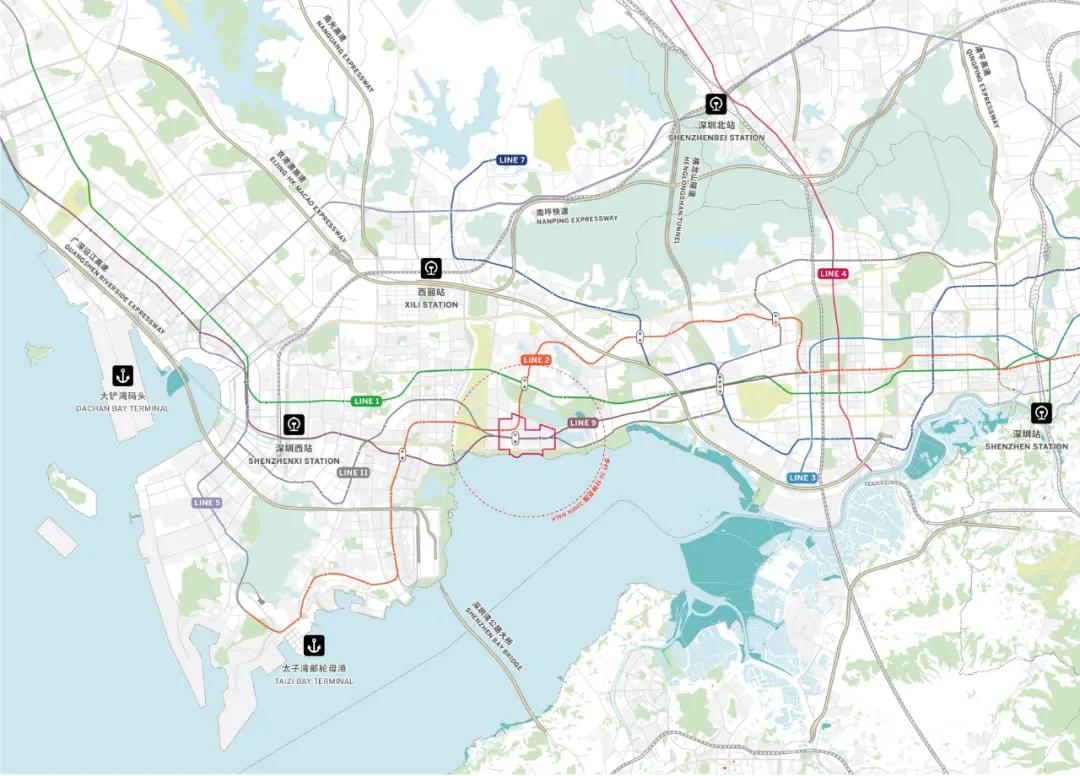
▲ 场地区位 ©TLS
在世界级湾区城市群的时代,粤港澳大湾区是中国对外开放的前沿, 深圳湾是大湾区向世界开放的最前线, 超级总部将创造深圳湾最新的开放性海岸,它是城市与海洋及其世界性联系的边界。在这片开放海岸的历史、文化和自然力量的交汇、互动和复杂组织中,涌现出中国最年轻、最具有活力和开放性的城市群。这里的景观牵动着世界。
In the era of the Global Bay Area, The Guangdong-Hong Kong-Macao Greater Bay Area is China’s Opening Frontier, Shenzhen Bay is the Frontier of this Bay Area, Super Headquarters will create the latest open coast of Shenzhen Bay. In the history of this open coast, the intersection of culture and natural forces, the power of land and ocean, world trade, monsoon and ocean current, the interaction and complex organization…conceived Shenzhen – China’s youngest, most dynamic and openness city clusters emerges here. The landscape here affects the world.
世界级湾区总部景观模式
Top Bay Areas Global Headquarters Landscape Models
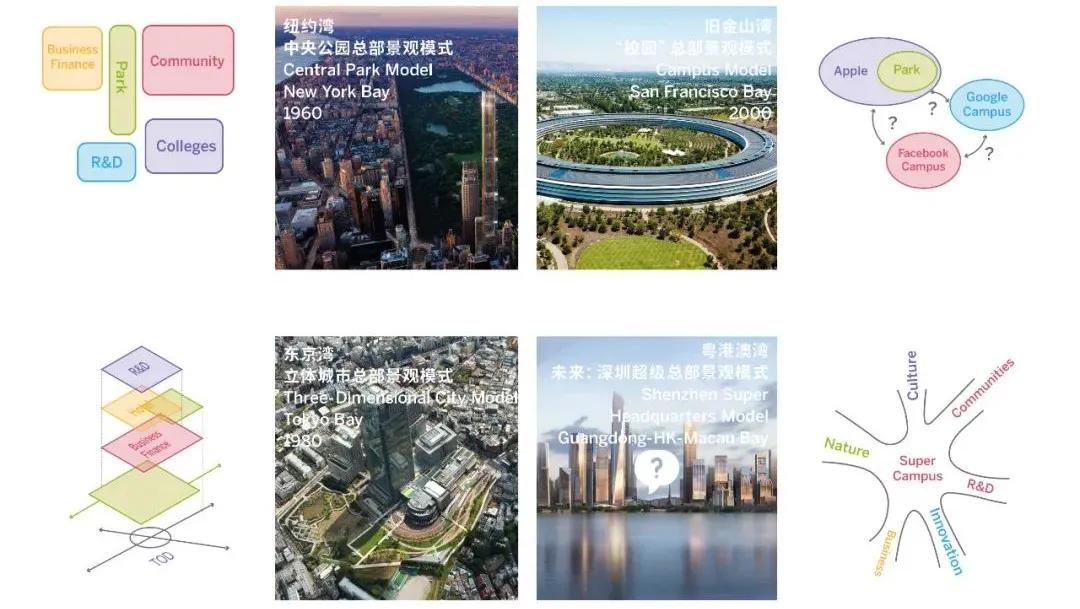
▲ 世界级湾区总部景观模式 ©TLS
我们仔细研究了全球总部区的开发模式及其最近的历史与沿革。
在1950年代,最成功的总部景观模式是纽约中央公园,它的影响涵盖了整座城市。在1980年代,东京开发了节点式的,高密度的,三维形式的总部区,园区被分裂散落成各式各样的高密度集群。在2000年代,旧金山蓬勃发展的科技产业发展出了企业总部园区的另一种形式,但总部区越来越自给自足并隔绝于城市环境。
我们的深圳湾超级总部景观方案,旨在开发一种新的校园型总部区模式。总部区成功的关键不在于建筑物,而在于将建筑物整合在一起的开放空间。超级校园将成为总部基地的核心,基于全球企业之间的开放协作,以及与城市和生态环境的深度融合,成为未来总部区的新典范。
We have carefully studied the models of the global business environment, and their recent history. Paradoxically, many of these models have been developed in Bay cities, like Shenzhen.
In the 1950s the most successful urban business environment was probably Central Park In NY, and it engaged the whole city. In the 1980s Tokyo developed a nodal, high-density, three-dimensional form of business environment, split into different high-density clusters. In the 2000s San Francisco’s thriving tech industries have developed another variation of the business environment, producing the increasing isolation between the business campus and the city.
We are modeling our Park on a University Campus. The key of the success of a campus is not in the buildings themselves but in the space that integrates them. Shenzhen Super Campus is aimed to develop a new model of business campus that integrates different companies with each other and with their urban and ecological environments.
创造湾区总部景观新模式
Create New Model of Headquarters Landscape

▲ 超级校园——连接创新学习性群体+联接生态适应性景观 ©TLS
未来校园型总部园区的成功,离不开对自然与生态领域的仔细考量。超级校园将在商业创新与生态适应之间建立完美的共生关系。
A future campus cannot succeed without a careful consideration of its natural ecologies. The Super Campus is aimed to produce a perfect symbiosis between business innovation and ecological adaptation.

▲ 超级校园景观矩阵 ©TLS
超级校园景观矩阵,强化生态、文化、艺术、技术、商业、运动、游戏、表演、交通、景观地貌等丰富的活动之间的互动连接。例如让对动植物的自然体验,启发技术和商业思考;让艺术回应自然变化;让音乐激发创新;让游戏融入科技;让不同活动群体相互联系、相互欣赏;让不同文化交融互动。
The super campus landscape matrix strengthens the interactive connections between rich activities such as ecology, culture, art, technology, commerce, sports, games, performances, transportation, and landscape. For example, let the natural experience of animals and plants inspire technology and business thinking; let art respond to natural changes; let music stimulate innovation; let games integrate technology; let different activity groups connect and appreciate each other; let different cultures interact.

▲ 教育性环境与创新学习性群体©TLS
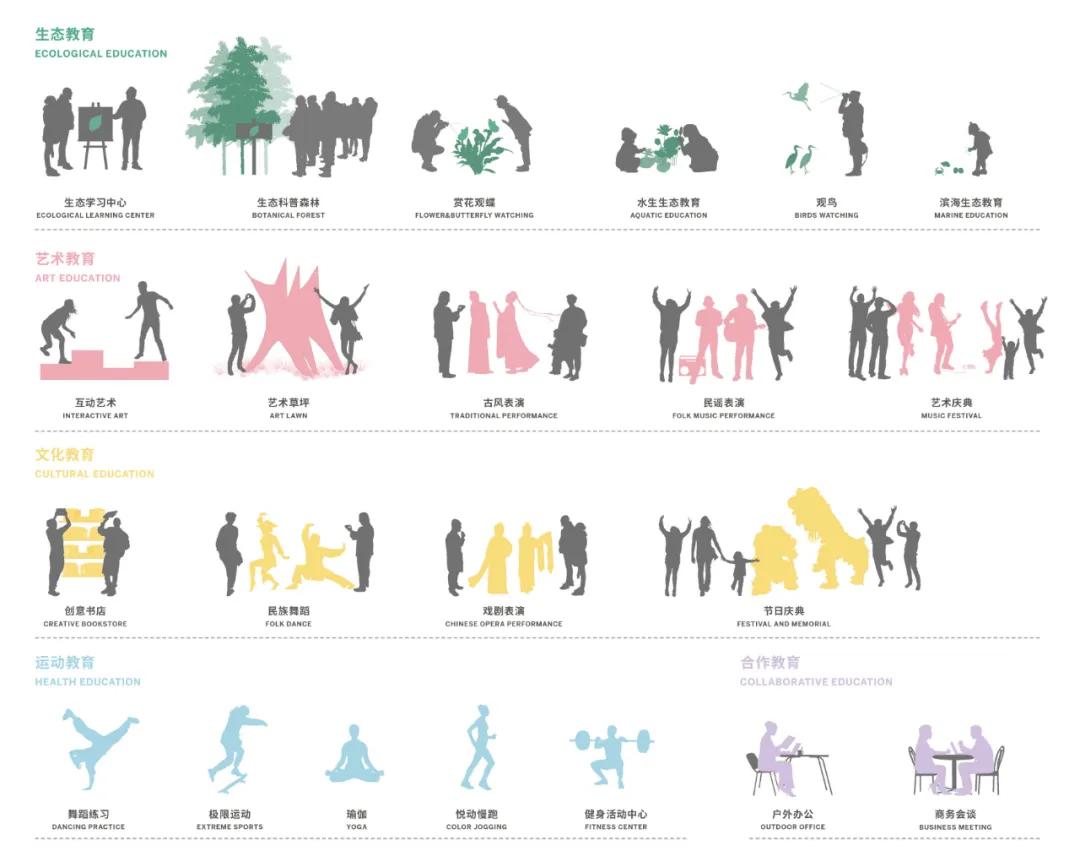
▲ 创新学习性群体速写©TLS
超级校园总部景观将连接丰富的自然生态系统要素、自然教育活动,连接创新学习型群体、全球引领型企业,多样的文化创意活动、教育和交流活动。建立交织的文化、生态网络,创造出公园内在的互动与连接矩阵,为全球湾区贡献新的总部景观模式。
It will connect abundant elements of natural ecosystems and natural education activities, Connect innovative learning groups, global leading companies, diverse cultural and creative activities, education, and exchange activities. To form "Super Campus" landscape and contribute to the new headquarters landscape model for global Bay Area interconnected, shaping a globalized world. A more open and leading Guangdong-HK-Macao Greater Bay Area is promoting a higher level of global interconnection and collaboration network.
气候适应性设计
Climate Responsive Design
为了使超级校园一年四季都能舒适、受欢迎,我们建议采用被动和主动两种方式来缓解气候影响。从海湾吹拂而来的夏季盛行风,能为超级校园降温,我们将引导这些季风并加以利用。
For the campus to be successful and comfortable year-round we propose both passive and active ways to moderate the climate. The campus can be cooled by prevailing summer breezes which move inland off the Bay. So let’s channel those breezes and take advantage!
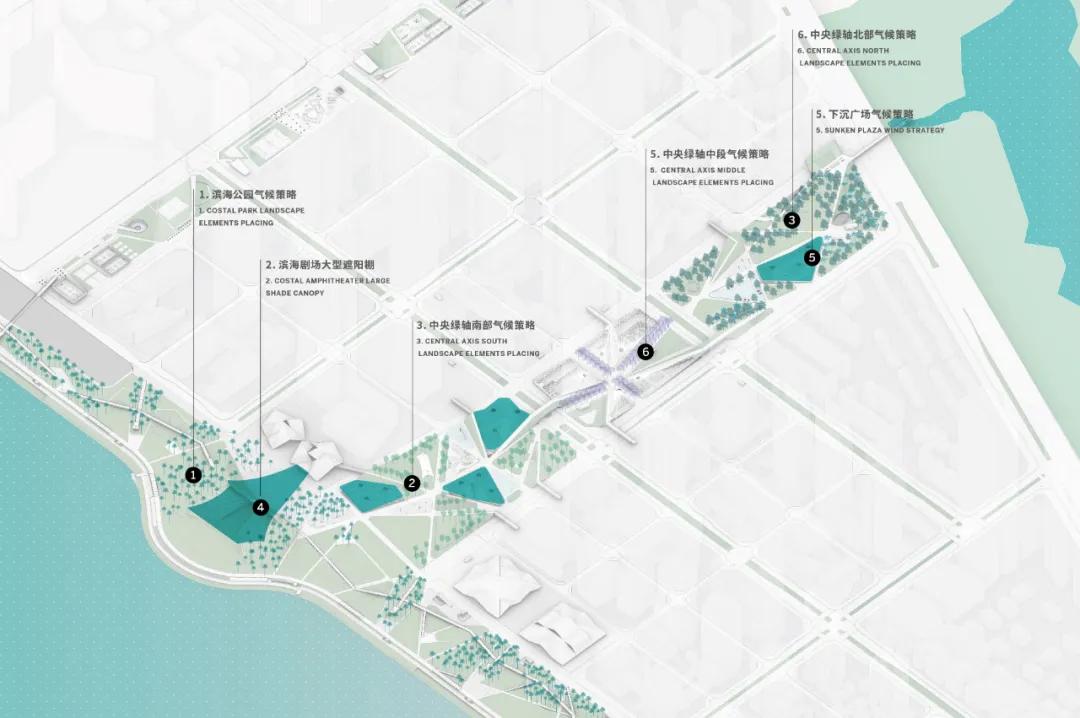
▲ 气候适应性设计策略分布 ©TLS

▲ 气候适应性设计策略©TLS

▲ 风环境模拟©TLS
高大的树荫为地表带来荫凉。树阵和微地形的规划和布局引导盛行风穿越公园。树冠必须足够高大以提供足够的林下空间,形成风道。下沉广场顶篷安装的风扇,将进一步促进空气的流通。我们选择特定树种进行布置,以增强风的流通-沿海种植风更容易穿透的棕榈树,它们柔韧的躯干有助于抵御台风造成的损害。
A major tree canopy over most spaces will create shade and cool the ground. The placement of trees and topography, aligning with the prevailing breezes will extend cooling through the campus. Tree canopies need to be tall to create space for air to move underneath them as well. Canopy structures over sunken gardens also create shade and are crowned by large fans to move air through for further cooling. Trees have been chosen and arranged to enhance wind flow – with more permeable hedgerows of palm trees at the coast. Their flexible trunks also mitigate erratic typhoon winds off the water.
生态设计
Ecological Design
▲ 栖息地未来故事©TLS
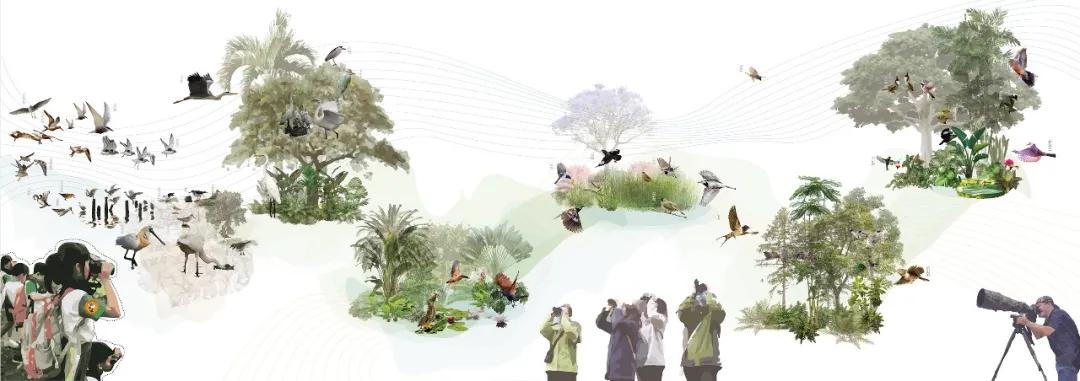
超级校园是一座生命之园。它通过积极的生态设计,成为一个生命体。它会不断生长、学习、发展更高的复杂性、更深度的连接、水文的多样性等等。超级校园指示着我们所处时代的大问题——与自然脱离连接,是最重大的全球性问题之一。这是面向未来的商业领域、科技领域都需要注意的关键问题。大量物种间相互联系与迁徙,定义了超级校园生态系统,人类只是其中的成员之一。树木依赖于水与土壤,鸟类依赖于植物和昆虫,后者又依赖于湿地植被,如此相互依存。
TheSuper Campus is alive. It is aggressively biological. As an organism, it willgrow and learn, develop complexities, deepen connections and hydrologicgradients over time. The Super Campus is indicative of the times we are livingin - where disconnection from the natural world accounts for many of our mosturgent global problems. Truly this is a key concern of future-oriented businessand research. Super Campus ecosystems are defined by inter-connections andmobility of all the living species, humans are but one. Trees depend on waterand soil, birds depend on trees and insects, insects depend on wetland flora,on and on.
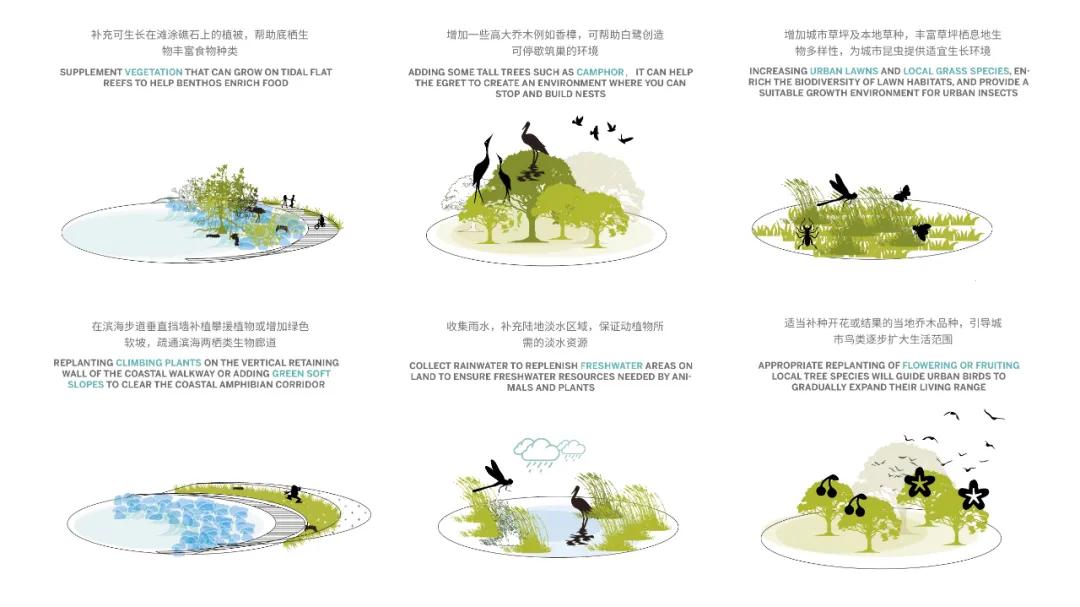
▲ 栖息地构建策略©TLS
绿色廊道容纳动物迁徙网络。水生动物可进入滨海公园和第一段绿轴。候鸟和其它鸟类,可以沿绿轴一路进入华侨城湿地,沿途获得足够的食物和庇护场所。
Here are proposed migration patterns withinconnected corridors for the movement of various species. Aquatic animals caninvade the coastal park and first block of the Green axis. Birds and otheravian species can move throughout all the way to OCT wetland with ample coverand food present.

▲ 栖息地主要生物链©TLS
总体设计
Master Plan

▲ 总平面图 ©TLS

▲ 片区功能分区 ©TLS
▲ 片区功能分区 ©TLS
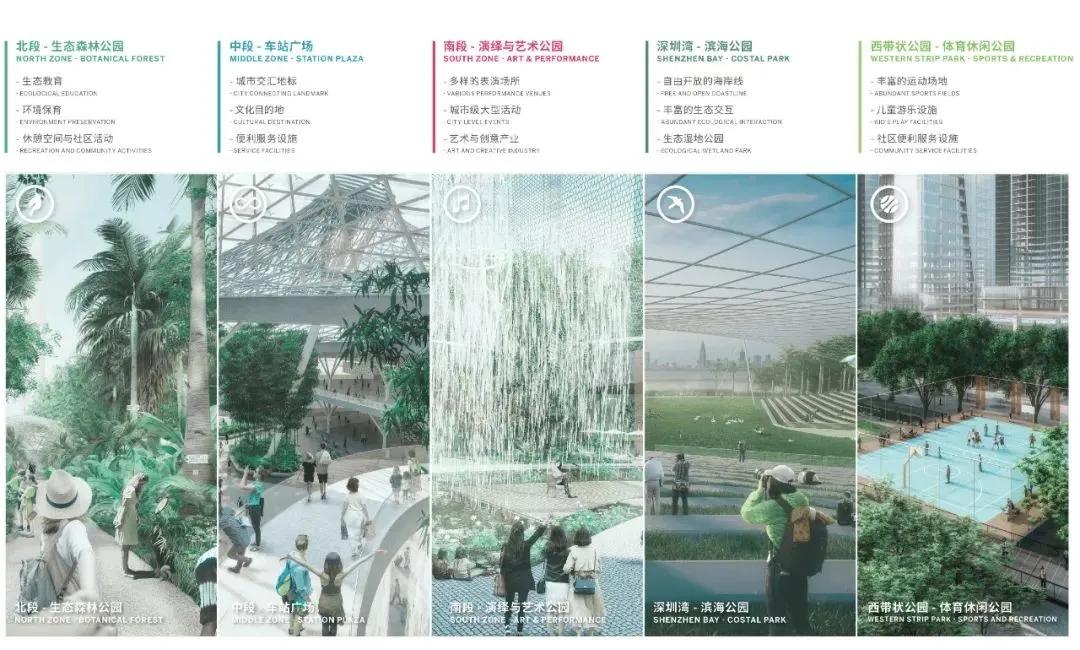
超级校园景观分为五大分区:北段—生态森林公园,连接华侨城生态公园;中段—车站广场,整合交通枢纽与城市活动中心;南段—演绎与艺术公园,连接城市文化设施;临深圳湾—滨海公园,融合海湾生态系统;西带状公园——体育休闲公园,服务学校与社区。三条重点街道连接五大分区:深湾公园路—艺文大街、白石四道—总部景观大道、还旁街—滨海步行街。
The super campus landscape is divided into five divisions: the northern section—Ecological Forest Park, connecting the OCT Ecological Park; the middle section—the station square, integrating the transportation hub and the city activity center; the southern section—the interpretation and art park, connecting the urban cultural facilities; and the Shenzhen Bay— Binhai Park integrates the bay ecosystem; West Belt Park-sports and leisure park, serves schools and communities. Three key streets connect the five major districts: Shenwan Park
中央绿轴北段-生态森林公园
North Block – Botanical Forest

▲ 北段生态森林公园 ©TLS

▲ 北段生态森林公园 ©TLS
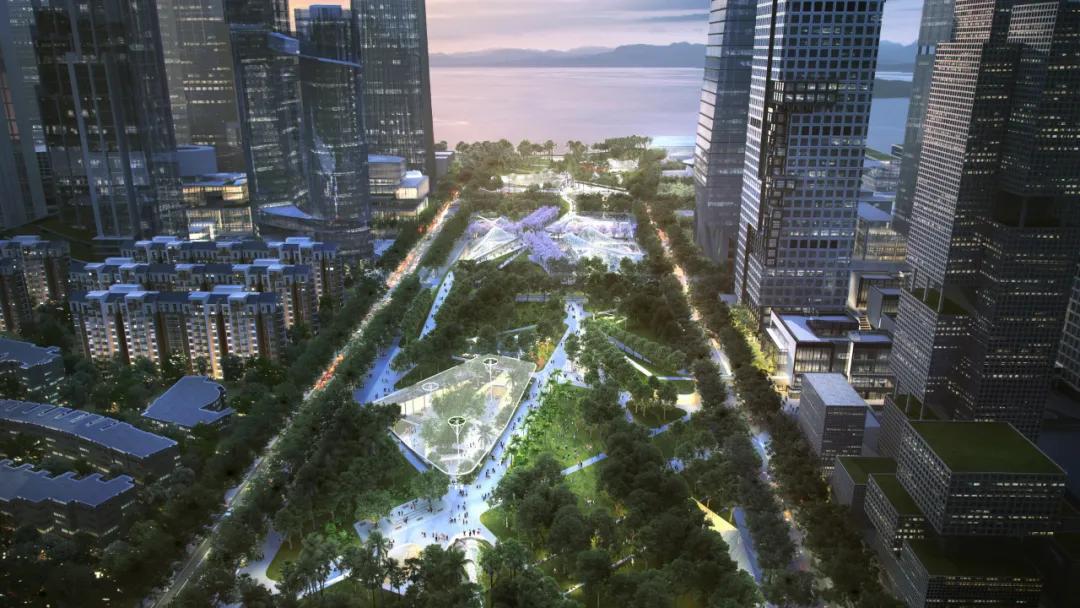
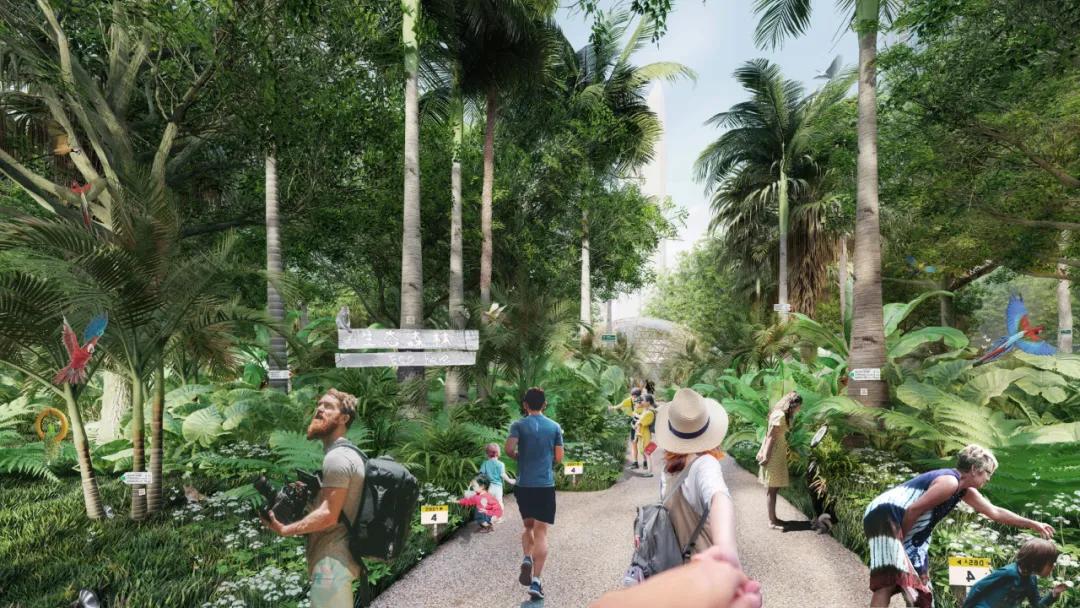
北段为生态森林公园,它是超级校园景观的生态科普场所。它模拟深圳的山地森林生境,通过生态绿桥,向北与华侨城湿地公园相连、向南与中央车站区连接。这里营造大湾区山地森林地区的典型生境群落,在城市中心营造出自然教育与沉浸式学习的环境,设置生态教室、温室等,形成户外自然科普中心。沿深湾公园路设自然主题的艺术花园。连接B1层和地下商业的下沉广场,设计为大榕树凉荫下的啤酒花园,创造独特的聚会场所。
The northern section is an ecological forest park, which is an ecological popular place for super campus landscape. It simulates the mountain forest habitat in Shenzhen and connects to the OCT Wetland Park to the north and the Central Station area to the south through an ecological green bridge. Here, a typical habitat community in the mountain forest area of the Greater Bay Area is created, an environment of nature education and immersive learning is created in the city center, and ecological classrooms and greenhouses are set up to form an outdoor nature science center. A nature-themed art garden is set along Shenwan Park Road. The sinking square connecting the B1 floor and the underground business is designed as a beer garden shaded by a large banyan tree, creating a unique gathering place.
▲ 北段生态森林公园鸟瞰 ©TLS
▲ 生态森林 – 教育小径 ©TLS

▲ 下沉啤酒花园 ©TLS
中央绿轴中段 – 车站广场
Central Block - Station Plaza

▲ 中段车站广场 ©TLS

▲ 中段车站广场 ©TLS

▲ 中段车站广场地下流线 ©TLS

▲ 车站广场“水晶山丘” ©TLS
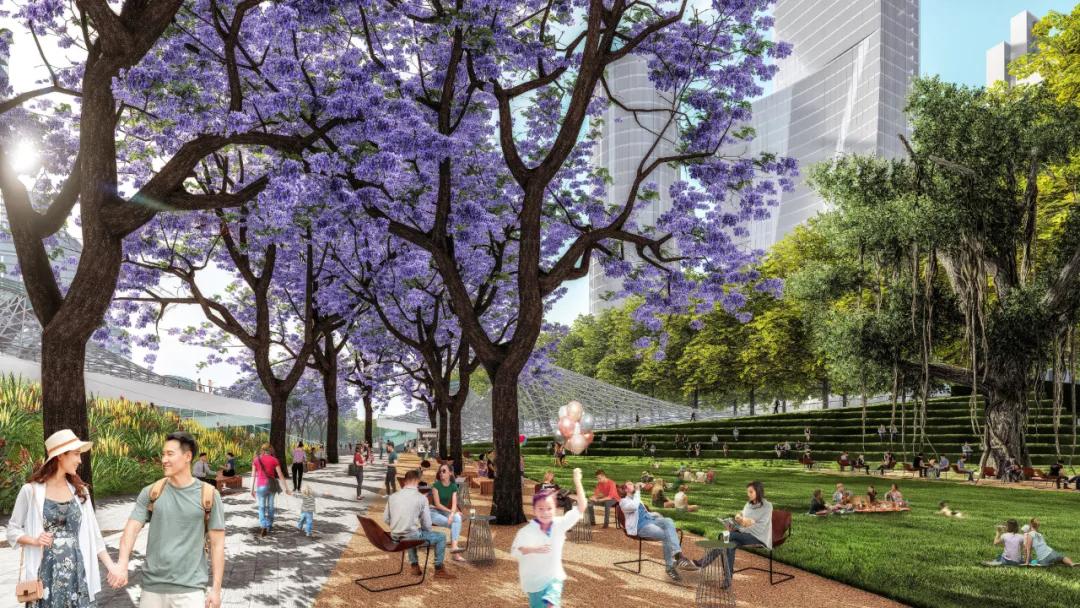
车站广场“水晶山丘”屋面覆盖着地下车站枢纽大厅,也在地面创造出独特的城市地标。它的光影和夜景效果,与交叉的蓝花楹大道配合,定义了车站广场空间。它在地下繁忙的共享大厅、地下森林,与地面广场、周边建筑之间建立视觉联系,成为公园美景的一部分。
The "crystal hills" roof covers the underground station hub hall, and also creates a unique urban landmark on the ground. Its light and shadow and night scene effects, in conjunction with the cross jacaranda avenue, define the station square space. It establishes a visual connection between the busy underground shared hall, underground forest, ground square and surrounding buildings, and becomes part of the park's beauty.
▲ 蓝花楹大道 ©TLS
在蓝花楹大道与阶梯坡道之间,有集体活动的开阔草地空间。蓝花楹大道与草坪之间的活动带,设有灵活的可移动桌椅。大榕树下的木甲板,成为小型团体聚会节点。大型坡道内隐藏了出地面设施。
Between the Jacaranda Avenue and the stepped ramp, there is open grassland space for collective activities. The activity belt between Jacaranda Avenue and the lawn is equipped with flexible movable tables and chairs. The wooden deck under the big banyan tree becomes a node for small groups. Ground Facilities exit hidden in large ramp.
▲ 蝴蝶桥 ©TLS
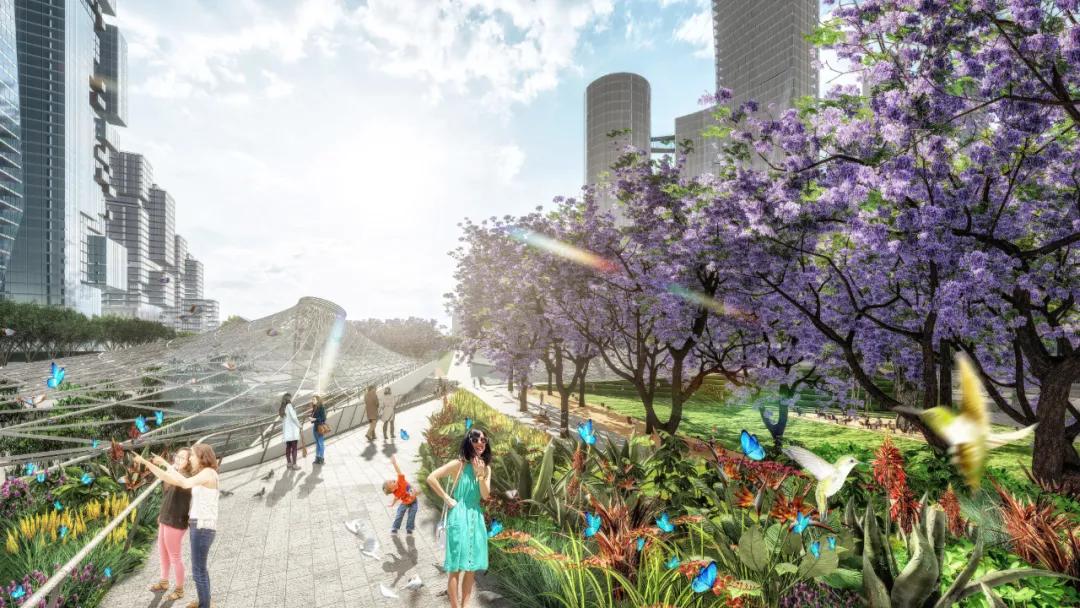
一座生态步行桥,种植深圳本地蝴蝶喜爱的植物群落,让彩蝶飞舞跨越道路。增强公园的连续性,并以诗意的方式让人们了解自然之美。
An ecological pedestrian bridge planting a plant community favored by local butterflies in Shenzhen, allowing colorful butterflies to fly across the road. Enhance the continuity of the park. Let people understand the beauty of nature in a poetic way.

▲ 车站下沉广场螺旋坡道 ©TLS
螺旋形大坡道连接地下、地下各层。共享大厅内的地下森林,将自然景观深深融入最具科技感的地下枢纽空间。
A spiral ramp connects the underground and underground layers. The underground forest in the shared hall deeply integrates the natural landscape into the most scientific and technological underground hub space.

▲ 车站下沉广场 ©TLS
中央绿轴南段 – 艺术与演绎公园
South Block - Art and Performance Park

▲ 南段–艺术与演绎公园 ©TLS

▲ 南段–艺术与演绎公园 ©TLS
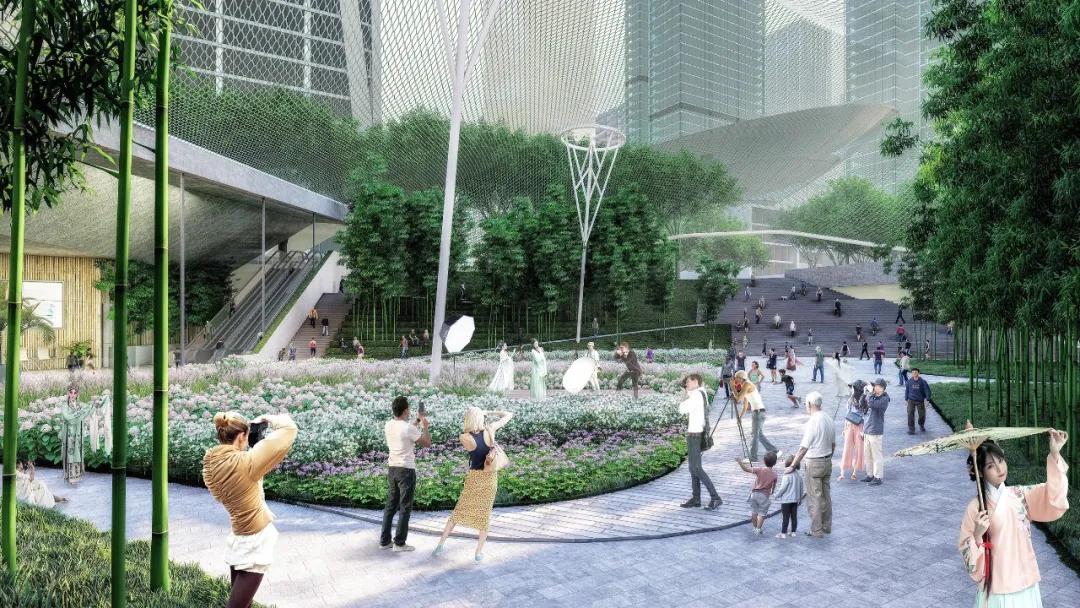
公园南段为演绎与艺术公园区,它是超级校园景观中,艺术表演群体和爱好者们交流、练习、表现和欣赏的场域。它连接周边街区的文化中心建筑、文化设施,将超级总部和周边的文化创意功能延伸入公园,为深圳和全球的创意群体服务。利用大型草坡地形、连接B1层的下沉花园,设计多种剧场化空间,服务于不同的音乐、戏剧、舞蹈、诗歌朗诵等创意群体,提供正式和非正式表演空间、练习和切磋空间。大型疏林草地环境,构建山海之间的亚热带季风草甸型景观,让视线远眺海湾风景。不同的创造性文化在此交流互动,构成激发深圳文化进化的实验“校园”。
The southern section of the park is a deduction and art park area. It is a field of communication, practice, performance and appreciation of art performance groups and fans in the super campus landscape. It connects the cultural center buildings and cultural facilities in the surrounding blocks, extends the super headquarters and the surrounding cultural and creative functions into the park, and serves creative groups in Shenzhen and the world. Using the large grass slope terrain and the sunken garden connected to the B1 floor, a variety of theater spaces are designed to serve different creative groups such as music, drama, dance, poetry recitation, and provide formal and informal performance spaces, practice and learning spaces. The large sparse forest grassland environment creates a subtropical monsoon meadow-like landscape between the mountains and the sea, allowing the view of the bay to be seen from afar. Different creative cultures communicate and interact here, forming an experimental "campus" that stimulates the evolution of Shenzhen's culture.

▲ 南段–艺术与演绎公园鸟瞰 ©TLS
▲ 下沉药草花园 ©TLS

▲ 下沉热带花园 ©TLS
滨海公园
Costal Park

▲ 滨海公园 ©TLS
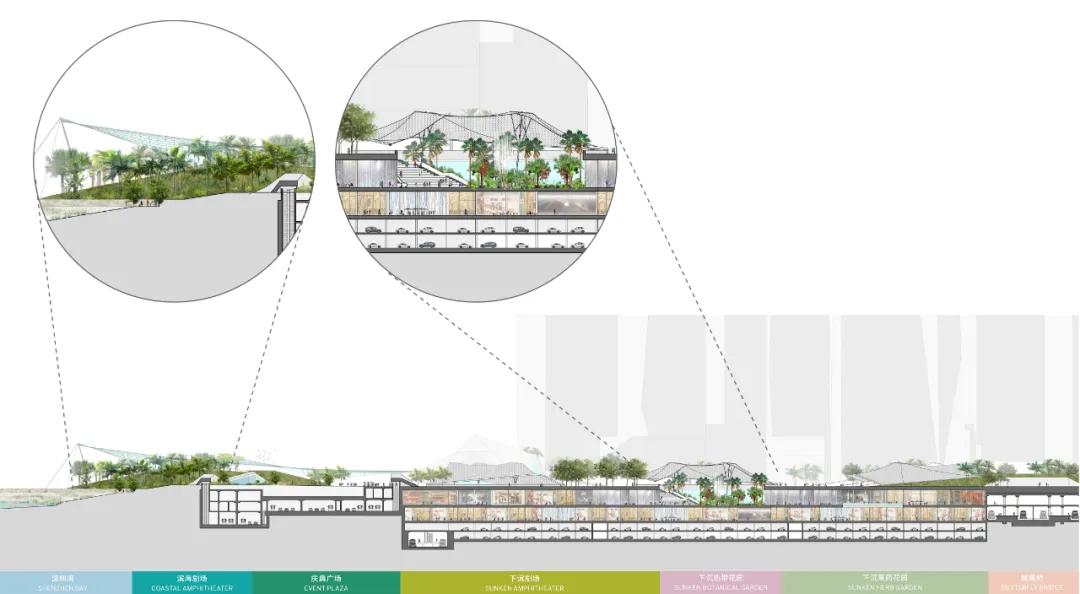
▲ 滨海公园 ©TLS
海湾公园——由湿地和水生态来定义的公园分区。它邀请海湾丰富的生命进入海岸景观。包含沼泽和浅水池的微地形,为两栖物种、哺乳动物和白鹭在内的各种鸟类创造了栖息地。一个超大型的可伸缩顶篷,为海湾边缘露天剧场的公共活动提供遮阴。
The Coastal Park – with a new identity focused on wetland and aquatic ecologies. We invite the life of the Bay onto the shore. A subtle new topography of swales and shallow ponds creates habitat for amphibious species, mammals, and diverse birds including a flock of egrets. A major retractable canopy shades public events at the bay edge Amphitheater.

▲ 滨海剧场 ©TLS

▲ 白鹭草坪 ©TLS
白鹭草坪剧场由两个绿色山丘界定,绿色山丘的阶梯式看台面向大海。而在面向城市一侧,棕榈树覆盖着节日庆典活动广场。绿色山丘下方容纳商业功能,商业界面能让广场更有活力。它们共同组成令人难忘、又精致的海滨地标。遮阳棚伸展开后,可同时覆盖白鹭草坪剧场,和节日庆典广场
The amphitheater is framed by 2 green hills etched with lawn terraces facing the water. Facing the city, a palm covered plaza for festivals and large urban events. Inserted under the mounds, commercial program to activate the plaza when there is no event. This is memorable but also delicate Bayside landmark. The retractable canopy can spread over both spaces for event shading and lighting.
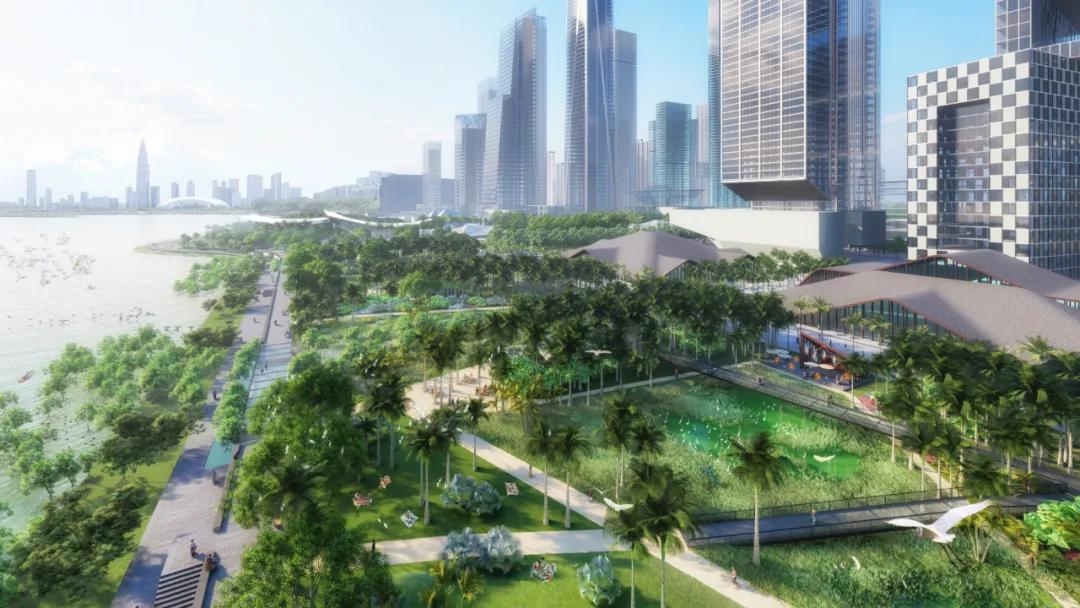
▲ 滨海湿地公园 ©TLS
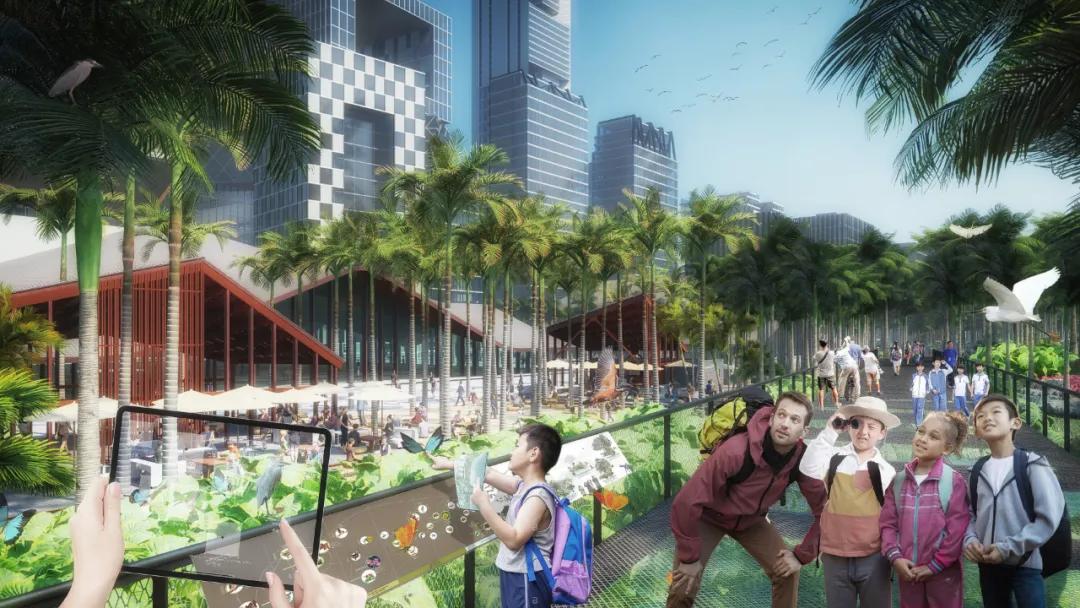
▲ 滨海湿地栈道 ©TLS
海湾公园延伸红树林湿地的生态功能,创造候鸟逗留、觅食的栖息地。湿地公园连接岭南风格文化中心,岭南风格茶室静看海湾的风景。湿地为鸟类提供清洁的淡水、食物丰富的滩涂、栖息植被、躲藏与筑巢空间。
Coastal park extends the ecological functions of mangrove wetlands, creating habitats for migratory birds to stay and forage. Wetland Park connects Lingnan-style cultural center. Lingnan-style tearooms could watch the bay scenery. Wetlands provide clean fresh water for birds, tidal flats rich in food, habitat vegetation, hiding and nesting spaces.
西带状公园
Western Strip Park
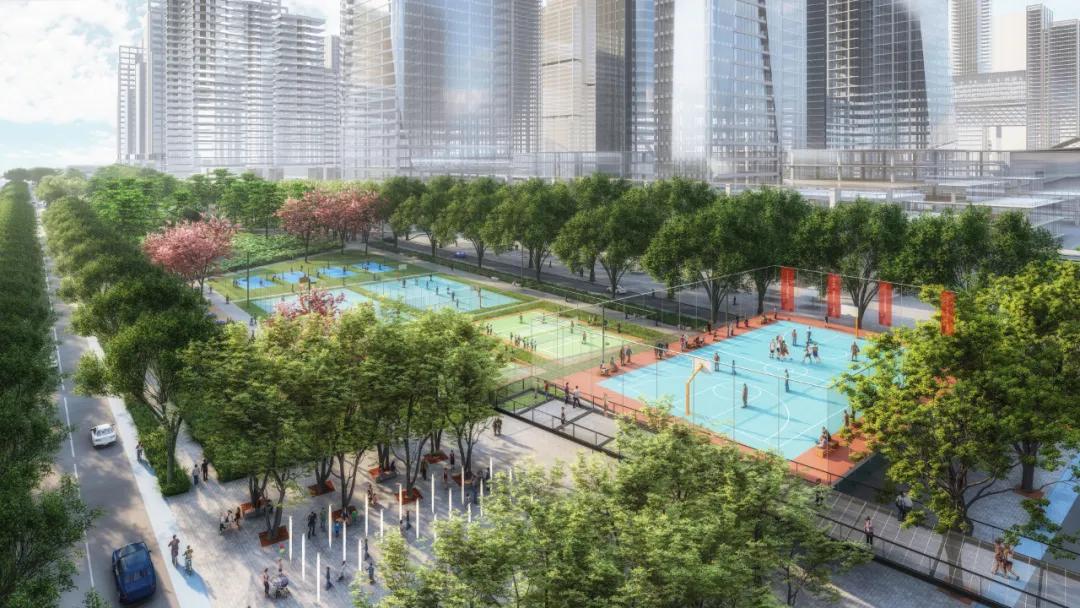
▲ 西带状公园鸟瞰©TLS
西带状公园是超总的体育和运动中心。公园南段的运动中心有一系列的室内和室外运动场,为周边社区和办公人士提供休闲运动的场所。南端的休憩广场上有一座步行连桥与滨海公园相连。将规划中的停车空间置入地下,留出更多的地面空间为人们提供运动的可能。
Western Strip Park is the sports center for HQ base. The Sports center in the south park has a series of indoor and outdoorsports fields to provide leisure sports for surrounding communities and officeworkers. There is a pedestrian bridge connecting Coastal Park on the southernplaza. There is a planned parking space underground, leaving more ground spacefor people to exercise.

▲ 西带状公园—乒乓球小广场©TLS

▲ 西带状公园—儿童游乐场©TLS
▲《超级校园》动画 ©TLS
竞赛阶段团队
Competition Phase Design Team
景观设计团队
总监/主创设计师:Tom Leader
项目经理:Pablo Alfaro,郑司
设计团队:仲歆,范炜,魏颖,叶淑萍,邱燕霞,贾英凡,俎菀芃,余兆威,刘思妍,孙辰,郑幻,于洋,Ivan Valin,黄煜铭,刘荣清
建筑设计团队
总监/主创设计师:Alejandro Zaera-Polo
设计团队: Ivaylo Nachev, Maider Llaguno-Munitxa, Carlota Mendez
顾问团队
气候科学顾问:Klimaat - Meiring Beyers
公共艺术顾问:Betti-Sue Hertz,王景
Landscape Design Team
Principal/Chief Designer: Tom Leader
Project Manager: Pablo Alfaro, Si Zheng
Design Team: Xin Zhong, Wei Fan, Ying Wei, Shuping Ye, Yanxia Qiu, Yingfan Jia, Wanpeng Zu, Zhaowei Yu, Siyan Liu, Chen Sun, Huan Zheng, Yang Yu, Ivan Valin, Yuming Huang, Rongqing Liu
Architecture Design Team
Principal/Chief Designer: Alejandro Zaera-Polo
Design Team: Ivaylo Nachev, Maider Llaguno-Munitxa, Carlota Mendez
Consultant Team
Climate Science Consultant: Klimaat - Meiring Beyers
Public Art Consultant: Betti-Sue Hertz, Jing Wang