
Direct carotid puncture in acute ischaemic stroke intervention
Elisa Colombo, Lorenzo Rinaldo, Giuseppe Lanzino
doi: 10.1136/svn-2019-000260
2019年,SVN编辑部特邀美国加州大学尔湾分校(University of California, Irvine, UCI)神经外科Li-Mei Lin教授担任客座主编,组织出版神经外科专刊(2020年3月专刊)。最新上线文章“Direct carotid puncture in acute ischaemic stroke intervention”,来自美国梅奥诊所神经外科Elisa Colombo、Lorenzo Rinaldo及Giuseppe Lanzino(通讯作者)。
典型的颅内血管闭塞性疾病患者通常年龄较大,是急性缺血性卒中血管内介入治疗的主要人群,其中很大一部分患者主动脉及弓上血管解剖结构复杂,且伴有心血管并发症,探索经颈动脉入路(transcervical access, TCA)作为机械取栓的初始入路选择或可使患者获益。对于此类患者,直接经颈动脉穿刺具有绕过解剖障碍、实现快速再灌注的优势。当进入颈总动脉时,要格外谨慎,以避免不良事件的发生,包括血肿形成、医源性动脉夹层以及导管鞘打结等。尽管存在潜在的并发症,直接经颈动脉穿刺在急性缺血性卒中血管内介入治疗中克服了具有挑战性的血管构筑,并可能减少与延迟血管再通相关的不良预后的发生。
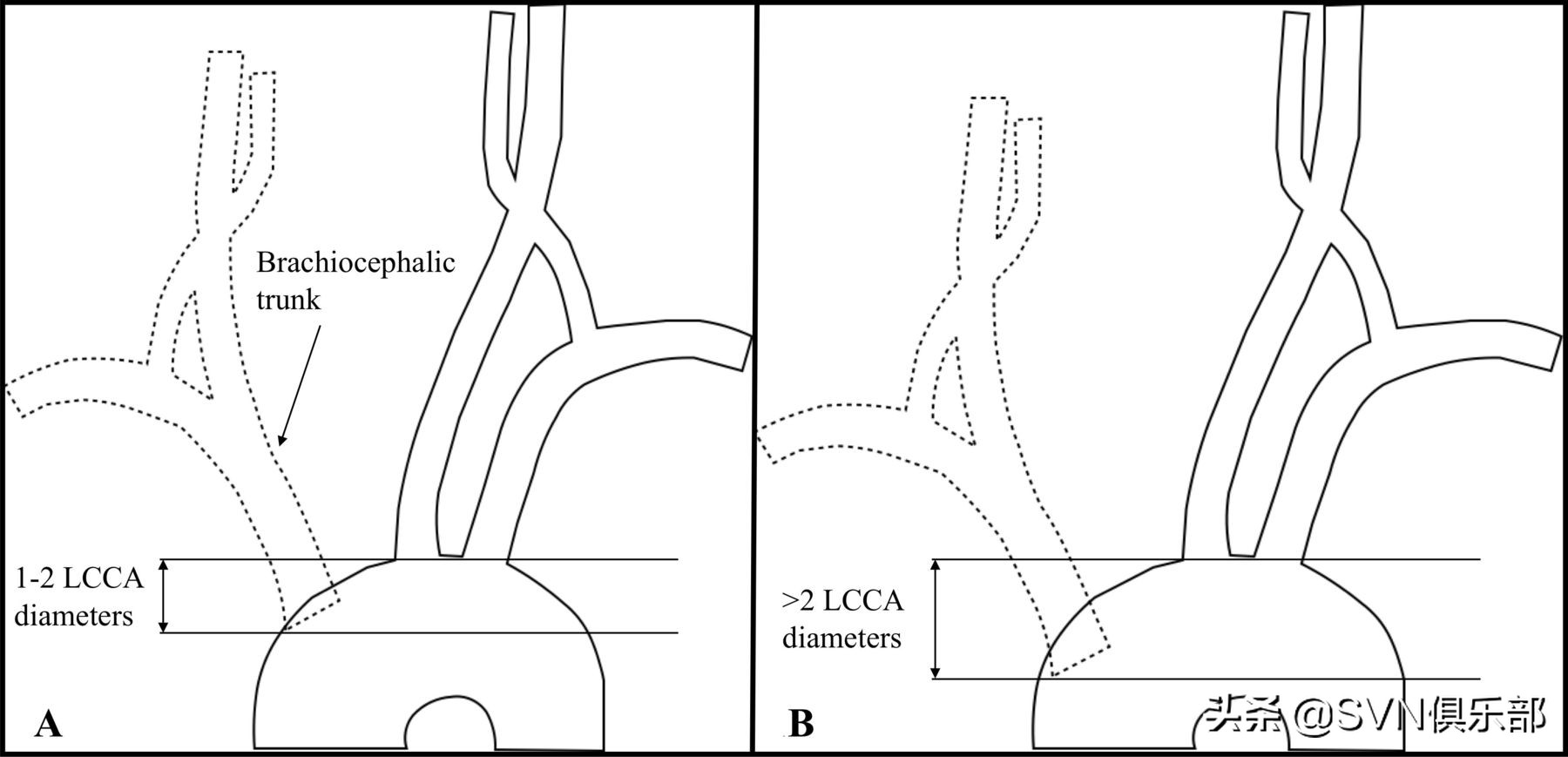
Figure 1. Graphic representation of a type II aortic arch (A) and a type III aortic arch (B). These anatomical variations of the arch are defined by the vertical distance of the brachiocephalic trunk origin and the top of the arch. Specifically, in a type II aortic arch, the distance is 1–2 diameters of the left common carotid artery (LCCA), whereas in a type III arch the distance is >2 LCCA diameters.
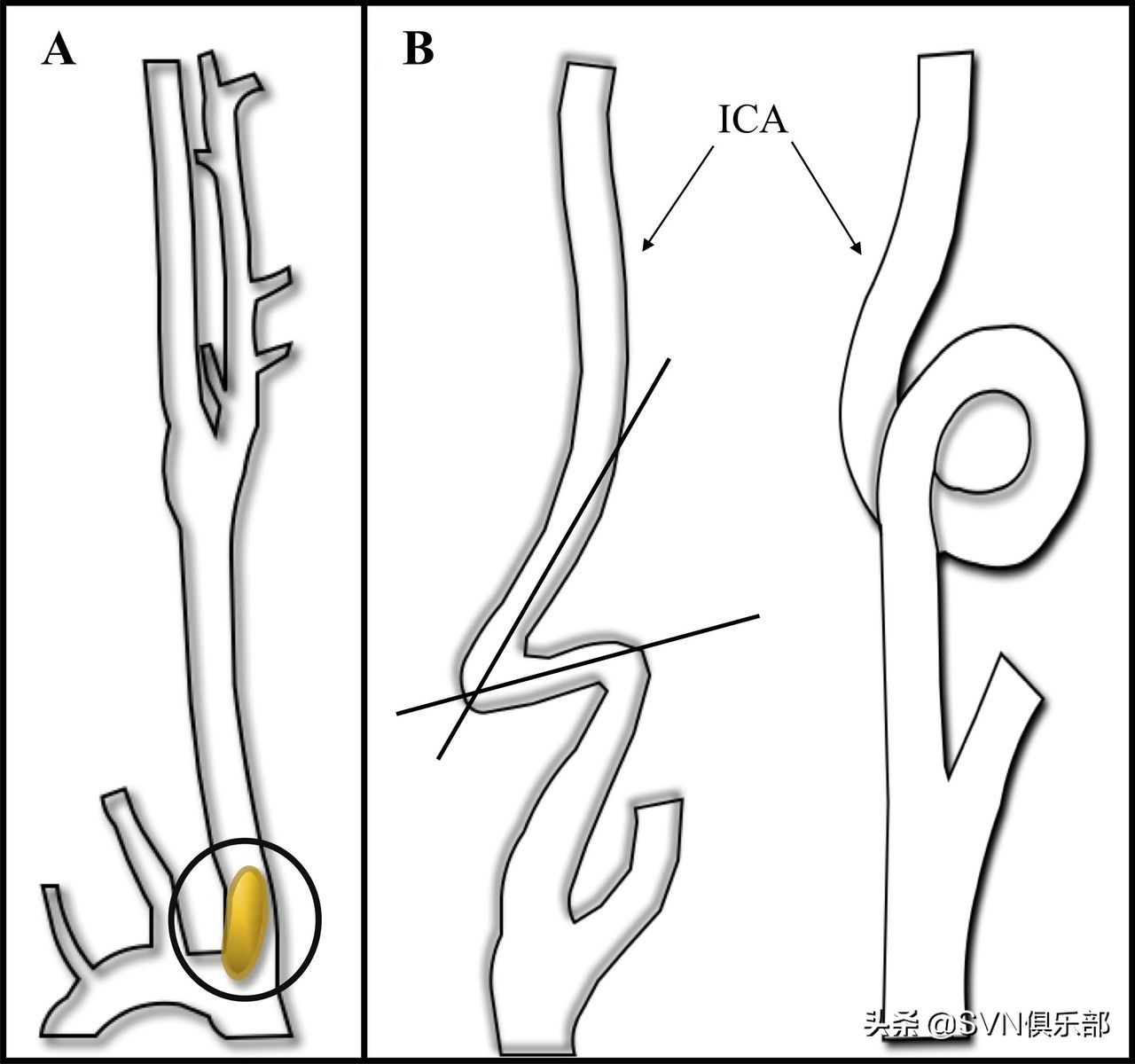
Figure 2. Carotid ostium stenosis (A) is usually induced by progressive atherosclerosis and/or the intramural build-up of a plaque (black circle). Kinking and coiling of the internal carotid artery (ICA) (B, left and right images, respectively) are among the diverse anomalies of this vessel. Kinking is seen most frequently among elderly people, men in particular, whereas coiling is more frequent among women. When these forms are acquired, they are associated with ageing, hypertension and the usual cardiovascular risk factors.
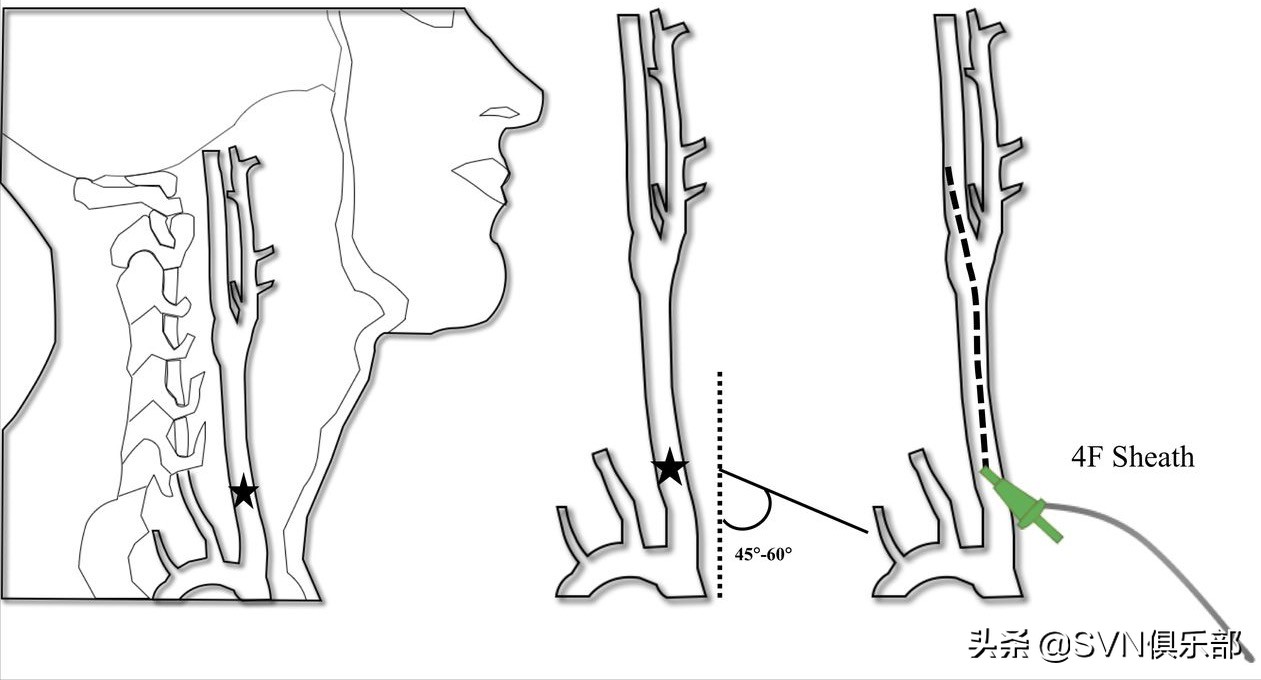
Figure 3. Direct percutaneous carotid puncture can be performed under conscious sedation or general anaesthesia with the head turned to the contralateral side by 10°–15°. The puncture site on the CCA can be assessed by palpation between the index and the middle finger or with the aid of ultrasound. Ideally, CCA puncture should be 2–3 cm above the superior edge of the clavicle, which is approximately at the C5–C6 level (black star). The skin is punctured, and a needle is inserted at a 45°–60° angle. This part of the procedure can also be performed under roadmap control using a 4F access sheath. CCA, common carotid artery.
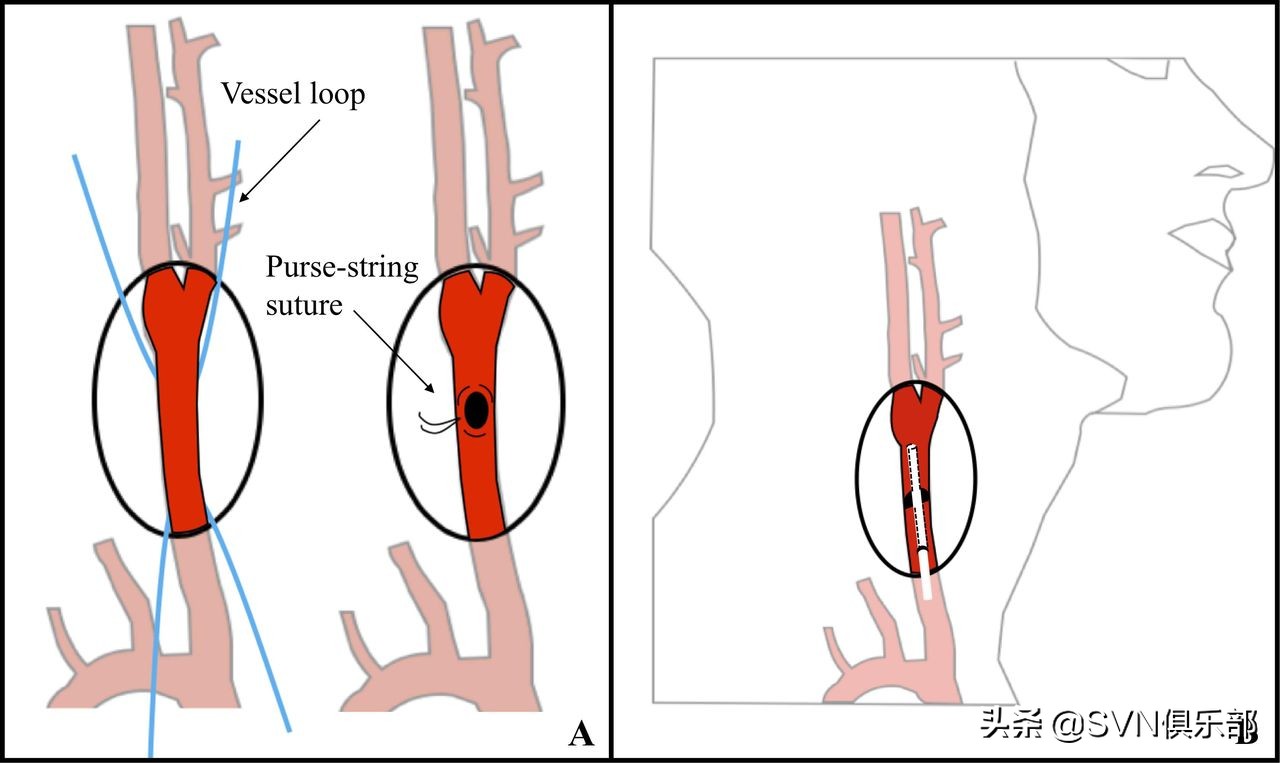
Figure 4. When surgical cut-down technique is chosen to gain direct access to the carotid artery, the common carotid artery is isolated proximally and distally to the chosen puncture site and the vessel loops are placed around it (A). The needle is then advanced with a flat angle into the vessel under visual control and a purse-string suture is placed at the puncture site (A). The remaining steps recapitulate those of the percutaneous puncture of the carotid artery (B).
SVN编辑部(中国)
官方网站:www.svn-csajournal.org (or svn.bmj.com)
微信公众号:SVN俱乐部(SVN_Editorial_Office)
Email:csa.svn@chinastroke.net
地址:首都医科大学附属北京天坛医院国家神经系统疾病临床医学研究中心504室
Tel:010-59975024
SVN,期待您的支持与关注!
版权声明 ©
本头条号对其刊载的所有内容,包括文字、图片、音视频资料以及版式设计等享有版权,未经本头条号授权同意,其他任何机构不得以任何形式侵犯本头条号作品著作权,包括但不限于:擅自复制、链接、非法使用或转载,或以任何方式建立作品镜像。转载请联系编辑部邮箱。如获转载授权,发布请注明出处,不得擅自修改文章内容。