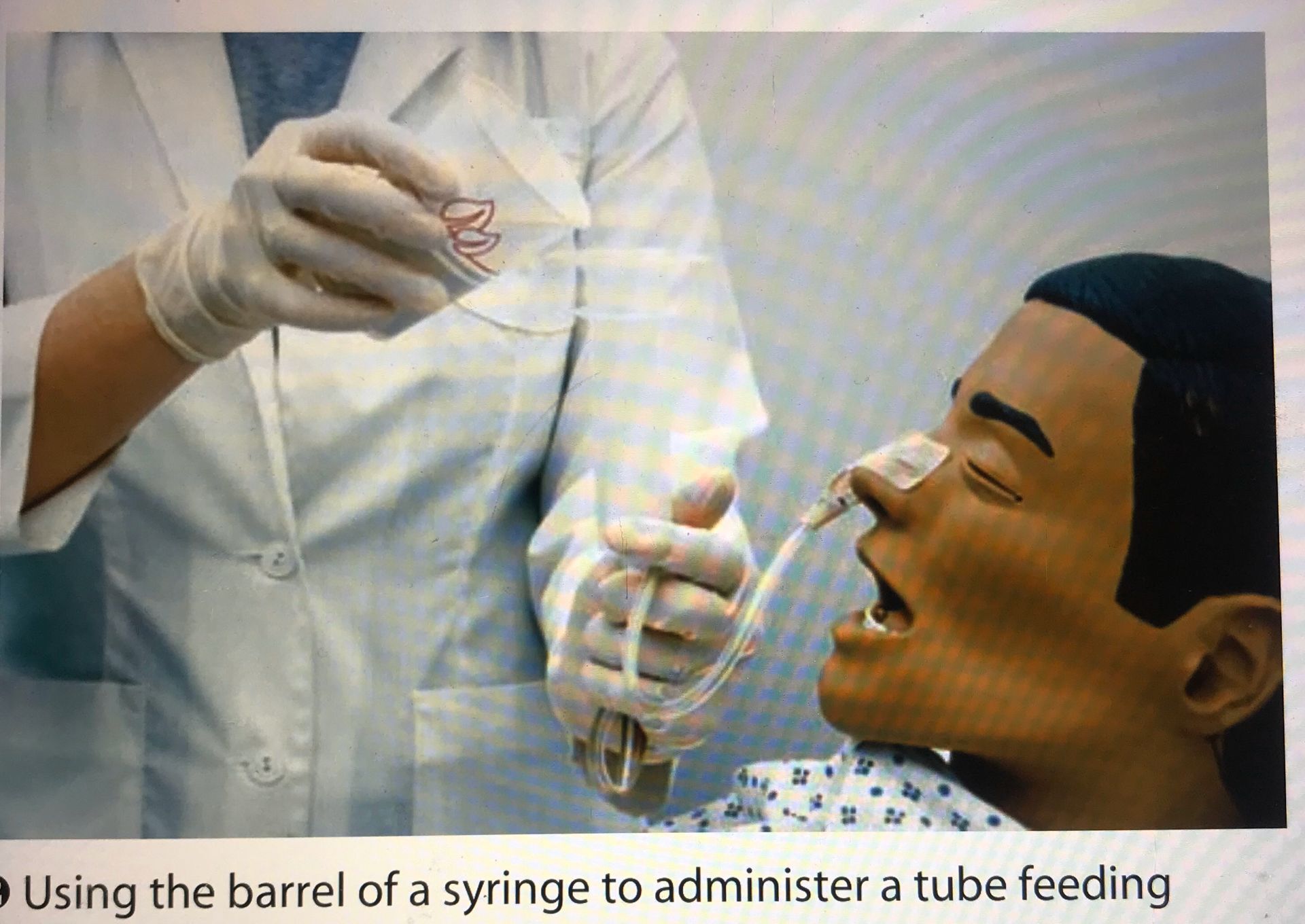
Administering medications via a nasogastric, gastrostomy, or jejunostomy tube
鼻饲管,胃造瘘管,空肠造瘘管给药
1. Check the medications 核对药物
1.1 Check the primary health care provider’s prescription. 核对医嘱。
1.2 Always check with pharmacist to see if the client’s medications come in a liquid form because these are less likely to cause tube obstruction.
总是需要和药剂师核对,看其药物是否能以液体形式存在,因为这样会降低管路堵塞的风险。
1.3 Ensure that the medication prescribed can be crushed or is a capsule that can be opened, use elixir forms of medications if available.
确保处方药能被碾碎或者装在可以打开的胶囊里,如果有的话也可使用酏剂。
1.4 If the medications do not come in liquid form, check to see if they may be crushed. (Note that enteric-coated, sustained action, buccal and sublingual medications should never be crushed.)
如果药物不是液态,需要去核对该药物是否能被碾碎。 (备注:肠溶片,缓释片,口腔用药,和舌下含服用药是绝对不可碾碎的。)
2 Prepare the medication for administration. 准备给药。
2.1 Crush a tablet into a find power and dissolve crushed medication in at least 30 ml of warm water. (Note: Cold liquids can cause client discomfort.)
将药物碾碎成粉末状后溶解到至少30毫升的温水中 (注意:冷液体会引起不适感. )
2.2 Only using water for mixing and flushing.
只能用水溶解药物和冲洗导管。
2.3 Some medications are mixed with other fluids, such as normal saline, in order to maximize dissolution. Nurses are encouraged to consult with a pharmacist.
有一部分的药物需要被其他液体溶解,比如生理盐水,是为了最大程度上的溶解药物。鼓励提倡护士们向药剂师咨询。
2.4 Read medication labels carefully before opening a capsule. Open capsules and mix the contents with water only with the pharmacist’s advice.
打开胶囊之前需要仔细阅读药品说明书。 打开胶囊和将其内容物溶于水中时必须遵循药剂师的指令。
2.5 Do not administer the whole or undissolved medications because they will clog the tube。
千万不要将整片或者未被溶解的药物直接注入管内,否则会导致管路阻塞。
3 Verify the client’s identify and explain the procedure to the client.
核对身份并向其解释操作流程。
4 Preparation before administration of medication 给药前准备
4.1 Don gloves; assess tube placement。戴手套;检查管路位置
4.2 Aspire all the stomach contents and measure the residual volume. Check organization policy if residual volume is greater than 100ml.
回抽胃内残余量并计量。如果胃内残余容量多于100毫升时需要核对医疗机构的规范要求准测。
4.3 Check for bowel sounds. 查肠鸣音。
5 When administering the medication(s) 给药中
5.1 Remove the plunger from the syringe and connect the syringe to a pinched or kinked tube.
取下注射器活塞,并将注射器与被打折的管路相连接
5.2 Pinching or kinking the tube prevents excess air from entering the stomach and causing distension.
捏住或者弯折管路可防止过量的空气进入胃内引起腹胀。
5.3 Depending on agency policy, put 15 to 30ml (5 to 10ml for children) of water into the syringe barrel to flush the tube before administering the first medication.
根据所在医疗机构的操作规范要求,第一次给药前,需要用15-30毫升的水 (儿童5-10毫升)注入注射器内来冲洗导管。
5.4 Raise or lower the barrel of the syringe to adjust the flow as needed.
根据需要抬高或者降低注射器来调整流速。
5.5 Pinch or clamp the tubing before all the water is instilled to avoid excess air entering the stomach.
在注入所有的水之前,捏住或夹闭导管,以免过多的空气进入胃内。
5.6 Pour liquid or dissolved medication into the syringe barrel and allow to flow by gravity into enteral tube.
将液体或者已经溶解好的药物倒入注射器中。药物会通过重力作用注入管内。
5.7 If you are giving several medications, administer each one separately and flush with at least 15 to 30ml (5 to 10ml) of water between each medication.
如果注入多种药物时,必须单独给药,给药间隔中需至少用15到30毫升(儿童5到10毫升)水冲洗导管。
5.8 When you finish administering all medications, flush with 15 to 30ml of warm water to clear the tube.
全部给药完,用15-30毫升的温水冲洗导管。
6. Document the administration of the medication and any other appropriate information.
记录给药和其他相关信息。
Ref:
Berman, A., Snuder, S.J., Levent-Jones, T., Dwyer, T., Hales, M., Harvey, N., Luxford, Y., Moxham, L., Park, B., Reid-Searl, K., & Stanley, D. 2014, Kozier and ERB’s Fundamentals of Nursing, second Australian Edition, Person Australian, NSW.
Silvestri, L.A. 2017, Saunders Comprehensive Review for the NCLEX-RN Examination, 7th edn, Elsevier, Missouri.