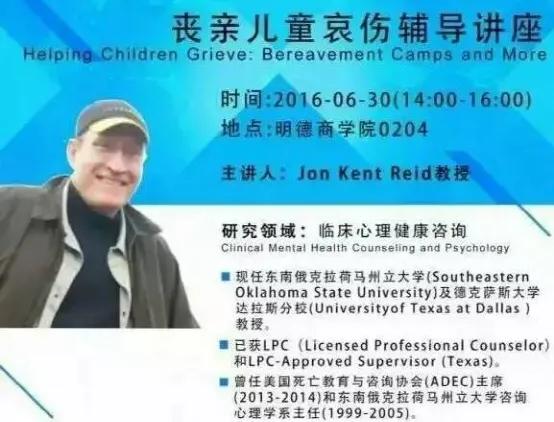
整理:徐瑞萍。
什么是哀伤?
哀伤是对丧失的反应。丧失的对象可能是:所爱的人的离世,朋友的离开,重要物品的遗失或者宠物的丧失。任何失去、结束或者变化都可能引发哀伤反应。
孩子就是孩子。Erik Erikson说,不要从孩子的外在表现来错误的判断孩子。咨询的过程中问及孩子的梦,不是为了分析,而是为了打开话题。
哀伤辅导的四个基本阶段:
接纳丧失的现实: 问孩子有没有参加葬礼,让他们重述故事。
Ask the child if they attended the funeral:“tell and re-tell their story”
经验和处理丧失引发的精神痛苦。
适应丧亲后的生活:内在适应(identity, self-image);外在适应(Practical/logistics);心理适应(Deity, after-life, religiosity)
重新安放逝去的人并找到纪念这个人的方式;发展新的角色、身份和关系。
葬礼告别仪式,家长可以邀请,但不强迫,提前回答孩子的一些问题。
孩子会担心亲人的离世与自己有关,他们会问“某某是因为我去世了吗?”比如说,孩子对母亲说了“i hate you”导致了母亲去世。可以调整他的认知,问:你对其他人说过同样的话吗?
特殊的技巧或活动:
1.Balloon Lift as a letting-go or saying good-bye activity.
2.Drawing: books with structured drawing activities书的封面和样
4.Show and Tell with objects which explain about the deceased and the relationship
3. 儿童故事
2. 沙盘里摆放玩具
Draw something you worry about.
Draw something that makes you mad.
Draw yourself and write words that describe yourself.
Draw your favorite memory of your deceased father, mother, sister...
Draw your family.
Draw yourself before your parent died; draw yourself now. (Worden)
如果孩子不愿意画画,可以说我不是你的美术老师,我不会给你打分;如果还是不愿意,可以问:我们可不可以一起画?边画边聊。
赞赏祖父母的辛苦和努力付出
让孩子有一个信念“父母不在身边,但是爱我的。“;
提升孩子的自尊和自我价值感。
允许和帮助孩子表达思念
现场提问:与留守儿童工作注意事项?
With each of these activities, allow time for questions to be answered and emotions, which may arise, to be processed. (Don’t end your talk with them while they are crying)
与孩子工作的总体原则:
3. 发现生活中的愉快和美好
We don’t have to resolve all of our losses before working with bereaved children. Some losses may never be resolved, but we need to be aware of them.
喜欢孩子
处理自己关于哀伤的议题
与孩子在一起工作的三个条件:
喜欢孩子
处理自己关于哀伤的议题
We don’t have to resolve all of our losses before working with bereaved children. Some losses may never be resolved, but we need to be aware of them.
3. 发现生活中的愉快和美好
与孩子工作的总体原则:
With each of these activities, allow time for questions to be answered and emotions, which may arise, to be processed. (Don’t end your talk with them while they are crying)
现场提问:与留守儿童工作注意事项?
赞赏祖父母的辛苦和努力付出
让孩子有一个信念“父母不在身边,但是爱我的。“;
提升孩子的自尊和自我价值感。
允许和帮助孩子表达思念
Jon K. Reid教授友善耐心、乐观开放。感恩他在震后为中国孩子们做的大量心理援助工作,感谢他的学术分享。