点击「神经介入在线」可快速关注
支
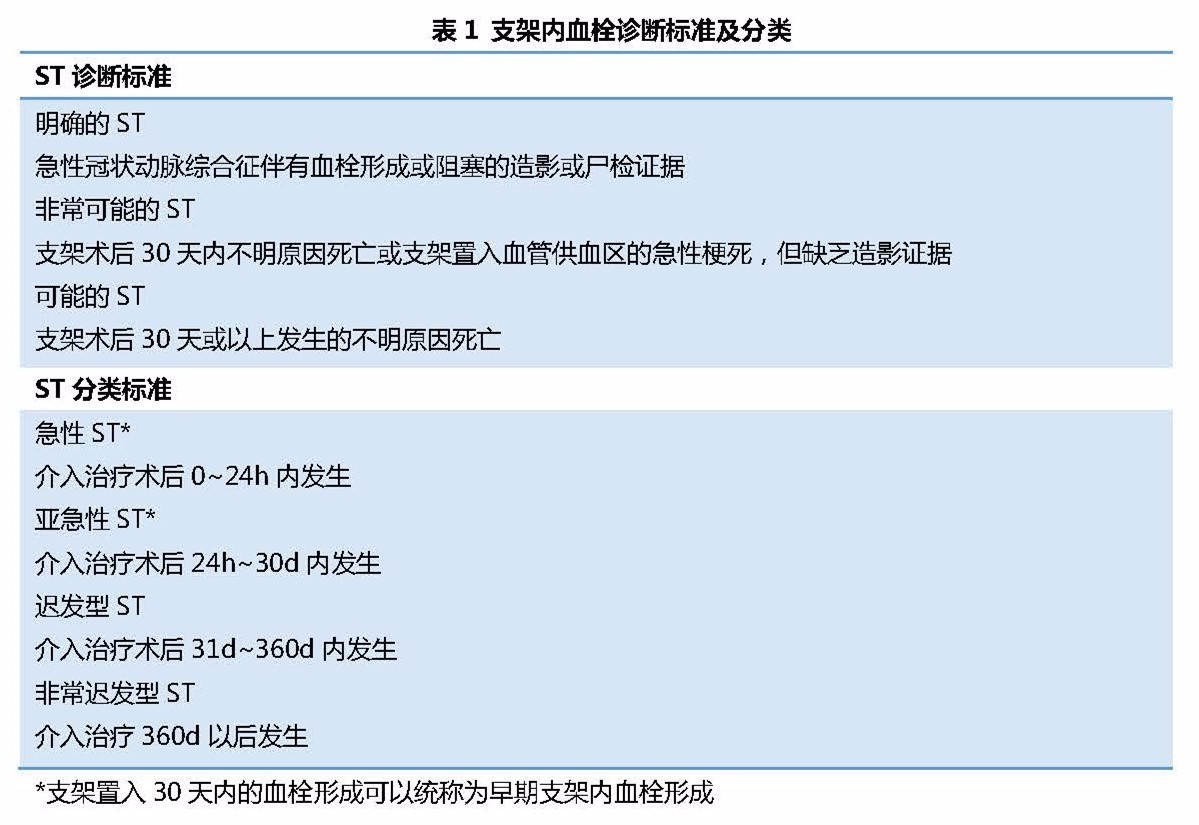
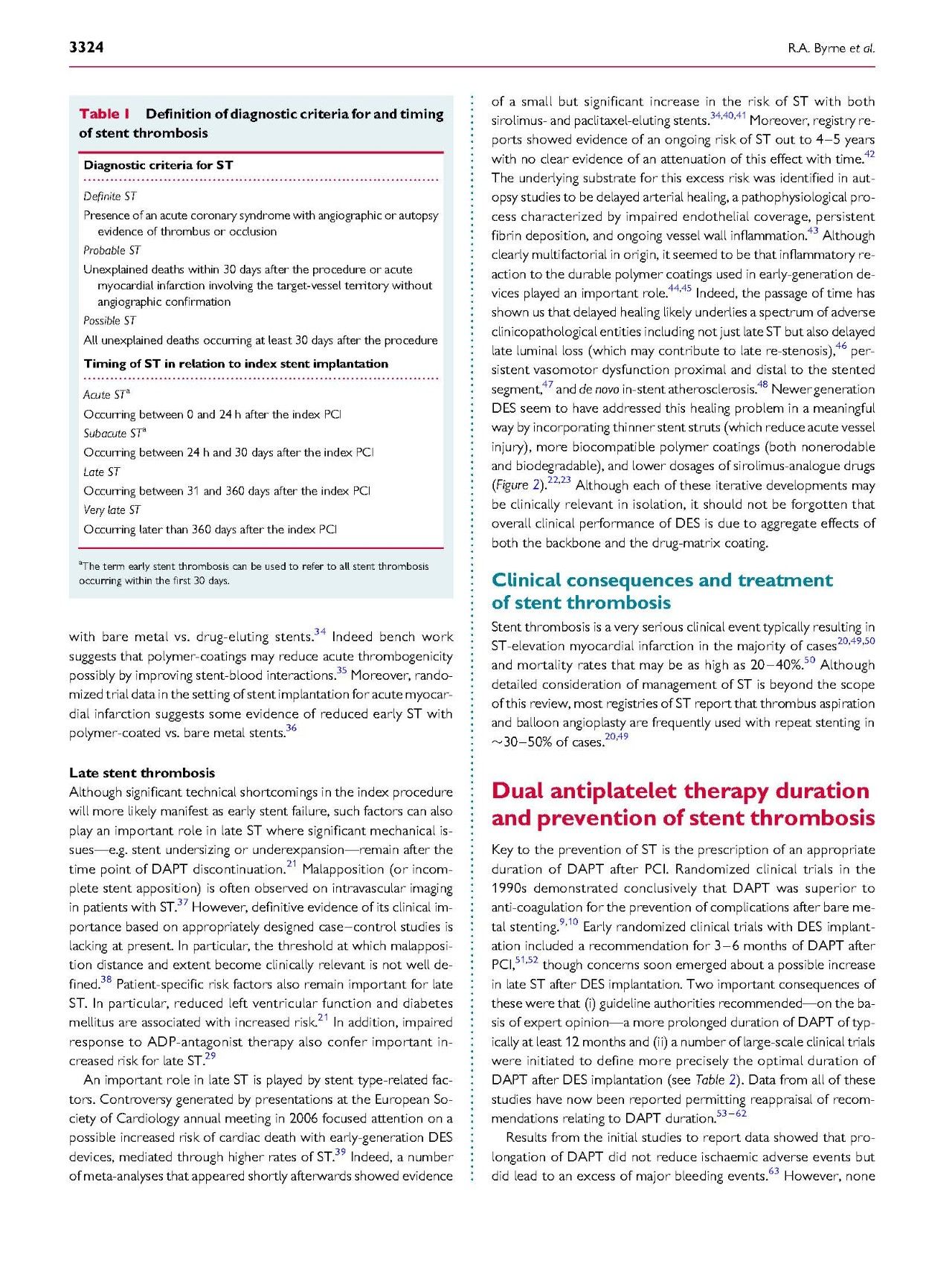
架内血栓(stent thrombosis,ST)是指造影或尸检发现的支架部位新近的血栓形成,病理上主要表现为血栓成分和炎性成分的混合物,包括血小板、纤维蛋白碎片、中性粒细胞、嗜酸性粒细胞[1]。2006年由一组专家组成的学术联合研究会[2]将ST分类为明确的、非常可能的、可能的,并且依据距离支架置入时间分为急性、亚急性、迟发型和非常迟发型(见表1)。在临床实践中,依据病理生理及危险因素的不同,可分为早期支架内血栓(术后30天内)和晚期支架内血栓(术后30天以后)形成,早期支架内血栓最常见,占50%~70%[3]。虽然近年来ST的发生率明显降低,大规模注册研究显示应用现代抗栓治疗及最新一代药物洗脱支架治疗,早期ST发生率<1%[4-6]。但是其危害仍不容小窥,对其预防及控制需要重视。
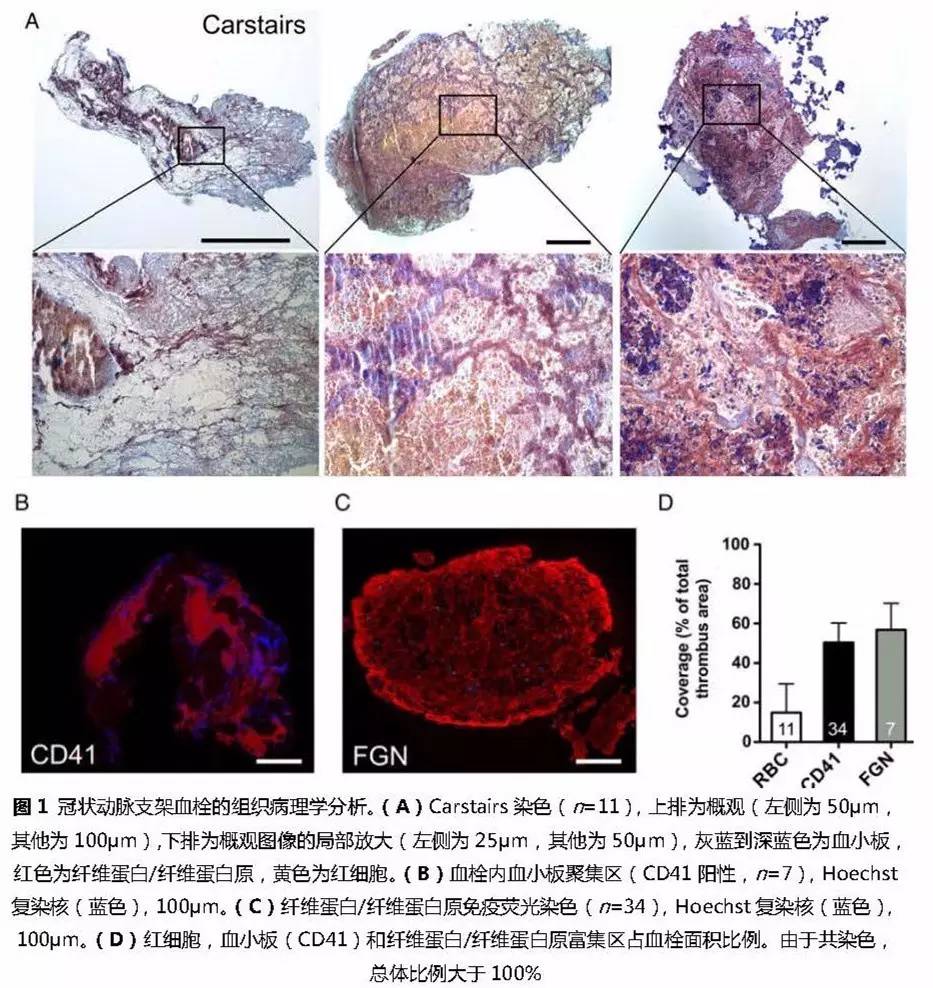
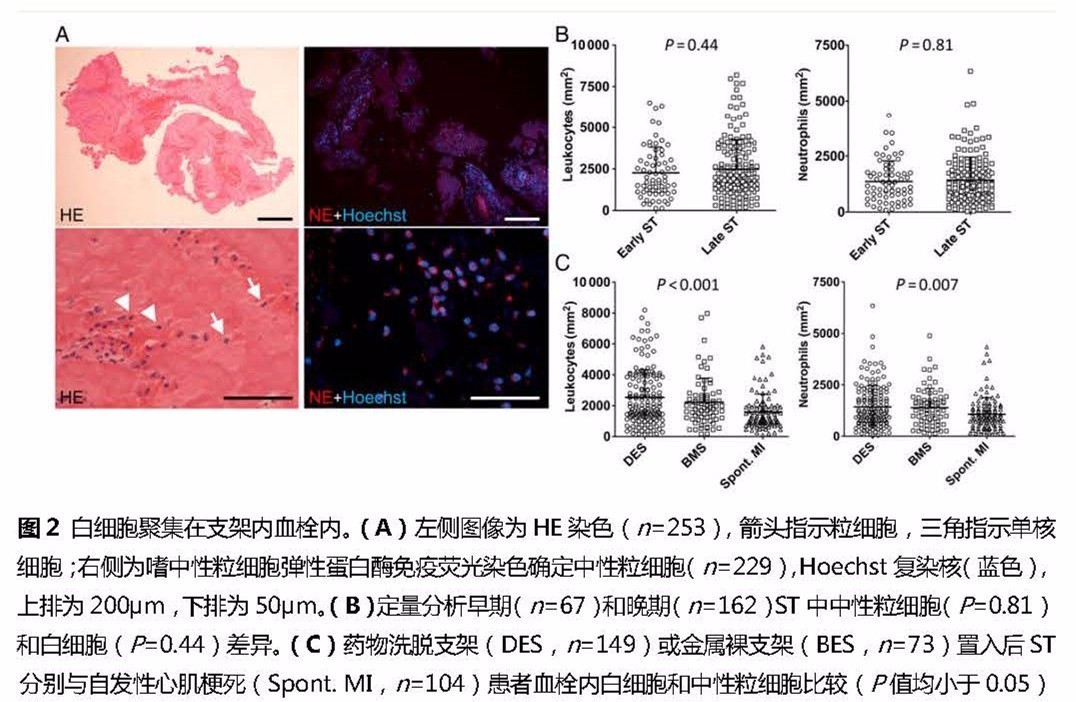
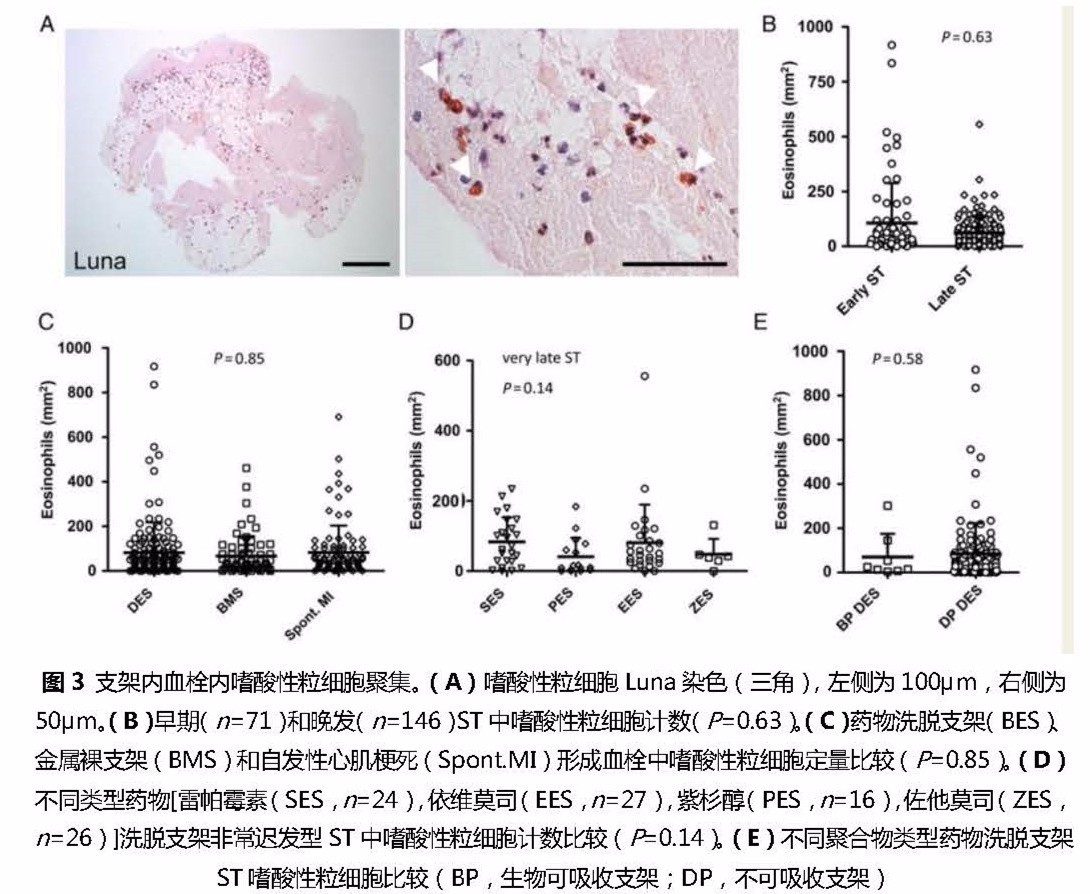
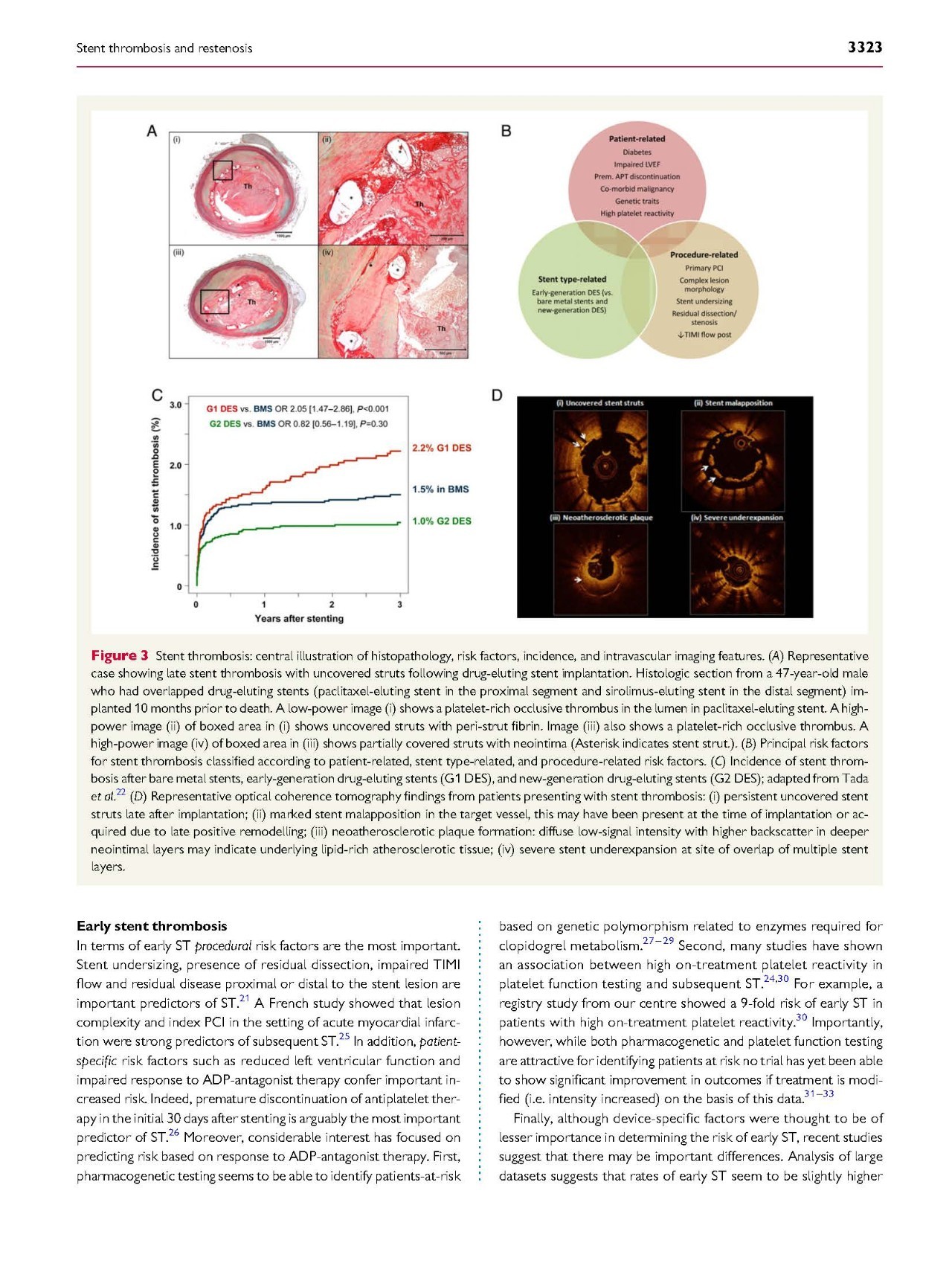
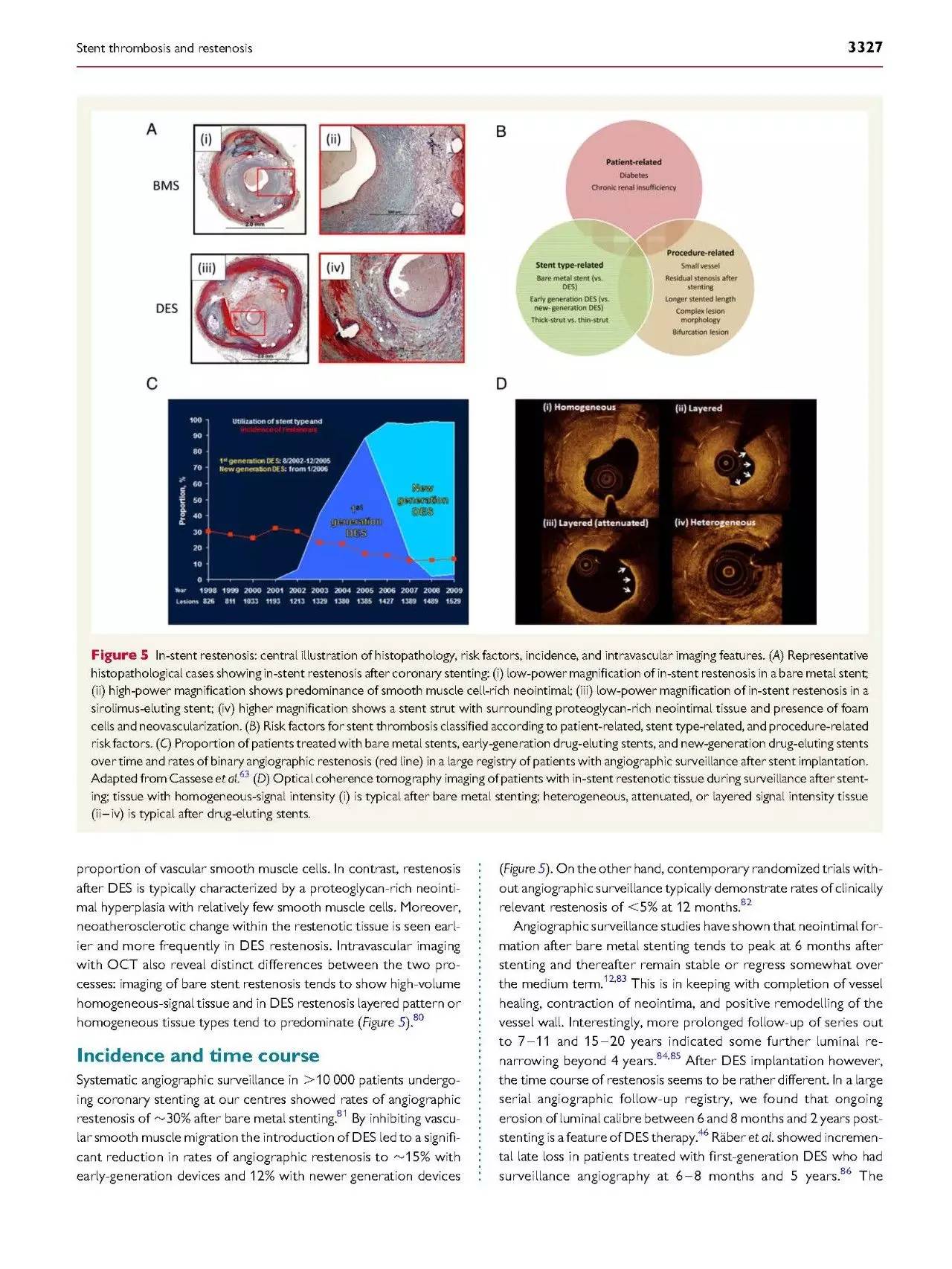
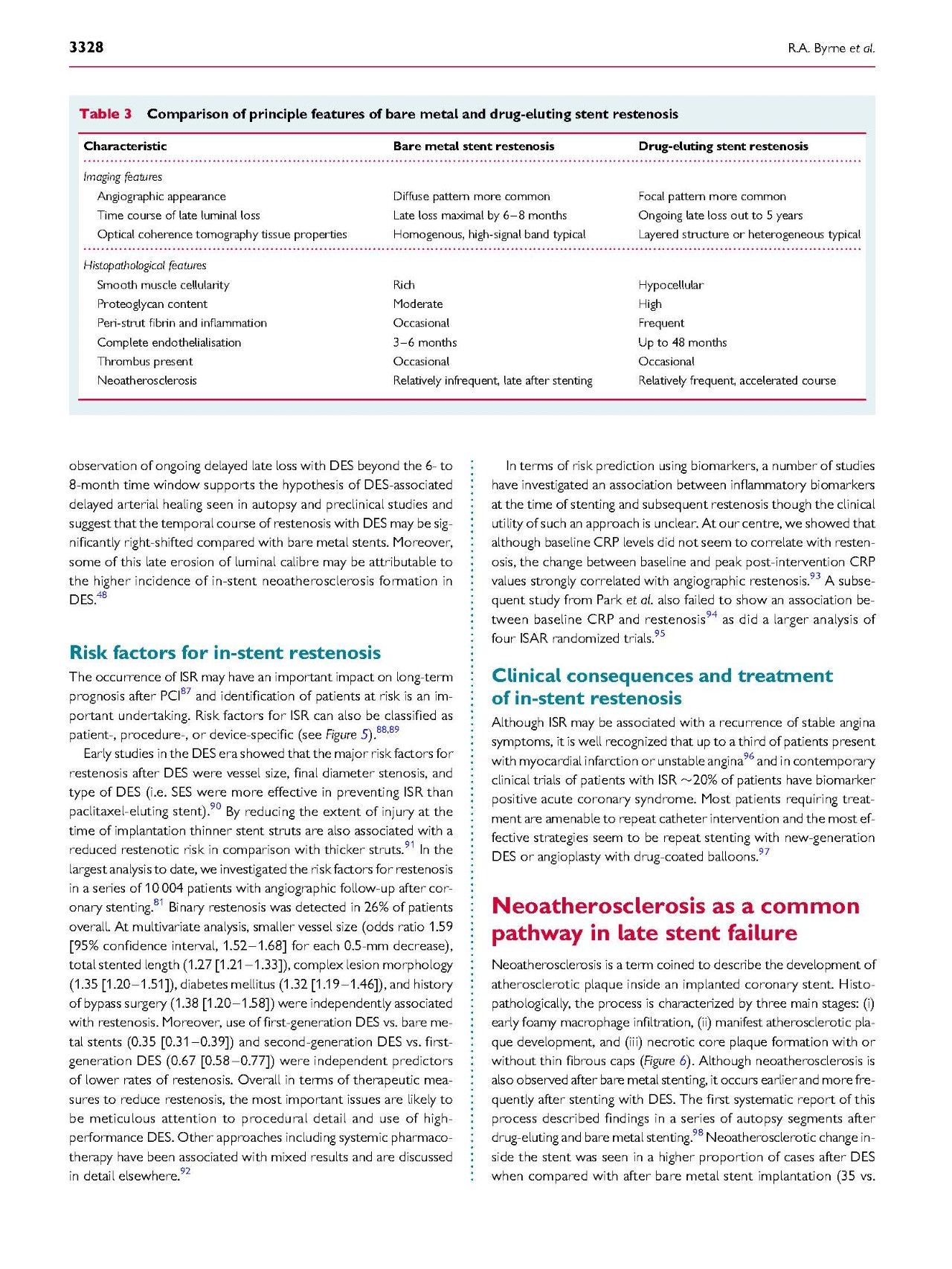
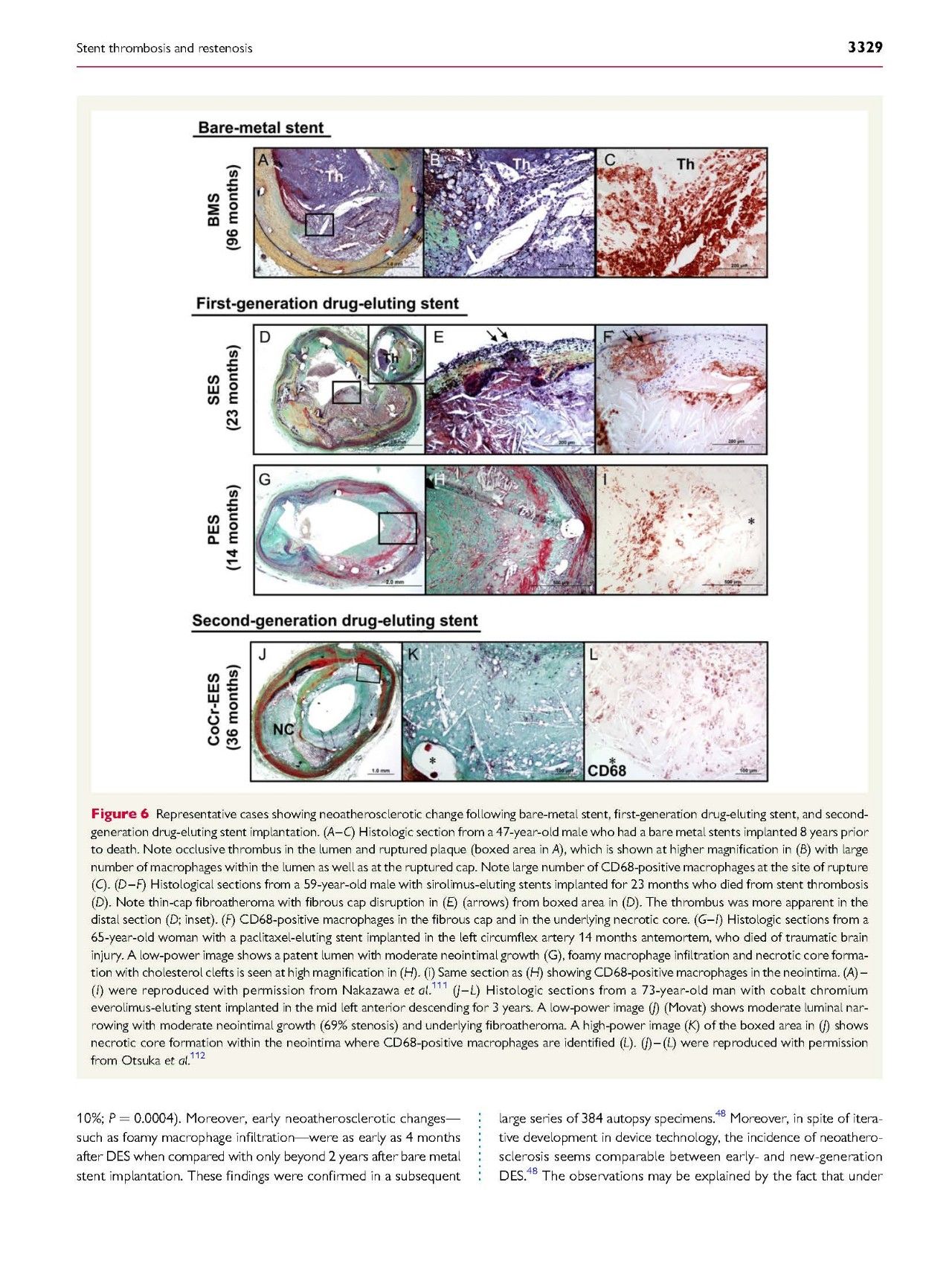
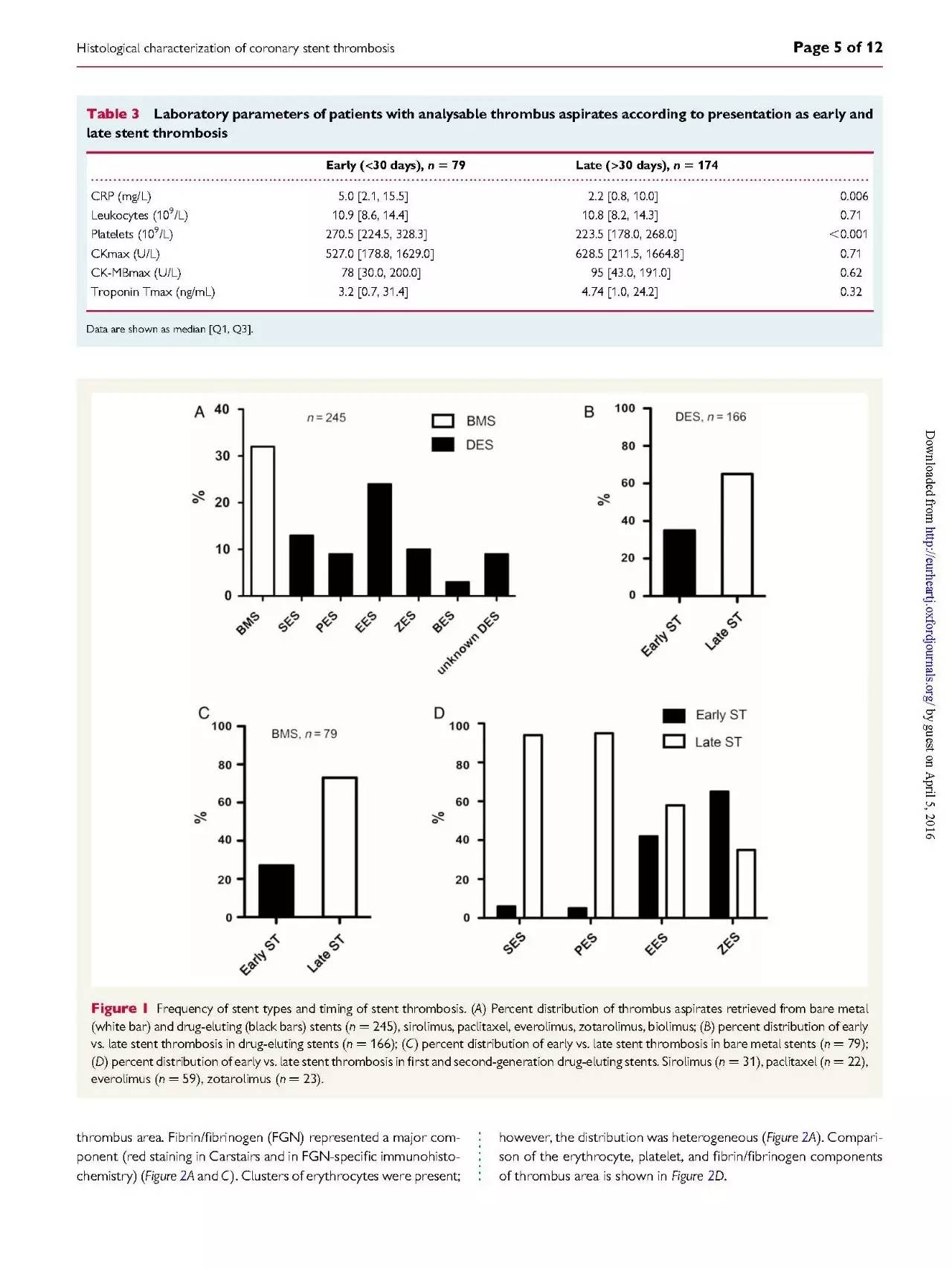
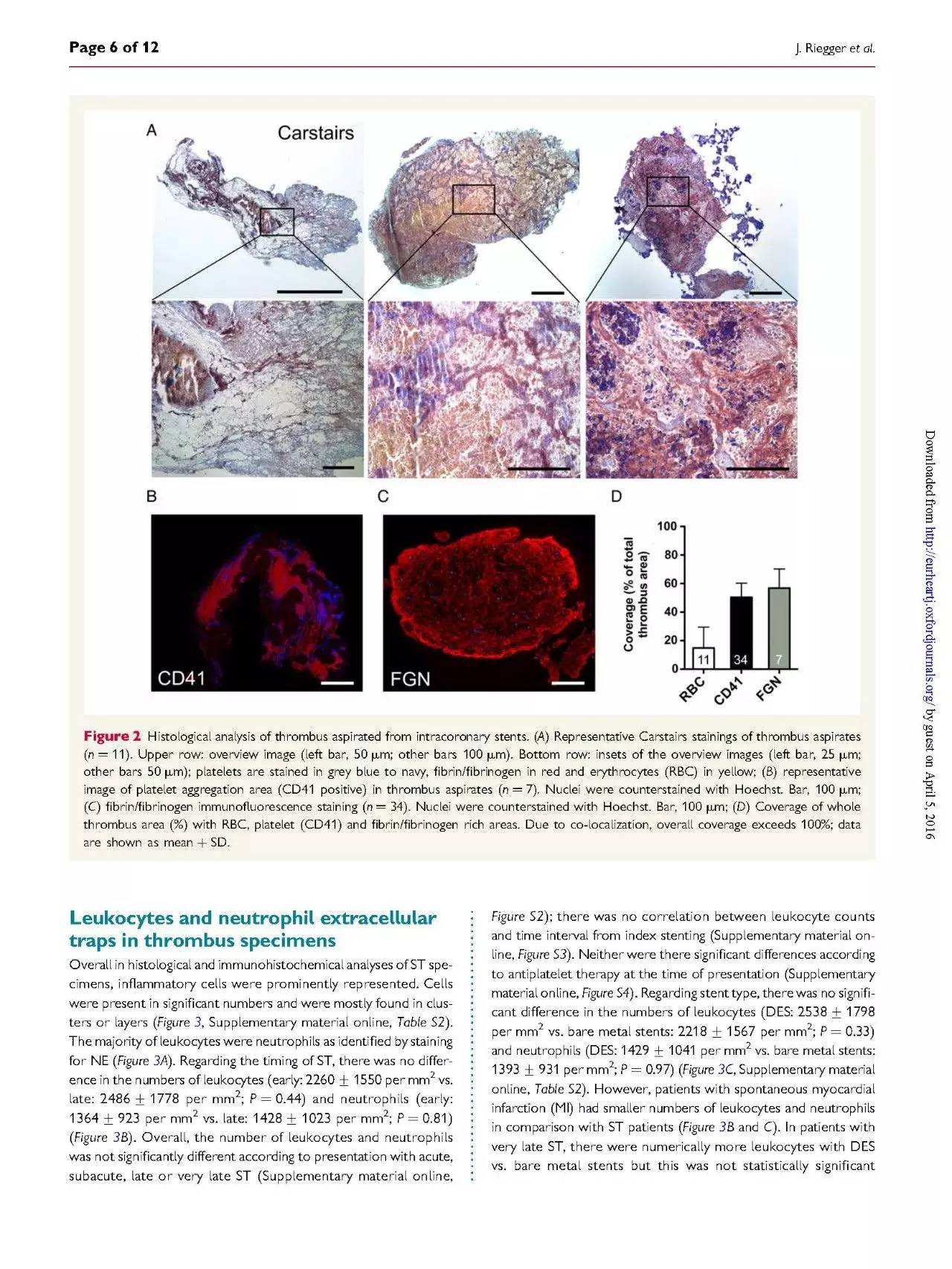
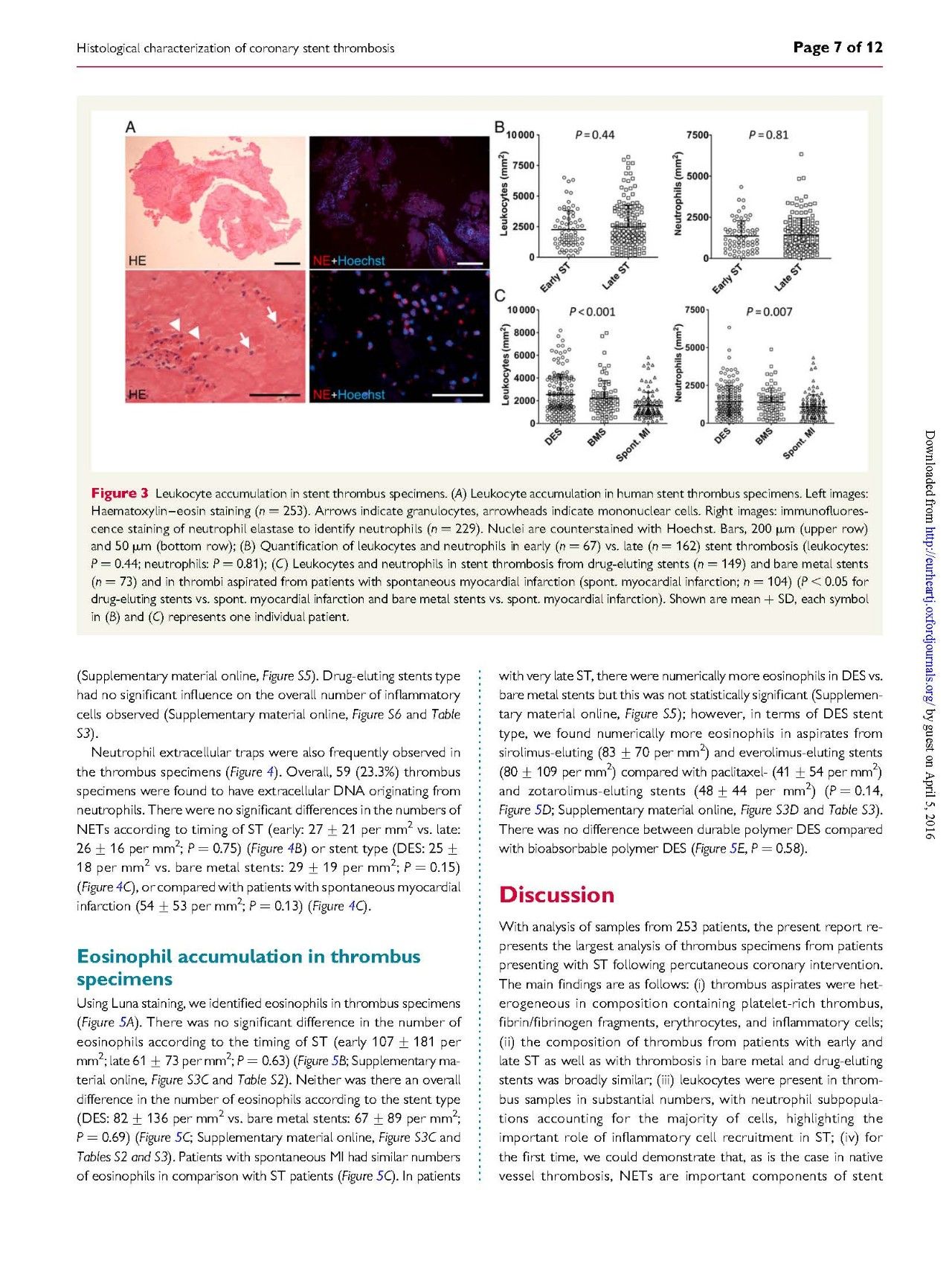
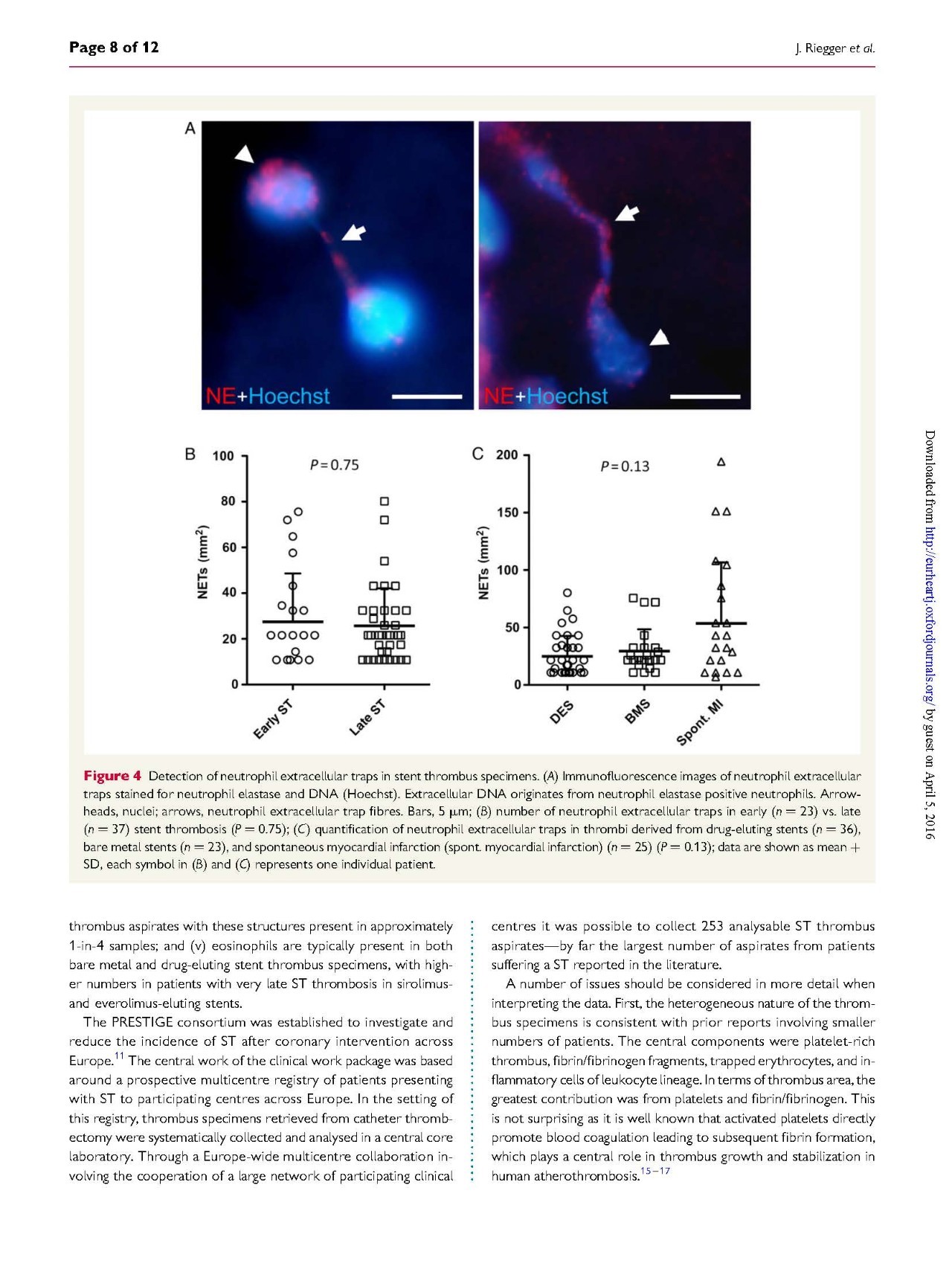
一、支架内血栓的病理(见图1至图3)
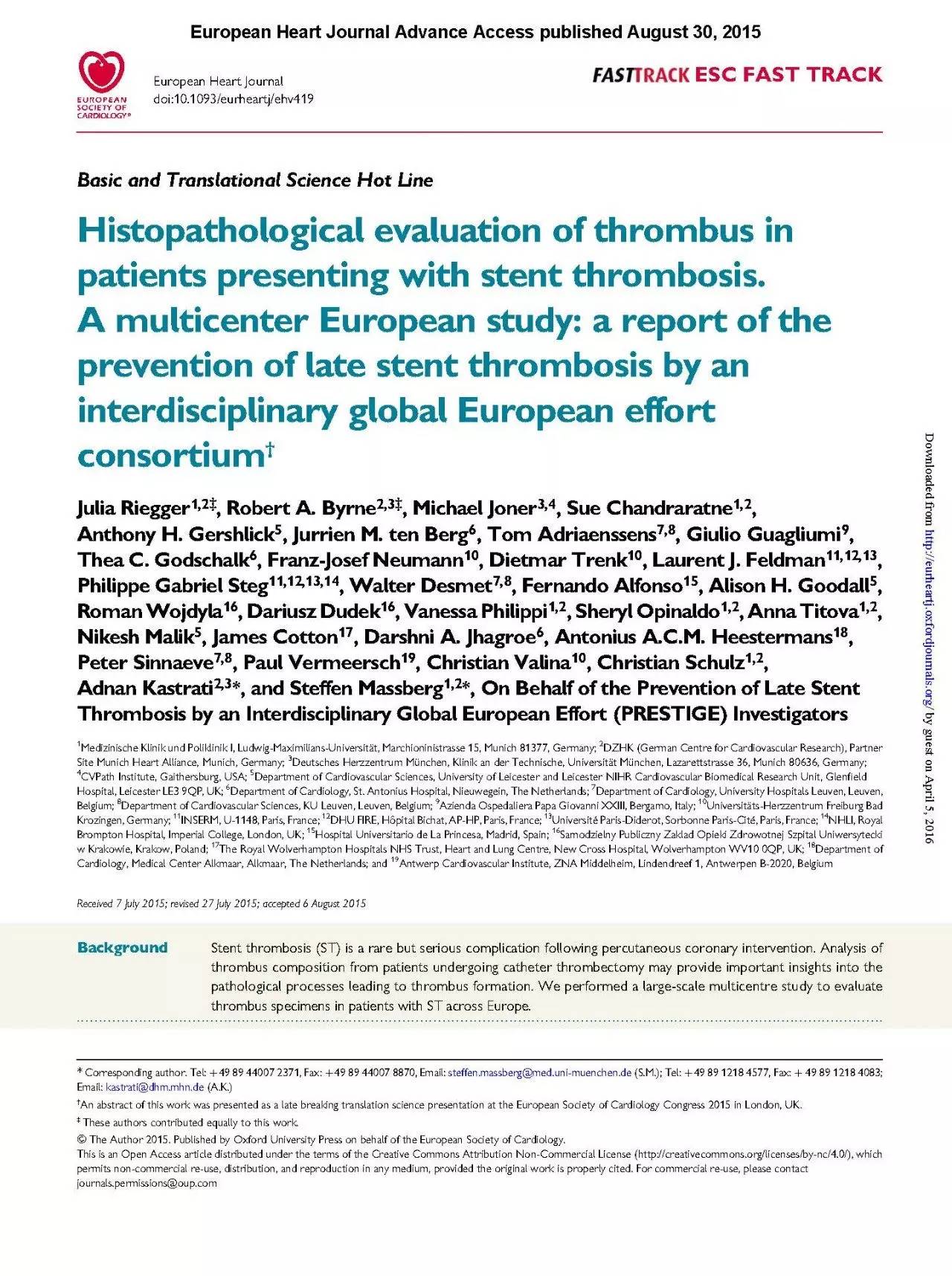
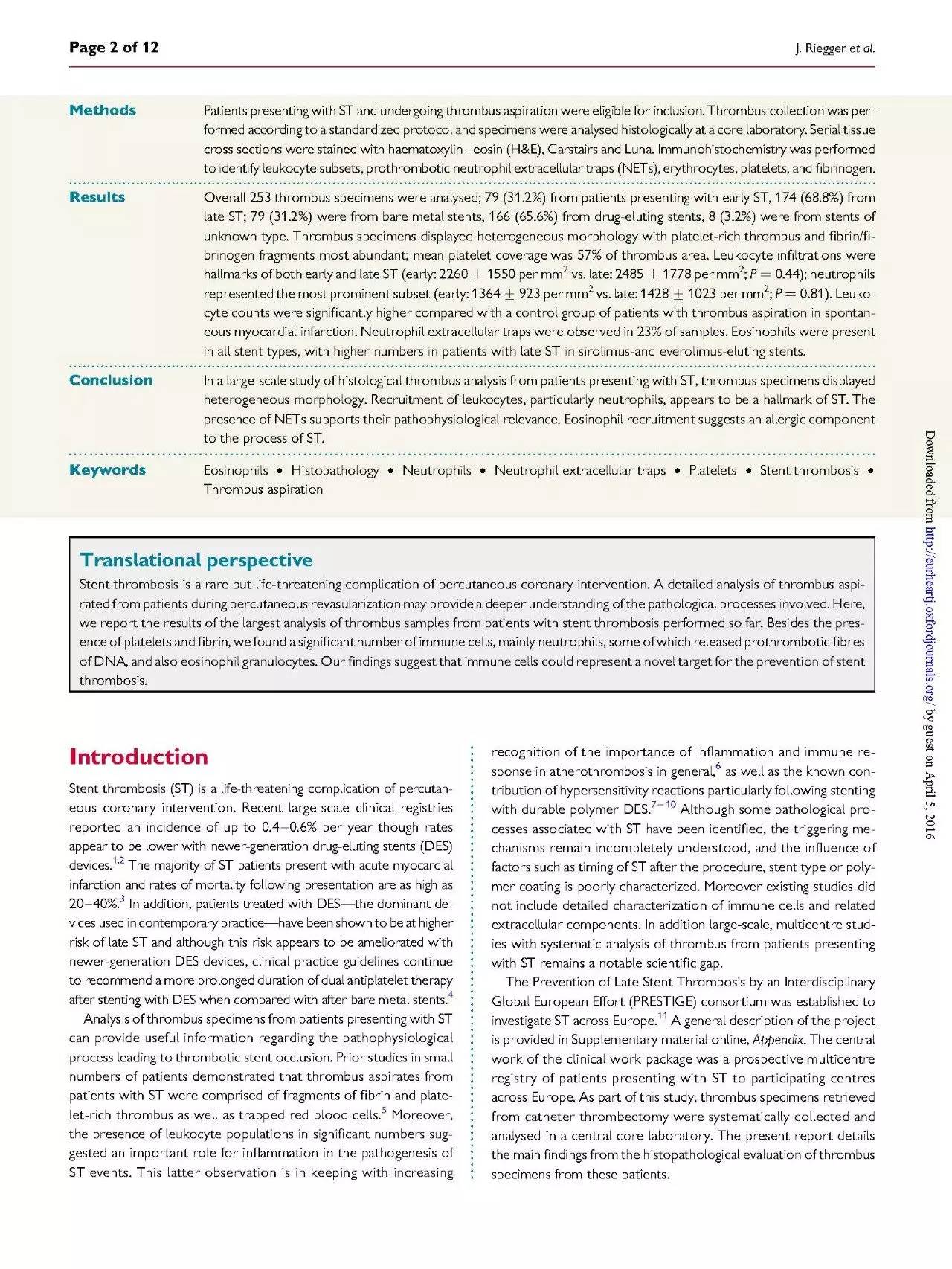
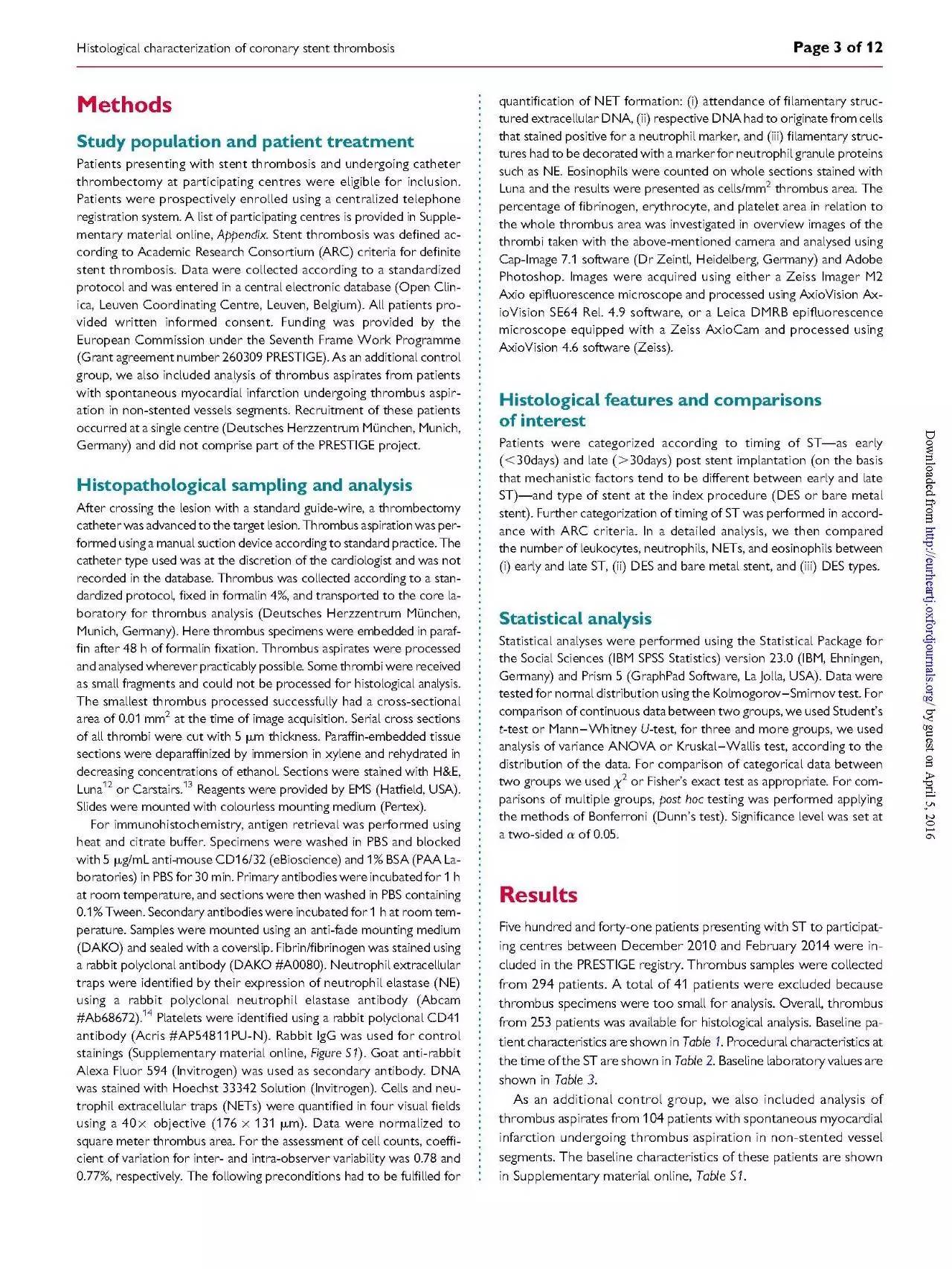
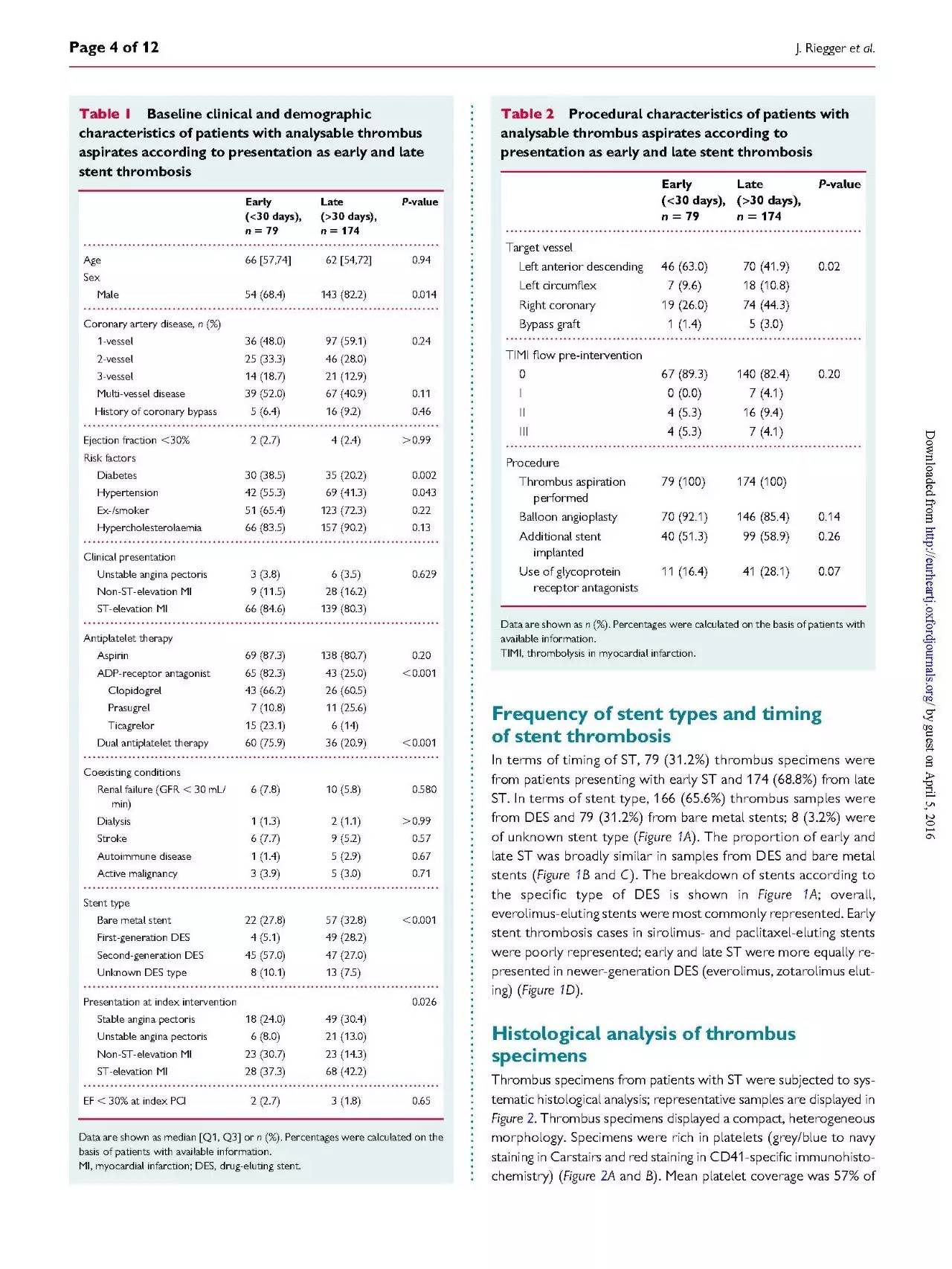
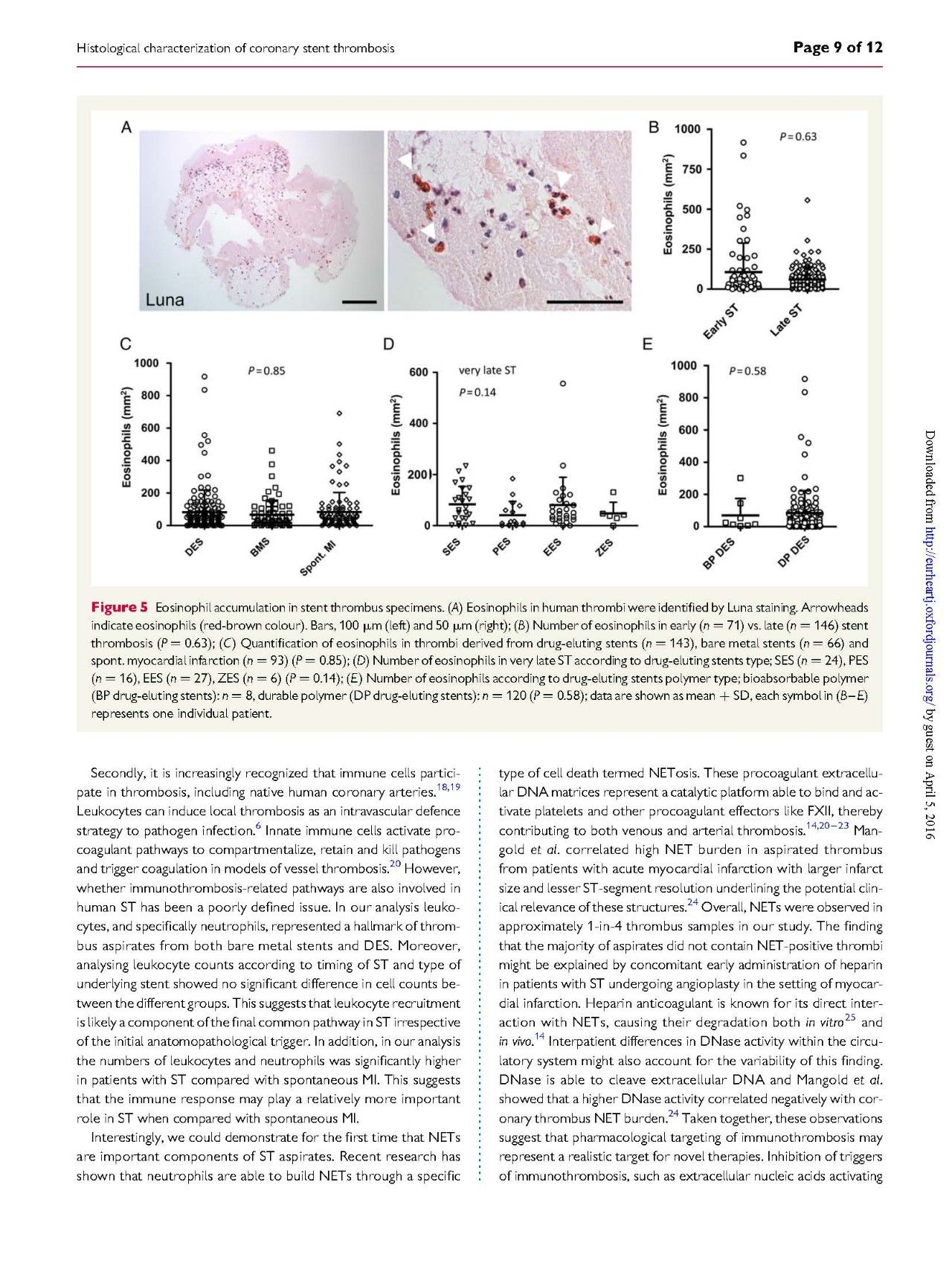
欧洲PRISTIGE组织者进行了一项支架内血栓的组织病理研究,共分析了253个支架内血栓样本,79例(31.2%)来自于早期ST,174例(68.8%)来自于晚发ST,79例(31.2%)为金属裸支架,166例(65.6%)为药物洗脱支架,8例支架类型不明(3.2%)。血栓形态多样,富含血小板和纤维蛋白碎片。平均血小板覆盖比例占血栓区域的57%,白细胞浸润在早期和晚期ST均很明显。其中,主要是中性粒细胞,ST患者栓子中白细胞计数明显高于自发性心肌梗死患者的栓子。23%的样本中观察到了中性粒细胞胞外陷阱现象。几乎所有支架类型都观察到了嗜酸性粒细胞,在使用雷帕霉素和依维莫司药物洗脱支架的晚发ST患者中嗜酸性粒细胞数量更高。
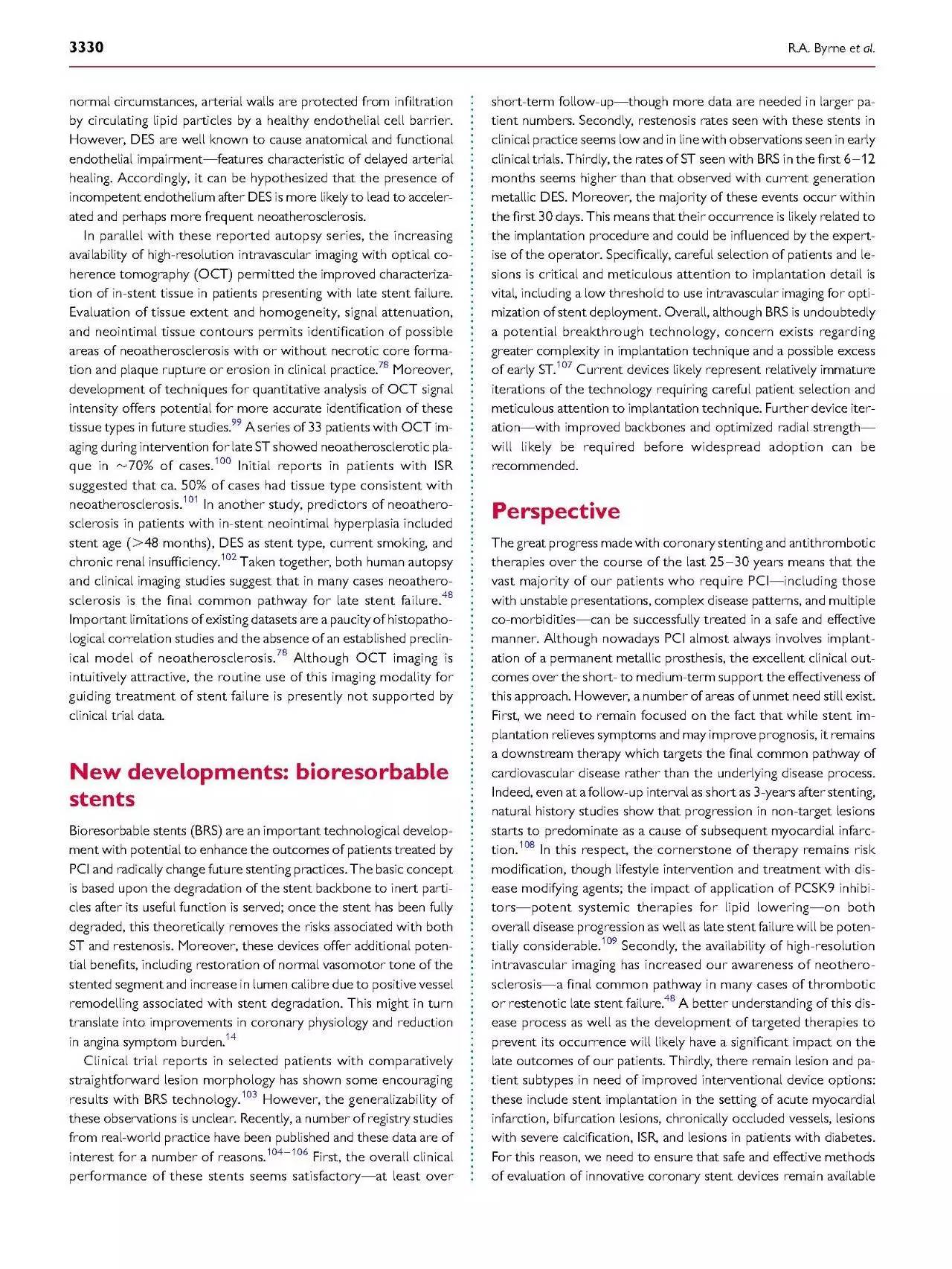
二、支架血栓的危险因素
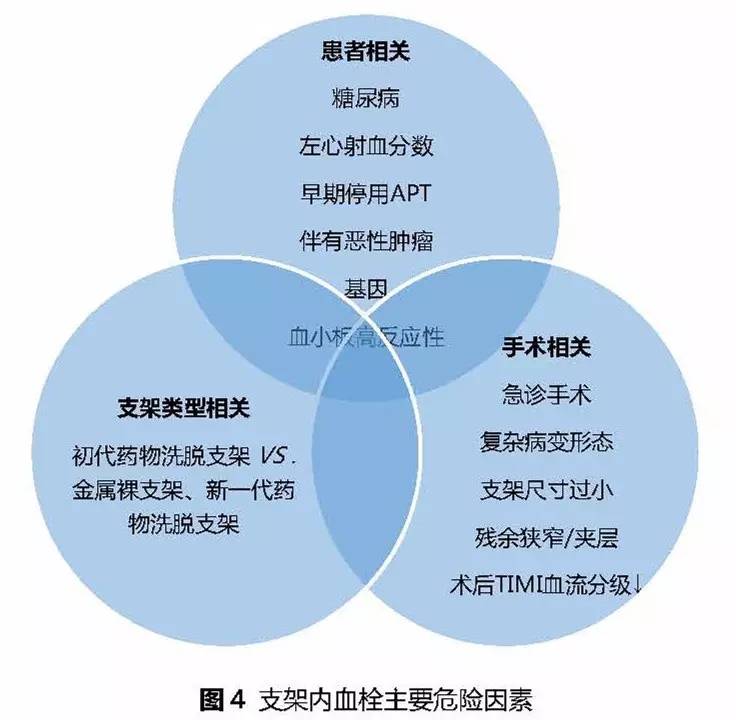
通常将危险因素分为患者、手术及设备相关(见图4)。
1.早期支架内血栓
在早期ST中,手术相关危险因素是最主要的,支架过小、残余狭窄、术后TIMI血流分级降低、支架近端或远端残余病变是ST的最主要预测因素[7]。一项法国研究显示,病变复杂性和PCI指数强烈预测术后ST[8]。此外,患者左心室功能减低、对ADP拮抗剂反应差同样增加术后ST风险,术后30天内早期停用抗血小板治疗是ST的最重要预测因素[9]。此外,相当多研究关注ADP拮抗剂治疗反应性对ST的预测。首先,基于氯吡格雷代谢相关酶的基因多态性的药代动力学检测似乎能够确定患者风险[10-12]。其次,许多研究已经展示了血小板功能检测中血小板高反应性与随后ST的相关性[6,13]。例如,在Sibbing等所在中心的一项研究显示,血小板高反应性患者ST风险为其他患者的9倍[13]。
最后,虽然支架相关危险因素相对于其他稍显不重要,大数据库研究显示相对于药物洗脱支架,金属裸支架可能增加早期ST风险[14]。的确,研究显示聚合物包被能通过改善支架-血流接触减少ST[15],一项关于急性心肌梗死介入治疗的随机试验也进一步证实了此类观点[16]。
2.晚发支架内血栓
虽然明显的术中技术缺点主要造成早期支架失败,但也是晚发支架内血栓的重要原因,如支架过小或扩张不足[7],支架移位也不少见[17]。此外,患者相关危险因素如糖尿病、左心射血分数降低也与晚发ST相关[7]。另外,ADP拮抗剂治疗反应性的降低也是晚发ST的危险因素[12]。
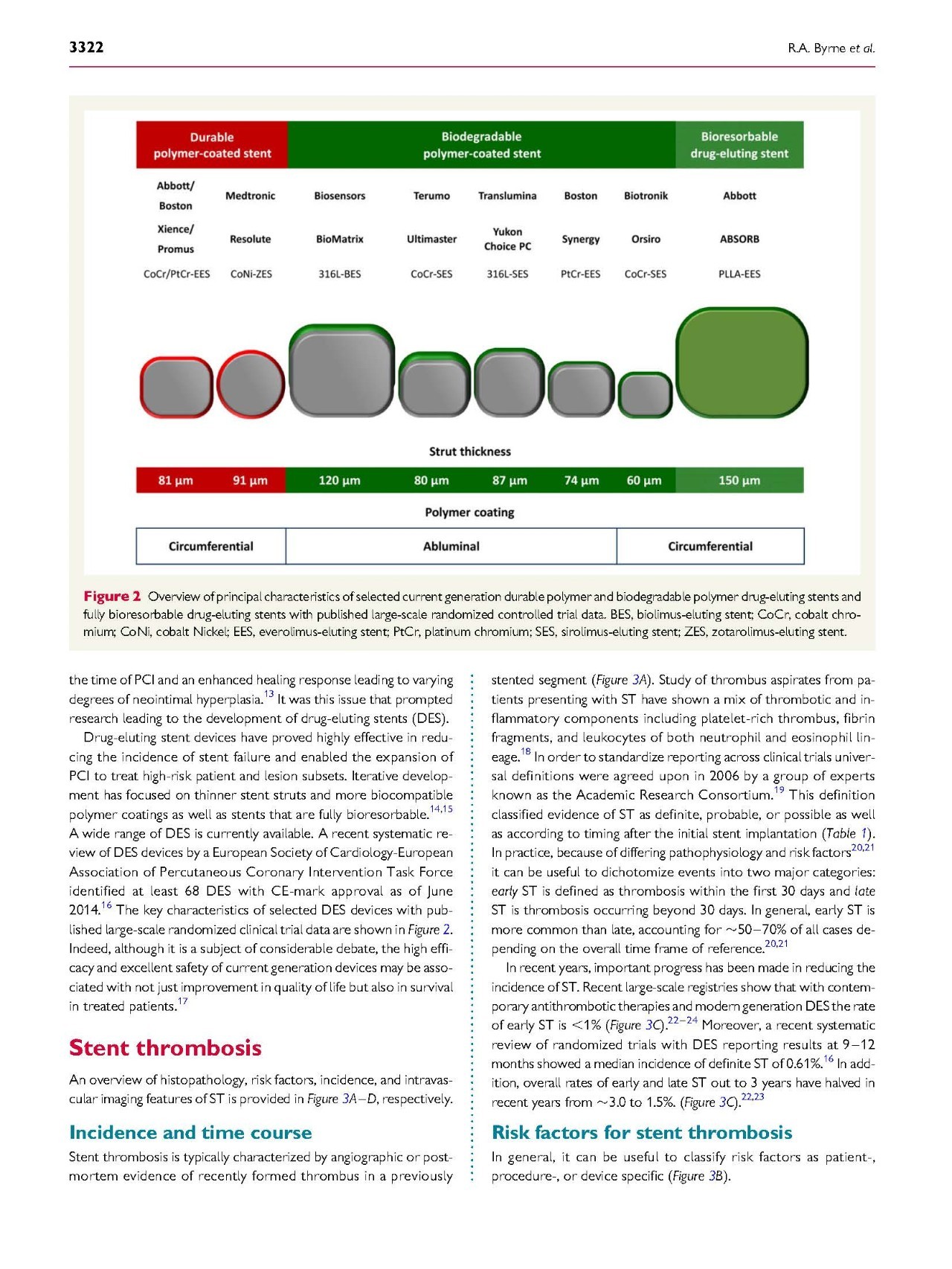
支架类型是迟发型ST重要影响因素。2006年欧洲心血管年会提出初代药物洗脱支架可能增加ST进而导致心源性死亡[18],后来的一些meta分析也显示雷帕霉素和紫杉醇药物洗脱支架有此类风险[14,19-20]。此外,注册研究显示4~5年内ST风险逐渐增加,没有随着时间减轻的证据[21]。尸检显示原因可能与推迟动脉愈合有关,主要表现为内膜覆盖受损、持续的纤维蛋白沉积和动脉壁炎症浸润。新一代支架似乎解决了动脉延迟愈合问题,更薄的支架支柱,更生物兼容的聚合物包被,更低剂量的雷帕霉素类药物。
三、双抗持续时间和支架内血栓的预防
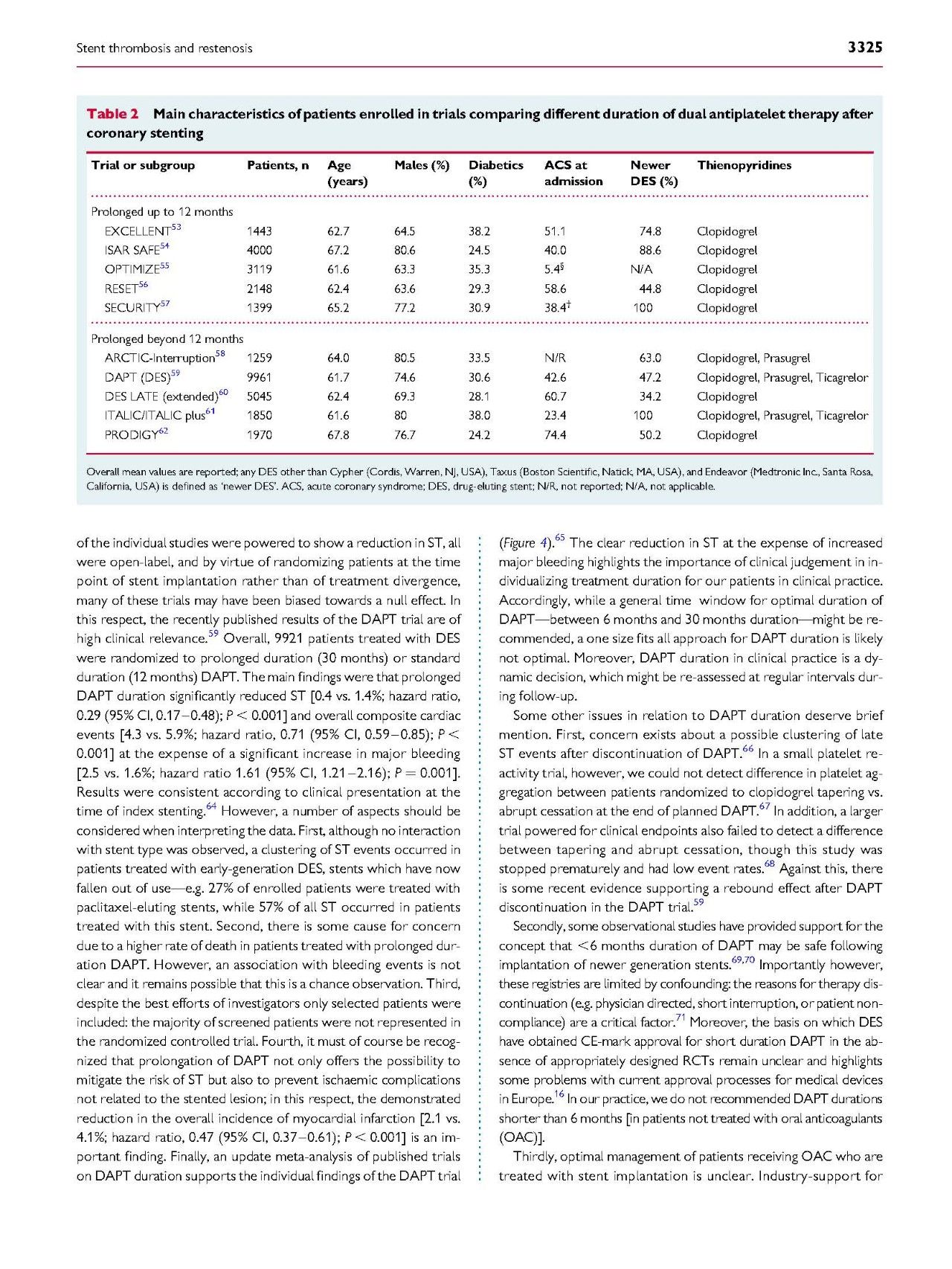
防止ST的关键是适当的双抗。1990年的随机临床试验已经证明了在阻止金属裸支架并发症方面,双抗优于抗凝。早期的使用药物支架的临床研究推荐术后双抗3~6个月,虽然此后发现可能增加术后晚发ST风险。此后,人们开始增加双抗时间至12个月,并且探索更精确和最佳的双抗时间。
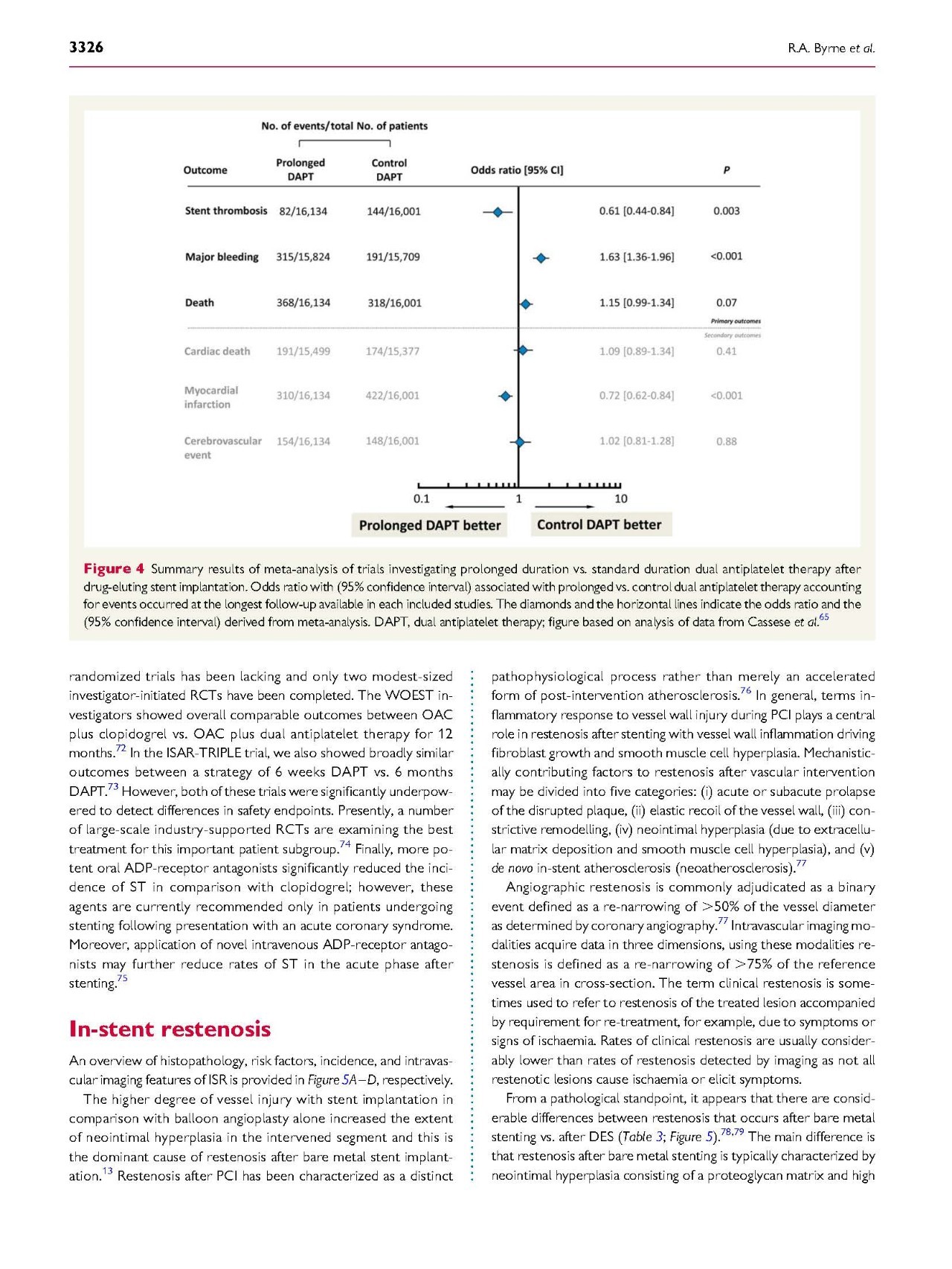
早期研究显示延长双抗时间不能减少缺血事件,而且,此类早期研究均不能显示ST的减少。新近发表的一个双抗试验,9921位DES治疗患者,随机分为双抗30个月和12个月组,结果显示延长双抗明显降低ST(0.4%vs.1.4%;HR,0.29;P<0.001)。一项最新的meta分析也进一步支持了延长双抗降低ST的观点。因此,虽然延长双抗增加了出血风险,但是这需要我们在临床实践中个体化的处置。一个最佳的双抗时间窗——6~30个月可能值得推荐,单一模式的双抗使用方法可能不是最佳的,双抗时间在临床实践中应该是个动态的决定,应该在随访期间动态的评估。
目前,口服抗凝的最佳方案尚不清楚,仅有2个随机对照试验(RCT),且效力较低。因此,口服抗凝剂目前仅推荐用于支架术后急性冠状动脉综合征患者,此外,新型的静脉用ADP受体拮抗剂可能能够进一步减少支架后急性期ST的发生率。
翻译:张晶晶 赤峰市医院神经内科
【参考文献】
[1]Riegger J, Byrne RA, Joner M, et al.Histopathological evaluation of thrombus in patients presenting with stentthrombosis. A multicenter European study: a report of the prevention of latestent thrombosis by an interdisciplinary global European effort consortium[J].European Heart Journal, 2016.
[2]Cutlip DE, Stephan W, Roxana M, et al.Clinical end points in coronary stent trials: a case for standardizeddefinitions[J]. Circulation, 2007,115(17):2344-2351.
[3]Kimura T, Morimoto T, Kozuma K, et al.Comparisons of Baseline Demographics, Clinical Presentation, and Long-TermOutcome Among Patients With Early, Late, and Very Late Stent Thrombosis ofSirolimus-Eluting Stents[J]. Circulation, 2010,122(1):52-61.
[4]Tomohisa T, Byrne RA, Iva S, et al. Riskof stent thrombosis among bare-metal stents, first-generation drug-elutingstents, and second-generation drug-eluting stents: results from a registry of18,334 patients[J]. Jacc Cardiovascular Interventions, 2013,6(12):1267-1274.
[5]Lorenz RB, Michael M, Stefanini GG, etal. Very late coronary stent thrombosis of a newer-generationeverolimus-eluting stent compared with early-generation drug-eluting stents: aprospective cohort study[J]. Journal of Pharmacy & Pharmacology,2012,125(9):1110-1121.
[6]Stone GW, Bernhard W, Giora W, et al.Platelet reactivity and clinical outcomes after coronary artery implantation ofdrug-eluting stents (ADAPT-DES): a prospective multicentre registry study[J].Lancet, 2013,382(9892):614-623.
[7]Werkum JWV, Heestermans AA, Zomer AC, etal. Predictors of coronary stent thrombosis: the Dutch Stent ThrombosisRegistry[J]. Journal of the American College of Cardiology,2009,53(16):1399-1409.
[8]Cayla G, Hulot J, O’Connor SA, et al.Clinical, Angiographic, and Genetic Factors Associated With Early CoronaryStent Thrombosis[J]. Jama the Journal of the American Medical Association,2011,306(16):1765-74.
[9]Ischmidt I. Incidence, predictors andoutcome of thrombosis after succesful implantation of drug-eluting stents[J].Jama the Journal of the American Medical Association, 2005,293(17):2126-2130.
[10]Dirk S, Werner K, Steffen M, et al. Noassociation of paraoxonase-1 Q192R genotypes with platelet response toclopidogrel and risk of stent thrombosis after coronary stenting[J]. EuropeanHeart Journal, 2011,32(13):1605-1613.
[11]Sibbing D, Stegherr J, Latz W, et al.Cytochrome P450 2C19 loss-of-function polymorphism and stent thrombosisfollowing percutaneous coronary intervention[J]. European Heart Journal,2009,30(8):916-922.
[12]Mega JL, Tabassome S, Jean-Philippe C,et al. Reduced-function CYP2C19 genotype and risk of adverse clinical outcomesamong patients treated with clopidogrel predominantly for PCI: ameta-analysis[J]. Jama the Journal of the American Medical Association,2010,304(16):1821-1830.
[13]Sibbing D, Braun S, Morath T, et al.Platelet Reactivity After Clopidogrel Treatment Assessed With Point-of-CareAnalysis and Early Drug-Eluting Stent Thrombosis[J]. Journal of the AmericanCollege of Cardiology, 2009,53(10):849-856.
[14]Amehilli K. Analysis of 14 trialscomparing sirolimus-eluting stents with bare-metal stents[J]. New EnglandJournal of Medicine, 2007,356(10):175-176.
[15]Kumaran K, Rajesh S, Gibson WJ, et al.Stent thrombogenicity early in high-risk interventional settings is driven bystent design and deployment and protected by polymer-drug coatings[J].Circulation, 2011,123(13):1400-1409.
[16]Mastectomy SN. Everolimus-eluting stentversus bare-metal stent in ST-segment elevation myocardial infarction(EXAMINATION): 1 year results of a randomised controlled trial[J]. Lancet,2012,380(9852):1482-1490.
[17]Attizzani GF, Capodanno D, Ohno Y, etal. Mechanisms, Pathophysiology, and Clinical Aspects of Incomplete StentApposition[J]. Journal of the American College of Cardiology,2014,63(14):1355-1367.
[18]Edoardo C, P Gabriel S, William W.Stent thrombosis late after implantation of first-generation drug-elutingstents: a cause for concern[J]. Circulation, 2007,115(11):e390-e.
[19]Gwmoses S. Safety and efficacy ofsirolimus-and paclitaxel-eluting coronary stents[J]. New England Journal ofMedicine, 2007,356(10):998-1008.
[20]Christoph S, Simon W, Sabin A, et al.Outcomes associated with drug-eluting and bare-metal stents: a collaborativenetwork meta-analysis[J]. Lancet, 2007, 370(9591): 937-948.
[21]Daemen J, Wenaweser P, Tsuchida K, etal. Early and late coronary stent thrombosis of sirolimus-eluting andpaclitaxel-eluting stents in routine clinical practice: data from a largetwo-institutional cohort study[J]. Lance, 2007,369(9562):667-678.
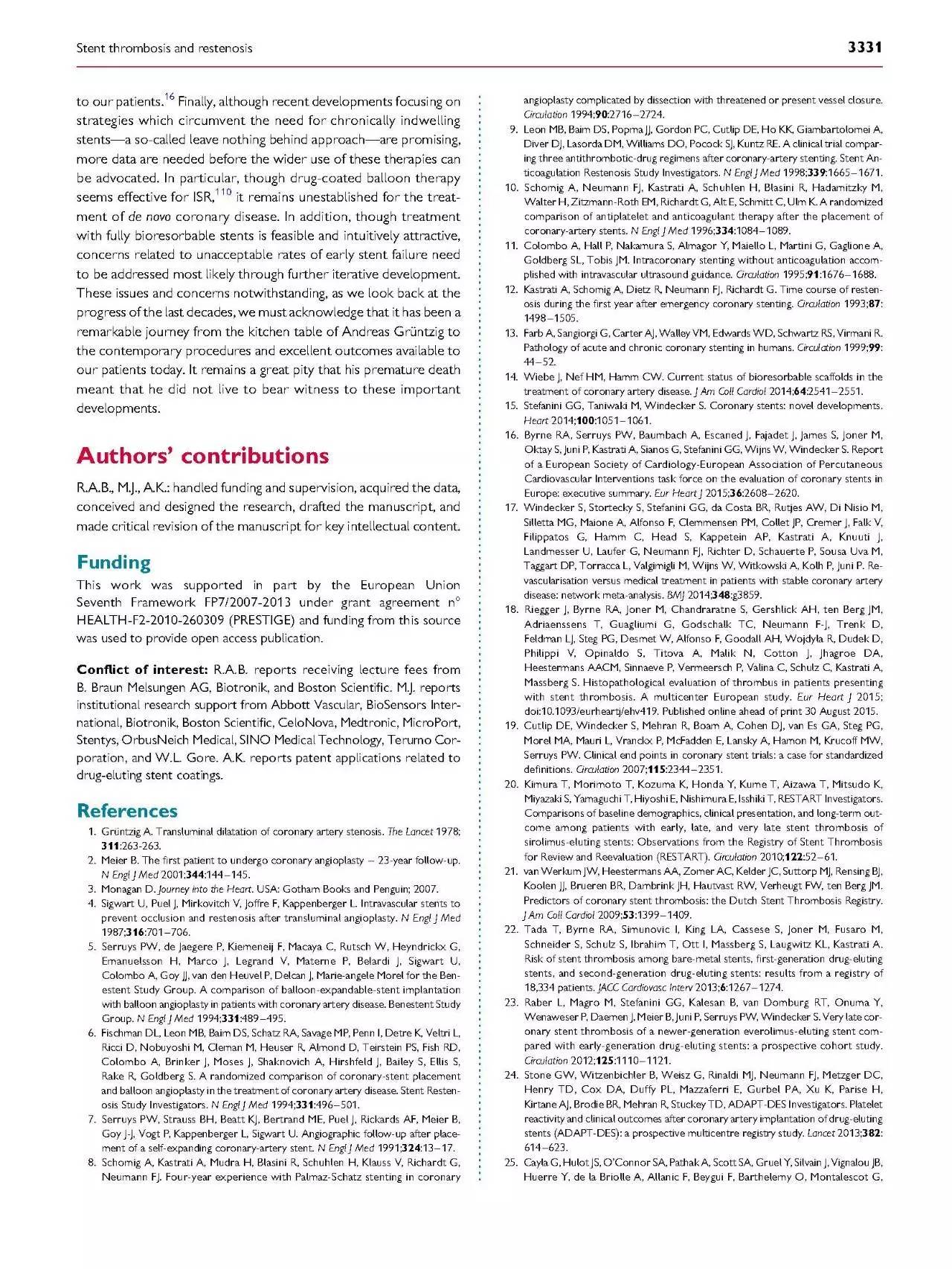
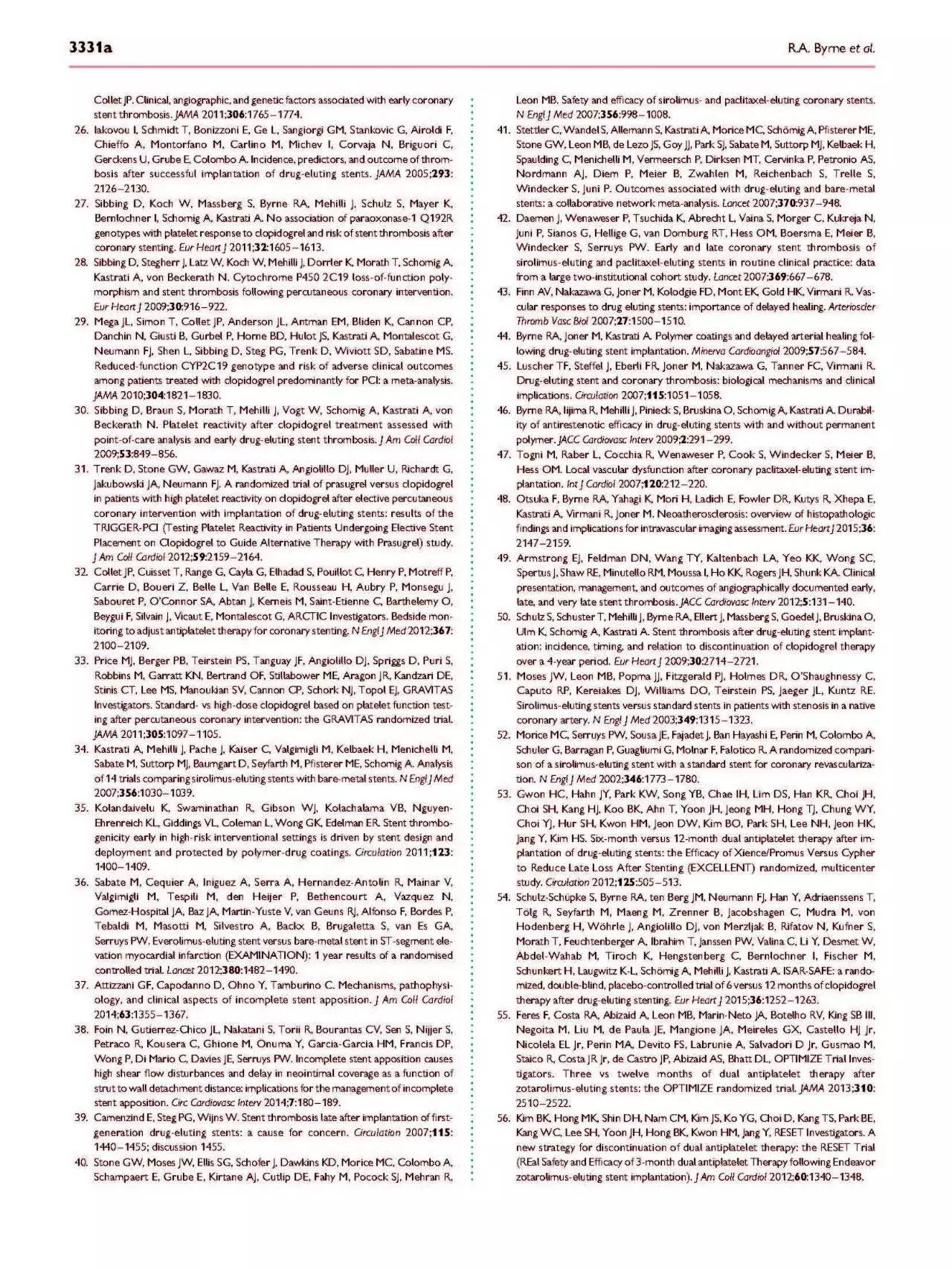
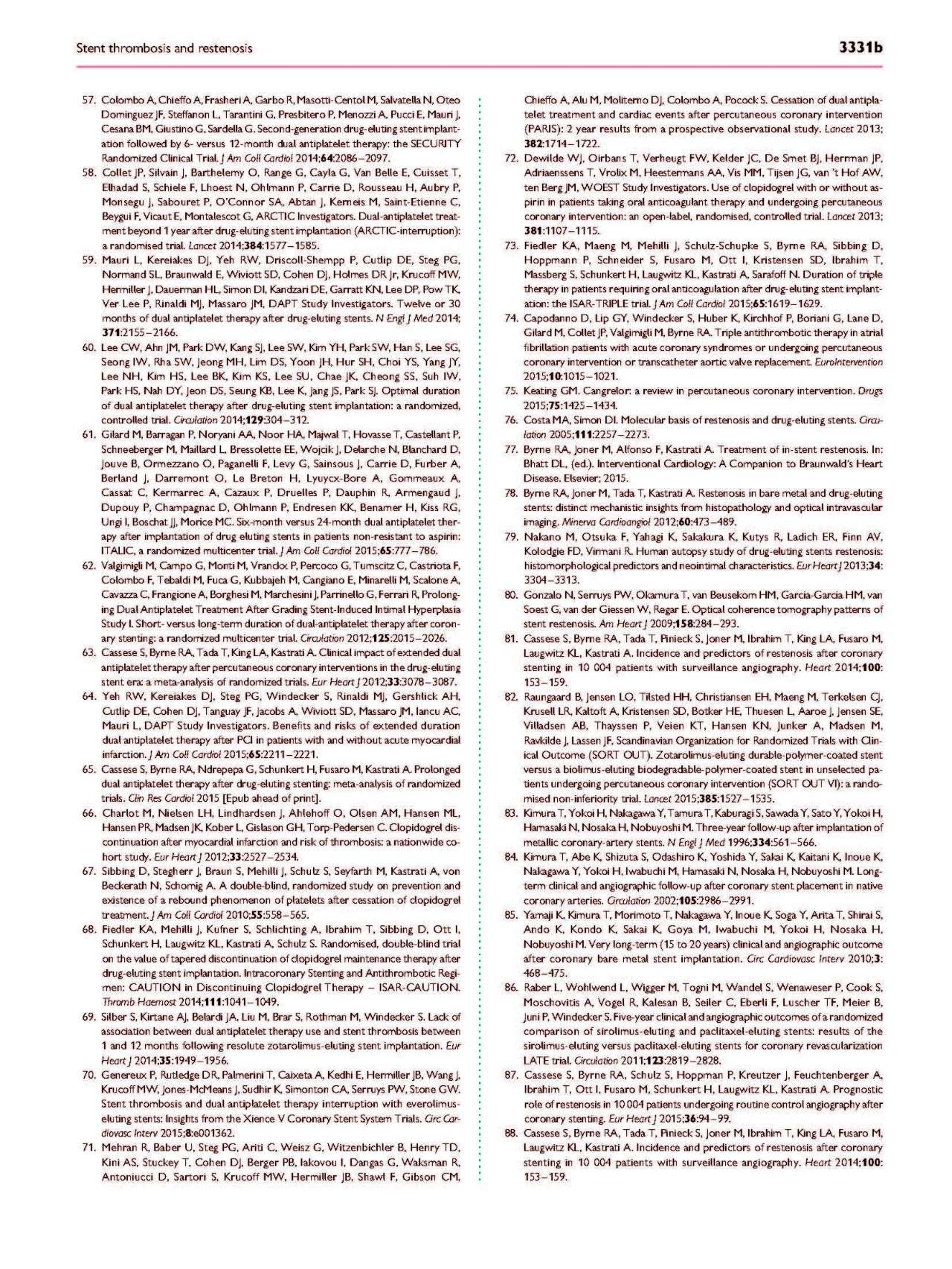
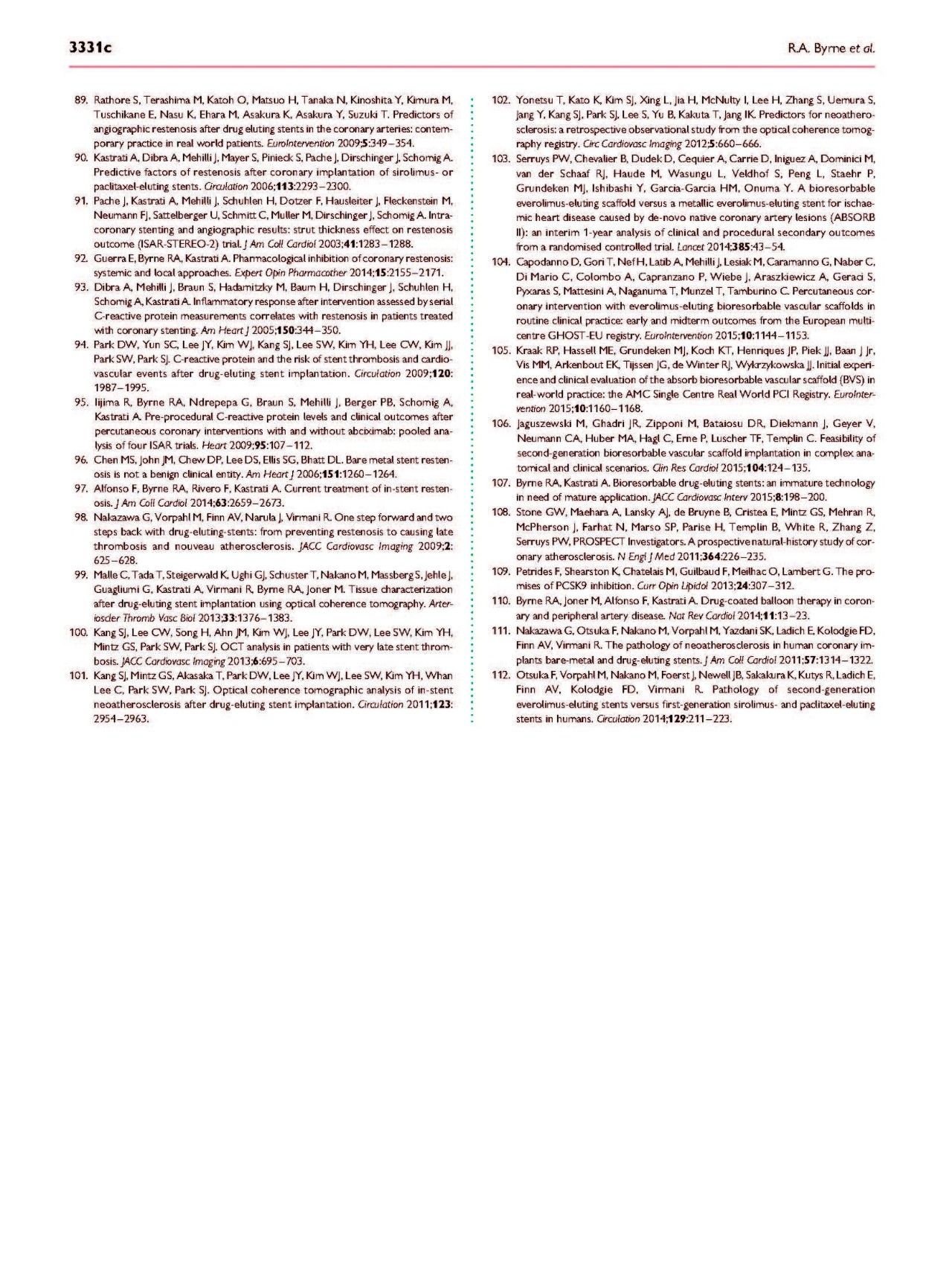
原文回顾

编辑 黄越
欢迎广大医生积极投稿,分享经典病例。
投稿邮箱:sjjrzx@hh-medic.com