步骤 1 : try catch
步骤 2 : 使用异常的父类进行catch
步骤 3 : 多异常捕捉办法1
步骤 4 : 多异常捕捉办法2
步骤 5 : finally
步骤 6 : throws
步骤 7 : 练习-异常处理
步骤 8 : 答案-异常处理
步骤 1 :
try catch
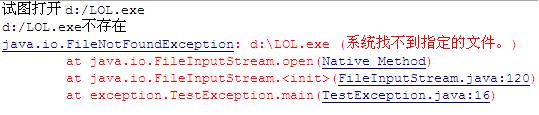
1.将可能抛出FileNotFoundException 文件不存在异常的代码放在try里
2.如果文件存在,就会顺序往下执行,并且不执行catch块中的代码
3. 如果文件不存在,try 里的代*会码**立即终止,程序流程会运行到对应的catch块中
4. e.printStackTrace(); 会打印出方法的调用痕迹,如此例,会打印出异常开始于TestException的第16行,这样就便于定位和分析到底哪里出了异常
代码比较
package exception; import java.io.File; import java.io.FileInputStream; import java.io.FileNotFoundException; public class TestException { public static void main(String[] args) { File f= new File("d:/LOL*ex.e**"); try{ System.out.println("试图打开 d:/LOL*ex.e**"); new FileInputStream(f); System.out.println("成功打开"); } catch(FileNotFoundException e){ System.out.println("d:/LOL*ex.e**不存在"); e.printStackTrace(); } } }
package exception;
import java.io.File;
import java.io.FileInputStream;
import java.io.FileNotFoundException;
public class TestException {
public static void main(String[] args) {
File f= new File("d:/LOL*ex.e**");
try{
System.out.println("试图打开 d:/LOL*ex.e**");
new FileInputStream(f);
System.out.println("成功打开");
}
catch(FileNotFoundException e){
System.out.println("d:/LOL*ex.e**不存在");
e.printStackTrace();
}
}
}
步骤 2 :
使用异常的父类进行catch
FileNotFoundException是Exception的子类,使用Exception也可以catch住FileNotFoundException
代码比较
package exception; import java.io.File; import java.io.FileInputStream; import java.io.FileNotFoundException; public class TestException { public static void main(String[] args) { File f= new File("d:/LOL*ex.e**"); try{ System.out.println("试图打开 d:/LOL*ex.e**"); new FileInputStream(f); System.out.println("成功打开"); } catch(Exception e){ System.out.println("d:/LOL*ex.e**不存在"); e.printStackTrace(); } } }
package exception;
import java.io.File;
import java.io.FileInputStream;
import java.io.FileNotFoundException;
public class TestException {
public static void main(String[] args) {
File f= new File("d:/LOL*ex.e**");
try{
System.out.println("试图打开 d:/LOL*ex.e**");
new FileInputStream(f);
System.out.println("成功打开");
}
catch(Exception e){
System.out.println("d:/LOL*ex.e**不存在");
e.printStackTrace();
}
}
}
步骤 3 :
多异常捕捉办法1
有的时候一段代*会码**抛出多种异常,比如
new FileInputStream(f);
Date d = sdf.parse("2016-06-03");
这段代码,会抛出 文件不存在异常 FileNotFoundException 和 解析异常ParseException
解决办法之一是分别进行catch
catch (FileNotFoundException e) {
System.out.println("d:/LOL*ex.e**不存在");
e.printStackTrace();
} catch (ParseException e) {
System.out.println("日期格式解析错误");
e.printStackTrace();
}
代码比较
package exception; import java.io.File; import java.io.FileInputStream; import java.io.FileNotFoundException; import java.text.ParseException; import java.text.SimpleDateFormat; import java.util.Date; public class TestException { public static void main(String[] args) { File f = new File("d:/LOL*ex.e**"); try { System.out.println("试图打开 d:/LOL*ex.e**"); new FileInputStream(f); System.out.println("成功打开"); SimpleDateFormat sdf = new SimpleDateFormat("yyyy-MM-dd"); Date d = sdf.parse("2016-06-03"); } catch (FileNotFoundException e) { System.out.println("d:/LOL*ex.e**不存在"); e.printStackTrace(); } catch (ParseException e) { System.out.println("日期格式解析错误"); e.printStackTrace(); } } }
package exception;
import java.io.File;
import java.io.FileInputStream;
import java.io.FileNotFoundException;
import java.text.ParseException;
import java.text.SimpleDateFormat;
import java.util.Date;
public class TestException {
public static void main(String[] args) {
File f = new File("d:/LOL*ex.e**");
try {
System.out.println("试图打开 d:/LOL*ex.e**");
new FileInputStream(f);
System.out.println("成功打开");
SimpleDateFormat sdf = new SimpleDateFormat("yyyy-MM-dd");
Date d = sdf.parse("2016-06-03");
} catch (FileNotFoundException e) {
System.out.println("d:/LOL*ex.e**不存在");
e.printStackTrace();
} catch (ParseException e) {
System.out.println("日期格式解析错误");
e.printStackTrace();
}
}
}
步骤 4 :
多异常捕捉办法2
另一个种办法是把多个异常,放在一个catch里统一捕捉
catch (FileNotFoundException | ParseException e) {
这种方式从 JDK7开始支持,好处是捕捉的代码更紧凑,不足之处是,一旦发生异常,不能确定到底是哪种异常,需要通过instanceof 进行判断具体的异常类型
if (e instanceof FileNotFoundException)
System.out.println("d:/LOL*ex.e**不存在");
if (e instanceof ParseException)
System.out.println("日期格式解析错误");
代码比较
package exception; import java.io.File; import java.io.FileInputStream; import java.io.FileNotFoundException; import java.text.ParseException; import java.text.SimpleDateFormat; import java.util.Date; public class TestException { public static void main(String[] args) { File f = new File("d:/LOL*ex.e**"); try { System.out.println("试图打开 d:/LOL*ex.e**"); new FileInputStream(f); System.out.println("成功打开"); SimpleDateFormat sdf = new SimpleDateFormat("yyyy-MM-dd"); Date d = sdf.parse("2016-06-03"); } catch (FileNotFoundException | ParseException e) { if (e instanceof FileNotFoundException) System.out.println("d:/LOL*ex.e**不存在"); if (e instanceof ParseException) System.out.println("日期格式解析错误"); e.printStackTrace(); } } }
package exception;
import java.io.File;
import java.io.FileInputStream;
import java.io.FileNotFoundException;
import java.text.ParseException;
import java.text.SimpleDateFormat;
import java.util.Date;
public class TestException {
public static void main(String[] args) {
File f = new File("d:/LOL*ex.e**");
try {
System.out.println("试图打开 d:/LOL*ex.e**");
new FileInputStream(f);
System.out.println("成功打开");
SimpleDateFormat sdf = new SimpleDateFormat("yyyy-MM-dd");
Date d = sdf.parse("2016-06-03");
} catch (FileNotFoundException | ParseException e) {
if (e instanceof FileNotFoundException)
System.out.println("d:/LOL*ex.e**不存在");
if (e instanceof ParseException)
System.out.println("日期格式解析错误");
e.printStackTrace();
}
}
}
步骤 5 :
finally
无论是否出现异常,finally中的代码都会被执行
代码比较
package exception; import java.io.File; import java.io.FileInputStream; import java.io.FileNotFoundException; public class TestException { public static void main(String[] args) { File f= new File("d:/LOL*ex.e**"); try{ System.out.println("试图打开 d:/LOL*ex.e**"); new FileInputStream(f); System.out.println("成功打开"); } catch(FileNotFoundException e){ System.out.println("d:/LOL*ex.e**不存在"); e.printStackTrace(); } finally{ System.out.println("无论文件是否存在, 都会执行的代码"); } } }
package exception;
import java.io.File;
import java.io.FileInputStream;
import java.io.FileNotFoundException;
public class TestException {
public static void main(String[] args) {
File f= new File("d:/LOL*ex.e**");
try{
System.out.println("试图打开 d:/LOL*ex.e**");
new FileInputStream(f);
System.out.println("成功打开");
}
catch(FileNotFoundException e){
System.out.println("d:/LOL*ex.e**不存在");
e.printStackTrace();
}
finally{
System.out.println("无论文件是否存在, 都会执行的代码");
}
}
}
步骤 6 :
throws
考虑如下情况:
主方法调用method1
method1调用method2
method2中打开文件
method2中需要进行异常处理
但是method2不打算处理,而是把这个异常通过throws抛出去
那么method1就会接到该异常。 处理办法也是两种,要么是try catch处理掉,要么也是抛出去。
method1选择本地try catch住 一旦try catch住了,就相当于把这个异常消化掉了,主方法在调用method1的时候,就不需要进行异常处理了
代码比较
package exception; import java.io.File; import java.io.FileInputStream; import java.io.FileNotFoundException; public class TestException { public static void main(String[] args) { method1(); } private static void method1() { try { method2(); } catch (FileNotFoundException e) { // TODO Auto-generated catch block e.printStackTrace(); } } private static void method2() throws FileNotFoundException { File f = new File("d:/LOL*ex.e**"); System.out.println("试图打开 d:/LOL*ex.e**"); new FileInputStream(f); System.out.println("成功打开"); } }
package exception;
import java.io.File;
import java.io.FileInputStream;
import java.io.FileNotFoundException;
public class TestException {
public static void main(String[] args) {
method1();
}
private static void method1() {
try {
method2();
} catch (FileNotFoundException e) {
// TODO Auto-generated catch block
e.printStackTrace();
}
}
private static void method2() throws FileNotFoundException {
File f = new File("d:/LOL*ex.e**");
System.out.println("试图打开 d:/LOL*ex.e**");
new FileInputStream(f);
System.out.println("成功打开");
}
}
关注【前沿梦工场】,回复“吃吃的爱”,“逆天侠盗团2”获取最新电影