SANDRA’S STORY: (AGE: 11 YEARS OLD, MADRID)桑德拉的故事(年龄:11岁,来自西班牙马德里)
WHAT SANDRA’S MOTHER SAYS:
桑德拉母亲的讲述:
Until two years ago, we were living in England, at which time we moved to Madrid. I have a lazy eye and Sandra’s father has high hyperopia with astigmatism, so we have always been concerned about our daughter’s vision.
直到两年前,我们才从英国搬到西班牙。我有弱视,孩子爸爸是高度远视加散光,所以,我们一直很关注孩子视力。
When Sandra was 2 years old, she began wearing glasses. The ophthalmologist told us that she had a different prescription in one eye as compared to the other, and that she had to wear a patch. We went for a second opinion and it was the same. We proceeded to patch her eye to avoid having her develop a lazy eye like mine.
两岁时,桑德拉开始戴眼镜。眼科医生告诉我们,孩子双眼度数相差很大,需要戴眼罩。我们也咨询了其他医生,结果还是一样。所以,我们开始给孩子遮盖,以免孩子像我一样,终身弱视。

After Sandra began using the patch, she began to turn her eye in. We were very sad and disappointed. The ophthalmologist told us that she probably had strabismus before beginning occlusion and the occlusion just made it more apparent.
桑德拉戴眼罩后,眼睛开始内斜,这让我们既难过又失望。眼科医生说:“肯定是孩子遮盖前就有斜视,只不过遮盖后,斜视变得明显了。”
Sandra began wearing the patch over her right eye when she was 3 years old. In the beginning we were told that she needed to have total full-time occlusion for a long time. After a very long time of wearing the patch full-time, the patching time was reduced. The patch was then removed because we were told that her visual acuity had improved. When Sandra was 5 years old, the visual acuity decreased again so she had to begin wearing the patch again. After wearing the patch for many years, Sandra did not want to wear the patch anymore. She also did not want to wear the glasses anymore, because it was very hard for her emotionally.
桑德拉3岁时,开始用眼罩遮盖右眼。起初医生告诉我们,孩子必须全天遮盖。在很长一段时间的全天遮盖后,遮盖时间有所缩短。后来,医生跟我们说,桑德拉视力已经提高,可以不用戴眼罩了。在桑德拉5岁时,她的视力出现回退,不得不再次遮盖。多年戴眼罩的经历,让桑德拉再也不想继续,她很排斥戴眼镜,这使她备受折磨。
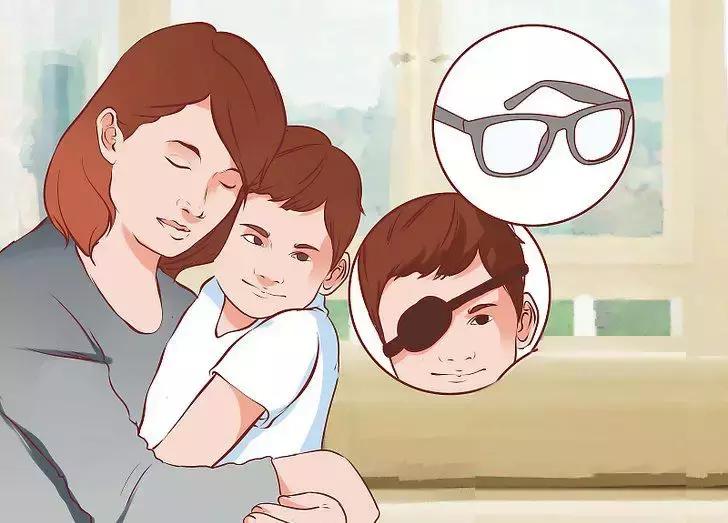
One year ago, when Sara was 10 years old, we went to a hospital for a visual examination. The visual acuity in her eye was very low, only 20/100. She had to wear a patch again, even though the ophthalmologist said that it would be very difficult to improve her visual acuity at this point because she was now too old. They suggested that we could try vision therapy with an optometrist.
一年前,桑德拉10岁时,我们带她去医院做了眼科检查。结果一只眼睛非常差,视力只有0.2,她不得不又戴上眼罩。医生告诉我们,现在孩子的年龄已经太大,视力很难提高。他建议我们去找眼视光医生,看看视觉训练有没有效果。
We cannot believe the results of Sandra’s optometric vision therapy program, but we are sad, because my daughter had to suffer a during all of those years of wearing a patch. After only one month of vision therapy, my daughter doubled her visual acuity without having to wear a patch. Now, after 10 months of treatment, she no longer has any strabismus or lazy eye at all!
我想说,视觉训练的效果,简直难以置信!可是同时也让我们很难过,因为女儿这么多年来,受了太多戴眼罩的煎熬。仅仅做了一个月的视觉训练,女儿视力就提高了一倍,并且不用戴眼罩了。现在,经过10个月的训练,她的斜视和弱视都已痊愈。
WHAT SANDRA SAYS:
桑德拉的讲述:
I do not want to wear a patch ever again! I was wearing that patch all my life, and I suffered a lot. Children laughed at me, and I did not see well to do my school work and to play. I felt really very bad, and I still have emotional trauma because of the patch.
我再也不想和眼罩有任何关系!感觉以前我的生活,就是在戴眼罩中度过,我觉得没人能想象,眼罩会带来什么样的痛苦。同学们都嘲笑我,不管是学习还是玩游戏,我都看不清楚,感觉不能比这更糟了,现在想起眼罩我都很难受,这大概就是所谓的心理创伤吧。
OPTOMETRIC DATA AND OPTOMETRIST’S COMMENTS:
验光数据和医生的讲述:
Sara presented with an esotropia and a hyperdeviation (eye turns in and up). She suppressed her left eye at distance, and she had very poor stereopsis. Her right eye had 4 diopters of hyperopia and 2 diopters of astigmatism with 20/30 visual acuity. The left eye had 6 diopters of hyperopia, and even with the prescription her best corrected visual acuity was only 20/100.
桑德拉眼睛同时有内斜和上斜。看远时,左眼被抑制,立体视很差。右眼400度远视加200度散光,视力0.6。左眼600度远视,矫正视力0.2。
OPTOMETRIC TREATMENT:
治疗方案:
1. Remove the patch
2. Syntonic phototherapy
3. Optometric vision therapy
4. Contact lenses (in the last phase of treatment)
1、停止遮盖
2、共振色光疗法
3、视觉训练
4、隐形眼镜(治疗后期)
We started Sandra’s therapy with syntonics and had a very good result in a short period time. In just one month, the result was 20/20 visual acuity in the right eye and 20/40 in the left eye. Most importantly, there was less suppression and improved stereopsis. After, the syntonic treatment was completed, Sandra came to our office for optometric vision therapy every 2 weeks, and she worked at home for 15-20 minutes each day. We worked to improve all of her motor and visual skills: focusing, monocular and binocular spatial localization, peripheral awareness, eye movement control, and binocularity.
初期视觉训练效果很好。开始一个月后,右眼视力提高到1.0,左眼视力提高到0.5,抑制减轻,立体视改善。这之后,每两周来诊所进行一次视觉训练,每天在家训练15至20分钟。训练目的在于改善双眼视功能,包括聚焦能力、单眼和双眼空间定位能力、周边视觉、眼球运动控制能力以及立体视。
Sandra completed her optometric vision therapy program in 10 months. At the end of her therapy program, the visual acuity in her right eye was 20/20 and in her left eye 20/25. She also demonstrated excellent binocularity and stereopsis.
10个月后,桑德拉治疗结束。右眼视力1.0,左眼视力0.8,双眼视和立体视正常。
I am now following Sandra’s progress every 8 months and she is maintaining all of her improved visual skills: visual acuity, binocularity, and stereopsis.
现在,每8个月随访一次,桑德拉视力、双眼视和立体视都保持很好,没有回退。
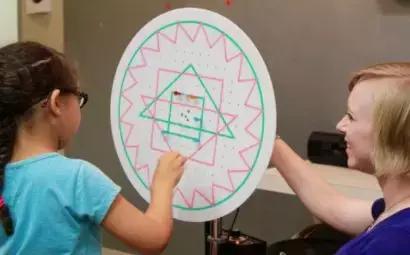
It is very common to see children who have been patched show improved visual acuity while they are patching and then regress when the patch is removed. I explain to parents that the KEY to improving visual acuity and having it last over time is to treat amblyopia on a binocular basis.
对于遮盖后视力有提升的孩子,通常在停止遮盖后,会发生视力回退,这种现象十分常见。我给家长的解释是,提升视力,并避免回退的“关键”在于,将双眼视作为弱视治疗的基础。
I say no more patching! Behavioral optometrists do not recommend patching anymore because it is in contradiction with our philosophy and our therapy. We need to take a neuro-functional approach and teach people with strabismus and amblyopia how to use their visual cortex. When the brain learns how to do this, the gains will be maintained.
遮盖与视觉训练的理念和方法有根本抵触,是时候放弃遮盖了。我们应该采用的是,基于大脑神经科学的治疗方法,教会斜弱视患者,如何正确使用大脑视觉中枢。一旦做到这一点,治疗效果便能得到长期维持。

Another key in this particular case was the syntonic phototherapy, but every case is different and we never know which therapy or procedure will be necessary. It is important to have as many tools as possible such as graded occlusion, syntonics, vision therapy, and contact lenses, and to use all of them well. It is also crucial to work with the whole patient, not only with their eyes.
每位患者病情不同,我们也很难事先知道,哪种治疗方法效果最好。所以,医生应掌握多种治疗方法,如压抑膜、视觉训练、隐形眼镜等,并合理使用这些方法。还有一点很重要,治疗的不仅是视力,还有整体双眼视功能。
Marta Cabranes, DOO
Visual Clinic, Madrid, Spain
马尔塔•卡布拉医生
眼视光诊所,马德里,西班牙
*(文章摘自: CROSSED & LAZY EYES MYTHS,MISCONCEPTIONS AND TRUTHS)