傅抱石 (1904年10月5日—1965年9月29日),原名长生、瑞麟,号抱石斋主人,生于江西南昌,祖籍江西新余,现代画家,“新山水画”代表画家 。早年留学日本,回国后执教于中央大学。1949年后曾任南京师范学院教授、江苏国画院院长等职。
傅抱石江山万里图
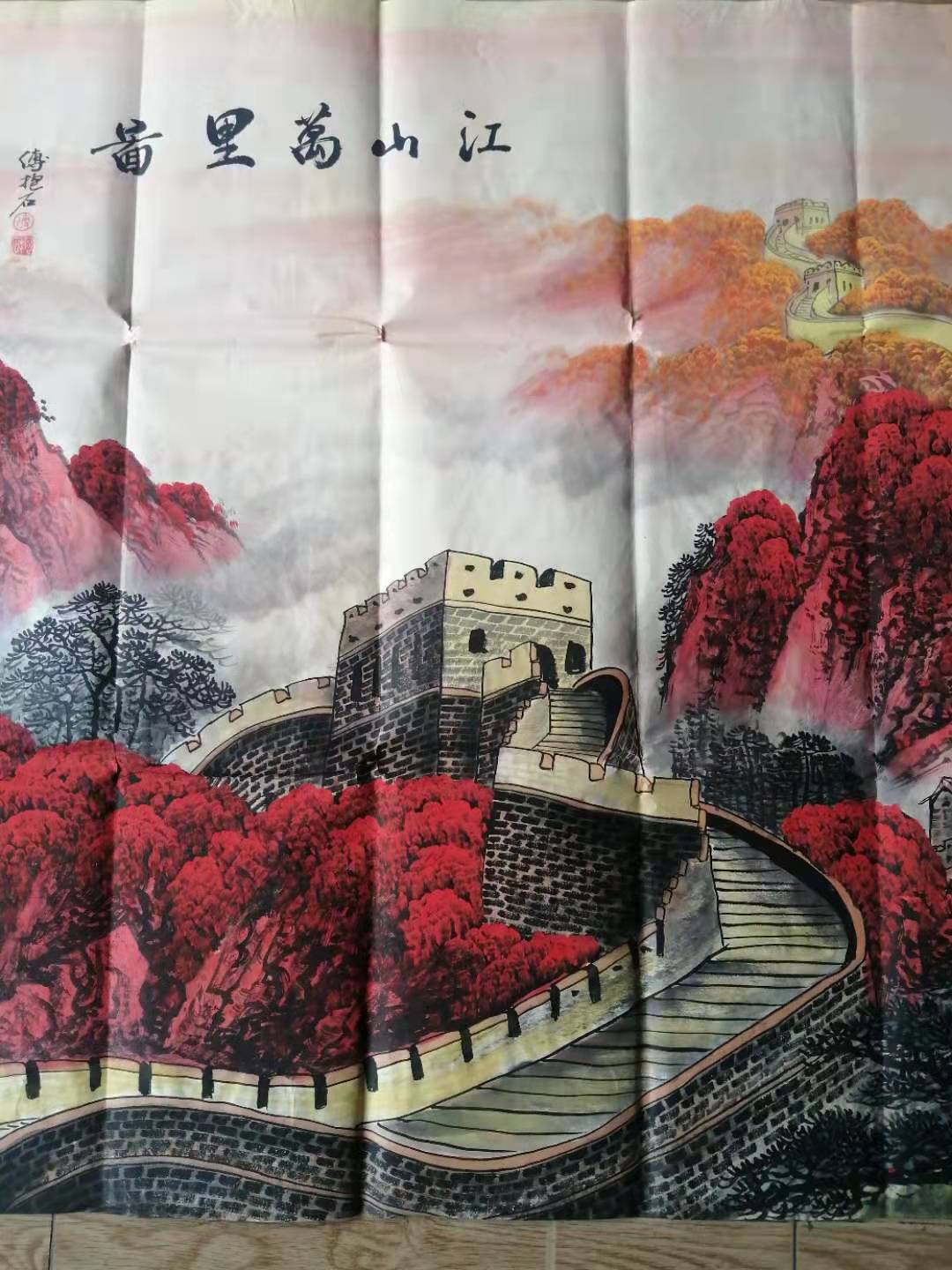
他擅画山水,中年创为“抱石皴”,笔致放逸,气势豪放,尤擅作泉瀑雨雾之景;晚年多作大幅,气魄雄健,具有强烈的时代感。人物画多作仕女、高士,形象高古。著有《中国古代绘画之研究》《中国绘画变迁史纲》等。
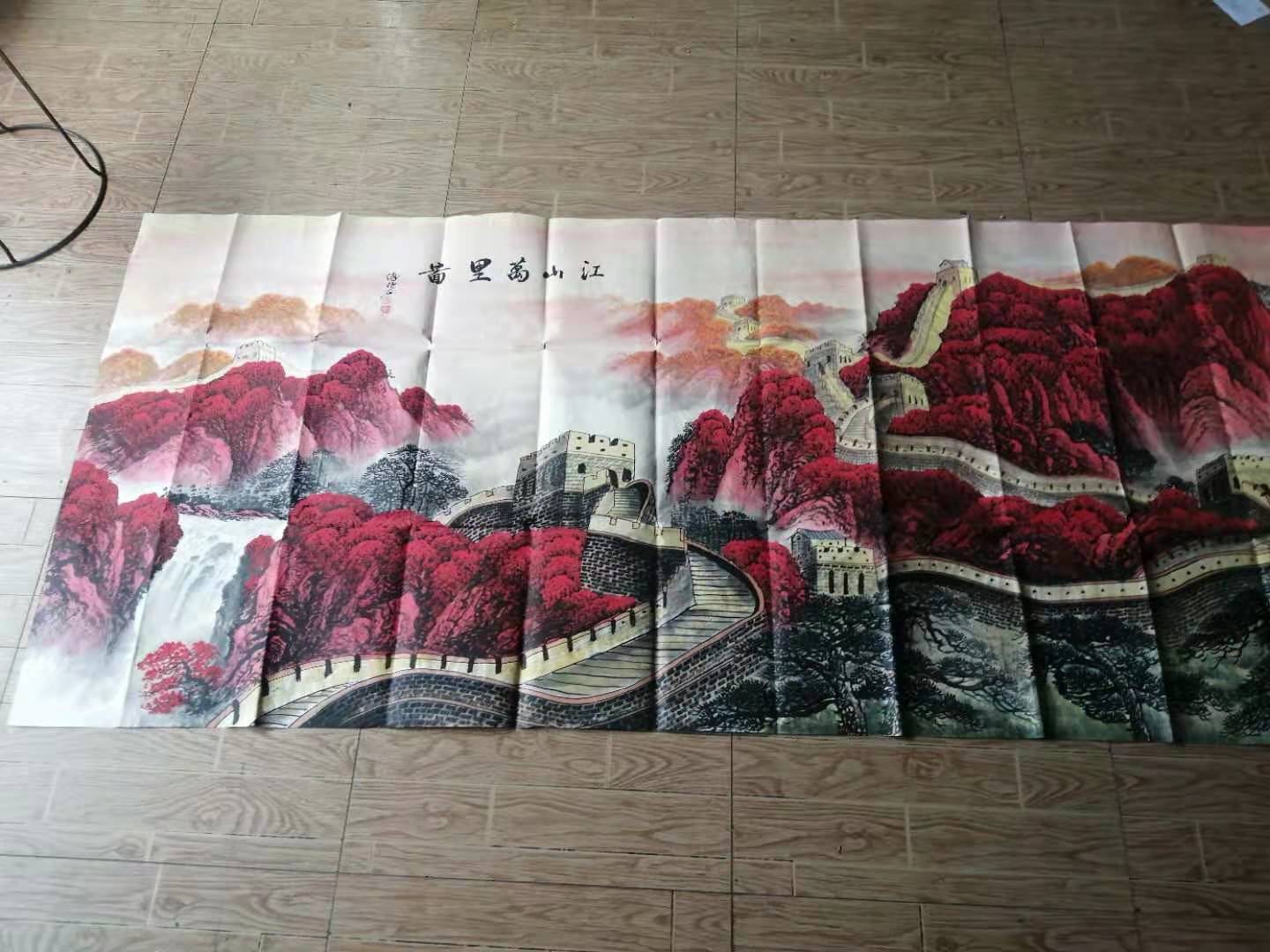
此图为江山万里图,图画万里长城之气势。按照抱石先生的说法,描写祖国江山的辽阔宽大,美姿多娇,触景生情,想到英雄人物为它献身,极其完美地表现了中国人民革命乐观主义的豪迈气概。由于国土辽阔广大,“当江南沃土在和煦的阳光下盛开着万紫千红的百花,漫山红遍。
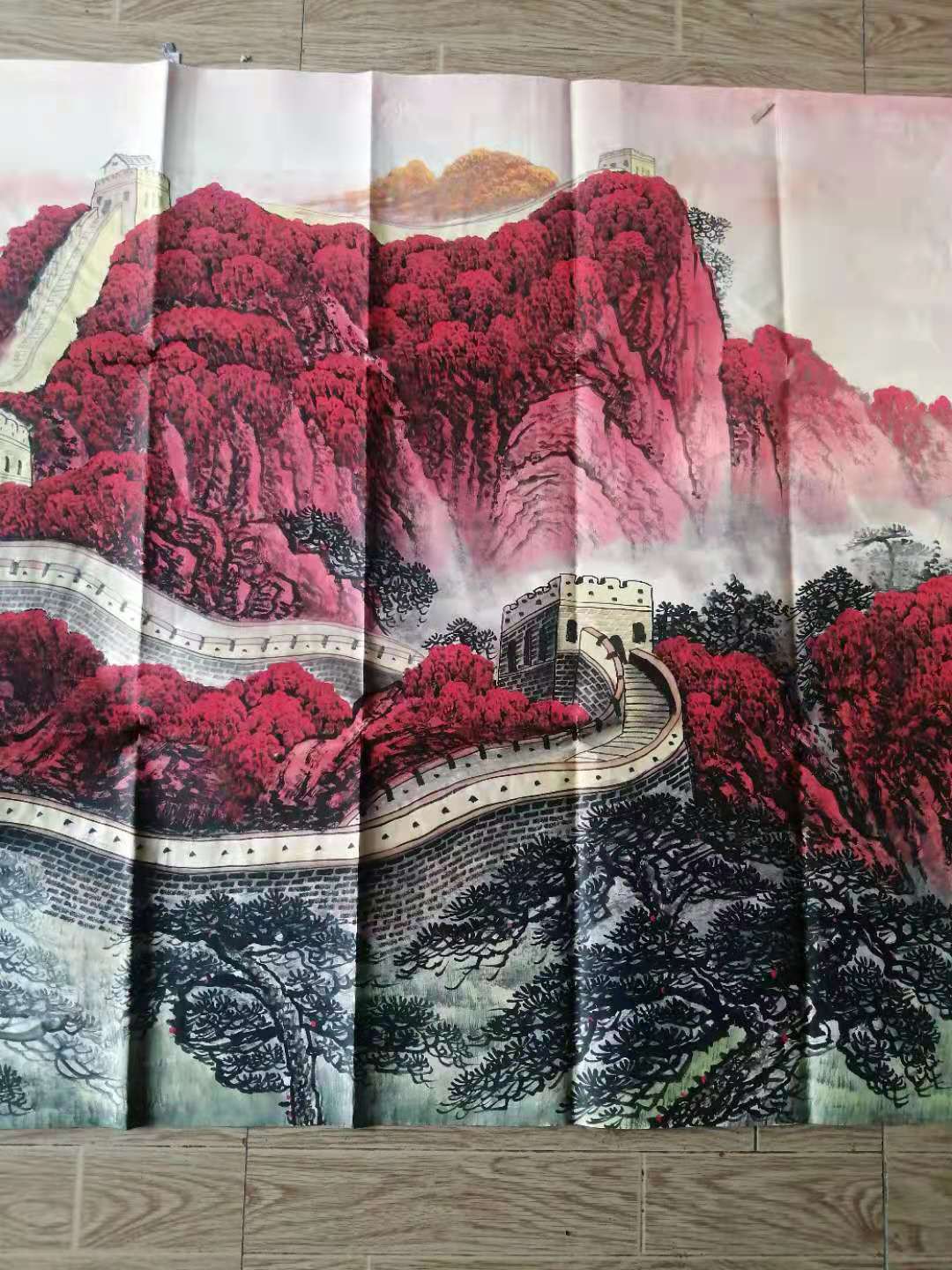
此画相对与李可染的漫山红遍来说,更能体现中华雄风,万里长城永不倒,红叶遍满山,青松立眼前,以长城为脊,仿佛一条巨龙,盘旋与山,守护华夏民族。

可见其题字处亦能见到其晕染之效,淡淡的红黄相融,一般的作品画到这来就做留白处理了,字里行间,可见其泰山般稳固的字迹,落款傅抱石,印章与章谱对比,完全符合。
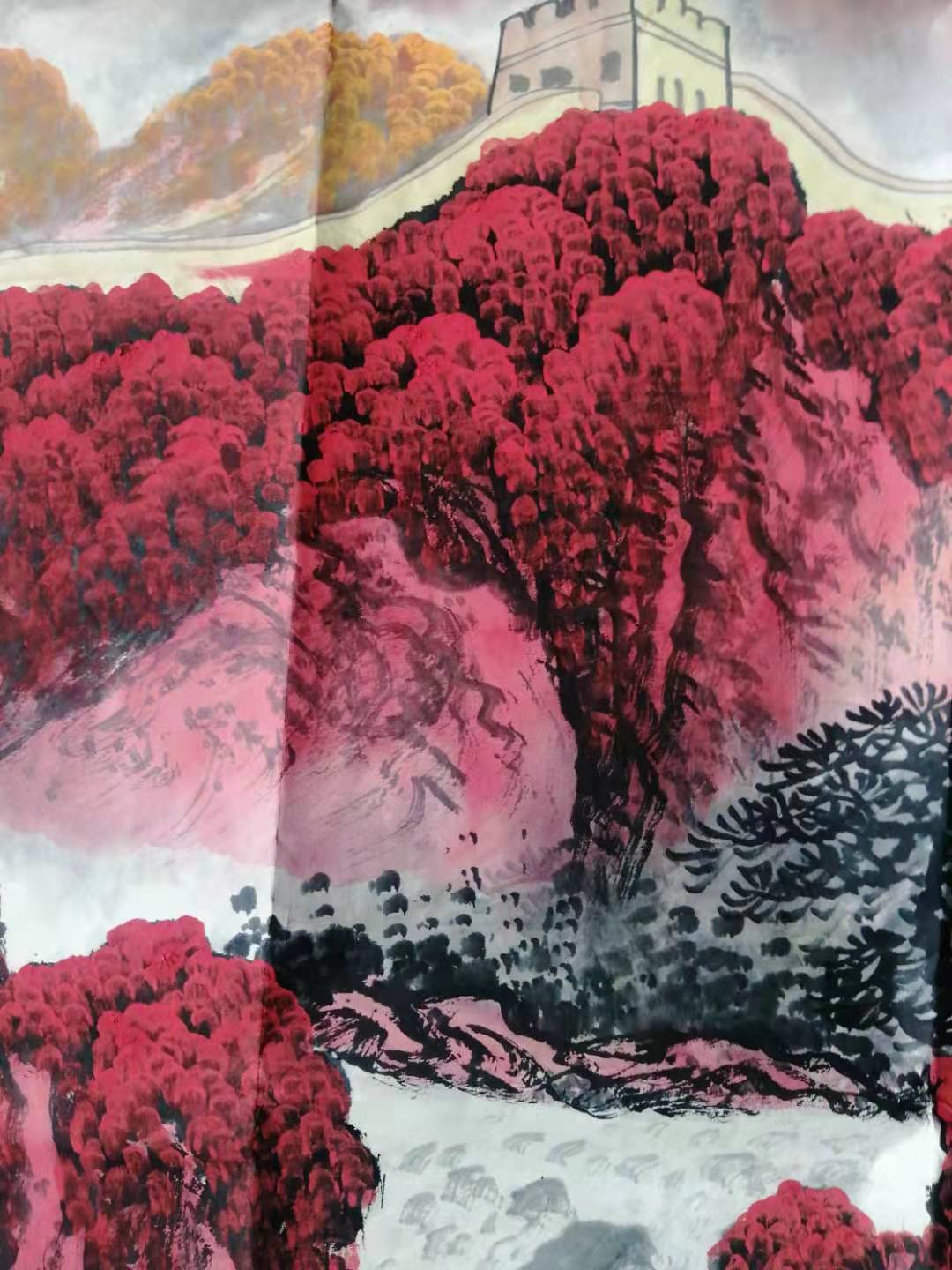
可见其红枫以披麻皴的手法来作画,与愿景的棕黄色相呼应,其红枫,与秋黄之叶,属于同一时节,山体以云头皴的手法,表现较为柔和,与树植完美的融为一体。
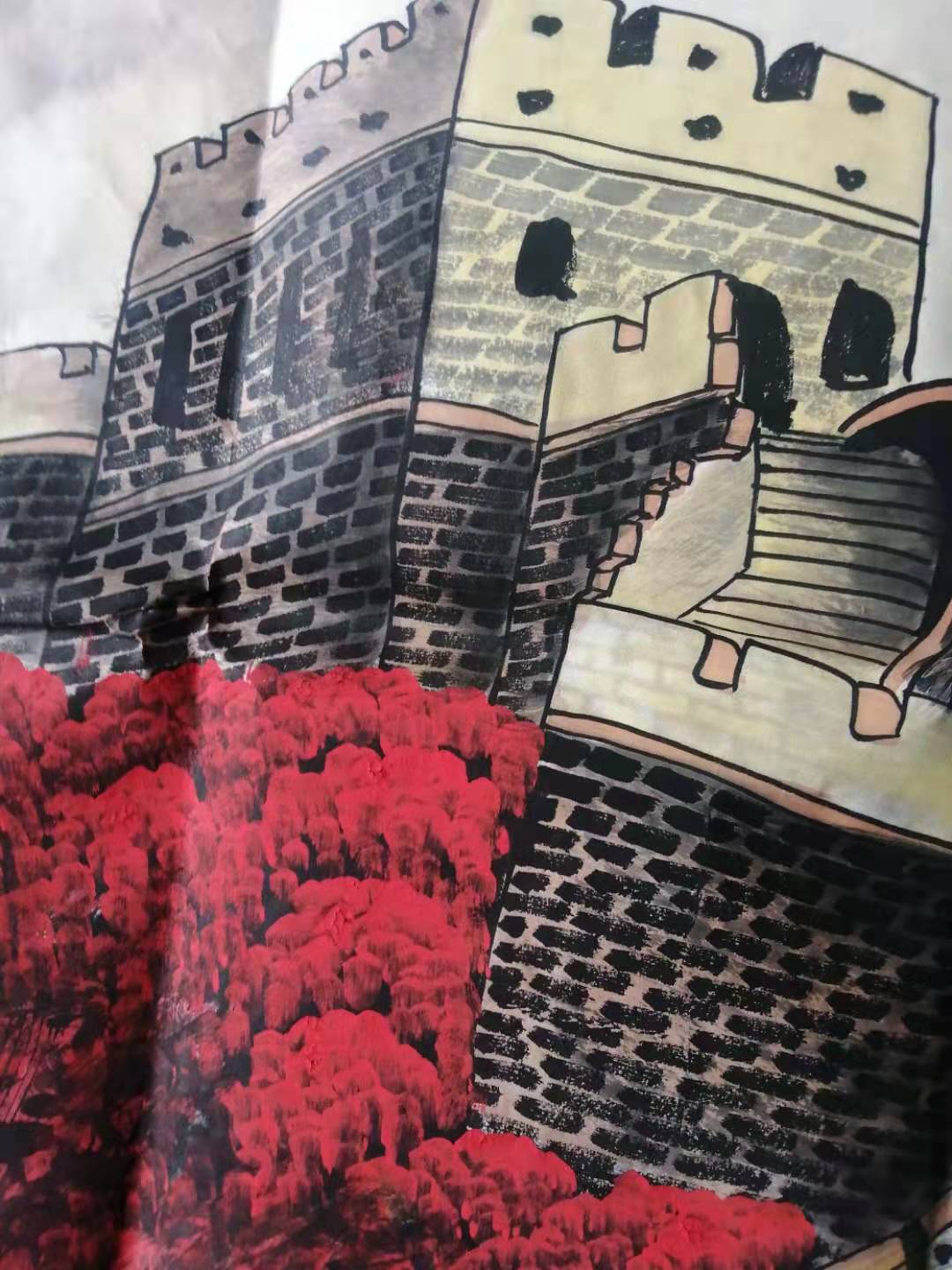
长城(The Great Wall),又称万里长城,是中国古代的军事防御工事,是一道高大、坚固而且连绵不断的长垣,用以限隔敌骑的行动。长城不是一道单纯孤立的城墙,而是以城墙为主体,同大量的城、障、亭、标相结合的防御体系。
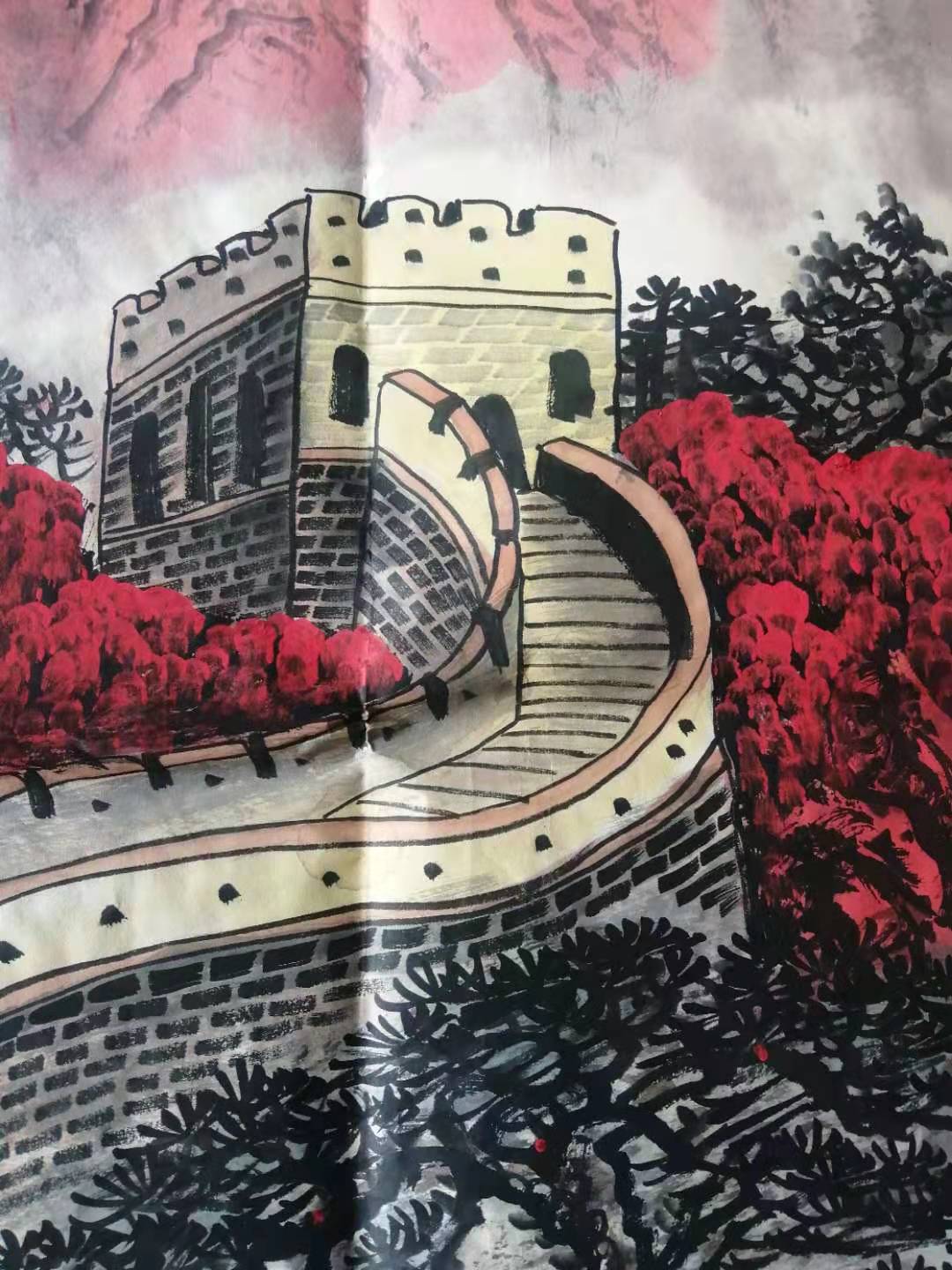
长城修筑的历史可上溯到西周时期,发生在首都镐京(今陕西西安)的著名典故“烽火戏诸侯”就源于此 。春秋战国时期列国争霸,互相防守,长城修筑进入第一个高潮,但此时修筑的长度都比较短。秦灭六国统一天下后,秦始皇连接和修缮战国长城,始有万里长城之称 。明朝是最后一个大修长城的朝代,今天人们所看到的长城多是此时修筑。
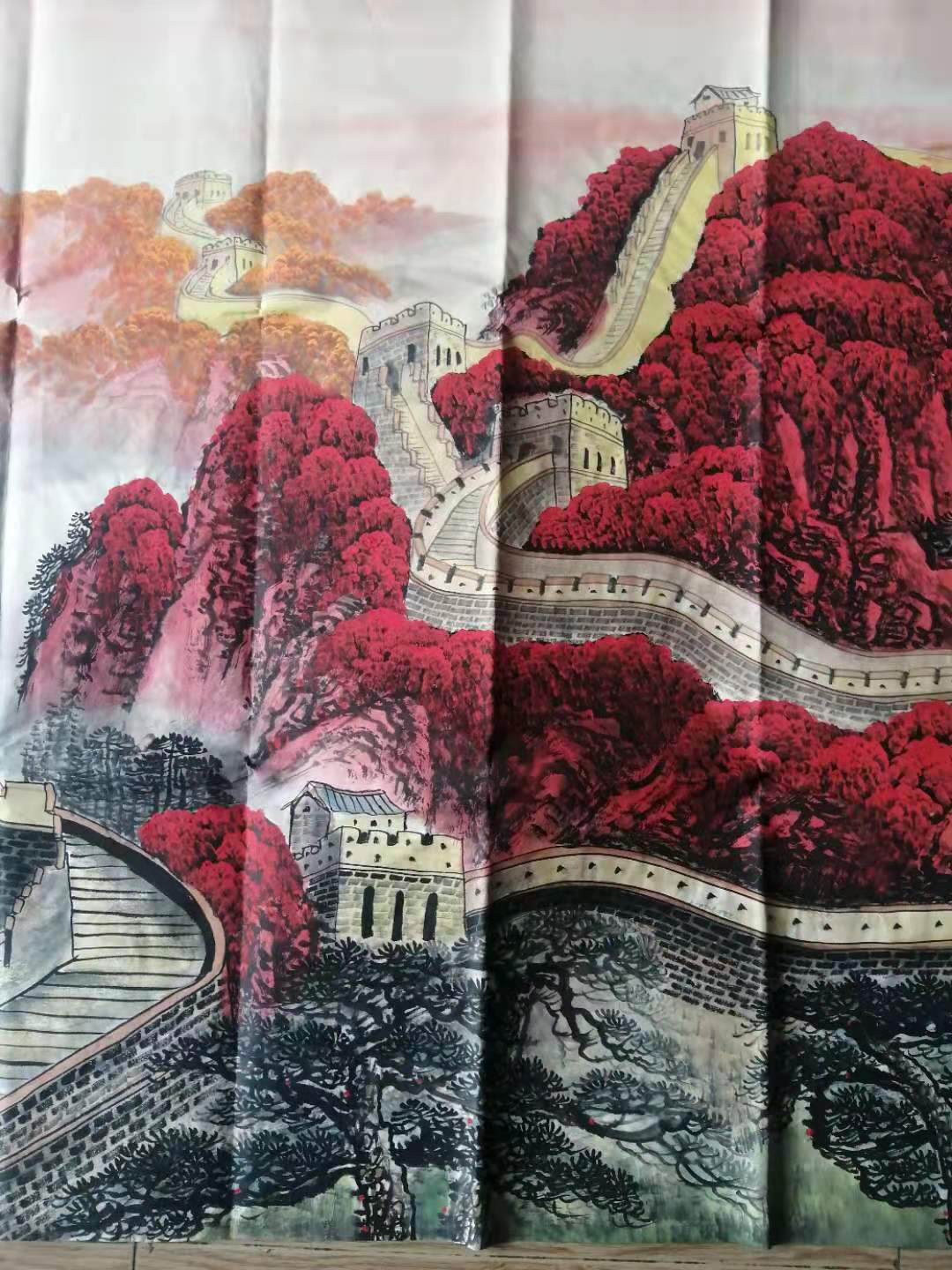
长城资源主要分布在河北、北京、天津、山西、陕西、甘肃、内蒙古、黑龙江、吉林、辽宁、山东、河南、青海、宁夏、*疆新**等15个省区市。其中河北省境内长度2000多千米,陕西省境内长度1838千米 。根据*物文**和测绘部门的全国性长城资源调查结果,明长城总长度为8851.8千米,秦汉及早期长城超过1万千米,总长超过2.1万千米。 现存长城*物文**本体包括长城墙体、壕堑/界壕、单体建筑、关堡、相关设施等各类遗存,总计4.3万余处(座/段)
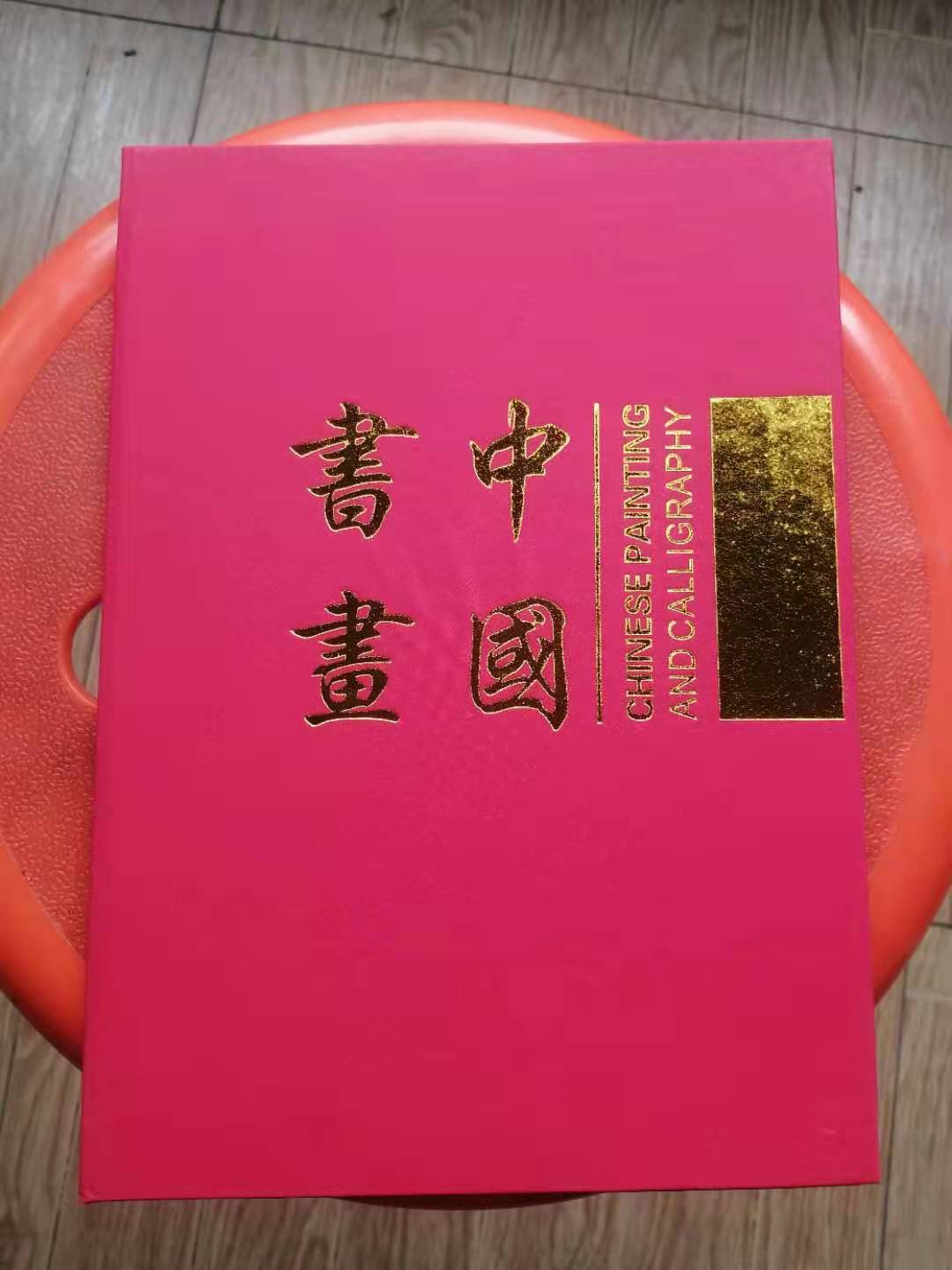
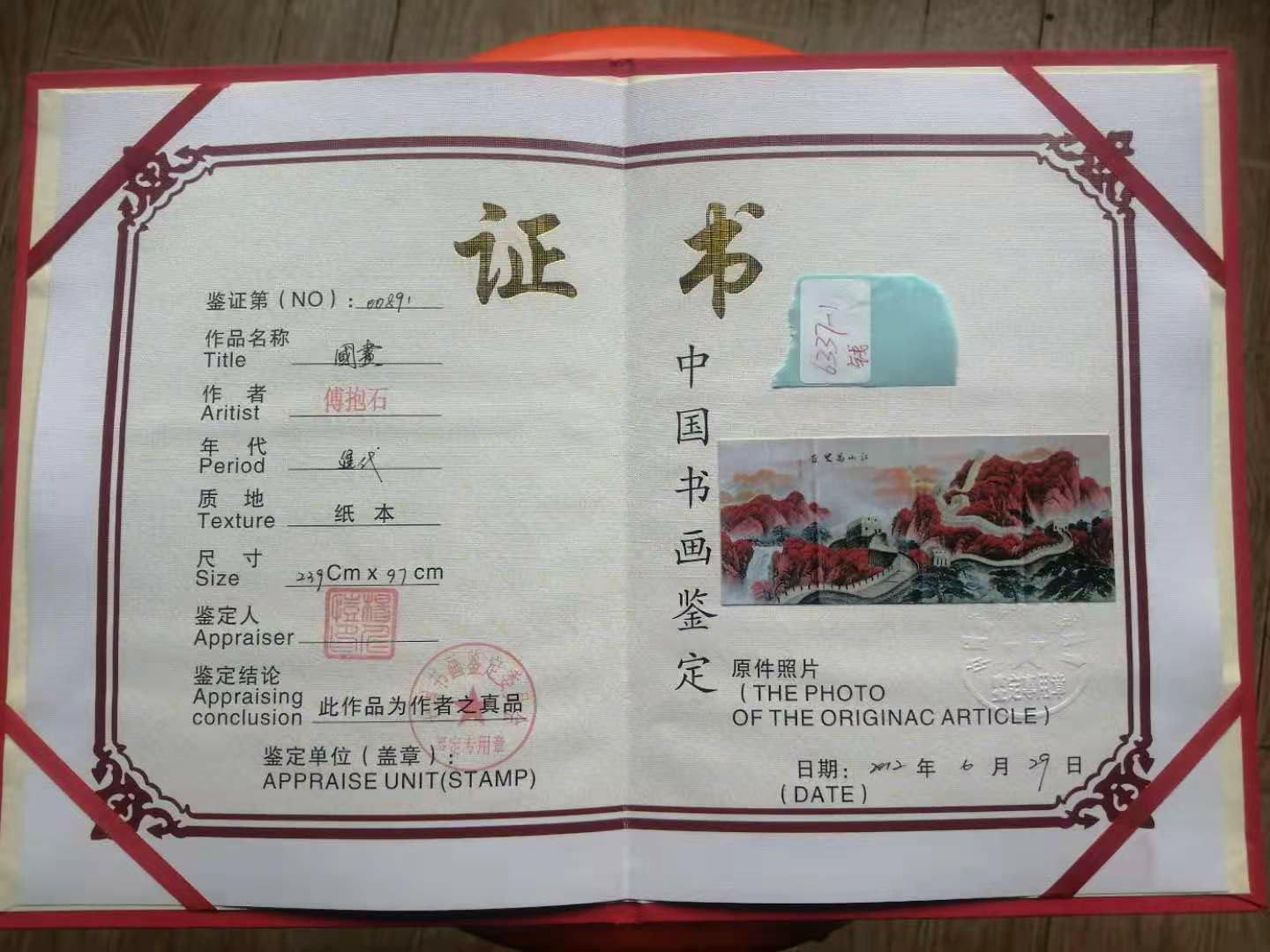
此证书为字画专业鉴定证书,盖有专业鉴定章,明确表明作者,年代,真伪,为字画交易保驾护航。
此画气势宏伟,红而不艳,其间云雾缭绕,瀑布飞流直下,晕染层次丰富,仿佛与天相接,融为一体,其长城的墙体,以工笔画表现,犹如龙鳞一般,其青松以重墨表现,以鱼鳞皴表现树皮,枝干茂盛,形似龙脚龙爪,整体体现万里长城之气势,犹如东方巨龙,蜿蜒绵长,整体十分耐赏,具有极高的艺术价值,而傅抱石为书画界之泰斗级画师,更是独创抱石皴法,无人超越,这件作品比起李可染的漫山红遍,气势更胜一筹,注定其作具有不可估量的收藏价值。
英文翻译:Fu Baoshi (October 5, 1904 -- September 29, 1965), formerly known as Changsheng and Ruilin, master of Baoshi House, was born in Nanchang, Jiangxi Province. His ancestral home was Xinyu, Jiangxi Province. He was a modern painter and a representative of "New Landscape Painting". He studied abroad in Japan in his early years and taught at Chuo University after returning to China. After 1949, he served as a professor of Nanjing Normal University and president of Jiangsu Academy of Chinese Painting.
Fu Baoshi Jiangshan Wanli Map
He is good at painting mountains and rivers. In middle age, he created "boulders Cun". His strokes are relaxed and easy, and his imposing manner is bold and unrestrained. In his later years, he has a strong sense of The Times. Figure painting for ladies, Gao Shi, the image of Gao Gu. He is the author of "The Study of Ancient Chinese Painting", "Outline of the History of the Changes of Chinese Painting", etc.
This picture shows the momentum of the Great Wall. According to Mr. Baishi, the description of the vast country, the beauty of the scenery, and the heroic heroic spirit of the Chinese people's revolutionary optimism is extremely perfect. Because of the vast territory, "when the fertile soil in the south of the Yangtze River in the genial sunshine in full bloom of flowers, manshan red.
Compared with Li Keran's painting, the Great Wall never falls. The red leaves are all over the mountain and the green pines stand in front of us. With the Great Wall as the ridge, it looks like a giant dragon hovering over the mountain to protect the Chinese nation.
It can be seen that the inscription can also see the effect of its halo, light red and yellow blend, general works painted here to do the blank processing, between the lines, visible as Taishan solid handwriting, signed Fu Baoshi, seal and chapter spectrum contrast, completely in line with.
It can be seen that the red maple is painted with the techniques of the hemp chapping, echoing the brown and yellow color of the vision. The red maple, with the leaves of the autumn yellow, belongs to the same season. The mountain is chapped with the techniques of the clouds, and the performance is relatively soft, which perfectly integrates with the tree planting.
The Great Wall, also known as The Great Wall, is a military fortification in ancient China. It is a tall, strong and unbroken Wall used to isolate The movement of The enemy. The Great Wall is not a single isolated wall, but a defensive system with the wall as the main body and a large number of cities, barriers, pavilions, and landmarks.
The history of the construction of the Great Wall can be traced back to the Western Zhou Dynasty, where the famous allusion "Beacon fires play on princes" occurred in the capital Haojing (today's Xi 'an, Shaanxi Province). During the Spring and Autumn Period and the Warring States Period, the states fought for supremacy and defended each other. The construction of the Great Wall entered its first climax, but the length of construction was relatively short at this time. After Qin destroyed the six states and unified the world, the First Emperor of Qin connected and repaired the Great Wall of the Warring States Period, which became known as the Great Wall. The Ming Dynasty was the last dynasty to overhaul the Great Wall. Most of the Great Wall we see today was built at this time.
The Great Wall resources are mainly distributed in Hebei, Beijing, Tianjin, Shanxi, Shaanxi, Gansu, Inner Mongolia, Heilongjiang, Jilin, Liaoning, Shandong, Henan, Qinghai, Ningxia, Xinjiang and other 15 provinces. Among them, Hebei Province has a length of more than 2,000 kilometers and Shaanxi Province has a length of 1,838 kilometers. According to the results of a nationwide survey of the Great Wall resources conducted by the cultural relics and surveying and mapping department, the total length of the Ming Dynasty Great Wall is 8,851.8 km, and the Qin, Han and early Great Wall is more than 10,000 km, with a total length of more than 21,000 km. The existing relics of the Great Wall include the Great Wall wall, trenches/boundary trenches, individual buildings, forts, and related facilities, totaling more than 43,000 (blocks/sections).
This certificate is a professional authentication certificate of calligraphy and painting, with a professional authentication seal, which clearly indicates the author, age, authenticity, and provides escort for calligraphy and painting transactions.
Painting grand, red but not bright, mist, waterfall, shading rich layers, as if into the day, be in harmony are an organic whole, the walls of the Great Wall, with claborate-style painting, like scales, the pine and the heavy ink performance, with scales Cun bark, branches thick, shaped like a dragon African feet, whole reflects the imposing manner of the Great Wall, is like a dragon, winding long, The whole is very resistant to appreciation, has a very high artistic value, and Fu Baoshi is the master class painter of calligraphy and painting, but also the original bouldering cures method, no one beyond, this work than Li Keran's manshan red, momentum is better, destined to have immeasurable collection value.