






1.When my husband was going into the dining room this morning, / wen maI hVzbEnd wEz gEIN Intu DE daInIN ru:m DIs mO:nIN /
今天早晨我丈夫走进饭厅时,
过去进行时,主语+be动词过去式+动词ing
go into
进入
he dropped some coins on the floor.
/ hi drXpt sVm kOInz Xn DE flO: /
把一些硬币掉在地上了。
Some 用于肯定句。
2. There were coins everywhere.
/ DeE WE kOInz evriweE /
到处都是硬币。
There were + 名词复数
We looked for them,
/ wi lkt fO:r DEm /
我们虽然找了,
look for 寻找(强调过程)
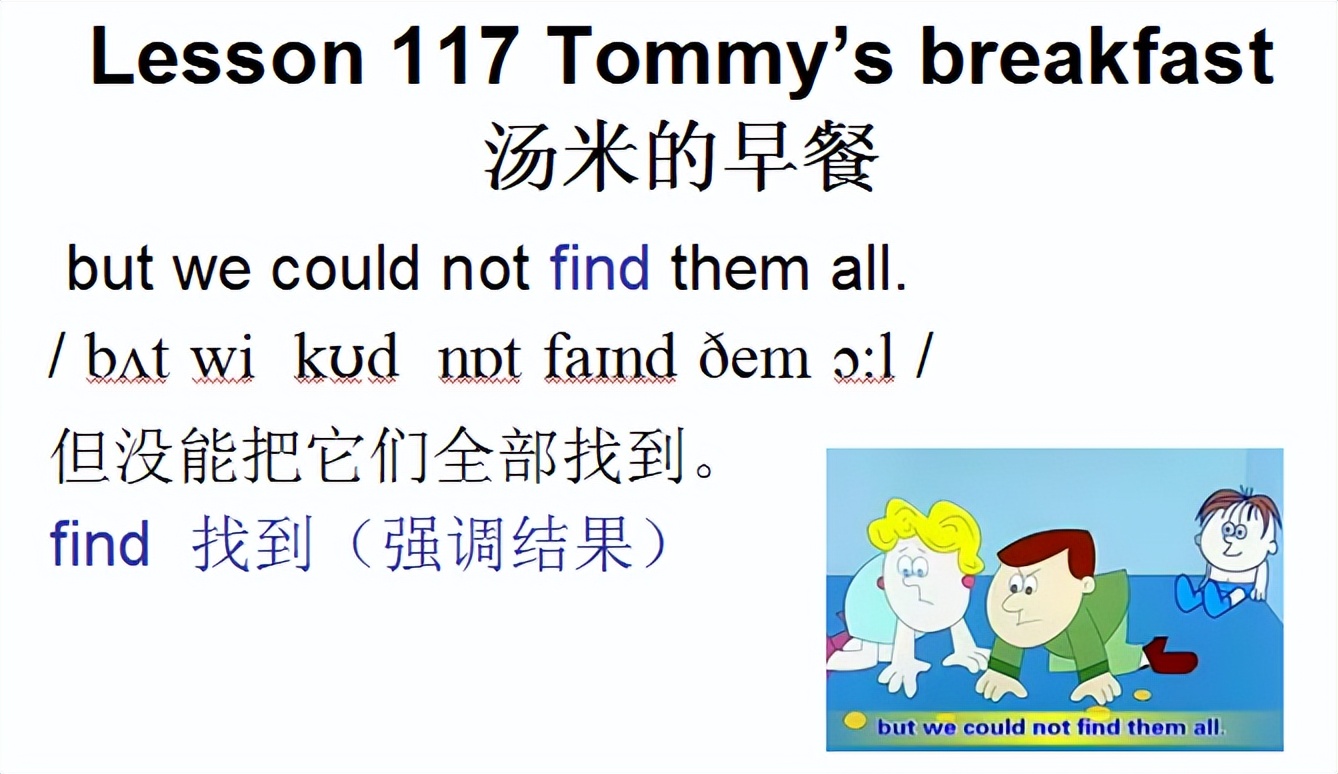
but we could not find them all.
/ bVt wi kd nXt faInd Dem O:l /
但没能把它们全部找到。
find 找到(强调结果)
3. While we were having breakfast,
/ 't waIl wi wE hQvIN brekfEst /
正当我们吃早饭时,
While 当…时
have breakfast 吃早餐
our little boy, Tommy, found two small coins on the floor.
/ aE lItl bOI tXmi fand tu: smO:l kOInz Xn DE flO: /
我们的小男孩汤米在地上找到了两枚小硬币。
一般过去时,主语+实义动词过去式
4. He put them both into his mouth.
/ hi pt Dem bET Intu hIz maT /
他把这两枚硬币全都放进了嘴里。
put … into 把 … 放进
We both tried to get the coins,
/ 't wi bET traId tu geI De kOInz /
我们俩都试图把这两枚硬币拿出来,
try to do sth. 尝试做某事
both 两者
but it was too late.
/ bVt It wEz tu: leIt /
但太迟了。
Tommy had already swallowed them!
/ tXmi hQd O:lredi swXlEd DEm /
汤米已经把硬币咽了下去!
过去 完成 时,主语+ had + 动词过去分词
5. Later that morning,
/ leItE DQt mO:nIN /
那天上午的晚些时候,
when I was doing the housework,
/ wen aI wEz du:IN De hasw:k /
当我正做家务时,
过去进行时,主语+be动词过去式+动词ing
my husband phoned me from the office.
/ maI hVzbEnd fEnd mi frEm DE XfIs /
我丈夫从办公室打来电话。
phon sb 打电话给某人
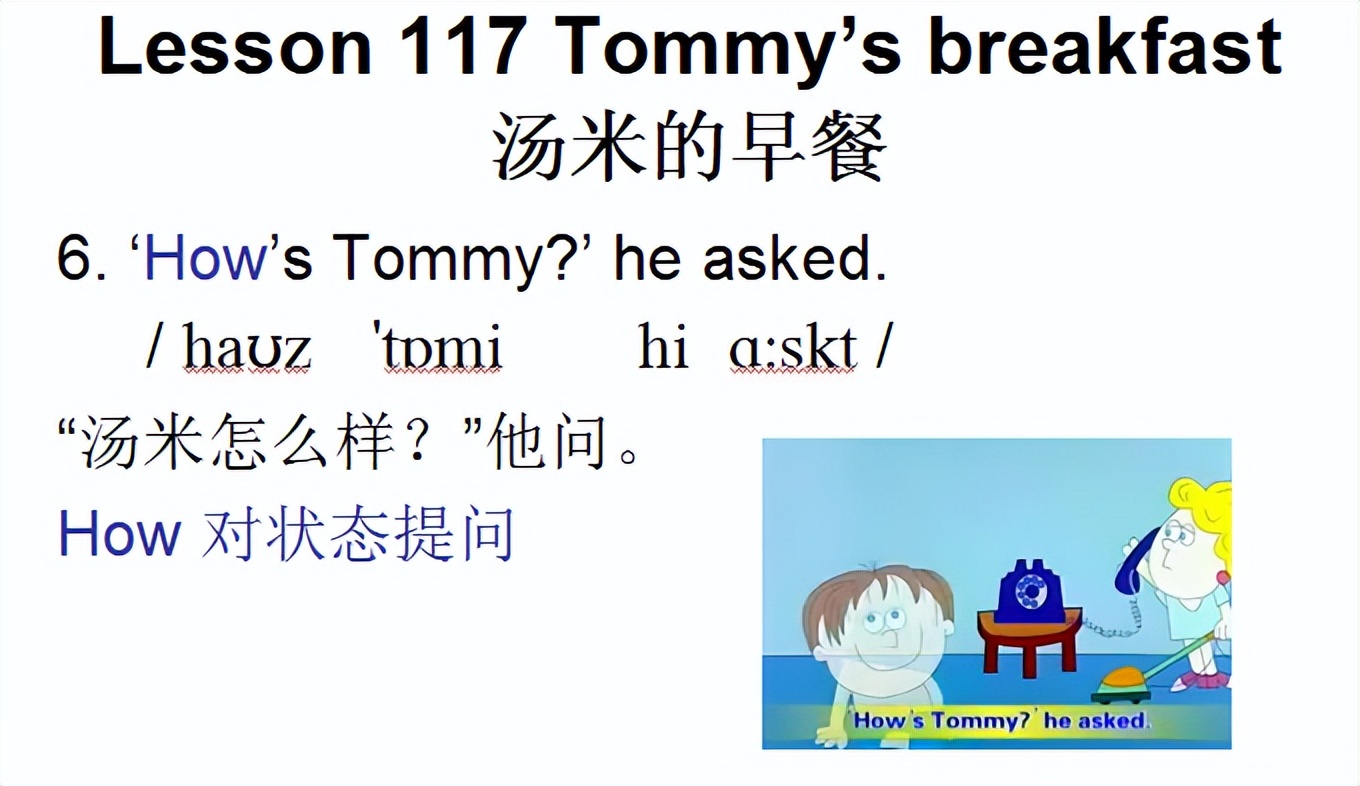
6. ‘How’s Tommy?’ he asked.
/ haz tXmi hi A:skt /
“汤米怎么样?”他问。
How 对状态提问
‘I don’t know,’ I answered,
/ aI dEnt nE aI A:nsEd /
“我不知道,”我回答说,
‘Tommy’s been to the toilet three times this morning,
/ tXmiz bi:n tu DE tOIlEt Tri: t aImz DIs mO:nIN /
“今天上午汤米去了3次厕所了,
been to
到…
but I haven’t had any change yet!’
/ bVt aI hQvnt hQd eni tSeIndZ jet /
但我还没看到硬币!”
yet 仍然,用于否定句。