英语中的介词通常构成都很简单,如in, on, at, to,by, of, for,from等。当然也有一些稍复杂的。
介词的简单分类:
表示时间的常用介词:
at 在……时候,如:at night在夜里, at midnight在午夜, at noon 在中午
on 在…时;常用于具体的某日上午、下午、晚上等。如:on New Year's Eve 在除夕夜 on Monday morning 在周一上午
in用于这些情况,如不具体的某日上午、下午、傍晚:in the morning在上午, in the afternoon在下午, in the evening在傍晚, in 2020 在2020年,in May 在五月
in用 于将来时中,表示一段时间之后,如:I'll come back in two days.两天后我会回来。
about大约,
since 自从,如:Great changes have taken place since you left. 自从你走后,发生了巨大的变化。(注意这个句子主句与从句的时态,这是考试中常考查的考点)
from...to...从……到…… We have lessons from Monday to Friday. 我们从周一至周五上课。
for +一段时间,表示“长达”,常用于完成时态。He has lived here for 5 years. 他已经在这儿住了五年了。
表示地点、方位的常用介词:
in,在……内,通常后面跟大的地点。
at,在小的地点内或旁
on 在……上面(物体表面)
from...to...从……到…… I've read the book from beginning to end. 我把这本书从头至尾都看了。
between 在两者之间
among 在三者或三者以上的人或物之间
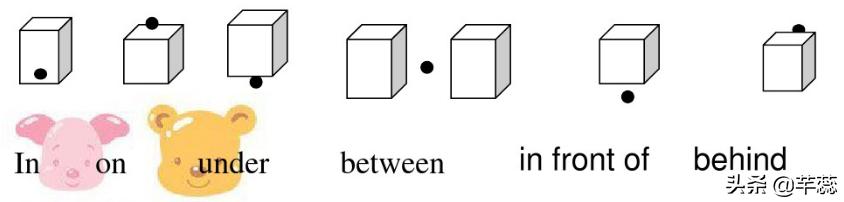
介词用法图示一
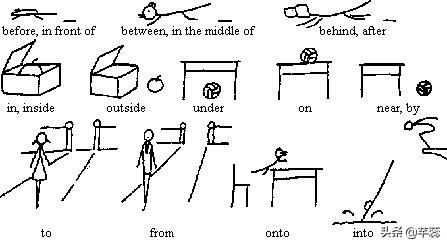
介词用法图示二
表示方式的常用介词:
by+交通工具,如:by bus; by train, by plane/by air
in +某种语言,如:in English 用英语。另外一个常用的短语为:in ink 用墨水写
with+某种工具 如: He hit it with a hammar. 他用锤子砸。
on+某种手段、通讯方式等。如:His model deeds have been publicized on TV. 他的先进事迹都上了电视了。
其他常用介词:
about 关于,
against 反对,靠(倚)着
for 为了
like 像……一样
except 除了 Everyone finished the work except Tom. 除了汤姆,大家都完成了工作。
without 表示否定“没有”
常用的介词短语:
be good at 擅长
ask for 请求
instead of 代替 He watched TV instead of seeing a film. 他没有看电影,而是看电视了。
at the top of 在……顶部
at the foot of 在……底部 如:at the foot of the mountain 在这个山脚下
be made of (通常能看出原材料) / be made from(通常看不出原材料) 由……制成
arrive in(大地点) /at (小地点) 到达
in front of 在……前面 /in the front of 在……前面(内部空间的前部分)