住宅区的建筑外墙拥有极具创意的“多彩外衣”,与莫斯科郊区沉闷而单调的城市氛围形成鲜明对比。开放式的庭院具备多样的娱乐功能,改善了社区居民的生活体验与质量。
An effective and creative “colorful layer” on the facade of the buildings provides a tasteful contrast to the monotony of Moscow’s suburban areas while open courtyards improve perception and quality of life and offer a great number of recreational functions.
▼项目概况,overview ©Mosproekt-3

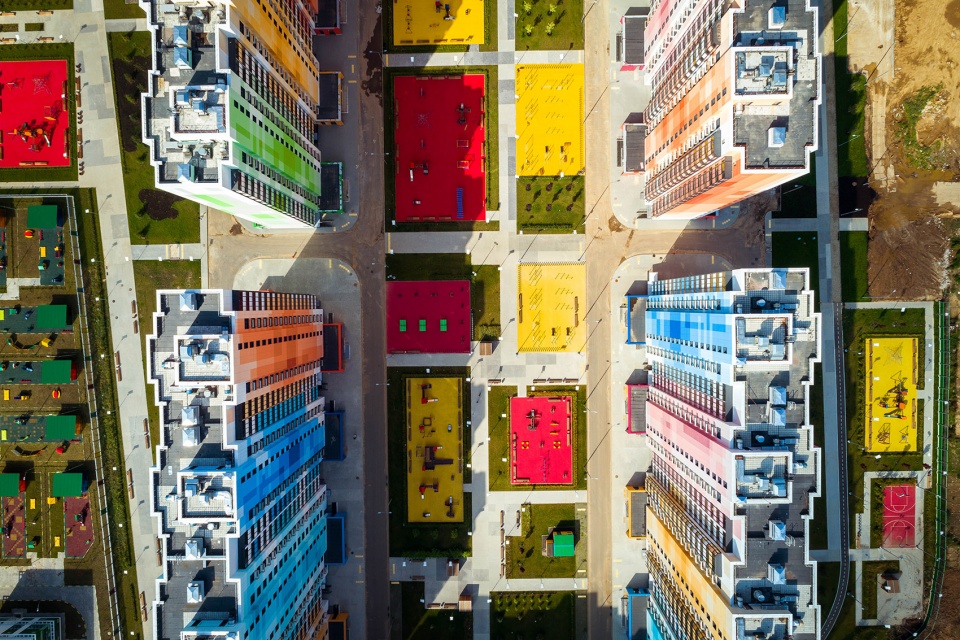
新的住宅区位于莫斯科东北省份Dmitrovskoe Shosse,包含有47幢高层住宅楼,及建筑环绕形成的两个10000平米大型公共庭院。住宅区的每幢建筑都为周边的城市肌理增添了不一样的色彩。住宅项目的概念深化由意大利建筑设计师Massimo Iosa Ghini及其工作室完成。工作室主张利用鲜明的建筑外墙装饰及功能多样的公共空间,打造与众不同且富有人性化的居住区,以此打破俄罗斯郊区过于单调的城市氛围。俄罗斯公司Mosproekt-3负责该项目技术层面的问题。
▼高层住宅楼,multistory buildings ©Mosproekt-3

Located within Moscow’s north eastern administrative district of Dmitrovskoe Shosse, the new residential complex includes 47 multistory buildings gathered around two massive 10.000 square meter communal courtyards, each providing the surrounding urban fabric with a new outward appearance. The concept was entrusted to Massimo Iosa Ghini’s Italian studio of architects, whose insights provided the immensely wide scale of the monotonous Russian suburbs with more “human” and distinctive traits, by using bright accents on the exterior facades and creating common spaces for collective use, whereas Russian firm Mosproekt-3 dealt with the technical aspects of the project.
▼公共庭院, communal courtyards ©Mosproekt-3

▼庭院局部鸟瞰,partial aerial view of courtyard ©Mosproekt-3
“我们的设计摆脱了无法灵活变通的预制结构,因而未受到过多限制,最终得以巧妙地实现了美学,社区生活功能及可持续性等多元需求。” Massimo Iosa Ghini表示,“在不影响建造成本的前提下,工作室的最终目标是同时提升社区的生活体验感及环保价值。”
“We contributed to the existing design by skillfully conjugating aesthetics, quality of life and sustainability, while taking advantage of very limited guidelines, free from the common restraints concerning prefabricated construction, which did not allow for a wide margin of modifications” says Massimo Iosa Ghini, “The ultimate goal of my studio was to create a sense of value tied to both perception and the environment, without affecting productions costs”.
▼设计草图,design sketch ©Mosproekt-3

住宅建筑普遍具有单调性,因此该项目的挑战在于如何最大程度地美化建筑外墙。该地区的独特之处在于,地区内住宅主要通过加重色彩色相的方式,提升建筑物及出入口的辨识度。建筑新的外墙借助陶瓷覆层,完美呈现了不同色彩之间有趣的对比与融合,其设计灵感来源于俄罗斯以伊尔·利西茨基(El Lissitzky)为代表的前卫派运动,该运动推崇图形化的理性主义美学。
Given the monotony of this type of building, the main challenge consisted in maximizing the aesthetic output of the exterior cladding. The unique identity of the district along with the ability to easily recognize each building and entryway, are achieved through the use of color declined in several accents and hues.The tasteful blend of different and contrasting shades of color comes to life with the ceramic cladding and is inspired by the graphical, rationalist aesthetics of the Russian avant-garde movements, particularly that of El Lissitzky.
▼建筑外墙展现图形化美学,graphical aesthetics of exterior cladding ©Mosproekt-3
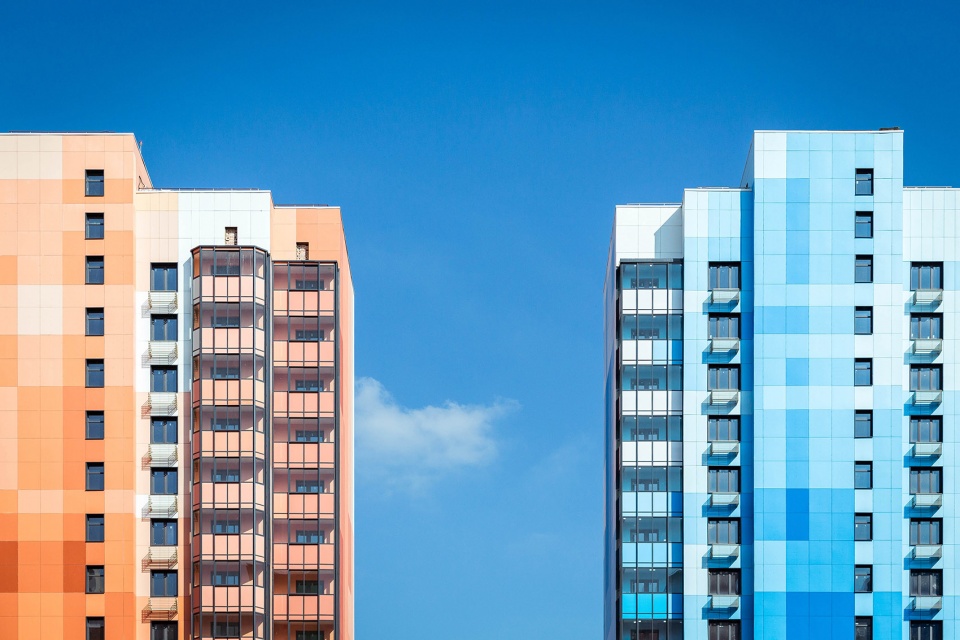
色彩作为一种艺术性策略,因其较强的视觉参考性及方向指引性,构建了建筑与外界的交流。最重要的是,项目的最终呈现提升了城市的可识别性,有利于城市的身份认同及文化发展。
Color, used to create visual references and to provide a certain sense of bearing, is transformed into an artistic device used for communication and most importantly the fruition and better identification of the urban fabric, the appreciation of its identity and its cultural development.
▼社区与周边,利用色彩增强可识别性。Community and its surroundings, color used as device that improve identification. ©Mosproekt-3

为了使现有建筑不再单调,该项目在技术层面投入了大量精力寻求新颖的建筑立面覆材方案:摈弃传统的俄罗斯预制结构,用小尺寸的彩色陶瓷饰面代替纤维水泥面板。这种结构不仅使建筑更显活力,还保障了建筑立面色彩选择的灵活性。住宅区建筑外墙采用了大量不同的色彩组合,使每个建筑的外观都与周围建筑不同。居民进入建筑的主门厅与立面统一布局,使得住宅区拥有和谐的建筑外观及空间氛围。除了外立面的改造设计,住宅区新建了一个室内的多层停车场及若干入口大厅。
▼小尺寸的彩色陶瓷饰面代替纤维水泥面板,abandon fiber-cement while using external stained ceramic finish in a very small format ©Mosproekt-3
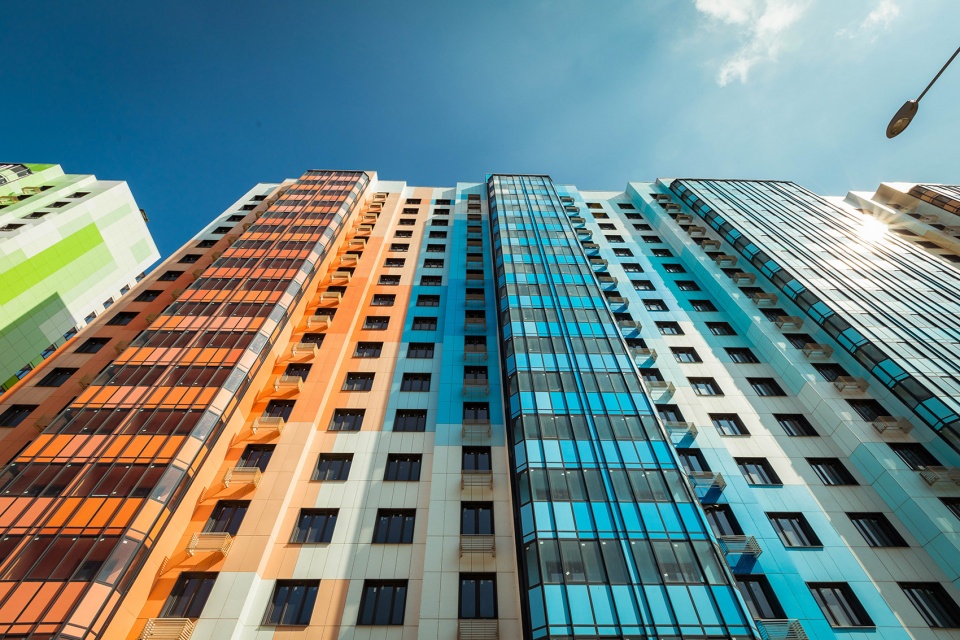
From a technical point of view, special attention was paid to finding innovative solutions for the exterior cladding while discarding the monotonous schemes employed for existing buildings: traditional Russian methods of prefabrication, with external stained ceramic finish in a very small format, were abandoned in favor of panels of fiber-cement. This system enhances the energetic performance of the buildings and allows for a greater degree of flexibility in regard to the aesthetic and chromatic output of the facades. A great number of color combinations were chosen in order to achieve a specific look, detached from that of the surrounding chromatic fabric. A series of portals usher residents into the main Lobby, built in accordance with the external aesthetic layout, in order to convey the same type of “look and feel”. Along with the redesign of the external facades, the creation of a multistory covered parking and several entrance halls.
▼每栋建筑都与周围建筑不同,buildings detached from the surrounding chromatic fabric ©Mosproekt-3

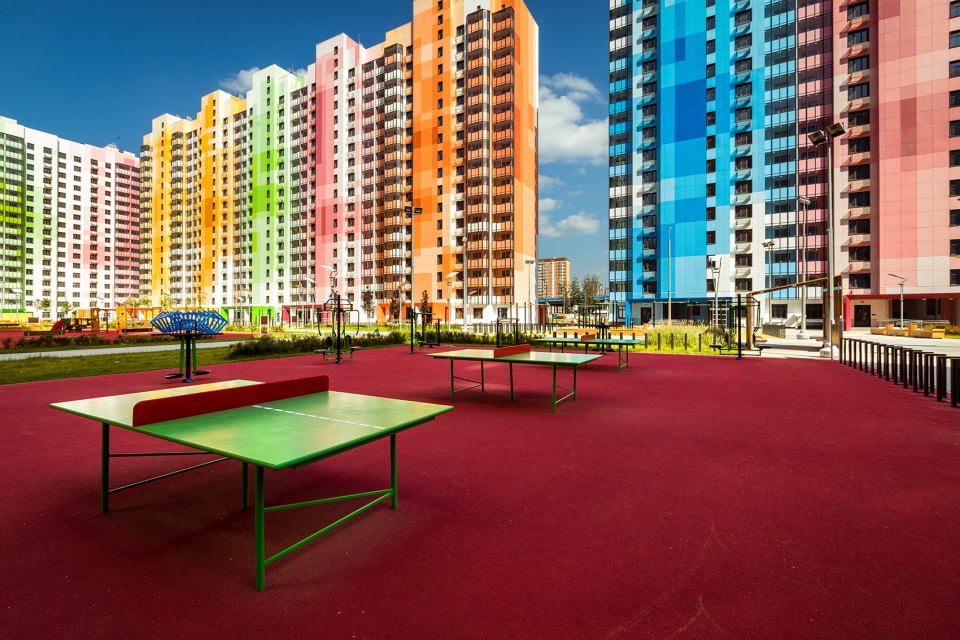
此外,以提升居民生活质量为宗旨,增加绿化及娱乐设施,为社区居明量身打造室外公共空间,也是住宅区设计至关重要的一环。该社区拥有超过22公顷的公共庭院,庭院主要包括绿化设施及集散空间。连接社区不同区域的人行道及自行车道系统,将庭院划分成不同功能的若干区块。区块内设置有娱乐健身设施,和可供社区居民交流及放松的户外空间。
“Of great importance was the creation of a concept design concerning external collective facilities which could improve the quality of life, through the addition of green areas and numerous recreational functions specifically tailored for the community who will inhabit the residential complex”.More than 22 hectares of communal courtyards are arranged based on a system of green areas and collective spaces, each with a specific purpose ranging from recreational zones and fitness facilities to common areas for socialization and outdoor leisure, all of which are integrated within a network of pathways and bike lanes connecting different sections of the district and leading to existing developments.
▼运动娱乐设施,fitness and recreational facilities ©Mosproekt-3

▼游戏广场鸟瞰,aerial view of recreational zone ©Mosproekt-3
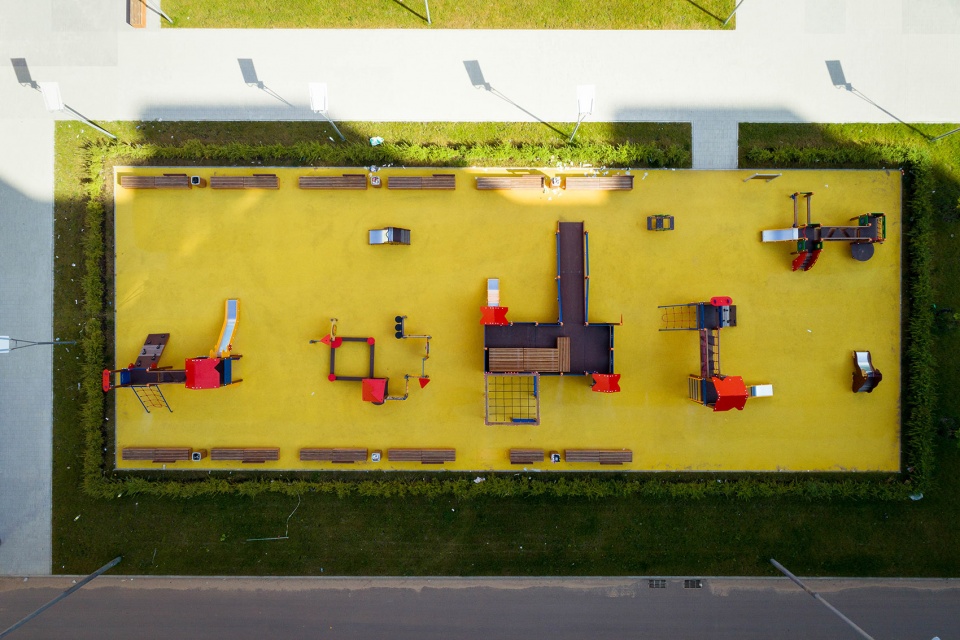
▼游戏广场细部,detail view of recreational zone ©Mosproekt-3
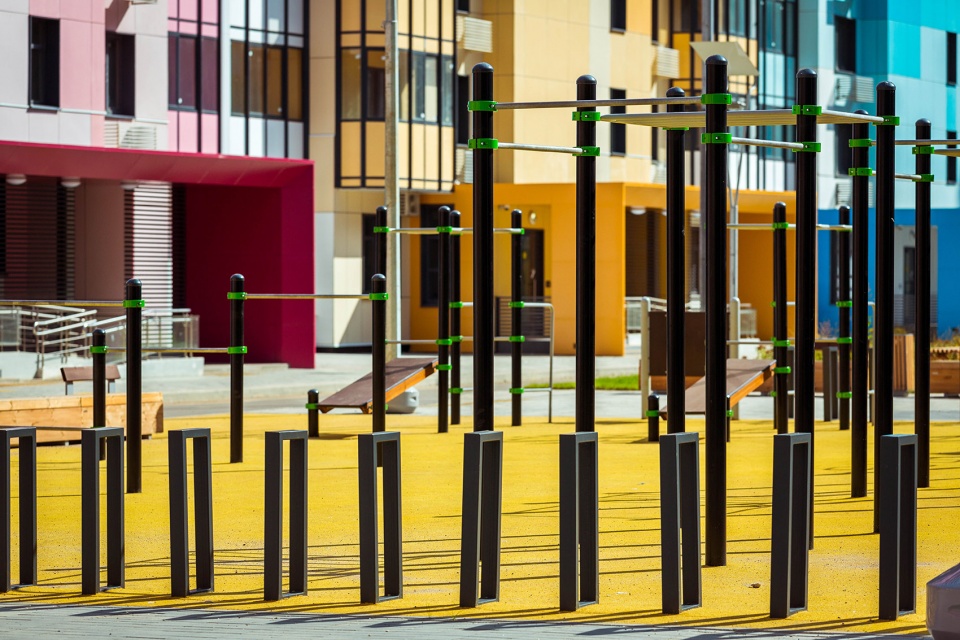
▼室外休闲设施,facilities for outdoor leisure ©Mosproekt-3

▼庭院绿化,green system in courtyard ©Mosproekt-3
