Critical Evaluation (3)
Fan Yi Jun (Nance Fan) , 2003

Title: Strategic management development: using experiential learning theory to assess and develop managerial competencies
Author: David Kolb, Stuart Lublin, Juliann Spoth and Richard Baker
Evaluator: Fan, Yi Jun
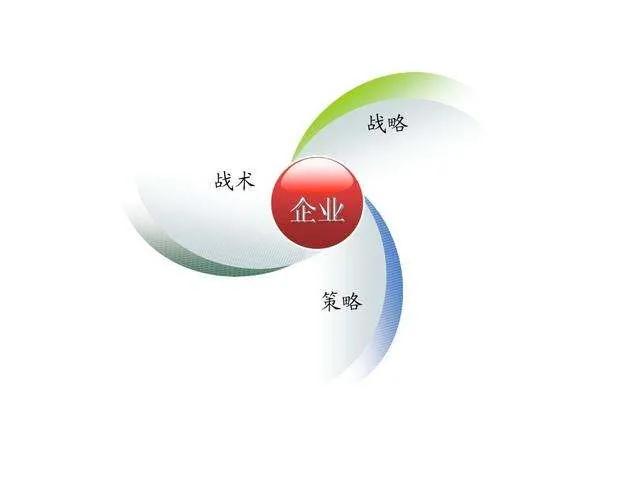
How do you describe a classical organization? It must be with a limited span of control, non-overlapping job definitions, a single chain of command, and formal authority that matched responsibility. But it’s old fashioned and can’t fit our modern management processes. We are facing more complex environmental circumstances. We really need greater behavioral competence in taking initiative and responsibility; we really need greater perceptual competence in gathering and organizing information; we really need greater affective competence in empathizing with others; we really need greater symbolic competence in one’s ability to conceptualize the organization as a system required to make modern organizational forms work effectively.
We are required increasingly sophisticated and highly differentiated specialized knowledge to find solutions for our organizations. We need complex dynamic leadership. Strategic management development becomes highlighted. Can “experiential learning theory” be a useful way to assess and develop our managerial skills? Yes, I think it’s a strategic approach after reading this article.
How to effectively manage complex organizations in complex environments? This is what I am interested and wondered mostly. A system needs to identify not only highly specialized, specific knowledge requirements, but also the more integrative learning and problem solving competencies needed to cope with uncertainty and complexity. Then “experiential learning theory” really can be an approach based on “competency circle”.
There are four basic modes of the experiential learning process: affective competencies (related to the concrete experience mode); perceptual competencies (related to the reflective observation mode); symbolic competencies (related to the abstract conceptualization mode); behavioral competencies (related to the active experimentation learning mode). It is also highlighted that our role in integrative learning is to manage the process of learning; to facilitate adult learners in the process of learning from their own experiences in life rather than being dispensers of knowledge and wisdom. But this raises an interesting question about how people with extremely short experience can adopt this learning approach very well? Consciously improving the practical activities in society may be an adaptable approach to richen their life experience for better performance on this integrative learning sincere it emphasizes the integration of the abstract concepts of social knowledge with the concrete, subjective experiences of personal knowledge.
I believe that the integrative learning approach can help managers become life-long learners and cope with the issues on their continually changing agendas through providing them with access to knowledge and relationship networks. To be honest, I don’t have much experience on this, but what I consider is I will put integrative learning approach to my future management work because it sounds a strategic way to develop management skills.

题目:战略管理发展: 运用“经验学论”评估和发展管理能力
作者: David Kolb, Stuart Lublin, Juliann Spoth and Richard Baker
评论:范 宜 君 ( 格拉斯哥 2003;译于 2019 )
你如何描述一个经典组织? 它必须具有有限控制范围、不重叠的工作定义、单一命令链和与职责匹配的正规权威。但是,这已经过时了,不适合我们现代管理程序。我们正面临更加复杂的环境状况。我们真的需要更强的行为能力来采取主动并担当责任; 我们确实需要更强的感知能力来收集和组织信息; 我们真的需要更强的情感能力去同情他人; 我们确实需要更强的象征能力,使一个人能够将组织概念化,成为使现代组织形式有效运作所必需的系统。

我们需要越来越复杂和高度差异化的专业知识来为我们的组织找到解决方案。我们需要综合而深具活力的领导。战略管理发展成为重点。“经验学习理论” 能成为评估和发展我们管理技能的有效方法吗? 是的,读了此文后,我认为这是一种战略方法。
如何在复杂的环境中有效地管理复杂的组织? 这是我最感兴趣和最好奇的。系统不仅需要识别高度专门化、特定的知识需求,还需要识别更综合的学习和解决问题的能力,以应对不确定性和复杂性。那么“体验学习理论” 确实可以成为一种基于“能力圈” 的学习方法。
体验学习过程有四种基本模式: 情感能力(与具体体验模式相关); 感知能力 (与反思观察模式相关); 符号能力 (与抽象概念化模式相关); 行为能力 (与主动实验学习模式相关)。同时也强调了我们在综合学习中的角色是管理学习过程; 帮助成人学习者在学习过程中从自己的生活经验中学习,而不是成为知识和智慧的传播者 。但这也提出了一个有趣的问题,即经验极其短暂的人如何才能很好地采用这种学习方法? 有意识地改进社会实践活动可能是一种适应性的方法,以丰富他们的生活经验,从而更好地表现在这种综合学习上。
我相信, 综合学习方法可以帮助管理者成为终生学习者 ,并通过向他们提供获取知识和关系网络的途径来处理他们不断变化的议程上的问题。说实话,我在这方面的经验并不多,但我认为我将把综合学习的方法应用到我未来的管理工作中,因为这听起来是一种发展管理技能的战略方法。