
手把手教你正确掌握二甲双胍的临床地位与使用时机。
糖尿病患者心血管事件发生风险显著增高,长期以来受到内分泌、心血管领域医师广泛关注。作为一种临床应用已有60多年历史的降糖药,二甲双胍已成为全球糖尿病防控的核心药物。因此,正确认识、合理使用二甲双胍对心血管医师来说同样至关重要。
近期,《二甲双胍临床应用专家共识》(下文简称“共识”) 2018版正式公布。基于近年来不断涌现的二甲双胍相关研究新证据,共识做出部分更新与修订,为广大临床医师提供重要的学术参考。我们将依据专家共识,对每部分内容进行具体解读,今天先跟小编一起来了解“二甲双胍的临床地位与使用时机”。
表:二甲双胍的临床地位与使用时机
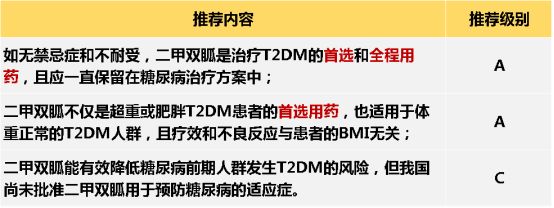
T2DM治疗的一线首选和全程用药 ,
二甲双胍当仁不让!
共识推荐,如无禁忌症和不耐受,二甲双胍是治疗 T2DM的首选 全程用药 ,且应一直保留在糖尿病治疗方案中。那么,二甲双胍为何能够在众多降糖药中脱颖而出,让共识为它打Call呢?
首先,二甲双胍兼具短期和长期降糖疗效,单独使用可有效降低 T2DM患者的 空腹血糖 ( FPG ) 和餐后血糖 (PPG)。研究表明二甲双胍可使中国新诊断T2DM患者的HbA1c降低1.8%,且不受体重影响[1]。基线HbA1c水平一致时,最佳有效剂量(2000 mg/d)的二甲双胍降糖疗效优于其他口服降糖药[2]。二甲双胍缓释片与普通片的疗效相似。
其次,二甲双胍单药治疗效果不佳者,联合其他口服降糖药可 进一步获得明显的血糖改善。与使用其他口服降糖药作为一线治疗相比,以二甲双胍作为一线治疗的患者,加用第二种口服降糖药或启动胰岛素联合治疗的开始最晚,后续需要调整治疗方案的概率也最低[3, 4]。二甲双胍联合胰岛素可进一步降低HbA1c、减少胰岛素用量、增加体重并降低低血糖风险[5-8]。
再次,二甲双胍具有心血管保护作用 。二甲双胍的长期治疗与新诊断的T2DM患者、已存在心血管疾病的T2DM患者的心血管事件发生风险降低显著相关[9]。此外,荟萃分析显示,二甲双胍可降低糖尿病患者的全因死亡率[9, 10]。
最后,二甲双胍 良好的安全性和耐受性是其长期应用的保障。单独使用时不增加低血糖发生的风险,胃肠道反应多为一过性、不导致肾脏损害,长期使用不增加高乳酸血症或乳酸酸中毒发生风险[11-13]。与其他降糖药物相比,二甲双胍具有良好的成本-效益比。
不超重 、不 肥胖 的 T2DM患者 ,
也应该 首选 二甲双胍 !
回顾性和前瞻性临床研究结果均显示,二甲双胍在肥胖、超重、正常体重的T2DM患者中疗效相当。因此,体重不是能否使用二甲双胍治疗的决定因素,无论对于超重、肥胖或体重正常的患者,国内外主要糖尿病指南均将二甲双胍推荐为治疗T2DM的首选用药 [ 14, 15]。
防范糖尿病于未然 ,二甲双胍也有功 !
值得一提的是,除治疗效果成绩斐然外,大量证据尚显示二甲双胍可以有效且安全地降低糖尿病前期人群发展为T2DM的发生率 [16]、减少患者体重增加且10年内医疗花费更低[17, 18],但我国尚未批准二甲双胍应用于糖尿病的预防。
鉴于大量研究证据表明二甲双胍具有确切的降糖效果和包括改善心血管结局在内的多重优势,专家共识仍然力荐二甲双胍作为首选和全程用药奋战于T2DM治疗一线。
下期预告:
二甲双胍的作用机制
参考文献:
[1]Ji L, Li H, Guo X, et al. Impact of baseline BMI on glycemic control and weight change with metformin monotherapy in Chinese type 2 diabetes patients: phase IV open-label trial. PloS one. 2013; 2: e57222.
[2]Esposito K, Chiodini P, Bellastella G, et al. Proportion of patients at HbA1c target <7% with eight classes of antidiabetic drugs in type 2 diabetes: systematic review of 218 randomized controlled trials with 78 945 patients. Diabetes, obesity & metabolism. 2012; 3: 228-33.
[3]Berkowitz SA, Krumme AA, Avorn J, et al. Initial choice of oral glucose-lowering medication for diabetes mellitus: a patient-centered comparative effectiveness study. JAMA internal medicine. 2014; 12: 1955-62.
[4]Ji L, Lu J, Weng J, et al. China type 2 diabetes treatment status survey of treatment pattern of oral drugs users. Journal of diabetes. 2015; 2: 166-73.
[5]Hemmingsen B, Christensen LL, Wetterslev J, et al. Comparison of metformin and insulin versus insulin alone for type 2 diabetes: systematic review of randomised clinical trials with meta-analyses and trial sequential analyses. Bmj. 2012: e1771.
[6]Strowig SM, Aviles-Santa ML, Raskin P. Comparison of insulin monotherapy and combination therapy with insulin and metformin or insulin and troglitazone in type 2 diabetes. Diabetes care. 2002; 10: 1691-8.
[7]Kooy A, de Jager J, Lehert P, et al. Long-term effects of metformin on metabolism and microvascular and macrovascular disease in patients with type 2 diabetes mellitus. Archives of internal medicine. 2009; 6: 616-25.
[8]Guo L, Chen L, Chang B, et al. A randomized, open-label, multicentre, parallel-controlled study comparing the efficacy and safety of biphasic insulin aspart 30 plus metformin with biphasic insulin aspart 30 monotherapy for type 2 diabetes patients inadequately controlled with oral antidiabetic drugs: The merit study. Diabetes, obesity & metabolism. 2018; 12: 2740-2747.
[9]Holman RR, Paul SK, Bethel MA, et al. 10-year follow-up of intensive glucose control in type 2 diabetes. The New England journal of medicine. 2008; 15: 1577-89.
[10]Campbell JM, Bellman SM, Stephenson MD, et al. Metformin reduces all-cause mortality and diseases of ageing independent of its effect on diabetes control: A systematic review and meta-analysis. Ageing research reviews. 2017: 31-44.
[11]Wright AD, Cull CA, Macleod KM, et al. Hypoglycemia in Type 2 diabetic patients randomized to and maintained on monotherapy with diet, sulfonylurea, metformin, or insulin for 6 years from diagnosis: UKPDS73. Journal of diabetes and its complications. 2006; 6: 395-401.
[12]Rachmani R, Slavachevski I, Levi Z, et al. Metformin in patients with type 2 diabetes mellitus: reconsideration of traditional contraindications. European journal of internal medicine. 2002; 7: 428.
[13]Cryer DR, Nicholas SP, Henry DH, et al. Comparative outcomes study of metformin intervention versus conventional approach the COSMIC Approach Study. Diabetes care. 2005; 3: 539-43.
[14]Garber AJ, Abrahamson MJ, Barzilay JI, et al. Consensus Statement by the American Association Of Clinical Endocrinologists And American College Of Endocrinology on the Comprehensive Type 2 Diabetes Management Algorithm - 2018 Executive Summary. Endocrine practice : official journal of the American College of Endocrinology and the American Association of Clinical Endocrinologists. 2018; 1: 91-120.
[15]Introduction: Standards of Medical Care in Diabetes-2018. Diabetes care. 2018; Suppl 1: S1-S2.
[16]Li CL, Pan CY, Lu JM, et al. Effect of metformin on patients with impaired glucose tolerance. Diabetic medicine : a journal of the British Diabetic Association. 1999; 6: 477-81.
[17]Diabetes Prevention Program Research G. The 10-year cost-effectiveness of lifestyle intervention or metformin for diabetes prevention: an intent-to-treat analysis of the DPP/DPPOS. Diabetes care. 2012; 4: 723-30.
[18]Diabetes Prevention Program Research G. Long-term safety, tolerability, and weight loss associated with metformin in the Diabetes Prevention Program Outcomes Study. Diabetes care. 2012; 4: 731-7.
◆ ◆ ◆ ◆ ◆