时态(tense)是一种动词形式,不同的时态用以表示不同的时间与方式。它是表示行为、动作、状态在各种时间条件下的动词形式,其实,所谓“时”就是行为发生的时间或状态存在的时间;英语中有现在,过去,将来,过去将来四种时,所谓“态”即行为发生时或存在时的状态,有四种:一般态,进行态,完成态,完成进行态。这样就构成了16种时态。如图
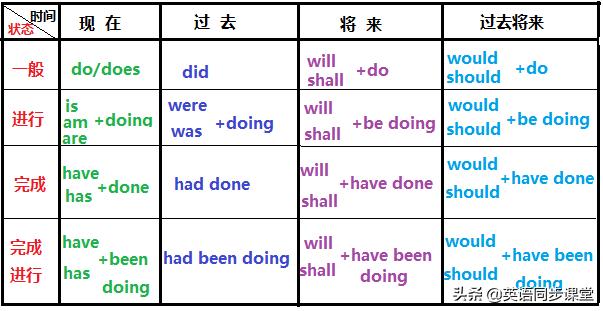
十六种时态的动词形式
中学阶段主要学习和掌握的九种时态,初中英语需掌握八种,它们的具体用法如下:
1、 一般现在时 表示现阶段经常或习惯发生的动作或存在的状态,或说明主语的特征。
① 一般现在时句子中常有的时间状语: often,usually,sometimes,always,every ( day 等), once/twice,a ( week 等), on ( Sunday 等), never,in the ( morning 等)。如:They go to the Palace Museum once a year.(他们每年去一次故宫)/ They often discuss business in the evening. (他们经常在晚上商谈生意)
② 表示客观真理、事实、人的技能或现在的状态时句子里一般不用时间状语。如:The earth turns round the sun.(地球绕着太阳转)/ Light travels faster than sound.(光传播比声音快)
③ 表示十分确定会发生(如安排好的事情)或按照时间表进行的事情,用一 般现在可以表达将来,句子中可以有将来时间。如:The train for Beijing leaves at 8:00 in the morning.(开往北京的列车上午8点开车)
④ 在时间状语从句中(以 when, after, before, while, until, as soon as 等引导)和条件状语从句中(以 if,unless 引导),用一般现在时代替一般将来时,句子可以有将来时间。如:Please ring me up as soon as you arrive in Germany.(你一到德国就给我打电话) / If it rains tomorrow,we will have to stay at home.(如果明天下雨我们就只好呆在家)
⑤ 一般现在时用于倒装句中可以表示正在发生的动作,动词以 come, go 为主。如:Here comes the bus. (车来了) / There goes the bell.(铃响了)。
⑥ 一般现在时常用于体育比赛的解说或寓言故事中。Now the midfield player catches the ball and he keeps it.
⑦ 人的心理活动和感官动作一般用一般现在时而不用现在进行时表达,常见动词有: like, love, hate, dislike, want, wish, hope, think (认为) ,understand, remember, forget, mean, need, hear, feel, see . 如:I think it is going to snow.(我想天要下雪了)/ I really hope you can enjoy your stay here.(我真的希望你愉快地呆在这儿)
2、一般过去时 表示过去某时发生的动作或状态,这种动作或状态可能是一次性,也可能经常
发生。
① 表示过去具体时刻发生的一次性动作时,时间状语有: at (eight) (yesterday morning),(ten minutes) ago, when 引导的时间状语从句。如:I got up at 6:00 this morning.(我是早上六点钟起床的)/ Little Tom broke the window at half past nine this morning. (小汤姆今天早上九点半把窗子打破了)/ When he went into the room,he saw a stranger talking with his father.(他走进房间时发现一个陌生人正和他父亲谈话)
② 表示过去一段时间内不知何时发生的一次性动作时,时间状语有: yesterday, last ( year 等), in ( 1998 等)。如:He came to our city in the year 2000 .(他2000年来到我们市)
③ 表示过去一个阶段中经常发生的事情时,时间状语有: last…, in…, from…to…, for(10 years),often,usually, sometimes, always, never 等。如:Mr Jackson usually went to evening schools when he was young. / Every day he went to the rich man and borrowed books from him.
④ 讲故事、对过去经历的回忆、双方都明白的过去事件等一般用过去时,而且经常省略时间状语。如:I happened to meet Rose in the street.(我正好在街上遇到露西)
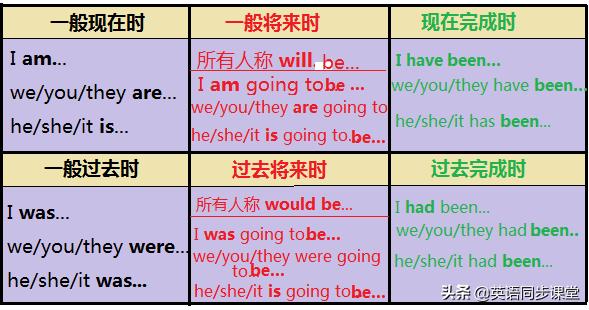
be(是,存在)动词的各种时态变化
3、 一般将来时 表示将来某一时刻或经常发生的动作或状态。
①一般将来时的时间状语有: tomorrow,this (afternoon),next (year),one day ,now, soon ,someday,sometime, in the future, when 引导的从句等。
② 用 will 构成的将来时,表示动作与人的主观愿望无关。“ shall ”用于第一人称,“ will ”
用于所有人称。如: I will graduate from this school soon.(我很快就要从这所中学毕业了)/ You will stay alone after I leave.(我走了之后你就要一个人过了)
③ “ am/is/are going to +动词原形”表示打算或准备要做的事情,或者主观判断即将要发生的事情,而“ am/is/are to +动词原形”表示安排或计划中的动作。如:A man told them that the woman was to give birth to the special baby.(有一个人告诉他们那个妇女就会生下那个特别的男孩)/ It’s going to rain soon.(天快要下雨了)
④ 表示一个人临时决定要做某事,可以用 will 表达。如: I wil l go to the lab to get some
chemicals(化学药剂). So please wait until I return.(我要到化学实验室去取些药品,请等我回头)
⑤ 现在进行时、一般现在时也可以表示将来。(见相应时态)
⑥ shall 和 will 在口语的一些疑问句中相当于情态动词。Shall一般与第一人称连用,will与第二人称连用。如: Shall we go to the zoo next Saturday?(我们下周六去动物园好吗?)/ Will you please open the door for me? (替我把门打开好吗?)
⑦ “ be to +动词原形”表示按照计划将要发生的事情。如:An angel came to tell her that she was to have this special boy.
4、现在进行时 现在进行时表示现在正在进行的动作或是现阶段正发生而此刻不一定在进行的动作。
① 现在进行时由“助动词 be (am is are ) +现在分词”构成。
② 现在进行时的时间状语有: now, this …, these…等,但经常不用。如:What are you doing up in the tree?(你在树上干什么?)/ I am writing a long novel these days .(我最近在写一本长篇小说)
③ 表示即将发生的动作,一般指近期安排好的事情。常见的动词有: come, go, stay, leave, spend, do 等。如:I’m coming now.(我就来)/ What are you doing tomorrow?(你明天干什么?)/ He is leaving soon.(他就要走了)
④ 表示频繁发生或反复进行的动作,常与always等频度副词连用,以表示赞扬、不满或讨厌等感情色彩。如:He is always borrowing money from me and forgetting all about it some time later.(他老是向我借钱,过一些时候就忘得一干二净)
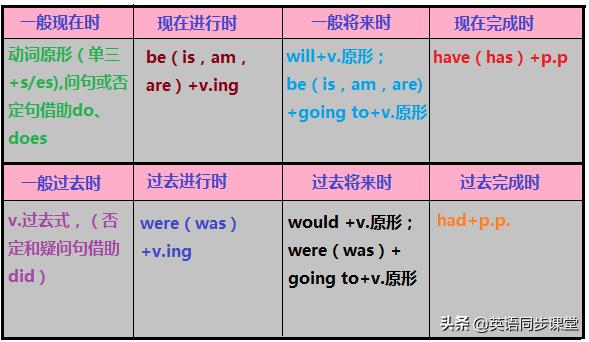
八种时态动词的变化形式
5、过去进行时 过去进行时表示过去某一时刻或某阶段正在进行的动作。
① 过去进行时由“ was (第一、三人称单数)或 were (第二人称单数和各人称的复数)+现在分词”构成。
② 过去进行时的时间状语有: then, at that time, this time yesterday, at (eight) yesterday (morning),(a year) ago, 以及由 when引出的时间状语从句。如:He was cooking supper this time yesterday.(昨天这个时候他正在做晚饭)/ The little girl was playing with her toy when I saw her .(我看到小女孩的时候她正在玩玩具)
③ 用于宾语从句或时间状语从句中,表示与主句动作同时进行而且是延续时间较长。句子中通常不用时间状语。如:She was it happen when she was walking past. (她路过时看到事情的发生)/ They sang a lot of songs while they were walking in the dark forest. (他们在黑暗的森林里走时唱了很多歌)
④ 也可以表示过去一个阶段频繁发生或反复进行的动作,常与always等频度副词连用,以表示赞扬、不满或讨厌等感情色彩。如:He was always borrowing money from me when he lived here.(他住在这里时老向我借钱)
6、现在完成时 现在完成时表示一个发生在过去的、对现在仍有影响的动作,或表示开始在过去,并且一直延续到现在,甚至还可能延续下去的动作。
①在完成时由“助动词 have (has) +动词的过去分词”构成。
②表示发生在过去的对现在仍有影响的动作时,时间状语有: already, yet, just, once, twice,ever, never,three times, before 等。如:I have never seen such fine pictures before. (我以前从来没有看过这么好的画)/ He has just gone to England.(他刚去英国)
③表示在过去开始一直延续到现在(可能延续下去)的动作或状态时,时间状语有: for (two years),since 1990, since (two weeks ago) 和 since 引导的状语从句。如:I have been away from my hometown for thirty years.(我离开家乡有30年了)/ Uncle Wang has worked in the factory since it opened .(自从这家工厂开张,王叔叔一直在那儿工作)
④口语中 have got 往往表示 have (有)的意思。如:They have got thousands of books in their library.(他们图书馆有上万本书)
⑤ have been to 与 have gone to 的区别: have gone to (“已经去了”)表示人不在这里, have been to (“去过”)表示人在这里。如:--Where is Mr Li? –He has gone to the UK.(李先生在哪里?他去了英国。)/ --Do you know something about Beijing? –Yes,I have been to Beijing three times. (你知道北京的情况吗?是的,我去过那里三次。)
⑥在完成时中,一个瞬间性动词(一次性动作)不能与表示一段时间的状语连用,此时须将该瞬间动词改为延续性动词或状态动词。具体变化见下表:
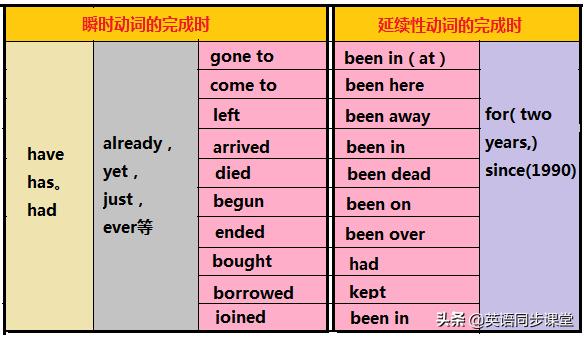
或者使用下面这个句型:
It is / has been + (多久) + since + 主语(人)+谓语(过去时)+……+过去时间状语
[注意] 在其它的时态中也存在类似问题,记住,关键是:瞬间动词不能和表达一段时间的状语连用。如 : How long may I keep the book ? (这本书我能借多久?)(句子中 keep 取代了 borrow )
7、过去完成时 过去完成时表示过去某一时间或某一动作发生之前已经完成的动作。简言之, 过去完成时所表示的时间是“过去的过去”。
①过去完成时由“助动词 had +动词的过去分词”构成。
②过去完成时时间状语有: by (yesterday), by then, by the end of (last…) 或者由 when,before 等引出状语从句。有时句子中会有 already, just, once, ever, never 等词语,也会有 for… 或 since… 构成的时间状语。如:They had already finished cleaning the classroom when their teacher came.(当老师来的时候他们已经打扫完了教室)/ The woman had left before he realized she was a cheat .(在他发觉那个妇女是个*子骗**时她已经走掉了)
③过去完成时常用于宾语从句中、 after 引导的从句中,或者从句是 before 引导的主句中。如: After I had put on my shoes and hat,I walked into the darkness.(我穿上鞋子戴上帽子走进了黑暗之中)/ He said that he had never seen a kangaroo before.(他说他以前从来没有见过袋鼠)
8、 过去将来时 过去将来时表示在过去预计将要发生的动作或存在的状态。
①过去将来时由“助动词 should (第一人称)或 would (第二、三人称)+动词原形”构成。在美国英语中,过去将来时的助动词一律用“ would +动词原形”。
②过去将来时常由于宾语从句中,时间状语有: later, soon, the next (day) .
③在时间状语从句和条件状语从句中不可以使用过去将来时,而应该使用一般过去时。如:He promised that he would pay me a lot if I helped him with the project.(他答应付给我许多钱如果我帮助他搞那个项目)/ Every time when he was free,he would sit down and read some books.(每次只要他有空他就会坐下来看看书)
④表示纯粹的将来时用 would 或 should, 表示打算或主观认为的事情用 was/were going to (+动词原形)。如:She told me she would be 18 the next month.(她告诉我她下个月就18岁了)/ She told me that she was going to have a walk with her pet dog.(她告诉我她打算带她的宠物狗去散步)
⑤过去将来时还可以表示一个过去经常性的动作。如:When it rained in the day, he would bring an umbrella with him.(白天下雨时他会随身带一把雨伞)
9、现在完成进行时:现在完成进行时指一个从过去就开始一直延续到现在并由可能继续下去的动作,它具有现在完成时和现在进行时双重特征,结构是:“ have/has + been + 动词的现在分词”。如:I have been swimming in the cold water for about two hours.(我已经在冰冷的水里游了将近两个小时)/ How long have you been waiting here?(你在这里一直等了多久?)