洒蓝釉:瓷器釉色名。又称“雪花蓝釉”、“洒蓝釉”。明宣德时景德镇所创,清康熙时烧制成熟。是在烧成的白釉器上,以竹管蘸蓝釉汁水,吹于器表,形成厚薄不均、深浅不同的斑点;所余白釉地仿佛是飘落的雪花,隐露于蓝釉之中。
洒蓝釉创烧于明代宣德年间的景德镇,之后停烧。到了清代康熙时期才又恢复生产。清康熙、雍正、乾隆时期的洒蓝釉瓷器呈色稳定,做工精细,很多辅以金彩装饰,也有少量辅以五彩和釉里红装饰。由于烧造时的工艺复杂,成功率比较低,因此洒蓝釉瓷器在当时也是比较珍稀的一个品种。清代后期,洒蓝釉瓷器的烧造水平有所下降,胎和釉等方面都无法与清早期的器物相比。因此,从收藏的角度讲,清代的洒蓝釉瓷器还是以康、雍、乾时期的制品为最佳。
藏品介绍
中文名称:洒蓝釉草莓纹碗
英文名称:Sprinkle strawberry grain bowl with blue glaze
类别:瓷器
规格:一件
品相:美品
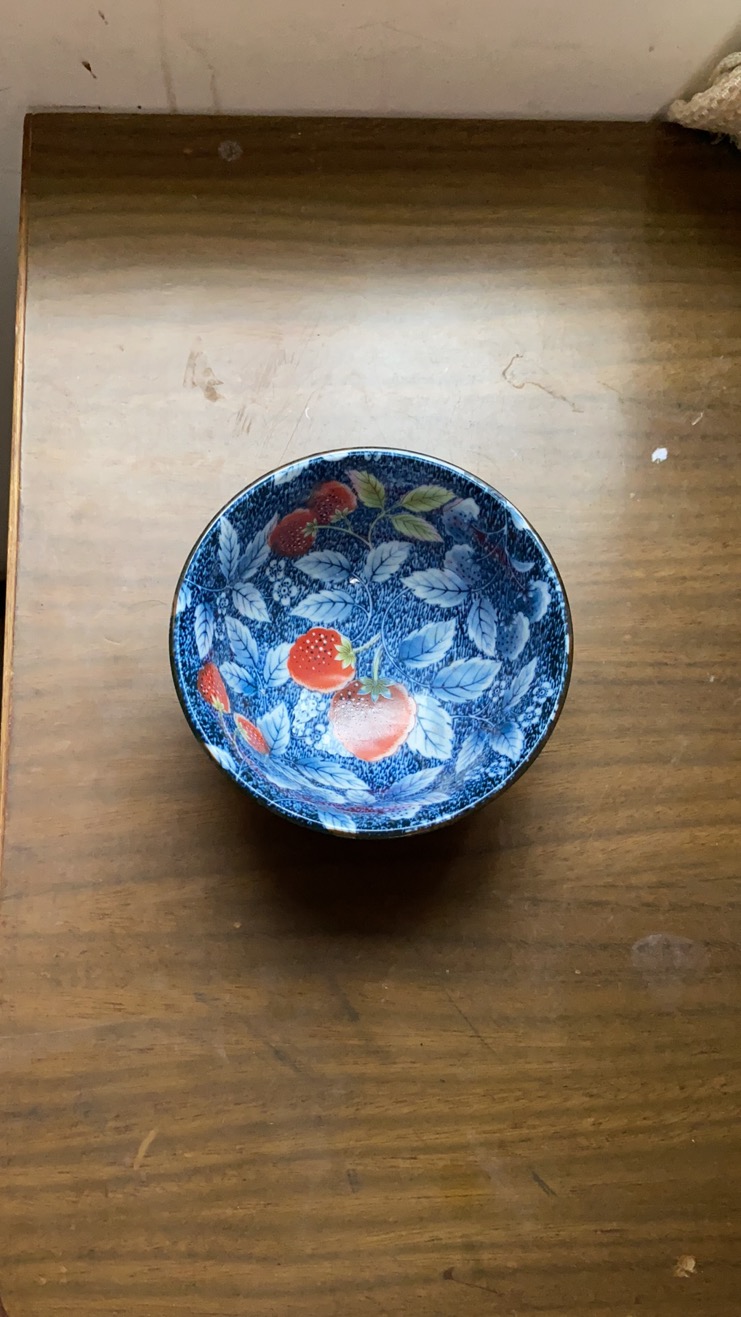
这是典型的日本瓷器,采用了洒蓝釉工艺,结合着釉上彩,显得极为鲜艳,蓝上画红是其典型的特征,蓝釉历来以美如蓝天为标准,此洒蓝釉蓝中带着白,极为自然,仿佛深蓝的天空有着朦胧的白云,这种与自然相接近才是艺术的最佳表现,其中画上草莓,起了点睛之笔,有着(红)鸿运当头之意。
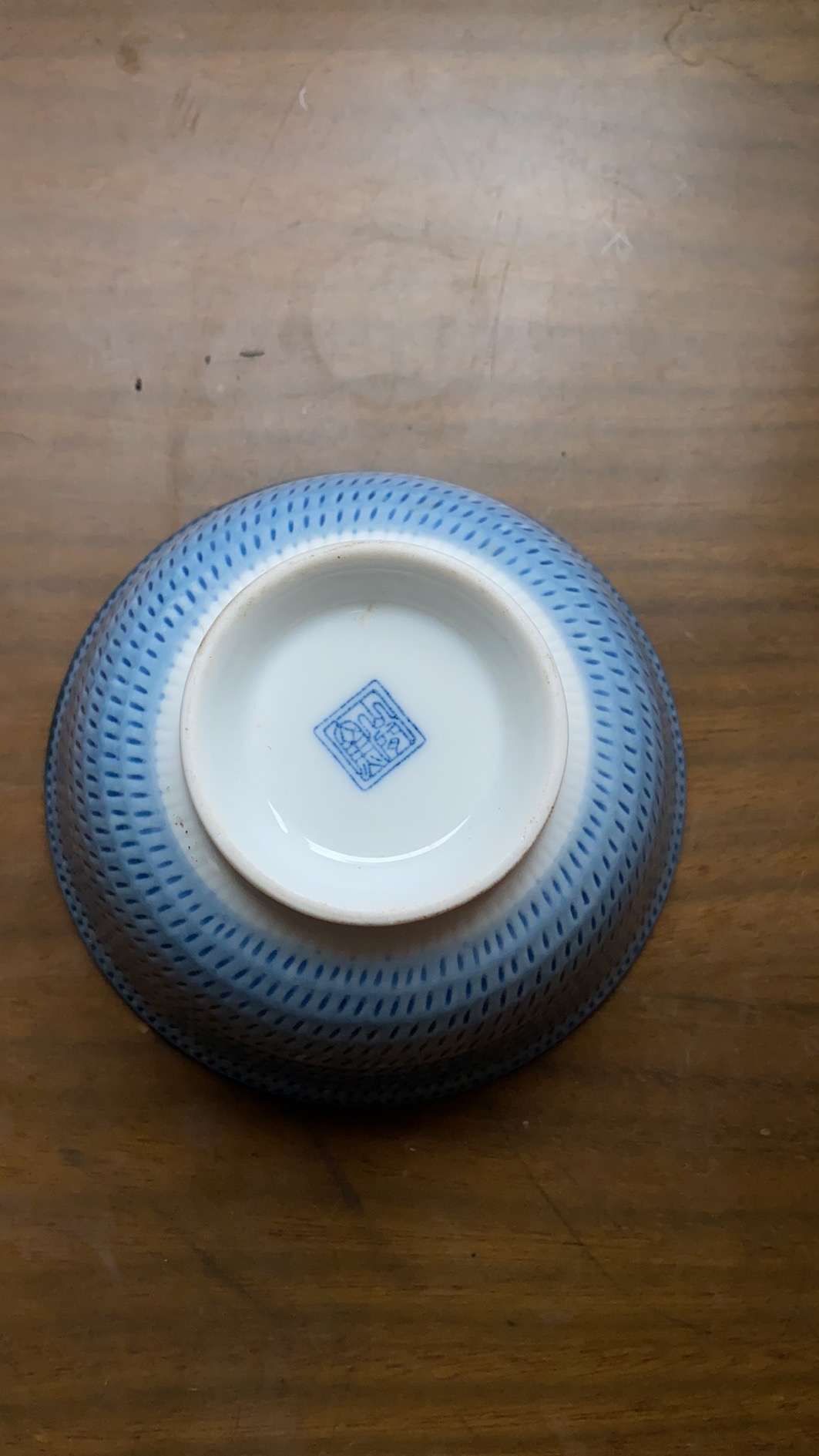
底款为古币底,形似古钱币,外圆内方,内方中双框印章款:山间窑,是典型的日本窑款,山间窑属于伊万里烧。江户时代从伊万里港出口的有田烧被称作伊万里烧,但现在唯有生产于伊万里地方的瓷 器才称作伊万里烧,而之前所述那种情况的瓷器则被称为「古伊万里烧」。但事实上,将伊万 里烧与有田烧区别成两个种类而展售的情况并不多见,所以若是将伊万里烧视作有田烧的一种 其实也是可以的。不过若真要从制品的情况来分别的话,有田烧中烹饪用途的器具数目较多, 而伊万里则是一般的餐具较多。
这件山间窑款的日本瓷器,十分的精美,碗外缘是葵花纹,而葵花象征着太阳,也与日本*旗国**相对应,深受日本所喜爱,可以看到这一圈圈的属性点蓝,就好似一颗颗葵花籽含蓄其中,整个瓷器品相完美,无磕无残,极具收藏价值。
宣德炉,是由明宣宗朱瞻基在大明宣德三年参与设计监造的铜香炉,简称“宣炉”。宣德炉它是中国历史上第一次运用风磨铜铸成的铜器。
为了制作出精品的铜炉,在朱瞻基的亲自督促下,整个制作过程,包括炼铜、造型必须自《宣和博古图》《考古图》等典籍及内府密藏的数百件宋元名窑中,精选出符合适用对象、款制大雅的形制,将之绘成图样,再呈给其亲览,并说明图款的来源和典故的出处,经过筛选确定后,再铸成实物样品让其过目,满意后方准开铸。
宣德炉是中国历史上第一次运用黄铜铸成的铜器。为制作精品的铜炉,明朝宣德皇帝曾亲自督促,这在历史上实属少见。宣德炉以色泽为亮点,其色内融。此件宣德炉以黄铜制成,底书“大明宣德年制”楷书款,带底座。其炉身形制规整,敦厚之中不失灵巧精致,作为书房陈设颇为雅致。焚香其内,数百年历史的厚重感随香外溢。它通体光素,尽显铜炉精纯美质,铜质精良,入手沉甸。此“宣德炉”来源于纽约佳士得2012年9月纽约洛克菲勒中心拍卖会,流失海外多年,如今漂洋过海重归祖国怀抱,且品相完好,相当珍贵。
藏品介绍
中文名称:大明宣德桥耳香炉
英文名称:aming xuande bridge ear incense burner
类别:杂项
规格:一对
品相:美品
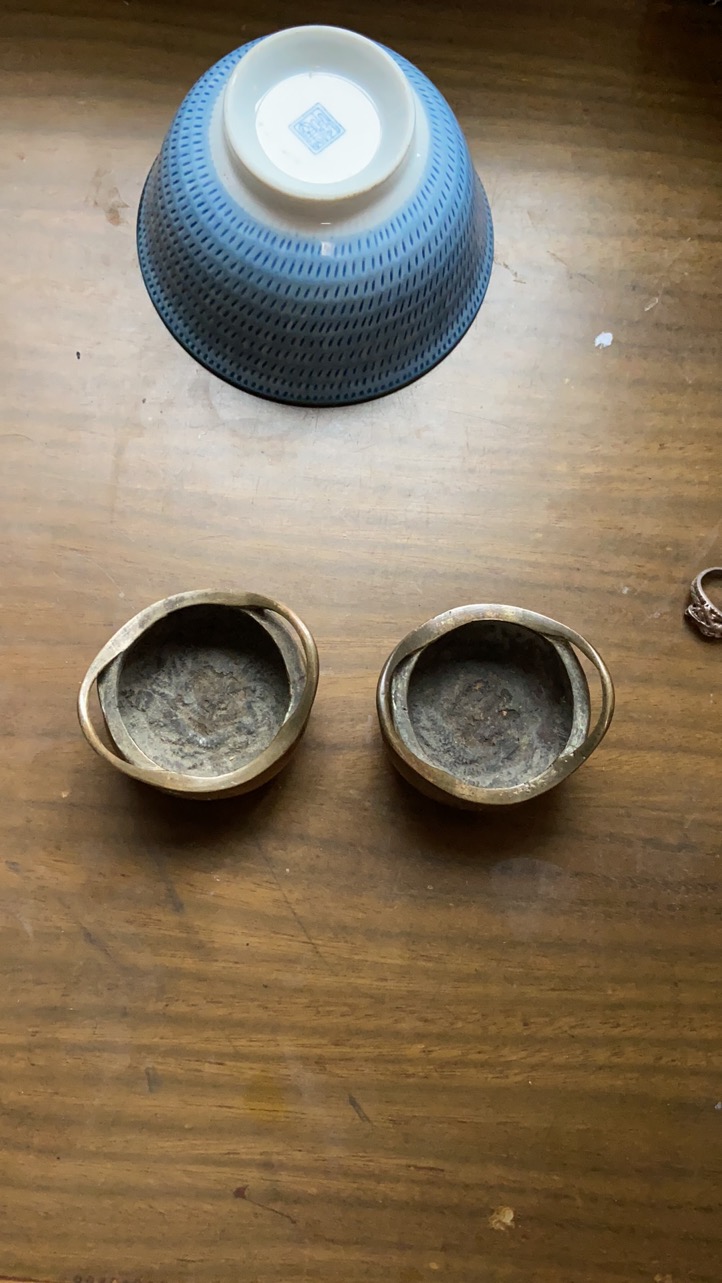
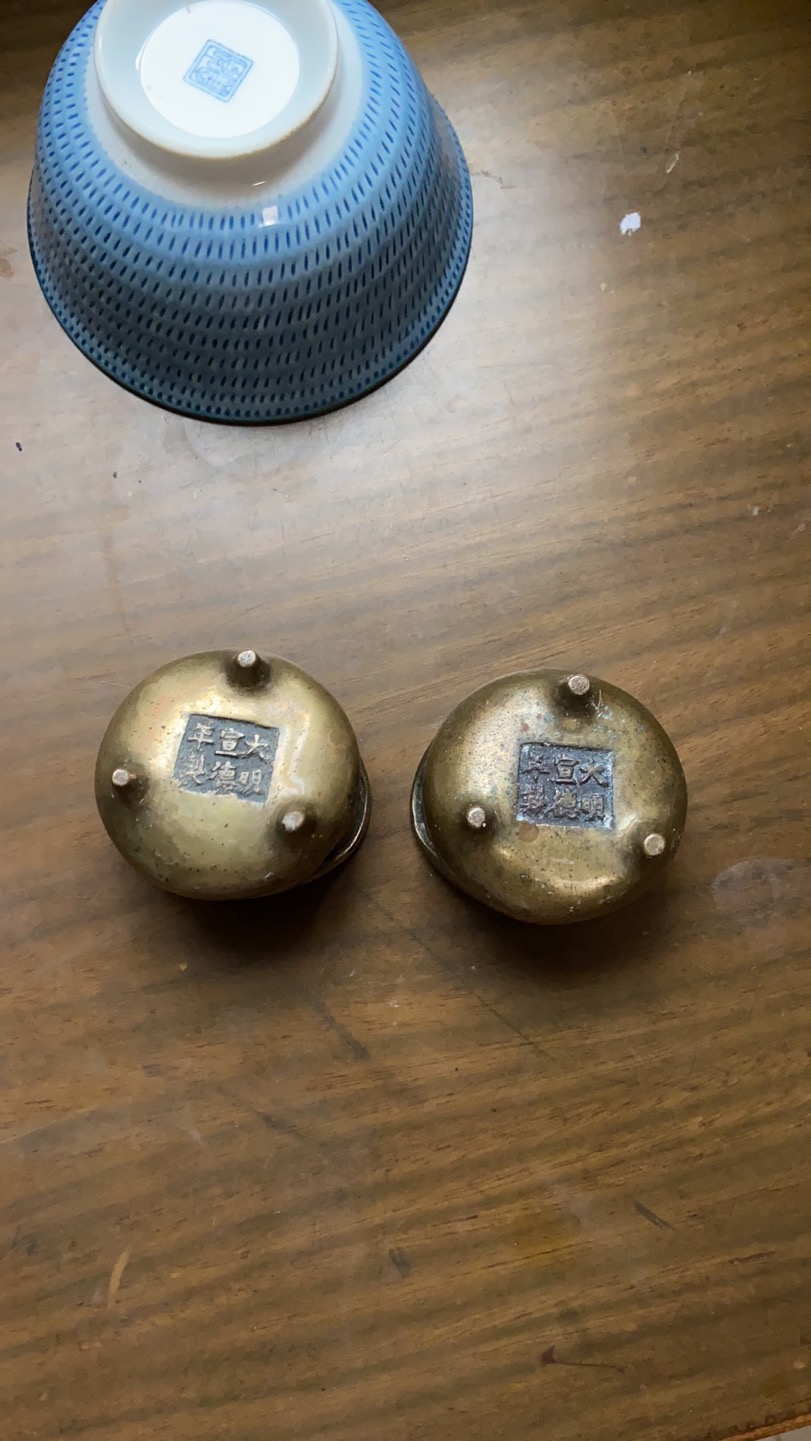
此宣德炉为蟹青皮色,黄中带青,青中有黄,形似蟹壳的青色,故而名蟹青皮色,底部对称分布三足,三足之间阳刻六字款:大明宣德年制,德字少一横,是当时的典型特征,这件宣德炉在自然光线下,底光柔和,自然光呈现晕散反射,无任何贼光,开门到代,十分罕见。
宣德炉最妙在色,其色内融,从黯淡中发奇光。史料记载有四十多种色泽,为世人钟爱,其色的名称很多。例如,紫带青黑似茄皮的,叫茄皮色;黑黄象藏经纸的,叫藏经色;黑白带红淡黄色的,叫褐色;如旧玉之土沁色的,叫土古色;白黄带红似棠梨之色的,叫棠梨色,还有黄红色的地、套上五彩斑点的,叫仿宋烧斑色;比珠砂还鲜红的斑,叫朱红斑;轻及猪肝色、枣红色、琥珀色、茶叶末、蟹壳青等等……明朝万历年间大鉴赏家、收藏家、画家项元汴(子京)说:“宣炉之妙,在宝色内涵珠光,外现澹澹穆穆。”
桥耳炉是炉式之一,又称“凤眼耳炉”、“虎眼耳炉”。
器形一般为唇口或直口,束颈,溜肩,扁圆腹,腹下三足。常在炉沿上塑相对的镂空外侈耳,如耳面较宽平,桥形,称“桥耳炉”;如镂空处两角微尖如凤眼,则称“凤眼耳炉”;如镂空处两角浑圆,形如虎眼。
宣德炉历来就是香炉之王,干将莫邪宝剑也就经过六炼,而这件宣德炉整整经过十二炼,这才有了几百年不变色,不腐蚀的珍品香炉,细看这对宣德炉包浆自然,底光柔和,所谓包浆是自然形成的氧化层,也有人为手盘包浆,两者不同,但同时都有保护藏品的功能,有如给藏品镀上一层保护膜,使藏品不再氧化,便于收藏传世,如果觉得香炉脏,可以用清水洗,再用棉布擦干,不要破坏包浆,破坏了包浆就相当于破坏了保护层,更重要的是包浆是鉴定新老藏品最简单有效的方法。细看这件宣德炉品相完美,没有磕缺,损毁,变形等是不可多的收藏级香炉,建议收藏,传世。
英文翻译:Asperse blue glaze: name of porcelain glaze color. Also known as "snow blue glaze", "sprinkle blue glaze". Jingdezhen was created when Xuande was in the Ming Dynasty, and it was mature when Kangxi was in the Qing Dynasty. It is on the white glaze fired, dip the bamboo tube in the blue glaze juice, blow on the surface of the glaze, form uneven thickness, different depth spots; The rest of the white glaze as if falling snow, hidden in the blue glaze.
The blue glaze was burned in Jingdezhen during xuande period of Ming Dynasty, and then stopped burning. It was not until the Kangxi Period of the Qing Dynasty that production resumed. During the Kangxi, Yongzheng and Qianlong periods of the Qing Dynasty, the glazed porcelain with blue glaze was stable in color and fine in workmanship. Many were decorated with gold and a few with colorful and underglaze red. Because the craft when firing is complex, the success rate is relatively low, because this sprinkles blue glaze porcelain to also be a rare breed at that time. In the late Qing Dynasty, the firing level of glazed porcelain with blue glaze declined, and it could not be compared with the wares in the early Qing Dynasty in terms of fetus and glaze. Therefore, from the point of view of collection, qing dynasty sprinkling blue glaze porcelain or to the kang, Yong, dry period for the best products.
The collection is introduced
Chinese name: sprinkle strawberry grain bowl with blue glaze
Sprinkle grain Bowl with Blue Glaze
Category: Porcelain
Specification: one piece
Appearance: Beautiful
This is a typical Japanese porcelain, the blue glaze technology, combined with a glaze color, appear extremely bright, blue painted red is its typical characteristics, blue glaze has always been on the basis of beauty, such as the blue sky, the in the blue glaze blue with white, is very natural, as if deep blue of the sky a hazy cloud, this close with nature is the best performance of art, the picture of strawberry, the punchline, have much luck (red).
The bottom is an ancient coin with the shape of an ancient coin. The outside is round and the inside is square, while the inside is square and the inside is double frame seal. The intermountain kiln is a typical Japanese kiln, which belongs to Iwanli Kiln. The yatian kiln that was exported from The Port of Iwanli in the Edo period was called Iwanli Kiln, but now it is only the porcelain produced in Iwanli prefecture that is called Iwanli kiln, and the porcelain of that condition described earlier is called "Ancient Iwanli kiln". But in fact, it is not common to distinguish Yanyuli and Yantiao into two categories, so it is actually ok to consider Yantiao as a kind of Yantiao. However, if the difference is really to be made according to the products, there are more utensils used for cooking in the field, and more utensils used for the general purpose in Iwanli.
The mountain to Japanese porcelain kiln, very elegant, bowl edge is kwai decorative pattern, the sunflower is a symbol of the sun, also correspond with the Japanese flag, and loved by Japan, can see the blue wreaths of attribute point, as if each sunflower implicative, perfect the whole porcelain product, without cracking, extremely collection value.
Xuande furnace is a copper incense burner, which was designed and supervised by Zhu Zhanji, emperor Xuande of the Ming Dynasty for three years. Xuande furnace it is the first time in The history of China to use the copper cast by wind.
In order to produce high-quality goods of copper furnace, Zhu Zhanji urged by himself, the whole production process, including copper, modelling must from broadcasting the information rich ancient figure, the archaeological figure such as books and nei secret of hundreds of ancient jun in the song dynasty and yuan dynasty, selects conforms to the applicable objects, the section shape of jedaiah, drawing it into pattern, to its close browser, and to explain the source of the figure type and the origin of allusions, after screening to determine moulds samples let it look again, satisfied with the rear open casting.
Xuande furnace is the first bronze ware made of brass in Chinese history. The Xuande Emperor of the Ming Dynasty personally supervised the production of fine copper furnaces, a rarity in history. Xuande furnace to color as a bright spot, its color melting. This piece of Xuande furnace made of brass, the bottom book "Great Ming Xuande year" regular script, with the base. Its furnace body form is regular, do not break in honest and sincere dexterous and delicate, serve as study display quite refined. Burning incense inside, hundreds of years of history with the sense of the heavy fragrance overflow. It's full body light element, showing the copper furnace pure beauty, excellent copper, start the deep. This "Xuande Furnace" is originated from Christie's Auction in Rockefeller Center in New York in September 2012. It has been lost overseas for many years, but now it has returned to the bosom of the motherland across the sea. In good condition, it is quite precious.
The collection is introduced
Chinese name: Daming Xuande Bridge ear incense burner
English name: Aming Xuande Bridge Ear burner
Category: Miscellaneous
Specification: One pair
Appearance: Beautiful
This jintong furnace for greenish grey, though Huang Zhong is green, green with yellow, shaped like a crab's shell reached the cyan, so a greenish grey, though three symmetrical distribution at the bottom of the foot, three feet between Yang carved six models: da Ming xuande years, less a horizontal DE word, was the typical features of this jintong furnace in natural light, downy light, natural light to render dizzy scattered reflection, without any light, open the door to the generation, is very rare.
Xuande furnace in the best color, its color melting, from the dark in the strange light. There are more than 40 colors recorded in historical records, which are loved by the world and have many names. For example, purple with green and black like eggplant skin, called eggplant skin color; The black and yellow elephant Tibetan sutra paper is called Tibetan sutra color; Black and white with a reddish yellow, called brown; Such as old jade ooze color of the soil, called the soil ancient color; White yellow red like apple pear color, called apple pear color, there are yellow and red ground, set on the multicolor spots, called the song burning spot color; Than the pearl sand also bright red spot, called red spot; Light and pig liver color, jujube red, amber, tea, crab shell green and so on... Ming Dynasty Wanli years great connoisseur, collector, painter Xiang Yuanbian (Zijing) said: "Xuan Furnace wonderful, in the treasure of the connotation of pearl light, Dan Dan Mu Mu externally.
Bridge ear furnace is one of the furnace, also known as "Eye eye ear furnace", "tiger eye ear furnace".
The shape of the vessel is generally lip or straight mouth, neck, shoulders, flat round abdomen, three feet under the abdomen. Often on the furnace edge plastic opposite hollow outer ears, such as the ear surface is wide and flat, bridge shape, called "bridge ear furnace"; If the two corners of the hollow place are slightly pointed, such as phoenix eye, it is called "Phoenix eye and ear furnace"; Such as hollow-out two rounded corners, such as the shape of the tiger eye.
Jintong furnace is the king of the incense burner, lieutenant m-sword sword is after six, and the description for all after twelve smelting furnace, which is several hundred years, no corrosion of treasures incense burner, scrutinize the patina natural jintong furnace, bottom light is downy, so-called wrapped slurry is a natural formation of the oxide layer, also some people to hand wrapped slurry, the two different, but at the same time have to protect the function of collection, as to the collection on plating a layer of protective film, make no longer oxidation, facilitate collection handed down from ancient times, if a censer, dirty can wash, reoccupy cloth wipe, do not destroy the wrapped slurry, destroyed the wrapped slurry is equivalent to destroy the protective layer, More importantly, wrapping pulp is the easiest and most effective way to identify old and new collections. Take a close look at this xuande furnace product phase perfect, no crack, damage, deformation and so on is not much of the collection of incense, it is recommended to collect, handed down.