一、基础词汇
1.go( v. )走;去从事;(时间)流逝;(事情)进展 ★How’s it going?
近况可好?
2.take( v. )买下;拿;取;花费
3.let( v. )允许;让 ★let go (of sth. )松开;放手
4.get( v. )去取(或带来);得到;接到;抵达;理解;明白
5.finish( v. )完成;做好
★finish doing sth.结束做某事
6.sell( v. )出售;销售;卖
7.buy( v. )购买;买
8.same( adj. )相同的
9.short( adj. )短的;矮的;短缺的;不足的
★be short of sth.缺少某物
10.long( adj. )长的;长时间的( adv. )长时间地
11.favo(u)rite( adj. & n. )特别喜爱的(人或事物)
12.after( prep. & conj. )在……以后
13.with( prep. )带有;使用;和……在一起;对于;与……有关
14.because( conj. )因为
15.so( conj. )所以;因此;(引出评论或问题)那么
16.when ( conj. )当……时 ( adv. )什么时候
17.look( v. )看;看上去( n. )看;外观;样子;考虑;思考
18.play( v. )(同某人)比赛;玩耍( n. )戏剧[2017.30] ★play against
sb.与某人比赛
19.sound( v. )听起来好像( n. )声音
20.test( n. )测验;检查( v. )试验;测试
二、词形变化
1.health( n. )健康→healthy( adj. )健康的
2.difficult( adj. )困难的→difficulty( n. )困难;难题
3.use( v. & n. )使用;运用→useful( adj. )有用的;有益的→useless
( adj. )无用的;无效的→used( adj. )用过的
4.easy( adj. )容易的,不费力的→easily( adv. )轻松地;轻易地
5.interest( n. )兴趣;关注( v. )使感兴趣;使关注→interesting( adj. )有
趣的→interested( adj. )感兴趣的
6.bore( v. )使厌倦→boring( adj. )令人厌倦的→bored( adj. )厌烦的
7.relax( v. )放松;休息→relaxing( adj. )令人放松的[2019.76]→relaxed
( adj. )放松的;自在的
8.busy( adj. )繁忙的;忙碌的→busily( adv. )忙碌地
三、一词多义
1.free( adj. )空闲的; 免费的
2.right( adj. )正当的;适当的;正确的;右边的( adv. )向右边; 正好;
恰好 ( n. )右边; 权利
3.fat( adj. )肥的;肥胖的( n. ) 脂肪;肥肉
4.store( n. )商店( v. ) 储存;存放;(在计算机里)存储
5.second( num. )第二( n. ) 秒;片刻
6.lesson( n. )课;课程; 经验;教训
★learn a lesson吸取教训
四、课标新增
1 benefit
含义: n .益处;成效 v .受益;得益于
拓展: beneficial adj .有利的;有裨益的;有用的
2 budget
含义: n .预算 adj .价格低廉的;花钱少的
3 recent
含义: adj. 近来的,新近的
拓展: recently adv. 最近,近来,不久前
4 prove
含义: v. 证明;证实;证明是
搭配: prove oneself展示自己;证明自己的能力
5 desert
含义: n .沙漠;荒漠;荒原 v .舍弃,遗弃
拓展: 易混淆词汇:dessert n .(饭后)甜点,甜食
6 scare
含义: v .使害怕;惊吓 n .惊吓;恐慌;恐惧
搭配: scare away/off 把……吓跑
拓展: scared adj .惊慌的;吓坏了的
scary adj .吓人的
7 ache
含义: v .疼痛;隐痛 n .(身体某部位的)疼痛
拓展: headache n .头痛
toothache n .牙痛
stomachache n .胃痛
8 reduce
含义: v .减少,缩小
搭配: reduce sth. (from...) to...将某事物的数量(从……)降低到……
五、重点短语
1.think about思考;思索
2.for sure无疑;肯定
★for certain确定;无疑
3.at a very good price 以很好的价格
4.from...to...从……到……
5.here you are给你
六、主要考点
考点1 how much的用法
▶"How much is/are sth.?"意为"……多少钱"。相当于:
How much is/are sth. worth?
How much do/does sth. cost?
What’s the price of sth.?
▶how much也可用于询问程度、不可数名词的数量等。如:
① How much water do you need?你需要多少水?
②I know how much hard work goes into looking after a baby.我知道照
看小孩有多辛苦。
归纳拓展
常见的由how构成的疑问短语还有:
how many(询问可数名词的数量)多少
how long(询问长度或时间)多长
how far(询问距离)多远
how soon(询问将来的时间)多久之后
howoften(询问频率)多久一次
考点2 interesting和interested的辨析
▶interesting与interested分别属于由-ing分词转化来的形容词和由-ed分词
转化来的形容词。前者常用于描述事物;后者常用于描述人的感受。
|
-ing形容词 |
-ed形容词 |
固定搭配 |
|
relaxing[2019.76] |
relaxed |
be relaxed about"对……感到放松" |
|
exciting |
excited[2020.15] |
be excited about"对……感到兴奋" |
|
pleasing |
pleased[2014.64] |
be pleased with"对……感到满意" |
|
worrying |
worried |
be worried about"为……担心" |
|
interesting |
interested |
be interested in (doing)sth."对 (做)某事感兴趣" |
考点3 take的用法
▶take意为"带走;服(药);乘坐;接受;需要"。用法如下:
take sb./sth. to...把某人/某物带到……
take sb. sth.把某物带给某人
take some medicine吃一些药
take a bus/train乘坐公共汽车/火车
take the job/advice接受工作/建议
▶take还可表示"花费(时间或精力等)"。用法如下:
(1)sth. take(s) time/energy/..."某事花费时间/精力/……"
(2)It takes sb. ... to do sth."某人花费……做某事"
▶take还常与名词连用。如:
|
take place发生;出现 |
take action采取行动 |
|
take turns 轮流 |
take risks/a risk冒险 |
▶"take+ adv. / prep. "短语参见 专题二→考点2
易失分点
(1)take it easy常用于劝慰他人,意为"别急,沉住气"。
(2)take your time意为"慢慢来"。
考点4 look的用法
▶look作名词,意为"看,察看,表情,外观"。常见用法:
have/take a look(at...)看(……);察看(……)
a look of surprise 惊讶的表情
take on a new look呈现新的面貌
▶look作系动词,意为"看起来;似乎"。常见用法:
look+ adj .看起来……
look like sb./sth.看起来像……
▶look作实义动词,意为"看;注意;寻找"。常见的look短语有:
look up查阅 look after照料
look into 调查 look for寻找
look over检查 look through浏览
妙辨异同
look/watch/read/see
|
强调"看"的动作,为不及物动词 |
look at sth.看某物 |
|
|
watch |
强调"全神贯注地观看或注视" |
watch TV/a match看电视/看比 赛 |
|
read |
强调"阅读" |
read a book 读书 |
|
see |
强调"看"的结果 |
I see it!我看到它了! |
考点5 get的用法
▶get意为"收到;获得;购买"。
get sth. from sb. 从某人那里得到某物
get sth. for sb.=get sb. sth. 给某人拿某物
get a good education 获得良好的教育
▶get意为"到达;理解;明白"。
get to+地点名词 到达某地
get sb./sth. 理解某人的意思/明白某事
▶get意为"变得",其后跟形容词。如:
get popular 变得流行
get angry/mad 发怒
▶get意为"被,受到",其后跟动词的过去分词。如:
get hurt受伤 get broken受损
get dressed穿上衣服
归纳拓展
常见的get短语:
get into陷入;染上(某种习惯) get off下车
get on with和睦相处 get out of离开,从……出来
get in the way of挡……的路,妨碍
七、写作指导

——你眼中最美的老师
写作任务
教师节来临之际,你校英语社团公众号计划做关于你校最美教师的系列推送,现面向全体学生征集素材。假如你是李华,请你给公众号留言,推荐一位你眼中最美的老师,对其作简要介绍,并说明推荐理由。
要求:1. 语言表达要准确,语意要通顺、连贯;
2. 词数不少于100。
审题与构思
1. 这是一篇 写人的记叙文 。写作时应抓住人物的外貌、性格特征并选取典型事例来介绍人物。
2. 人称以 第三人称为主 。
3. 时态 以一般现在时和一般过去时为主 。
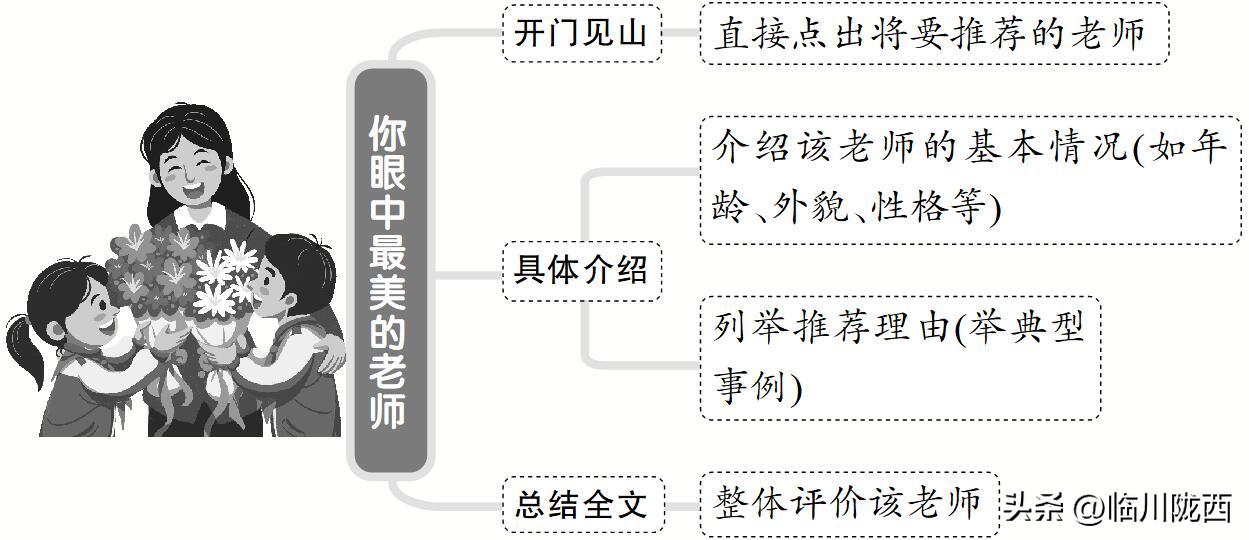
常用表达
年龄: ... years old, in his / her thirties / forties / ...
外貌: strong / weak, short / of medium height / tall / about ... meters tall, long / short / straight / curly hair, wear glasses ...
性格:active, outgoing, funny / humorous, silent / quiet, shy, serious / strict, be easy to get on with, friendly / kind / nice / caring / warm-hearted, helpful / be ready to help others, be patient with ...
爱好:be good at / do well in ..., like / love / enjoy music / sports / doing ..., be interested in ...
事例:have high expectations for all of his / her students, care about his / her students, prepare his / her lessons carefully, try to make his / her classes lively and interesting, put his / her work first ...
评价:be considered as, be famous / known as, one of the greatest teachers, set a good example, think highly of ...
补全短文
I'm Li Hua and I think our English teacher Mrs. Su is the most beautiful teacher in our school.
She is tall and thin. With big eyes and long hair, (1)_____________________________(她看起来非常美丽). She is creative and (2)__________________________________________
_______________________________(总是使用不同的办法使她的课生动而有趣). We all like to take her classes. (3)___________________________________(除此之外,她对待工作很认真).
No matter what happens, she always puts her job first.
Last month, (4)_____________________________(她意外伤了腿), so she couldn't keep standing throughout the whole class. We thought that (5)_____________________________(她将会请几天假). However, she still gave the class as usual.
I think Mrs. Su is the most beautiful teacher and we should look up to her.