我是黄豆妈Yaya,上海交大英语硕士,分享英语启蒙和早期教育干货,欢迎关注!
今天给大家带来《牛津阅读树》拓展阅读1+阶段的What a Mess!《乱七八糟》【想要看视频版讲解的麻麻们可以移步小红书(搜索:小黄豆妈妈)】
以下给出英文版的讲解示范,供大家参考。家长在讲解的时候,一定要根据宝宝的实际情况,来决定是否要拓展、要拓展多少哦!
图解版——拓展阅读1+阶段 What a Mess!
导读:
你的家里通常是乱糟糟,还是整整齐齐呢?今天Kipper的家里很乱,我们来看看是为什么吧!
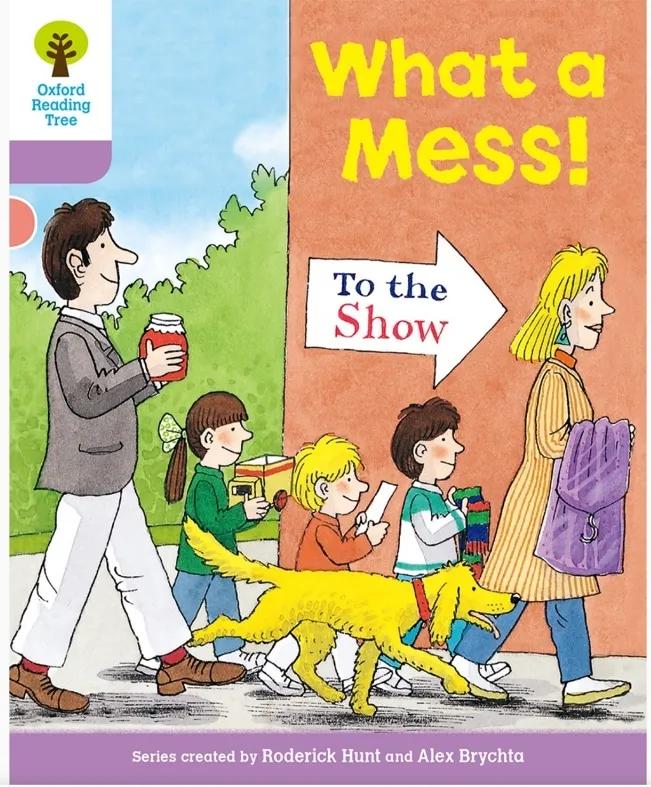
Today let’s read What a Mess!
今天我们来读《乱七八糟!》
Where did the family go?
全家人要去哪里呢?
They went to a show.
大家要去一个展出。
What did they take with them?
他们都带了什么呢?
Dad had a jar.
爸爸拿了一个罐子。
Biff was holding a toy lorry.
Biff拿了一个玩具卡车。
Kipper was taking a card.
Kipper拿了一个卡片。
Chip was holding a scarf.
Chip拿了一个围巾。
Mum was holding a purple dress.
妈妈拿了一件紫色的裙子。
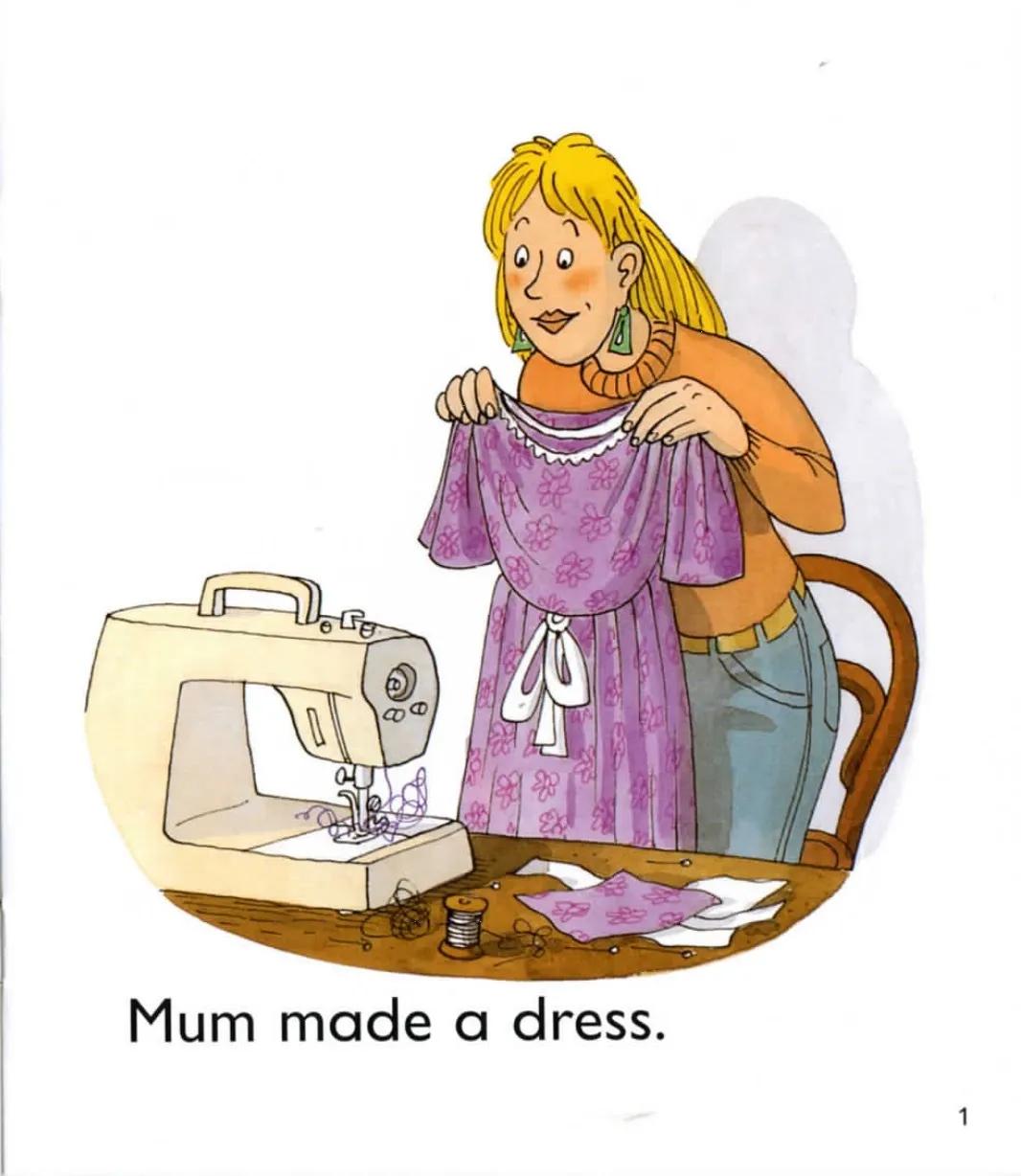
What did Mum make?
妈妈在做什么呢?
Mum made a dress.
她在做裙子。
It was a beautiful, purple dress with flowers on it.
这是一件很漂亮的、紫色带花的裙子。
What did Mum use to make the dress?
妈妈用什么做的裙子呢?
She used the sewing machine, strings, and cloth.
她用了缝纫机、线、和布做的。
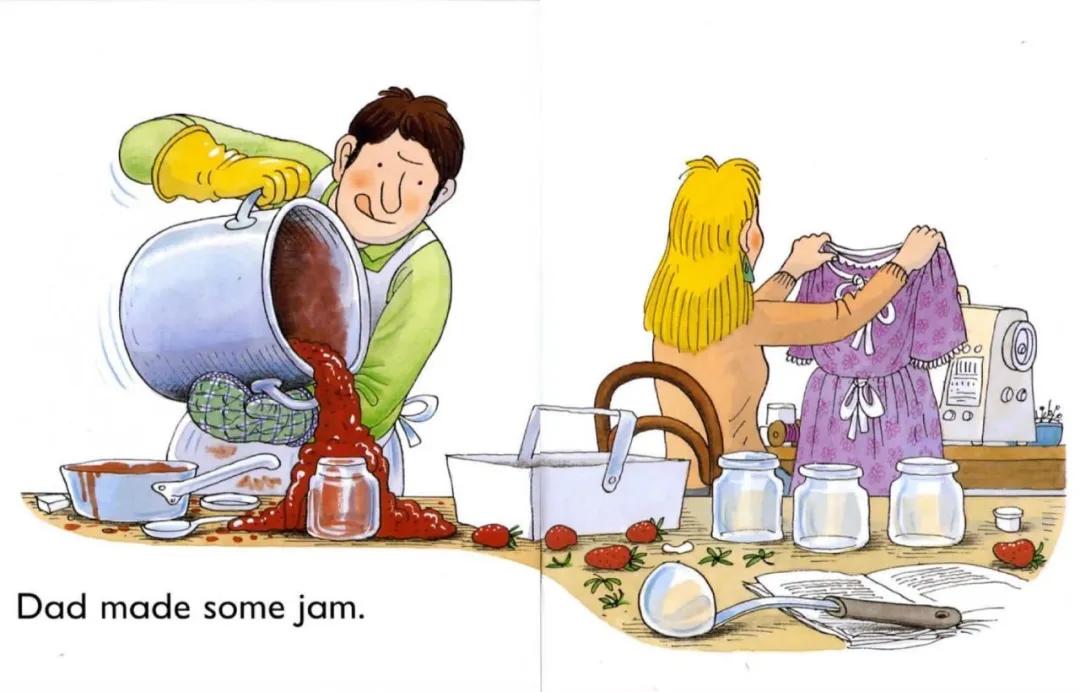
What did Dad make? 爸爸做了什么呢?
Dad made some jam.
爸爸做了果酱。
What kind of jam did Dad make?
爸爸做的什么果酱呢?
It was strawberry jam because I can see some strawberries on the table.
是草莓果酱,因为我看到桌上有一些草莓。
Oh no! Dad poured the jam out of the jar.
天哪!爸爸把果酱倒在罐子外面了。
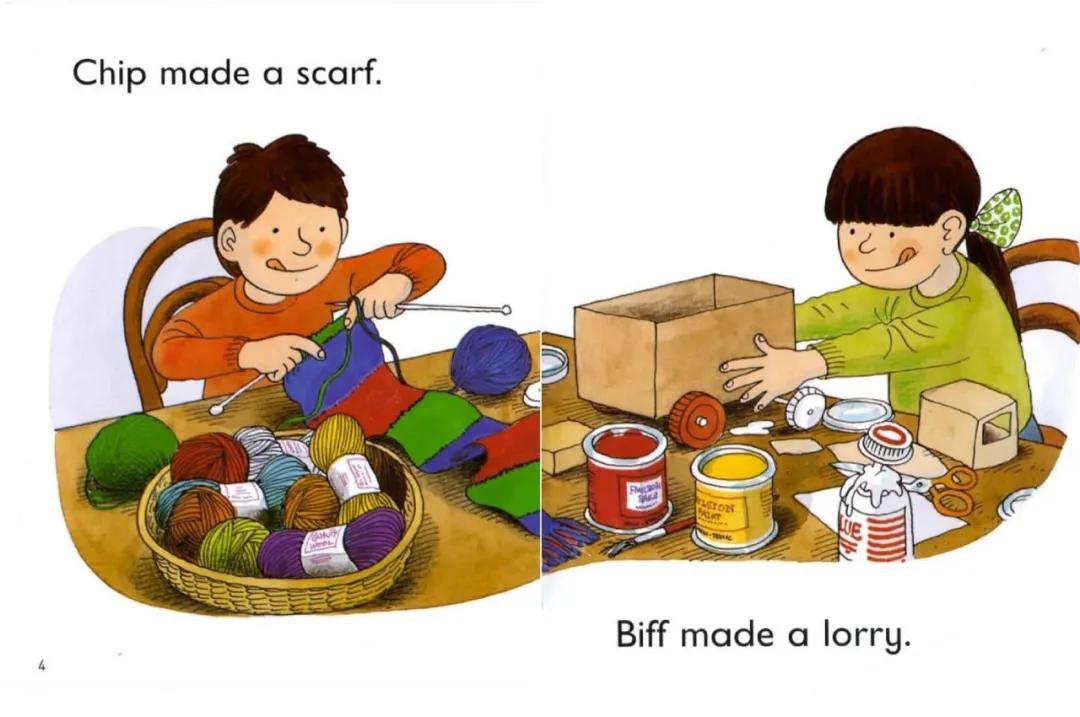
What did Chip and Biff make?
Chip和Biff在做什么呢?
Chip made a scarf.
Chip织了一条围巾。
It was a colorful scarf.
是一条五颜六色的围巾。
Well done, Chip!
真棒哎,Chip!
Biff made a lorry.
Biff做了个卡车。
She was putting the box onto the wheels.
她正在把盒子放在轮子上面。
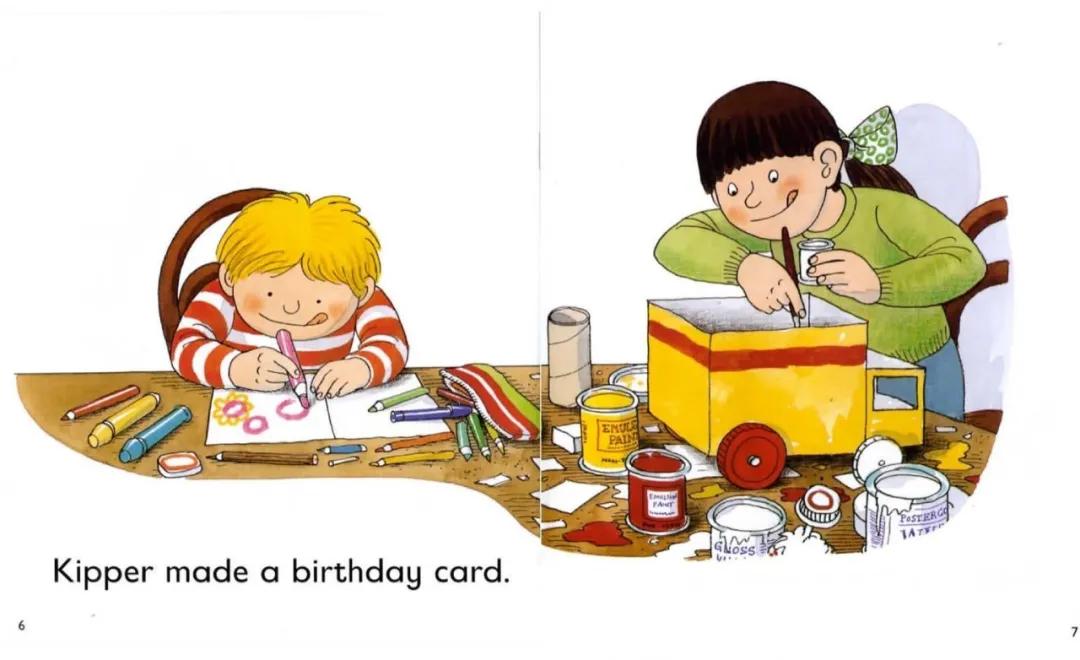
What did Kipper make?
Kipper做了什么呢?
Kipper made a birthday card.
Kipper做了张生日卡。
He drew the card with his crayons.
他用蜡笔画了一张卡片。
Look at Biff’s lorry! She painted it with red and yellow.
看看Biff的卡车!她把卡车涂上红色和黄色了。
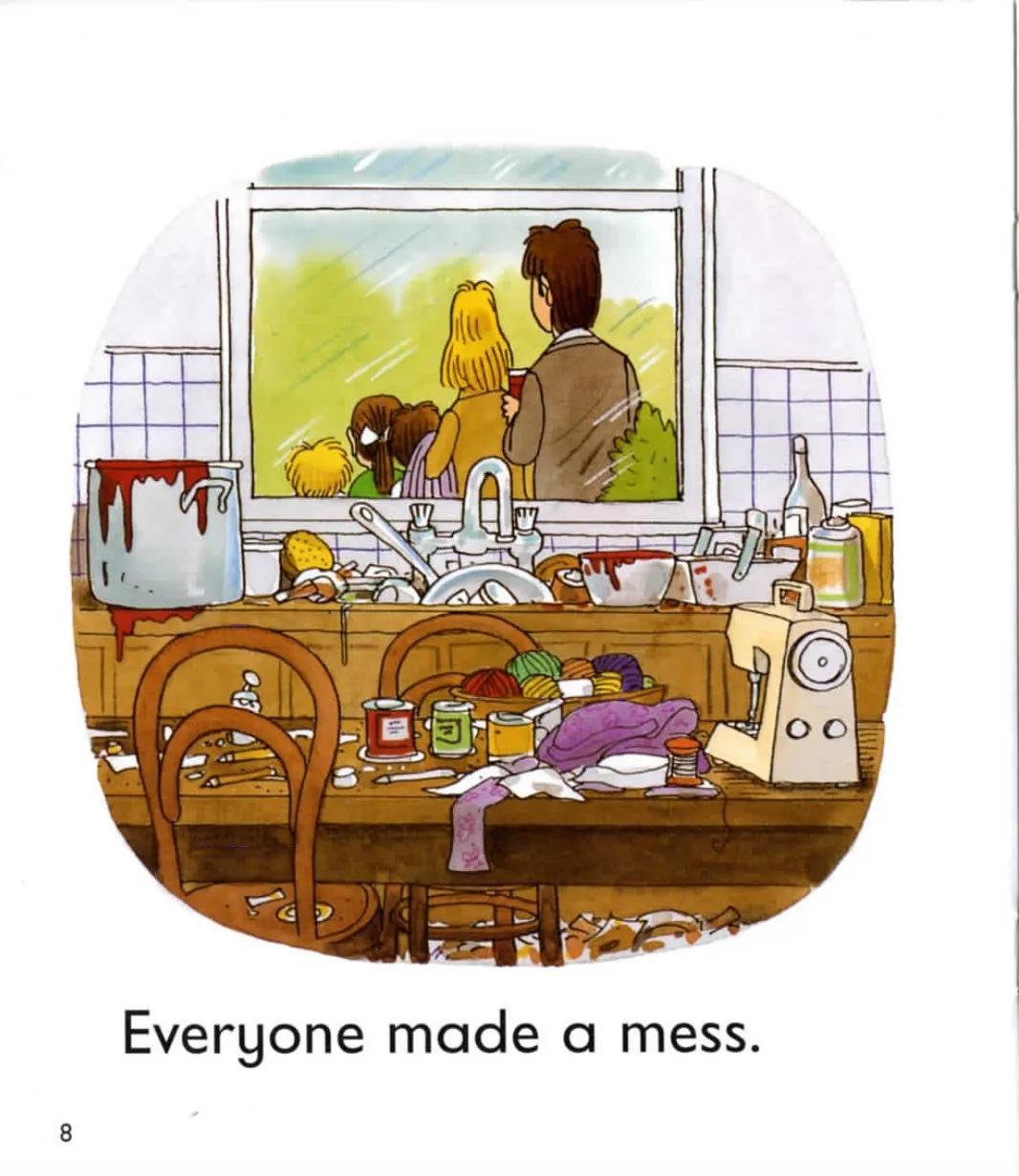
Everyone finished their work.
大家都完成了他们的作品。
They took their handicrafts to the show.
他们带着这些手工去参加展出了。
Look at the house!
看看房子里!
Everyone made a mess.
大家都搞得一团糟。
They had no time to clean.
大家没有时间收拾了。
拓展问题
1.Which one was the most difficult to make?
哪一个是最难做的呢?
2.What would you make if you were going to a show?
如果你要去参加展出,你会做什么呢?
3.Why do you think they didn’t tidy up before going out?
你觉得他们出门之前为什么没有打扫干净呢?
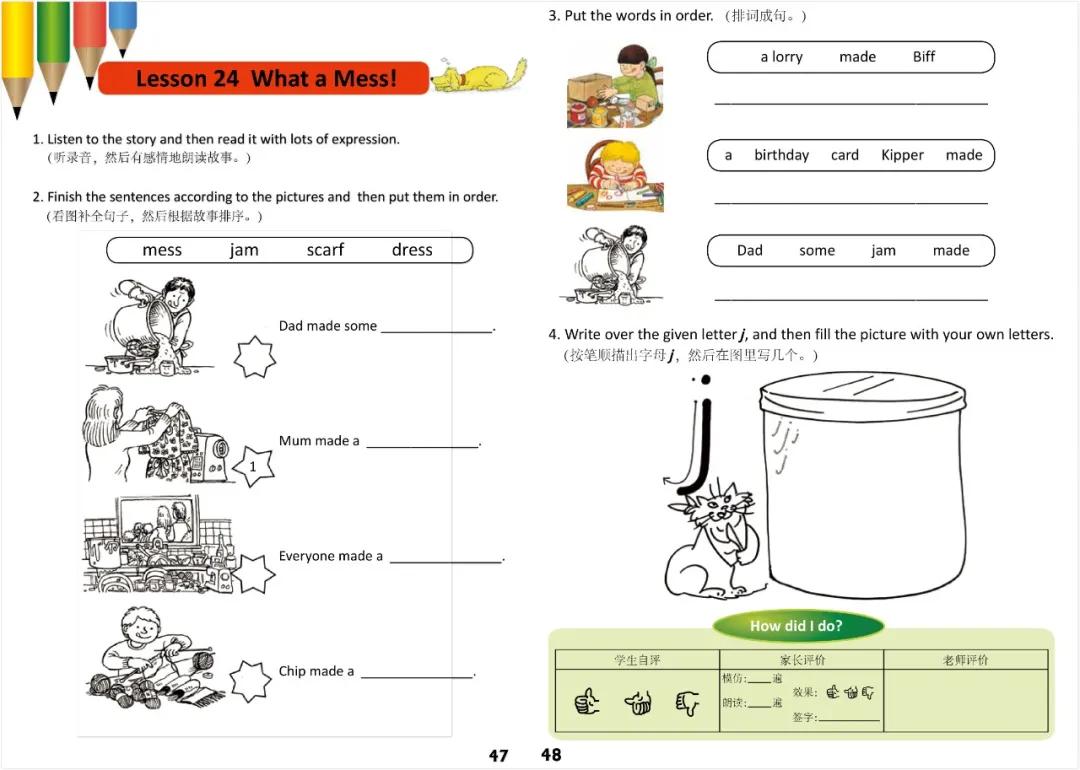
拓展练习
(难度略大,适合4岁以上宝宝~)
黄豆妈说
Chip喜欢织围巾,Biff却喜欢做卡车,这一对双胞胎的爱好很有趣呢!
你觉得织围巾是女孩子的专属吗?做卡车是男孩子专属吗?
特别提醒
1. 每个宝宝的年龄不一样,基础不一样,不需要完全按照以上文本来讲。如果孩子感兴趣,就多说一点,不感兴趣就少说一点,都没问题。
2. 只要孩子理解,或看图能明白,或家长可以用肢体语言或者指物的方式让孩子明白,就不要翻译。
3. 如果实在不能理解,可以适当解释,但不需要字对字翻译。