袁大头是民国时期主要流通货币之一,“袁大头”是对袁世凯像系列硬币的口语俗称,严谨点说叫“袁世凯像背嘉禾银币”。北洋政府为了整顿币制,划一银币,于民国三年(1914年)二月,颁布《国币条例》十三条,决定实行银本位制度。《国币条例》规定:“以库平纯银六钱四分八厘为价格之单位,定名为圆”,“一圆银币,总重七钱二分,银八九,铜一一”,“一圆银币用数无限制”,即以一圆银币为无限法偿的本位贷币。根据这一规定,于1914年12月及1915年2月, 先后由造币总厂及江南造币厂开铸一圆银币,币面镌刻袁世凯头像,俗称“袁头币”或“袁大头”。
清朝灭亡之后,1912年4月袁世凯出任大总统。北洋政府鉴于当时铸币、纸币十分复杂,流通的中外货币在百种以上,规格不一,流通混乱,折算繁琐,民众积怨,同时也想借助货币改制以解决军费问题,便决定铸发国币。袁世凯为了提高自己的统治地位,把他的头像铸于币面,“袁大头”由此而来。
藏品介绍
中文名称:民国八,九,十年袁大头对组银币
英文名称:In the eighth, ninth and tenth years of the Republic of China, Yuan Datou set silver coins
类别:杂项
规格:六枚(三对)
品相:美品
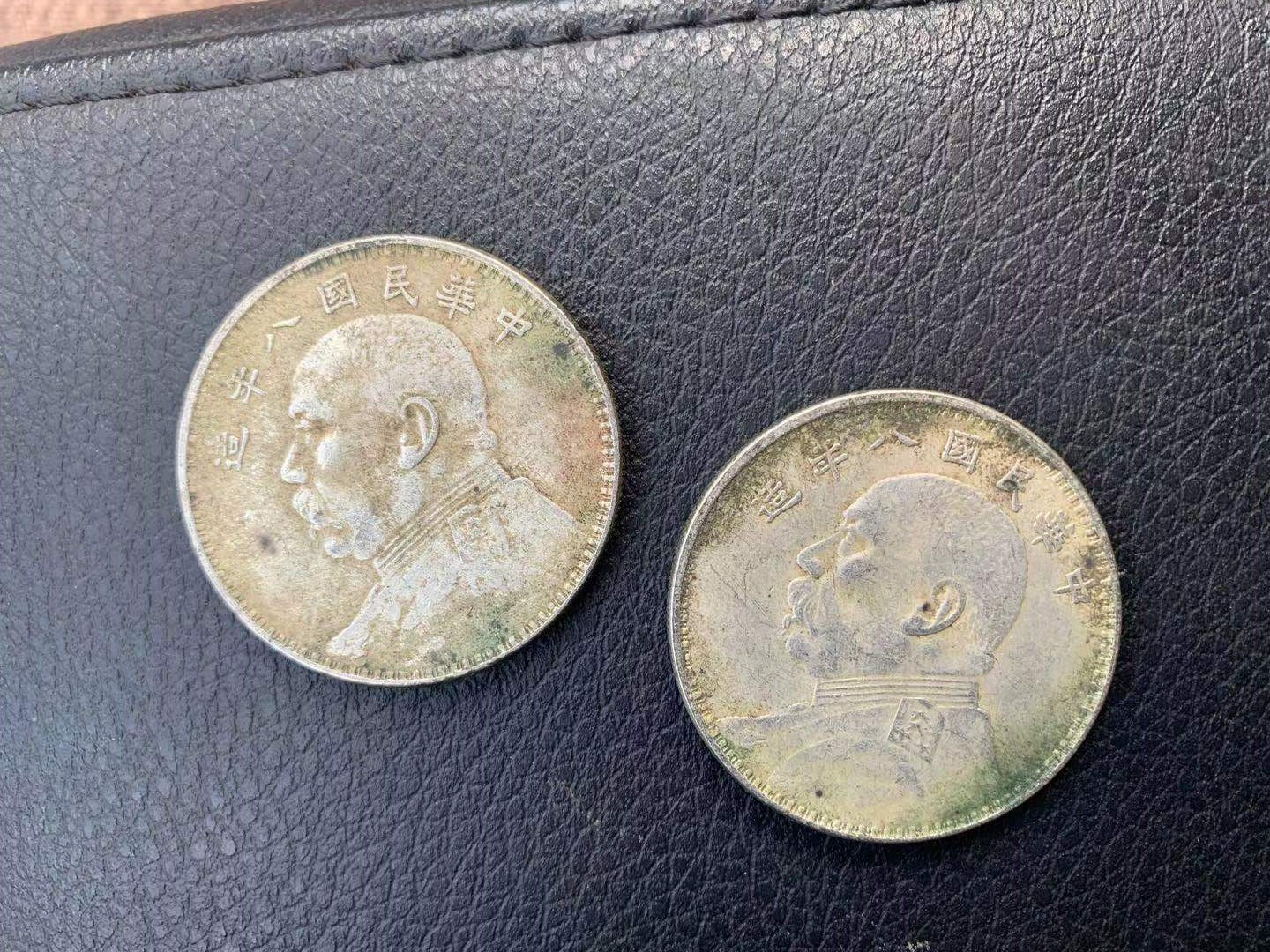
正面均为袁世凯五分侧面像,上列纪年,中华民国八年造,收藏价值是极高的,袁大头之所以会被称为袁大头主要是因为在这枚银元背后是印有袁世凯侧脸的“大头贴,并且这枚银元也是由他发行的,首先银元值钱的其中原因在于它和人民币不同,它从外国的传入期是由清朝开始袁世凯为了解决在辛亥革命后的军费问题以及个人地位提高的重要途径。

背嘉禾二本,左右交互,下系结带,中铸“壹圆”二字。这些年,在银元收藏界,有一个名字,始终不乏耳闻,那就是“袁大头”,特别是这几年,随着金银价格走强以及市场的火爆,许多老银元的市场价格都有了多倍的涨幅,其中部分版本特殊,品相良好,存世稀少的珍品,更是不可估量。
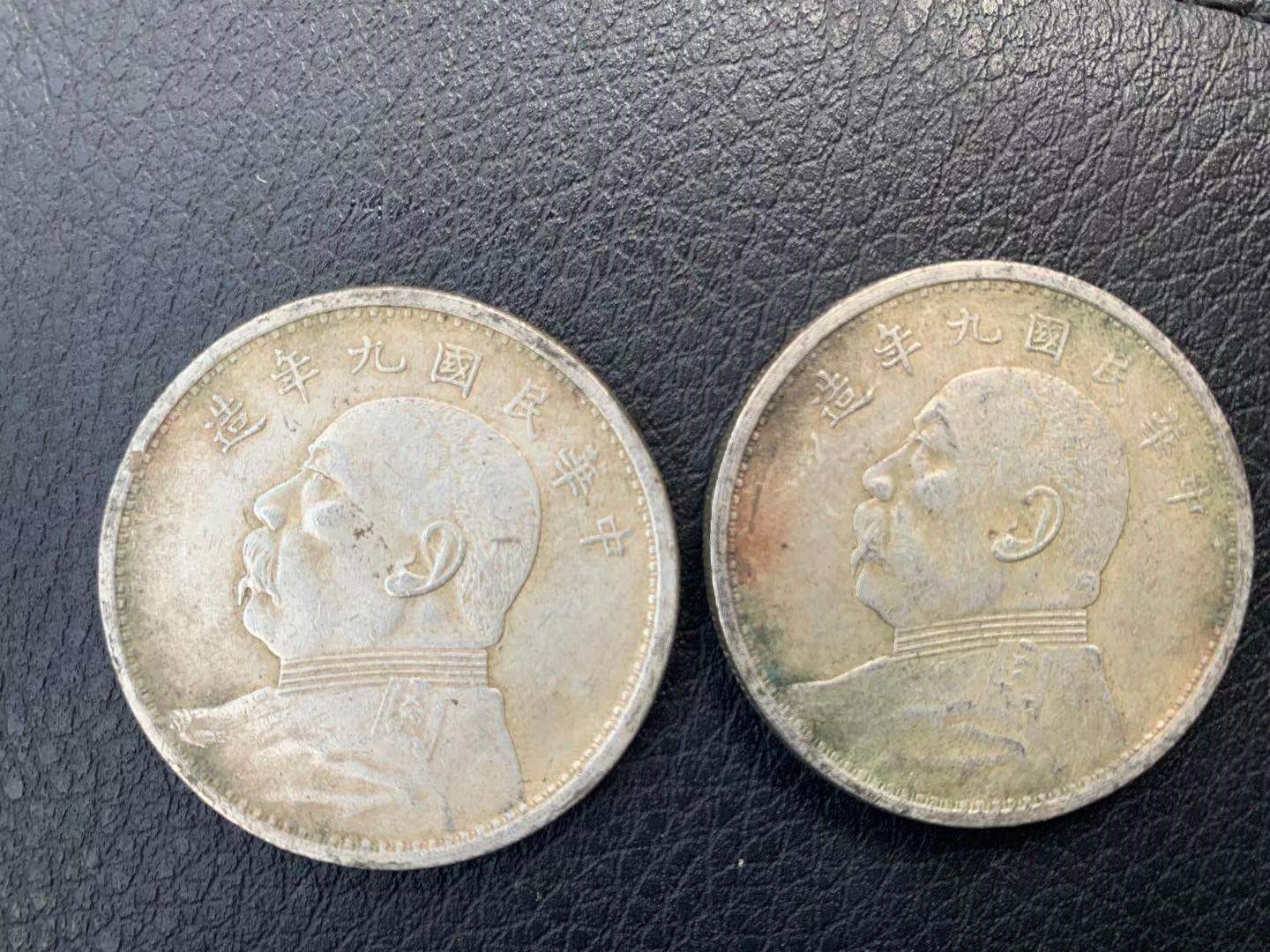
民国九年袁大头,可以看到袁大头胸前与内齿圈连接处,少一内小齿,是一种防伪手段,此币无论是看银光,压力,内齿,包浆,各方面都是表现十分开门的,是真品银币无疑,而右边这一枚为精发小嘉禾开芒版,属于稀有版本,具有不菲的收藏价值。

嘉禾”,美禾,茁壮之禾,硕大之禾,祥瑞之禾也。东汉许慎《说文》云:“禾,嘉谷也。以二月而种,八月始熟,得时之中,故谓之禾。”王充《论衡·讲瑞篇》云:“嘉禾生于禾中,与禾中异穗,谓之嘉禾。”古人多以“嘉禾”为祥瑞之物,与甘露醴泉并称。如班固《汉书·公孙弘传》云:“甘露降,风雨时,嘉禾兴。”也就是生长得特别茁壮的禾稻,古人视嘉禾图案为吉祥的象征。
在中国钱币上就有嘉禾图案,现在国徽上就有,最典型的嘉禾纹样就是“袁大头”上的背后的嘉禾图案。
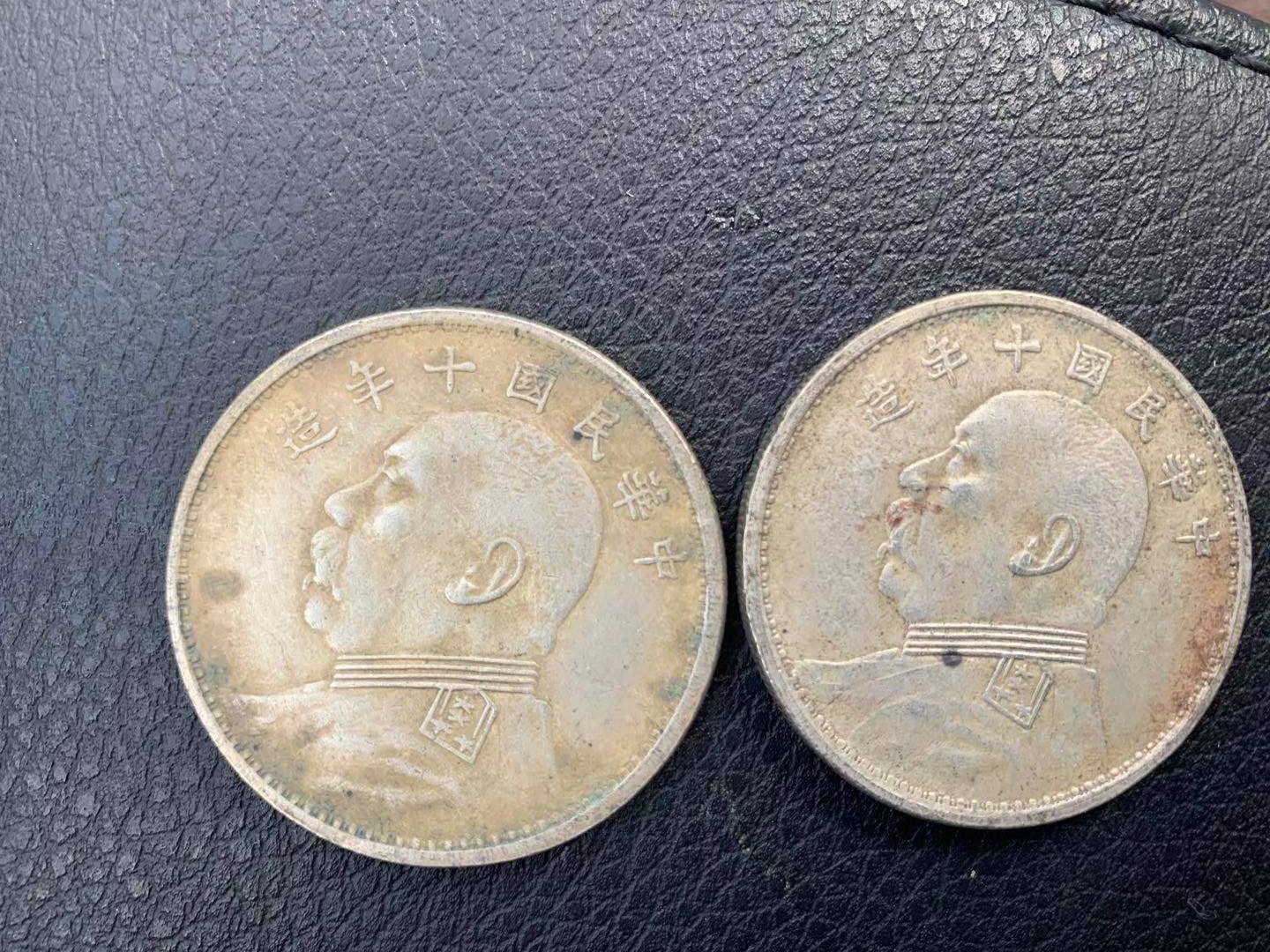
这两枚民国十年袁大头版本不同,可以看到右边的年字一点为T型,为T点年,此版本十分稀有,这几枚袁大头人物图案清晰,氧化包浆自然,其中带有氧化绿锈,是由于真品袁大头中含有少量的铜,这种银铜共同氧化的包浆现象,也只有真品袁大头所具备。

民国十年版中的主要版别
十年版中的普通版,其图案文字与一般“袁大头”无大差别。另外有一些把“年”字中的一点写成一竖或“7”字形,称为T点年,但铸量较少。
此外还有T点年版、缺口造版、半缺口造版、双缺口造版、连口造版、十年八年版、十年九年版、开渠华版、正星版、偏星版、竖点年版、开口中版、右缺口中版、T点年大胡须版、大点年版、下缺口造版、败笔造版、六角星版、连口造无珠版等等。
这三枚钱币包浆自然,有典型的氧化银包浆,有包浆的钱币可以以此作为参考,所谓包浆是自然形成的氧化层,也有人为手盘包浆,两者不同,但同时都有保护钱币的功能,有如给钱币镀上一层保护膜,使钱币不再氧化,便于收藏传世,如果觉得钱币脏,可以用清水洗,再用棉布擦干,不要破坏包浆,破坏了包浆就相当于破坏了保护层,更重要的是包浆是鉴定新老钱币最简单有效的方法。细看这三枚钱币品相完美,没有磕缺,损毁,变形等,是不可多得收藏级银币,建议收藏,传世。
英文翻译:Yuan Datou is one of the main currencies in circulation during the period of the Republic of China. "Yuan Datou" is the colloquial name for Yuan Shikai's series of coins. Strictly speaking, it is called "Yuan Shikai's image carrying Jiahe silver coin". In order to rectify the currency system, the Beiyang government unified the silver coin. In February, the third year of the Republic of China (1914), it issued the "National Currency Regulations" 13 articles and decided to implement the silver standard system. "The national currency regulations" provisions: "to Kuping sterling silver six four eight cents for the price of the unit, named for the round", "a round silver coin, the total weight of seven money two, silver 89, copper one", "a round silver coin with unlimited number", namely a round silver coin for unlimited law compensation of the standard loan currency. According to this provision, in December 1914 and February 1915, a silver coin was cast successively by the Mint General Factory and the Jiangnan Mint, and the face of the coin was engraved with Yuan Shikai's head, commonly known as "Yuan Tou Coin" or "Yuan Datou Coin".
After the fall of the Qing Dynasty, Yuan Shikai became President in April 1912. In view of the complexity of coinage and paper money at that time, the circulation of more than 100 kinds of Chinese and foreign currencies, different specifications, chaotic circulation, tedious conversion, and people's grievances, the Beiyang government also wanted to solve the military expenditure problem by means of currency restructuring, so it decided to coin the national currency. Yuan Shikai, in order to improve his dominant position, cast his head on the face of the coin, from which "Yuan Datou" came.
The collection is introduced
Chinese name: eight, nine, ten years of the republic of China yuan big head to group silver coins
In the eighth, ninth and tenth years of the Republic of China, Yuan Datou set silver coins
Category: Miscellaneous
Specifications: 6 pieces (3 pairs)
Appearance: Beautiful
Positive are five yuan shikai profile, the above calendar, the eight years of the republic of China, the collection value is extremely high, big head big head is called yuan yuan because behind this silver was printed with yuan shikai side face of the photo, and it also issued by his silver medal, the first silver valuable is that it, unlike the yuan, the reasons of it from foreign afferent phase consists of the qing dynasty to yuan shikai in order to solve the problem of the military after xinhai revolution, and an important means to improve the personal status.
Back Jiahe two, left and right interaction, under the knot belt, cast "one circle" two words. Over the years, in the silver collection area, has a name, is not always hear, that is "big head" yuan, especially in recent years, as the gold and silver price strength and market, and many there were more than the market price of the old silver dollar rise, some of these special version, good appearance, only rare treasures, is immeasurable.
Nine years of the republic of China yuan big head, big head can see yuan within the chest and gear ring joint, less within a small teeth, is a security measure, this money whether see a silver light, pressure, inner gear, patina, everything is very open, is genuine silver, no doubt, but this one for fine hair on the right open mans little golden edition, belong to the rare version, has the high value of collection.
Jiahe ", the United States, the strong Wo, the great Wo, auspicious Wo also. The Eastern Han Dynasty Xu Shen "said the text" cloud: "Wo, Jia Gu also. It is planted in February, and began to be ripe in August. In time, it is called Wo." Wang Chong "on balance, speak Ruiji" cloud: "Jiahe was born in Wo, and Wo different ear, that is Jiahe." The ancients to "Jiahe" for auspicious things, and Ganlu li spring and said. Such as Ban Gu "Book of Han · Gongsun Hong" cloud: "dew drop, wind and rain, Jiahexing." That is, the growth of particularly strong rice, the ancients saw Jiahe pattern as a symbol of good luck.
There are Jiahe patterns on Chinese coins, and now there are on the national emblem. The most typical pattern of Jiahe is the pattern on the back of "Yuan Datou".
The two big ten years of the republic of China yuan version, you can see a little words to the right of the year as the model T, T point for years, this version is very rare, this big head several yuan character pattern is clear, oxidation patina nature, with green rust oxide, is due to genuine yuan big head contains a small amount of copper, the silver copper patina of common oxidation phenomenon, also only big head have genuine yuan.
Major editions of the 10th edition of the republic of China
Ten years edition of the common version, its pattern and text and general "Yuan Datou" no big difference. In addition, some of the "year" in the word written in a vertical or "7" shape, known as the T point year, but less cast.
And T point edition of gap, gap made version, half made version, double gap version, even mouth made version, ten years eight years, ten years of nine years, channelization edition of China, is the star, partial star edition of edition of set point, the edition and openings in the edition version, right in the gap, T point big beard version of larger, the edition, the gaps made version, failure, hexagonal star edition version, even mouth made without beads and so on.
The three coin patina nature, has the typical wrapped slurry, silver oxide has patina of COINS can be as a reference, the so-called wrapped slurry is a natural formation of the oxide layer, also someone to hand wrapped slurry, the two different, but at the same time have to protect the function of money, like a plated coin on a layer of protective film, make money no longer oxidation, facilitate collection handed down from ancient times, if feel money is dirty, can wash, dry, reoccupy cloth don't destroy the wrapped slurry, destroyed the wrapped slurry is equivalent to destroy the protective layer, more important is the wrapped slurry is the most simple and effective method for identification of new and old COINS. Look closely at the three coins with perfect appearance, no knock, damage, deformation, etc., which is a rare collection of silver coins. It is recommended to collect and pass down from generation to generation.