正文翻译
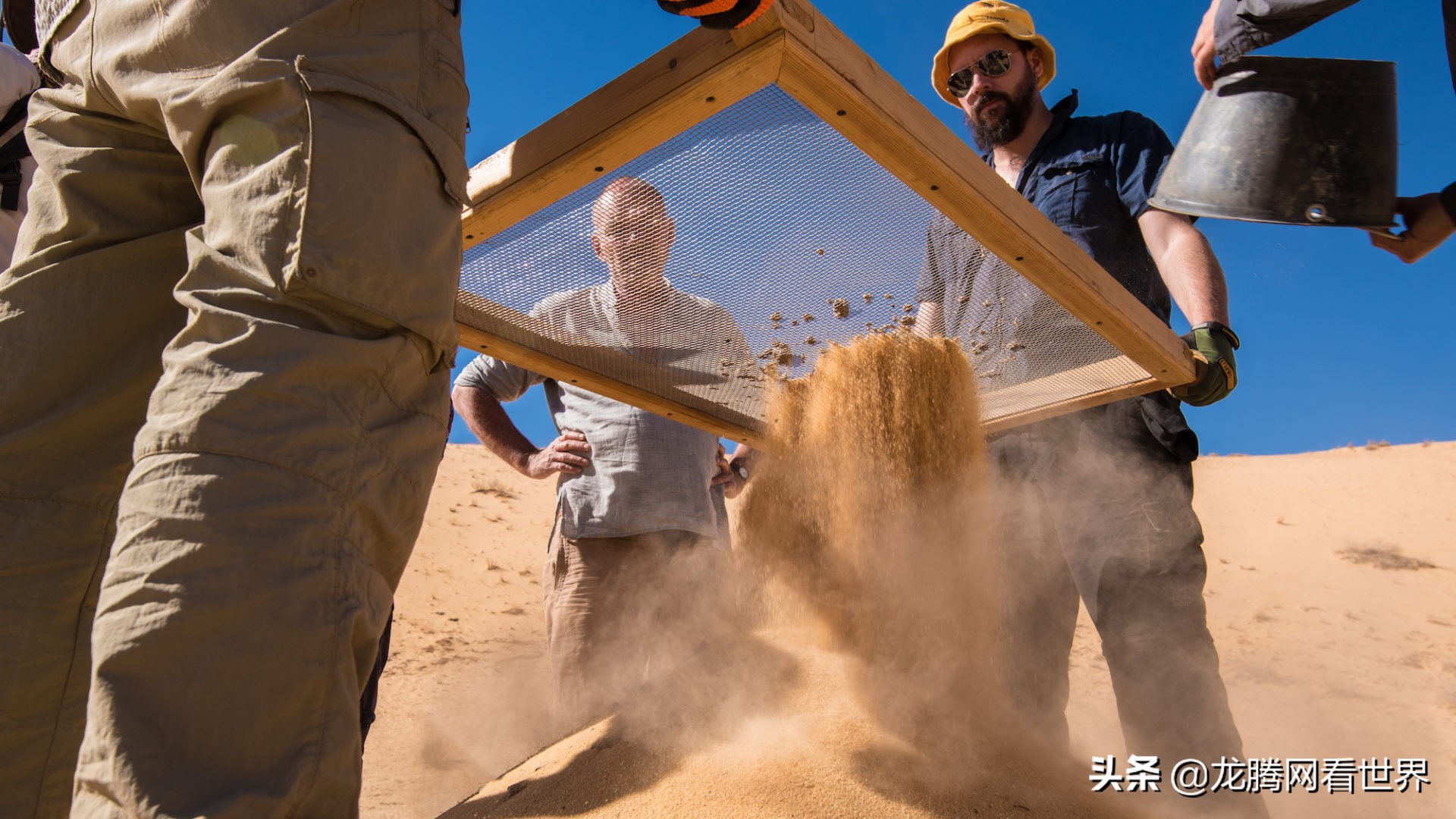
Politics, geography, and tradition have long focused archaeological attention on the evolution of Homo sapiens in Europe and Africa. Now, new research is challenging old ideas by showing that early human migrations unfolded across Asia far earlier than previously known.长期以来,政治、地理和传统一直将考古学的注意力集中在欧洲和非洲的智人进化上。现在,新的研究正在挑战旧的观点,新研究表明亚洲早期人类的迁移比我们已知的时间要早得多。The Nefud Desert is a desolate area of orange and yellow sand dunes. It covers approximately 25,000 square miles of the Arabian Peninsula. But tens of thousands of years ago, this area was a lush land of lakes, with a climate that may have been kinder to human life.内夫得沙漠(位于沙特阿拉伯)很荒凉,到处都是橙色和黄色的沙丘。这座位于阿拉伯半岛的沙漠面积约25000平方英里。但数万年前,这里湖泊密布,地面郁郁葱葱,当时的气候更有利于人类生存。On a January afternoon in 2016, an international team of archaeologists and paleontologists was studying the surface of one ancient lakebed at a site called Al Wusta in the Nefud’s landscape of sand and gravel. Their eyes were peeled for fossils, bits of stone tools, and any other signs that might remain from the region’s once-verdant past.2016年1月的一个下午,一个由考古学家和古生物学家组成的国际团队正在对位于内夫得沙漠地区名为阿尔乌斯塔的古湖床表面进行研究。团队成员瞪大眼睛搜索化石、石器碎片,以及其他任何可能证明此地曾经郁郁葱葱的痕迹。
“We knew it [was] important,” Zalmout recalled in an email. It was the first direct evidence of any large primate or hominid life in the area. In 2018, lab tests revealed that this specimen was a finger bone from an anatomically modern human who would have lived at least 86,000 years ago.“当时我们就感觉,这块小东西意义重大,”扎尔穆特在一封电子邮件中回忆说。这是该地区存在大型灵长类动物或原始人的第一个直接证据。2018年,实验室测试显示,这块骨头是一位现代人的指骨,从解剖学角度来看,这个现代人至少生活在8.6万年前。Prior to this Al Wusta discovery, evidence in the form of stone tools had suggested some human presence in the Nefud between 55,000 and 125,000 years ago. To anthropologists, “human” and “hominin” can mean any of a number of species closely related to our own. The finger bone was the oldest Homo sapiens find in the region.阿尔乌斯塔发现之前,这里出土的一些石器可以证明在5.5万至12.5万年前,内夫得沙漠曾出现过人类。在人类学家看来,“人类”和“古人类”可以指与人类密切相关的许多物种中的任何一种。这块指骨来自该地区发现的最古老的智人。The bone’s dating contradicts a well-established narrative in the scientific community. Findings, particularly from the area of modern-day Israel, Jordan, and Lebanon, known as the Levant region, have led to the understanding that H. sapiens first made their way out of Africa no earlier than 120,000 years ago, likely migrating north along the Mediterranean coast. These people settled in the Levant and their descendants—or those from a subsequent early human migration out of Africa—traveled into Europe tens of thousands of years later.这块骨头的年代测定与科学界公认的说法相矛盾。特别是被称为黎凡特地区的以色列、约旦和黎巴嫩等地区的发现,人们原本以为智人最早不早于12万年前离开了非洲,很可能沿着地中海海岸向北迁移。这些人在黎凡特地区定居下来,他们的后代——或者说是后来离开非洲的早期人类移民者——几万年后来到了欧洲。

The fingerbone, then, adds a twist to the tale of how and when our species left the African continent and, with many starts and stops, populated much of the rest of the earth. A new crop of discoveries, particularly from Asia, suggest that modern humans first left Africa some 200,000 years ago, taking multiple different routes.这节手指骨为人类如何以及何时离开非洲大陆的故事带来了一个插曲,经历了多次走走停停,人类在地球上的大部分地区繁衍生息。一项新的发现,尤其是来自亚洲的发现,表明现代人类第一次离开非洲大约是在20万年前,而且是通过多条不同的路线走出了非洲。No longer is the Levant necessarily central—and points east could have had unforeseen importance to early human migrations. As anthropologist Michael Petraglia, of the Max Planck Institute for the Science of Human History, puts it, “A new story is unfolding.”黎凡特地区不再是必经的中心地带,而东部地区对早期人类迁徙可能具有不可预见的重要性。正如马克斯普朗克研究所人类学教授迈克尔·佩特拉利亚所说:“一个新的故事正在展开。”
评论翻译 These findings could shed light on big unanswered questions, such as why humans made these migrations, what past environmental conditions were like, and how H. sapiens interacted with other hominins. But the changing narrative also underscores how much of our knowledge comes from—and is limited by—where archaeologists and other researchers have worked. The geographic emphasis has long been influenced not by science but by access, funding, and tradition.这些发现可能会为一些悬而未决的问题带来一些灵感,比如人类为什么要迁徙,过去的环境条件如何,智人是如何与其他古人类互动的。但是,这种不断变化的叙述也突出了我们的了解多么依赖考古学家和其他研究人员的工作,并同时又受到这些研究工作的限制。长期以来,地理重点一直都没有受到科学的影响,而是受到准入条件、资金和传统的影响。The first hint that the long-held story of human journeys out of Africa had missed something critical came from within the well-studied Levant region, in the Misliya Cave in Israel. In 2018, archaeologists revealed that they had found a human jawbone in this cave.长久以来关于人类离开非洲的漫长旅程都遗漏一些重要线索,第一个线索来自被充分研究的黎凡特地区,即以色列的米斯利亚洞穴。2018年,考古学家透露,他们在这个洞穴中发现了一块人类下颌骨。
It’s possible, then, that humans left Africa and journeyed into the Levant—and elsewhere—even earlier than the date of this jawbone. This line of thinking gained still more traction in July 2019, when a group of scholars published novel findings on a skull discovered in Greece in the 1970s. That fossil, the new work suggests, is human and more than 210,000 years old.那么,有可能人类离开非洲,来到黎凡特以及其他地方的时间比这块颚骨出现的时间还要早。2019年7月,一些学者发布了关于上世纪70年代在希腊发现的头骨的最新研究成果,为这一思路提供了更多支持。最新研究成果表明,希腊发现的这块化石属于距今超过21万年的人类化石。But in addition to this changing timeline, researchers are rethinking where humans traveled when they left Africa. The Al Wusta find is just one example.除了不断变化的时间线,研究人员还在重新思考人类离开非洲后去了哪里。阿尔乌斯塔的发现只是其中一个目的地。In 2015, researchers in China published their finding of 47 human teeth, dating between 85,000 and 120,000 years old, in a cave in Hunan province. Until this discovery, the oldest modern human fossils found in southern Asia were only about 45,000 years old.2015年,中国的研究人员在湖南省某洞穴中发现的47颗人类牙齿,这些牙齿的时间在8.5万至12万年前。在此之前,南亚发现的最古老的现代人类化石只有大约4.5万年的历史。These new findings “oblige [us] to rethink when and the way we dispersed,” says forensic anthropologist María Martinón-Torres, director of the National Research Center on Human Evolution in Burgos, Spain, and a member of the team that discovered and studied the teeth. She adds: “There may be more than one ‘out of Africa’ dispersal … humans, like any other animal, may have expanded as far as there was not any barrier, ecological or geographic, that prevented them from doing so.”这些新发现“迫使我们重新思考人类是在何时以及以何种方式扩散的,”西班牙布尔戈斯国家人类进化研究中心的法医人类学家玛丽·马丁·托雷斯说,她也是发现和研究这些牙齿的研究员之一。她说:“人类走出非洲后,就像其他动物一样,可能有不止一个扩散路线,人类可能已经扩散到了没有生态或地理屏障阻止他们的地方。”In 2018, researchers in India published on the discovery of a collection of advanced stone tools. They say this find indicates a hominin presence stretching back at least 170,000 years—millennia earlier than previous research suggested. And some evidence suggests early humans may have headed directly toward Asia by crossing from Africa over the Arabian Peninsula, altogether bypassing the Levant, where so much of the earliest evidence of humans outside Africa has come from.2018年,印度研究人员发表了一篇关于一系列先进石器工具的文章。他们说,这一发现表明,古人类的存在至少可以追溯到17万年以前,比之前的研究结果早了几千年。一些证据表明,虽然许多非洲以外的人类最早证据都来自黎凡特地区,但是早期人类可能从非洲穿越阿拉伯半岛,直接前往亚洲,完全绕过了黎凡特。A combination of new discoveries, then, has shifted understandings of the timing, routes, and geographic range associated with H. sapiens’ dispersal out of Africa. But for archaeologists, the finds also flag a blind spot of sorts. As Martinón-Torres says, “These findings are also a big warning note regarding Asia.”一系列新发现改变了人们对智人离开非洲的时间、路线,以及智人到达地理范围的认识。但对于考古学家来说,这些发现也标志着某种盲点。正如马丁·托雷斯所说,“这些发现也是一个重大警告,我们过去是不是一直忽略了亚洲地区。”Indeed, there is growing awareness of the need to expand the geographic scope of paleontology and archaeology related to early human migrations and evolution. “For a long time,” Martinón-Torres adds, “Asia was considered like a dead end with a secondary role in the mainstream of human evolution.”事实上,人们逐渐意识到,有必要扩大与早期人类迁移和进化有关的古生物学和考古学的地理范围。马丁·托雷斯补充道:“很长一段时间以来,人们认为亚洲是条死胡同,在人类进化的主流研究中扮演着次要角色。”“There is a huge bias in archaeological fieldwork and where it’s occurring, and our theories on human evolution are built on these geographic biases,” says Petraglia, who with Zalmout and colleagues at the Saudi Commission for Tourism and National Heritage found the Al Wusta fingerbone.佩特拉利亚、扎尔穆特以及他们在沙特旅游和国家遗产委员会的同事发现了阿尔乌斯塔指骨。佩特拉利亚说:“考古野外工作一直到现在仍然存在巨大的偏见,而如今人类进化的理论就是建立在这些地理偏见的基础上的。”

“Countries where paleoanthropological research has been conducted for many decades are more likely to have important finds that are also well-known and valued by the people themselves,” says Katerina Harvati, director of paleoanthropology at the University of Tübingen. “And therefore, [they] are likely to have more funding opportunities.”德国图宾根大学古人类学主任卡捷琳娜·哈维缇说:“在那些古人类学研究已经进行了几十年的国家,出现重要发现的可能性更大,这些发现也为当地人民所熟知和重视。因此,(他们)可能会得到更多的融资机会。”
For that matter, political issues may help or hinder archaeologists. Durrani participated in fieldwork in Yemen in the 1990s, for example, and later led tours at archaeological sites there. This work came to a halt in 2008 due to political instability in the area. Violence and conflicts pose serious barriers for access, she says.就此而言,政治问题也可能对考古学家产生影响。例如,杜兰尼在20世纪90年代参加了也门的野外考察工作,后来又带领游客参观了那里的考古遗址。由于该地区的政治不稳定,2008年这项工作就停止了。她说,当地的*力暴**和冲突给研究人员进入该地区带来了很大困难。
Over time, access and conditions will, scientists hope, further improve. In the interim, this research reveals that anatomically modern humans left Africa earlier than expected and traveled south, along the Arabian Peninsula, in addition to north.科学家们希望,随着时间的推移,遗址准入和考古条件能进一步改善。在此期间,这项研究表明,从解剖学角度看,现代人比预期的更早离开非洲,除了向北,还沿着阿拉伯半岛向南旅行。However, some of these finds have drawn skepticism. Jeffrey Schwartz, professor emeritus at the University of Pittsburgh, cautions against drawing dramatic conclusions from the findings. “I think we are calling too many things H. sapiens,” he says.然而,有些专家对其中一些发现提出质疑。匹兹堡大学名誉教授杰弗里-施瓦兹警告,不要从这些发现中得出引人注目的结论。“我认为我们把太多东西称为智人了”他说。
Nonetheless, the earlier migrations are intriguing, says Luca Pagani, a biological anthropologist who authored one of the Nature articles. “Although it’s not going to change our idea of which migrations were a success, it does show a richer variety of attempts at dispersal,” he says, and that is an essential part of the story of early modern humans.尽管如此,生物人类学家卢卡·帕加尼在《自然》杂志上的一篇文章提到,早期的迁徙很有意思,“虽然这不会改变我们对哪些迁徙成功的看法,但确实显示了更丰富的扩散尝试,这是早期现代人类故事的一个重要部分。Indeed, the reasons certain early human migrations failed could illuminate major questions in archaeology. Martinón-Torres and her colleagues working in China, for example, have posited that early modern humans may have been in competition with Neanderthals or other hominins, which could have influenced their movements.事实上,某些早期人类迁徙失败的原因可以解释考古学上的主要问题。例如,在中国工作的马丁·托雷斯和她的同事们提出了一个假设,早期现代人可能与尼安德特人或其他古人类竞争,这可能影响了他们的运动。Petraglia, meanwhile, suspects early modern humans may have thrived in the Arabian site until water disappeared as the desert expanded. “If you want to know how climate change may affect us one day, well, we’ve got a whole story here about the effects of climate change on human populations,” he says. In short, the descendants of these intrepid humans may not have survived, but their stories could still guide us into the future.而佩特拉利亚怀疑早期现代人可能曾经在阿拉伯遗址繁荣过,直到随着沙漠的扩张水源消失。他说:“如果你想知道气候变化某一天会如何影响我们,那么,我们这里有关于气候变化对人类人口影响的完整故事。”简而言之,这些勇敢者的后代也许无法存活,但他们的故事仍能指引我们走向未来。