JUMBO HERITAGE LIST
第壹部 卷二越南柬埔寨手稿篇
第157回:庙宇神殿湮没丛林,你中有我我中有你
©原创图片(本文图片版权归Jumbo Huang所有,任何形式转载请联系作者:Jumbo_Huang@126.com微信Jumboheritagelist)本章节文字内容部分来自公开网络或公有领域,仅供个人学习研究和欣赏而使用,没有商业用途。
晚上吃完饭之后我跟队友聊天时,又提到昨天乘客时经过当地的一个朝鲜博物馆的事情,大家都很好奇,是什么让神秘的朝鲜能在柬埔寨有存在感呢?
其实我仔细研究了一下,还真发现朝鲜在柬埔寨是很有影响力的,三年前朝鲜在世界性的旅游胜地柬埔寨吴哥窟投资了1500万美元(约135亿朝鲜圆)建造的文化历史博物馆正式对外开放。
当时英国《独立报》引用柬埔寨《金边邮报》的报道,说朝鲜在吴哥窟遗址群所在的柬埔寨旅游城市遏粒建造了“伟大全景博物馆”。朝鲜以将“伟大全景博物馆”捐赠给柬埔寨为条件,获得了10年的运营权,将赚取入场费。
由朝鲜万寿台创造社主导建设的该博物馆在朝鲜海外事业中属于最大规模。博物馆里有宽120米、高13米的大型壁画,壁画描写的是在8到15世纪迎来鼎盛时期的高棉帝国时代的日常生活、文化和历史。
博物馆也展示了白头山风景和朝鲜已逝最高OOOOOOO出生的房屋绘画作品。另外,该博物馆还配备了3D电影馆和“VIP室”。经济困难的朝鲜在吴哥窟直接建立博物馆有两个目的:赚取外汇的同时扩大对柬埔寨的外交影响力。
我们返回酒店之后,队友投诉说今天的导游中文太差了,浏览吴哥窟时讲解不清,让大家无法对吴哥窟的历史有清楚的认识,无奈我只好给队友做了一个总结,梳理了一下吴哥窟的渊源。
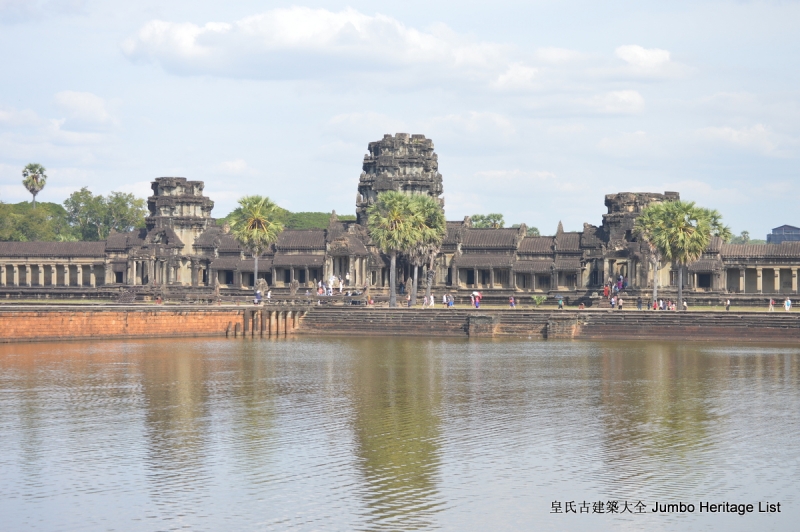
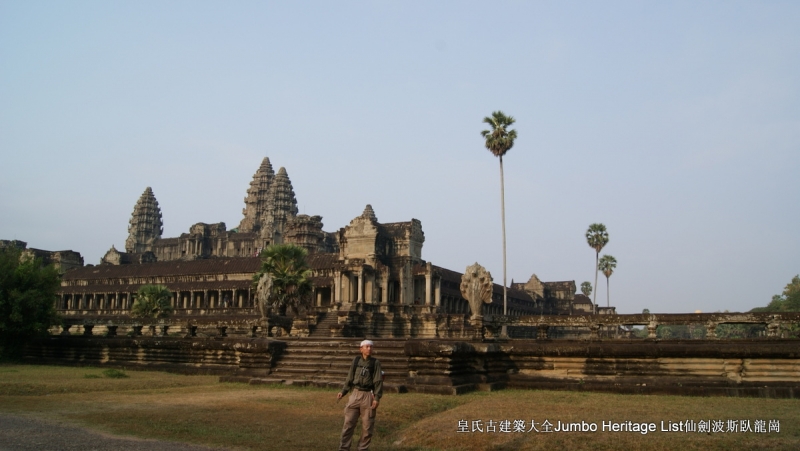
《皇氏古建筑大全》第2222:吴哥窟(Angkor Wat)又称吴哥寺,位于柬埔寨,被称作柬埔寨国宝,是世界上最大的庙宇,同时也是世界上最早的高棉式建筑。吴哥窟原始的名字是Vrah Vishnulok,意思为“毗湿奴的神殿”,
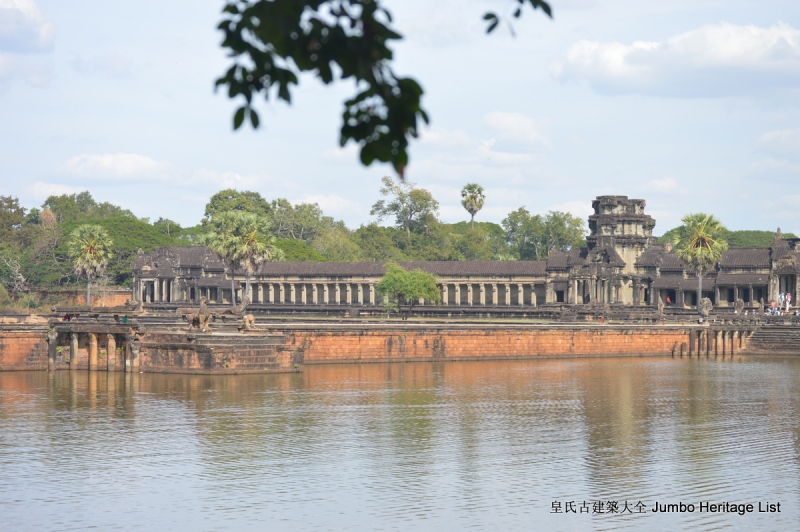
中国佛学古籍称之为“桑香佛舍”。12世纪时,吴哥王朝国王苏耶跋摩二世(Suryavarman II)希望在平地兴建一座规模宏伟的石窟寺庙,作为吴哥王朝的国都和国寺。因此举全国之力,花了大约35年建造,真是慢工出精品。它是吴哥古迹中保存得最完好的建筑,以建筑宏伟与浮雕细致闻名于世。
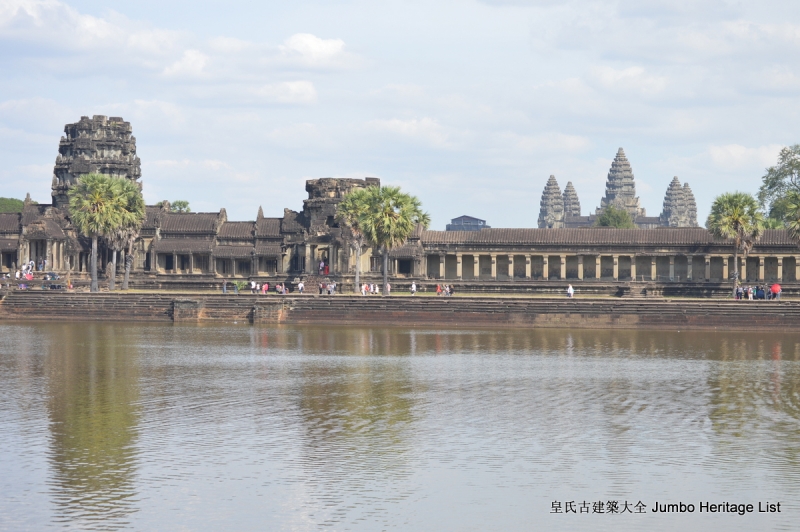
1992年联合国教科文组织将吴哥古迹列入世界文化遗产。此后吴哥窟作为吴哥古迹的重中之重,成为了柬埔寨一张亮丽的旅游名片。一百多年来,包括中国在内的世界各国投入大量资金和人力在吴哥窟的维护工程上,以保护这份世界文化遗产。
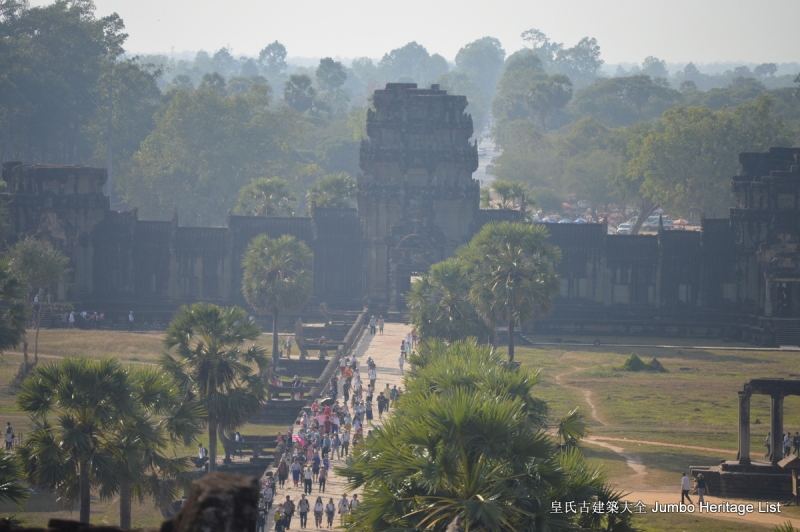
吴哥窟的造型,已经成为柬埔寨国家的标志,展现在柬埔寨的*旗国**上。吴哥窟的整体布局,从空中就可以一目了然:一道明亮如镜的长方形护城河,围绕一个长方形的满是郁郁葱葱树木的绿洲,绿洲有一道寺庙围墙环绕。
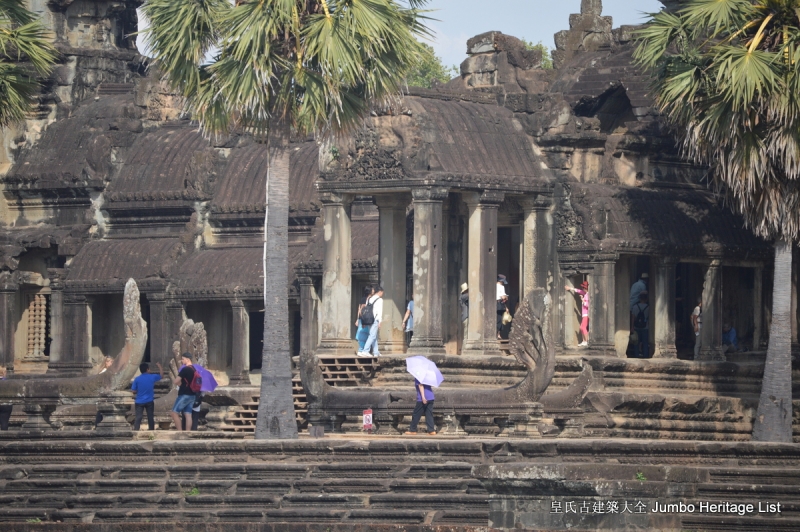
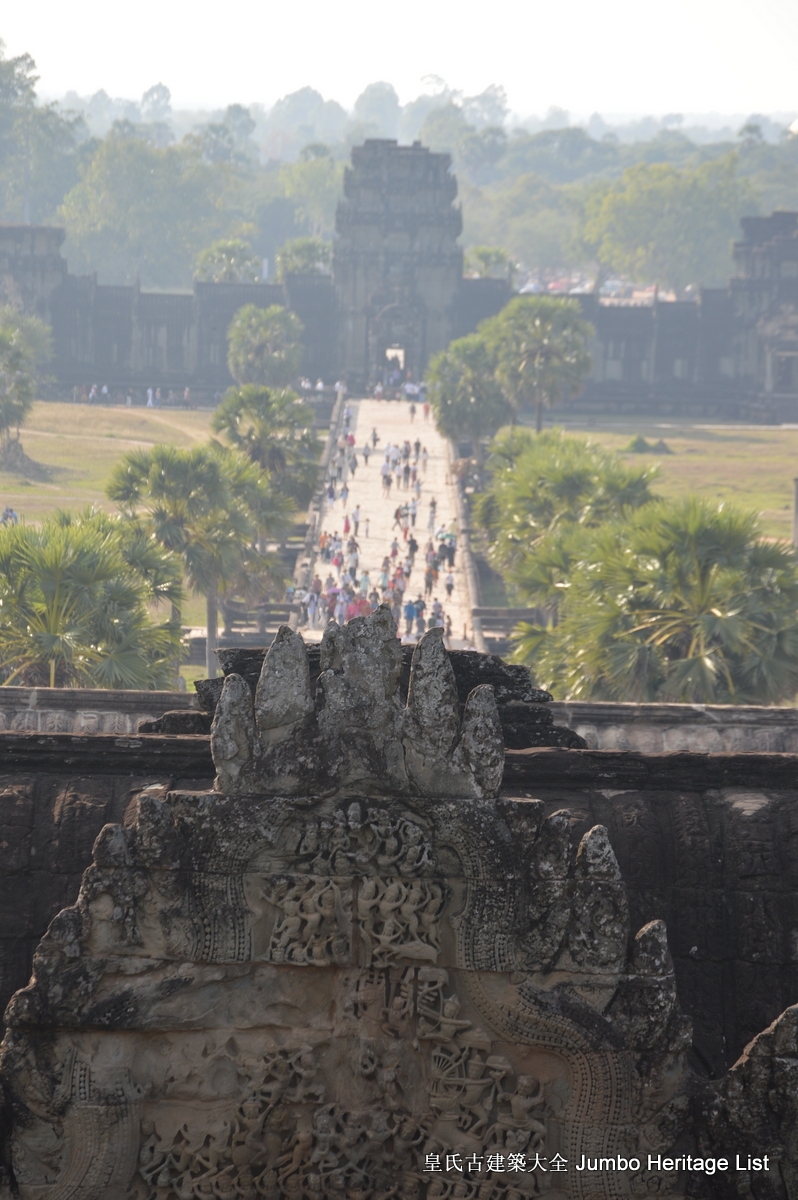
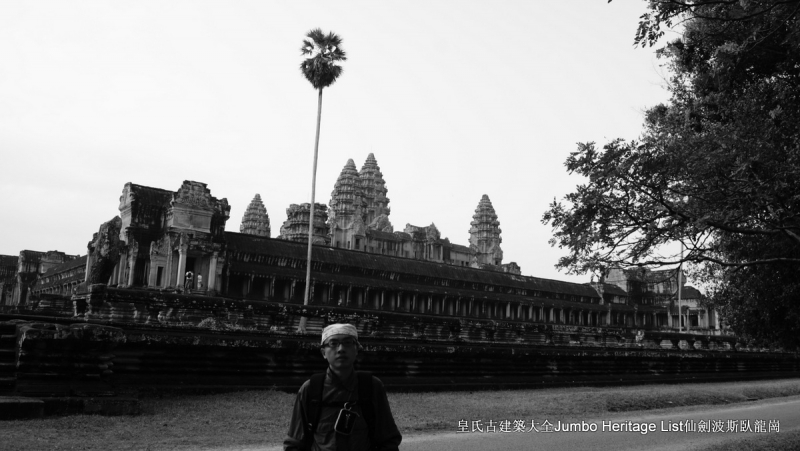
绿洲正中的建筑乃是吴哥窟寺的印度教式的须弥山金字坛。吴哥窟寺坐东朝西。一道由正西往正东的长堤,横穿护城河,直通寺庙围墙西大门。过西大门,又一条较长的道路,穿过翠绿的草地,直达寺庙的西大门。在金字塔式的寺庙的最高层,
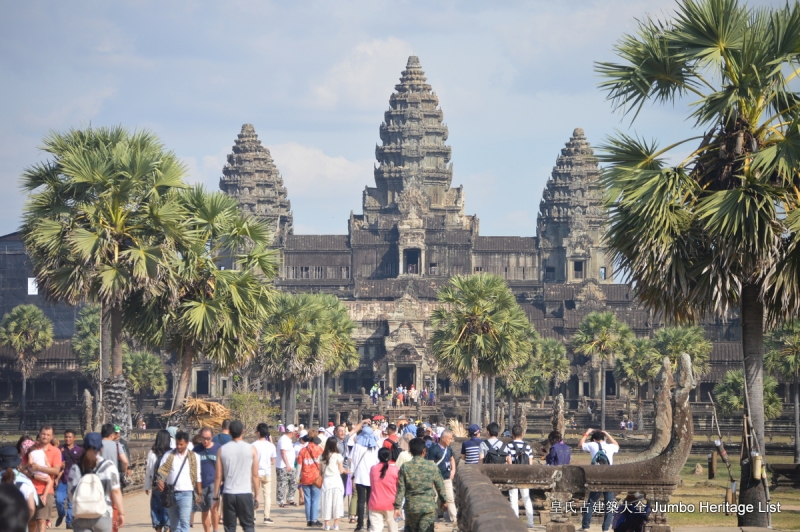
可见矗立着五座宝塔,如*子骰**五点梅花,其中四个宝塔较小,排四隅,一个大宝塔巍然矗立正中,与印度金刚宝座式塔布局相似,但五塔的间距宽阔,宝塔与宝塔之间连接游廊,此外,须弥山金刚坛的每一层都有回廊环绕,乃是吴哥窟建筑的特色。
那里的台阶陡峭,我们需要手脚并用地爬上去。这寓意着人们到达天堂需要经历许多艰辛。之前只有一条台阶建了扶手,据说在殖民时期有一位官员的夫人就是从这个楼梯摔下去世。
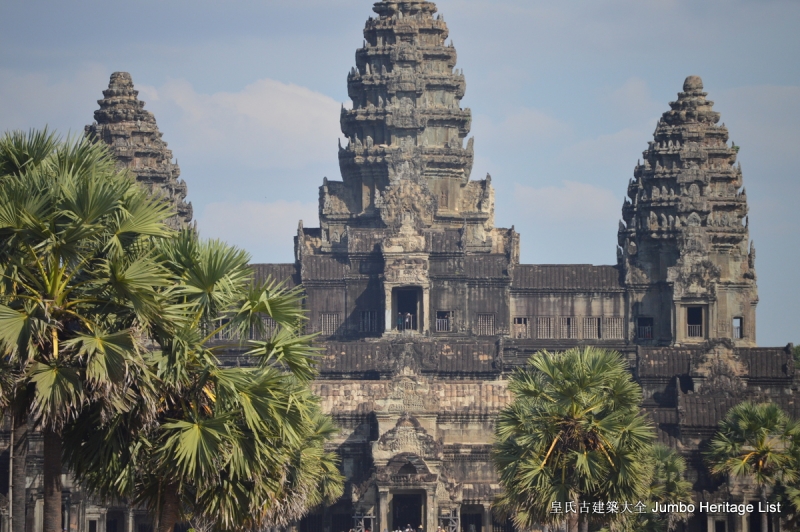
吴哥窟是整个遗址中保存最完好的寺庙建筑。今天柬埔寨人将它放在自己的*旗国**上,足见吴哥窟在柬埔寨人心目中的神圣地位。吴哥窟最初是为敬奉印度教神灵所建,但是今天已演变为佛教寺庙。
在方形广场的四个角上,各有一座石塔,而广场中央矗立着一座更高的石塔,象征神话中的圣山。无论印度教还是佛教信徒都相信,中间这个神圣的所在就是宇宙的中心。
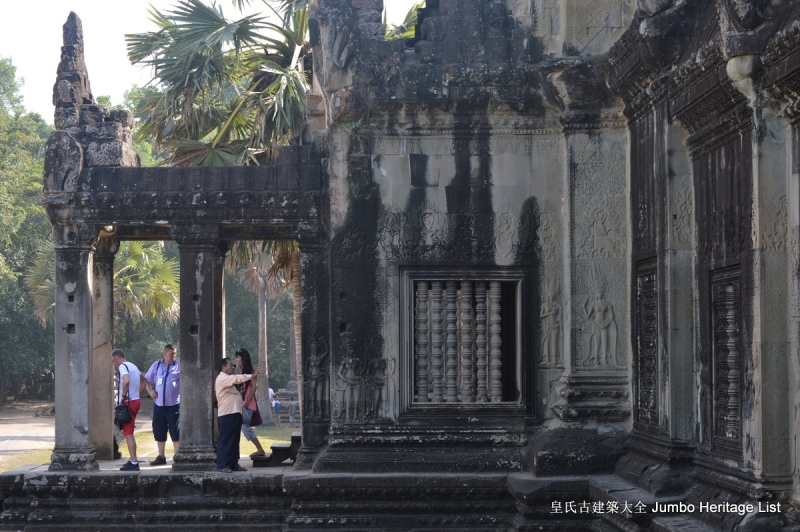
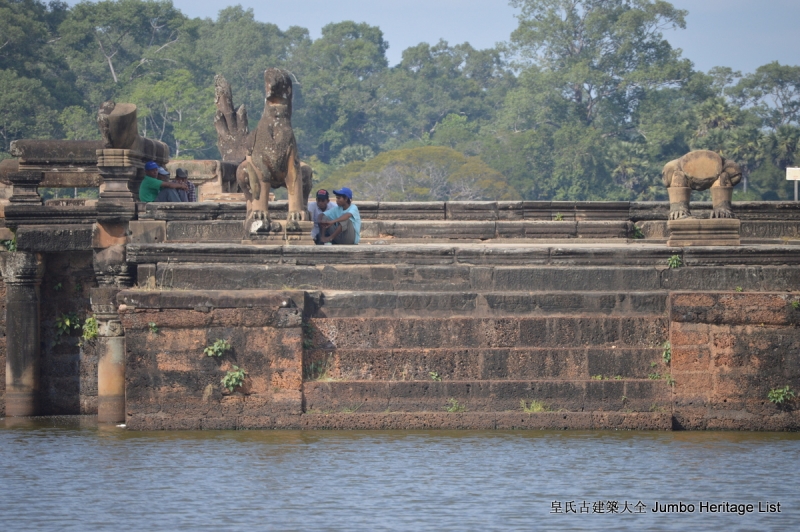
吴哥窟建在三层台阶的地基上,每层台基四周都有石雕回廊,浮雕大多取材于印度著名史诗《摩珂婆罗多》与《罗摩衍那》的神话故事。寺庙中央大道两旁是九头蛇形栏杆,柬埔寨传说中,九头蛇会带来风调雨顺。寺庙周围是护城河和水池,我当时一直以为了保护寺庙,但有专家说是为了通过水中的倒影,使寺庙显得更加神圣雄伟。
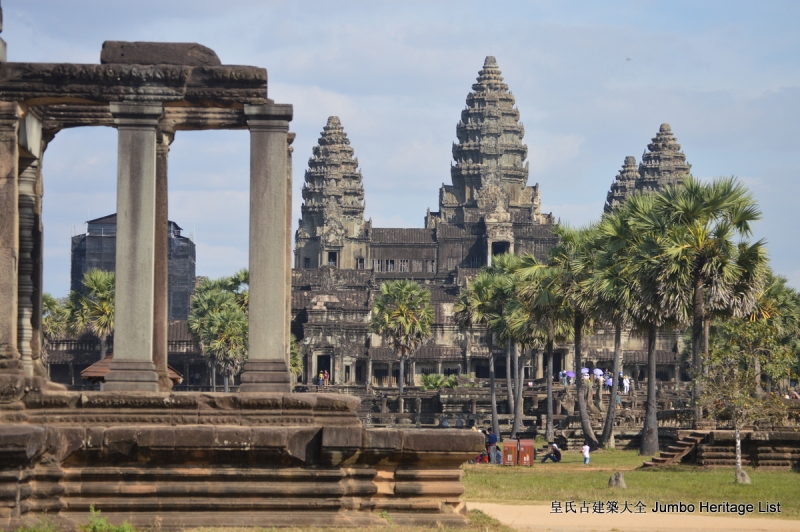
吴哥窟是人类的杰作,但每个设计都是为了体现神性。置身于吴哥窟的佛像间,已经分不清自己究竟是站在神的领地还是人的空间。神性和空间交汇在这个密林中的古城。吴哥窟中心建筑十字王台尽头是吴哥寺的中心建筑群。它基本是由大、中、小三个以长方形回廊为周边的须弥座,依外大内小、下大上小的次序堆叠而成的三个围囿,中心矗立五座莲花圣塔为顶点,象徵须弥山。
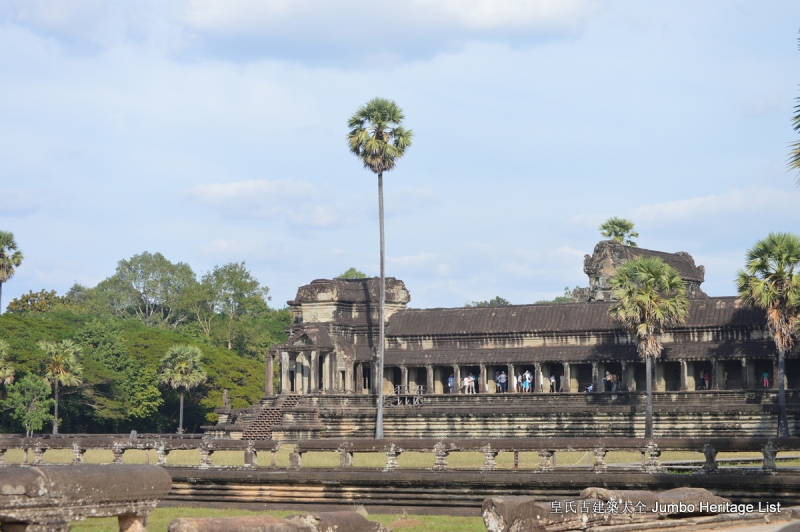
美国学者艾丽娜曼妮卡解释这三层回廊各代表国王、婆罗门和月亮、毗湿奴。各回廊的每个基点上建立廊门,上中两层的回廊,四隅设置塔门,每层塔门的四座宝塔,中央宝塔形成五点梅花图案。
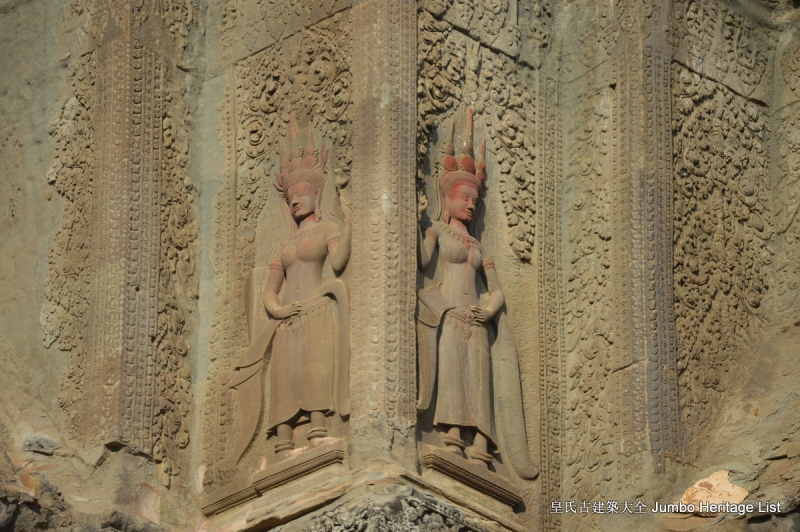
由于寺庙的朝西取向,因此上一层须弥座的位置,并非在下一层须弥座的正中,而是略略靠后偏东,为西边画廊留出更多空间;
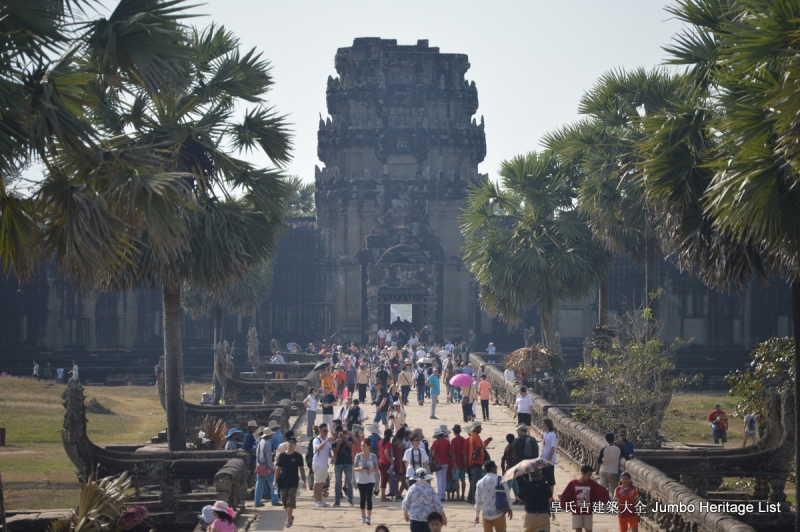
因为同样原故,西边的台阶不如东边台阶陡峭。第一层的须弥座由砂岩石垒成,高出地面约3米;须弥座之上,有高3米左右的回廊,围绕吴哥寺如口字形。回廊长方形,南北方向长190米,东西方向长220米。回廊四周,共有四座塔门和八座廊门,四隅各一座塔门,正西、正东各三座廊门,正北、正南各一座廊门。塔门和廊门有内、外二石阶,可通第一层内院、寺庙外院。
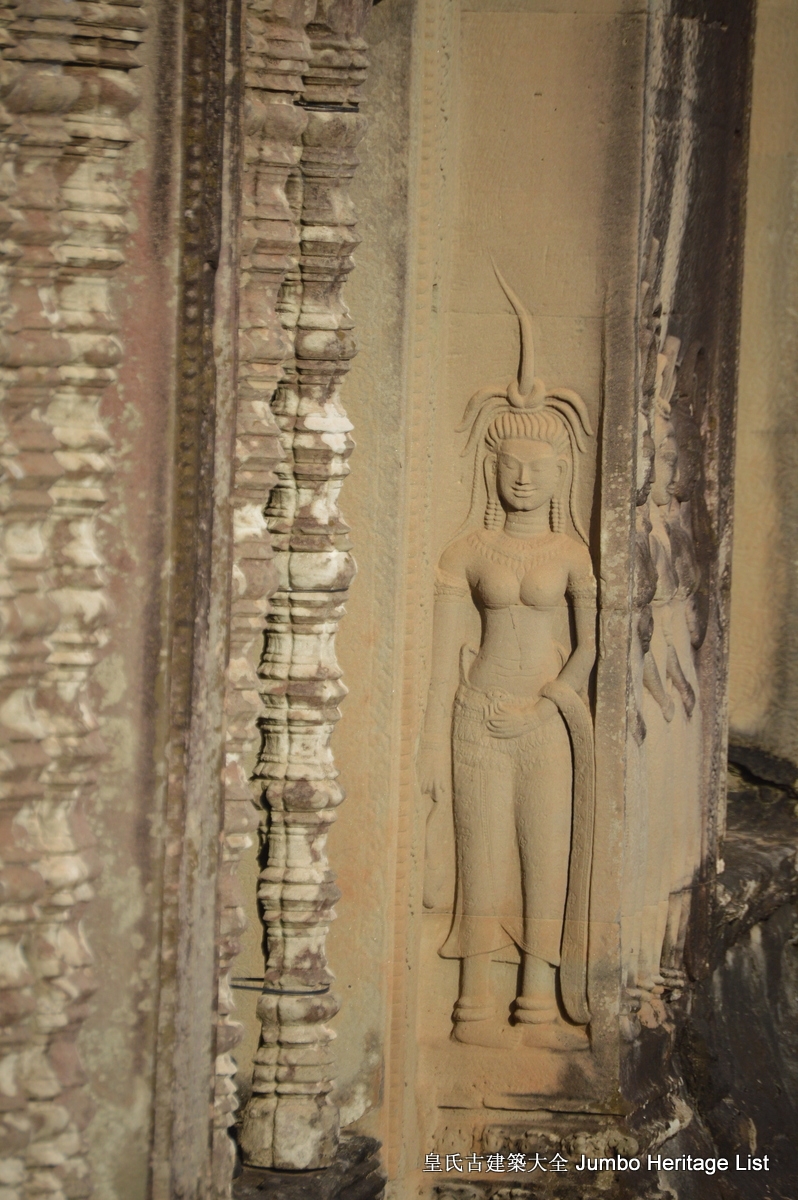
回廊的内侧墙壁既是寺的外墙兼巨型画廊。回廊的外侧,有两排并列的方石柱,其中一排支撑画廊拱顶,另一排支撑半拱顶边廊。回廊的二重檐拱顶,覆盖陶瓦,保护画廊壁上的石雕,不受日晒雨淋。
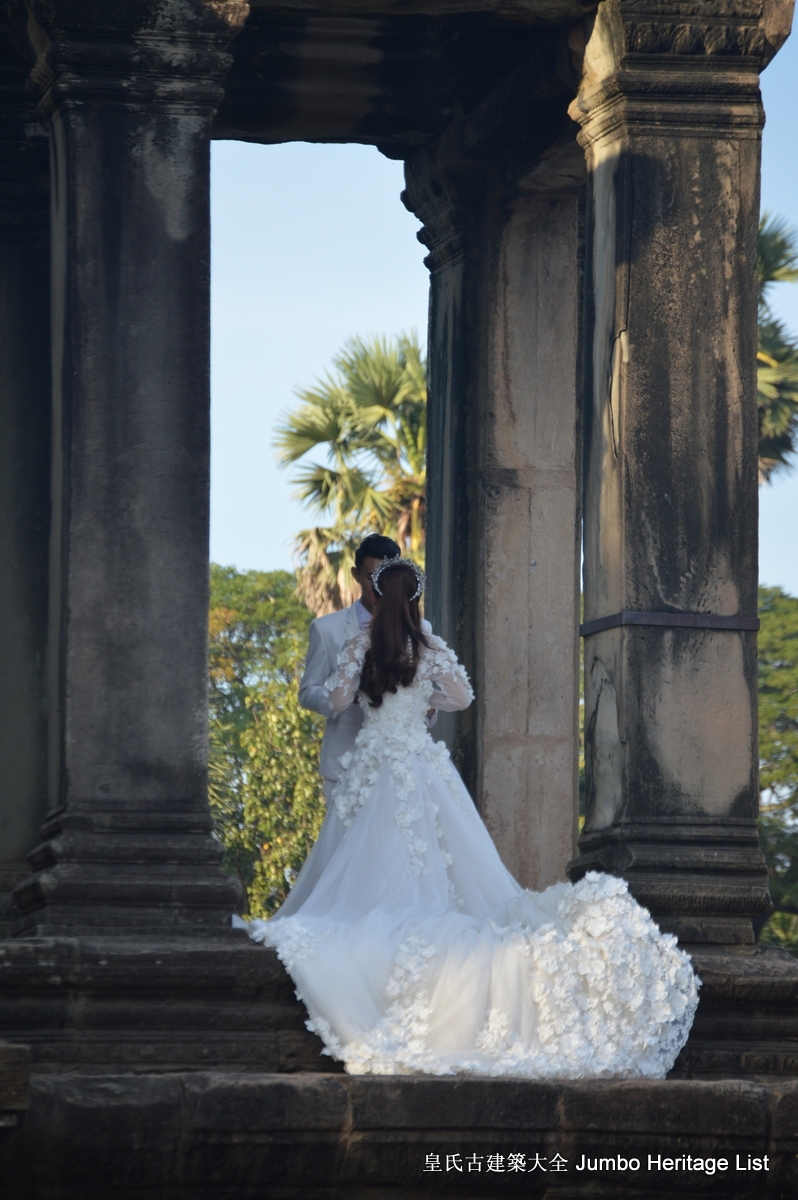
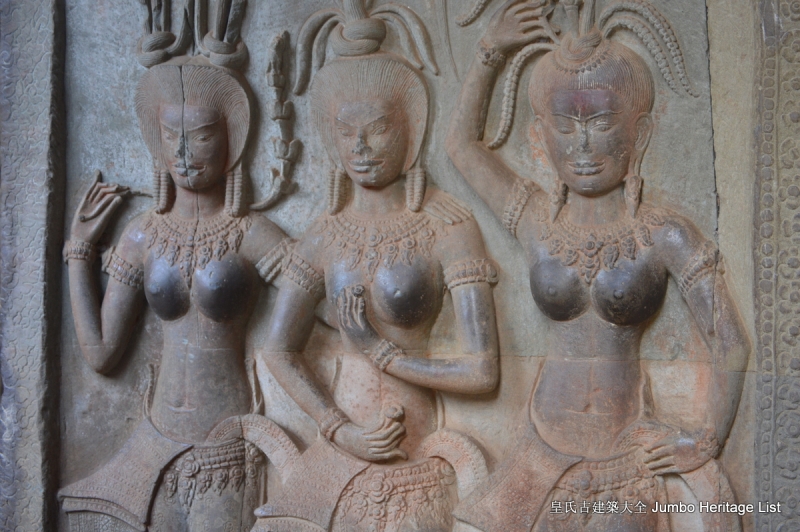
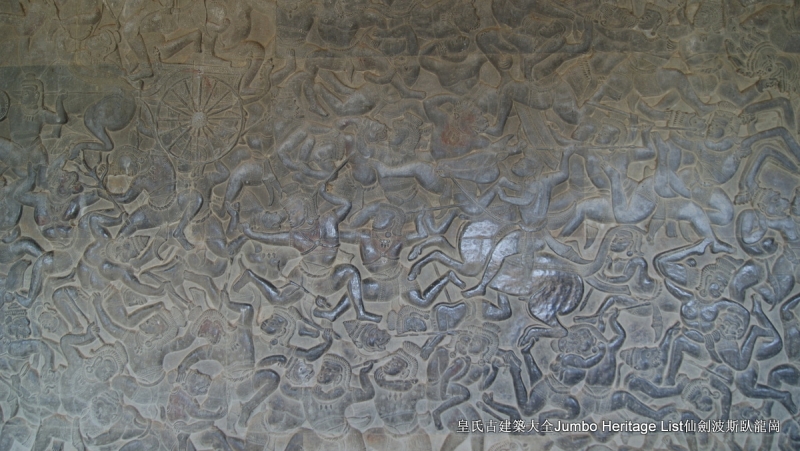
画廊的石壁,排列雕工精细的八幅巨型浮雕。每幅浮雕高二米余,长近百米,全长达七百余米,绕寺一周。浮雕描绘印度两篇著名梵文史诗《罗摩衍那》和《摩诃婆罗多》中的故事和一些吴哥王朝的历史。从西北壁角按反时钟方向,西画廊展示罗摩衍那中阿逾陀国王子罗摩(Rama)击败罗刹魔王罗波那(Ravana)的场面,和摩诃婆罗多中佧拉婆族和班度族战争的故事。
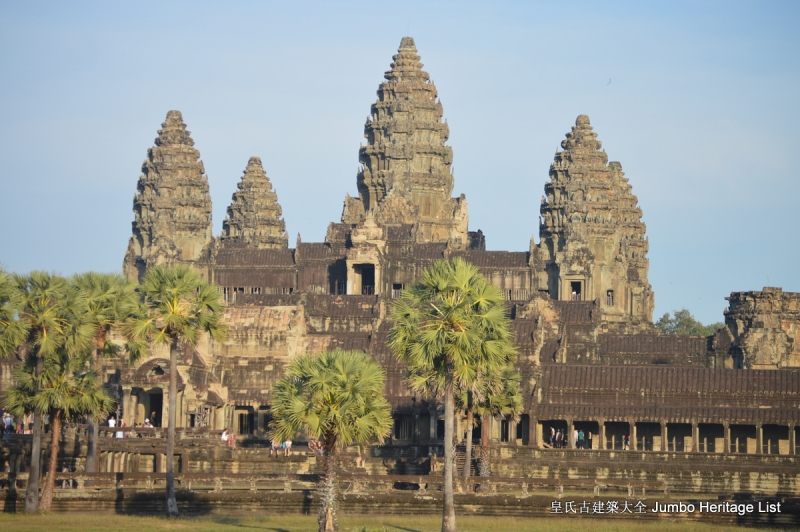
南画廊有几幅浮雕,和吴哥王朝历史有关,其中一幅描绘苏耶跋摩二世头戴王冠,在宝座上赤足盘腿而坐,左手向左指,后手靠著宝座扶手,左右侍从各二,手执长扇,为王扇风,身后还有宫女,手持巨型蜡烛,白日点燃。
接下去是印度神话中32层地狱和37重天堂。东画廊描绘古印度神话普拉纳斯中一个著名的故事:毗湿奴搅乳海,当时毗湿奴令92尊阿修罗和88尊天神把蛇王婆苏吉充绳索搅动乳海。接著的毗湿奴击败阿修罗的场面是16世纪后人所加。北画廊显示毗湿奴第八化身黑天战胜阿修罗班那。
西北和西南角廊的画面较小,多是描述罗摩衍那或黑天的故事。入第一层回廊西门,踏入一个名为“千佛阁”的田字阁,四周环绕回廊。田字阁被中央的十字游廊间隔为四个院落,其地面比十字游廊和回廊低约一米,原为水池,现不蓄水。田字阁的南北廊,宽约3米,外侧封闭,内侧立双排方柱。十字游廊由两道游廊交叉成十字形,每道游廊由中廊、左偏廊、右偏廊三部分组成,由四行方柱支撑。
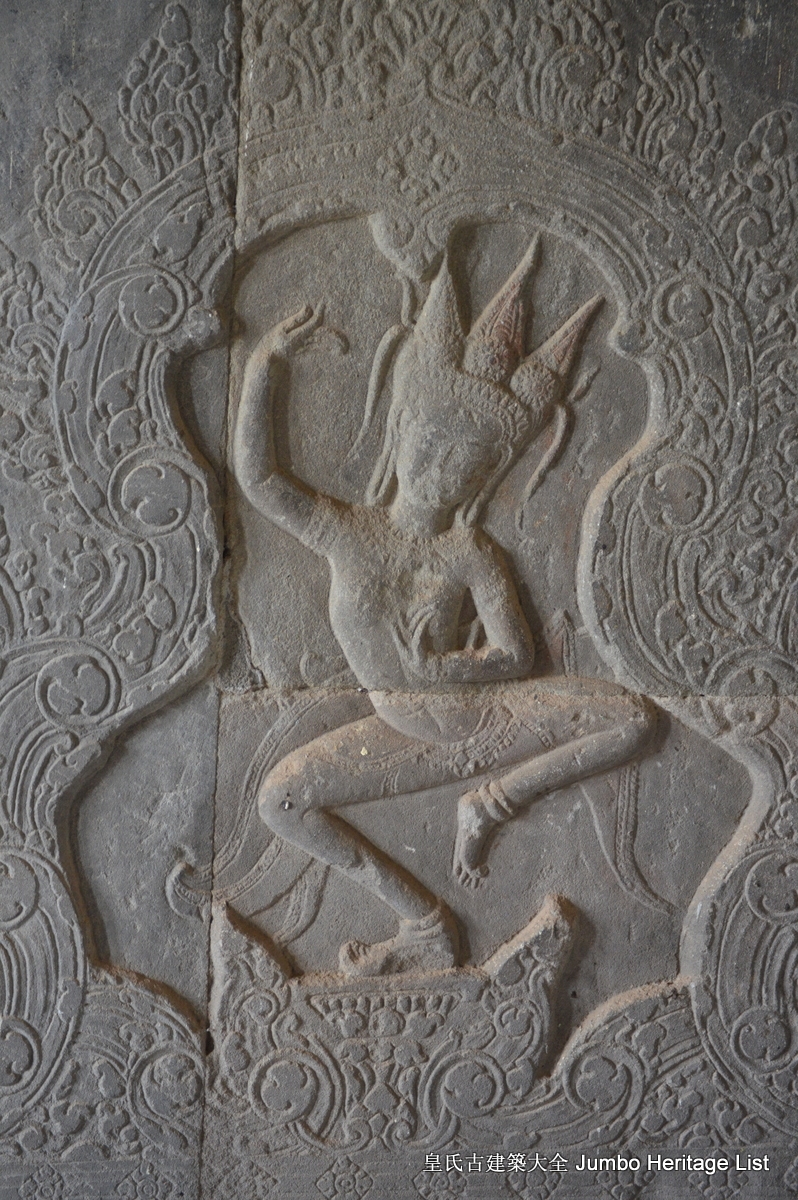
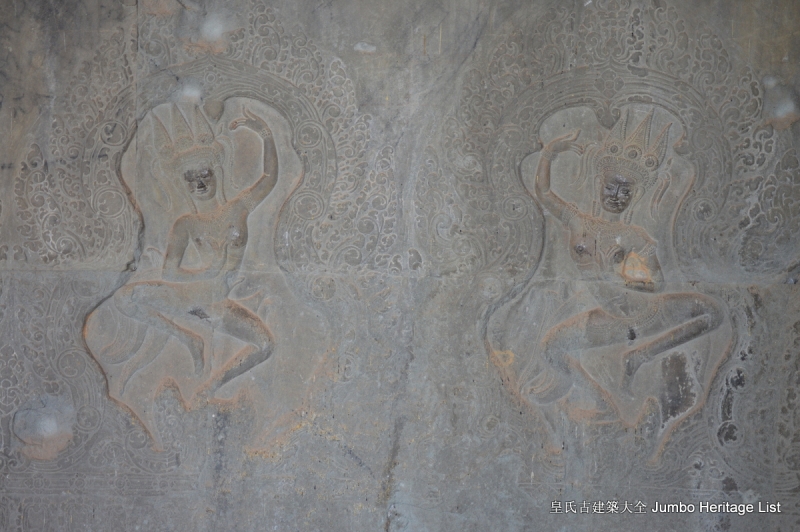
两行内方柱支撑中廊,两行外方柱支撑各自的偏廊。中廊宽约3米,高约4.5米,上半是墙壁下半是方柱。石柱底部有飞天女浮雕,一些柱身和柱墙还残留深红色的涂漆,由此可窥见八百多年前吴哥窟全盛时期之辉煌景象。主廊顶呈蛋尖拱形,以陶瓦盖顶。左右偏廊,宽约2.5米,高约3米。游廊总宽度约8米。
几世纪来,朝拜者曾在阁内留下许多佛像,不过大部分佛像已被挪走。阁内还有不少颂扬朝拜者善行的铭文,多数是高棉语,一些是缅甸语。田字画阁之外的院子,乃寺庙第一层围囿的内院,如反匚字形。在第一层围囿的西北角和西南角,各有一座藏经阁。田字阁的北廊、中廊和西廊各有石阶廊西通寺庙的第二层围囿。
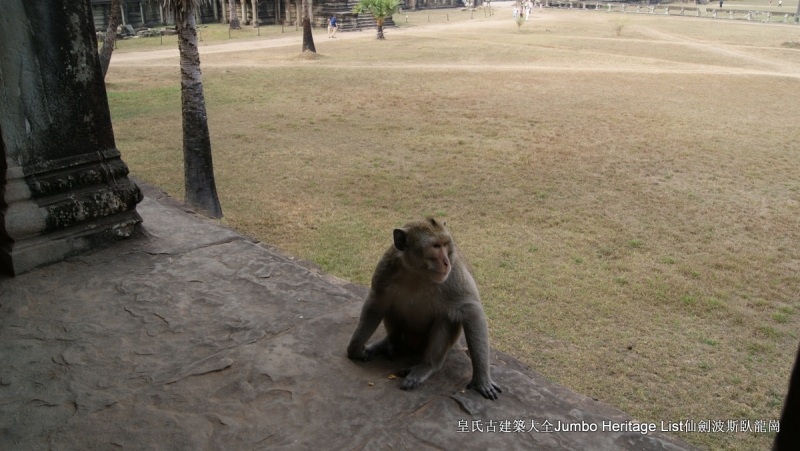
第二层台基又高出第一层台基五米半,四周也有长方形回廊,东西方向长约115米,南北方向宽约100米。回廊没有石柱,也没有偏廊,两壁分布竖葫芦棂窗,间以天神浮雕。回廊共有十座廊门,四隅各一,东南北各一,西边三座。每座廊门有内外二石阶,下通第一围囿内院,内通第二围囿内院。西边的三座廊门,通第一围囿的田字阁。
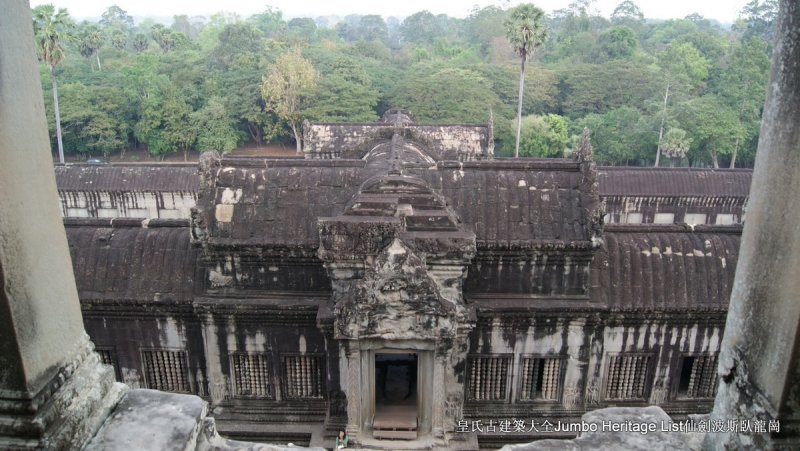
第二层回廊四角的塔门,顶部各矗立一座宝塔;因年久失修,四座宝塔的顶部大半缺损,九层宝塔只剩二三层。第二围囿内院的西南、西北隅各有一座小型的藏经阁。两座藏经阁之间由一个十字形阳台的南北道相连,
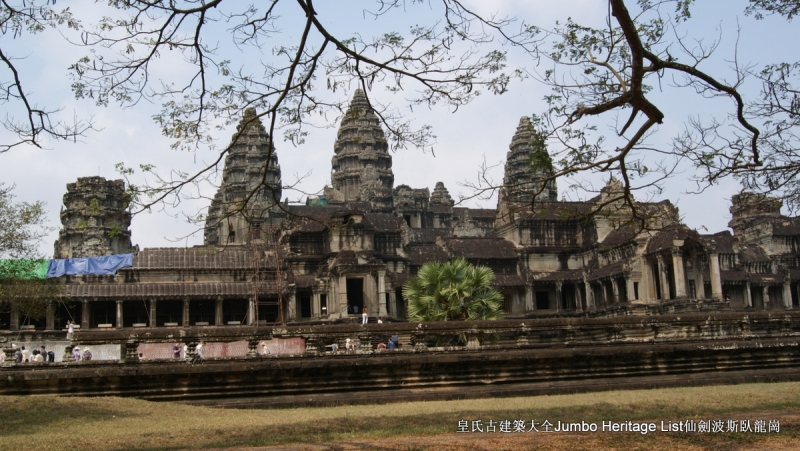
阳台的东西道连接第二层回廊的西门和第三层回廊的西门。这个十字阳台也是后人添加的。寺庙的第三层台基,即最内和最高层台基,称为巴甘,正方形,形如金字塔,但由两段叠成,巍然拔地而起12米,比一、二层台基高一倍。
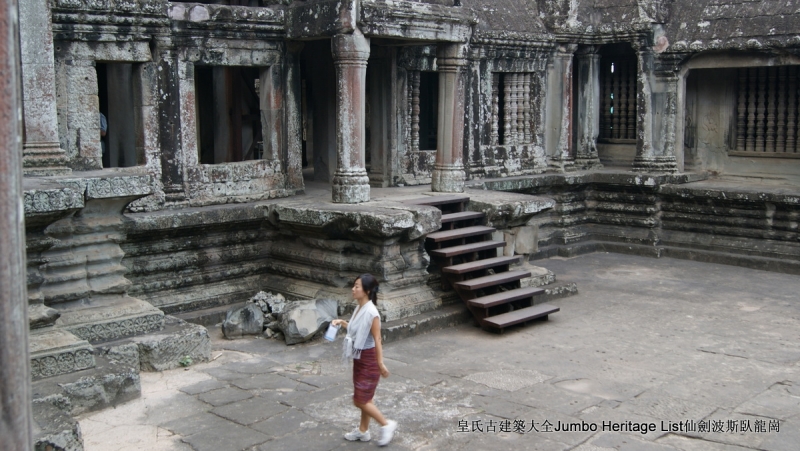
台基四周有十二道台阶,东南西北每边各三道,十二道台阶都十分陡峭, 必须手脚并用,匍匐攀登,象徵登天之艰辛。台阶之上的田字形重檐画廊,60米见方,上立五座莲花圣塔,四隅各一塔门,正中矗立一座42米高的大主塔,塔顶离地65米,主塔比四个角塔高大;五座宝塔,排成五点梅花式。每塔内设神龛。主塔的神龛,最初四通,中供毗湿奴一尊,在改奉上座部佛教后,中供佛像,三面用佛像壁围拢。
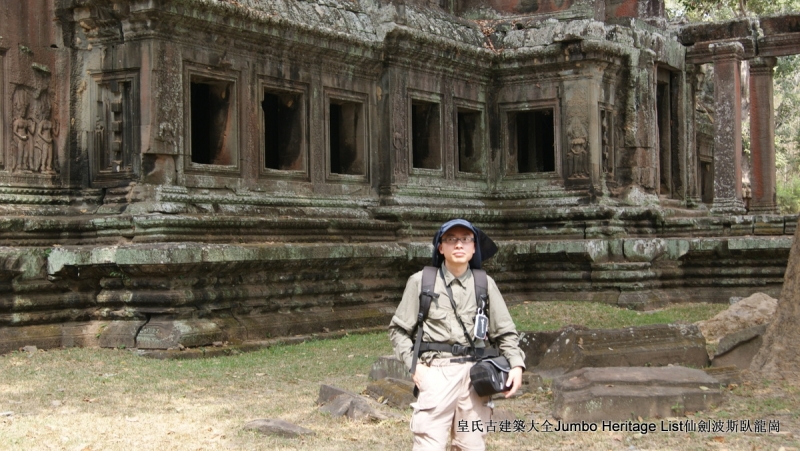
各塔门之间,塔门与主塔之间,由田字画廊相连。田字画廊由回廊和十字游廊组成,回廊分主廊和偏廊两部分,主廊靠外的墙壁分布著竖葫芦棂窗,在正东、正西、正南、正北四个基点则分布长方形无栏窗。主廊的内侧为立柱排,主廊上有高五米的拱顶,偏廊内侧排列立柱,半拱顶高三米。十字游廊有一走廊,二偏廊,一拱顶,二半拱顶,左右各二排方石柱。
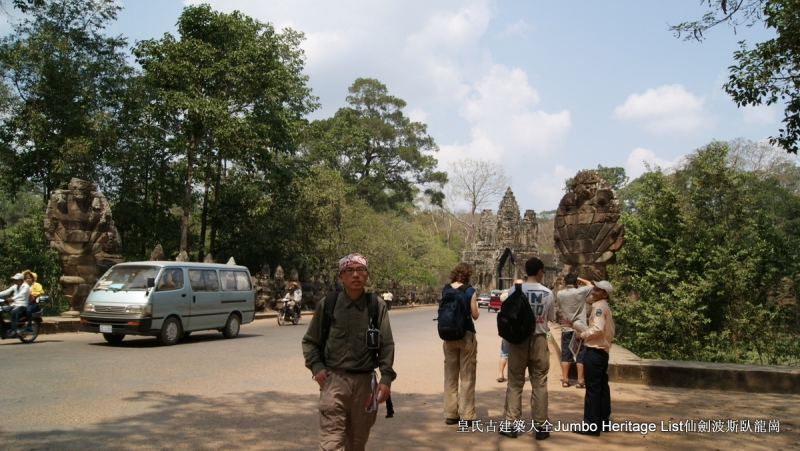
田字廊的拱顶和半拱顶上铺陶瓦。画廊顶部的天花板刻狮头蛇像,画廊和神龛入口有布满雕饰的门楣和三角墙。回廊东南西北四边的正中各有廊门,每廊门有台阶下通第二层;回廊四隅的塔门,各有二道台阶下通第二层。
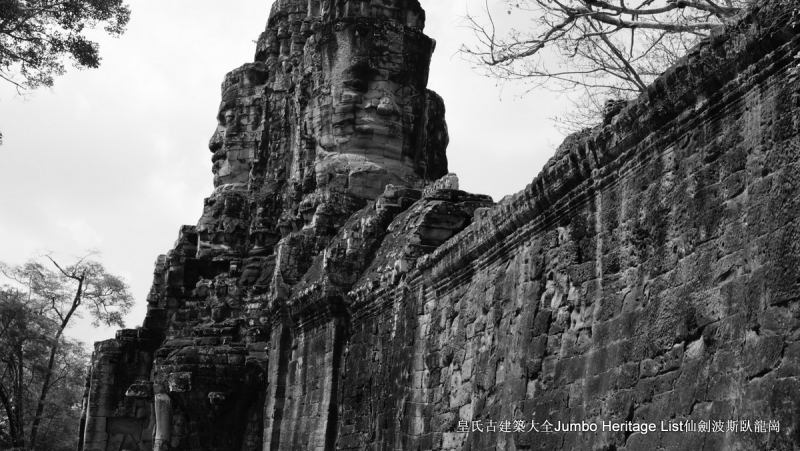
Jumbo Huang Index:Today I guided 9 people tour to visit the Angkor temples in Siem Reap:《皇氏古建筑大全》Jumbo Heritage List No.40405:Preah Ko: Preah Ko was the first temple to be built in the ancient and now defunct city of Hariharalaya (Roluos), some 15 kilometers south-east of the main group of temples at Angkor, Cambodia. The temple was built under the Khmer King Indravarman I in 879 to honor members of the king's family, whom it places in relation with the Hindu deity Shiva.
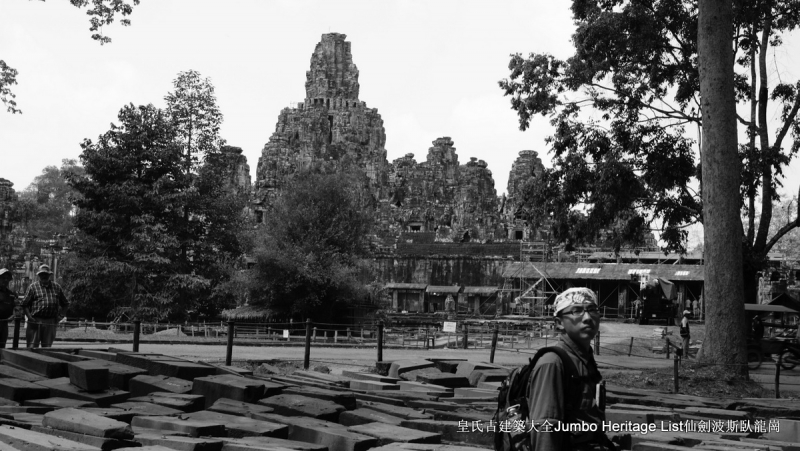
《Jumbo Heritage List》No.40379:Bakong: Bakong (Khmer ប្រាសាទបាគង) is the first temple mountain of sandstone constructed by rulers of the Khmer empire at Angkor near modern Siem Reap in Cambodia. In the final decades of the 9th century AD, it served as the official state temple of King Indravarman I in the ancient city of Hariharalaya, located in an area that today is called Roluos.The structure of Bakong took shape of stepped pyramid, popularly identified as temple mountain of early Khmer temple architecture.
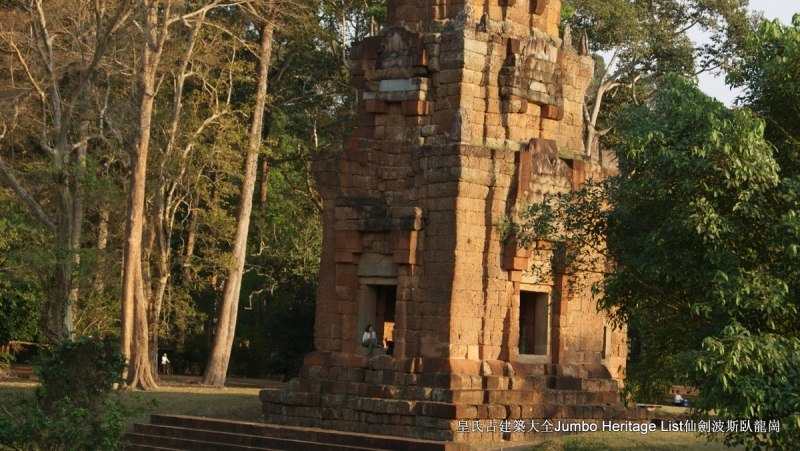
《Jumbo Heritage List》No.20994:Phnom Bakheng, at Angkor, Cambodia, is a Hindu and Buddhist temple in the form of a temple mountain. Dedicated to Shiva, it was built at the end of the 9th century, during the reign of King Yasovarman (889-910). Located atop a hill, it is nowadays a popular tourist spot for sunset views of the much bigger temple Angkor Wat, which lies amid the jungle about 1.5 km to the southeast. The large number of visitors makes Phnom Bakheng one of the most threatened monuments of Angkor. Since 2004,
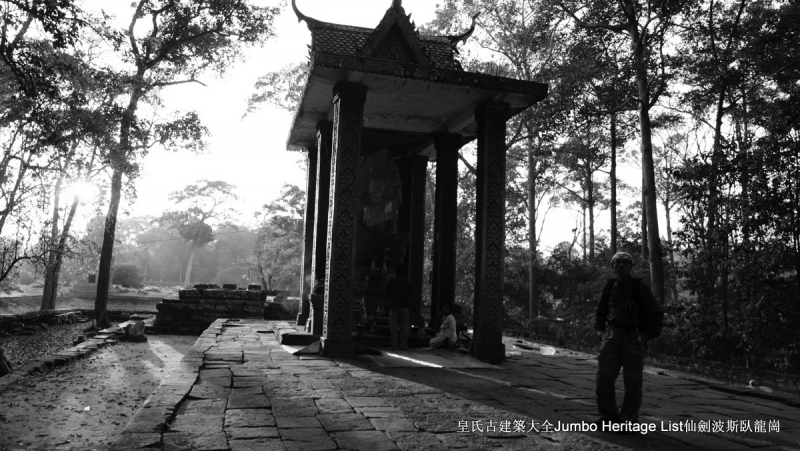
World Monuments Fund has been working to conserve the temple in partnership with APSARA.APSARA (Authority for the Protection of the Site and Management of the Region of Angkor) is the Cambodian management authority responsible for protecting the Angkor Archaeological Park. Founded in 1995, it is in charge of the research, protection, and conservation as well as the urban and tourist development of the park. It is headquartered in Siem Reap. As of 2016, it consisted of 15 departments and more than 500 personnel.
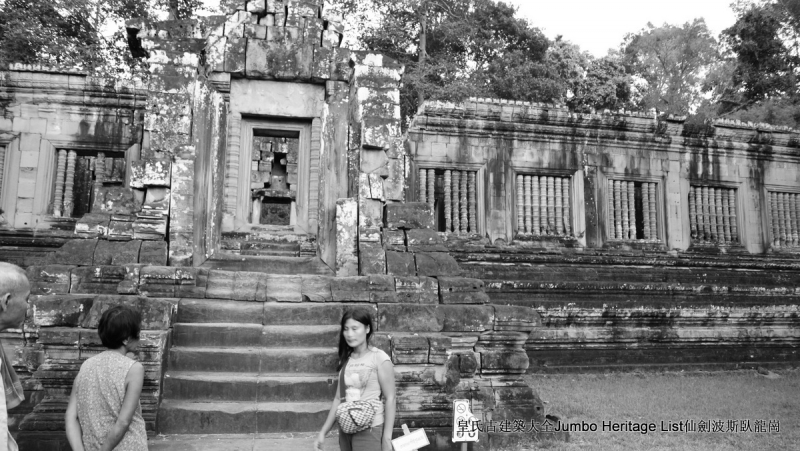
《Jumbo Heritage List》No.20979:Angkor Bayon Temple, The Bayon (ប្រាសាទបាយ័ន, Prasat Bayon) is a well-known and richly decorated Khmer temple at Angkor in Cambodia. Built in the late 12th or early 13th century as the official state temple of the Mahayana Buddhist King Jayavarman VII, the Bayon stands at the centre of Jayavarman's capital, Angkor Thom Following Jayavarman's death, it was modified and augmented by later Hindu and Theravada Buddhist kings in accordance with their own religious preferences.The Bayon's most distinctive feature is the multitude of serene and smiling stone faces on the many towers which jut out from the upper terrace and cluster around its central peak. The temple is known also for two impressive sets of bas-reliefs, which present an unusual combination of mythological, historical, and mundane scenes. The current main conservatory body, the Japanese Government Team for the Safeguarding of Angkor (the JSA) has described the temple as "the most striking expression of the baroque style" of Khmer architecture, as contrasted with the classical style of Angkor Wat.The ruins of Angkor are located amid forests and farmland north of the Great Lake (Tonle Sap) and south of the Kulen Hills, near modern-day Siem Reap city, The temples of the Angkor area number over one thousand, ranging in scale from nondescript piles of brick rubble scattered through rice fields to the Angkor Wat, said to be the world's largest single religious monument. Many of the temples at Angkor have been restored, and together, they comprise the most significant site of Khmer architecture. Visitors approach two million annually, and the entire expanse, including Angkor Wat and Angkor Thom is collectively protected as a UNESCO World Heritage Site. The popularity of the site among tourists presents multiple challenges to the preservation of the ruins.
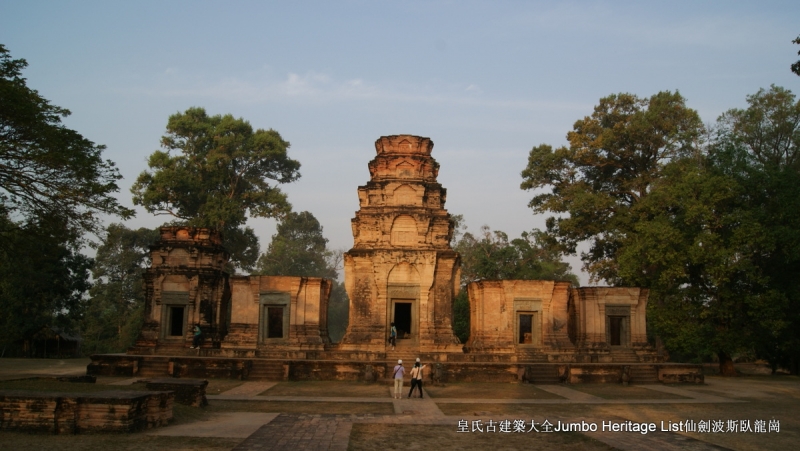
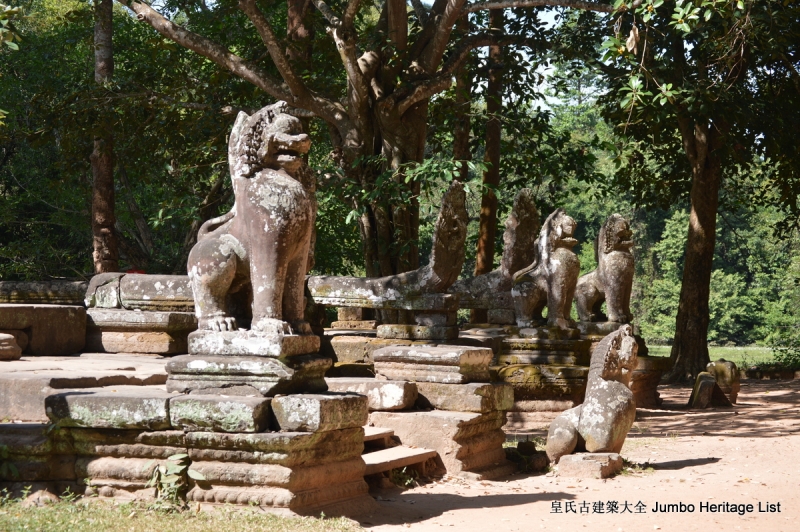
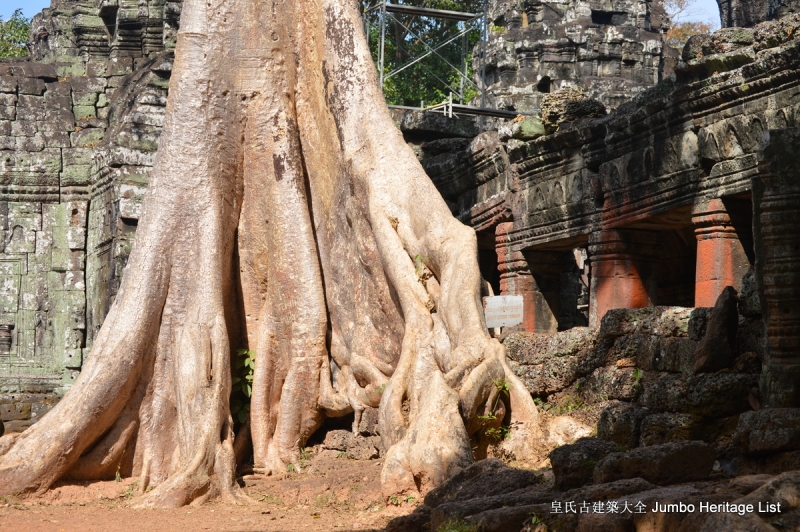
《Jumbo Heritage List》No.20975:Angkor Thom located in present-day Cambodia, was the last and most enduring capital city of the Khmer empire. It was established in the late twelfth century by King Jayavarman VII. It covers an area of 9 km², within which are located several monuments from earlier eras as well as those established by Jayavarman and his successors. At the centre of the city is Jayavarman's state temple, the Bayon, with the other major sites clustered around the Victory Square immediately to the north.《Jumbo Heritage List》No.40406:Baphoun,The Baphuon is a temple at Angkor, Cambodia. It is located in Angkor Thom, northwest of the Bayon. Built in the mid-11th century, it is a three-tiered temple mountainbuilt as the state temple of Udayadityavarman II dedicated to the Hindu God Shiva. It is the archetype of the Baphuon style with intricate carvings covering every available surface. The temple adjoins the southern enclosure of the royal palace and measures 120 metres east-west by 100 metres north-south at its base and stands 34 meters tall without its tower, which would have made it roughly 50 meters tall. Its appearance apparently impressed Temür Khan's late 13th century envoy Chou Ta-kuan during his visit from 1296 to 1297, who said it was 'the Tower of Bronze...a truly astonishing spectacle, with more than ten chambers at its base.《Jumbo Heritage List》No.40407:The Terrace of the Elephants is part of the walled city of Angkor Thom, a ruined temple complex in Cambodia. The terrace was used by Angkor's king Jayavarman VII as a platform from which to view his victorious returning army. It was attached to the palace of Phimeanakas of which only a few ruins remain. Most of the original structure was made of organic material and has long since disappeared. Most of what remains are the foundation platforms of the complex. The terrace is named for the carvings of elephants on its eastern face.The 350m-long Terrace of Elephants was used as a giant reviewing stand for public ceremonies and served as a base for the king's grand audience hall. It has five outworks extending towards the Central Square-three in the centre and one at each end. The middle section of the retaining wall is decorated with life size garuda and lions; towards either end are the two parts of the famous parade of elephants complete with their Khmer mahouts.《Jumbo Heritage List》No.40408:Phimeanakas, Vimeanakas (ប្រាសាទវិមានអាកាស, Prasat Vimean Akas) at Angkor, Cambodia, is a Hindu temple in the Khleang style, built at the end of the 10th century, during the reign of Rajendravarman (from 941-968), then completed by Suryavarman I in the shape of a three tier pyramid as a Hindu temple. On top of the pyramid there was a tower, while on the edge of top platform there are galleries. Phimeanakas is located inside the walled enclosure of the Royal Palace of Angkor Thom north of Baphuon.《Jumbo Heritage List》No.40409:Ta Keo had to be the state temple of Jayavarman V, son of Rajendravarman, who had built Pre Rup. Like Pre Rup, it has five sanctuary towers arranged in a quincunx, built on the uppermost level of five-tier pyramid consisting of overlapping terraces (a step pyramid), surrounded by moat, as a symbolic depiction of Mount Meru. Its particularly massive appearance is due to the absence of external decorations, as carving had just begun when the works stopped, besides an elaborate use of perspective effects. It is considered an example of the so-called Khleang style.《Jumbo Heritage List》No.20984:Ta Prohm is the modern name of the temple at Angkor, Siem Reap Province, Cambodia, built in the Bayon style largely in the late 12th and early 13th centuries and originally called Rajavihara. Located approximately one kilometre east of Angkor Thom and on the southern edge of the East Baray, it was founded by the Khmer King Jayavarman VII as a Mahayana Buddhist monastery and university. Unlike most Angkorian temples, Ta Prohm is in much the same condition in which it was found: the photogenic and atmospheric combination of trees growing out of the ruins and the jungle surroundings have made it one of Angkor's most popular temples with visitors. UNESCO inscribed Ta Prohm on the World Heritage List in 1992. Today, it is one of the most visited complexes in Cambodia’s Angkor region. The conservation and restoration of Ta Prohm is a partnership project of the Archaeological Survey of India and the APSARA,The trees growing out of the ruins are perhaps the most distinctive feature of Ta Prohm, and "have prompted more writers to descriptive excess than any other feature of Angkor." Two species predominate, but sources disagree on their identification: the larger is either the silk-cotton tree (Ceiba pentandra) or thitpok Tetrameles nudiflora, and the smaller is either the strangler fig or gold apple. Angkor scholar Maurice Glaize observed, "On every side, in fantastic over-scale, the trunks of the silk-cotton trees soar skywards under a shadowy green canopy, their long spreading skirts trailing the ground and their endless roots coiling more like reptiles than plants."《Jumbo Heritage List》No.40410:Banteai Kdeiis a Buddhist temple in Angkor, Cambodia. It is located southeast of Ta Prohm and east of Angkor Thom. Built in the mid-12th to early 13th centuries AD during the reign of Jayavarman VII, it is in the Bayon architectural style, similar in plan to Ta Prohm and Preah Khan, but less complex and smaller. Its structures are contained within two successive enclosure walls, and consist of two concentric galleries from which emerge towers, preceded to the east by a cloister.This Buddhist monastic complex is currently dilapidated due to faulty construction and poor quality of sandstone used in its buildings, and is now undergoing renovation. Banteay Kdei had been occupied by monks at various intervals over the centuries until the 1960s.《Jumbo Heritage List》No.2222:Angkor Wat Sanctuary;Angkor Wat អង្គរវត្ត is a temple complex in Cambodia and the largest religious monument in the world, on a site measuring 162.6 hectares , It was originally constructed as a Hindu temple of god Vishnu for the Khmer Empire, gradually transforming into a Buddhist temple towards the end of the 12th century. It was built by the Khmer King Suryavarman II in the early 12th century in Yaśodharapura, the capital of the Khmer Empire, as his state temple and eventual mausoleum. Breaking from the Shaiva tradition of previous kings, Angkor Wat was instead dedicated to Vishnu. As the best-preserved temple at the site, it is the only one to have remained a significant religious centre since its foundation. The temple is at the top of the high classical style of Khmer architecture. It has become a symbol of Cambodia, appearing on its national flag, and it is the country's prime attraction for visitors.Angkor Wat combines two basic plans of Khmer temple architecture: the temple-mountain and the later galleried temple. It is designed to represent Mount Meru, home of the devas in Hindu mythology: within a moat and an outer wall 3.6 kilometres long are three rectangular galleries, each raised above the next. At the centre of the temple stands a quincunx of towers. Unlike most Angkorian temples, Angkor Wat is oriented to the west; scholars are divided as to the significance of this. The temple is admired for the grandeur and harmony of the architecture, its extensive bas-reliefs, and for the numerous devatas adorning its walls. 7 Wakara St- Wat Damnak- Wat Bo Rd- Street 27-22.behind Wat Damnak Pagoda, between Psa Dey Hoy Market and Angkor High School, Closed on Monday, Siem Reap, 93000, Cambodia, Helistarcambodia.com, Scenic flight…