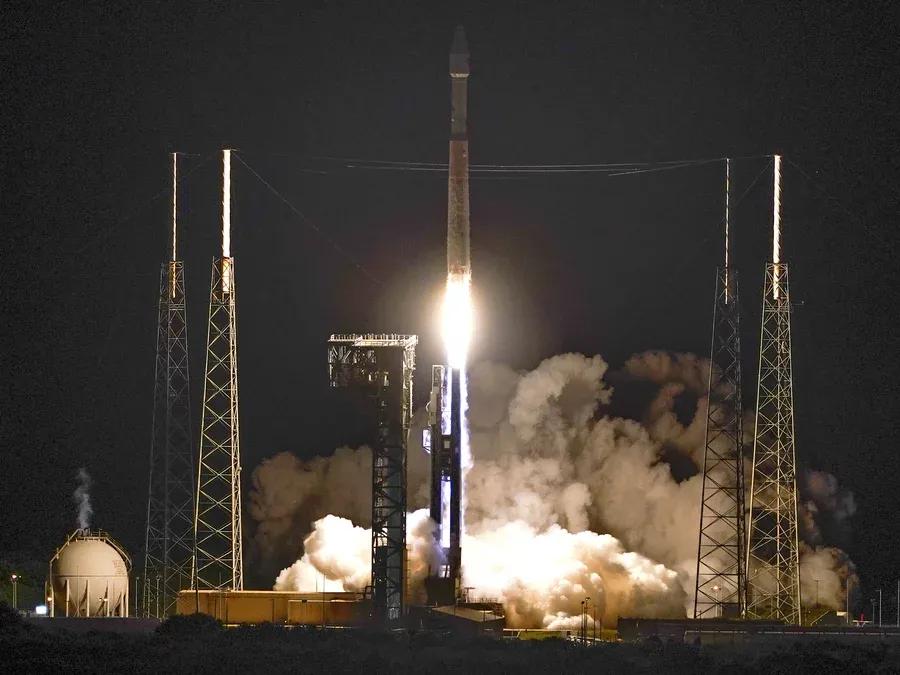
CAPE CANAVERAL, Fla. — A NASA spacecraft named Lucy rocketed into the sky with diamonds Saturday morning on a 12-year quest to explore eight asteroids.
佛罗里达州•卡纳维拉尔角 — 美国宇航局周六清晨一艘被命名为露西(Lucy)的航天飞行器带着钻石飞向天空,将开启历时 长达12 年去探索八颗小行星(的太空任务)。
Seven of the mysterious space rocks are among swarms of asteroids sharing Jupiter's orbit, thought to be the pristine leftovers of planetary formation.
七颗神秘的太空岩石隐藏于共享木星轨道的成群小行星中,被认为是行星形成的原始残留物。
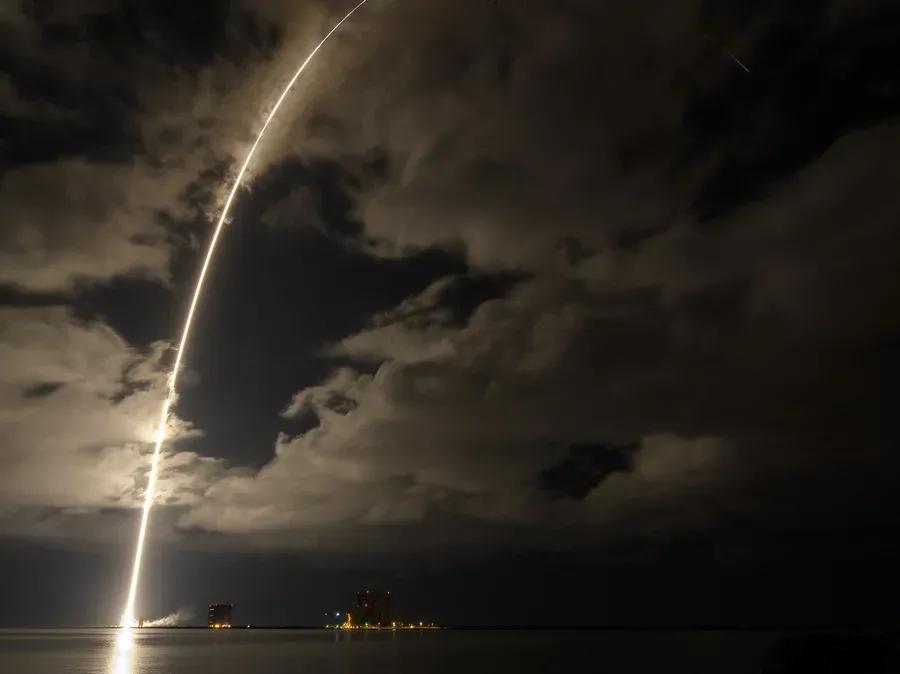
An Atlas V rocket blasted off before dawn, sending Lucy on a roundabout journey spanning nearly 4 billion miles (6.3 billion kilometers). Researchers grew emotional describing the successful launch — lead scientist Hal Levison said it was like witnessing the birth of a child. "Go Lucy!" he urged.
黎明前,太空飞行器露西在一颗阿特拉斯V型火箭护送下,成功地踏上跨越近40亿英里(63亿千米)的迂回太空旅程,研究人员情绪激动地描述成功发射(那一刻的心情)——首席科学家哈尔·莱维森 (Hal Levison) 说这就像亲眼目睹了一个孩子的诞生,“去吧!露西!” 他情绪激动地说。
Lucy is named after the 3.2 million-year-old skeletal remains of a human ancestor found in Ethiopia nearly a half-century ago. That discovery got its name from the 1967 Beatles song "Lucy in the Sky with Diamonds," prompting NASA to send the spacecraft soaring with band members' lyrics and other luminaries' words of wisdom imprinted on a plaque. The spacecraft also carried a disc made of lab-grown diamonds for one of its science instruments.
露西是以320万年前人类祖先的遗骸所命名的,该遗骸在埃塞俄比亚被发现至今已有50年了,这一发现得名于 1967 年披头士乐队的歌曲“带着钻石飞向天空的露西”,促使美国宇航局将以乐队成员的歌词和其他名人的智慧之言印在一块铭牌上,追随着露西航天飞行器遨游于太空中, 该航天器还为其中一个科学仪器携带了一个由实验室合成钻石制成的圆盘。
In a prerecorded video for NASA, Beatles drummer Ringo Starr paid tribute to his late colleague John Lennon, credited for writing the song that inspired all this.
在美国宇航局预先录制的一段视频中,披头士乐队鼓手林戈·斯塔尔 (Ringo Starr) 向他已故的同事约翰·列侬 (John Lennon) 表示致敬,约翰·列侬 (John Lennon) 创作了激发这一切的歌曲。
"I'm so excited — Lucy is going back in the sky with diamonds. Johnny will love that," Starr said. "Anyway, if you meet anyone up there, Lucy, give them peace and love from me."
斯塔尔 表示:“我非常激动—露西将带着珍珠重返天空,约翰尼将会喜欢她,不管怎样 ,如果你在太空中遇到任何人,露西,替我为他们带去和平与爱”。
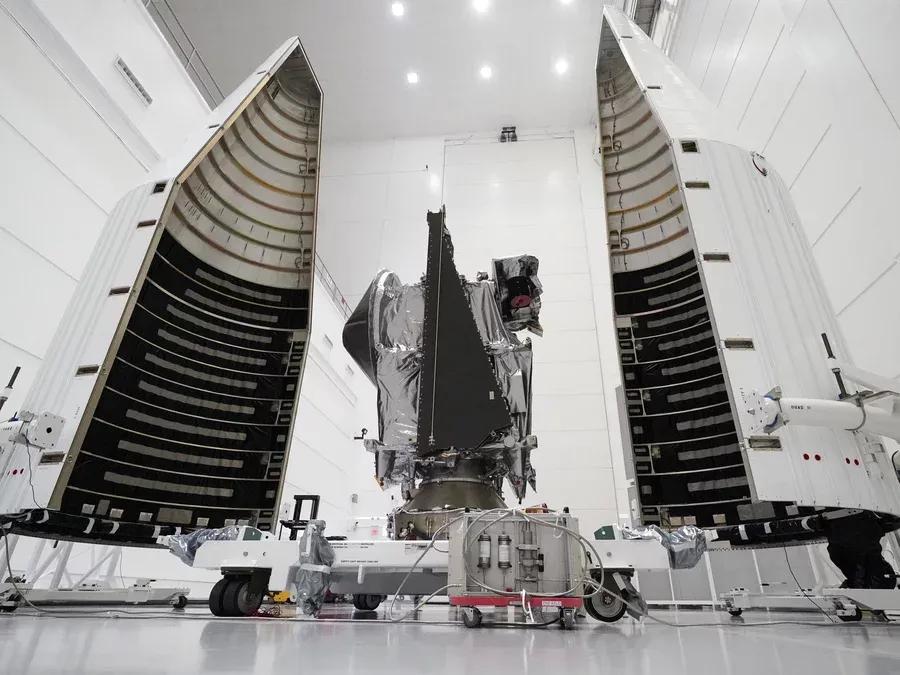
The paleoanthropologist behind the fossil Lucy discovery, Donald Johanson, had goose bumps watching Lucy soar — "I will never look at Jupiter the same ... absolutely mind-expanding." He said he was filled with wonder about this "intersection of our past, our present and our future."
化石露西被发现背后的古人类学家唐纳德·约翰逊 (Donald Johanson) 看着露西翱翔时起了一身的鸡皮疙瘩——“我永远不会用同样的眼光看待木星……绝对令人心旷神怡。” 他说,这对“我们过去、现在和未来的交叉点”充满了好奇。
"That a human ancestor who lived so long ago stimulated a mission which promises to add valuable information about the formation of our solar system is incredibly exciting," said Johanson, of Arizona State University, who traveled to Cape Canaveral for his first rocket launch.
前往卡纳维拉尔角进行首次火箭发射的亚利桑那州立大学的约翰森说:“一位生活在很久以前的人类祖先激发了一项使命,有望为我们所在太阳系形成提供宝贵信息,这是令人非常激动。”
Lucy's $981 million mission is the first to aim for Jupiter's so-called Trojan entourage: thousands — if not millions — of asteroids that share the gas giant's expansive orbit around the sun. Some of the Trojan asteroids precede Jupiter in its orbit, while others trail it.
为露西耗资 9.81 亿美元打造的任务是首个瞄准木星的所谓特洛伊随行者:数千——如果不是数百万——共享这颗气态巨行星环绕太阳的广阔轨道的小行星。 一些特洛伊小行星在其轨道上领先于木星,而另一些则落后于木星。
Despite their orbits, the Trojans are far from the planet and mostly scattered far from each other. So there's essentially zero chance of Lucy getting clobbered by one as it swoops past its targets, said Levison of Southwest Research Institute, the mission's principal scientist.
尽管他们的轨道,特洛伊木马远离地球,而且大多分散在彼此很远的地方。 因此,该任务的首席科学家、西南研究所的莱维森说,露西在飞越目标时,被另一只岩石撞击的可能性基本上为零。
Lucy will swing past Earth next October and again in 2024 to get enough gravitational oomph to make it all the way out to Jupiter's orbit. On the way there, the spacecraft will zip past asteroid Donaldjohanson between Mars and Jupiter. The aptly named rock will serve as a 2025 warm-up act for the science instruments.
露西将在明年 10 月和 2024 年再次绕过地球,以获得足够的引力,使其能够进入木星轨道。 在前往那里的途中,航天器将飞越火星和木星之间的小行星唐纳德约翰森。 这块名字恰如其分的岩石将作为 2025 年科学仪器的热身表演。
Drawing power from two huge circular solar wings, Lucy will chase down five asteroids in the leading pack of Trojans in the late 2020s. The spacecraft will then zoom back toward Earth for another gravity assist in 2030. That will send Lucy back out to the trailing Trojan cluster, where it will zip past the final two targets in 2033 for a record-setting eight asteroids visited in a single mission.
从两个巨大的圆形太阳翼汲取能量,露西将在 2020 年代后期追逐特洛伊木马的主要群体中的五颗小行星。 然后,航天器将在 2030 年再次返回地球以获得另一次重力辅助。这将使露西返回到尾随的特洛伊星团,在那里它将在 2033 年飞越最后两个目标,创纪录地在一次任务中访问过八颗小行星 .
It's a complicated, circuitous path that had NASA's science mission chief, Thomas Zurbuchen, shaking his head at first. "You've got to be kidding. This is possible?" he recalled asking.
这是一条复杂、迂回的道路,美国宇航局科学任务负责人托马斯·祖布臣起初摇头。 “你一定是在开玩笑。这可能吗?” 他记得问过。
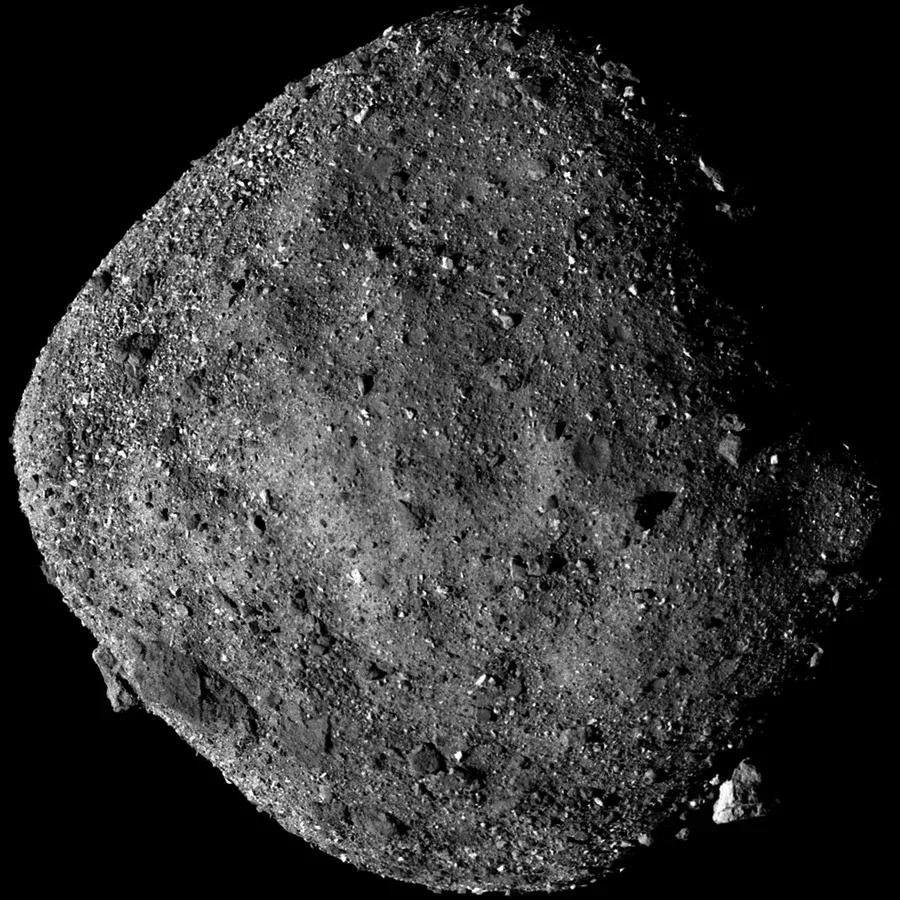
Lucy will pass within 600 miles (965 kilometers) of each target; the biggest one is about 70 miles (113 kilometers) across.
露西将通过每个目标 600 英里(965 公里)以内; 最大的一个直径约 70 英里(113 公里)。
"Are there mountains? Valleys? Pits? Mesas? Who knows? I'm sure we're going to be surprised," said Johns Hopkins University's Hal Weaver, who's in charge of Lucy's black-and-white camera. "But we can hardly wait to see what ... images will reveal about these fossils from the formation of the solar system."
“有高山吗?山峡谷?陨石坑?台地?谁会知道呢?我确信我们会感到惊讶”约翰霍普金斯大学的哈尔韦弗说,他负责露西的黑白相机。 “但我们迫不及待地想看看......图像将揭示太阳系形成过程中的这些化石。”
NASA plans to launch another mission next month to test whether humans might be able to alter an asteroid's orbit — practice in case Earth ever has a killer rock headed this way.
美国宇航局下个月预计将启动另一项太空任务,来测试人类是否能将够改变小行星的运行轨道 - 演练以防有一颗致命的岩石朝着地球这个方向飞来。
Notice:The Eglish information from NPR News.