瓷胎画珐琅是清代皇室自用瓷器中最具特色,釉上彩瓷中最为精美的彩瓷器。从康熙的色浓庄重至雍正的清淡素雅,到乾隆时的精密繁复的雍容华贵,使珐琅,这一洋味十足的彩料在瓷器上得到淋漓尽致的发挥。集中西风韵于一身,画尽了皇家身份的高贵与荣华。乾隆珐琅彩瓷是清代康,雍,乾三代珐琅彩瓷中最为精美的巅峰之作,具有古典美的乾隆仕女游园罐是其代表。
珐琅彩绘采用的画珐的制作技法起源于15世纪中叶欧洲比利时、法国、荷兰三国交界的佛朗德斯地区。15世纪末,法国中西部的里摩居,以其制作内填珐琅工艺为基础,发展成画珐琅的重镇,初期制作以宗教为主题的器物,后来逐渐制做成装饰性的工艺品。随着东西贸易交往的频繁,尤其自清康熙二十三年(1684年)清廷平定台湾以后,禁海开放,西洋制品开始涌入,西洋珐琅便由广州等港口传入中国,并就地设厂研制,称之为洋瓷,宫中则称其为广珐琅。当时,广州的产品多保留着西方文化的韵味,由于烧造技术不高,釉料呈色不稳定。康熙五十八年(1719年),聘请法兰西画珐琅艺人陈忠信来京,在内廷珐琅处指导烧造画珐琅器。其式样、图案主要是中国风格,少有西方画珐琅的特点。
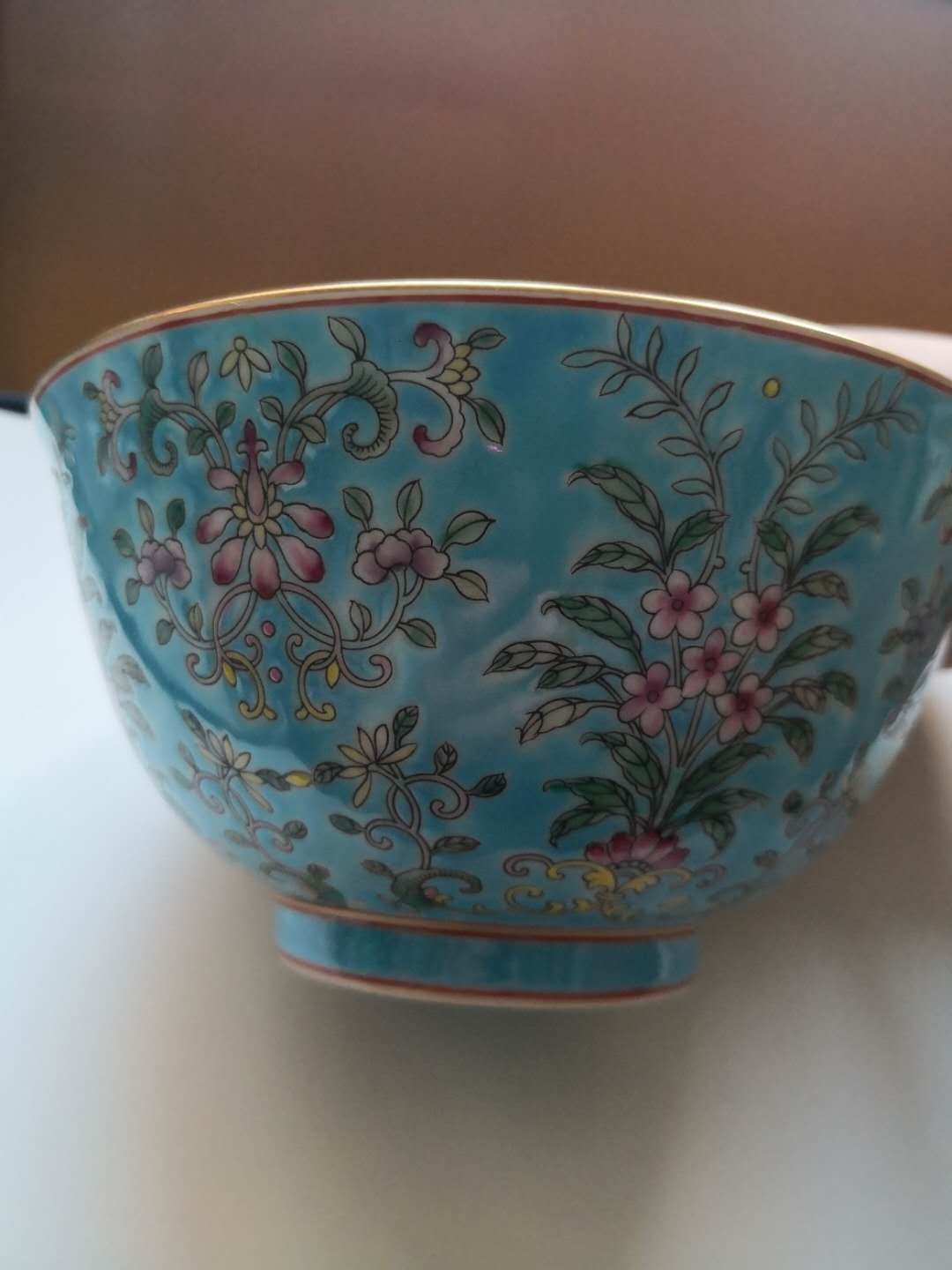
珐琅彩松石绿地花卉碗:可见其底色为颜色偏蓝的绿松石釉地,在绿松石中能达到这个颜色称为瓷松,而这件瓷器正规底色都是为瓷松的最高标准,十分精美,俗话说瓷如美玉,也正是这么来的。
松石绿釉,亦称“秋葵绿釉”,是一种瓷器釉色,是清雍正时期创烧的绿釉新品种。
现代配方系用硫酸钡、碳酸钙、硼酸等配制而成。其呈色为淡黄色中微微发绿,与绿松石色泽相似,故名“松石绿”。
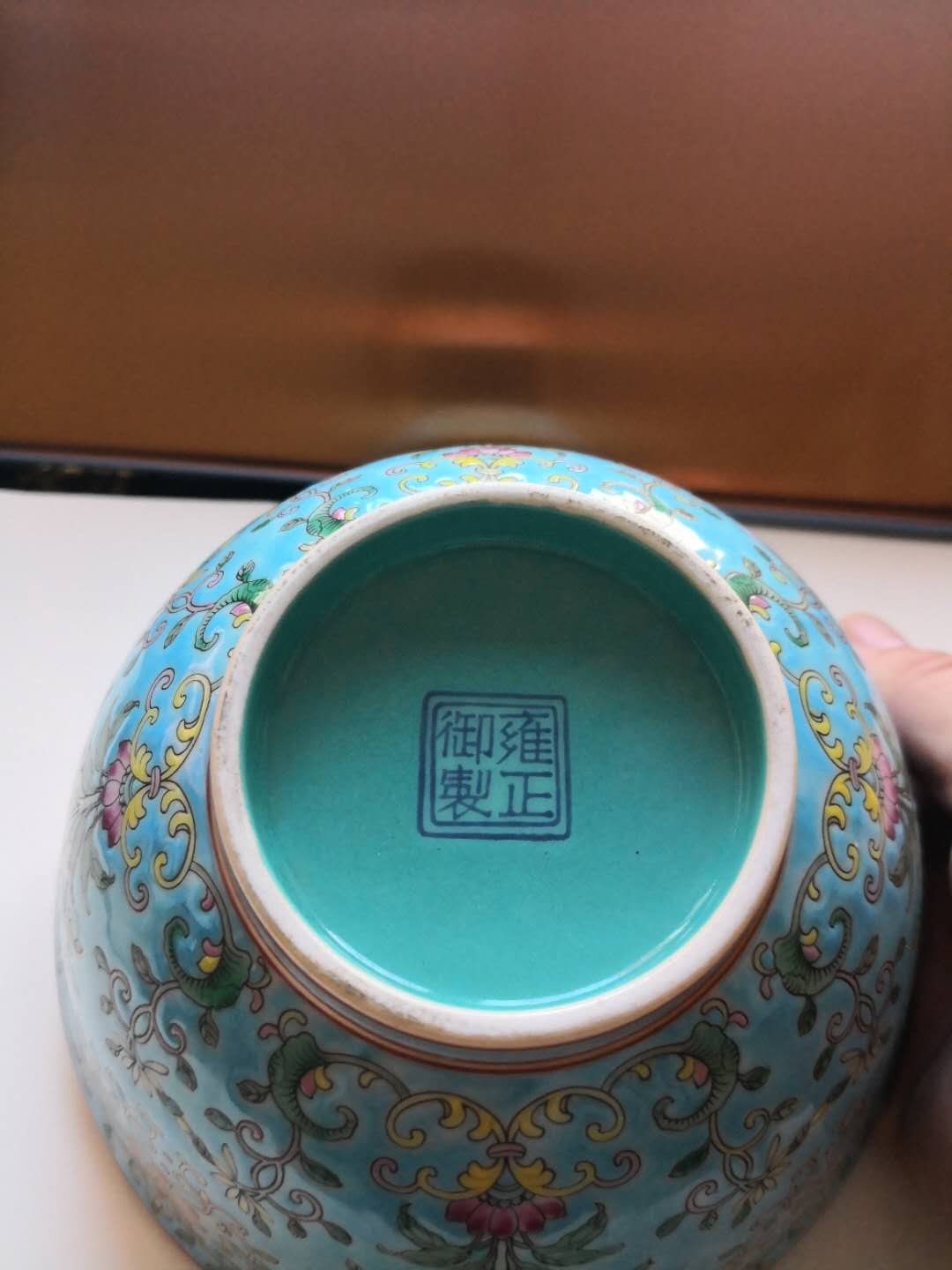
从底款来看正楷的青花‘雍正年制’款非常端正,位置居中,字形端正。圈足洁白细腻,为罕见的糯米胎,最早称之为“糯米汁胎”是形象描述胎体的质感,如同糯米经水磨后流出的米浆一般细腻、光滑。后被称为糯米胎,此胎极其细腻,是瓷石经过多次提炼极其细腻后才有的极品瓷胎,这种瓷胎轻扣声音清脆悦耳,胎质紧密,较一般瓷器硬度要高,抗热涨冷缩能力强,很多瓷器经历上百年时间就会自然的干裂,我们成为阴裂现象,与窑裂不同,是后期形成的,而糯米胎瓷器就不会出现这种问题,由于瓷土极其细腻,也不会出现棕眼的现象,是美瓷的重要要素。

碗内的松石绿釉,可见其美感,好比是一件顶级瓷松所做,其美感更胜瓷松。
从雍正皇帝的贵戚重臣年羹尧的奏折中,也可了解此时珐琅彩瓷器的烧造情况。如“雍正二年二月初九日,由驿斋到御赐新制珐琅管双眼翎二支,单眼翎十支……”。对这些翎管,年羹尧在二月十二日的谢折里称:“……臣伏覩珐琅翎管,制作精致,颜色娇丽,不胜爱羡,谨缮摺恭谢天恩,更恳圣慈,如有新制珐琅物件,赏赐一、二,以满臣之贪念。臣无任悚惶之至。雍正二年二月十二日具。”在年羹尧的折子上,雍正皇帝在“以满臣之贪念”这句话的“贪”字旁朱笔画圈,在折尾空白处,雍正帝的朱批曰:“珐琅之物尚无暇精致,将来必造可观。今将现有数件赐你,但你若不用此一‘贪’字,一件也不给你,得此数物,皆此一字之力也。”其中“珐琅之物尚无暇精致,将来必造可观”这句话,说明雍正帝对珐琅彩瓷器的发展充满信心。
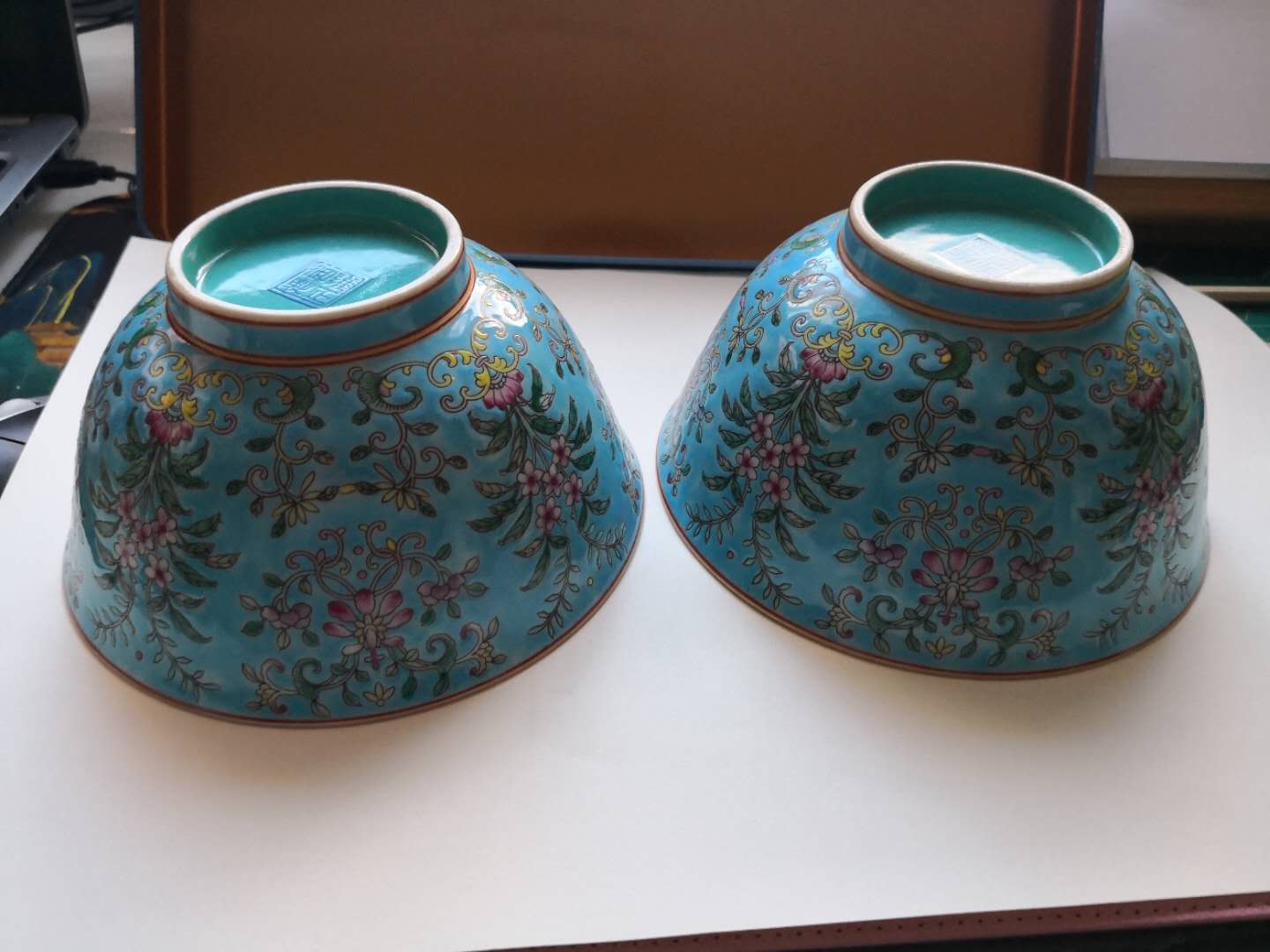
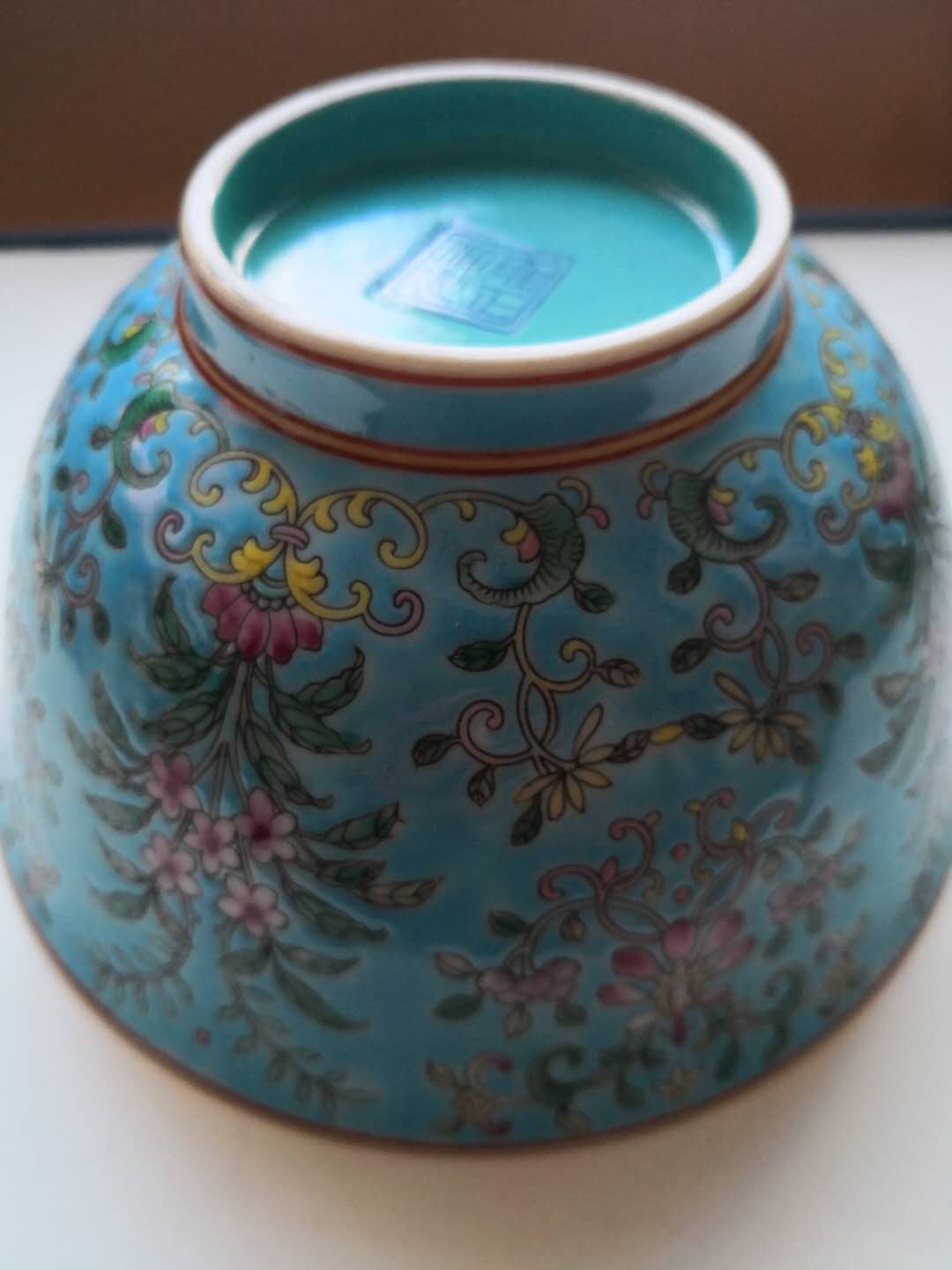
可见花卉纹饰反复,具有凹凸感,是珐琅彩的典型特征,而珐琅彩历来为宫廷所用,为瓷器中的劳斯莱斯,十分名贵。
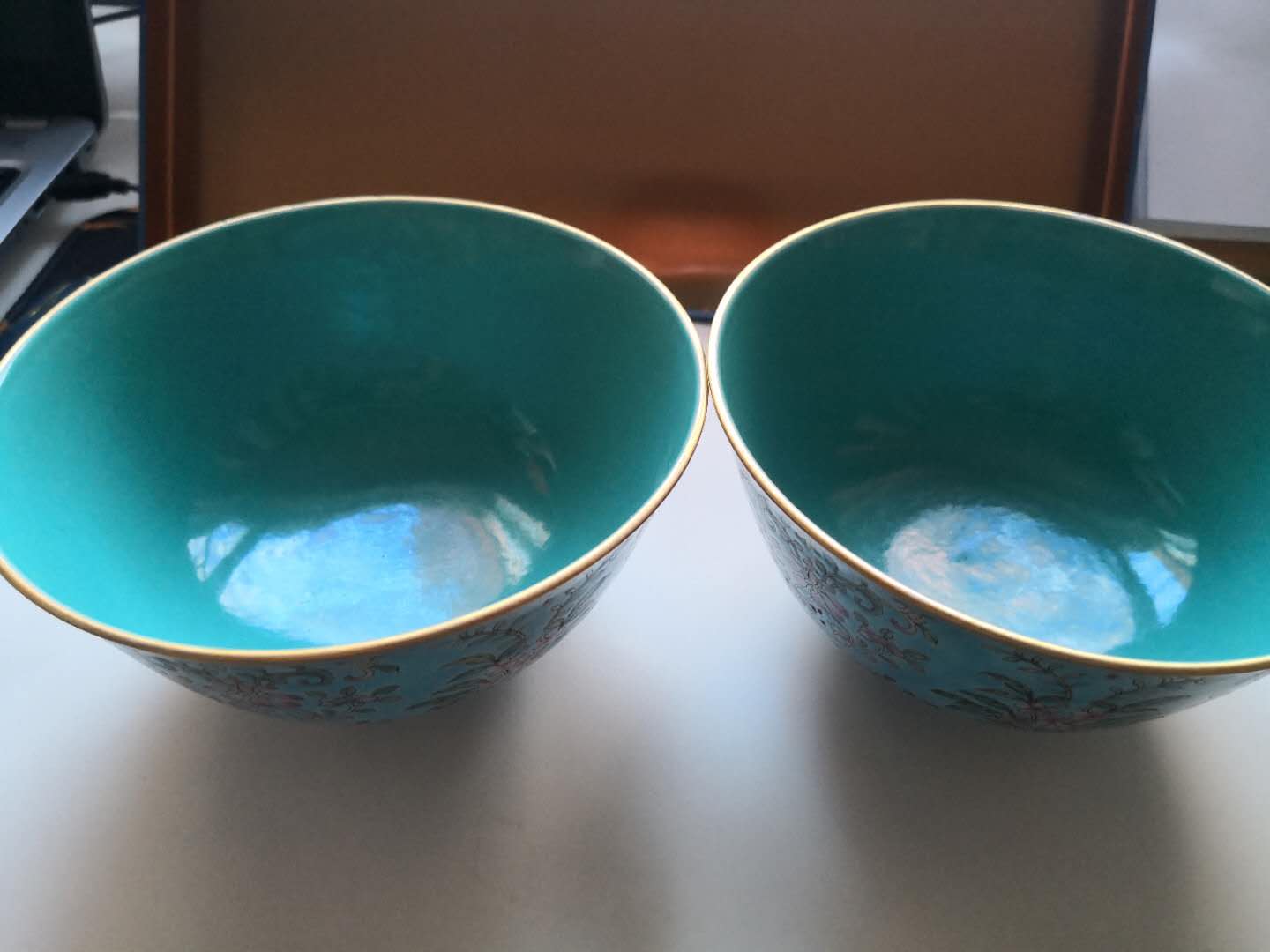
俗话说家无瓷器不雅,瓷无珐琅不贵,这一对珐琅彩极为名贵,历来为各大拍卖行压轴重器,具有不菲的收藏价值。
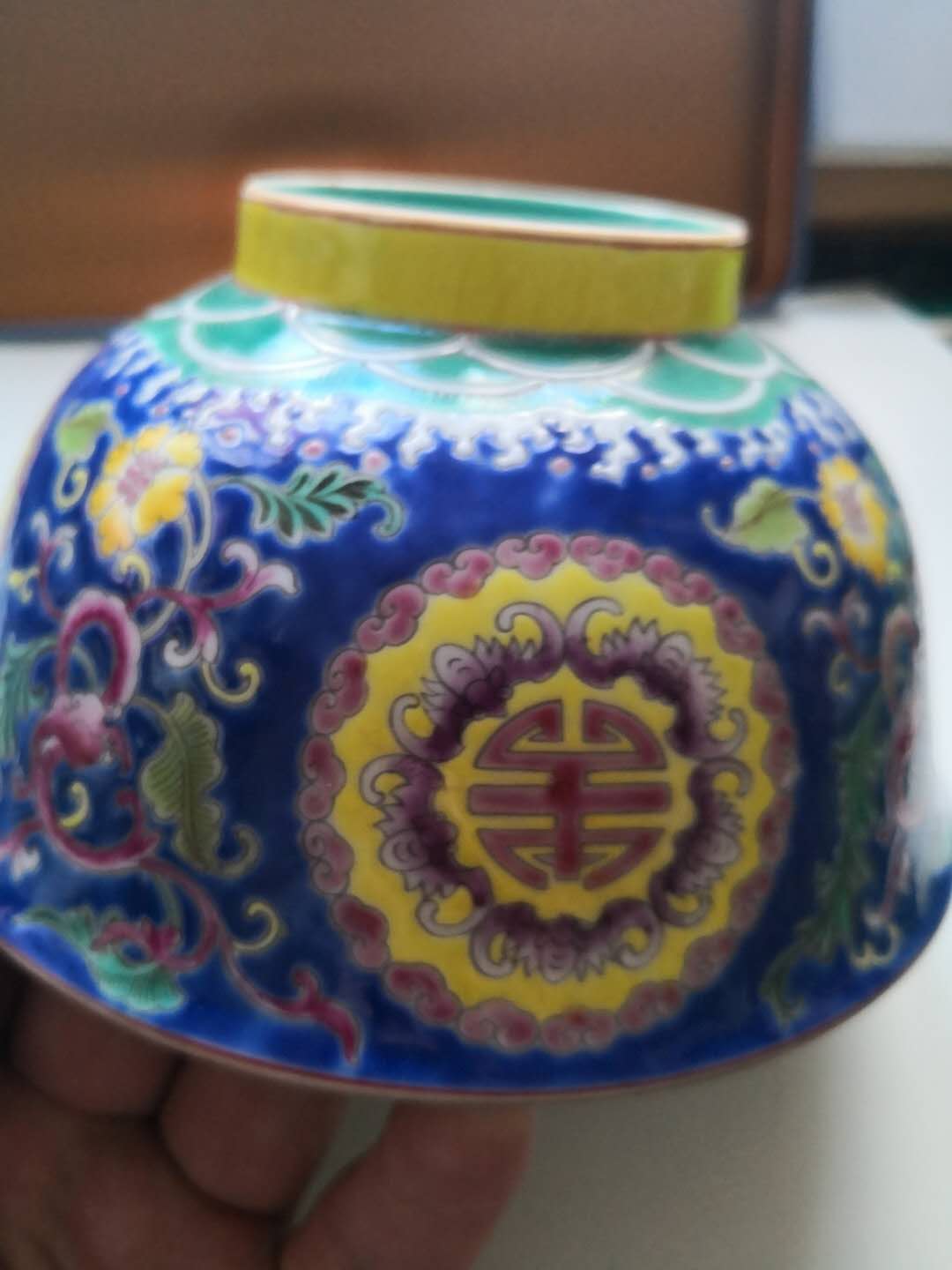
五福捧寿珐琅碗:五福捧寿是中国民间广为流传的一种传统吉祥图案。由五只蝙蝠围着寿字或围着桃子构成,寓意多福多寿。蝙蝠之蝠与福字同音,故以五蝠代表五福。五蝠常常围一寿字,习俗称“五福捧寿”。
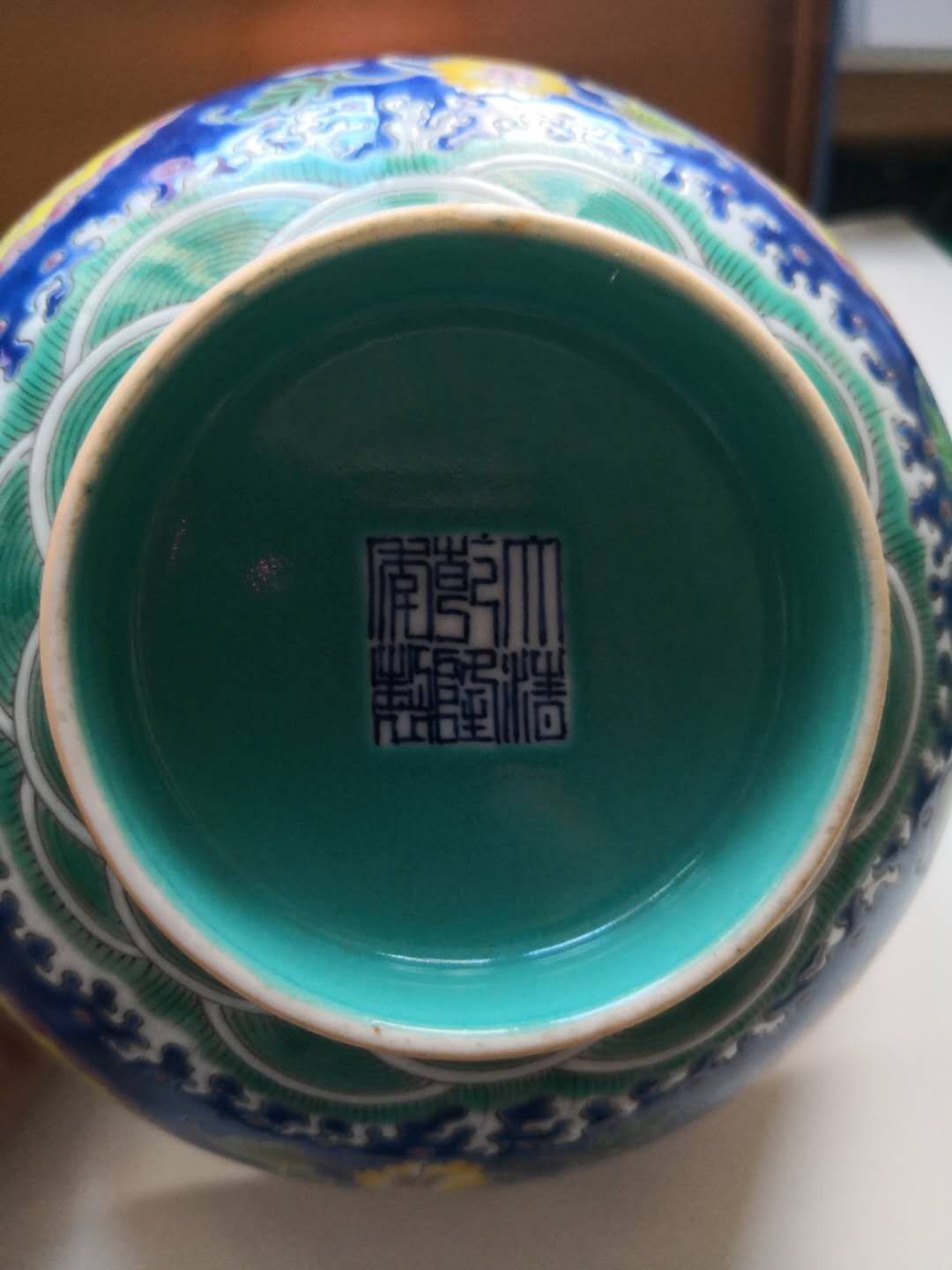
底款为钱币款,底部看去形式一枚古钱币,钱币四方孔内落大清乾隆年制篆书款,底部施护胎釉,十分精美,圈足露白,可见极其细腻,俗语糯米胎质,古人历来以圆为天,方为地,在地格中落款合情合理,而圆形的天外为海水,有一种天与海相连的寓意,而古人更是相信通过大海能直通天际。
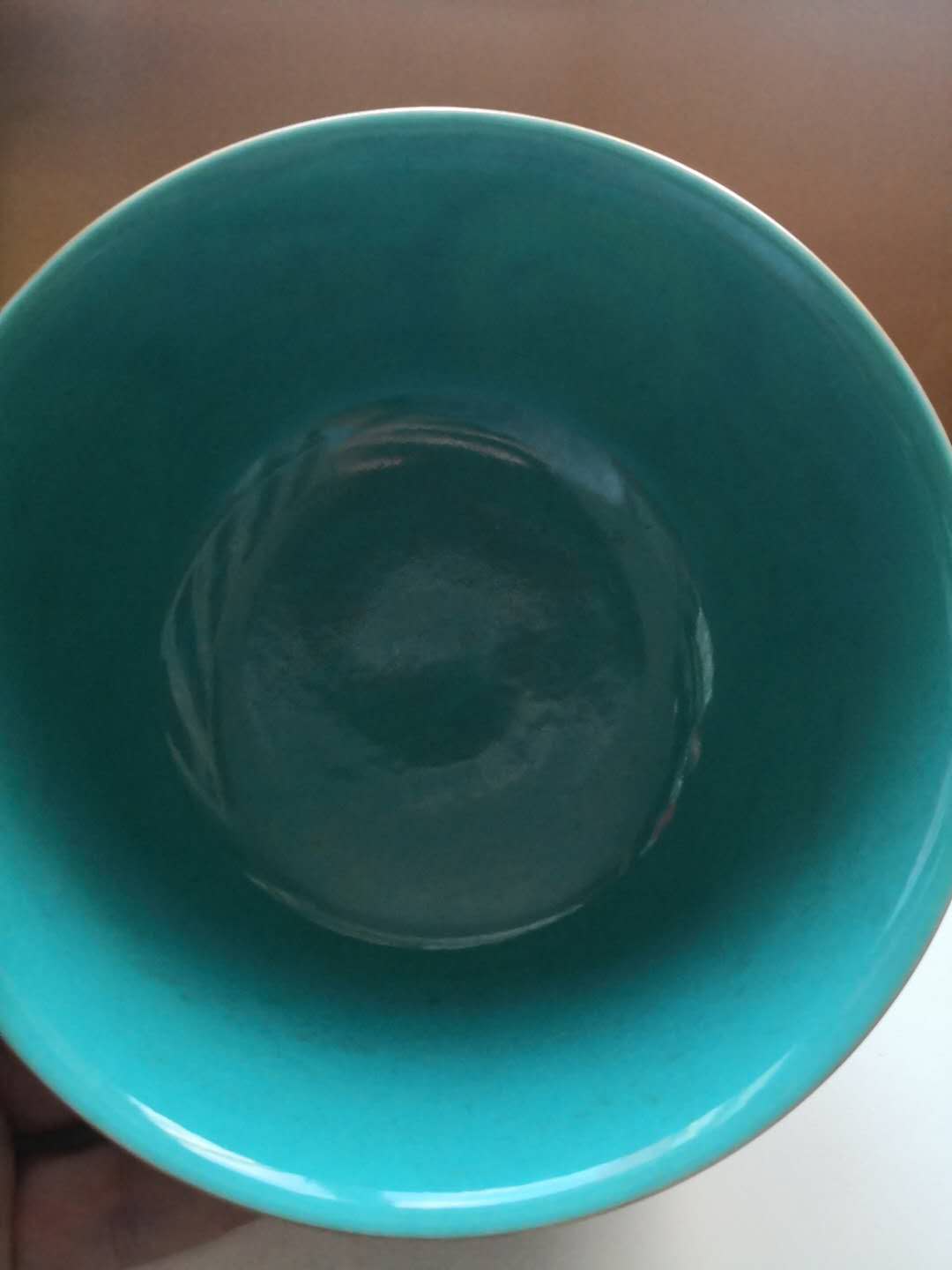
釉面光泽温润,为漫反射光泽,毫无贼光,火光尽褪,是釉面长时间氧化所致,为时间留下的烙印,无可仿制,为开门真品。
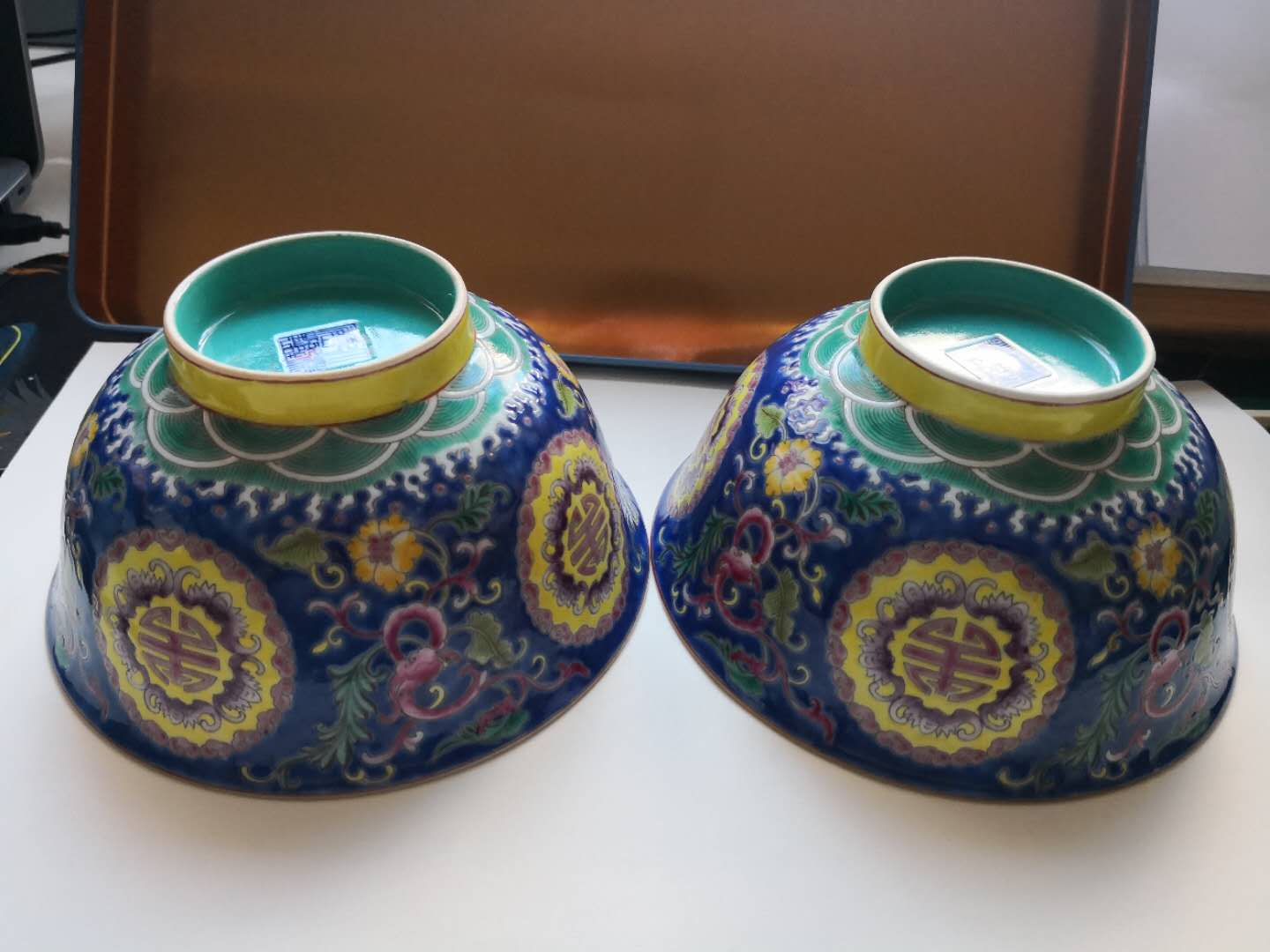
可以看到部分黄釉装饰,而在古代颜色使用非常严格的,黄色历来只能是君王使用,或者皇上的长辈,如慈禧太后的大雅斋就有黄色瓷器,可见其珍贵程度。
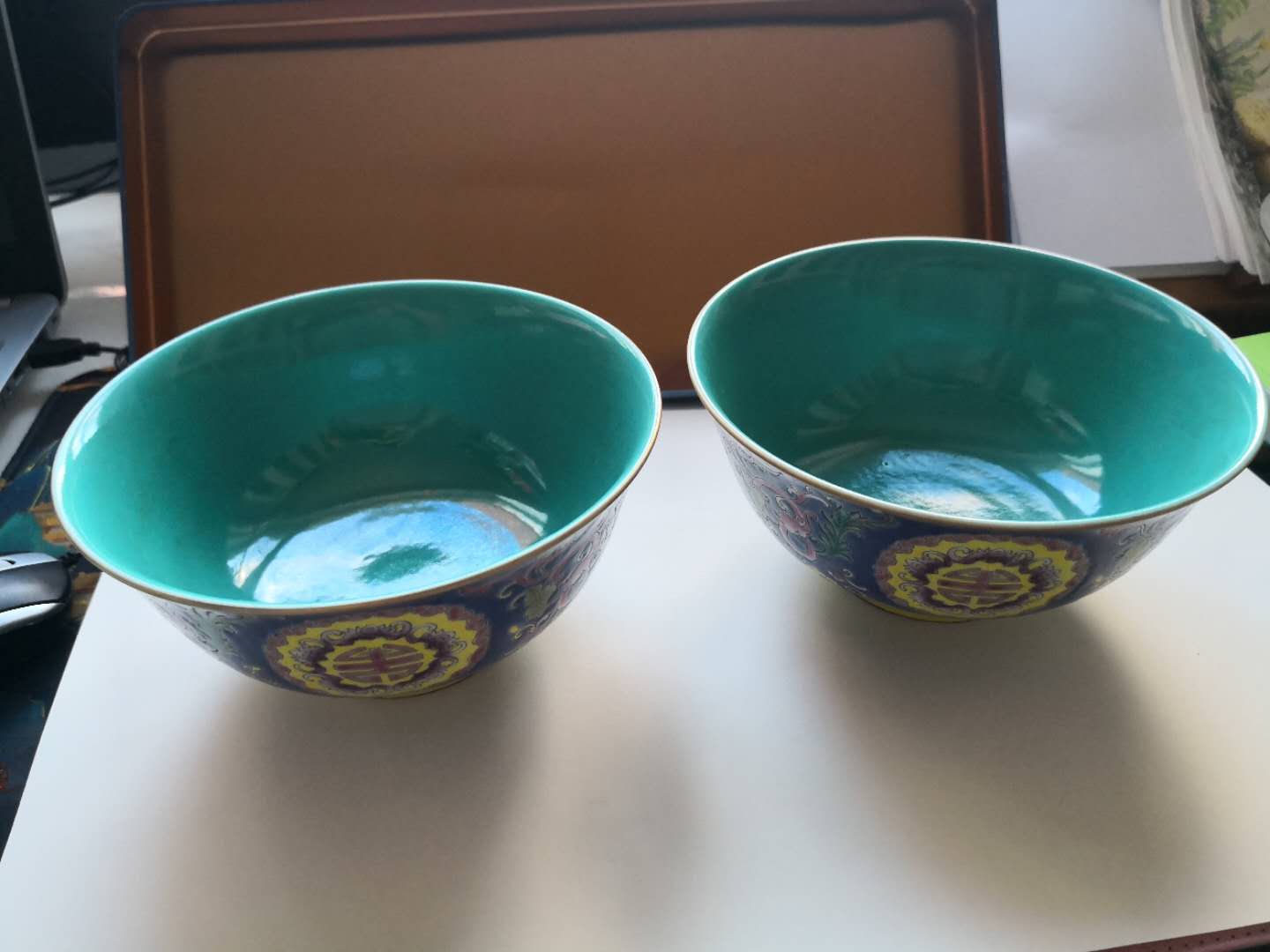
古代崇尚黄色,黄色常常被看作君权的象征。这首先起源于古代农业民族的“回敬土”思想答。按中国的阴阳学说,黄色在五行中为土,这种土是在宇宙中央的“中央土”,放在五行当中,“土为尊”。此后这种思想又与儒家大一统思想揉合在一起,认为以汉族为主体的统一王朝就是这样一个处于“中央土”的帝国,而有别于周边的“四夷”,这样“黄色”通过土就与“正统”、“尊崇”联系起来,为君主的统治提供了“合理性”的论证。再加上古代又有“龙战于野,其血玄黄”的说法,意思是说:龙在打仗的时候,流的血是黄色的,而君主又以龙为象征,黄色与君主就发生了更为直接的联系。这样,黄色就象征着君权神授,神圣不可侵犯。周代以黄钺为天子权力象征,隋代以后皇帝要穿黄龙袍,黄色成为君主独占的颜色。
这一对珐琅碗身价不凡,品相完美,具有极高的收藏价值。
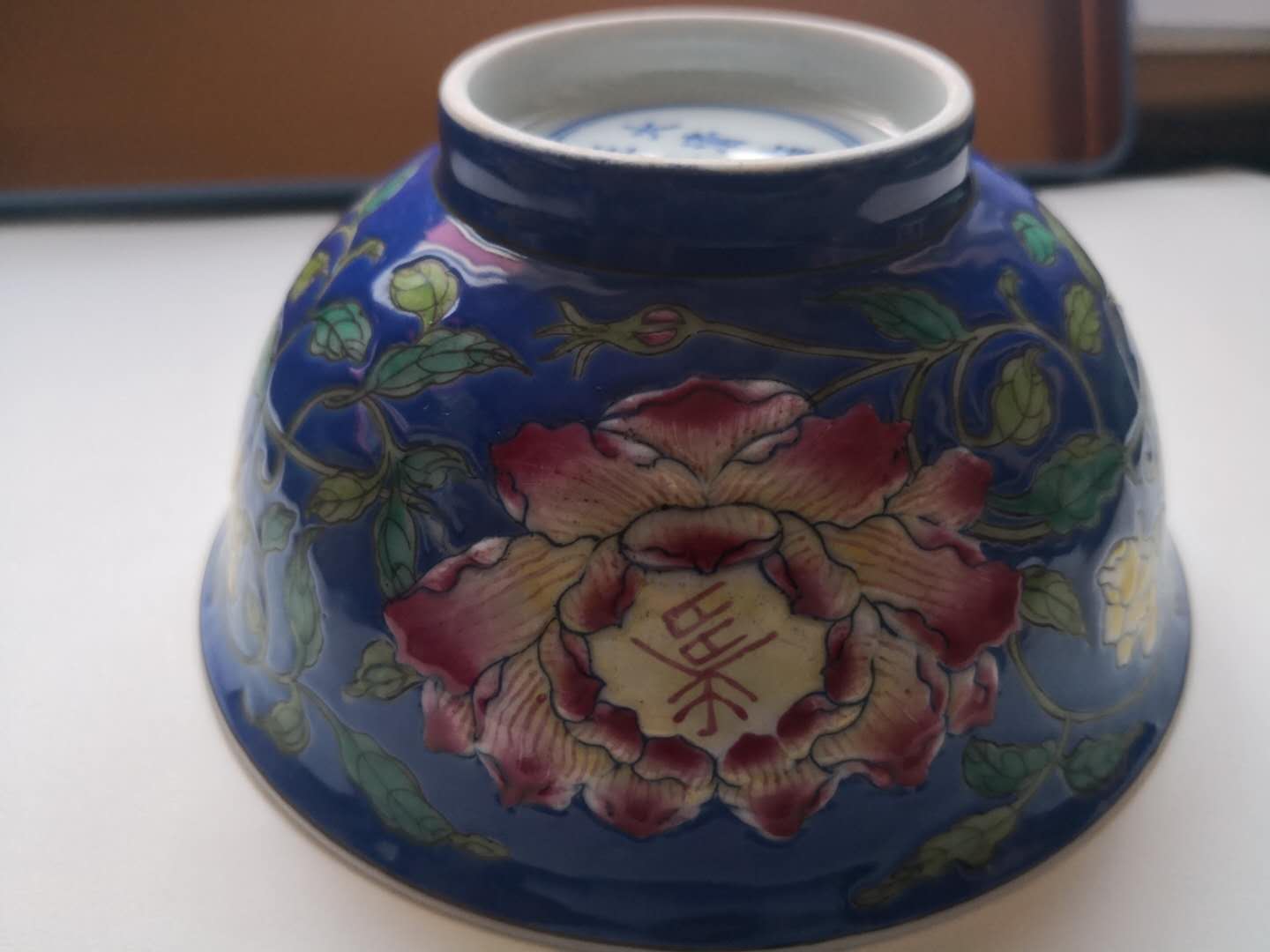
牡丹富贵珐琅碗:清代赵世学在《牡丹富贵说》中提到:牡丹有王者之号,冠万花之首,驰四海之名,终且以富贵称之。夫既称呼富贵,拟以清洁之莲,而未合也;律以隐逸之菊,而未宜也。甚矣,富贵之所以独牡丹也。
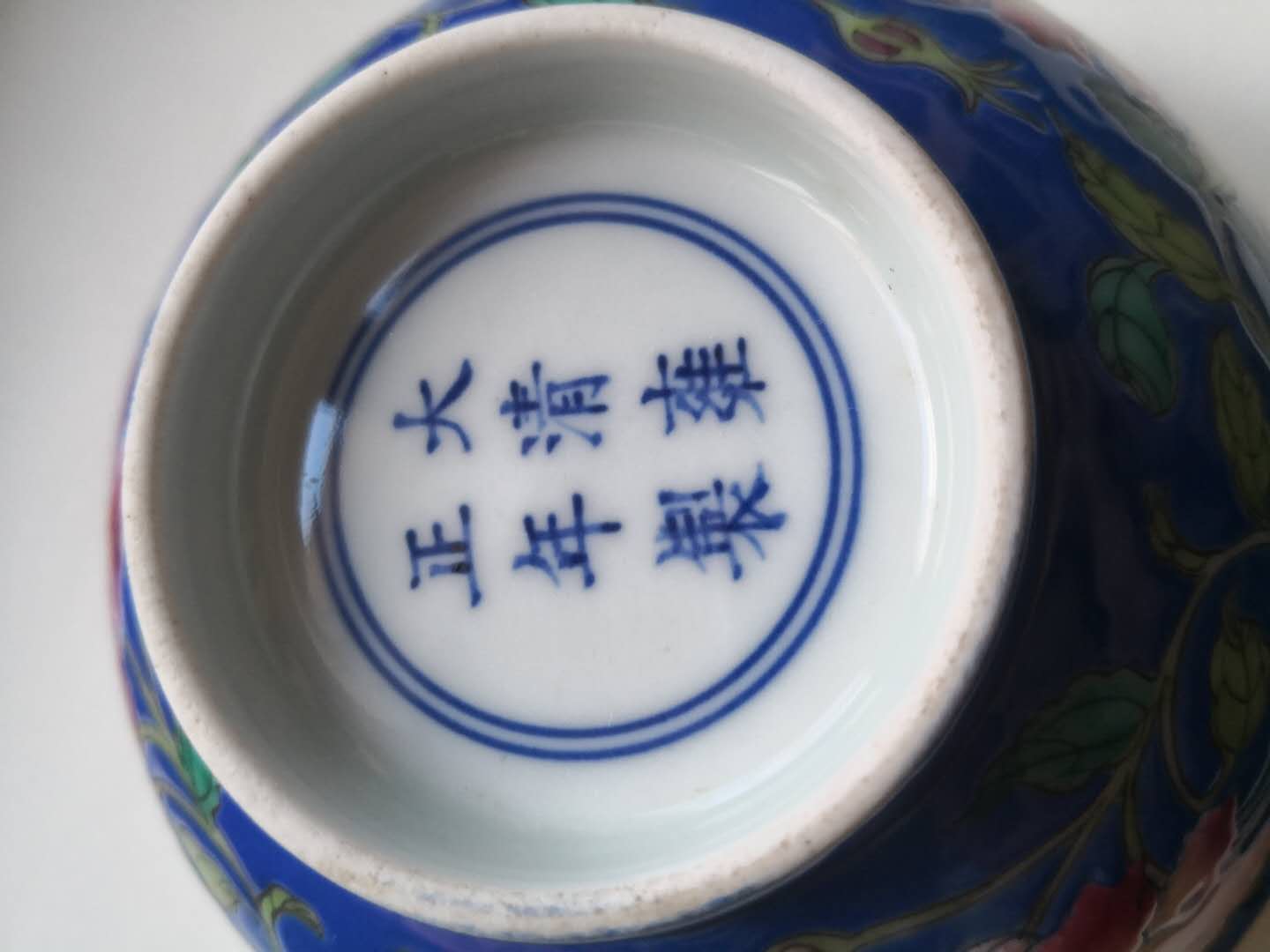
底部为青花双圈相隔,落大清雍正年制六字楷书款,其字迹浓淡有致,可见起落笔痕迹明显,其青花出现晕散,吃进胎骨毫无浮与表面之感,为典型的官窑器落款,十分难得,其胎质为糯米胎,为瓷器之精品。
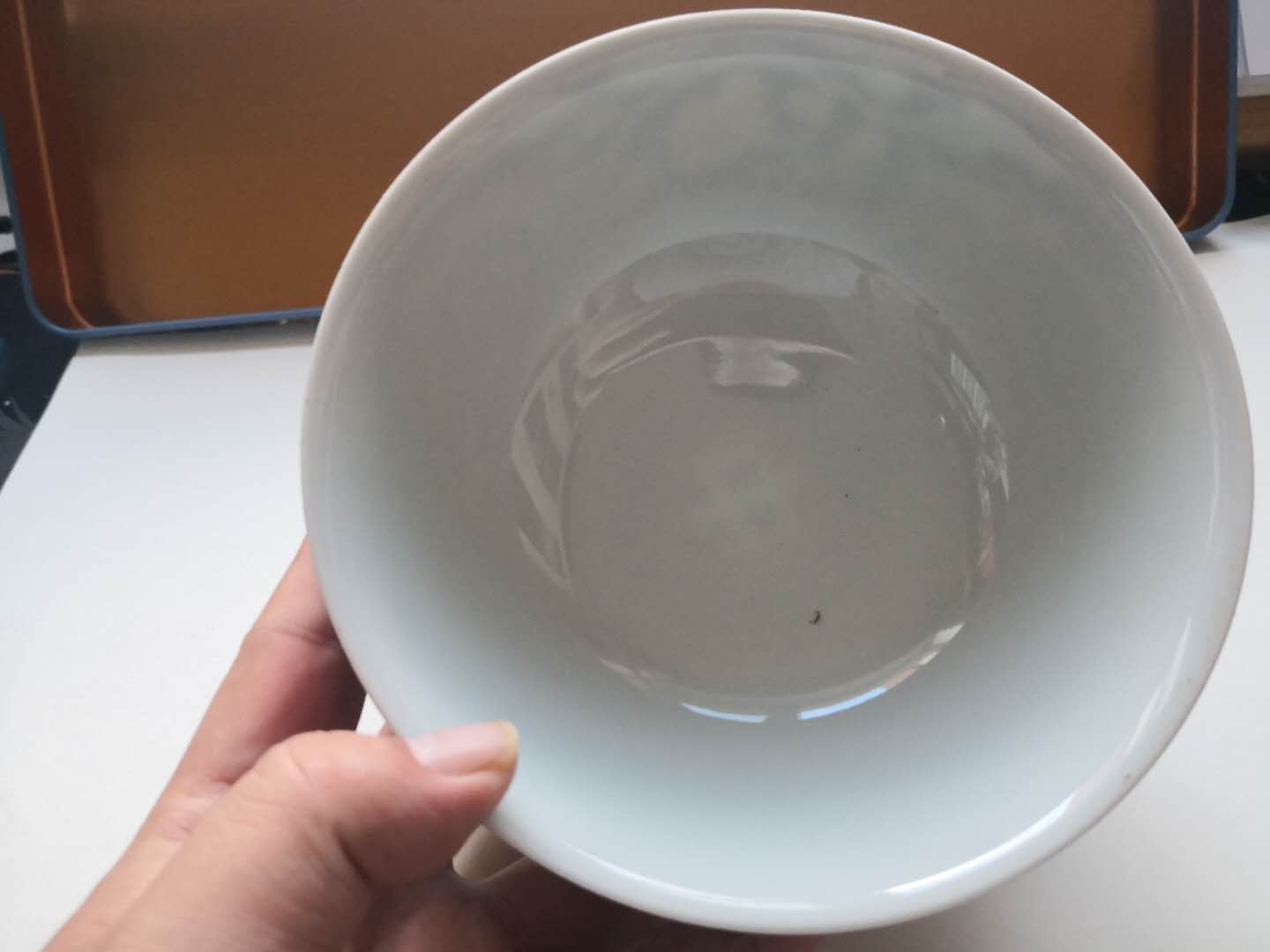
可以看到碗内釉面光泽温润,毫无棕眼,缩釉等现象,整体干净光洁,这是典型的官窑器特征,由于官窑器使用者身份尊贵,故而瓷器不容有半点瑕疵,如果有一个棕眼或者瑕疵,会被认为对皇上不尊,可能招来杀身之祸,故而官窑器的特征就是十分完美,花纹纹饰十分的规矩,落款也是十分的端正。
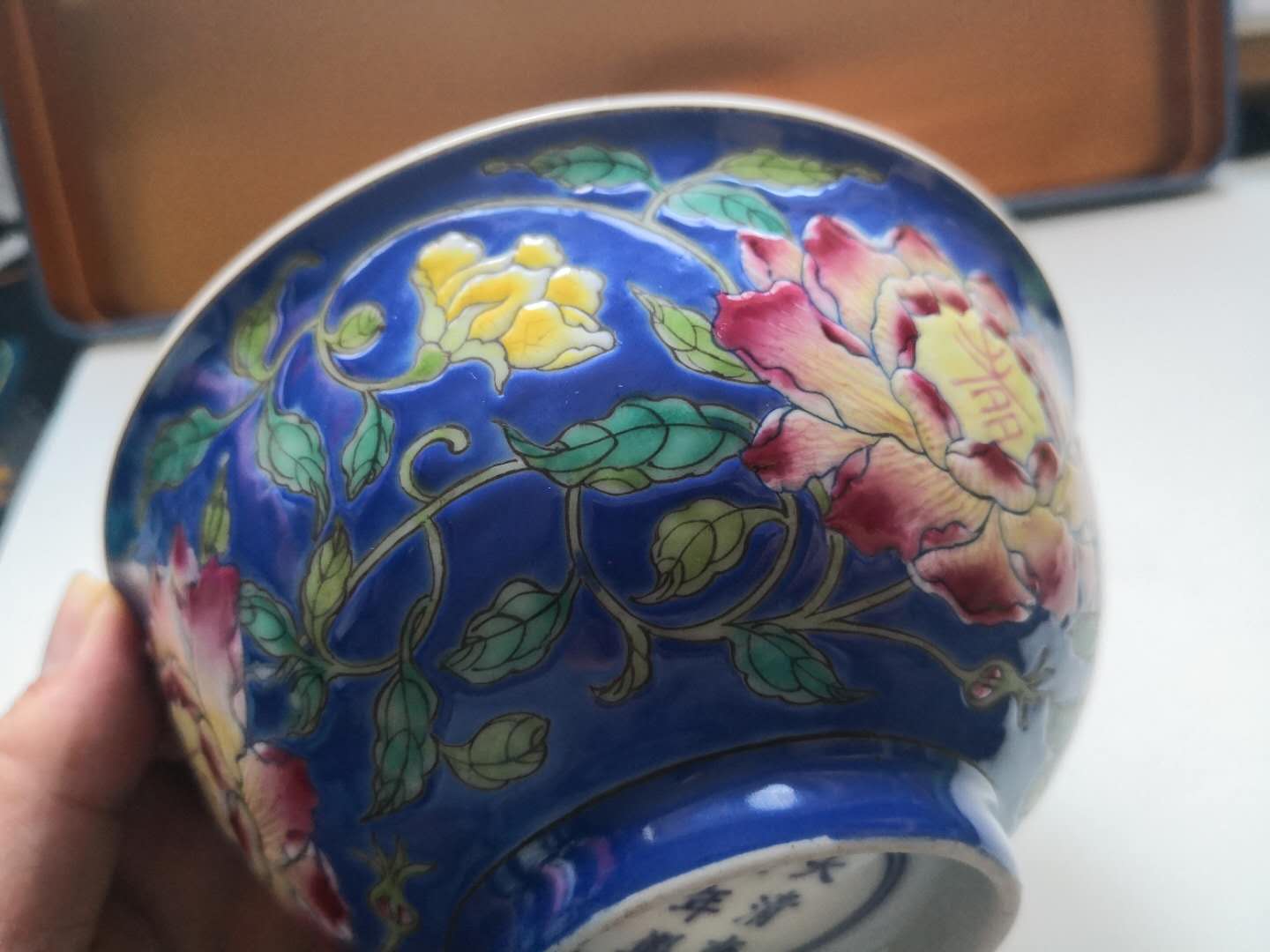
这件是以霁蓝釉为地,其蓝如大海如蓝天,所谓的湛蓝湛蓝就是如此,其花卉由黄到红过渡十分自然,其工艺精妙绝伦。
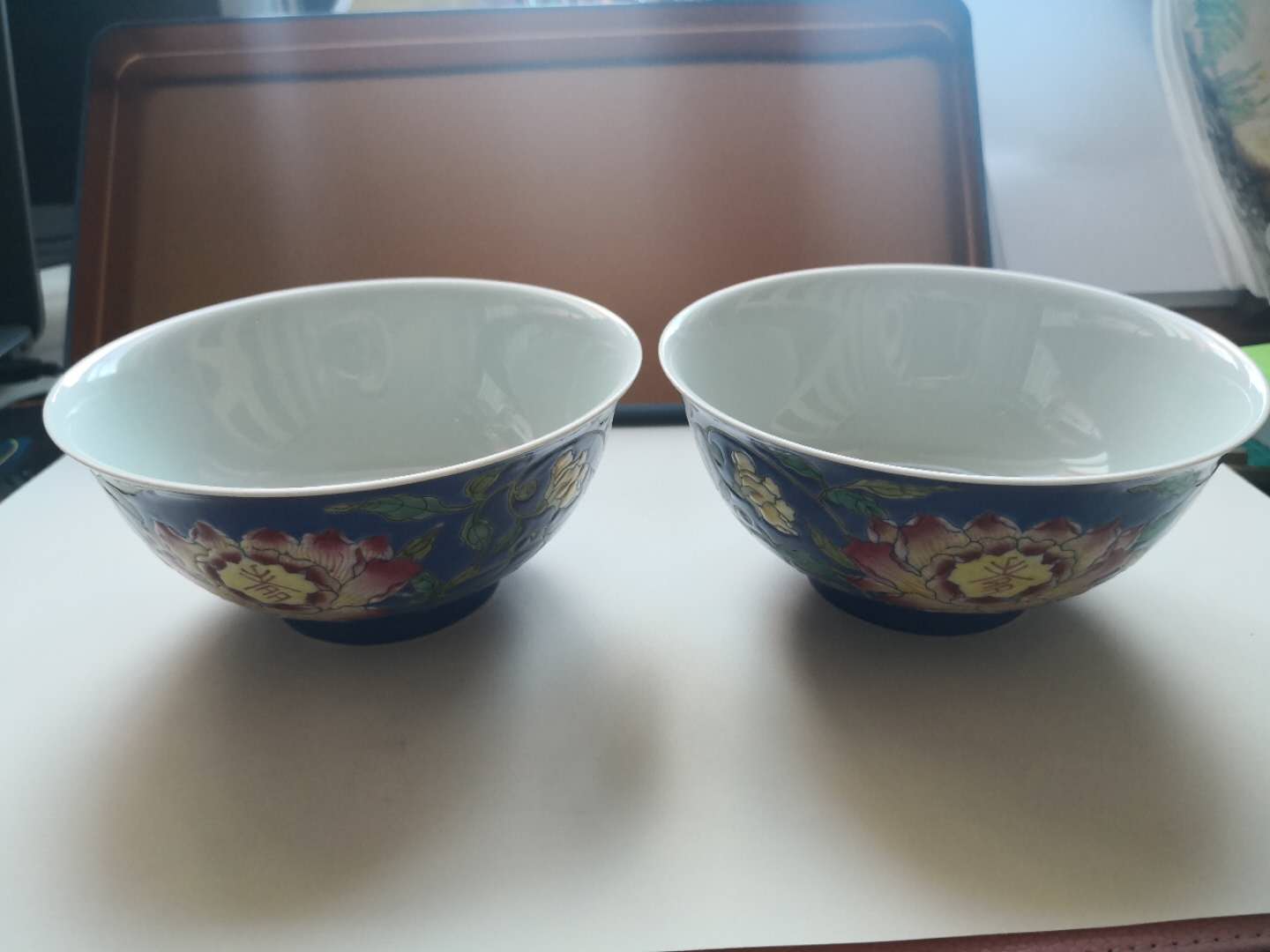
霁蓝釉:瓷器釉色名。中国传统制瓷工艺的珍品。又称“积蓝釉”、“祭蓝釉”、“霁青釉”。明、清蓝釉均称“霁蓝”,一种高温石灰碱釉。其生坯施釉,1280~1300℃高温下一次烧成。色泽深沉,釉面不流不裂,色调浓淡均匀,呈色较稳定。其釉色蓝如深海,釉面匀净,呈色稳定,后人称其为“霁青”,又因其呈色稳定明亮如宝石,又被举为把它和白釉和红釉并列,推为宣德颜色釉瓷器的三大“上品”。工艺继承元代传统,延烧不断,主要造型为祭器和陈设用瓷。
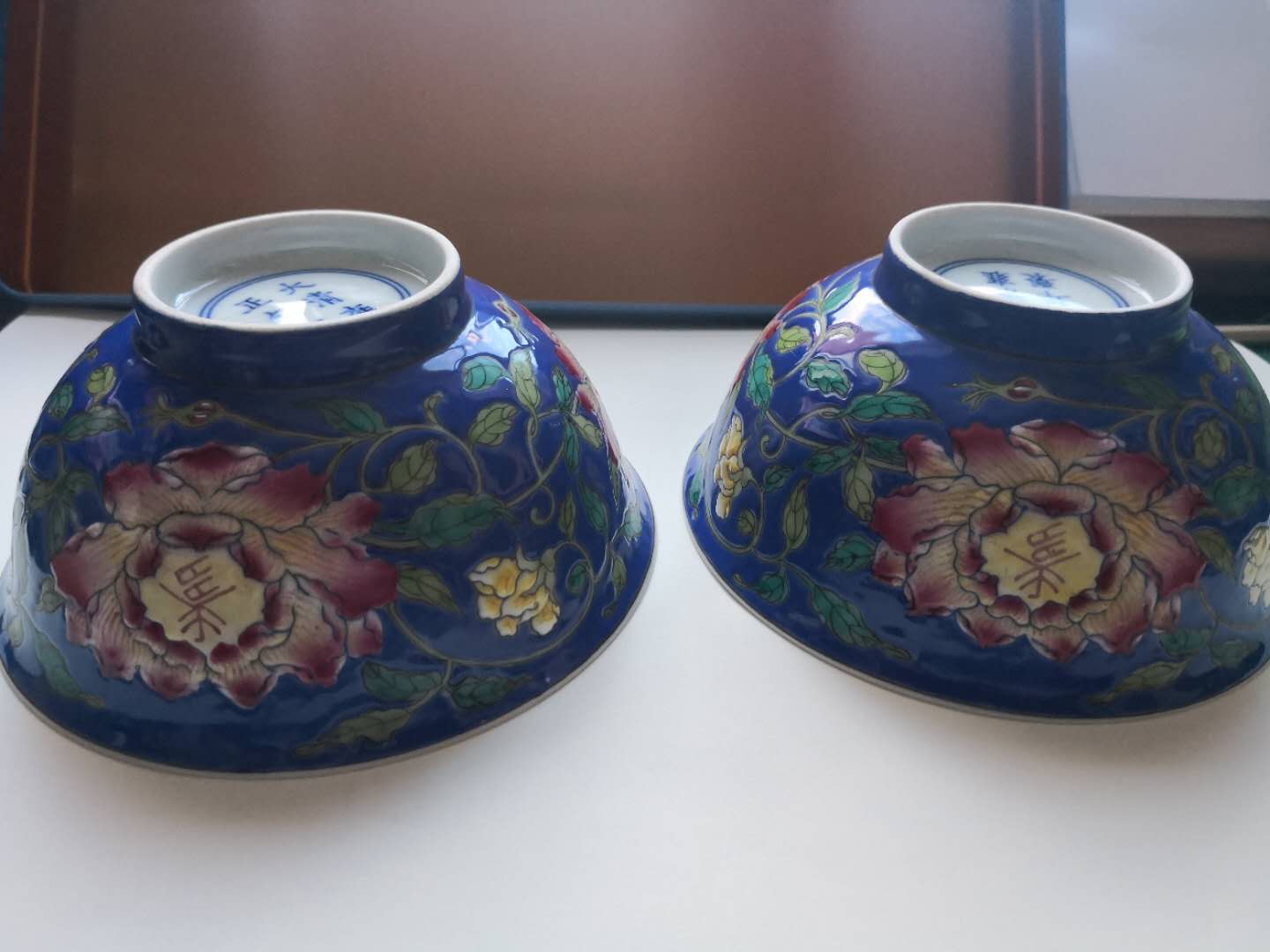
这对霁蓝釉珐琅彩牡丹纹碗,品相完美,寓意吉祥,为宫廷使用器,十分珍贵,其釉面蓝如宝石,美的动人心魄,颜色艳丽,丰富多彩,具有极高的收藏价值。
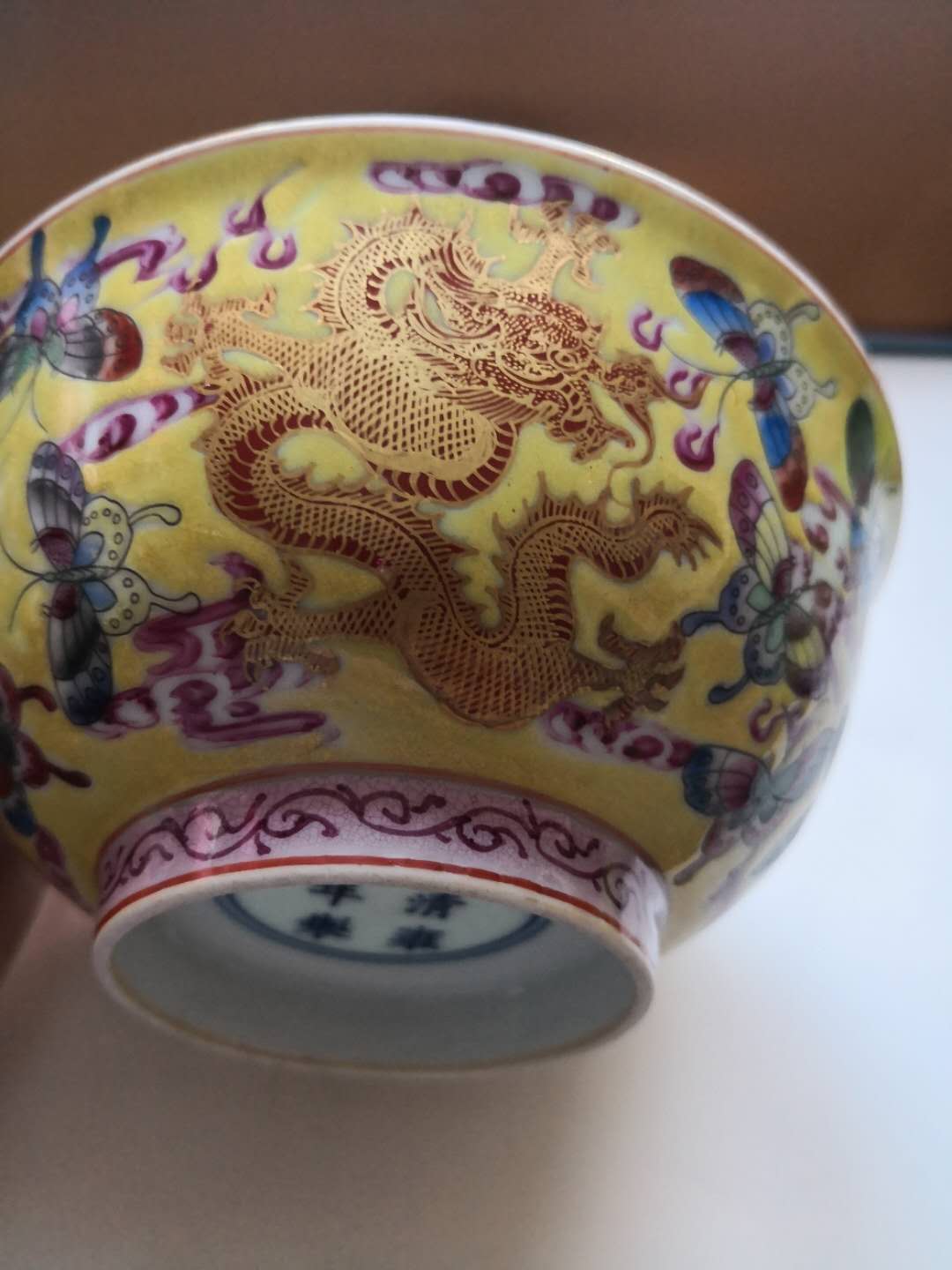
描金龙纹珐琅彩碗:此描金龙纹十分精细,为工笔画手法,龙纹两侧为蝶恋花图案,底部为缠枝草蔓纹,整体画工精美,十分规整。
描金又称泥金画漆,是一种传统工艺美术技艺。起源于战国时期,在漆器表面,用金色描绘花纹的装饰方法,常以黑漆作地,也有少数以朱漆为地,也有把描金称做“描金银漆装饰法”的。
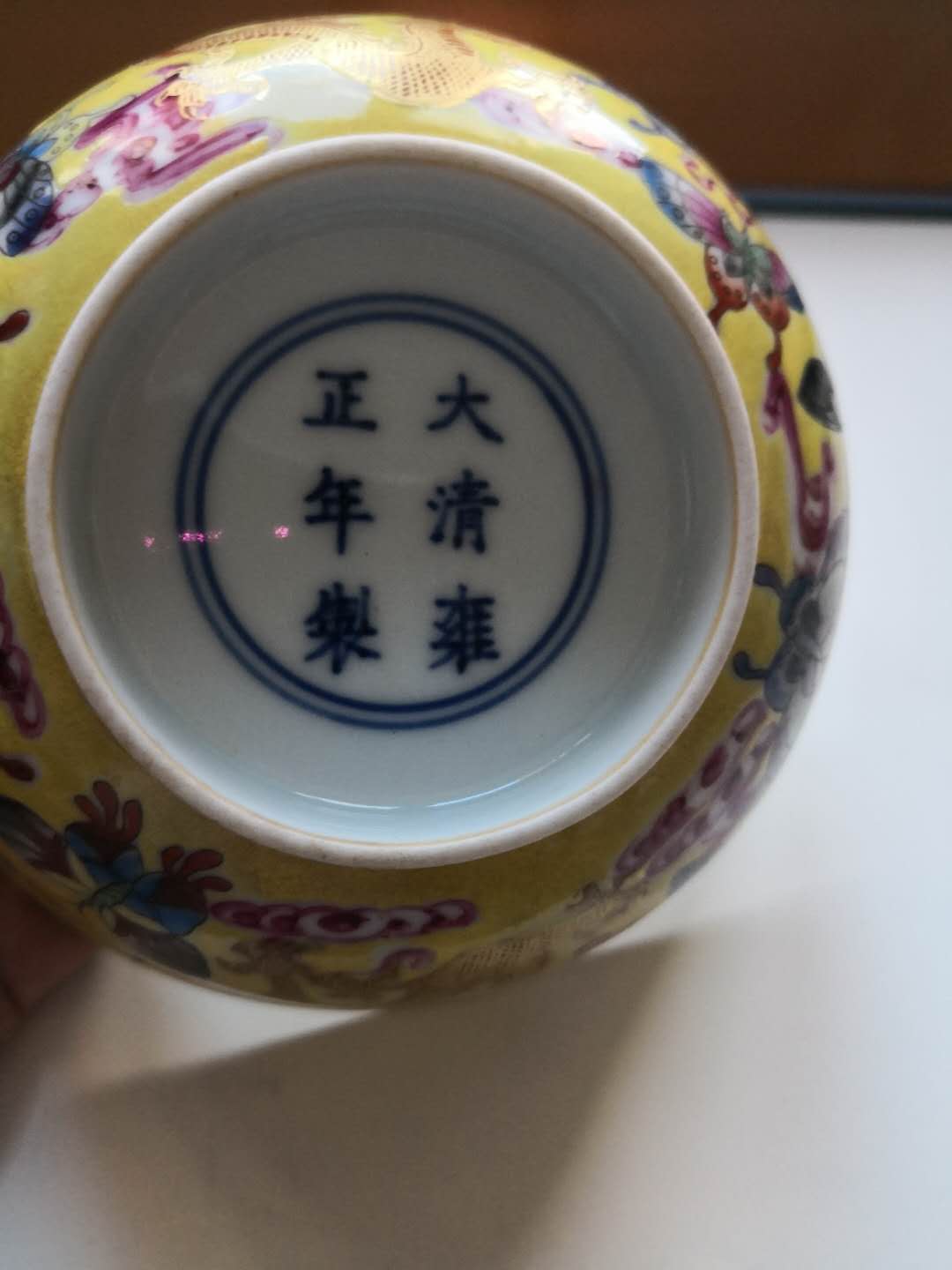
此底青花双圈,书写大清雍正年制款,落款十分规整,端正,圈足糯白,为典型的糯米胎,整体表现为官窑器。

蝶恋花:它一般代表着花香引蝶的花,每当花卉开放出美丽的花朵时,那么会招引许多蝴蝶,代表着相互恩爱、喜爱、互恋的意思,不过最后花卉凋谢蝴蝶离去,所以也代表着经不住岁月红尘的考验,只留下两人的执念的含义。
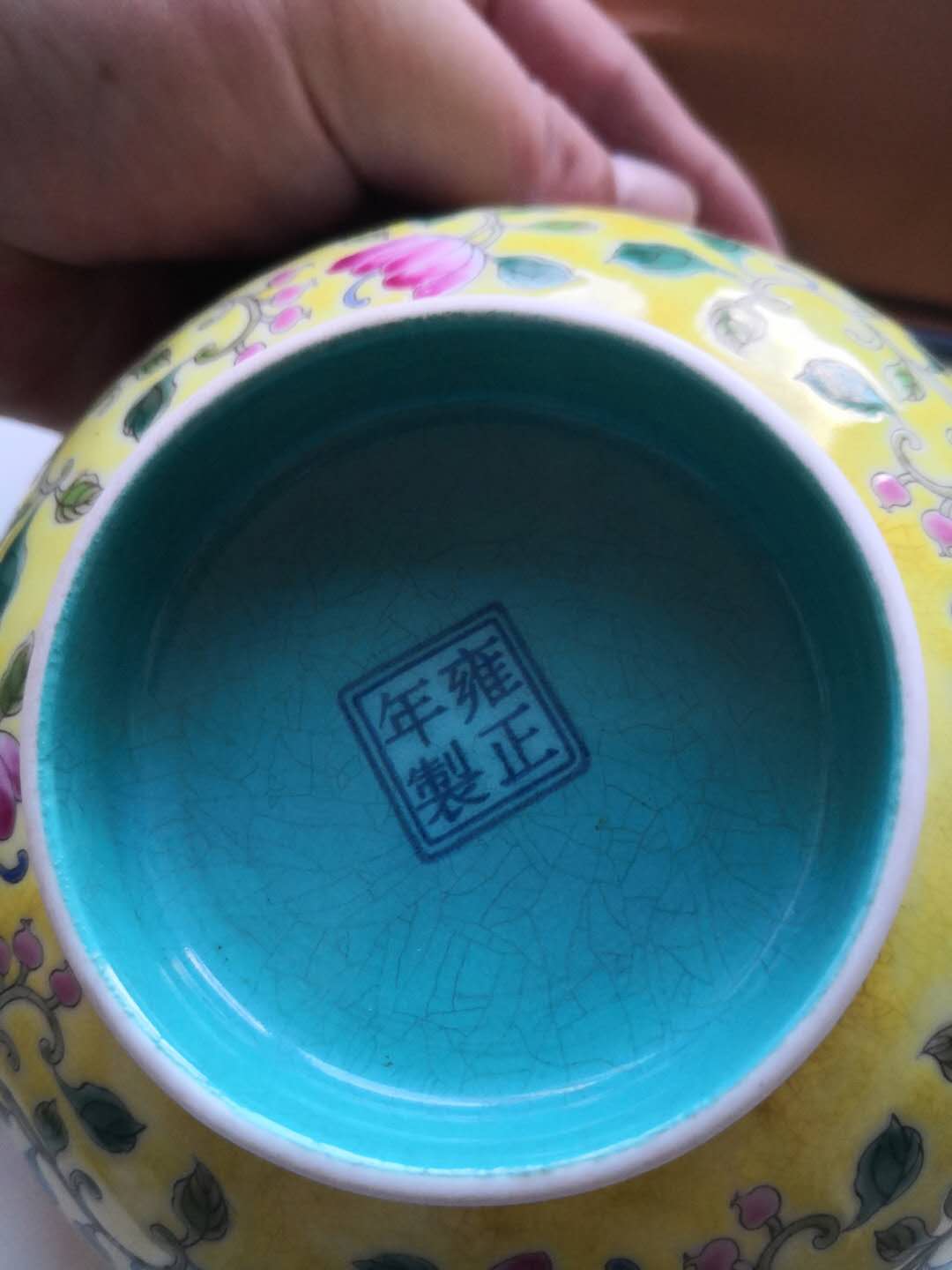
此底为古币款,外圆内方形似古币,四方孔内落四字楷书款,雍正年制,底部施护胎釉,邮票出现极其细腻的开片,开片毫无外卷现象,为开门真品。
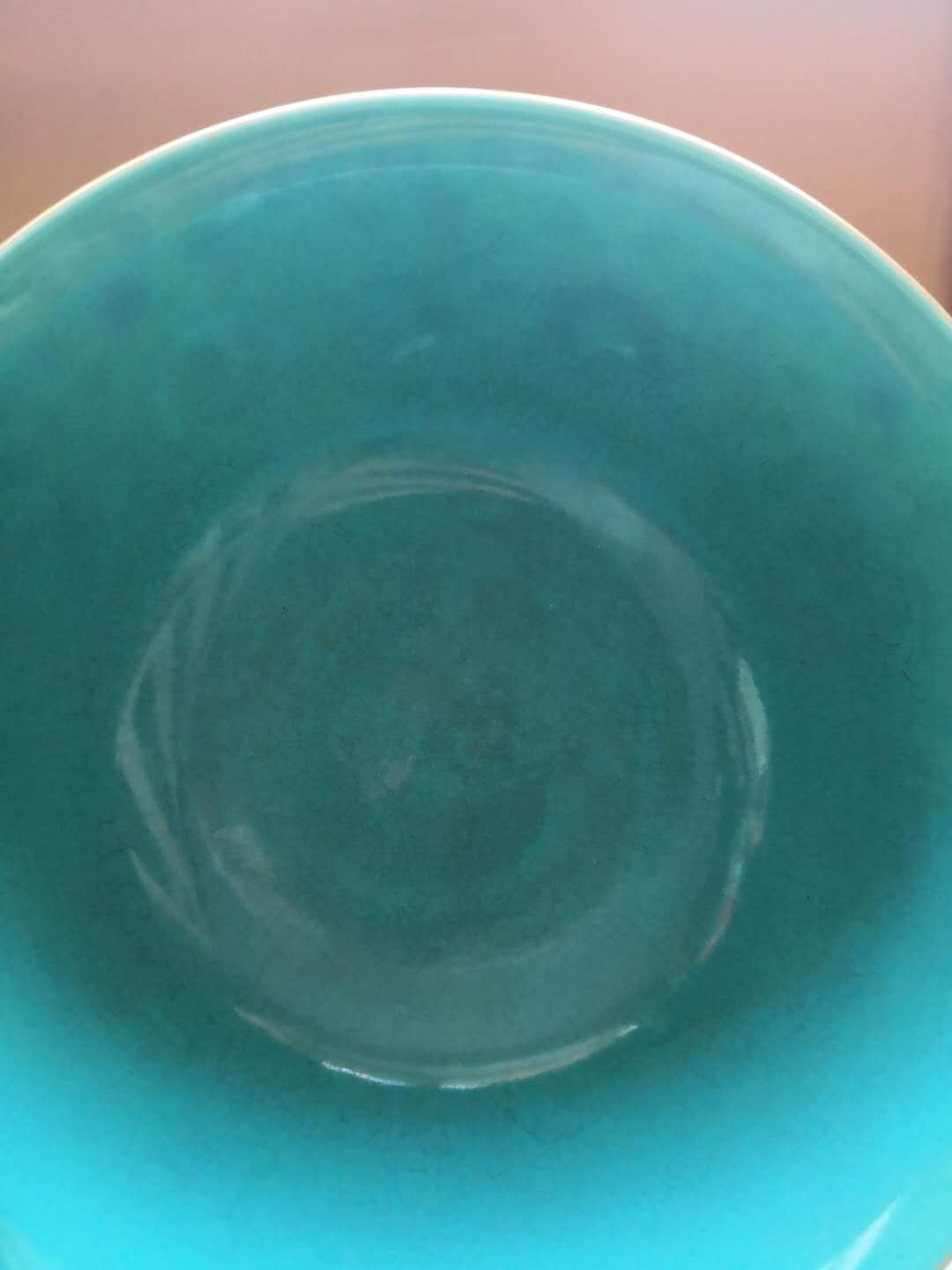
可见碗内的松石绿釉,开片十分细腻,釉面光泽温润,为漫反射光泽,细看无任何穿线,棕眼,毫无瑕疵,极其完美。
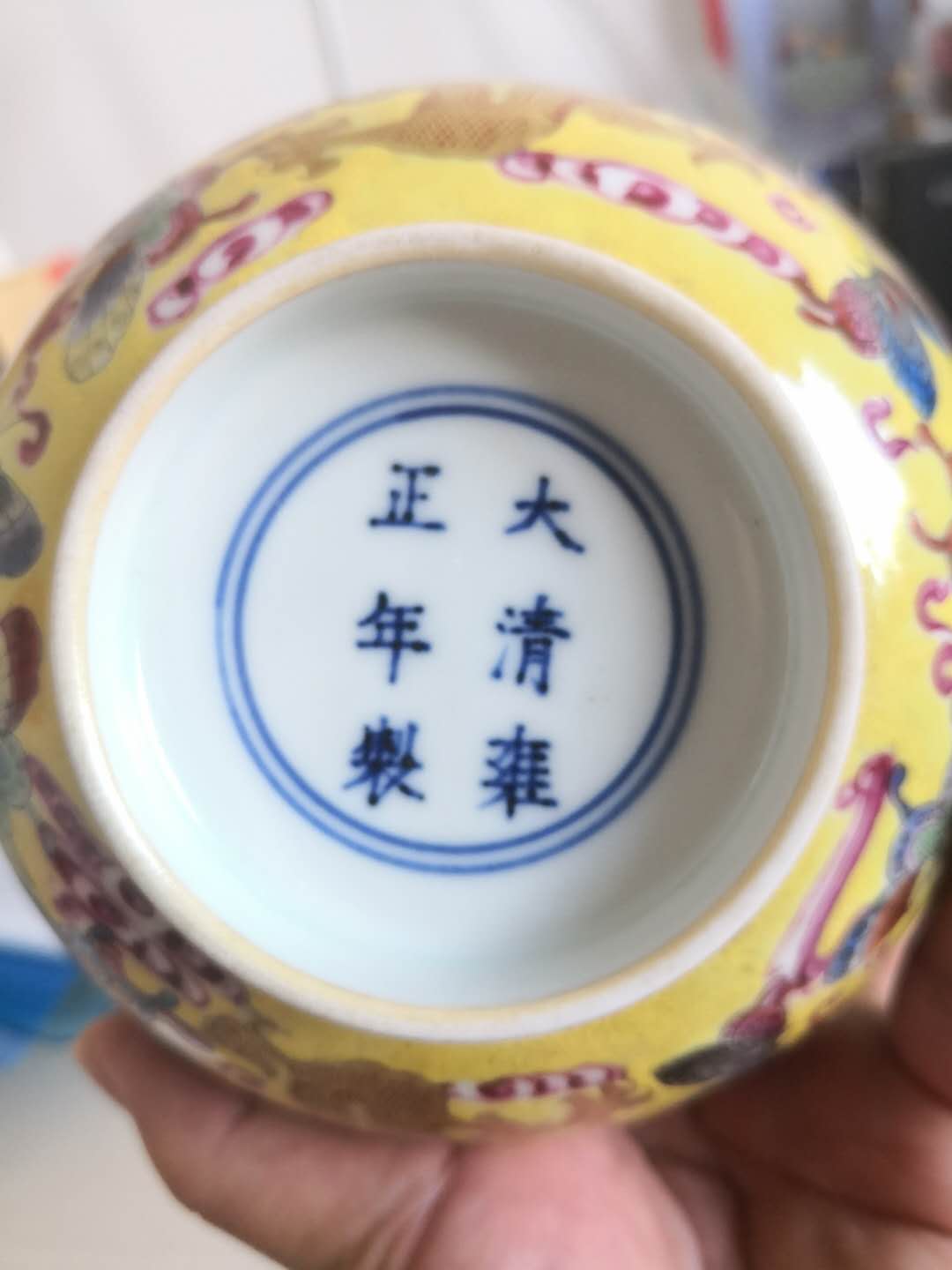
底部双圈青花明艳,双圈内大清雍正年制,可见青花浓淡过渡自然,书写痕迹十分明显,起落笔清晰,圈足细腻为糯米胎质。为开门真品。
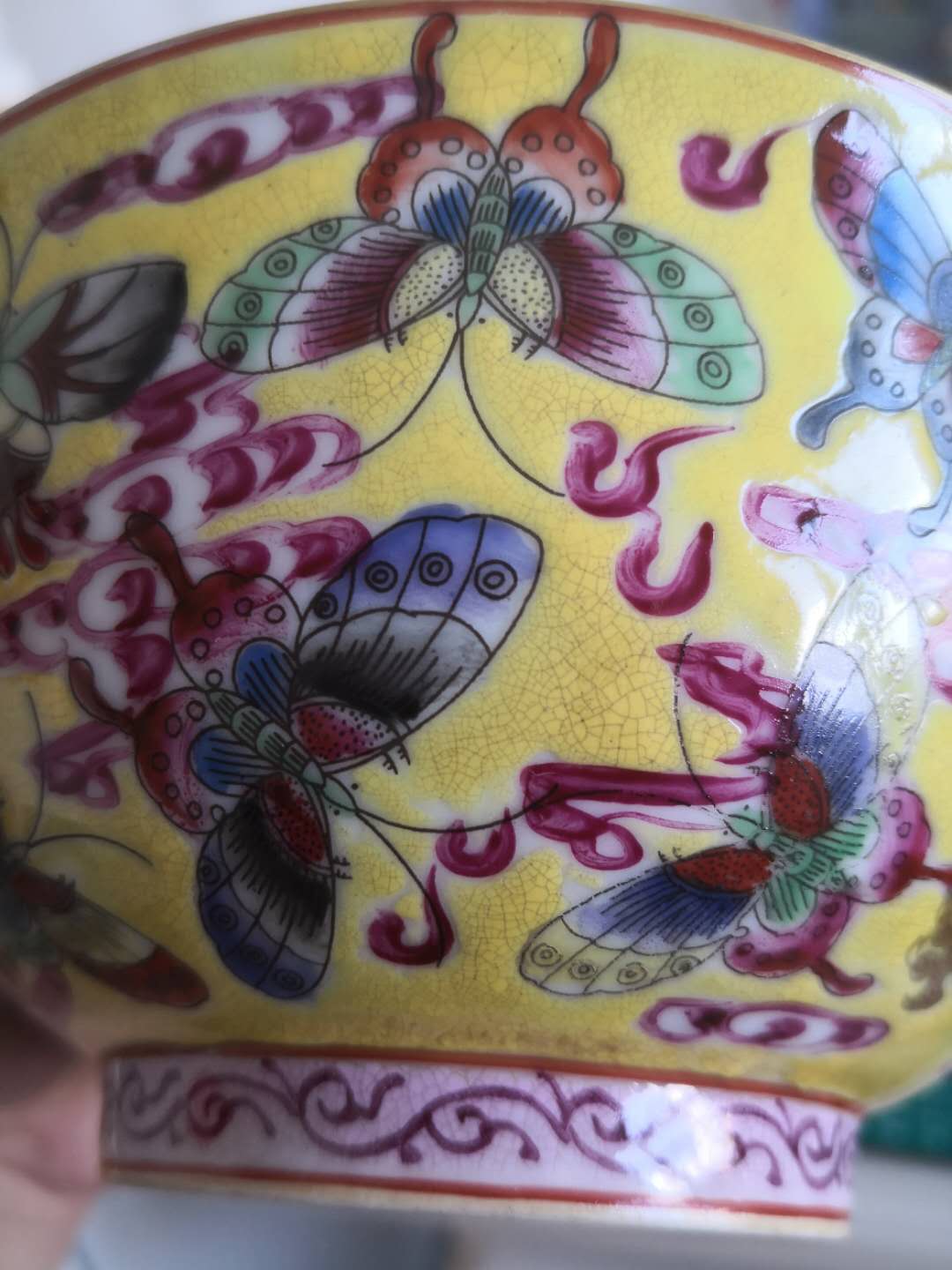
这是一件手绘珐琅彩碗,可见红色部分绘制痕迹十分明显,中心出现笔触痕迹,蝴蝶翅膀颜色也是手绘晕染,整体画工精美,为宫廷画师所画,极具艺术价值。
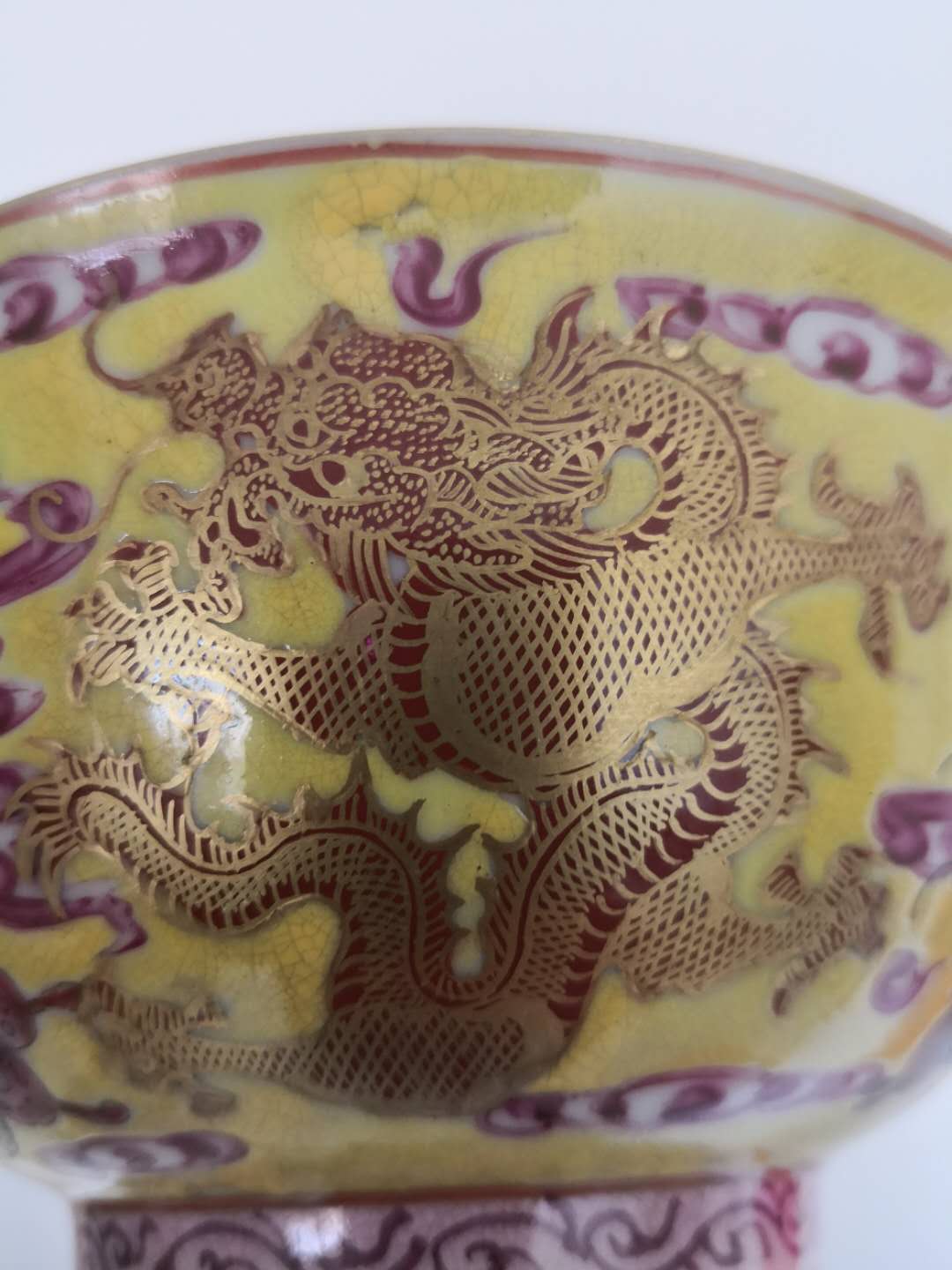
描金龙纹以网格状为龙鳞,红色为肉,雨点皴金为头部鬃毛表现,龙爪锋利,为五爪龙,背景为黄色,无论是黄色还是五爪龙都代表着这件瓷器乃君王所用,具有极高的收藏价值。
珐琅彩瓷器是清代专为皇家制作的宫中秘藏珍 品,也是甶皇帝直接授意下创烧的皇家*用御** 品。其制作往往极为精良,工艺极为复杂、严 谨,现存世也极为稀少。由其是雍正官窑珐琅 彩瓷器,不论是胎体、造型、绘画、书法、色 彩、印章都达到了历史的巅峰,风格上色彩丰 富、又淡雅多姿、层次清晰,即有类似西方油 画的艺术效果,又有东方工笔山水花鸟画之神 韵!袓传藏品,经专家鉴定为真品,极具收藏价值。
英文翻译:Porcelain body painting enamel is the most characteristic of the qing dynasty royal porcelain, the most exquisite color porcelain glaze porcelain. From kangxi's solemn color to Yongzheng's delicate simple elegance, to Qianlong's delicate and complicated elegance, the enamel, full of foreign flavor color material on the porcelain to get the most incisively and vividly play. Concentrated western charm in a suit, painting the royal status of the noble and glory. The Qianlong Enamel porcelain is the most exquisite peak of the Qing Dynasty's Three generations of Kang, Yong and Dry enamel porcelain, with the classical beauty of the Qianlong ladies garden pot is its representative.
Enamel painting used in the painting of the Va production technique originated in the middle of the 15th century Europe Belgium, France, the Netherlands at the border of the Region of Flanders. At the end of the 15th century, Limoju in central and western France developed into an important town of painting enamel on the basis of its enamel filling process. At the beginning, it made religious objects as the theme, and later gradually made decorative arts and crafts. With the frequent exchanges of trade between East and West, especially after the Qing dynasty suppressed Taiwan in the twenty-third year of Kangxi's reign (1684), the sea was banned and western products began to flood into China. Western enamel was introduced to China from guangzhou and other ports, and factories were set up on the spot to develop it. It was called "foreign enamel" in the palace. At that time, the products in Guangzhou mostly retained the charm of Western culture, and the glaze was unstable due to the low firing technology. In the fifty-eighth year of The Reign of Emperor Kangxi (1719), Chen Zhongxin, a French painting enamel artist, was invited to Beijing to instruct the firing of enamel ware in the Enamel office of the Inner Court. Its pattern and pattern are mainly Chinese style, few western painting enamel characteristics.
Enamel colored turquoise green flower bowl: it can be seen that the background color is blue turquoise glaze, in turquoise can achieve this color is called porcelain pine, and this porcelain normal background color is the highest standard for porcelain pine, very exquisite, as the saying goes that porcelain is like beautiful jade, which is exactly where it comes from.
Turquoise green glaze, also known as "okra green glaze", is a porcelain glaze color, is a new green glaze created in the Yongzheng Period of the Qing Dynasty.
Modern formula is made of barium sulfate, calcium carbonate, boric acid, etc. Its color is light yellow in slightly green, and turquoise color similar, so the name "turquoise green".
From the bottom of the blue and white 'Yongzheng system' very correct, the position in the middle, the right shape. The circle foot is white and delicate, is a rare glutinous rice embryo, the earliest known as "glutinous rice juice embryo" is the image description of the texture of the embryo body, like the rice pulp flowing out of the glutinous rice water mill general delicate, smooth. Called glutinous rice, after the child is very exquisite, is China stone some acura after many refined extremely delicate porcelain body, the porcelain body light sweet crisp, TaiZhi closely, more like porcelain higher hardness, heat from the cold resistance is strong, a lot of China experienced hundreds of years to naturally weather-shack, we become Yin crack phenomenon, unlike kiln crack, late is formed, and glutinous rice porcelain will not appear this kind of problem, because China clay is extremely delicate, also won't appear the phenomenon of brown eyes, is one of the important elements of the porcelain.
The turquoise green glaze in the bowl shows its aesthetic feeling, just like that made by a top porcelain pine, which is more beautiful than the porcelain pine.
From yongzheng emperor's relatives and close officials of New Year's banquet yao, also can understand at this time the situation of the firing of enamel colored porcelain. For example, "on the 9th day of February, yongzheng 2000, from yi Chai to Yu Kui, we made two enamel quills with two eyes and ten quills with one eye..." . To them the emperor said in his Thanksgiving feast on February 12, "... I v 覩 enamel feathered pipe, elaborate, color JiaoLi, be love envy, we would like to fold ready and Xie Tianen, more heartfelt kindness, if there are any new system enamel objects, reward one, two, with full I greed. I was terrified. Yongzheng on February 12, 2000." On the table of New Year's feast, Emperor Yongzheng drew a circle with his pen next to the word "greed". In the margin of the table, Emperor Yongzheng's pen said, "The enamel has no time to be refined. It will be made in the future." I have given you a number of things, but if you do not use the word 'greed' and do not give you any of them, this is the power of the word." Among them, the sentence "enamel is not flawless yet, it will be made in the future" shows that Emperor Yongzheng is full of confidence in the development of enamel colored porcelain.
Visible flower grain is acted the role of repeatedly, have concave and convex feeling, it is the typical characteristic of enamel color, and enamel color is used for palace all along, it is rolls Royce in porcelain, very precious.
As the saying goes, the home without porcelain is not elegant, porcelain without enamel is not expensive, this pair of enamel color is very expensive, has always been the major auction house grand final heavy ware, with not poor collection value.
Five-blessing longevity Enamel bowl: Five-Blessing longevity bowl is a traditional auspicious pattern widely spread among Chinese people. It consists of five bats around the Chinese character for longevity or around a peach, which means live a long and happy life. The word "bat bat" is homophonic with the character "fu", so the five bats represent the five blessings. The five bats often surround the character Of Longevity, and the custom is called "Five Blessings holding longevity".
Paragraphs bottom for COINS, look at the bottom of the form of a ancient COINS, coin square hole falls the qing qianlong year the seal character, the nursing at the bottom of the embryo glaze, very elegant, ring foot thief, is extremely delicate, glutinous rice TaiZhi, the ancients have always been in circles for days, as, in case of 'fair and reasonable, and round up to the sea, and the moral of are connected to the sea one day, while the ancients also believe that can direct the sky through the sea.
The glaze is warm and moist, the dragon is diffuse reflection sheen, without thief light, the flame fades away, is the glaze oxidation for a long time, it is the imprint left by time, no imitation, it is the genuine product.
Part of the yellow glaze decoration can be seen, but in ancient times the use of color is very strict, yellow has always been used only by the emperor, or the emperor's elders, such as the Dowager Empress Dowager Cixi da Ya Zhai has yellow porcelain, it can be seen its preciousness.
Ancient worship of yellow, yellow is often seen as a symbol of monarchy. This originated from the ancient agricultural nation's "return to the soil" thought. According to the Chinese theory of Yin and Yang, yellow is the earth in the five elements. This earth is the "central earth" in the center of the universe. In the five elements, "earth is honored". With unified Confucianism followed this thought close together, think to the han nationality as the main body of the unified dynasty is one such in a "middle earth" empire, which is different from the surrounding "territory", "yellow" by soil is linked with "orthodox" and "respect", provides the rule of the monarch of "rationality" argument. In addition, there is an ancient saying that "the blood of the dragon is yellow when it fights in the wild", which means that the blood of the dragon is yellow when it fights in the war, and the monarch takes the dragon as a symbol, so yellow has a more direct connection with the monarch. In this way, yellow symbolizes the divine right of Kings, the sacred and inviolable. In the Zhou Dynasty, Yellow Tomahawk was the symbol of the power of the emperor. After the Sui Dynasty, the emperor had to wear yellow dragon robe, and yellow became the exclusive color of the emperor.
This pair of enamel bowl is of uncommon value, perfect in appearance, and has extremely high collection value.
Enamel bowl of Peony Riches and Honour: Zhao Shixue in the Qing Dynasty mentioned in the Theory of Peony Riches and Honour that peony is the king of the world, the first of all flowers, and the name of the world, and finally called it wealth and honour. Husband called riches and honour, to clean the lotus, but not closed; The law to recluse chrysanthemum, but not appropriate also. Very yi, riches and honour alone peony also.
At the bottom of the double circle of blue and white, fall qing Yongzheng system six regular script, the handwriting is thick and thin, visible from the trace of writing, the blue and white appear halo loose, eat into the bone no floating and surface feeling, for the typical kiln ware, very rare, the quality of the fetus for glutinous rice embryo, for the porcelain of the fine.
Can see steaming bowl glaze gloss, no brown eyes, glaze etc. Phenomenon, the overall clean and bright and clean, this is the typical characteristics of imperial wares, due to the imperial wares user identity noble, so China should not be any defective, if you have a brown eye or flaws, can be said to the emperor, may cause fatal disaster, so the characteristics of the imperial wares is very perfect, decorative pattern grain very rules, inscribe is also very correct.
This one is based on a ji blue glaze, which is as blue as the sea and the blue sky. The so-called zhanblue is just like that. The transition from yellow to red is very natural, and the technique is exquisite.
Ji Blue glaze: name of porcelain glaze color. Treasures of traditional Chinese porcelain making. Also known as "accumulated blue glaze", "sacrificial blue glaze", "Ji green glaze". Ming and qing blue glazes are called "Ji blue", a high temperature lime alkali glaze. Its fresh glaze, 1280 ~ 1300℃ next fired. Color and lustre is deep, glaze does not flow does not crack, tonal shade is even, show color is more stable. Its glaze blue as the deep sea, the glaze surface is even clean, the color is stable, later called it "Ji Qing", and because of its color stability and bright as a gem, and it was chosen to put it and the white glaze and red glaze, promoted as xuande glaze three "top quality" glaze porcelain. The craft inherits the yuan dynasty tradition, continues to burn unceasingly, the main model is the sacrificial vessel and the display USES the porcelain.
The enamel bowl with peony pattern made of ji blue glaze is perfect and auspicious. It is very precious for the court. Its glaze blue is like a gem, beautiful, beautiful, colorful and has high collection value.
Painted golden Dragon pattern enamel color bowl: This painted golden dragon pattern is very fine. It is a fine brushstroke technique. The two sides of the dragon pattern are the patterns of butterflies and flowers, and the bottom is the pattern of twisted branches and grass.
Painted gold, also known as clay painting paint, is a traditional arts and crafts skills. Originated in the Warring States Period, in the lacquer surface, with the decorative method of gold pattern, often with black paint for the ground, there are a few with lacquer for the ground, there are also called "painted gold silver lacquer decoration method".
This bottom blue and white double circle, write qing Yongzheng year, the signing is very neat, regular, circle foot glutinous white, for a typical glutinous rice embryo, the overall performance for the official kiln ware.
Butterfly love: it generally represents the floral butterfly flowers, when the flowers open out beautiful flowers, then attract many butterflies, representing the meaning of mutual love, love, mutual love, but finally the flowers wither butterflies, so it also represents the test of the world of life, leaving only two people's attachment meaning.
This bottom for the ancient coin, outside the circle inside the square shape like ancient COINS, four words of regular script fell inside the hole, Yongzheng system, the bottom of the glaze, the stamp appears very delicate open piece, open piece without the appearance of the outer roll, open the door for the real product.
It can be seen that the turquoise green glaze in the bowl is very delicate and the glaze is warm and diffuse, without any thread, and the brown eye is flawless and extremely perfect.
Bottom double circle blue and white bright, double circle inside the Qing Dynasty Yongzheng system, visible blue and white transition natural, writing trace is very obvious, clear, delicate circle foot for glutinous rice. Genuine for the door.
This is a hand-painted enamel color bowl, visible in the red part of the painting traces are very obvious, there are brush traces in the center, butterfly wings color is also hand-painted color, the overall painting is exquisite, for the court painter painting, very artistic value.
Tracing golden dragon pattern to grid form for dragon scales, red for flesh, cun for head mane performance, sharp dragon claws, for five-claw dragon, background for yellow, yellow or five-claw dragon all represent this porcelain is used by the king, with high collection value.
Falangcai porcelain was specially made for the imperial family in qing Dynasty, and it was also created under the instruction of the design model emperor. They are often extremely sophisticated, complex and meticulous, and are rare in the world. As the enamel porcelain of Yongzheng Imperial Kiln, its body, shape, painting, calligraphy, color and seal have reached the peak of history. In terms of style, the color is rich, elegant and varied, and the level is clear. It has the artistic effect similar to western oil painting, and the charm of Oriental meticulous landscape flower and bird painting! Ancestral collection, appraised as authentic by experts, is of great collectable value.