这里是卡拉卡尔帕克斯坦共和国,位于乌兹别克斯坦的最西部,大部分土地荒无人烟,显示在地图上的定居点少得可怜。曾经,从花拉子模绿洲流淌过来的阿姆河在这里注入世界第四大湖咸海。如今,阿姆河像地图上的一条裂纹,蜿蜒向北,远未到达曾经的终点就消失不见。The bulk of Karakalpakstan, an autonomous republic in western Uzbekistan, is deserted, the landscape marked only by a few scattered settlements. Once the Amu River flowed through here, from the oasis of Khwarezm to the Aral Sea, the world’s fourth largest lake. Now the Amu is no more than a crease on the map, petering in the desert long before reaching the Aral Sea.
从阿姆河消失的地方一直到咸海的大片土地,在地图上是一块干净的空白。我决定去亲自看看,在真实的世界里,那片空白究竟意味着什么?The map is a blank from the point the river disappears into the vast expanses of the lake bed. I decided to go and see for myself, what is actually in that blank space.
在卡拉卡尔帕克斯坦的首府努库斯,我雇了一辆三菱四驱车前往咸海。经过将近半天的跋涉,三菱车冲下高原,进入一片高低起伏的丘陵地带。细软的沙地上,散落着破碎的贝壳,植被全都干枯了,仿佛远古时代的遗骸。In Nukus, the capital of Karakalpakstan, I hired a Mitsubishi 4x4 and driver and headed for the Aral Sea. After almost half a day we came off the plateau and descended into undulating hills. The fine sands were scattered with broken shells, the vegetation all withered; the remnants of some ancient age.
咸海 The Aral Sea
司机停下车,指着远处,咸海终于出现在了丘陵的尽头处。尽管距离湖边尚有一段距离,但汽车已经无法开过去。我跳下车,徒步走向它。阳光明亮,但气温极低。天空是一片混沌的白。风吹在脸上,有一种咸咸的粘稠感。这里依然保留着湖底的样貌,呈现出月球表面般的荒凉形态,有一种令人畏惧的荒凉感。日复一日,咸海缩减着自己的疆域,2012年时水量只剩下1960年的十分之一。The driver stopped and pointed into the distance. Finally, the Aral Sea was visible, beyond where the hills ended. We were still some way from the lake, but the car could go no further. I got out and continued on foot. It was a bright day, but freezing cold, with the sky a chaos of white clouds. There was a salt tackiness to the breeze playing over my face. The land retains the appearance of a lake bed. A desolate lunar landscape, desolate to the point of inducing fear. Day-by-day the Aral Sea retreats into itself, by 2012 it contained only a tenth of the water it had in 1960.
移除

点击此处添加图片说明文字
湖面是灰黑色的,平静得仿佛静止住了,就连浪也如同电影中的慢镜头,能够分辨出波动的褶皱和线条。我的目光无法看到更远的地方,因为远处的湖面被一团雾气弥漫的虚空吞噬,仿佛刻意想隐藏什么。Today, the lake is a dark grey, and so calm it seems almost motionless. Any waves seemingly moving in slow motion, the peaks and troughs easily discernible. I could see no further, in the distance the lake was swallowed up by a bank of fog, as if something was being deliberately hidden from me.
棉花 Cotton
咸海的衰落与棉花密不可分。You can’t tell the story of the loss of the Aral Sea without talking about cotton.
19世纪,沙皇俄国开始把中亚地区变成棉花基地。棉花取代了当地农民栽种的传统食用作物,成为主要经济作物。1860年,中亚供应的棉花仅占俄罗斯棉花用量的7%。到了1915年,这个数字变成了70%。In the 19th century, Russia planted commercial cotton plantations across Central Asia, replacing the traditional food crops of the local farmers. In 1860 Central Asia produced only 7% of Russia’s cotton; by 1915 it produced 70%.
苏联时期延续了这样的做法。为了灌溉更多的棉花田,中亚的两条大河——阿姆河和锡尔河人为改道。它们被沿途挥霍,灌溉越来越多的棉田。这导致两条大河还未及注入咸海,就在荒漠中蒸发殆尽。失去补给的咸海面积开始逐年缩减。按照现在的速度,很快就会从地球表面上消失。This continued into the days of the Soviet Union. To irrigate expanding cotton plantations Central Asia’s two major rivers – the Amu and the Syr – were diverted. So much water was taken from the rivers for cotton growing that both dried up in the desert sands before reaching the Aral Sea. With no water flowing in, the Aral Sea started to shrink and on current performance will soon disappear entirely.
长期种植单一作物,加之使用化肥,也使得乌兹别克斯坦的土地开始变得贫瘠。然而积重难返,独立后,乌兹别克斯坦仍然保持着世界产棉大国的地位。2017年以前,所有中小学生都必须参加义务采棉劳动。每到采棉季节,运力不足的火车上会挤满流动的采棉女工。我在乌兹别克斯坦时,正是采棉时节。一位旅行者告诉我,他已经购票的火车被突然取消,因为要改成“采棉专列”。The long-standing planting of a single crop (cotton), along with the use of chemical fertilisers, has left Uzbekistan’s soil depleted. But old habits die hard. Even after independence the country remained one of the world’s major cotton growers. Until 2017 all elementary and middle school students were obliged to volunteer to help plant the crop. In the cotton-picking season trains are packed with female cotton pickers following the harvest. I was there during that harvest and one traveller told me the train he’d purchased a ticket for had been cancelled, so it could serve as a “cotton-pickers’ express.”
穆伊纳克 Muynak
离开咸海,我前往一个叫作穆伊纳克(Muynak)的小镇。I left the Aral Sea and headed for the town of Muynak.
仅仅几十年前,穆伊纳克还是咸海最大的港口,典型的鱼米之乡。1921年,苏联发生饥荒,列宁曾向穆伊纳克请求帮助。短短数日之内,21,000吨的咸海鱼罐头,便抵达了伏尔加河流域,拯救了数以万计的生命。Just decades ago Muynak was the biggest port on the Aral Sea, blessed with both rich fishing grounds and fertile soil. During the Russian famine of 1921 Lenin appealed to Muynak for aid. Within days 21,000 tonnes of tinned fish from the Aral were sent to the Volga River basin, saving tens of thousands of lives.
咸海水量减少后,盐分是过去的十几倍,鱼类已经无法生存。穆伊纳克的一万名渔民,因此失去了工作。这一切,只发生在短短一代人的时间里,成为环境灾难最令人震撼的注脚。Fish could no longer survive in the Aral Sea due to the large quantities of salt concentrated in the remaining waters. The ten thousand fishermen of Muynak found themselves out of work. This all happened in a single generation, perhaps the most shocking footnote to this environmental catastrophe.
如今,昔日的港口,距离湖水已经超过160公里。经过四个小时的颠簸,当三菱车驶入穆伊纳克时,我看到的是一个贫瘠而荒凉的小镇。到处是黄土和荒地,灰尘扑扑的石头房子,人们的脸上带着困居已久的木讷神色。That former port now lies over 160 kilometres from the waters of the lake. When, after a bone-shaking four-hour journey, we pulled into Muynak I saw only a bleak and impoverished town. Empty patches of yellow earth and barren land lay everywhere, dust blowing up against stone houses, the people wearing the dull expressions borne of long hardship.
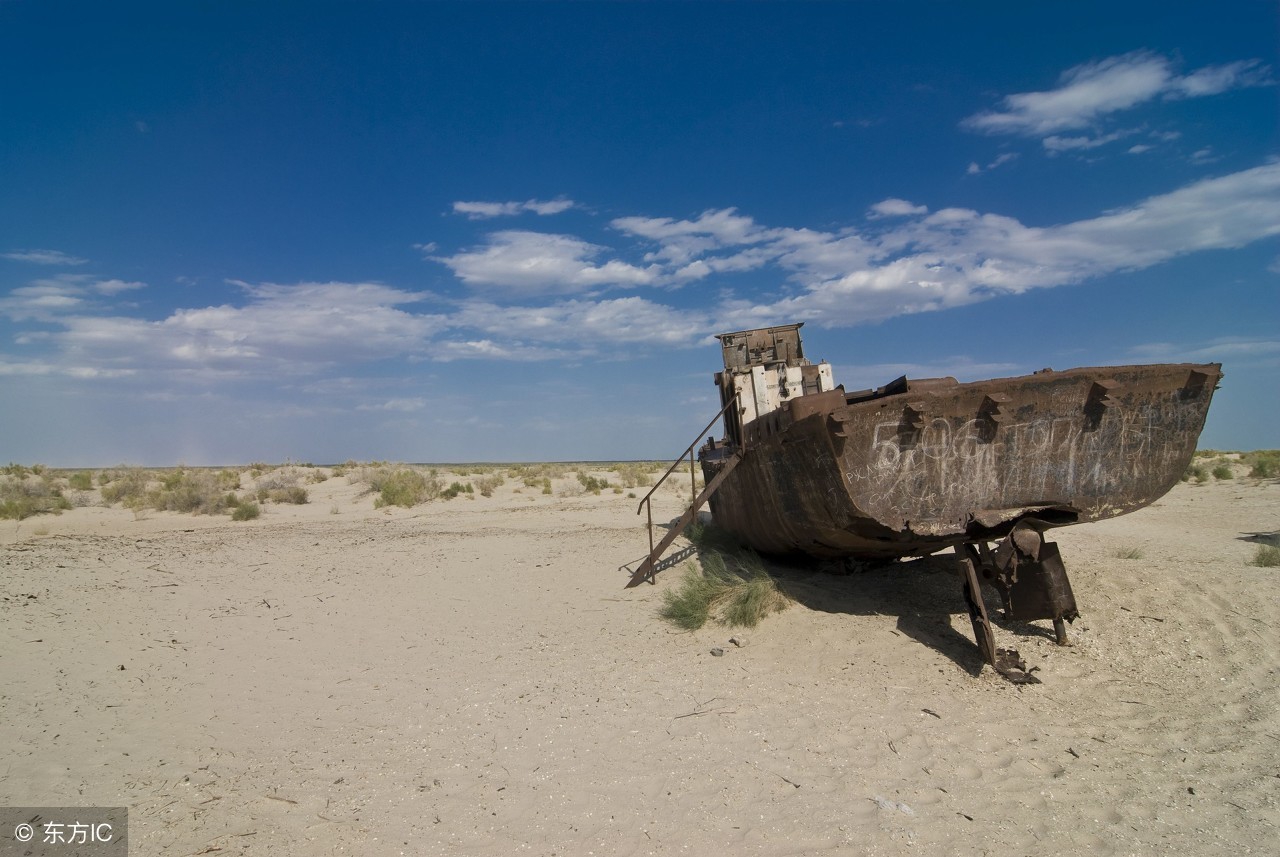
我来到曾经的码头,发现这里早已没有一滴水。干涸的海床一望无际,上面还搁浅着一排生锈的渔船。我顺着台阶,下到海床,走到渔船跟前。锈迹斑斑的船身上,依然能够分辨出当年的喷涂。船舱里,散落着酒瓶子和旧报纸,还有破碎的渔网。There was not a single drop of water at what was once the harbour. The dry lake bed stretched off endlessly, dotted with rusting fishing vessels. I followed steps down for a close look at one, the original paint was still discernible amongst the corrosion. Empty bottles of beer and old newspapers littered the cabin, alongside a torn fishing net.
海洋的痕迹已经荡然无存,渔船四周长出了一丛丛耐旱的荆棘。曾经,我的眼前遍布着渔船,如今大部分渔船都已被失业的渔民当作废铁变卖了。剩下的这十几条,成为沧海桑田的唯一证据。The boat was surrounded by thick drought-resistant brambles, but of the sea there was no sign. There used to be many more vessels stranded here, now sold off as scrap by out-of-work fishermen. Those remaining are the only evidence this was once a vast lake.
我摸了一下船身。在红色铁锈之下,那些钢铁的肌理似乎仍在喘息。置身于这样的场景里,我不能不感到哑口无言。从费尔干纳山谷到卡拉卡尔帕克共和国,我一路上看到了那么多的棉田。它们养育着这个国度,却也让生态环境不堪重负。由于咸海的荒漠化,棉花种植耗费的大量农药残留沉积在土壤表层,风干成为有毒盐尘,可以顺风吹遍整个乌兹别克斯坦、哈萨克斯坦,甚至远至格鲁吉亚和俄罗斯。I ran my hand over the boat’s hull. The texture of the steel could still be felt through the rust. The scene left me dumbfounded. The roads from the Fergana Valley to Karakalpakstan had been lined with cotton fields, fields which had nurtured the nation yet placed an unbearable burden on its environment. With the Aral Sea now a desert, the residues of the huge quantities of pesticides used on the cotton fields accumulate in the soil, which under a dry wind blows up as clouds of toxic dust that can be carried throughout Uzbekistan, Kazakhstan and even far off Georgia and Russia.

救赎 Rescue
早在苏联时代,政府就曾考虑从西伯利亚引水,救助咸海。但那是苏联时代的末期,庞大的帝国已经无力支撑如此宏大的工程。计划最终在1987年正式搁浅。The Soviet Union considered bringing water from Siberia in order to save the Aral Sea. But that was in the final years of the Soviet Union, when such grand plans were no longer affordable. The scheme was officially shelved in 1987.
1994年,咸海流域中的五个中亚共和国的领导人达成协议,每年动用1%的政府预算,治理咸海。但是,没有哪个国家愿意主动削减棉花产量,承受由此带来的阵痛。那意味着让本已脆弱的国民经济雪上加霜。治理实际上沦为空谈,不了了之。In 1994 the heads of five Central Asian nations agreed to spend 1% of their national budgets on saving the Aral Sea. But none were willing to further damage already vulnerable economies by cutting cotton production. And anyway, the rescue plan came to nought.
与此同时,咸海的面积仍在加速缩减。1987年,咸海已经断流为南北两部分。2003年,乌兹别克斯坦境内的南咸海,又断流为东西两部分。Meanwhile, the shrinking of the Aral Sea was accelerating. In 1987 it split into northern and southern sections. In 2003 that southern section again split into two parts, east and west.
我站在港口旁的展示牌前,看着咸海近百年的变化图,回想着我在地图上所看到的那片巨大的空白。周围荒无人烟,只有被遗弃的房子。很多人已经举家搬迁,只有很少一部分人还留在这里。An interpretation panel by the harbour showed how the Aral Sea had changed over the course of a century, and I recalled that huge blank space on the map. There was not a soul to be seen here, just abandoned homes. Most have already left, and very few remain.
离开 Leaving
我的司机告诉我,他原来就是穆伊纳克的渔民。十几年前,他咬牙变卖了渔船和家当,搬到努库斯,重新开始,后来才成为一名司机。他总结着自己的一生:他一辈子经历过两次巨变。第一次是苏联解体,那意味着国家和身份的转变;第二次则是咸海的消失,那意味着过去几代人的生活方式不得不就此终结。My driver told me he’d previously been a fisherman here in Muynak. Over a decade ago he had reluctantly sold off his fishing boat and possessions and started afresh in Nukus, where he became a driver. Over the course of his life, he said, he’d lived through two transformations: the break-up of the Soviet Union, which was a change of nation and identity; and the loss of the Aral Sea, an end to a way of life that had persisted for generations.
那天中午,他带我去当年的邻居家吃饭。戴着头巾的女主人端出饭菜,然后悄悄退出了房间。她的丈夫也离开了这里,在别的城市打工挣钱。At lunchtime we ate at the house of his former neighbour. Our host, a woman wearing a headscarf, backed silently out of the room after bringing our food. Her husband had already moved away, gone to work in another city.
午饭后,我们一起走到庭院。那是秋天最后的时光。一排排西伯利亚大雁,正在空中变幻着队列,准备飞往南方过冬。我们静静地看着大雁,想象着它们一路的飞行。然后,我们都不约而同地掏出手机,开始对着天空拍照。After lunch we moved to the courtyard to enjoy the best of the autumn light. Siberian geese flew in formation overhead, heading south for winter. We watched in silence, imagining their journey. Then, simultaneously, we pulled out our phones to take photographs of the sky.
因为,在这里,如此生机勃勃的场景并不多见。It was a rare thing, to see such life in this place.