小编说
在疫情抵达欧洲时,欧洲各国在群体免疫和严厉*锁封**两种选择上犹豫不决。有的实施了严厉的*锁封**措施,有的则选择了目标更为长远的“群体免疫”。这个计划英国试过,但英国在首相住进ICU后,态度就迅速产生了180度的转变。
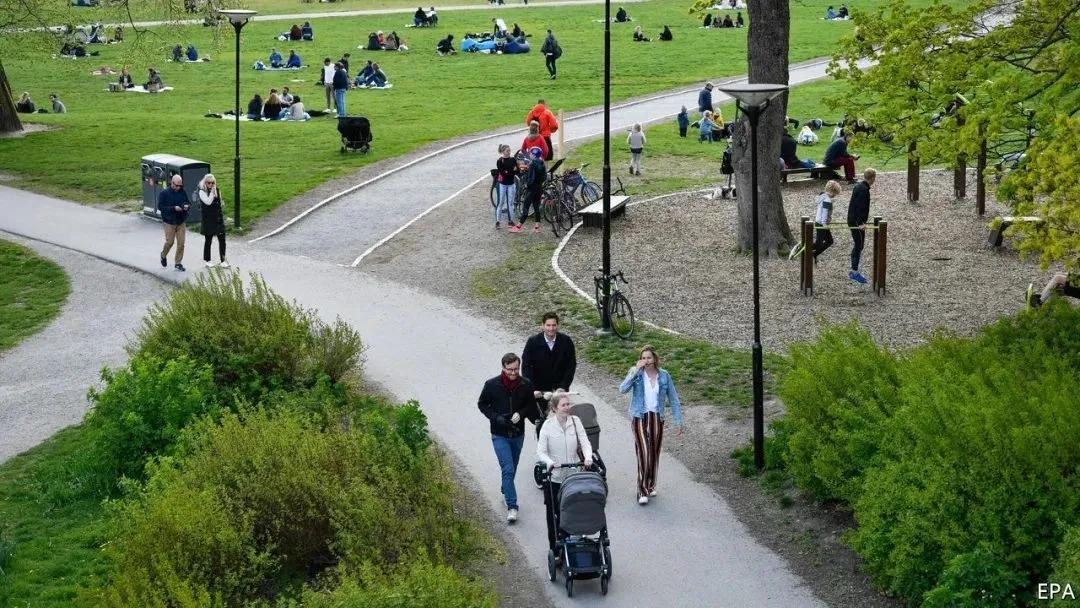
瑞典则没有随大流转而采取严厉的*锁封**措施,而是坚持将群体免疫贯彻到底。如今,瑞典每10万病例,就有33人死亡;而对比美国,美国也只是每10万病例,26.3人死亡。
然而死亡率如此之高,三分之二的瑞典人还是认为政府很好地处理了疫情。
(公众号:趣读经济学人)
双语阅读
1
As bleary-eyed Europeans squint in the sun, freshly released from coronavirus lockdowns, worries about a second wave of infections are on everybody’s mind. Life cannot return completely to normal until a vaccine is available. What sort of semi-normal life might work in the meantime is the big question. Sweden may hold the answer.
刚从新冠病毒*锁封**下解放出来的欧洲人,睡眼惺忪地在太阳底下眯着眼,对第二波疫情的担忧萦绕在每个人的心头。在疫苗研发出来之前,生活无法完全恢复正常。同时,什么样的半正常生活是正解呢?对于这个大问题,瑞典或许能给出答案。
bleary-eyed 睡眼惺忪的
squint 眯着眼
2
In March, when governments across Europe seemed to be competing to impose the toughest anti-viral measures—from closing borders to forbidding people fromventuring out even for a walk—Sweden resisted the temptation. It banned gatherings of more than 50 people. But nurseries and schools for children under 16 have remained open (with older students tele-learning from home). Bars, restaurants and gyms also stayed open, though with social-distancing rules. People were asked to work from home if they could. And the elderly, who are most at risk of dying if infected, were told to stay at home to protect themselves.
三月份,当欧洲各国政府似乎都在争相实施最严厉的抗疫措施时——从关闭边境,到禁止人们外出散步——瑞典并没有随波逐流。瑞典禁止50人以上的聚会,但16岁以下儿童的幼儿园和学校仍旧开放(16岁以上则在家上网课)。酒吧、餐馆和健身房仍旧开放,不过也有社交隔离规定。人们被要求尽可能地居家办公。一经感染最容易死亡的老年人则被告知要呆在家里保护好自己。
venturing out 冒险出门;探险
3
Sweden chose this path because it looked at the longer term, says Johan Giesecke, an epidemiologist advising the authorities. Full lockdowns are stop-gap measures, he says, and European governments rushed to put them in place without plans for what would replace them.Swedes have been sensible. Use of public transport has fallen significantly. A third of people say they avoid going to their workplace (by working from home, for example)—up from 10% in mid-March. Daily restaurant turnover fell by 70% in the month through April 22nd. Elisabeth Peters, who is 67 and lives on one of the islands off the west coast of Sweden, believes there has been a “huge change” in people’s behaviour, aligned with official advice. Some people are not seeing their grandchildren at all now, she says. When her children and grandchildren visit everyone stays outside all day and keeps at a distance from her and her husband.
为当局提供咨询的流行病学家约翰·吉塞克(Johan Giesecke)表示,瑞典之所以选择这条道路,是因为瑞典看得更长远。他说,全面的*锁封**措施只是缓兵之计,欧洲各国政府匆忙将其付诸实施,却没有制定出替代计划。瑞典人则是明智的。公共交通使用量大幅下降。三分之一的瑞典人表示,他们会避免前往工作场所(例如,通过在家工作),这一比例高于3月中旬的10%。截至4月22日,餐厅日营业额下跌了70%。67岁的伊丽莎白·彼得斯(Elisabeth Peters)住在瑞典西海岸外的一个小岛上。她认为,人们的行为已经发生了“巨大的变化”,这与官方的建议相符。她说,有些人现在根本见不到他们的孙辈。当她的孩子和孙子孙女来访时,每个人一整天都呆在外面,与她和她的丈夫保持距离。
stop-gap 权宜之计
aligned with 与..一致
4
On first glance, Sweden seems to have paid a heavy price for choosing less stringentmeasures to keep people apart. By May 13th it had recorded 33 covid-19 deaths per 100,000 people, a rate more than three times that of Denmark and seven times higher than in Finland, which had shut schools and restaurants in March. Even so, Sweden’s mortality rate has been much lower than that in Britain, France and Spain. Swedes largely approve of their country’s approach, with two-thirds saying in polls that the government is handling the epidemic well.
乍一看,瑞典似乎为选择不那么严格的隔离措施而付出了沉重的代价。截至5月13日,每10万人中就有33人死于新冠肺炎,这一数字是丹麦的3倍多,是芬兰的7倍多。芬兰在3月份关闭了学校和餐馆。即便如此,瑞典的死亡率也远低于英国、法国和西班牙。瑞典人基本上认同本国的做法,在民调中有三分之二的人表示,政府很好地处理了疫情。
stringent 严厉的
5
Time will tell whether Sweden chose a better strategy than other countries, says Jussi Sane of the Finnish Institute for Health and Welfare, because the costs of lockdowns—in terms not only of economic damage but also harm to people’s mental health—are yet to be tallied. European countries will see more covid-19 deaths when people start moving about, because the share of those infected so far (and thus presumably immune, at least for some time) is still in the single digits. Mr Giesecke reckons that Stockholm will reach “herd immunity”, the 40-60% rate of infection needed to halt the spread of the coronavirus, by June. He thinks that when European countries count deaths a year from now their figures will be similar, regardless of the measures taken and the numbers now. The economic damage in Sweden, however, may be smaller.
时间会证明瑞典是否比其他国家选择了一个更好的策略,芬兰健康福利研究所的茱希·珊(Jussi Sane)说,因为*锁封**的代价——不仅是经济损失,还有对人们精神健康的伤害——还有待统计。当隔离令解除,人们重新上街走动时,欧洲各国还会看到新冠肺炎死亡数的上升,因为到目前为止,受感染者的比例(因此可能免疫,至少在一段时间内)仍处于个位数。吉塞克估计斯德哥尔摩将在6月达到“群体免疫”,即阻止冠状病毒传播所需的40%-60%的感染率。他认为,不管采取了什么样的措施和现在的数字是怎么样的,当欧洲国家从现在开始计算一年后的死亡人数时,瑞典和他们的死亡人数将是相近的。然而,瑞典的经济损失可能会小一些。
tally 计算