Rijnvliet 可食用社区 是一片新的住宅区,为荷兰乌特勒支的Leidsche Rijn扩展区提供了约1100套新房子。这片区域由三方分别负责城市规划、景观设计以及“食物森林”管理,与当地居民合力共建,形成一片既可以栽种结果、又有多元活动潜力的可持续森林。在高度城市化的住区,Rijnvliet 可食用社区(Edible Neighborhood)像一片挂满硕果的绿洲,为人们提供惊叹的城市园林体验。

“食物森林”有着户外教室、天棚走道和指示穿过该地区的古罗马道路的石带 © Felixx
Rijnvliet Edible Neighborhood (REN) is a new residential community near Utrecht – the fastest growing city in the Netherlands. It is part of the Leidsche Rijn expansion project, designed to deliver 1000 new dwellings and demonstrate Utrecht’s ‘Healthy Urban Living’ strategy created to provide more and better green public spaces to facilitate climate adaptation, increase social equity and inclusivity.
Rijnvliet可食用社区是位于荷兰发展最快的城市乌特勒支附近的一个新住宅社区。它是Leidsche Rijn扩建项目的一部分,计划提供1000个新住宅,并展示乌特勒支的 " 健康城市生活 "战略,该战略旨在提供更多更好的绿色公共空间以促进气候适应、提高社会公平和包容性。

蓝绿结构和公共空间布局平面图 © Felixx
The entire district is embedded within a productive landscape, integrating three values: food production, usage and nature. Therefore the principles to create a ‘food forest’ are merged with the functionalities required for the surrounding residential areas.
整个区域被嵌入到一个生产性景观中,它整合了三种价值: 食品生产、日常使用和亲近自然 。因此,创建 "食物森林 "的导则与周围住宅区所需的功能完美契合。
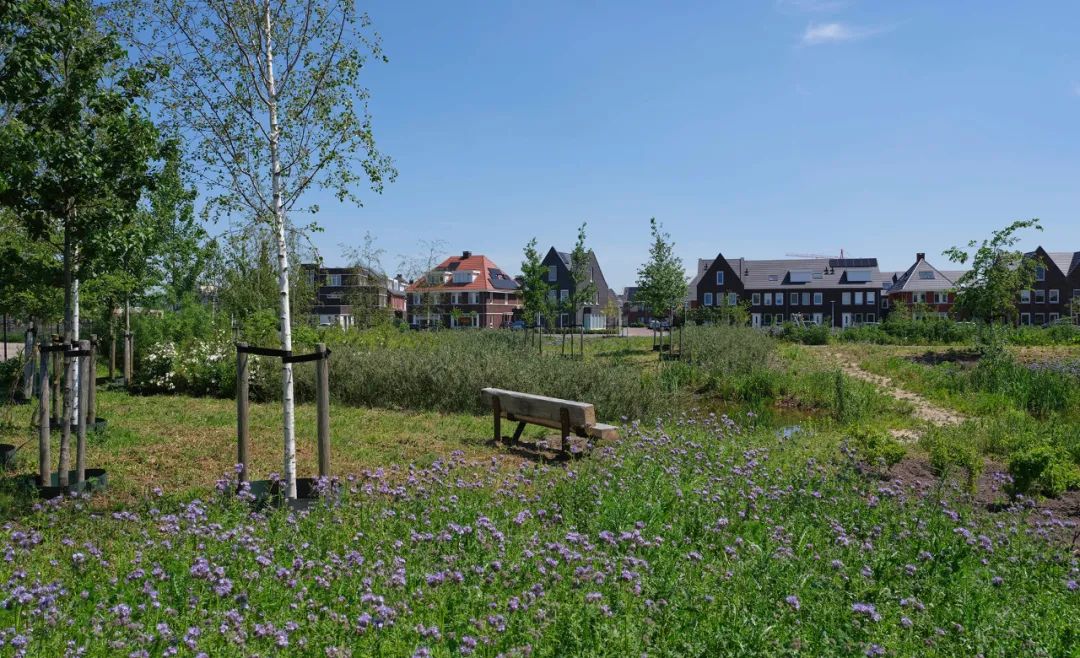
“食物森林”里的家具、草地、幼树、草地和花毯 © Jeroen Musch
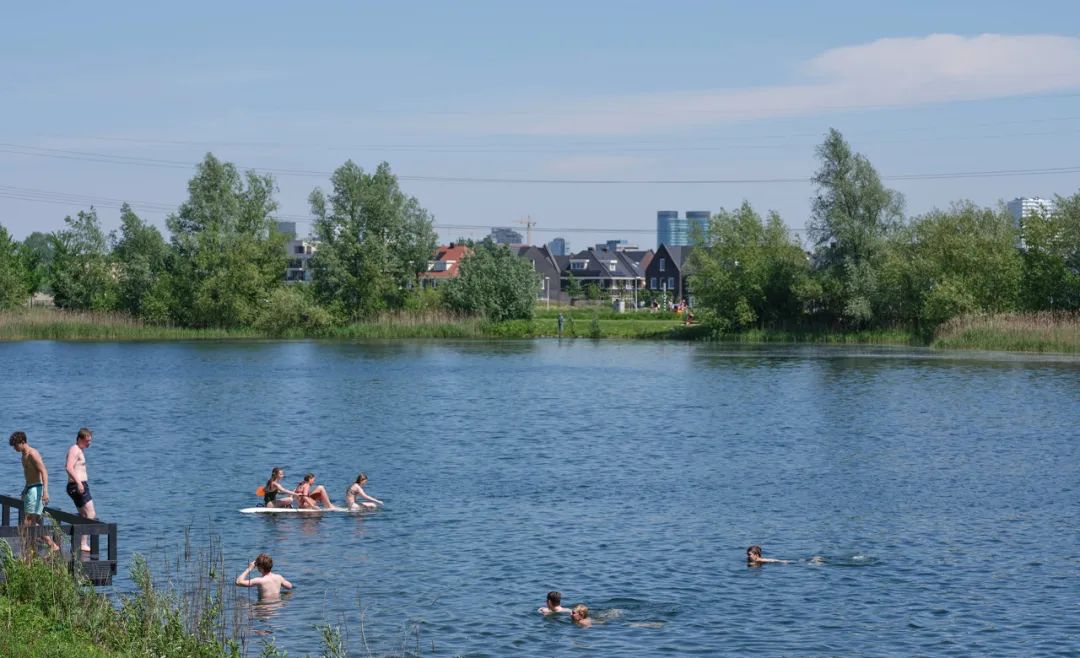
从“食物森林”边界眺望社区 © Jeroen Musch
“食物森林” FOOD FOREST
The realms are built up with multiple layers of plants, together forming an integrated ecosystem. The different vegetation types and species attract insects and organisms that enforce each other.
“食物森林”由精细规划的 多个植物层 创造,形成了一个综合的生态系统。不同的植被类型吸引着昆虫和其他生物,它们互相制约,繁荣共生。
1 The canopy, consisting of original and planted large trees.
2 Low trees, consisting of smaller trees or half-standards.
3 Shrub layer of fruit and berry bushes.
4 Herb layer of multiannual vegetables and herbs.
5 Soil covers, a layer of plants that spread horizontally.
6 Underground layer of plants that produce roots or tubers.
7 Climbers, a vertical layer of climbing plants.
组成“食物森林”的 七个植物层 :
1 树冠,由原始生长和人工种植的大树组成。
2 低矮的树木,由较小的树木或半标准的树木组成。
3 灌木层,由水果和浆果灌木组成。
4 草本层,由多年生蔬菜和草本植物组成。
5 土壤覆盖层,地被植物层。
6 地下层,产生根系或块茎的植物层。
7 攀援植物,攀援植物层。
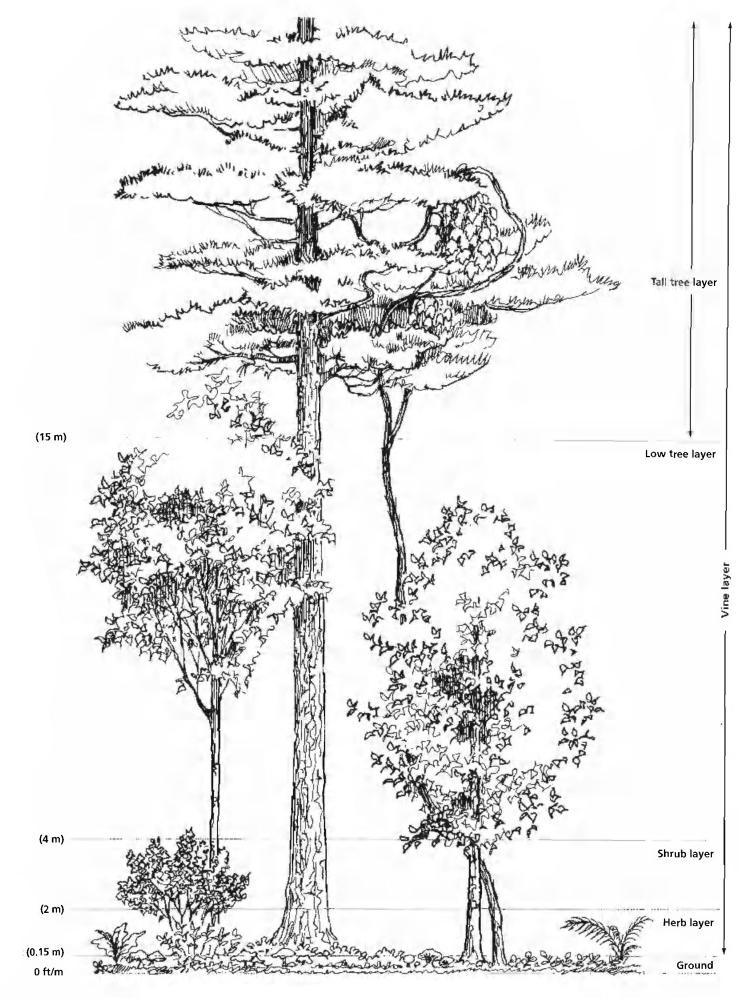
“食物森林”的七个植物层 © Felixx
The central part of Rijnvliet combines all these layers. For the public space in adjoining areas aspects such as safety & maintenance limit the full application of all layers. Instead, the public space design focused on a set of layers for each part, creating four distinct areas. The (edible) Fruit-, Leaf-, Nut- and Flower- neighborhood.
Rijnvliet的中心部分结合了所有这些层次。对于毗邻地区的公共空间来说,安全和维护等方面限制了一些植物层的应用。由此,公共空间的设计集中于创造独特的植物层组合,营建四个不同的区域: (可食用)果实区、赏叶区、坚果区和花卉区 。
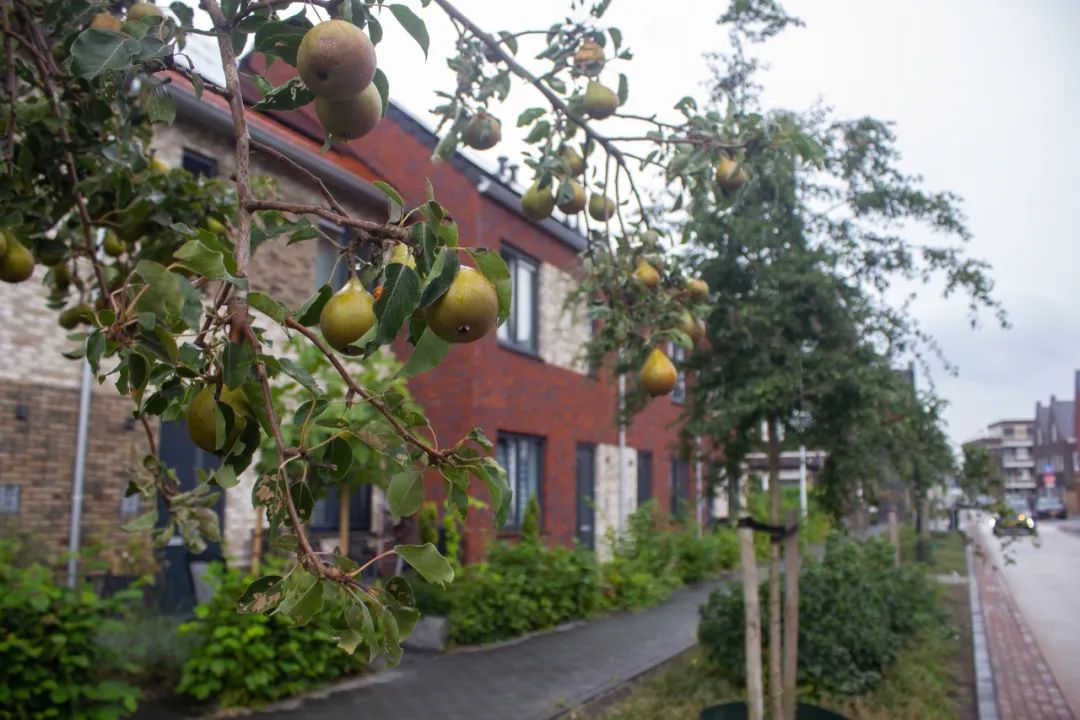
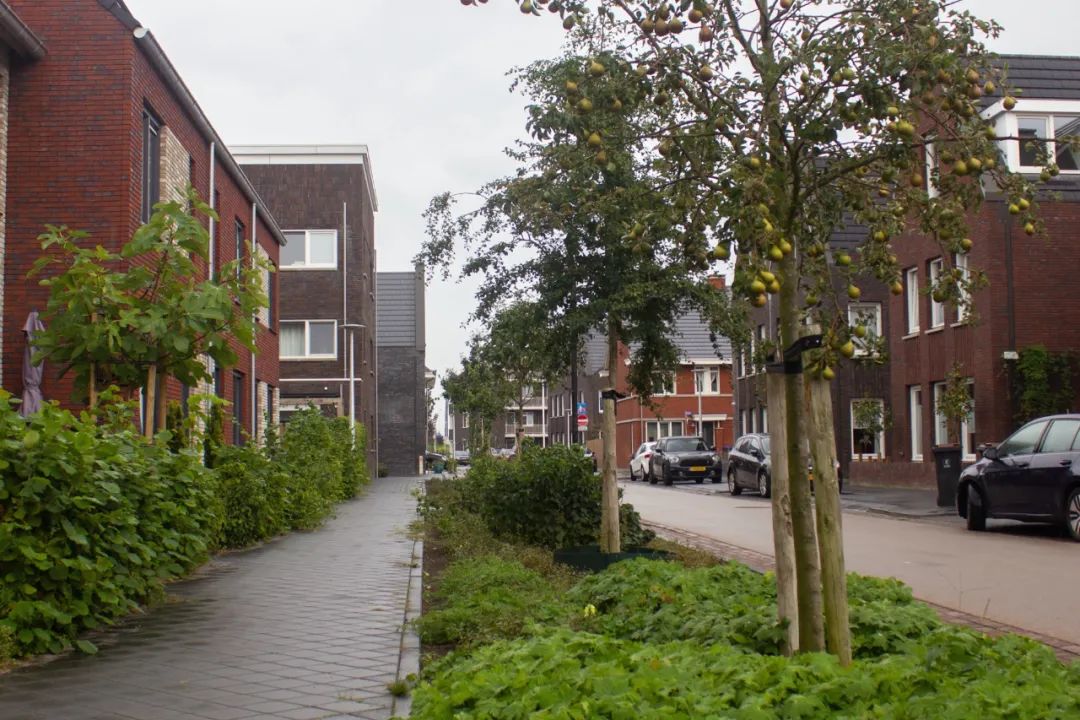
部分城市街道隶属于硕果累累的“果实区” © Felixx
社区参与 PARTICIPATION
The idea for this unique food forest originated from residents – organized in the ‘Green Lungs of Rijnvliet’ foundation – together with ‘Metaal Kathedraal’, a special ecological and cultural incubator in a former church building, right at the edge of the development area. They asked Xavier San Giorgi of Æ Food Forestry Development, to assist in the development. Their ‘grassroots’ proposal was embraced by the municipality and – complemented by the knowledge and experience of public space design of the landscape architects at Felixx – taken through the design phases.
居民在这个项目中有着举足轻重的作用。“食物森林”的想法即源于居民,在 "Rijnvliet绿肺基金会 "中组织起来,与 "Metaal Kathedraal "联合共建,在开发区的边缘,一个特别的生态文化孵化器在一个前教堂建筑中诞生了。他们请Æ Food Forestry Development协助开发,居民们的 "草根 "建议得到了市政府的充分支持,又获得了Felixx景观设计师在公共空间设计方面的鼎力相助,最后的设计得以顺利落地。
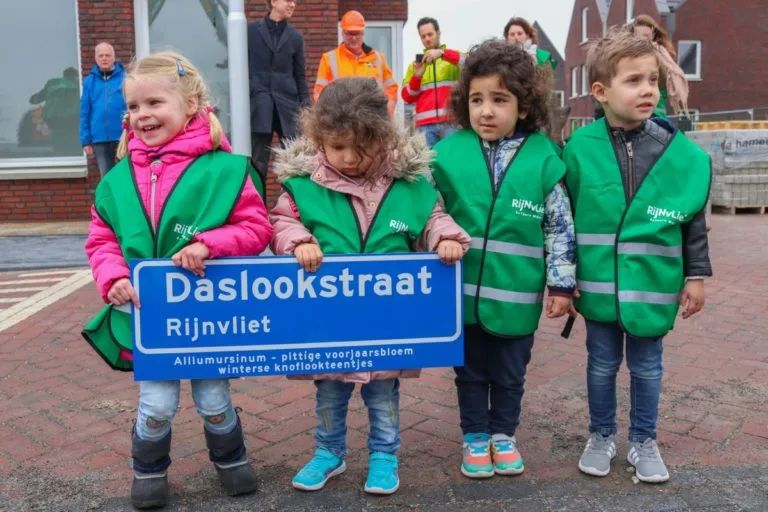
© VanWijkNieuwegein
2019年3月,与学校一起进行的植树活动。Rijnvliet的所有街道都以生长在其中的一种植物命名,并附有解释植物用途的教育性副标题。
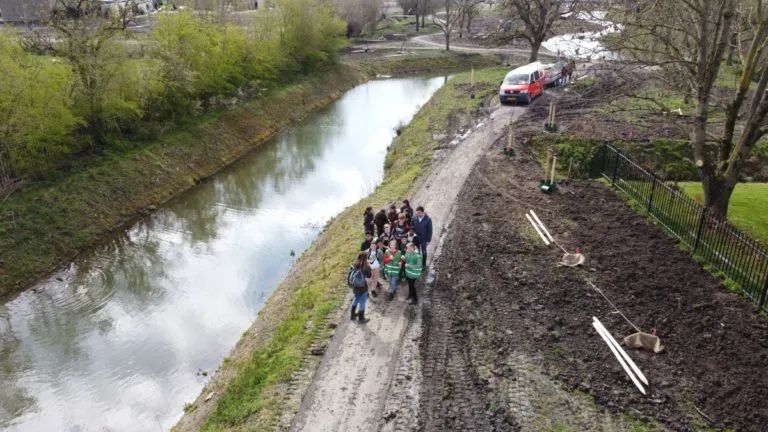
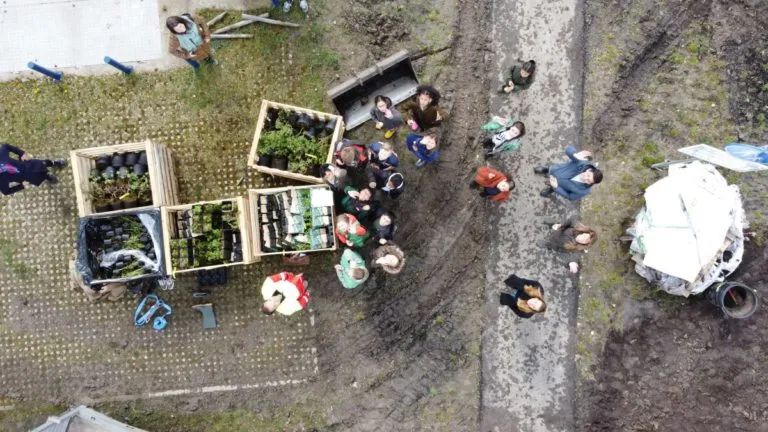
当地学校的年轻人在林务员的监督下种植食物林 © VanWijkNieuwegein
创新性 INNOVATION
Rijnvliet, Edible Neighborhood breaks new ground in urban planning by using participatory design to co-create a residential neighborhood around accessible urban agriculture. Using ideas submitted by residents, Rijnvliet is implementing an ecologically resilient 150,000m² urban food forest with over 200 species of (edible) flora, that doubles up as green infrastructure offering recreational benefits and ecosystem services including water management, reduction of heat, and cleaning the air. The abundant green and blue spaces are harmoniously merged together with the built environment enhancing the quality of live for inhabitants and the rich biodiversity for all living things, giving Rijnvliet a very powerful identity.
Rijnvliet可食用社区采用 参与式设计 ,围绕可利用的城市农业共同创造了一个住宅区,在城市规划方面实现了新的突破。利用居民提出的好点子,Rijnvliet正在实施一个具有生态弹性的150,000平方米的城市食物森林,其中有超过200种(可食用)植物作为绿色基础设施,提供娱乐和生态系统服务,包括 水管理、减少热量和提供清洁空气 。丰富的蓝绿空间与建筑环境和谐地融合在一起,极大提升了居民的生活质量和生物多样性,赋予了Rijnvliet一个非常强大的身份。
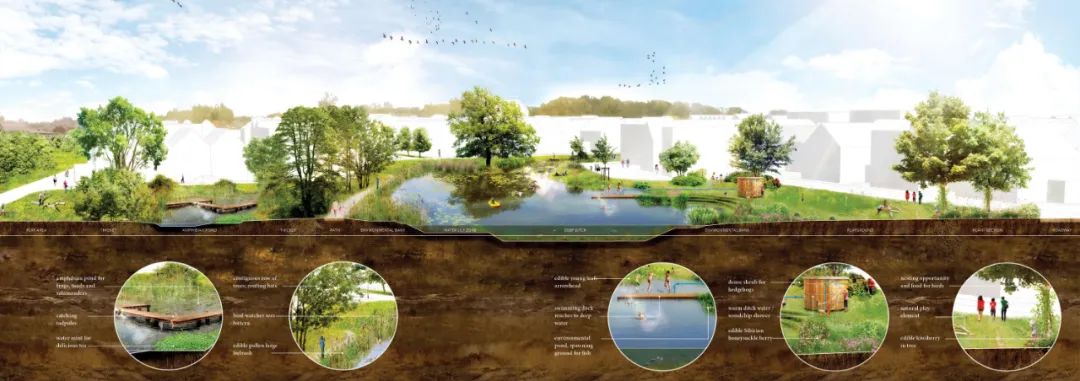
极富韧性的“食物森林”包含多种自然景观类型©Felixx+DeZwarteHond+ÆFoodForestry
可持续的未来 SUSTAINABLE FUTURE
The productive landscape of Rijnvlietserves as a backbone and creates social cohesion within a community byrequiring a coordinated effort for its care and maintenance. The residentengagement already contributed in educational, recreational, and naturalqualities for Rijnvliet and added new concepts and ideas to its design, such asbeehives on a ‘bee island’, isolated nesting island for birds and ‘food-forestrange and garden’ maintenance programs. The active participation in theimplementation of the food forest principles of the public space givesresidents a strong stake in the future of the area and is the best assurancefor long-term commitment to the stewardship of their Edible Neighborhood,Rijnvliet.
通过对后期景观的维护和管理提出要求,Rijnvliet成为了当地社区的主心骨,提供了强有力的社群凝聚力。 居民积极参与到Rijnvliet的教育、娱乐和自然品质营建上 ,并为其设计增加新的概念和想法,如"蜜蜂岛 "上的蜂箱、隔离的鸟类筑巢岛和"食物森林范围和花园 "维护计划。积极参与“食物森林”共建使居民自发地对该地区的未来产生强烈的兴趣,也是对 居民长期自治 Rijnvliet的最好保证。

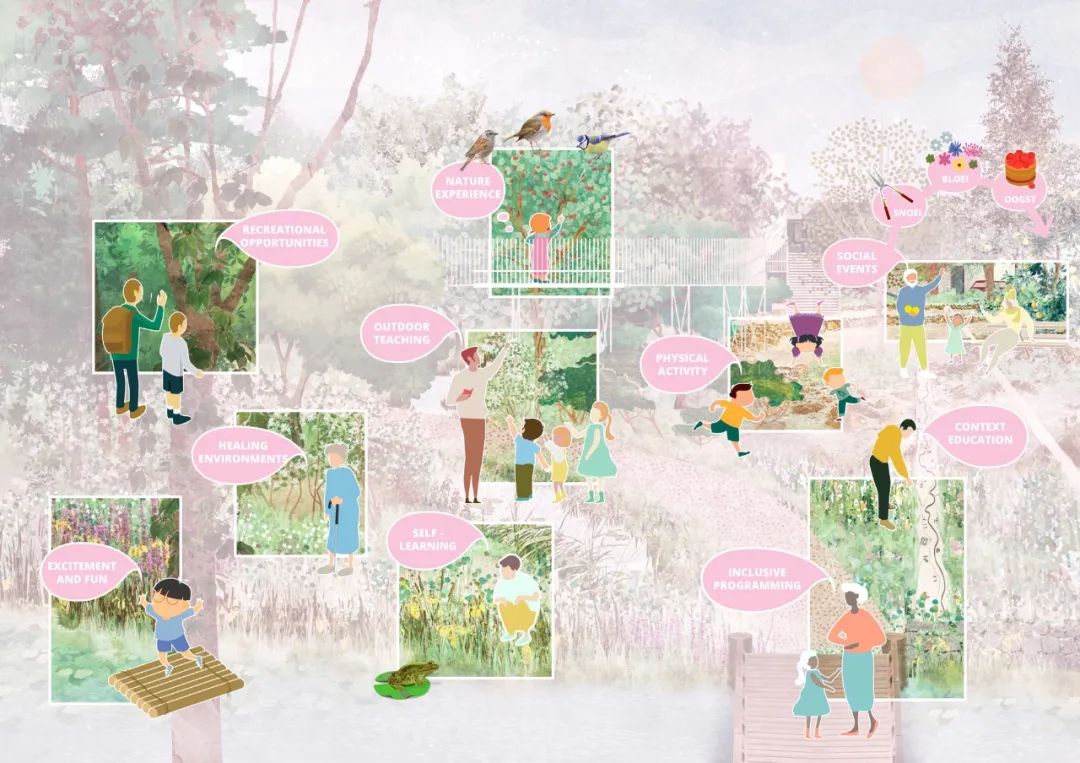
温暖的生态建设手册 © Felixx
‘This way you can make neighborhoods special and recognizable and tell stories on multiple levels that people learn something about in a fun way. It can strengthen the social cohesion of the neighborhood and bring people, animals and nature closer together. This can set in motion a cultural shift when people no longer just get their food from the fridge but can pick kiwi berries, apples, water mint, wild garlic, figs or almonds within easy reach.’
这种方式可以使街区变得更加特别和具有辨识度,并在多个层面上讲述故事使人们以一种有趣的方式学习一些知识。同时,它还可以加强街区的凝聚力,使人们、动物和自然更紧密地联系在一起。当人们不再只是从冰箱里获取食物,而是可以 在触手可及的地方亲手采摘 奇异果、苹果、水薄荷、野生大蒜、无花果或杏仁,令人震惊的文化转变就开始了。
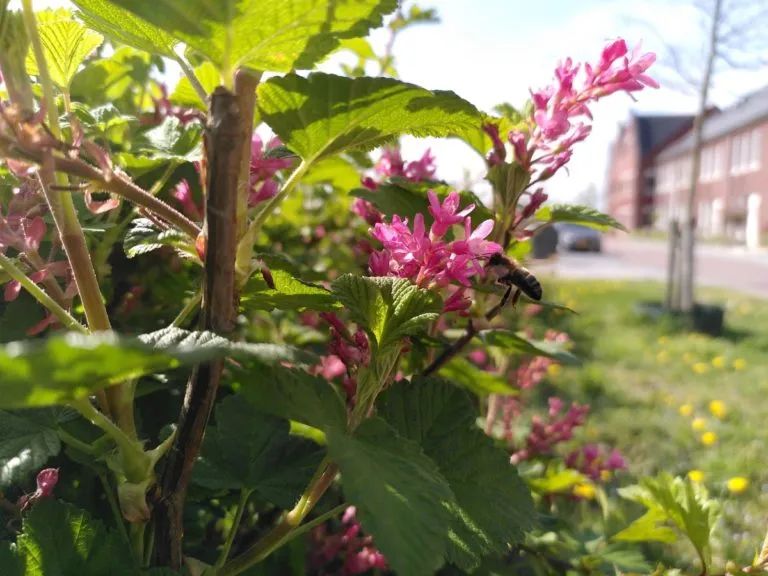
一只授粉蜜蜂围绕花篱翩翩起舞 © Felixx 一只授粉蜜蜂围绕花篱翩翩起舞 © Felixx
Rijnvliet, Edible Neighborhood in Utrecht has won a special international prize; the Innovation in Politics Award 2021. "This is a wonderful boost for the residents of Rijnvliet and actually for all of Utrecht! What makes this project so special is that the plan for the edible residential area was really put forward by residents themselves. The fact that other European citizens appreciate our project so much is really the icing on the cake!" - Klaas Verschuure (alderman Leidsche Rijn)
该项目赢得了一项特殊的国际奖项:2021年政治创新奖。"这对Rijnvliet的居民乃至整个乌特勒支来说都是一个很好的激励。它的特殊之处在于,可食用住宅区计划真正由居民自己提出、自己建造、自己维护的。其他欧洲人们如此欣赏我们的项目,真的是锦上添花!" - Klaas Verschuure(Leidsche Rijn市议员)
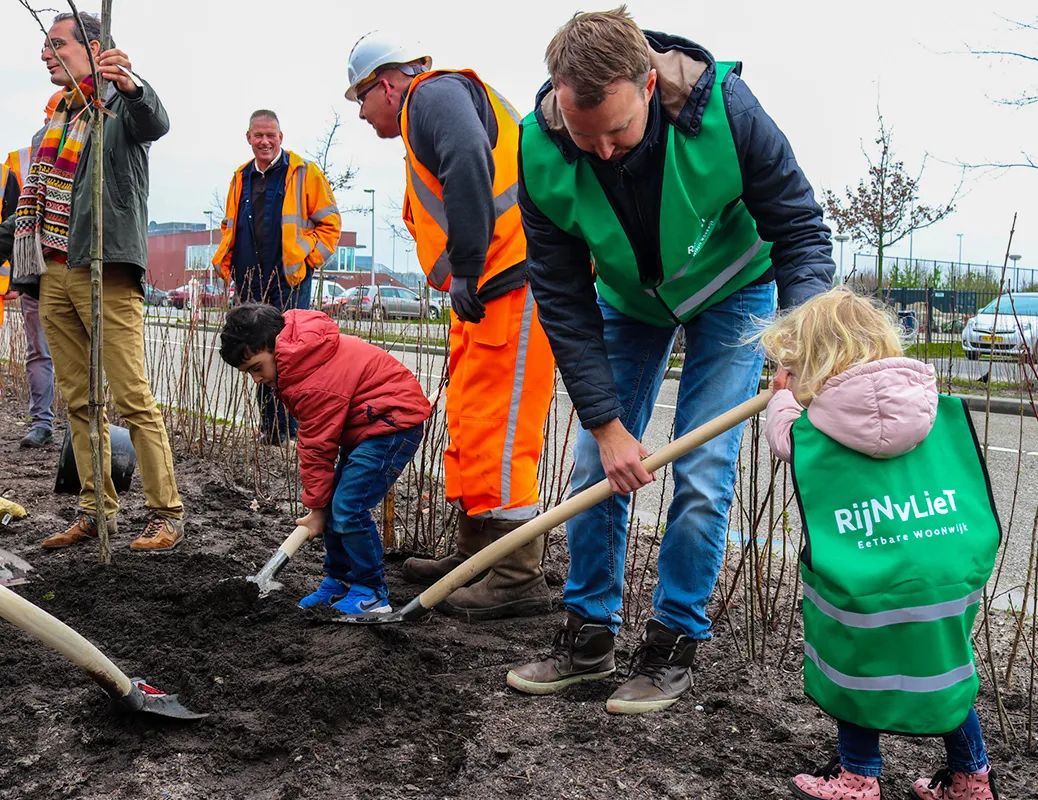

2019.1,第一批树木(Prunus serr.)被送到了“食物森林”© Felixx
设计时间: 2017
项目位置: 荷兰乌得勒支Rijnvliet
设计师: Felixx,DeZwarte Hond, Xavier San Giorgi – AE Food Forestry Development
参考资料:https://landezine.com/rijnvliet-edible-neighborhood-by-felixx/
本文由可持续景观研究院翻译编排
转载或任何形式的引用请联系 可持续景观研究院
· END ·