斗彩又称逗彩,创烧于明成化时期,是釉下彩(青花)与釉上彩相结合的一种装饰品种。斗彩瓷器出现在明代成化年间,相传与成化皇帝的宠妃万贵妃有关。万贵妃,本名万贞儿,原为慈寿皇太后身边的侍女,后来得到成化皇帝的宠幸。万贵妃喜爱奇珍异宝,所以景德镇官窑专门为万贵妃创烧出斗彩瓷器。
成化斗彩以其鲜嫩而淡雅的风格,旷绝古今,而彩色中的“姹紫”一品更是独具特色,可谓成化一代的标志。明人程哲在《蓉槎蠡说》一书中品评明代瓷器时推成窑瓷器为明代之冠,主要是指成化斗彩而言。成化斗彩之所以名贵,贵在技艺上的创新。它的胎、型、釉、彩有如下特点:胎质细腻,薄轻透体,小杯胎体之薄几如蝉翼,可以照见手指。造型匀称,色彩艳丽。纹饰绘画上,成化斗彩一般在花朵和人物衣服上以平涂法绘画施彩。树叶只有阳面,无阴阳向背之分;花朵只画正面,亦无反侧之别,绘人物衣服,只绘单色外衣,无内衣衬托,故有“成窑一件衣”之说,山石也无凹凸之感,这些特点构成成化斗彩鲜明的时代风格。
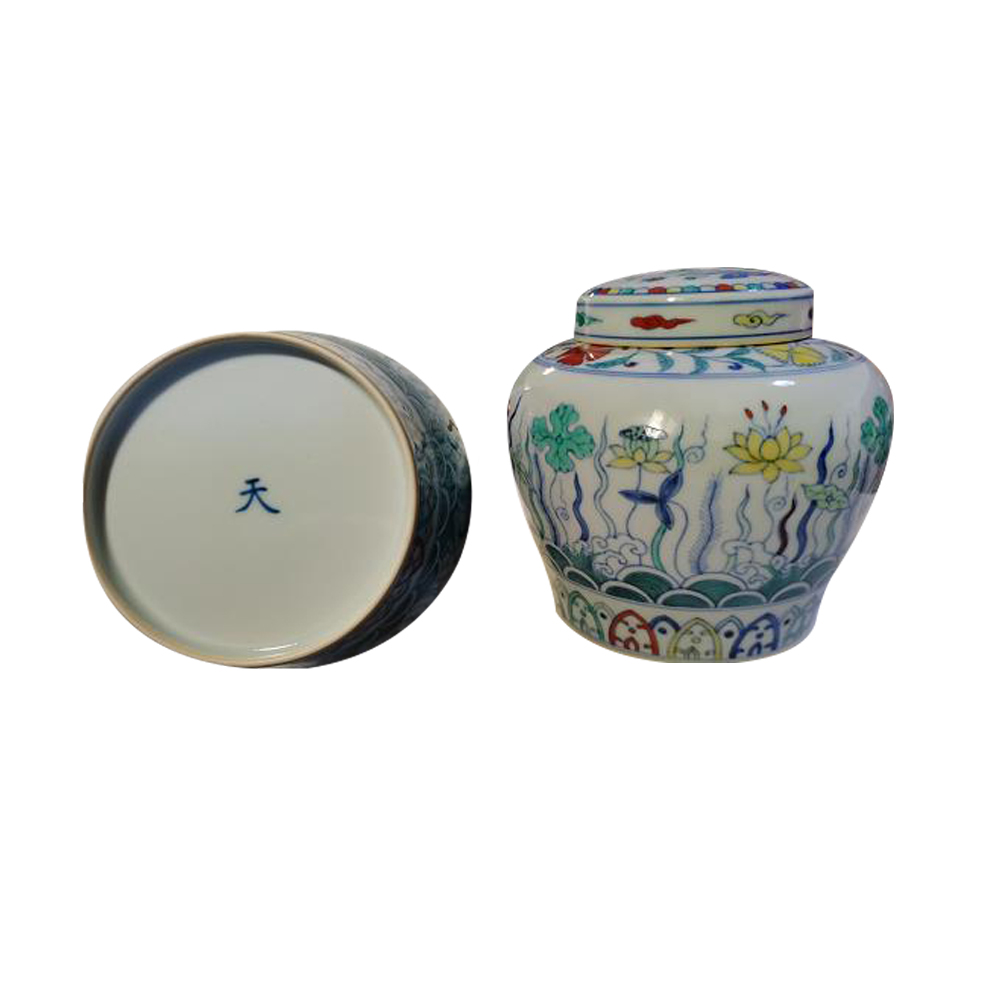
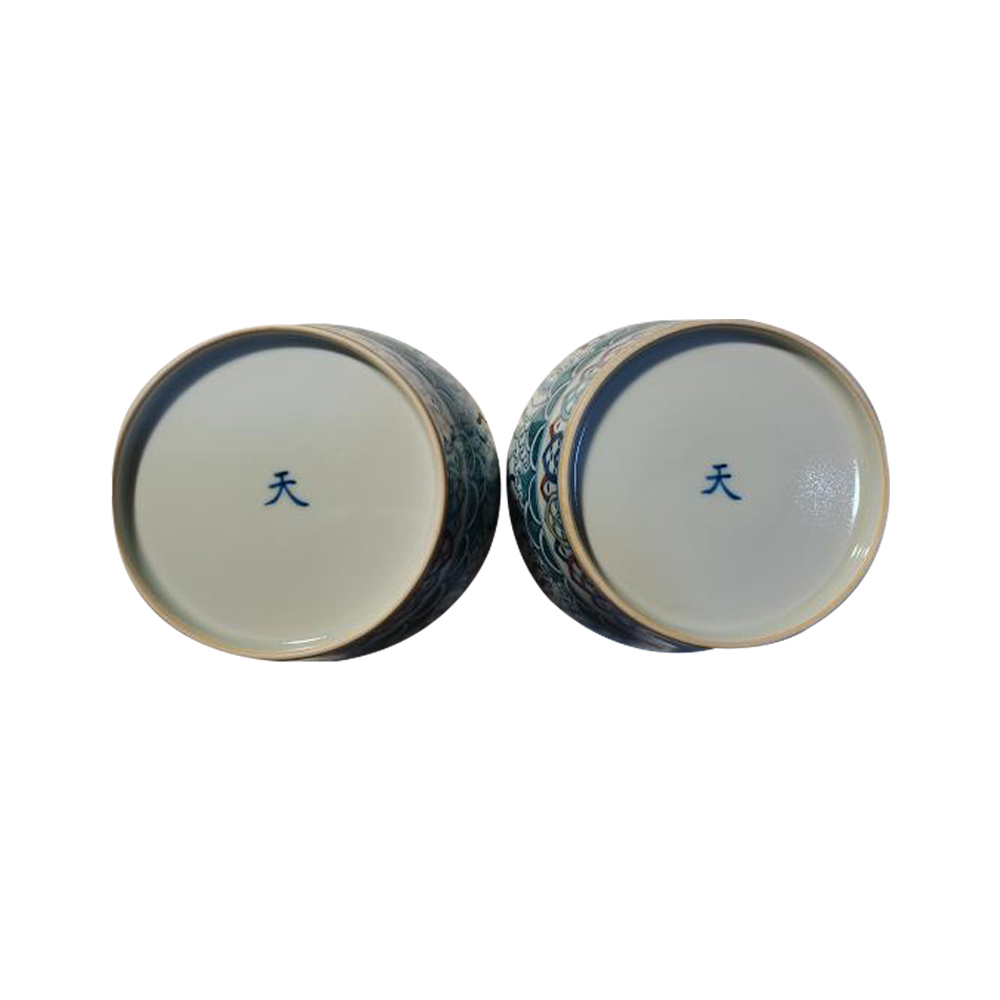
天字罐是成化斗彩中最著名的品种,因外底书“天”字,俗称“天字罐”。这种成化斗彩天字罐是*用御**的瓷器,一直珍藏于宫中,清雍正、乾隆时宫廷档案中称之为“成窑五彩罐”或“成窑天字罐”。天字罐的底款为什么写“天”字呢?有很多种推测。一般来说,是按照《千字文》排列。《千字文》开篇就是“天地玄黄,宇宙洪荒,日月盈昃,辰宿列张”。所以我们常说“天字第一号”,就是这么来的。此件藏品高14cm内口7.5cm腹部直径15cm是一件难得真品极具收藏价值。
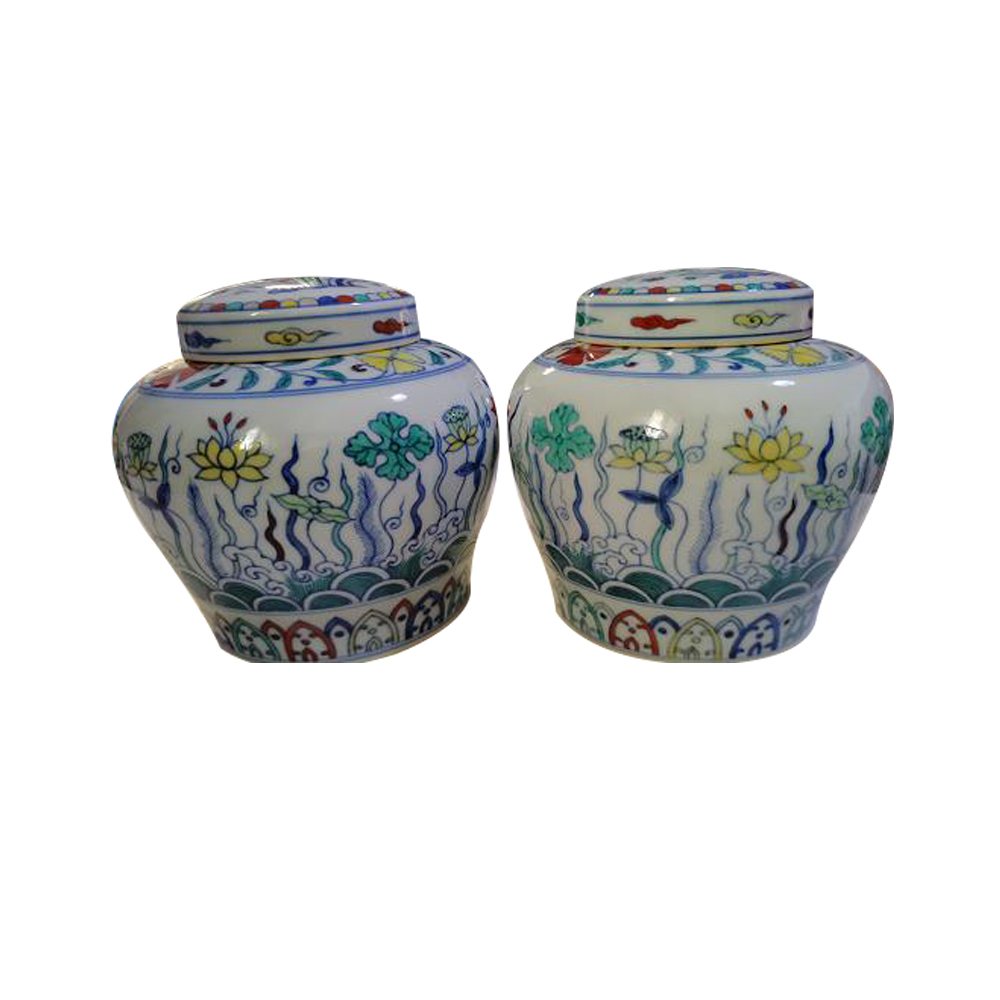
罐短直颈,丰肩,肩以下渐收敛,圈足,盖平顶微凸,无纽。罐底以青花书写“天”字,故又称之为“天字罐”。胎质轻薄坚细,釉面肥润光洁。器身以斗彩工艺饰以云鹤图,纹饰线条柔和圆润,彩料纯正,青花淡雅,谐调亮丽,给人一种高雅的美感。此罐造型精致新颖,构图别具匠心,画意惟妙惟肖,寓意祥瑞太平,为典型*用御**精品。是不可多得的斗彩鉴赏佳器,具有非常高的投资收藏价值。
Doucai, also known as Doucai, was created and burned in the Chenghua period of Ming Dynasty. It is a decorative variety that combines underglaze color (blue and white) with overglaze color. Doucai porcelain appeared in Chenghua period of Ming Dynasty, and it is said to be related to Wan Guifei, the favorite concubine of Chenghua Emperor. Wan Guifei, whose real name is Wan Zhener, was originally a maid beside Empress Cishou, and was later favored by Emperor Chenghua. Wan Guifei loves rare and precious things, so Jingdezhen Official Kiln specially produces Doucai porcelain for Wan Guifei.
With its fresh and elegant style, Chengdou color is unique from ancient times to modern times, and the "purple color" in color is unique, which can be described as the symbol of Chenghua generation. Cheng Zhe, a man of the Ming Dynasty, appraised the porcelain of the Ming Dynasty in the book Rong Cha Li Shuo, and pushed the porcelain of Chengyao to be the highest in the Ming Dynasty, mainly referring to Chenghua Doucai. The reason why Chengdoucai is valuable lies in the innovation of skills. Its tire, shape, glaze and color have the following characteristics: the tire quality is delicate, thin and transparent, and the carcass of a small cup is as thin as a cicada's wing, so you can see your fingers. Well-proportioned and colorful. In painting decoration, Chenghua Doucai is usually painted on flowers and characters' clothes by flat painting. Only the leaves are sunny, but there is no difference between yin and yang. Only flowers are painted on the front side, and there is no difference on the opposite side. People's clothes are painted, and only monochrome coats are painted without underwear. Therefore, there is a saying that "a garment is made into a kiln", and there is no concave and convex feeling in the rocks. These characteristics constitute the distinctive style of Chenghua.
Tianzi jar is the most famous variety in Chenghua Doucai, commonly known as "Tianzi jar" because of the word "Tian" in the outer book. This kind of Chenghua Dou Cai Tian Zi jar is imperial porcelain, which has always been treasured in the palace. It was called "Chengyao Multicolored Jar" or "Chengyao Tian Zi Jar" in the court archives during Yongzheng and Qianlong periods of Qing Dynasty. Why is the word "Tian" written in the bottom payment of Tiancan? There are many speculations. Generally speaking, it is arranged according to Thousand Characters. The "Thousand Characters" begins with "the heavens and the earth are yellow, the universe is wild, the sun and the moon are full, and the mornings and nights are listed". Therefore, we often say "Tianzi No.1", which is how it comes from. This collection is 14cm high, 7.5cm inside, and 15cm in abdomen diameter. It is a rare genuine product with great collection value.
The jar has a short straight neck, abundant shoulders, gradually converging below the shoulders, full circle, slightly convex flat top, and no buttons. The bottom of the jar is written with the word "Tian" in blue and white, so it is also called "Tian Zi jar". The fetus is thin and firm, and the glaze is fat and smooth. The body is decorated with a picture of a cloud crane by the color fighting technique, with soft and round decorative lines, pure color materials, elegant blue and white, harmonious and bright, giving people an elegant aesthetic feeling. This jar is exquisite and novel in shape, unique in composition, vivid in painting meaning, auspicious and peaceful, and is a typical royal boutique. It's a rare appreciation tool for fighting colors, and has very high investment and collection value.