金,作为中国的贵重金属,充当货币的职能由来已久。中国最早的金币,要推战国时期楚国的印子金,即是有铭文的扁平金版,印有数个至数十个方形阴文“郢爰”印记,含金在90%以上,甚至达99%;另外的“郢爰”效仿前者,只不过铸于陈地,也是楚国金币。除版状金币外,历代还有各式各样的金锭、金铤等金货币。由于金的物理属性及社会价值衡定性,金成为货币的理想承担者。
大清金币由于背面图案为一蟠龙,故俗称“龙洋”。因铸行量较小,又属贵金属币,愈显珍罕,市场价格居高不下,并仍具升值潜力,是收藏者难觅佳品。
藏品介绍
中文名称:大清金币样币
英文名称:Sample qing gold COINS
类别:杂项
规格:一枚
品相:美品
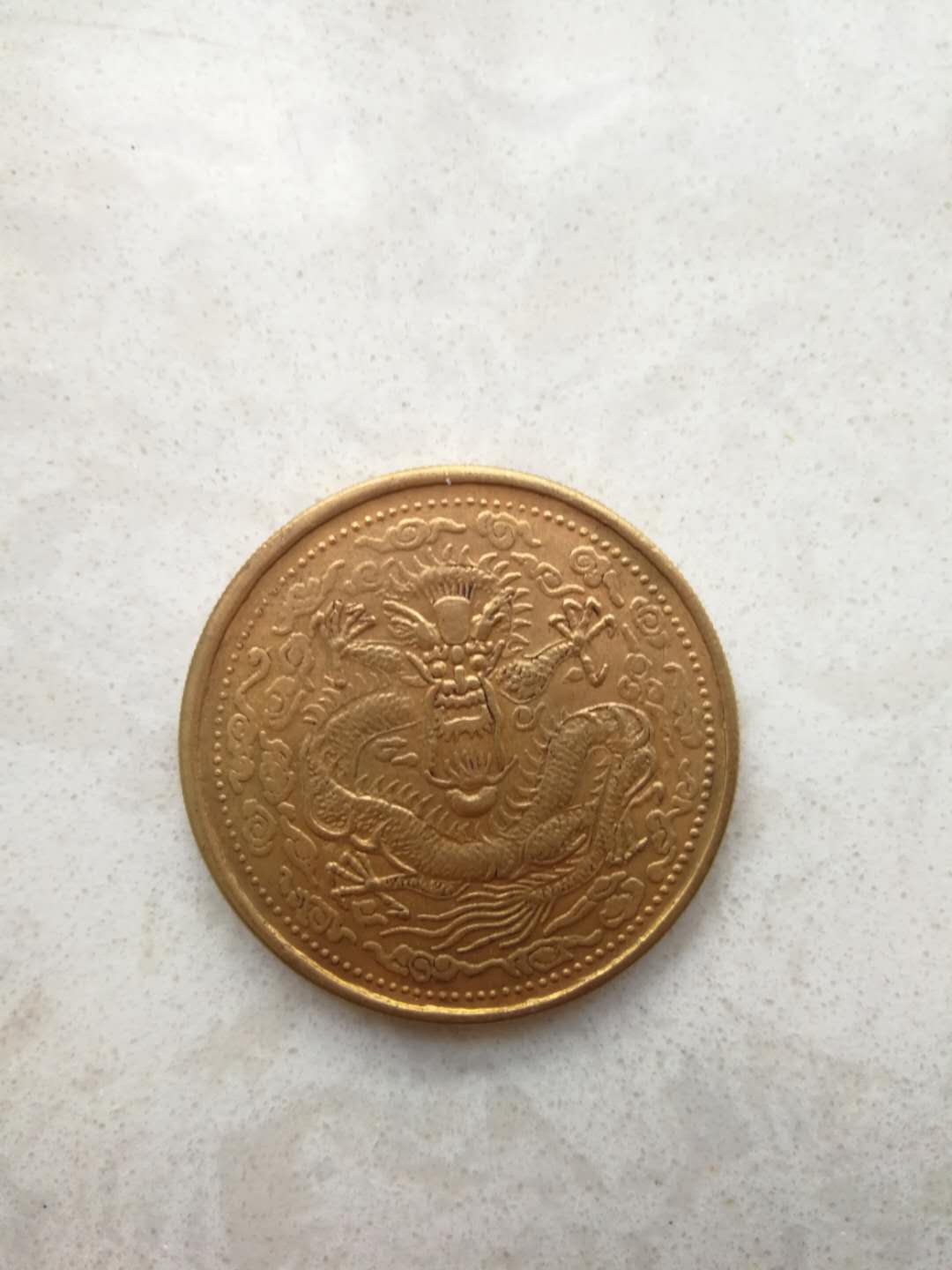
反面龙纹周身祥云环绕,中国龙被视为神物予以崇拜。“龙图是中国人的图腾,中国历代的君皇及皇族子孙被称为龙子,龙孙。龙的形象在皇室用品上被专有使用。据史书记载早在汉武帝时期的“白金三品",就铸有“龙〃的图形;其后的宋元明代,已有少部分流通币上铸有龙纹。特别是在历代花钱上,龙的图形则更多。清代未期光绪、宣统年间,官铸的金、银、铜元,其背面更是大多铸有龙图。据不完全统计,清代银币上的“龙"币图案约有近千种版别。这些龙更是千变万化,这枚钱币为坐龙,周边吉祥云,给人腾云驾雾,君临天下之感,古代只有皇室能自称为真龙天子,龙也象征着君王。
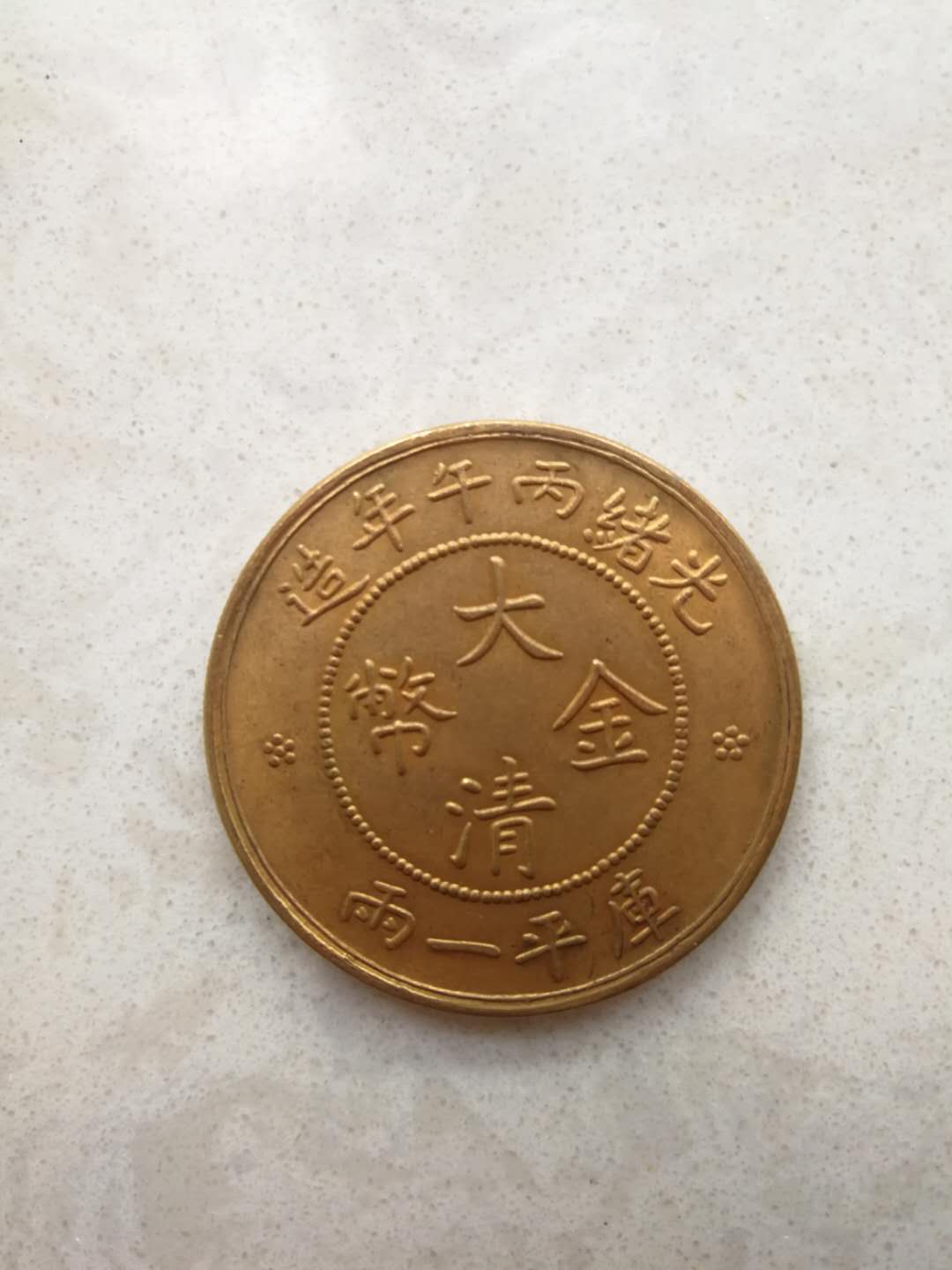
正面双圈,外圈上环光绪丙午年造,下环面值库平一两,左右各一六点星花,内圈大清金币四字直读,丙午大清金币因币面仅刻汉文而无满文,违背大清体制故不被采纳,故而发行量极少,到如今更为罕见,丙午金币以边道及龙外侧云朵大小,有齿边小云版、光边大云版之分。丁未金币亦有大、小云版,以大云版为罕见,另有合金材质。
这枚丙午年大清金币为罕见的样币,存世量极其稀少,且版本是属于罕见的光边大云版,钱币收藏最看重存世量,发行量,还有一点就是品相,再值钱的稀有钱币,品相毁了同样不值钱,这枚金币正反面字迹清晰,轮廓分明,表现压力十足,表面无明显磨损,属于完美品相,之所以有这么好的品相,是由于样币是不做流通的,只供参考使用。俗话说旧器如新就是宝,这枚钱币不仅存世罕见,且品相完美,具有极高的收藏价值。
粉彩瓷是珐琅彩之外,清宫廷又一创烧的彩瓷。在烧好的胎釉上施含砷物的粉底,涂上颜料后用笔洗开,由于砷的乳蚀作用颜色产生粉化效果。粉彩瓷在众多的清宫廷粉彩瓷中,慈禧粉彩简单率直,浓笔艳抹,富贵豪华而别具一格。红鸟牡丹富贵罐是其风格的经典之作。此后,有君王之才的袁世凯于1915年底称帝,年号“洪宪”。喻其*法大**制,倡导国民新生活,公正透明等。按惯例,新皇帝即位要烧新瓷贡贺。袁世凯粉彩玉壶春瓶,采用瓷石作胎,模具成型,材质单一,稀薄透光。袁世凯瓷已完全失去了古陶瓷胎体的内部活力,完全依赖颜料和技法,犹如在尸体上化妆,没有了整体的生命的活性。
粉彩瓷装饰画法上的洗染,吸取了各姐妹艺术中的营养,采取了点染与套色的手法,使所要描绘的对象,无论人物,山水,花卉,鸟虫都显得质感强,明暗清晰,层次分明。采用的画法既有严整工细刻画微妙的工笔画,又有渗入淋漓挥洒,简洁洗练的写意画,还有夸张变形的装饰画风。甚至把版画,水彩画,油画以及水彩画等姐妹艺术都加以融汇运用,精微处,丝毫不爽;豪放处,生动活泼。粉彩的绘制,一般要经过打图,升图,做图,拍图,画线,彩料,填色,洗染等工序。其中从打图到拍图,是一个用墨线起稿,进行创作构思,如绘瓷决定装饰内容与形象构图的阶段。正式绘制时的定稿叫“升图”,把描过浓墨的图样从瓷器上拍印下来叫“做图”。接着把印有墨线的图纸转拍到要正式绘制的瓷胎上去即“拍图”,这样就可进行绘瓷。粉彩的描绘,着色技法是比较复杂细致的,一般如画,彩,填,洗,扒,吹,点等技法。其所用工具有画笔,填笔,洗笔,彩笔,笃笔,赤金笔,金水笔,玛瑙笔,扒笔等许多特制笔。
藏品介绍
中文名称:牡丹富贵粉盒
英文名称:Peony Fugui Compact
类别:瓷器
规格:一件
品相:美品
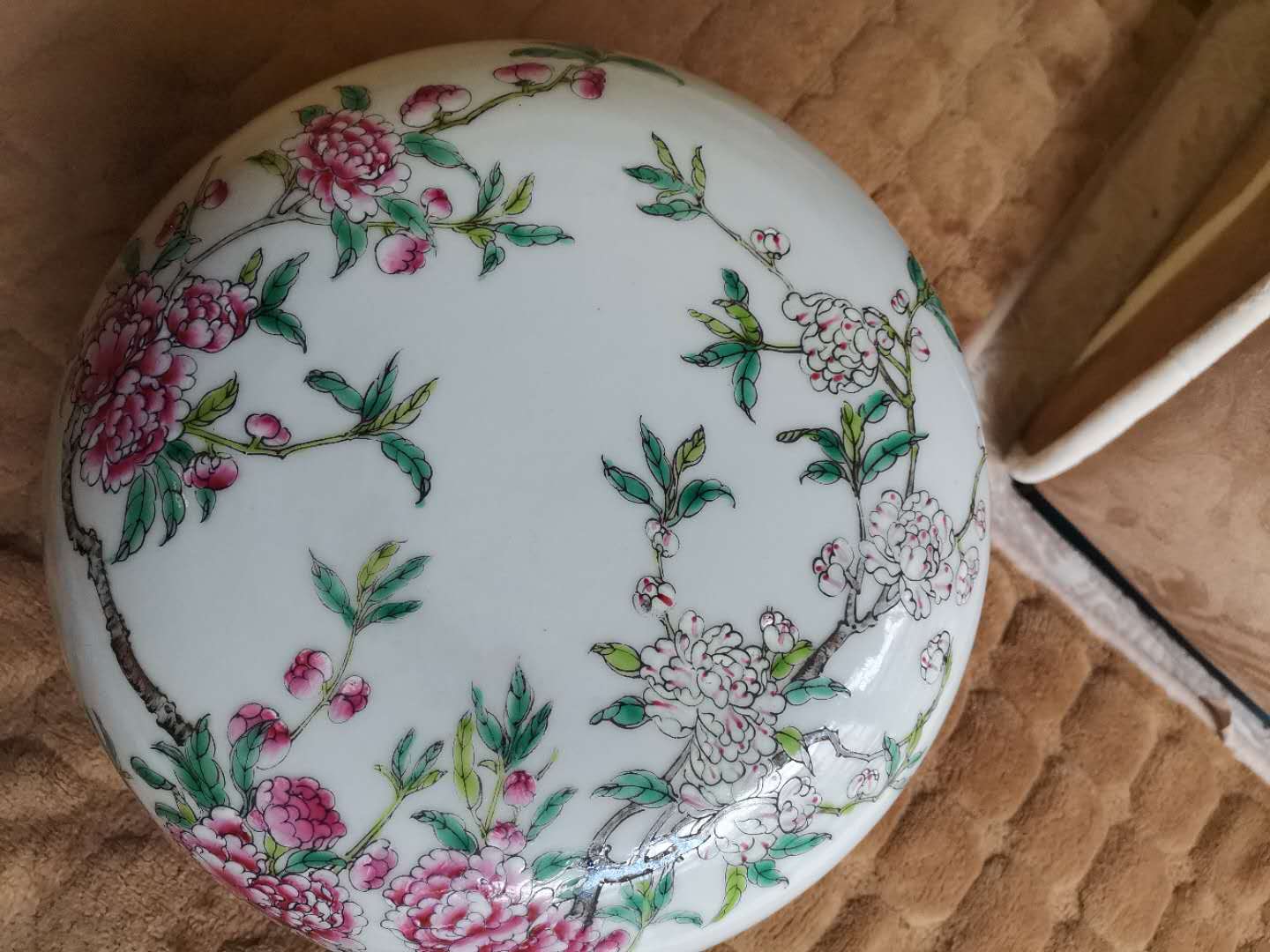
花开富贵图里有时会看到蝙蝠,因为蝙蝠的“蝠”和“富”谐音。这里的花一般指牡丹,清代赵世学在《牡丹富贵说》中提到:牡丹有王者之号,冠万花之首,驰四海之名,终且以富贵称之。夫既称呼富贵,拟以清洁之莲,而未合也;律以隐逸之菊,而未宜也。甚矣,富贵之所以独牡丹也。
康熙、雍正粉彩瓷
粉彩始创于康熙,极盛于雍正。康熙晚期在珐琅彩瓷制作的基础上,景德镇窑开始烧制粉彩瓷,但制作较粗,仅在红花的花朵中运用粉彩点染,其他纹饰仍沿用五彩的制作。主要发现有两个品种:一是白地粉彩器;一是绿、黄、紫三彩瓷上加有胭脂红(金红)彩。到了雍正朝,无论在造型、怡釉和彩绘方面,粉彩瓷均得到了空前的发展。粉彩是雍正彩瓷中最著名的品种之一,彩料比康熙朝的要精细,色彩柔和,皴染层次多。大多数在白地上、少量在色地上绘纹饰。以花蝶图为最多,牡丹、月季、海棠、四季花也极为普遍。人物故事图,在粉彩中也比较多。此外,粉彩瓷中谐音的“蝠”(福)、“鹿”(禄)图案十分多见。当时突出的是所谓“过枝”技法。
雍正早期有康熙五彩风格,粉彩纹饰多绘团花、团蝶、八桃蝙蝠(寓意多福多寿)、过枝花卉、水仙灵芝、仕女、*姑麻**献寿、婴戏等。纹饰明显疏朗、规整。如粉彩过枝桃蝠盘,从盘外壁开始绘桃枝叶及桃,通过盘口过到盘心接绘桃枝叶及蝙蝠,雍正时期一般绘8个桃,乾隆时多绘9个,有“雍八乾九”之说。雍正朝画的蝙蝠翅膀顶端下弯有钩,钩中有一点,嘴上有毛(但不绝对)。仕女幼童人物较小,面目清秀,或有疏简的山石树木等背景,或留较多的空白。这时和康熙朝一样,较多地使用“金红彩”,精细之作还在纹饰上方用墨彩行书题相应的诗词歌赋,并绘红色迎首或压角章,显露出当时社会文人的儒雅之风。一般民窑多在碗、盘、炉、罐、盘口瓶、小瓶上绘粉彩纹饰。
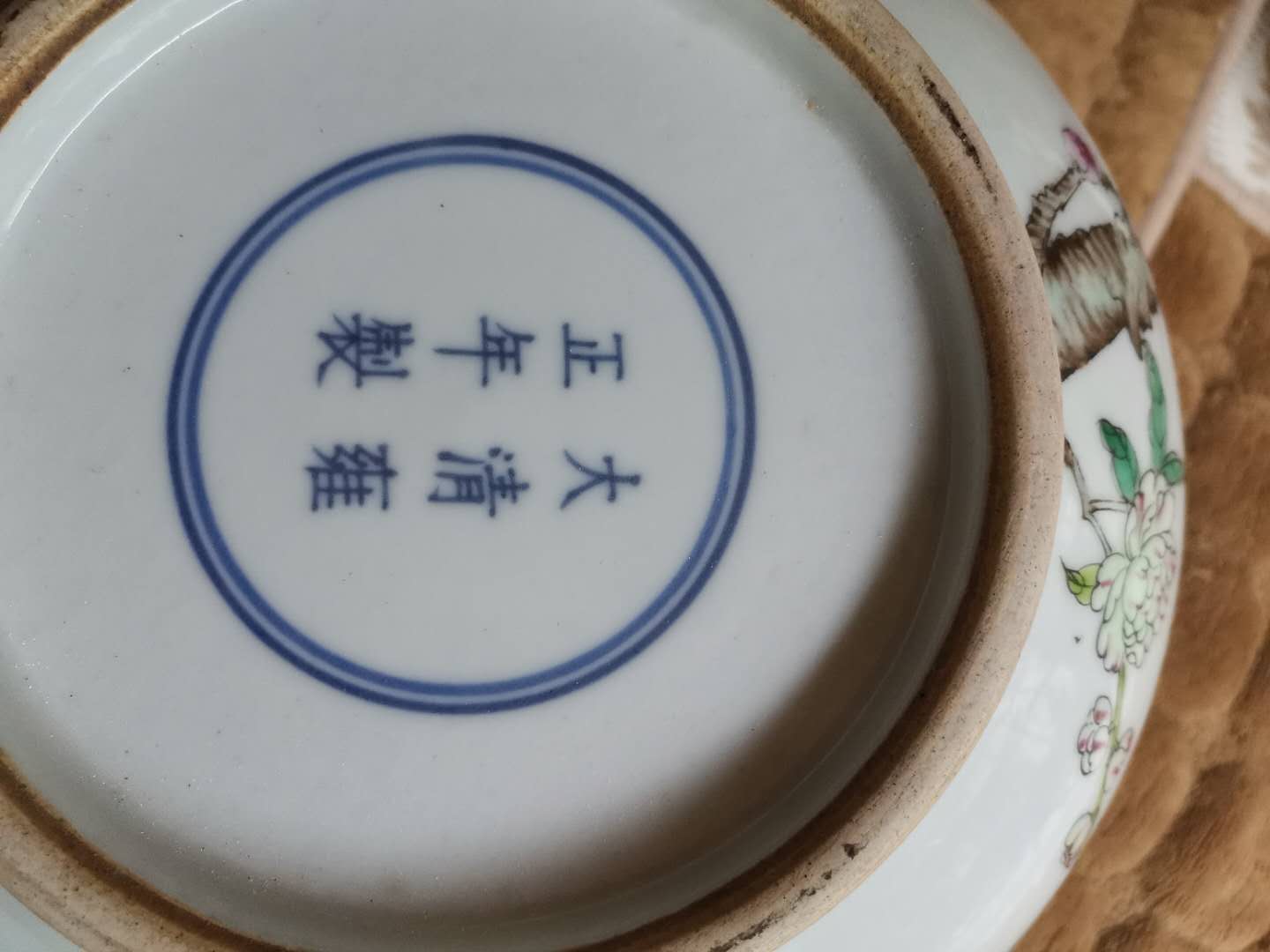
雍正粉彩官窑器多数有“大清雍正年制”两行六字楷书款。民窑精品有私家堂名款,也有图案标记,以器底绘青花笔、锭和如意,谐音“必定如意”等为突出。

底部双圈六字青花款,青花出现晕散吃进胎骨,圈足氧化发黄,且釉面在自然光线下出现漫反射现象,此瓷器为开门到代的官窑器,实属难得,极为罕见。
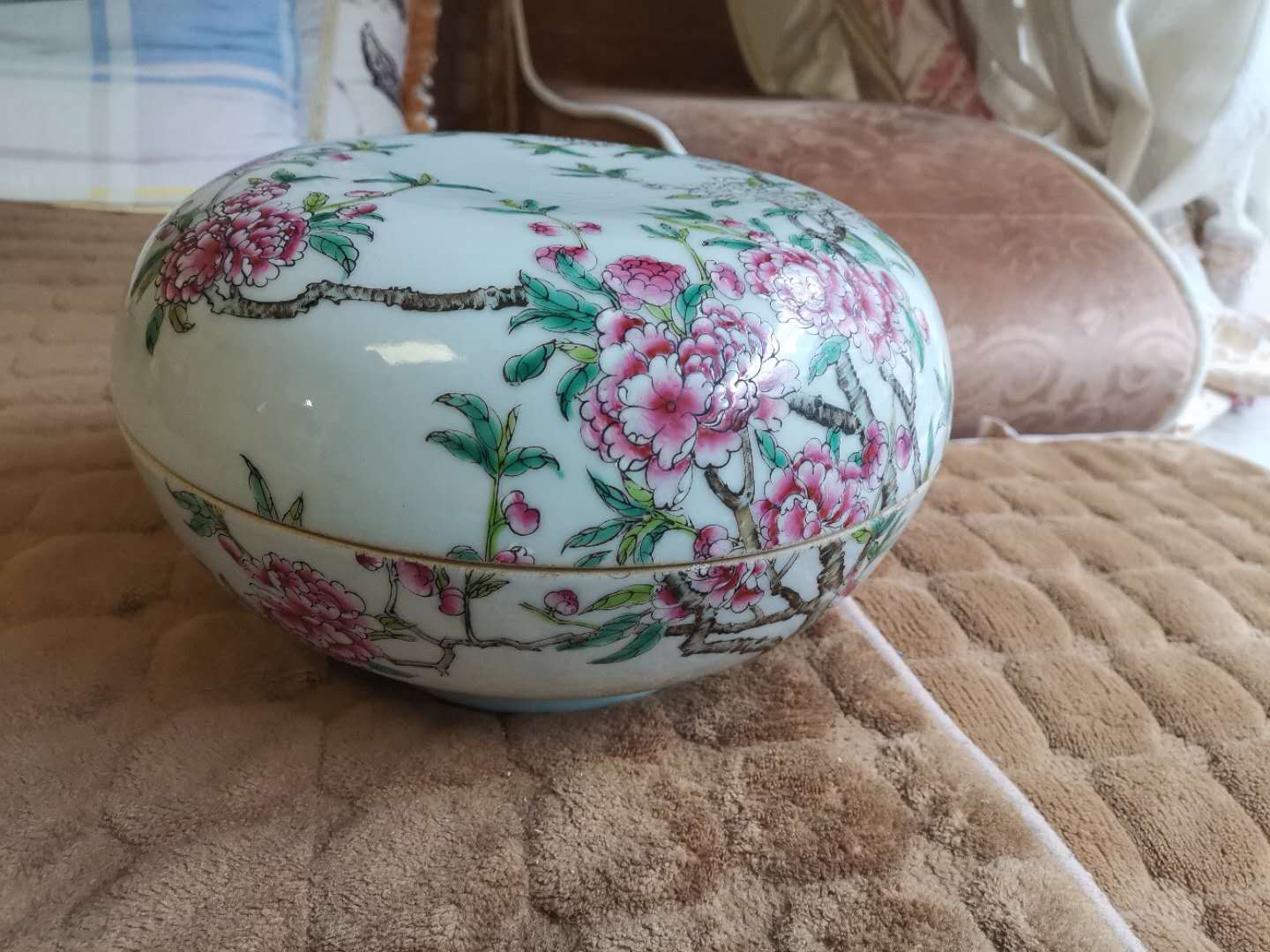
牡丹是中国传统名花。长期以来,牡丹享有“国色天香” 、“花中之王”的美誉。中国人把牡丹看作是人类和平、幸福、繁华与富足的象征。牡丹是中国的“国花”。
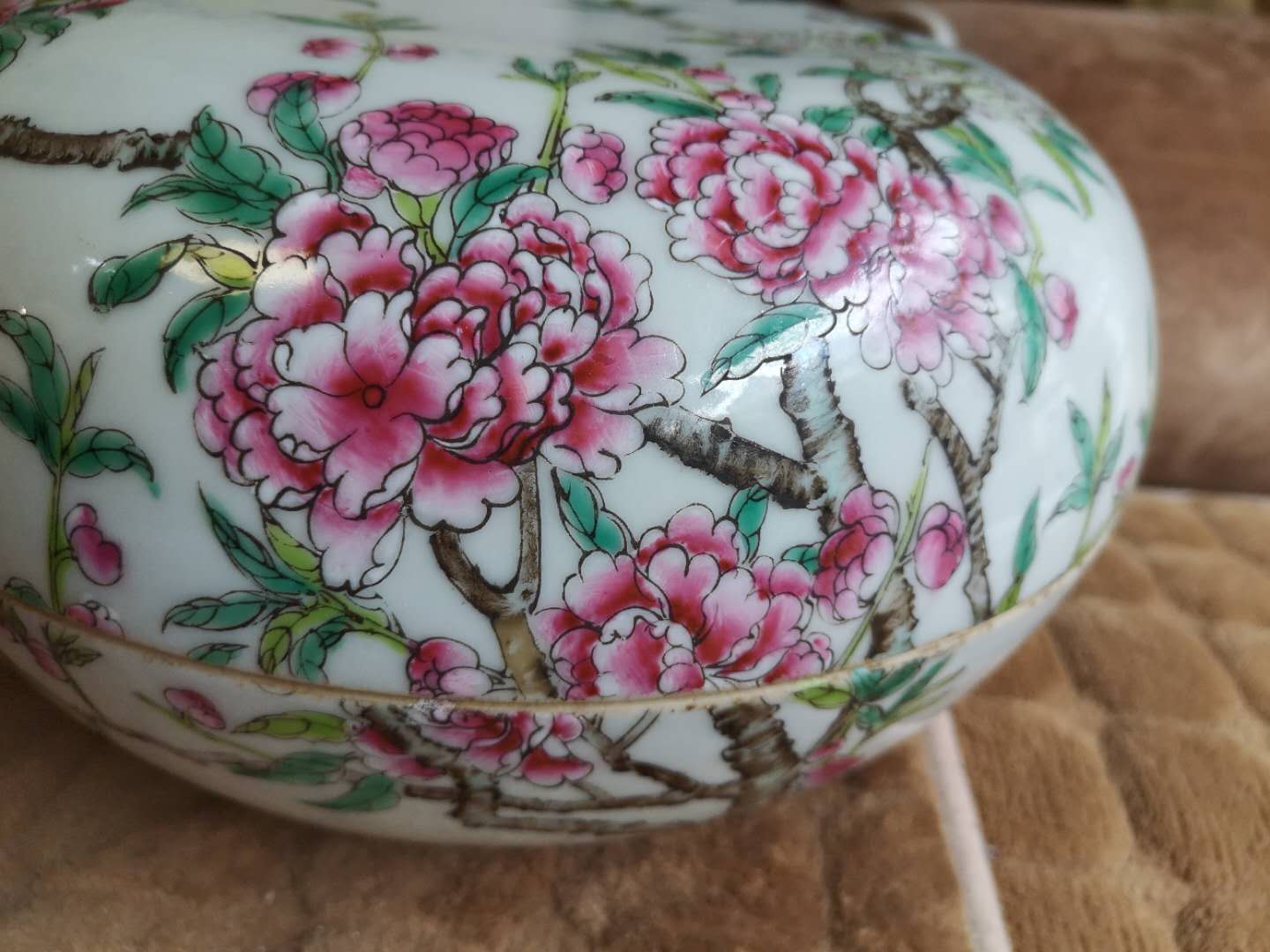
可以看到这件粉盒所画牡丹极其的规整,花枝采用了皴法,表现真实自然,粉彩牡丹花出现晕染效果粉红可爱,更可贵的盒盖盒身画面对接完美,画工惊人,只有官窑器才会有如此好的画工。
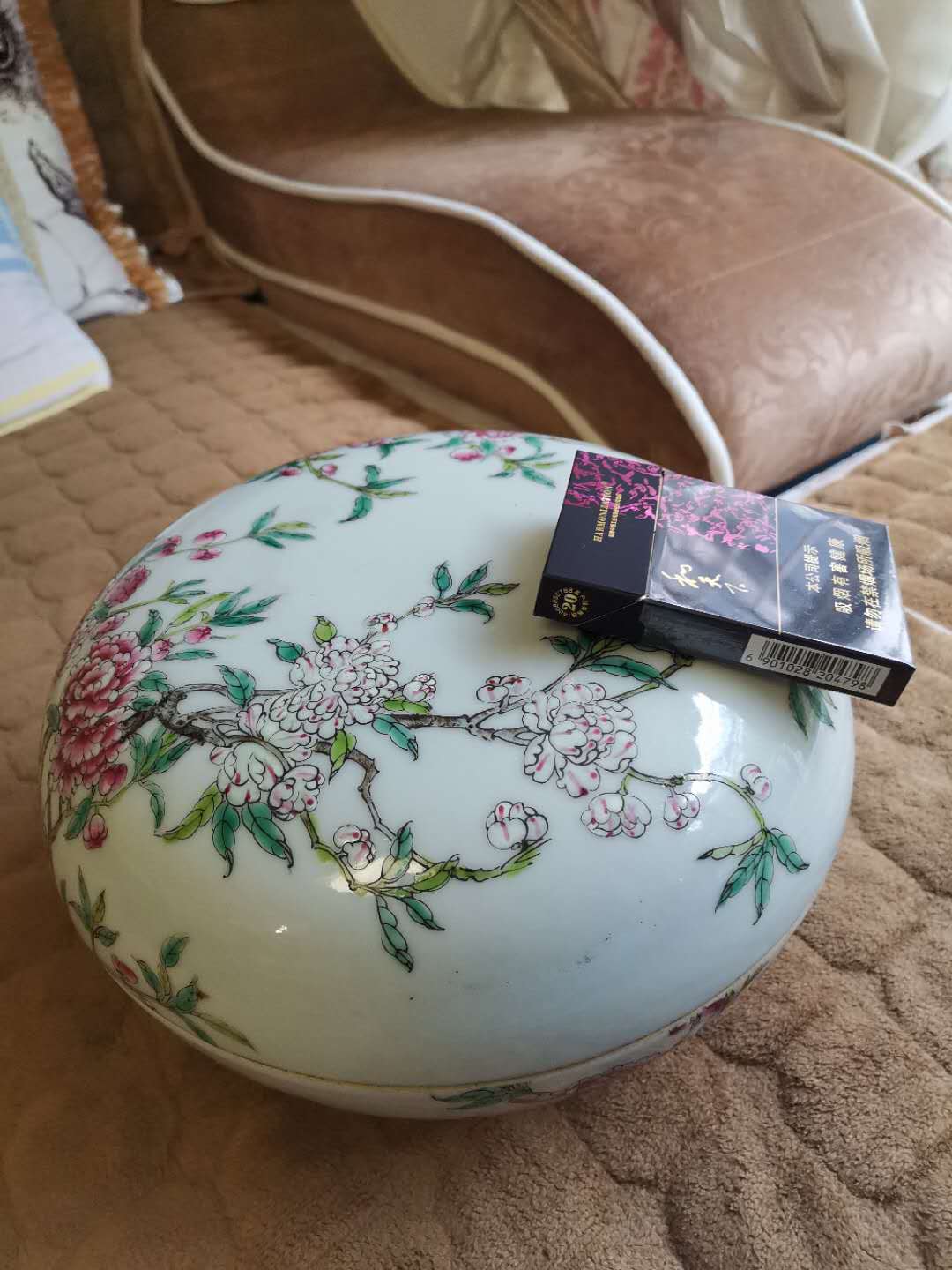
古代瓷器制度非常严格,烧了多少官窑都有记载,哪里烧的,出自谁的手,是谁作画,都很清楚,如果那个环节出了问题,就会人头不保,所以官窑器制作十分的严谨,是民窑器可望不可及的高度。
青花瓷(blue and white porcelain),又称白地青花瓷,常简称青花,是中国瓷器的主流品种之一,属釉下彩瓷。青花瓷是用含氧化钴的钴矿为原料,在陶瓷坯体上描绘纹饰,再罩上一层透明釉,经高温还原焰一次烧成。钴料烧成后呈蓝色,具有着色力强、发色鲜艳、烧成率高、呈色稳定的特点。原始青花瓷于唐宋已见端倪,成熟的青花瓷则出现在元代景德镇的湖田窑。明代青花成为瓷器的主流。清康熙时发展到了顶峰。明清时期,还创烧了青花五彩、孔雀绿釉青花、豆青釉青花、青花红彩、黄地青花、哥釉青花等衍生品种。
葫芦瓶:南宋后期龙泉窑创制的瓶式,瓶体似葫芦,故名。小口,短颈,瓶体由两截粘合而成。名与“福禄”谐音,且器形像“吉”字,故又名“大吉瓶”,寓意大吉大利。宋元时期,龙泉窑、景德镇窑均有生产。
藏品介绍
中文名称:乾隆青花葫芦瓶
英文名称:Qianlong blue and white gourd bottle
类别:瓷器
规格:一对
品相:美品
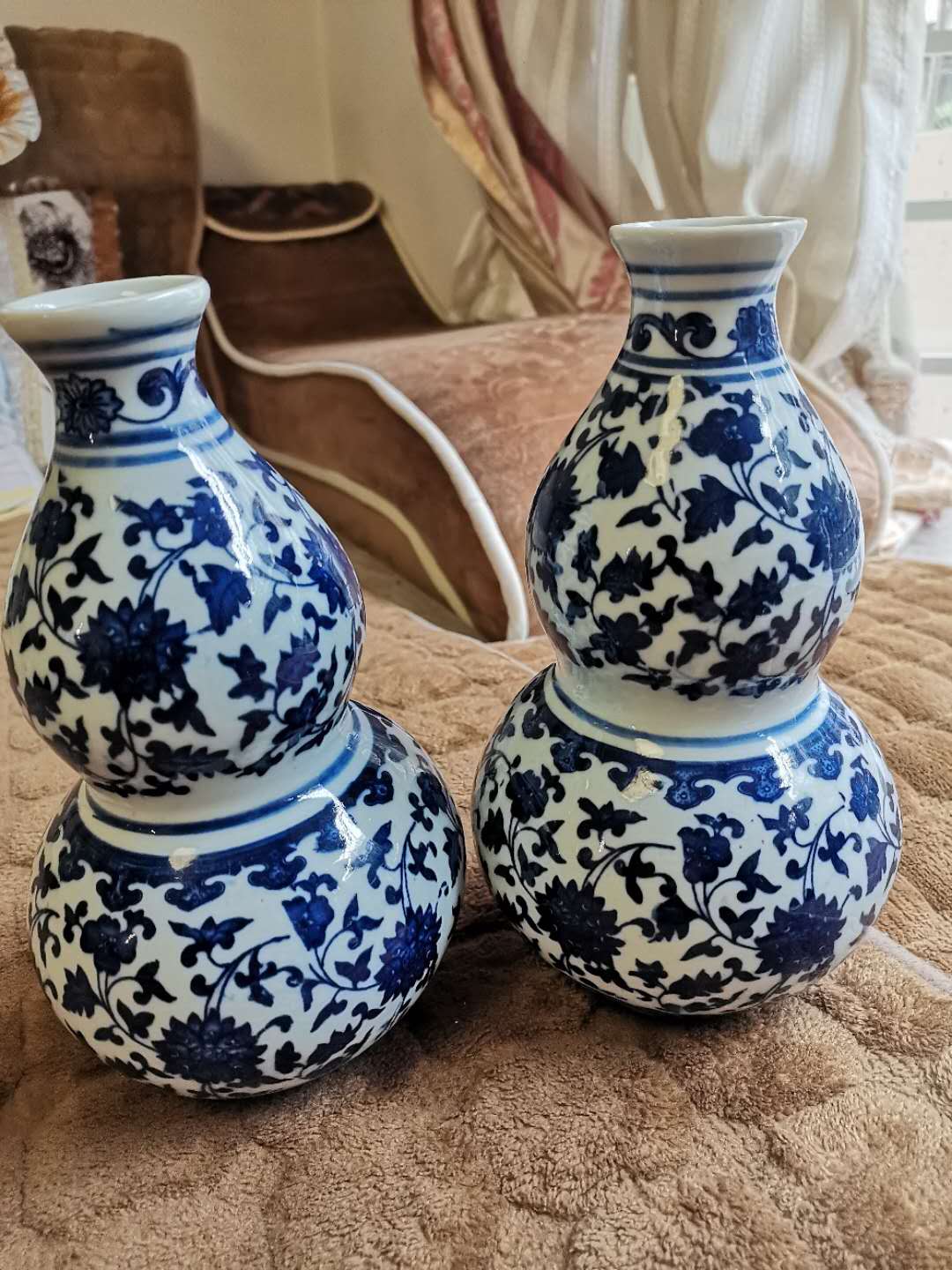
缠枝纹是中国古代传统纹饰之一。作为瓷器上最常见的纹样。盛行于元代以后。明代或称为“转枝”,以植物的枝杆或蔓藤作骨架,向上下、左右延伸,形成波线式的二方连续或四方连续,循环往复,变化无穷。缠枝莲、缠枝牡丹、缠枝草蔓均属此类。
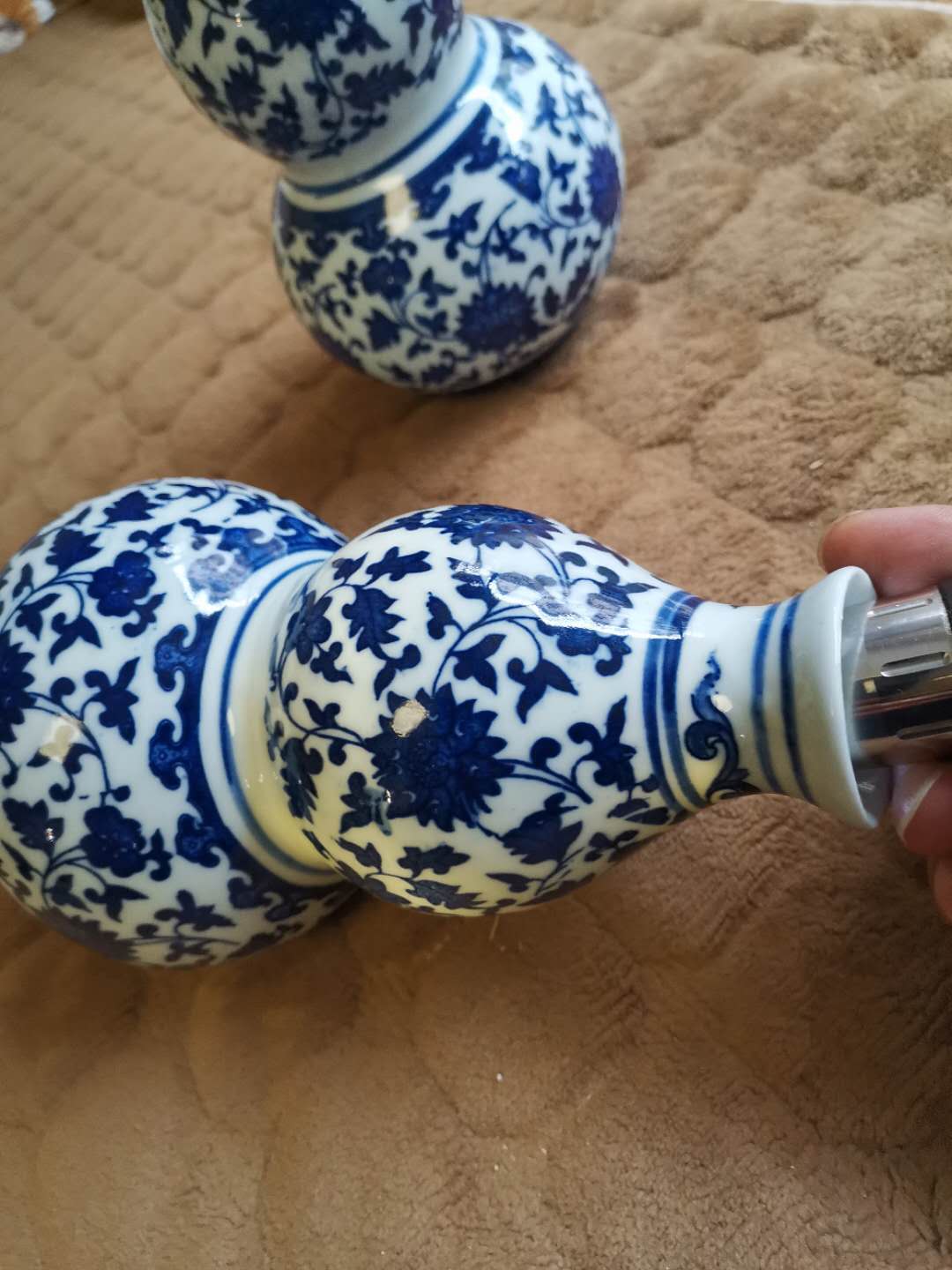
此器呈葫芦状,直口,短颈,束腰,浅圈足。瓶身以青花缠枝纹为主,以青花旋纹相隔,分为上下两部分,一大一小都是绘画的青花缠枝纹,下带一圈如意纹寓意吉祥,画工精美,青花艳蓝,是一件难得的收藏佳器。此件葫芦瓶,口沿微撇,线条圆润优美。纹饰层次丰富,质感极强,古朴稳重,大气磅礴,陈设室内,蓬荜生辉。在中华民族的五千年历史长河中,葫芦被很多民族认为是人类的始祖而崇拜。在神话和故事里,葫芦始终与神仙和英雄为伴,被认为是给人类带来福禄、驱魔辟邪的灵物。葫芦是上古时候的神器,又称“蒲芦”,谐音为"福禄"。其枝茎称为“蔓带”,谐音"万代",故而“蒲芦蔓带”谐音为"福禄万代",大吉大利的象征,葫芦与它的茎叶一起被称为"子孙万代"。因此葫芦便是“福禄吉祥”、“健康长寿”的象征,也是保宅护家的良品。
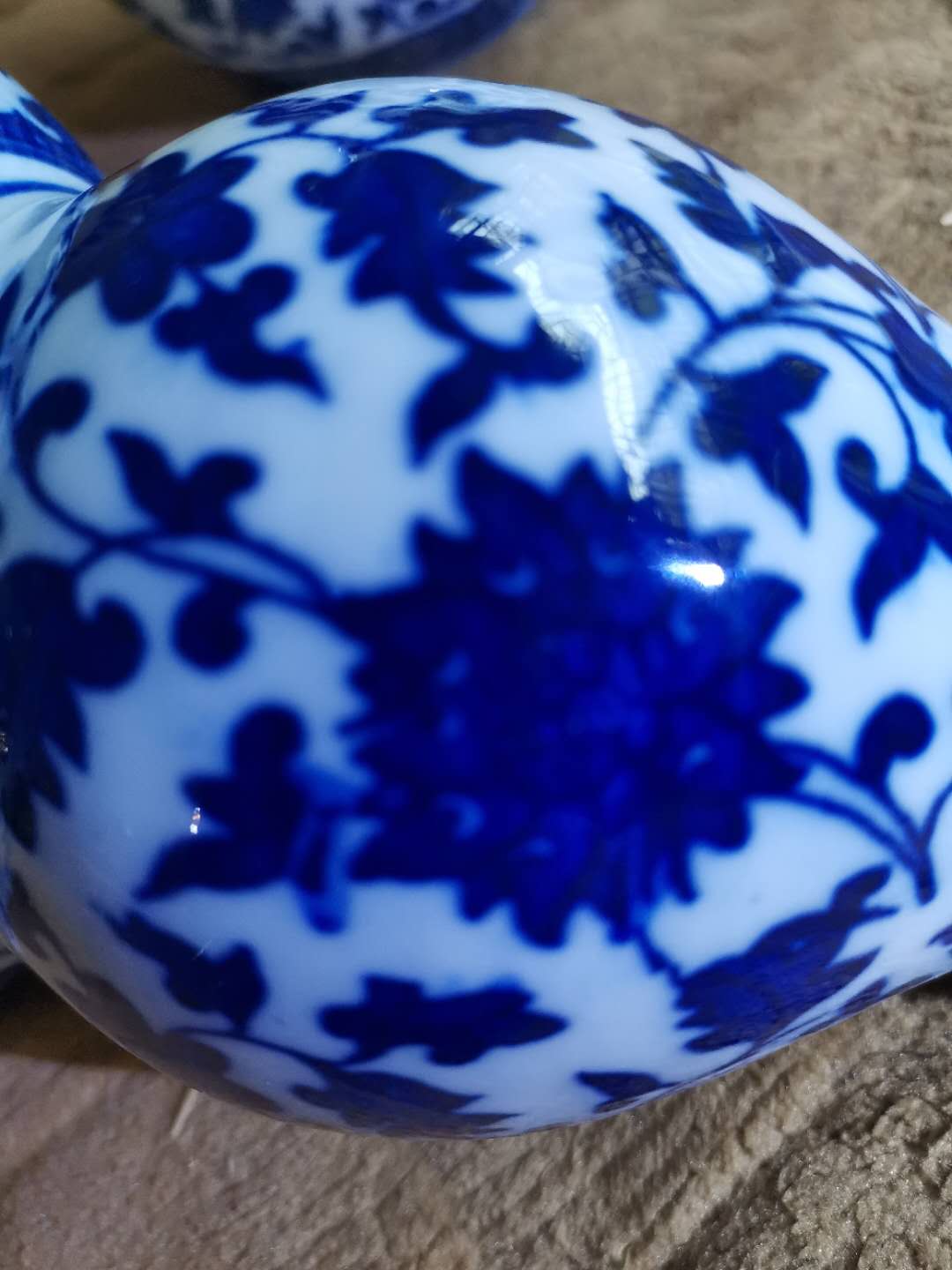
青花颜色发蓝,符合乾隆青花特征。
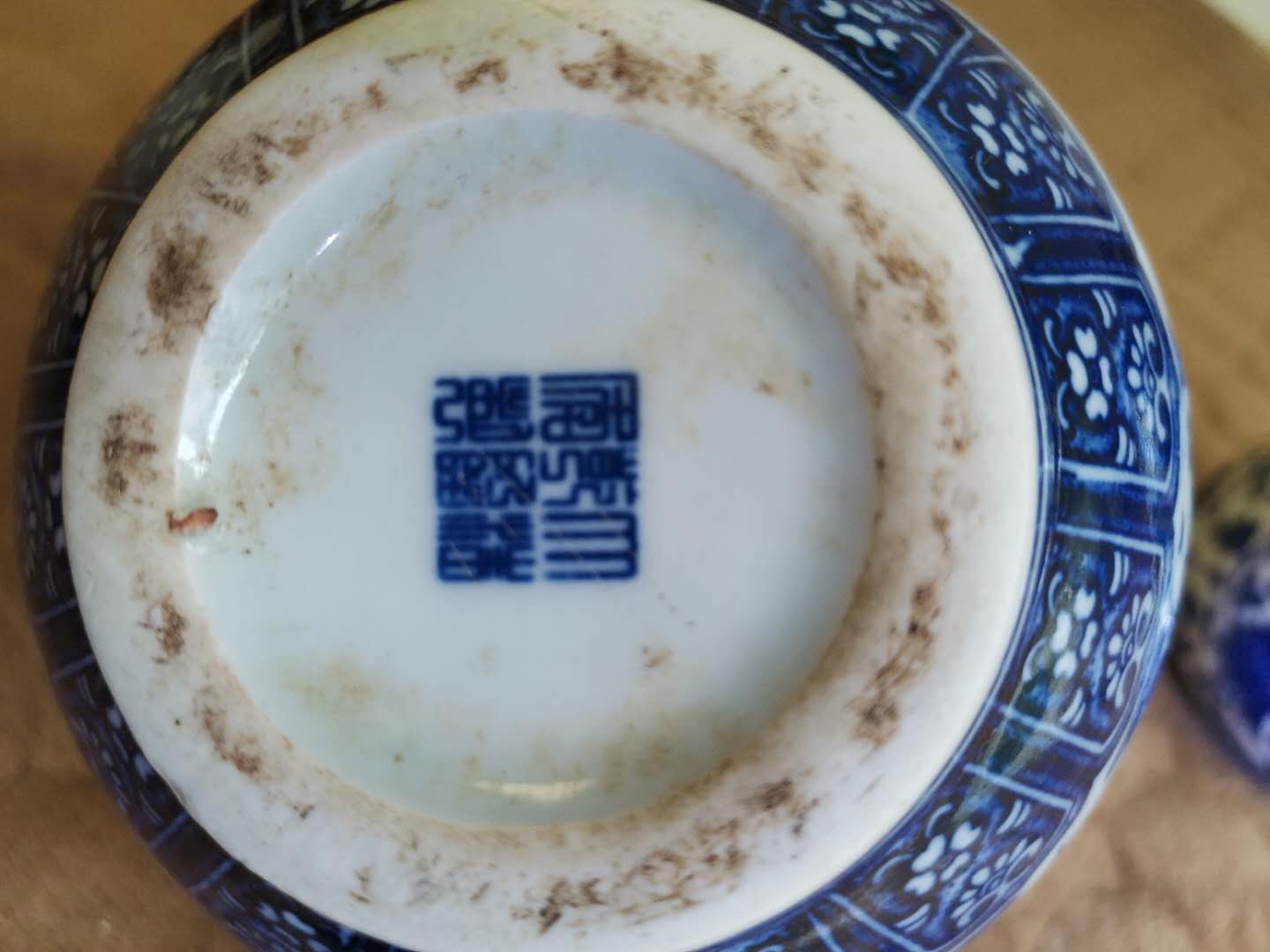
底足款正,六字青花款大清乾隆年制,字体精美胎底干净。
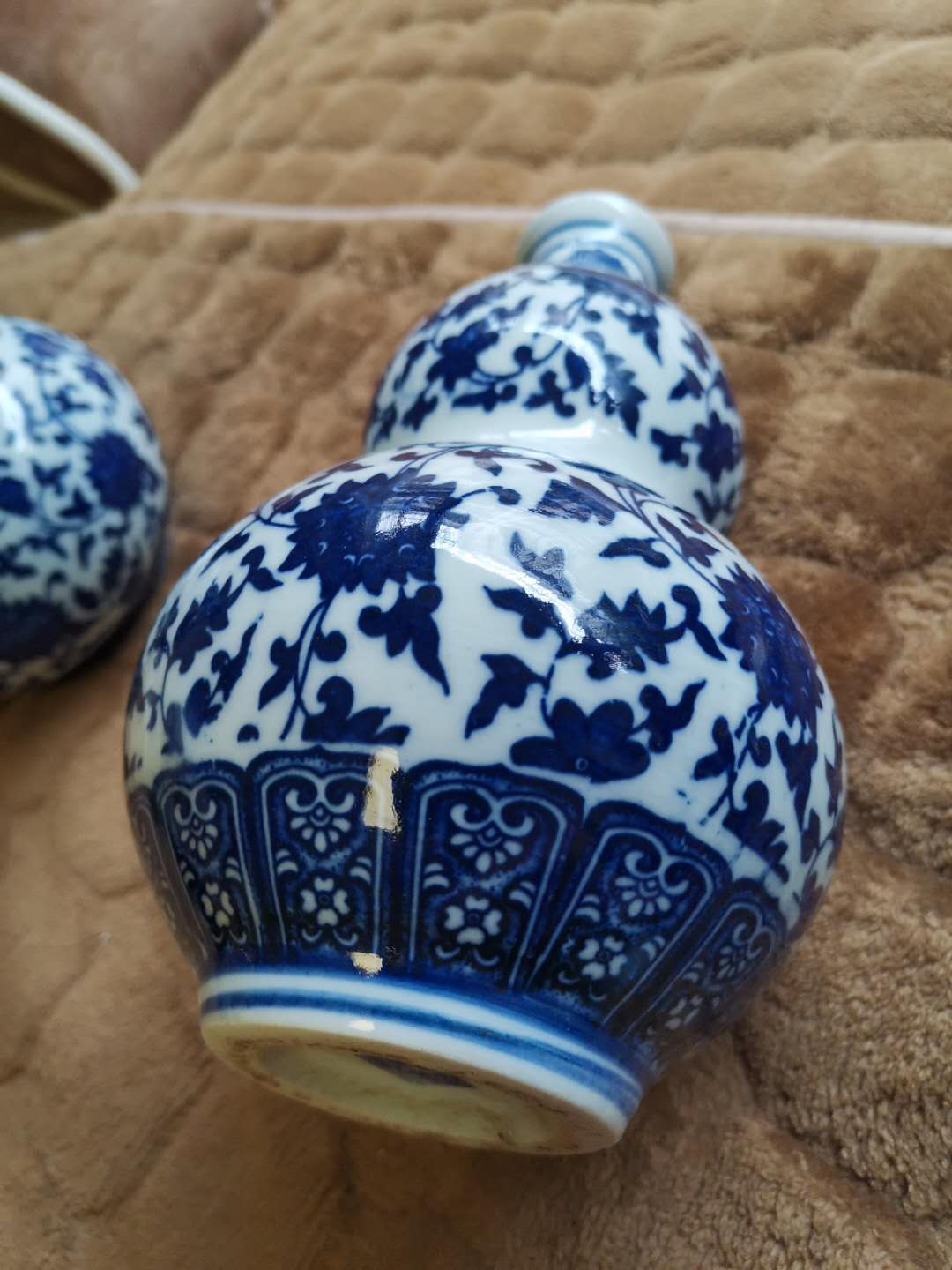
底部为孔雀开屏纹饰,也是吉祥的寓意,这一对葫芦瓶品相完好,开门到代,寓意吉祥,属于市场上讨巧瓷器,具有极高的收藏价值以及经济价值。
青花瓷是能最好表现泼墨山水画的瓷器,这是其它瓷器所做不到的,所以青花瓷最具中国风,最能体现中国山水画艺术的最好载体,china这个单词大家都知道是中国的意思,可是最早这个单词的意思就是瓷器,因为当时中国被称之为瓷器之国,可见我国瓷器在国际上的影响之大,已经成为国际上的一张艺术名片,而当时出口瓷最多的就是青花瓷,这对青花瓷开门见老,画工精美,寓意吉祥,综上所述是一件十分难得的馆藏级藏品,可谓是千金易得,一宝难求。
黄地青花梅瓶本品造型优美,体态雍容,气质典雅,胎釉精良,丰腴莹润。通体以黄釉为地,绘火龙纹。其黄彩匀净明亮,青花发色苍妍夺目,着意师法永乐笔意,犹若水墨般淋漓尽致,上下辉映,造型与此等釉彩相配,犹如天作之合,两者相得益彰。
藏品介绍
中文名称:黄地青花梅瓶
英文名称:Yellow ground blue plum vase
类别:瓷器
规格:1件
品相:美品
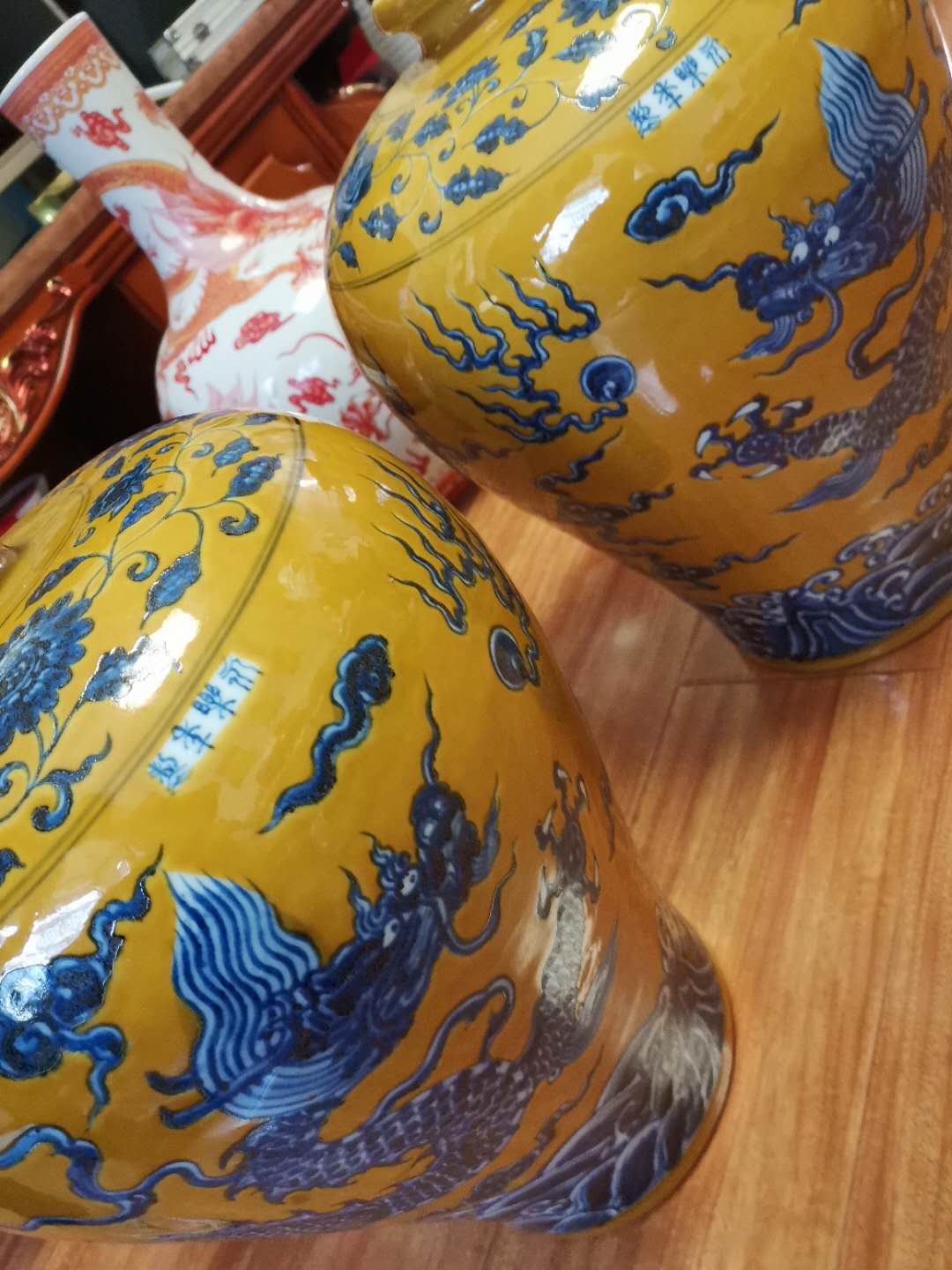
梅瓶也称"经瓶",最早出现于唐代,宋辽时期较为流行,并且出现了许多新品种。近代许之衡在《饮流斋说瓷》一书中详细地描述了梅瓶的形制、特征及名称由来:"梅瓶口细而颈短,肩极宽博,至胫稍狭,抵于足微丰,口径之小仅与梅之瘦骨相称,故名梅瓶。"关于梅瓶的用途,磁州窑白地黑花梅瓶器腹有“清沽美酒”与“醉乡酒海”的诗句。梅瓶既是酒器,又是一件令人爱不释手的观赏品。因此,这类器多制作精美,不但考虑到贮酒容量,还要注意造型优美。
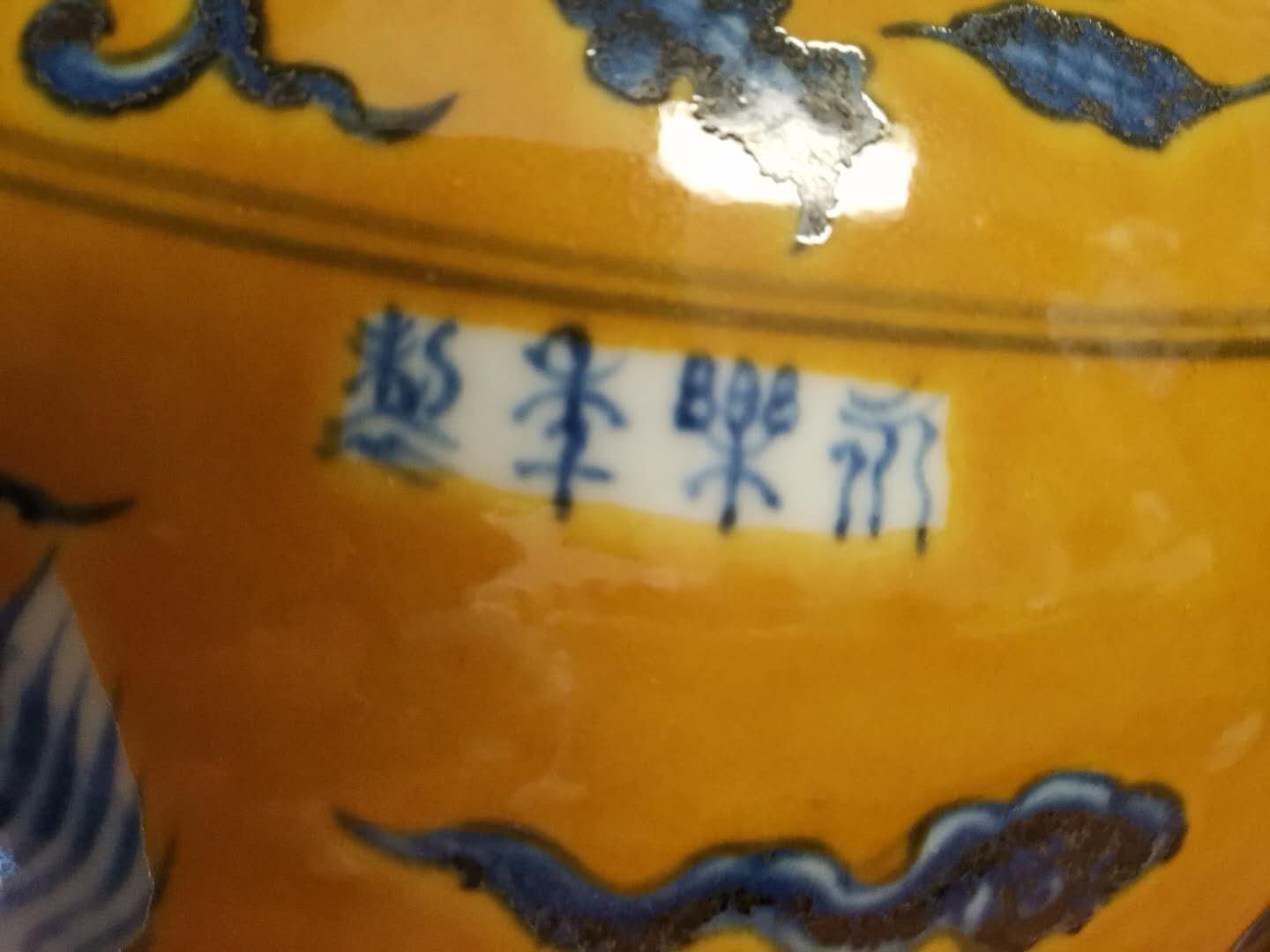
梅瓶肩部落款,永乐年制,笔法流畅,落笔处青花颜色较深,书写痕迹明显。光线折射处,出现了明显的铁秀斑:青料吃胎明显,表面漆黑出形成明显的凹凸感,淡青花出出现了明显的晕散,这就是吃到胎骨里了。
进口青料为高铁低锰,烧制出的青花,上面呈色浓艳,有黑色斑点,在黑色浓聚处闪烁如铅,俗称’锡光’或’铁锈斑’。”通俗来讲,苏麻离青料在高温下产生凝聚斑,凝聚斑又产生锡斑,可以说凝聚斑是锡斑的根
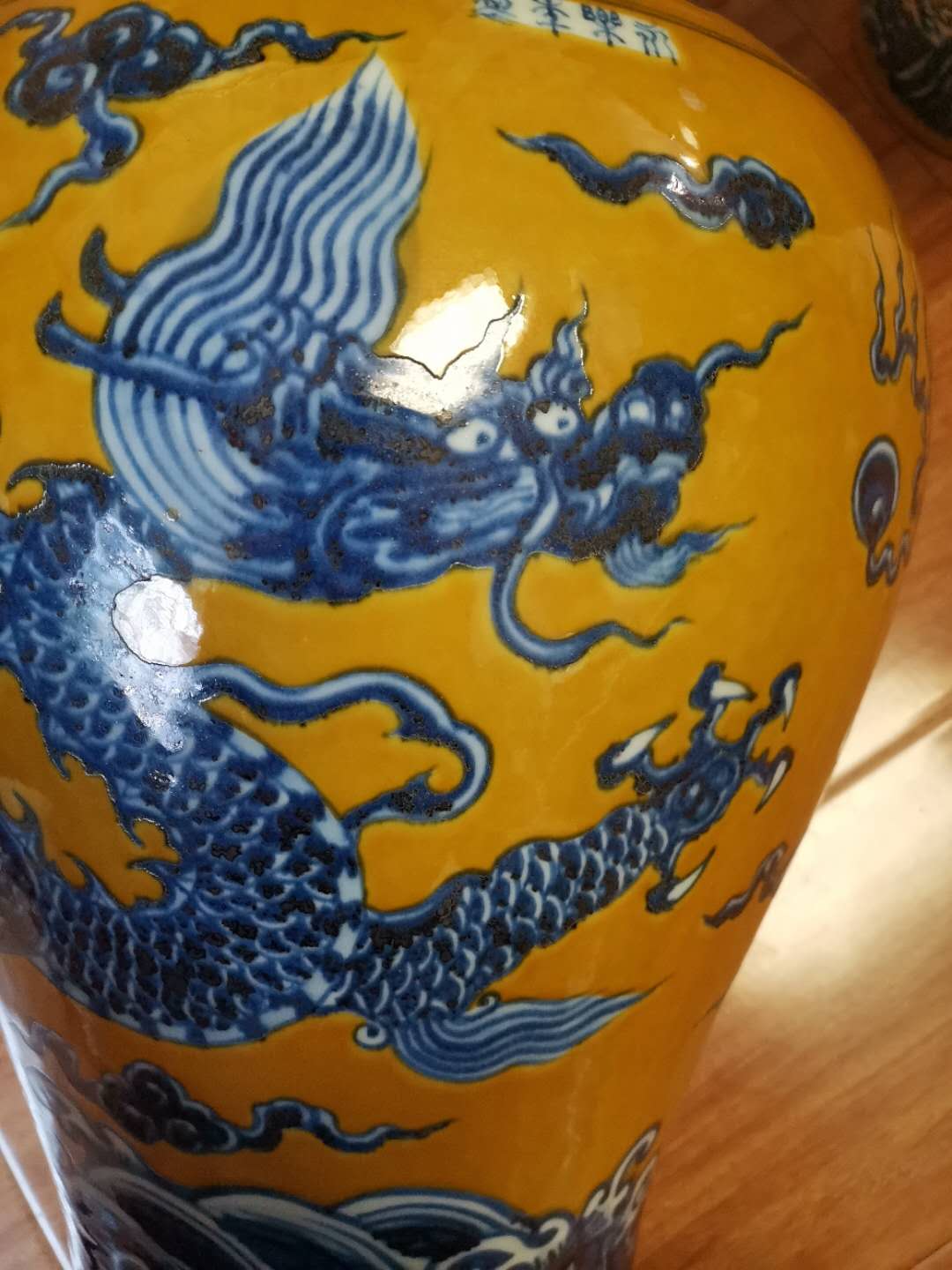
龙眼双目突出,龙颈较细,龙爪成风车爪,为典型的明代龙纹,以青花留白的形式表现龙纹,形象生动,极其威严。
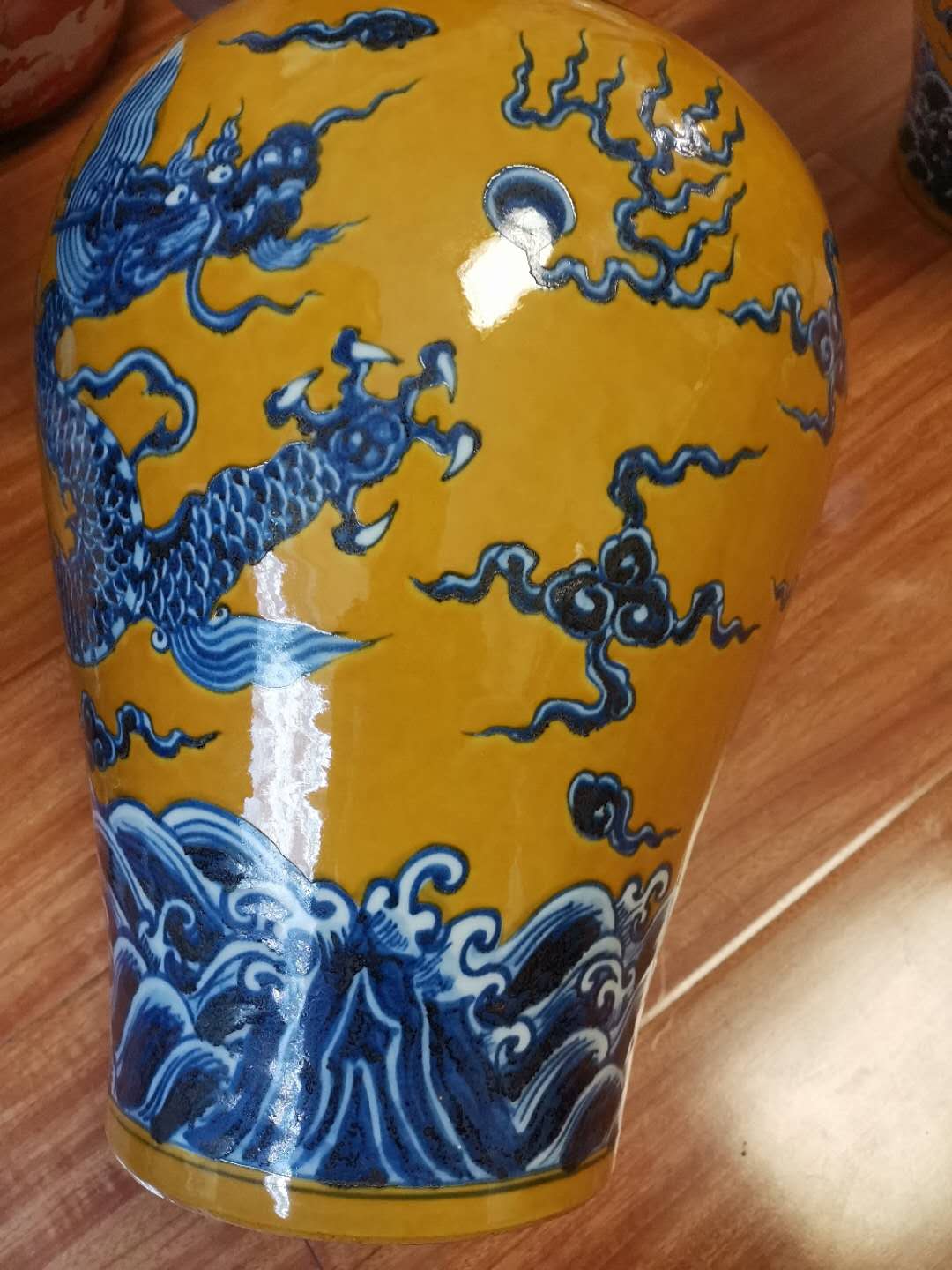
可以看到明显的火焰纹,但底部又是海水纹,但龙珠被火焰纹包围,此龙当属火龙纹。
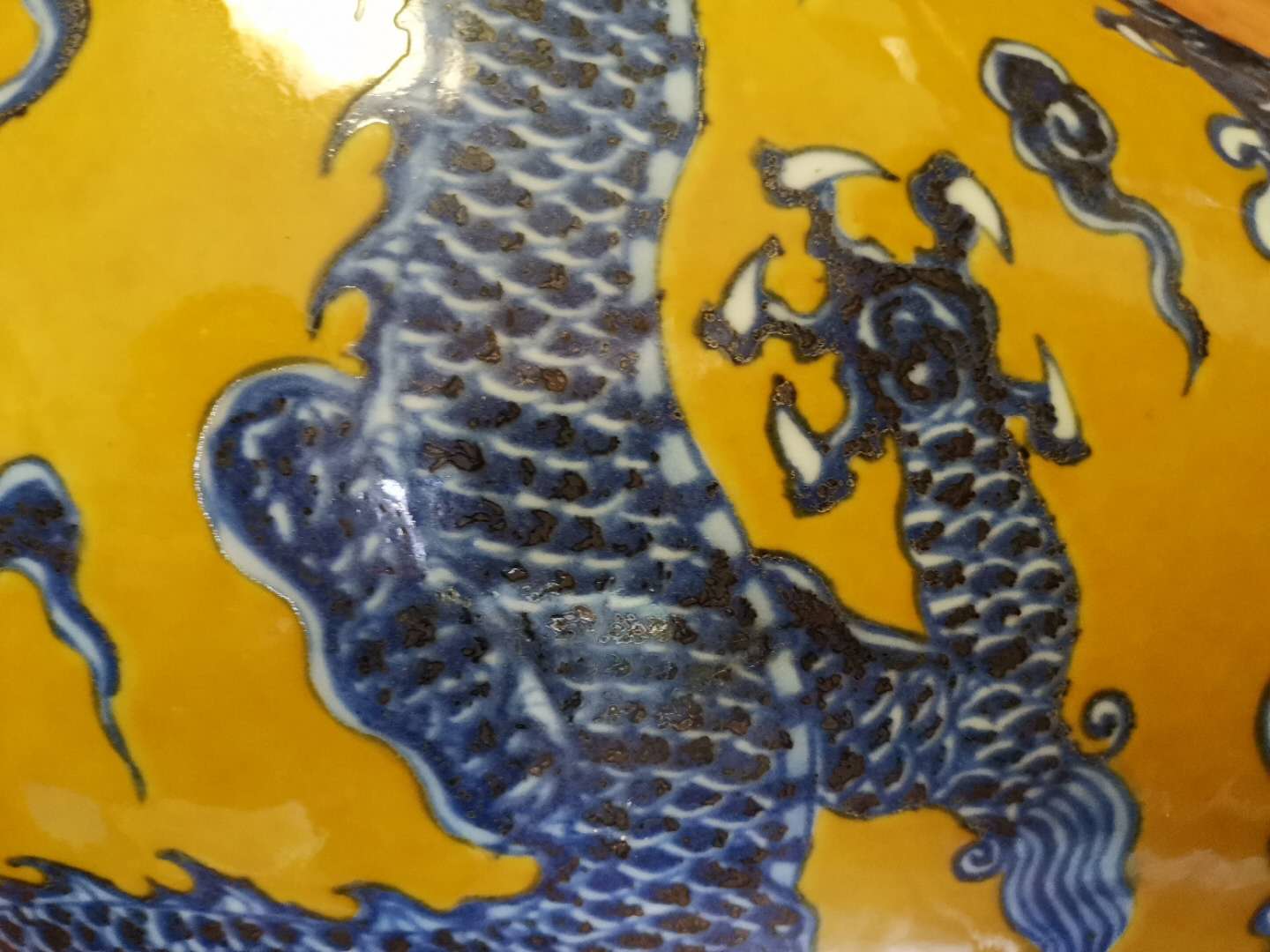
黑点状的铁锈斑与风车爪局部图片。
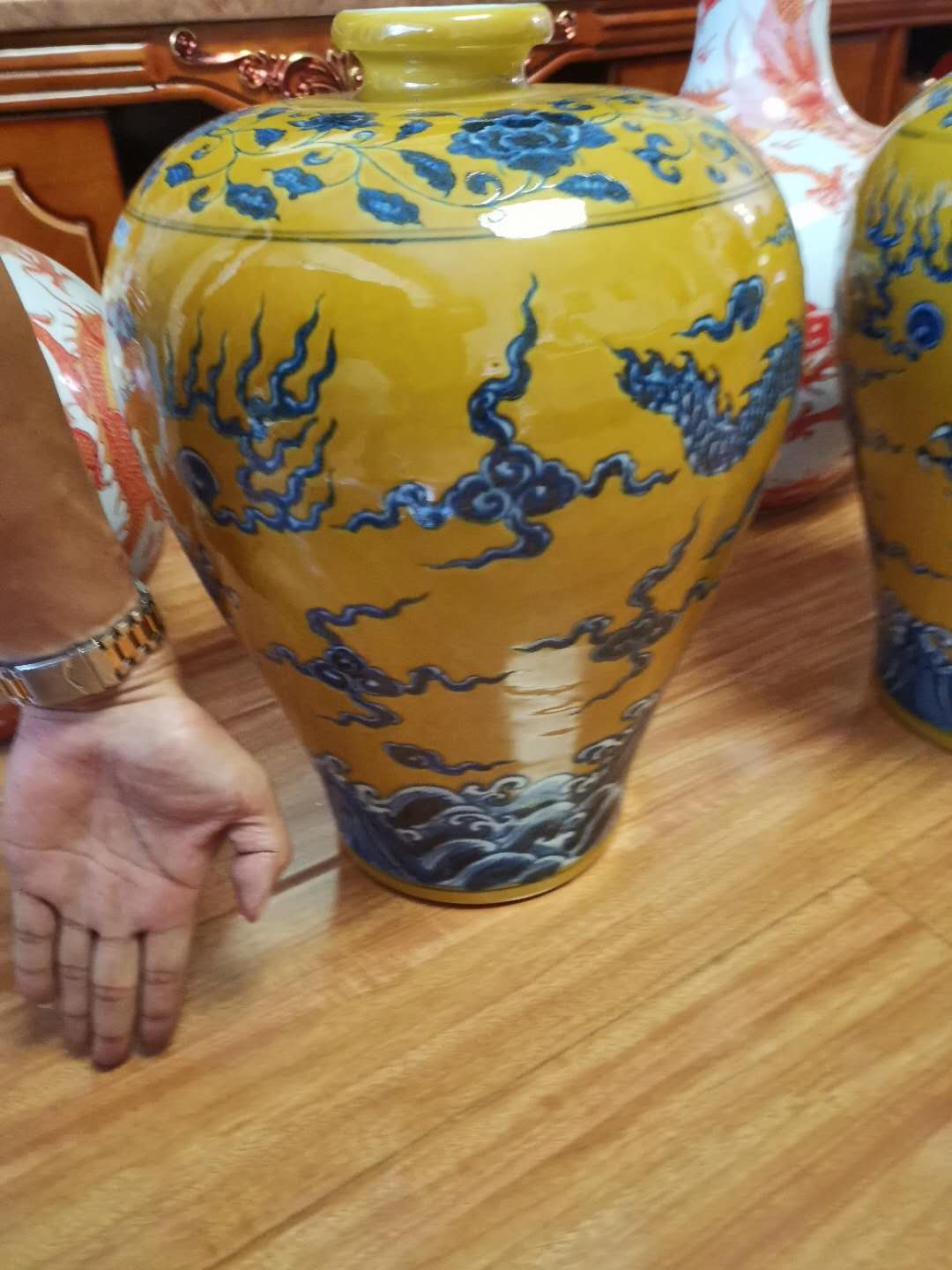
可以参照手臂来看,这对梅瓶在梅瓶器型中算大件了。
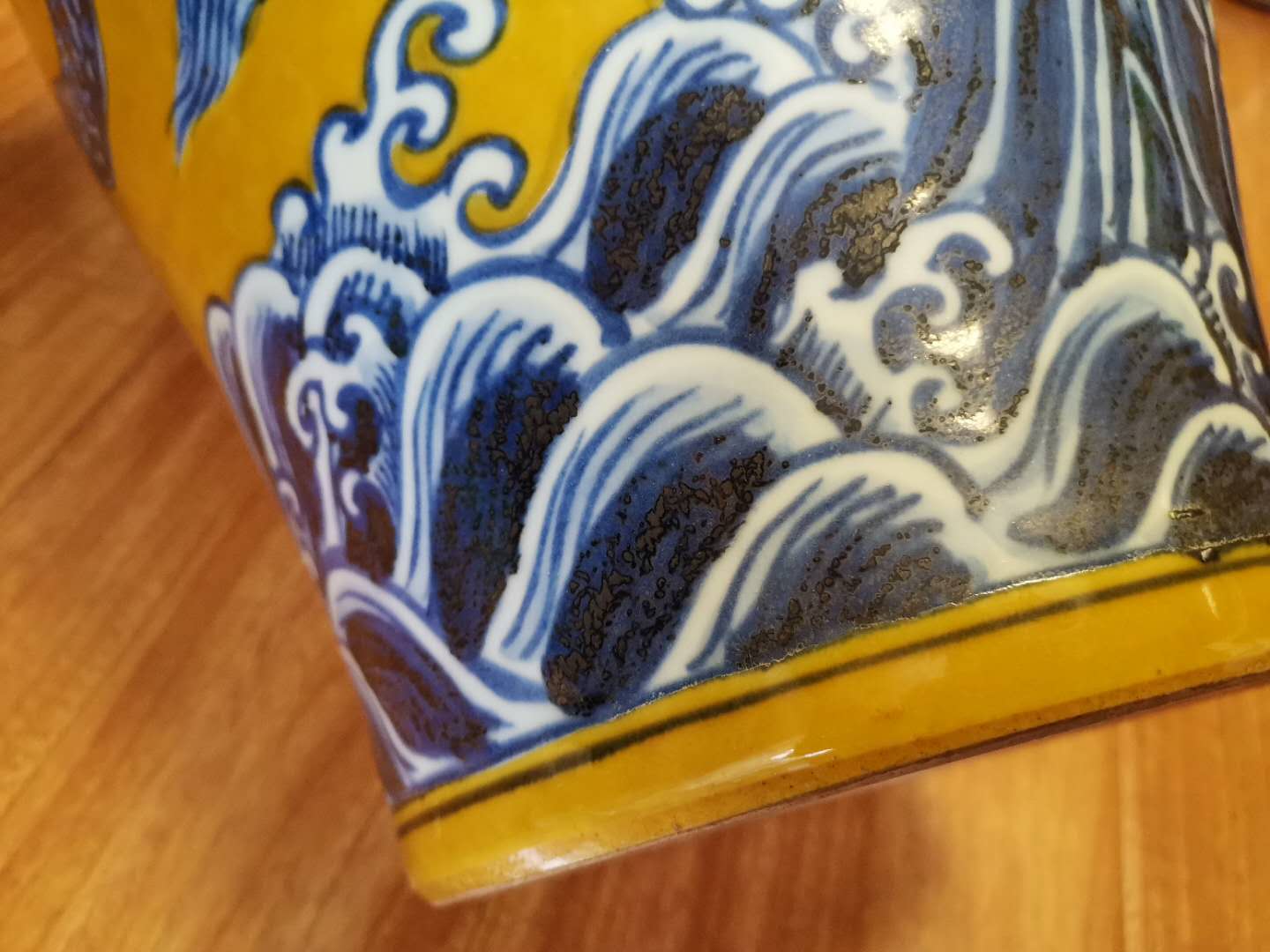
海水纹流畅自然,黑铁斑十分明显,这部分看已经出现了锡斑特征。局部锡斑特征极其明显,光线反射呈现亚光,有如锡的反光,这些特征无不体现它的年代身份。
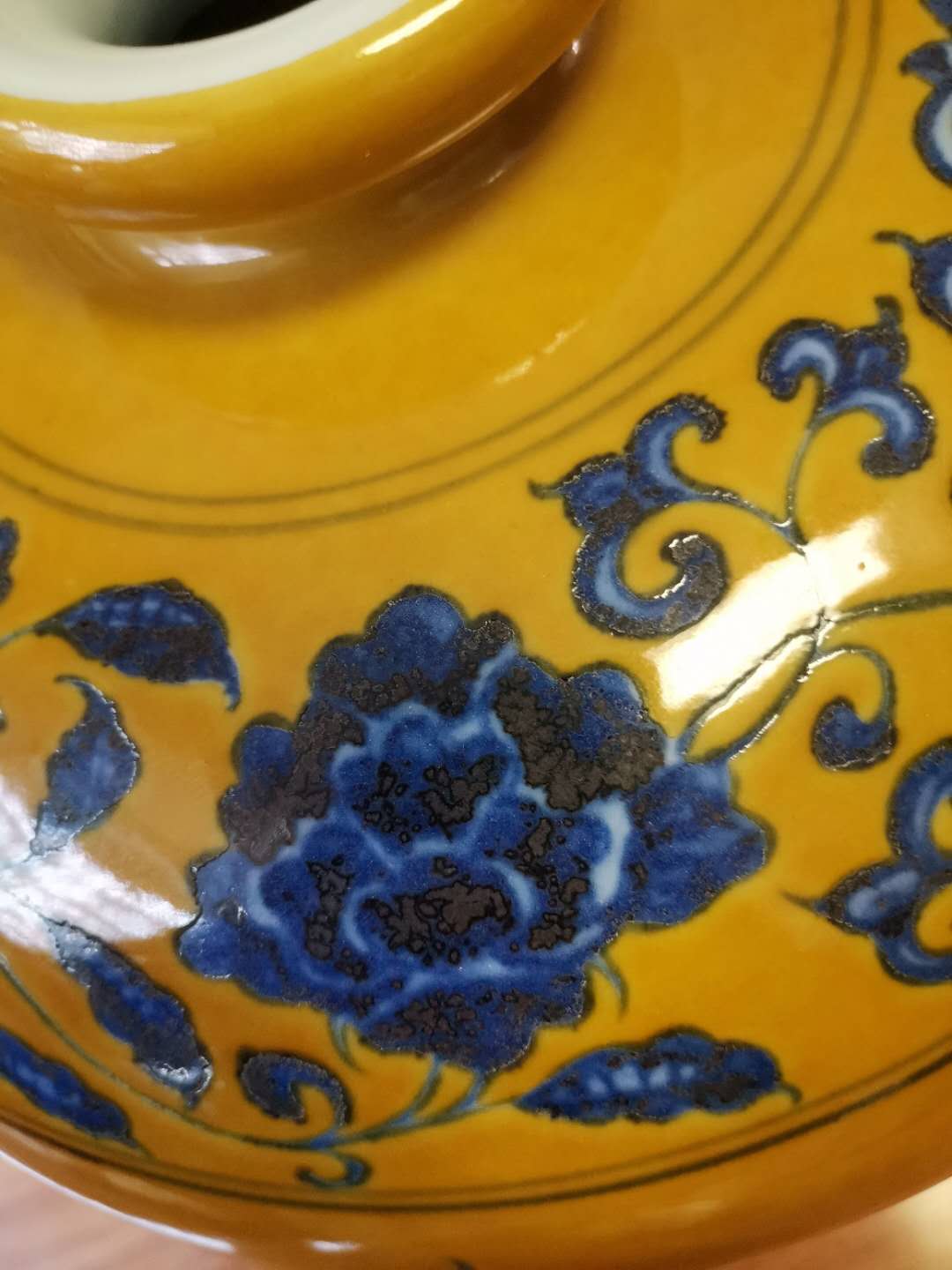
这是画的缠枝牡丹寓意富贵,同样有明显的锡斑特征。
综合以上特征为明显的明代黄地青花梅瓶,器型端正,青花吃胎特征明显,晕散自然,有明显的锡斑特征,落款规整,书写精美,为开门的到代真品瓷器,目前市场及其稀缺,具有极高的收藏价值。
随着瓷器烧造技术的不断提高,瓷器的造型更加丰富,很多陈设用瓷开始有了一定的实用功能。经过明代嘉靖、万历两朝的发展,花觚的造型也更加多样化。花觚始于元代,主要流行于明嘉靖、万历至清乾隆这一段时期。早期的花觚除了陈设用之外,民间多用于插花,布置厅堂。花觚的造型隽秀,端庄大方,线条变化十分丰富。常见的有五彩花觚和青花花觚两种。装饰题材有人物故事、民间传说、缠枝花卉或是花鸟等。花觚的时代特征十分明显,明代的花觚主要是三段式的,上面是喇叭口,中间是鼓腹,下部是凤尾,器型古朴典雅。我们常见的明代花觚以五彩最为贵重。一般都呈现出文饰繁密,层次分明,色彩艳丽,风格硬朗的特点。
藏品介绍
中文名称:黄地褐绿彩花 觚
英文名称:Yellow ground brown green colored vase
类别:瓷器
规格:1对
品相:美品
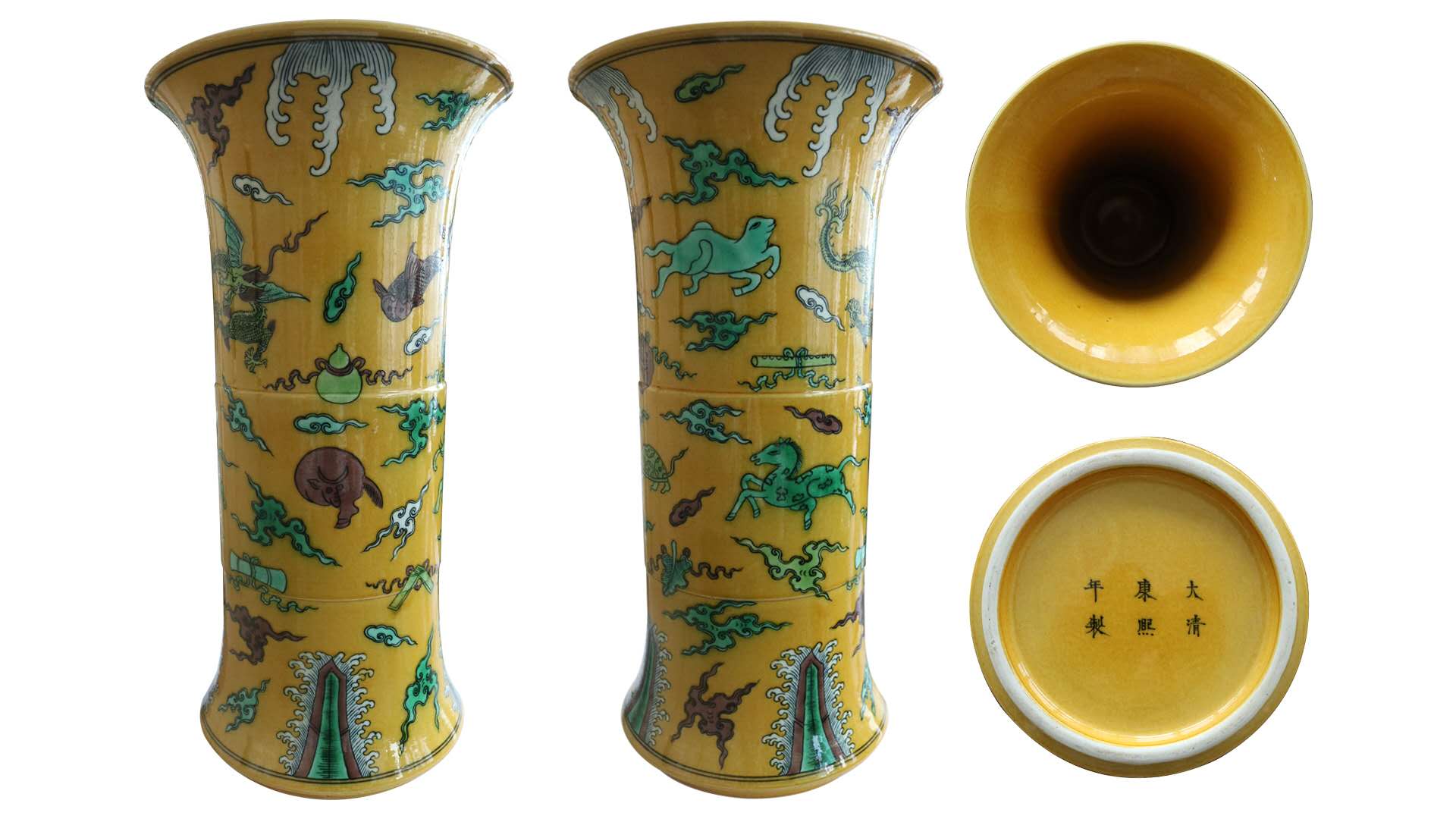
大清康熙年制花觚;这一时期德花觚品种在当时也是较常见德品种之一,造型古拙,凝重质朴。瓷土精细,瓷质坚密,胎体厚重,为清代各朝比重最大,釉面光洁细腻,胎釉结合紧密,有紧披光亮感。康熙瓷器器口施加含粉的白釉以及器里釉色与器物釉面基本保持一致是这一时期的重要特征。青花用料以青翠的"翠毛兰"为代表。五彩以红、黄、紫、绿、蓝、黑等,很少用青花,这一时期的花觚所绘图案大多为山水、人物。口沿敞口角度加大近90゜,口沿及底沿部多有装饰纹带,或双蓝圈,器中部明显隆起把所绘内容分为上、中、下三个部分。
这对花觚纹饰种类较多,主要是以寓意吉祥为主,绘有八仙法器,如意云纹,龙纹,双鱼等,全是寓意美好的画意,用此对花觚表现十分的讨巧,受人喜爱,品相十分完美,无磕,无残具有极高的收藏价值。
斗彩又称逗彩,中国传统制瓷工艺的珍品。创烧于明朝宣德年间,明成化时期的斗彩最受推崇,是釉下彩(青花)与釉上彩相结合的一种装饰品种。
斗彩是预先在高温(1300°C)下烧成的釉下青花瓷器上,用矿物颜料进行二次施彩,填补青花图案留下的空白和涂染青花轮廓线内的空间,然后再次入小窑经过低温(800°C)烘烤而成。斗彩以其绚丽多彩的色调,沉稳老辣的色彩,形成了一种符合明人审美情趣的装饰风格。
据历史文献记载,斗彩始于明宣德,但实物罕见。成化时期的斗彩最受推崇,明清文献中也称之为成“窑彩”或 "青花间装五色"。传世成化斗彩瓷器图案绘画简练,内容主要是花鸟、人物。它的做法是先用青花在白色瓷胎上勾勒出所绘图案的轮廓线,罩釉高温烧成后,再在釉上按图案的不同部位,根据所需填入不同的彩色,一般是3至5种,最后入彩炉低温烧成。按照专家陈万里先生的意见,成化斗彩又可以分为点彩、覆彩、染彩、填彩等几种。成化斗彩除个别的大碗外,多数造型小巧别致,有盅式杯、鸡缸杯、小把杯等。还有一种绘有海马或团花的盖罐,底有一青花“天”字,俗称天字罐等。
藏品介绍
中文名称:斗彩花卉四方盘
英文名称:Fight color flowers square dish
类别:瓷器
规格:一件
品相:美品
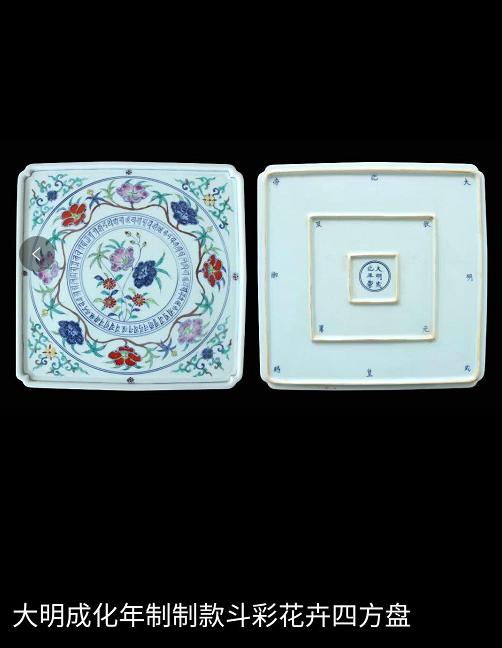
这件斗[dòu]彩瓷器落款规整,分为内中外三环,外环落款:大明成化皇帝*用御**,中环落款状元及第,内环落款双圈大明成化年制。为什么斗字后面我特意写上拼音呢,由于很多业余爱好者不是很专业把斗[dòu]彩读成了斗[dǒu] 彩,特标注拼音来纠正,斗彩的意思是釉下彩与釉上彩相互斗艳,所以才叫的斗彩,釉下彩常采用青花来作画,釉上彩是各种颜色的低温釉烧制而成,釉下釉上结合的是否自然,恰到好处,是斗彩最核心的艺术。
可以看见这件斗彩结合的非常精妙,釉下青花,与釉上彩完美的结合,表现的花卉纹十分美观规整,整体画工形似玉璧,画工精妙,斗彩想结合的很生动形象是极其困难的,提到斗彩大家第一想到的肯定是刘益谦斥资2.8亿买下的斗彩鸡缸杯了,自从这个天价成交的新闻刷爆藏友圈后,古玩市场出现了大量的现代工艺仿制的斗彩鸡缸杯,只要玩瓷器的都会花点小钱买着玩玩,弄得鸡缸杯到处都是,而这件四方斗彩盘却极其稀少,可以说这件瓷器的画工是可以与真品鸡缸杯去一较高下的,这件瓷器无磕,无残,无穿线,是一件难得的馆藏级藏品。
元青花
成熟的青花瓷出现在元代的景德镇。元青花瓷的胎由于采用了“瓷石+高岭土”的二元配方,使胎中的Al2O3含量增高,烧成温度提高,焙烧过程中的变形率减少。多数器物的胎体也因此厚重,造型厚实饱满。胎色略带灰、黄,胎质疏松。底釉分青白和卵白两种,乳浊感强。其使用的青料包括国产料和进口料两种:国产料为高锰低铁型青料,呈色青蓝偏灰黑;进口料为低锰高铁型青料,呈色青翠浓艳,有铁锈斑痕。在部分器物上,也有国产料和进口料并用的情况。器型主要有日用器、供器、镇墓器等类,尤以竹节高足杯、带座器、镇墓器最具时代特色。除玉壶春底足荡釉外,其它器物底多砂底无釉,见火石红。
藏品介绍
中文名称:元青花八仙凤纹瓶
英文名称:Blue and white vase with eight immortals and phoenix patterns
类别:瓷器
规格:1件
品相:美品
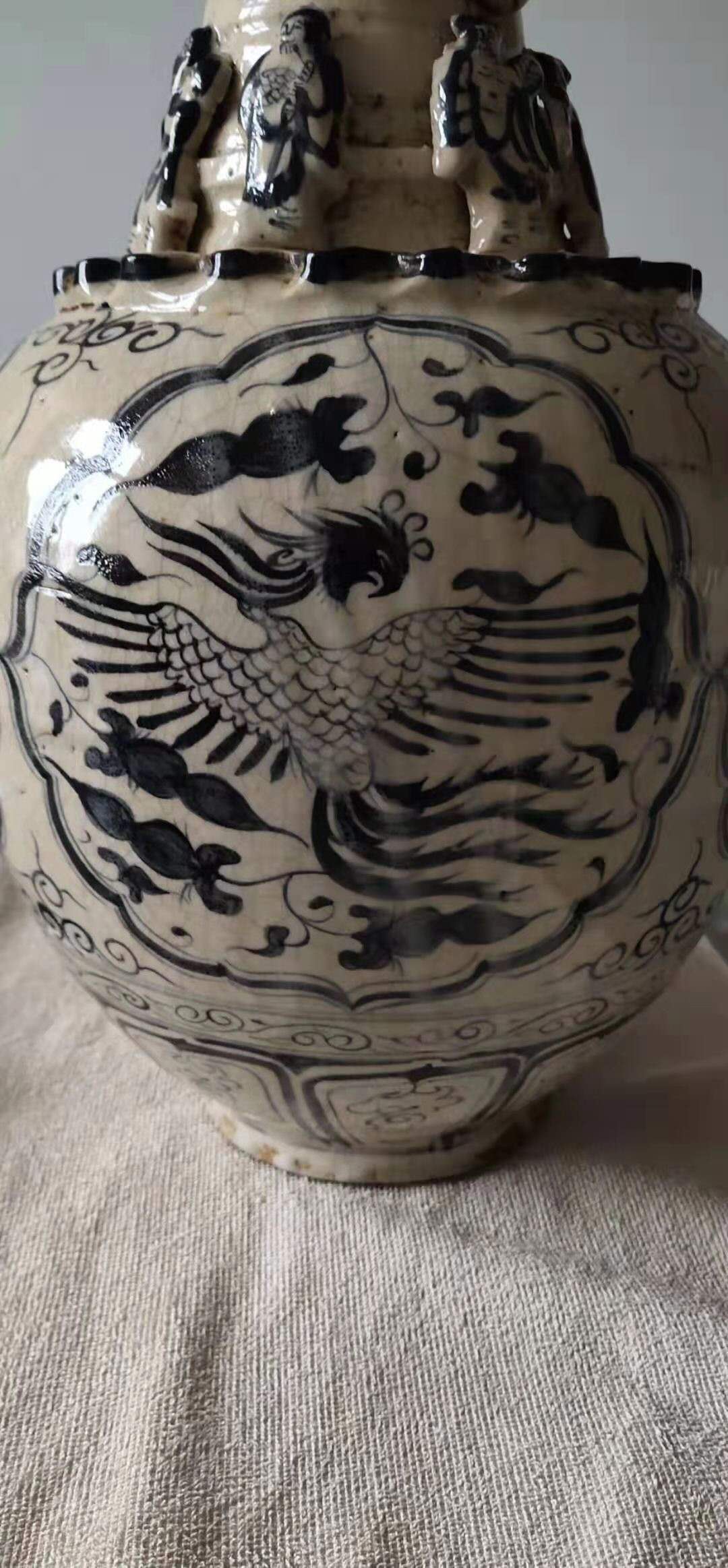
瓶肩的八仙人物使用了堆塑工艺,表现立体生动,瓶身开窗,绘制凤凰,瓶底为孔雀开屏纹。
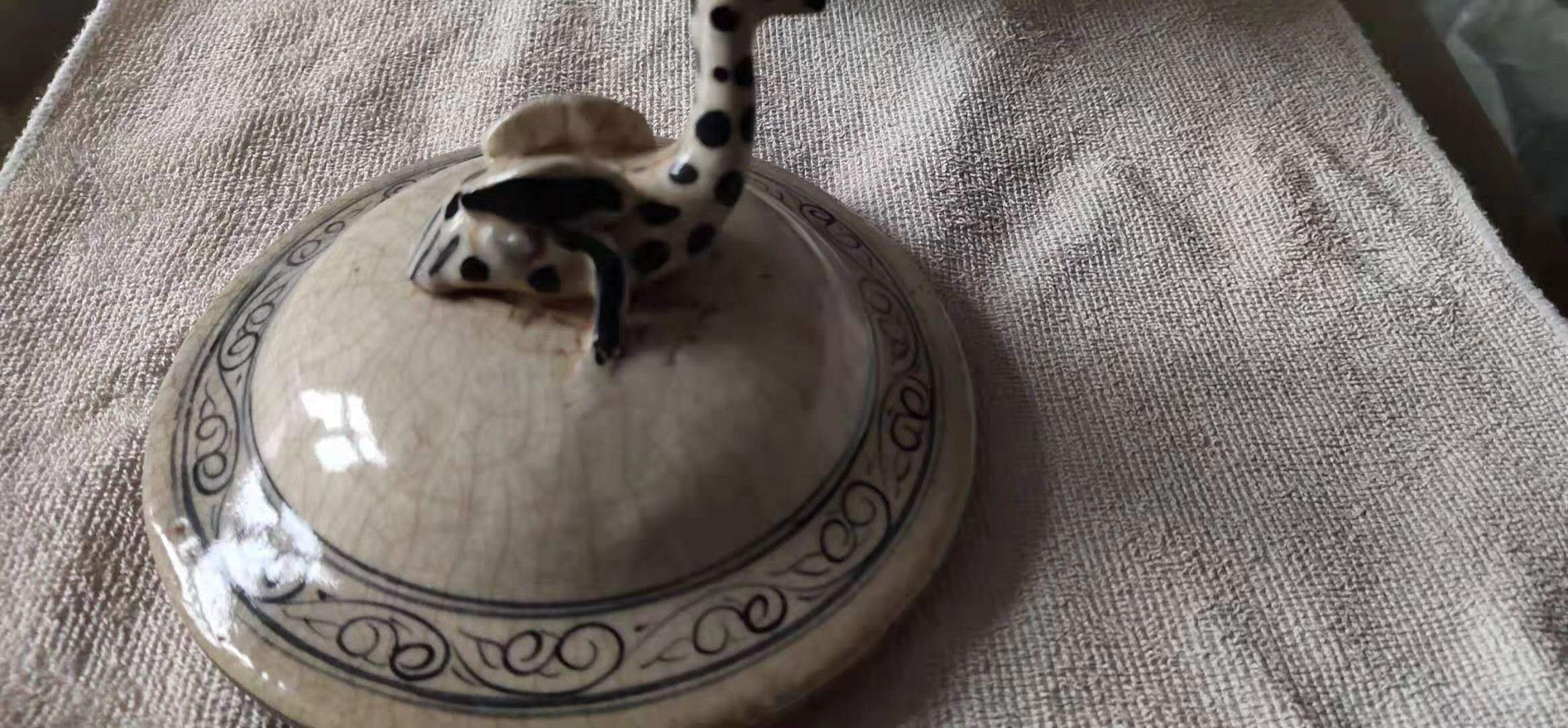
可见光线折射处有明显的缩釉现象。
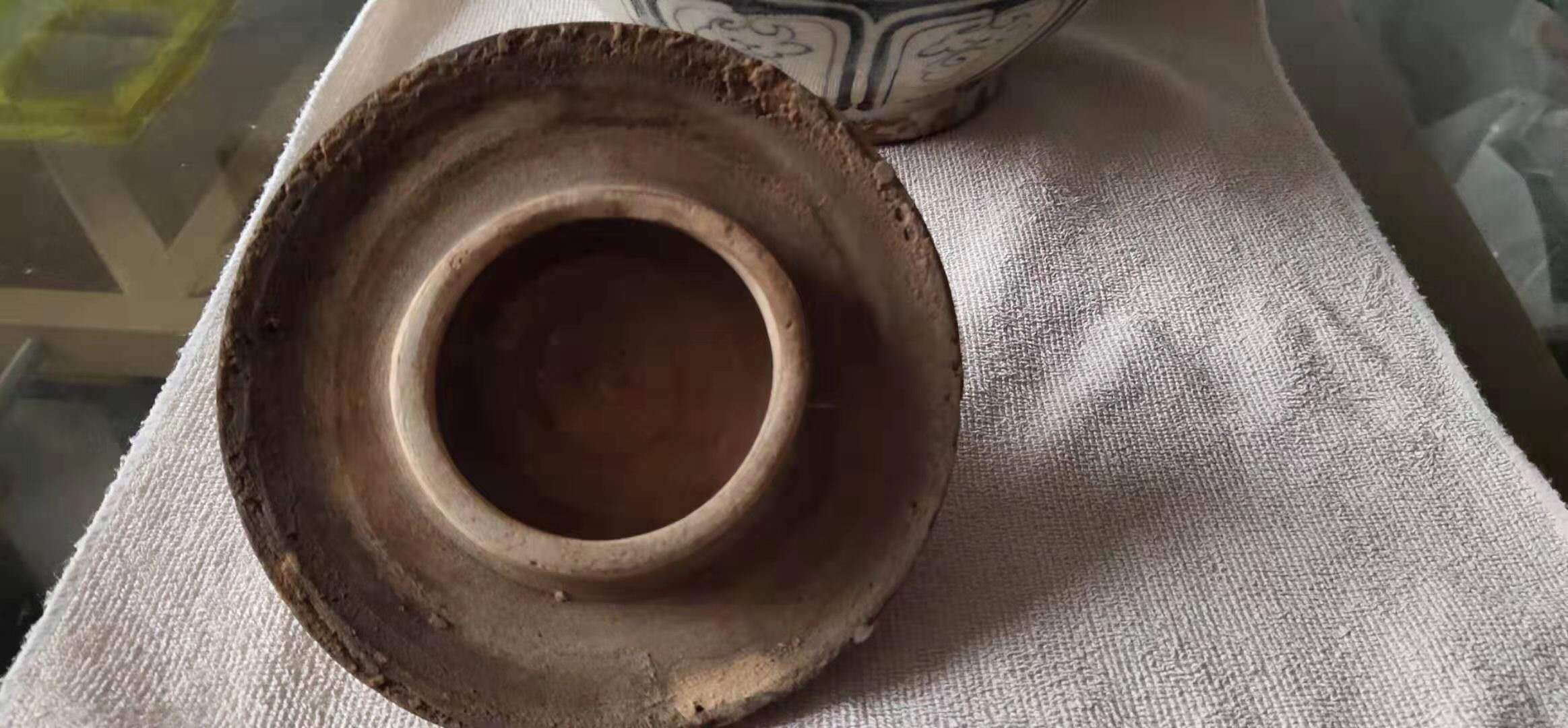
真品元青花口沿,器身棱角处多伴有暴釉,缩釉等现象。当时因受技术瓶颈所限,此现象当时应是产品的缺欠。观其国外伊朗,土耳其及国内高安元青花博物馆,馆藏品95%均可见此现象。也正因此现象的存在,被认定为真品元青花。
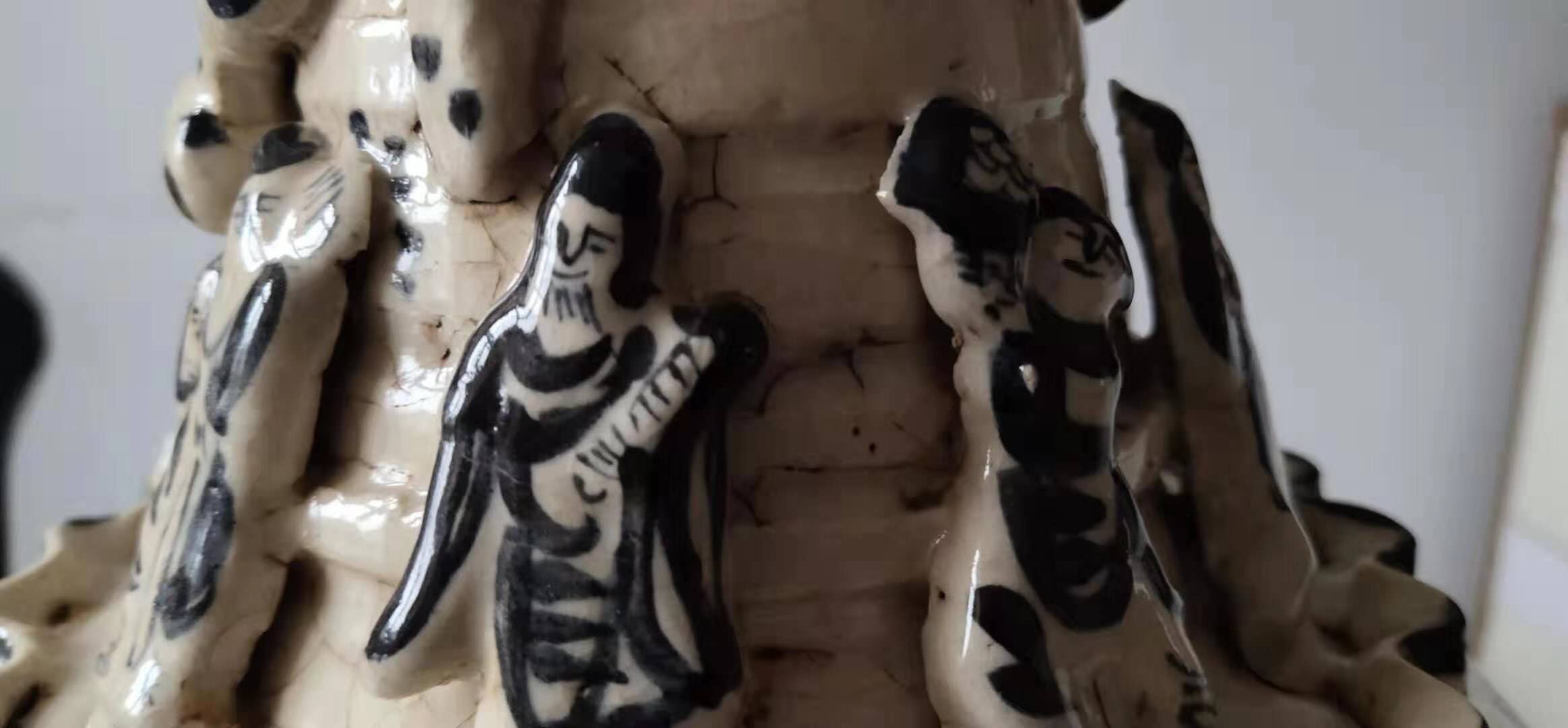
八仙人物局部特写
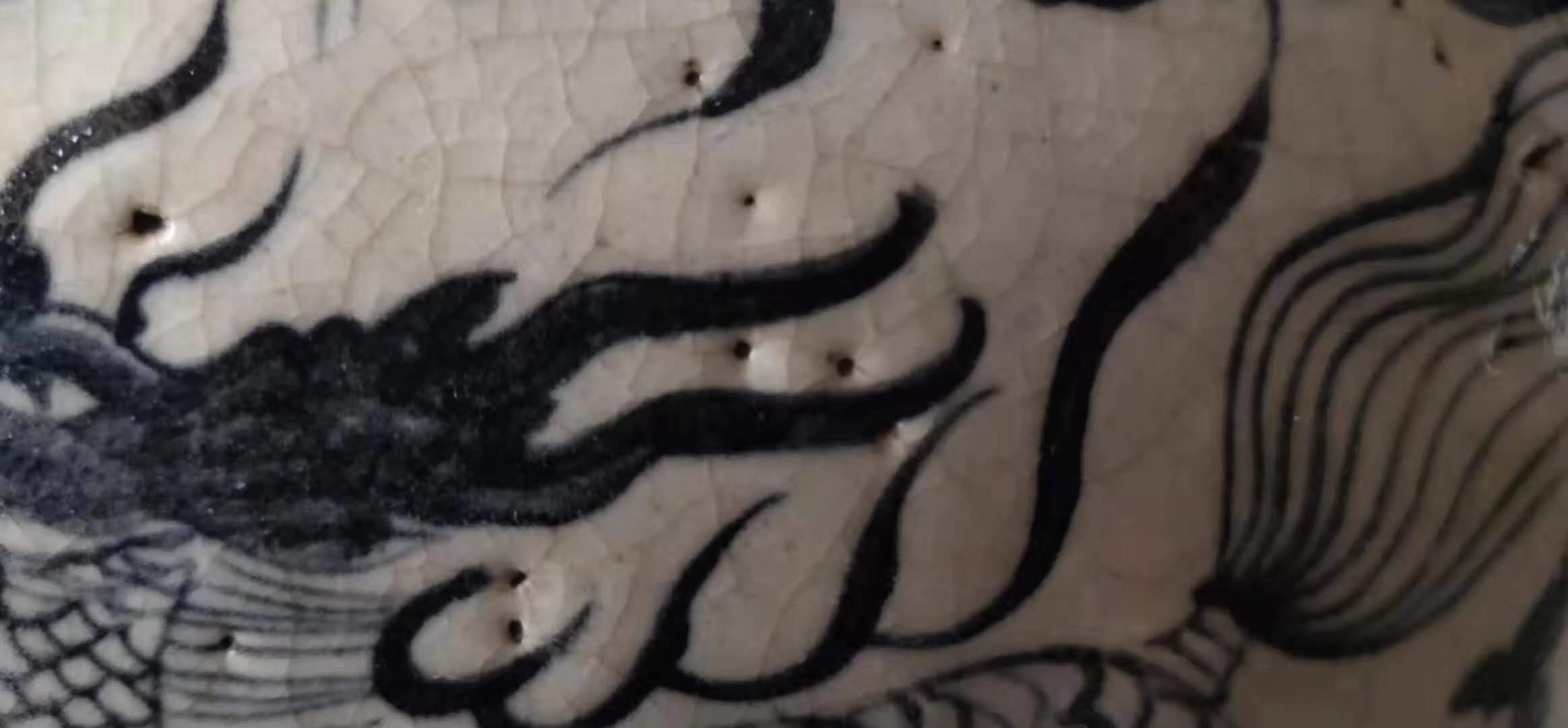
棕眼十分的明显
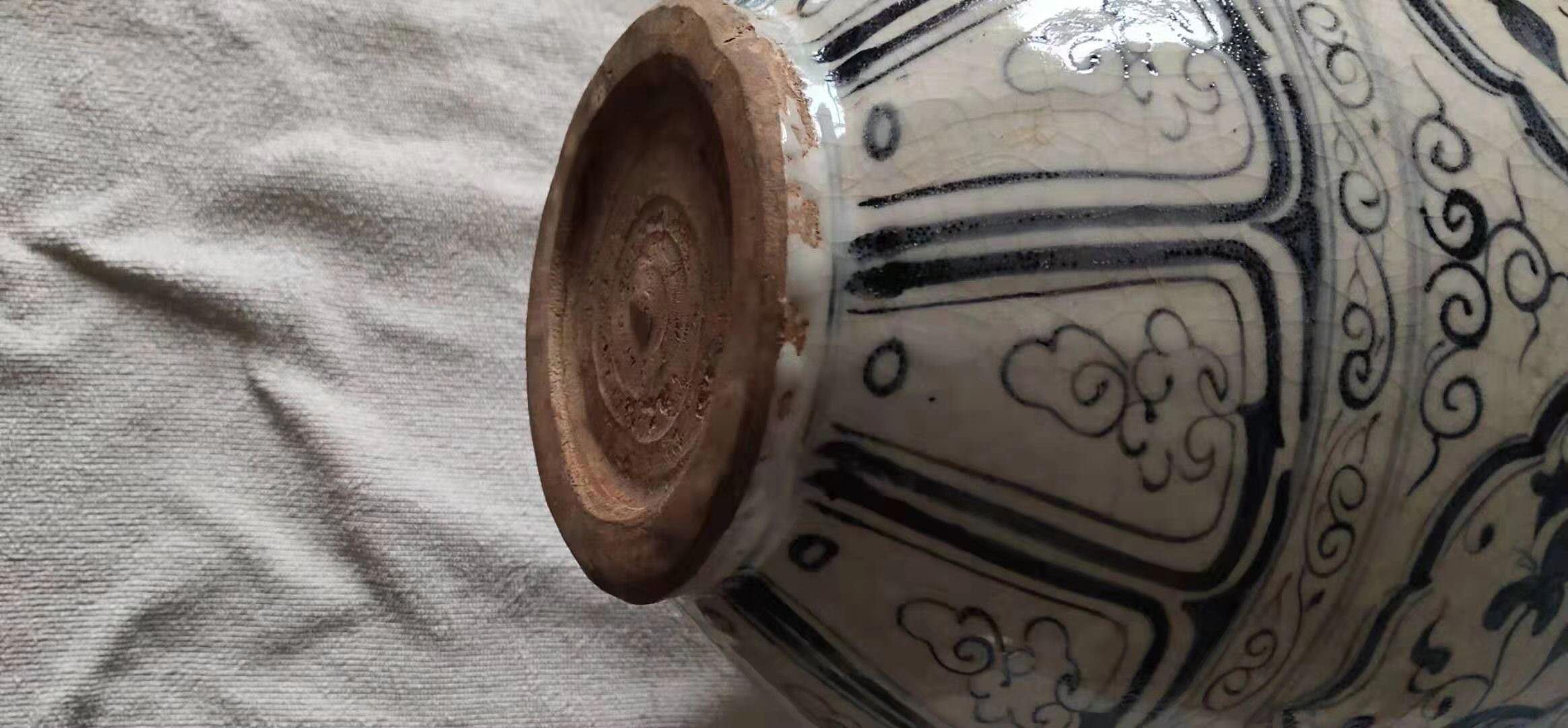
上图底部火石红极为明显,土沁自然痕迹相当明显,成熟的青花瓷出现在元代的景德镇。元青花瓷的胎由于采用了“瓷石+高岭土”的二元配方,使胎中的Al2O3含量增高,烧成温度提高,焙烧过程中的变形率减少。多数器物的胎体也因此厚重,造型厚实饱满。胎色略带灰、黄,胎质疏松。底釉分青白和卵白两种,乳浊感强。其使用的青料包括国产料和进口料两种:国产料为高锰低铁型青料,呈色青蓝偏灰黑;进口料为低锰高铁型青料,呈色青翠浓艳,有铁锈斑痕。在部分器物上,也有国产料和进口料并用的情况。器型主要有日用器、供器、镇墓器等类,尤以竹节高足杯、带座器、镇墓器最具时代特色。除玉壶春底足荡釉外,其它器物底多砂底无釉,见火石红。
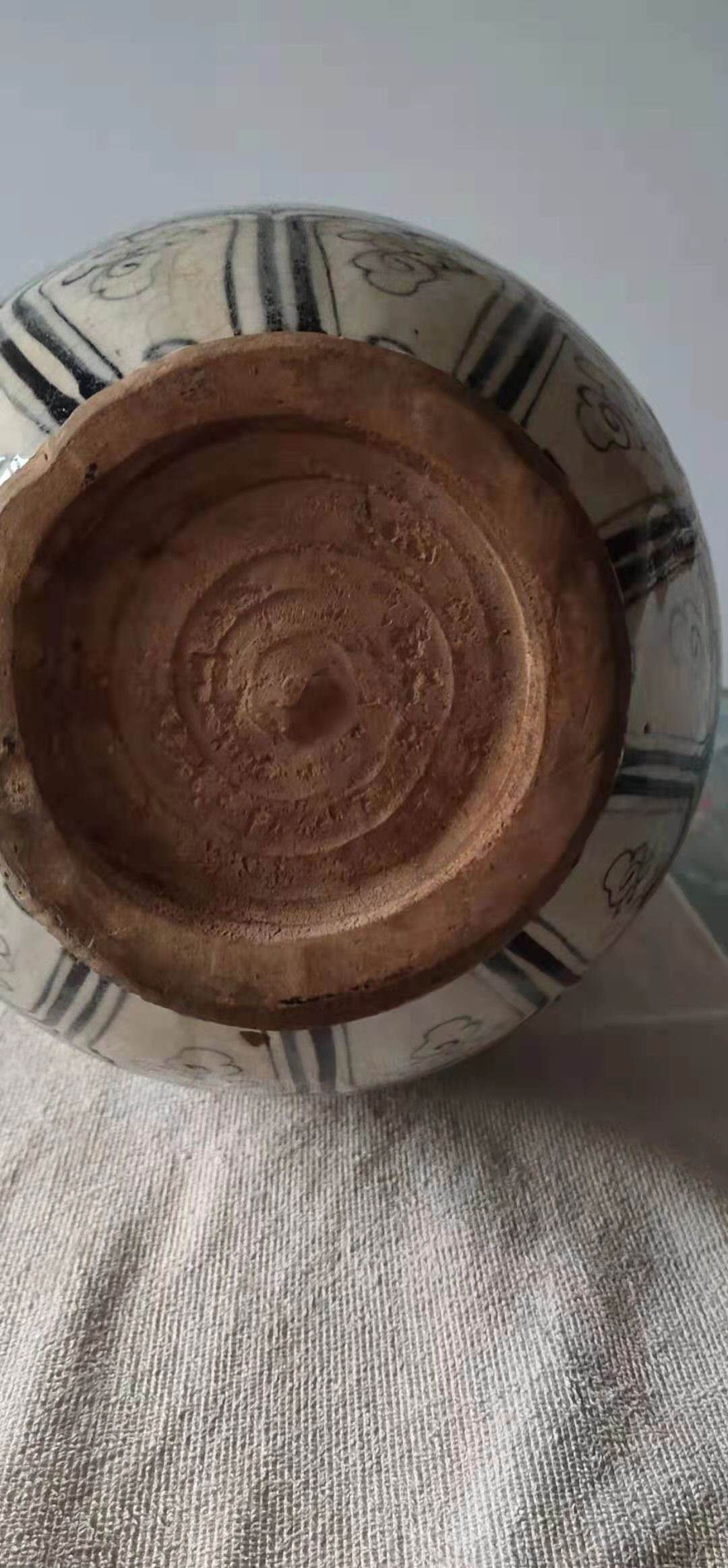
土沁,是古陶瓷鉴别的一大要素。玩古陶瓷人视土沁为宝,似乎宝贵的程度更甚于器物本身。早先的国人(明清民国)是否这样不得而知。但西人大多不是这样,他们总是喜欢把古器擦拭的精光锃亮,尽量还原其本质之美。这两种崇美的取向区别,譬喻一下,就好比两人争论这姑娘是皇帝的女儿,一个人一定要寻一些紫禁城里的老泥巴朽木渣什么的往她身上抹,另一人却让她洗完澡看她的皮肤、头发、风韵是否带有皇家的风采。我想,除了商业表达因素外,根上还是辨古的基本思路和方法上有所区别,这就涉及到怎么看待和对待土沁。
元青花在世界瓷器史中具有很高的威望和声誉,收藏家们纷纷争相以高价购买,世界一些大型博物馆更是将元青花作为镇馆之宝。据官方不完全统计,目前全世界馆藏元青花约400余件,新出土和散落在民间民藏手中的元青花未包含在内,但收藏界普遍认为元青花存世量稀少,奇货可居,而八方罐就更为少见了。目前全世界发现并记录在案仅有两件,一件在辽博,另一件是在泰国古都泰可素塔基下出土。
这件瓷器品相完美,无穿线,磕缺,损坏,修补问题,可遇不可求,能收藏它不仅是财富身份的体现,更能体现对艺术喜爱,很多藏家看到好的藏品是必须要咬牙才能拿下来的,这件瓷器已经是瓷器界的顶峰,刘益谦说过:收藏品只买贵的,因为价值越高的越稀有,越是能刷新艺术品的交易记录。
英文翻译:Gold, China's precious metal, has long served as money. The earliest gold COINS in China were inked by the State of Chu during the Warring States Period. They were flat gold plates with inscriptions, several to dozens of square Yin inscriptions of "Ying Yin", which contained more than 90% gold, even up to 99%. The other "Ying Ye" is similar to the former, but cast in Chen, is also chu gold coin. In addition to the plate gold COINS, there were various gold ingot, collar and other gold COINS in the past dynasties. Because of its physical properties and social value balance, gold has become the ideal bearer of money.
As a result of the back of the gold coin design for a coil dragon, so commonly known as "dragon." Due to the small amount of casting, and is a precious metal coin, the more rare, the market price is high, and still has the potential to appreciate, is a collector of rare products.
The collection is introduced
Chinese name: Qing gold coin sample
Sample Qing Gold COINS
Category: Miscellaneous
Specification: one coin
Appearance: Beautiful
With auspicious clouds all over the body, the dragon is worshipped as a god. "The Dragon Chart is a totem of the Chinese people. The emperors and their descendants in the past dynasties were called the sons of the Dragon and the Sons of the Dragon Family. The image of the dragon was used exclusively on royal household items. According to historical records, as early as in the Period of Emperor Wudi of the Han Dynasty, "Platinum three products ", there is" dragon "cast graphics; Later in the Song, Yuan and Ming Dynasties, a small number of circulating COINS were cast with dragon patterns. Especially in the past on the money, dragon figures are more. During the reign of Emperor Guangxu and Emperor Xuantong in the qing Dynasty, most of the gold, silver and copper COINS cast by the emperor guan had dragon figures on the back. According to incomplete statistics, there are about a thousand patterns of dragon COINS on the qing dynasty silver COINS. These dragons come in all shapes and forms. This coin is named "Sitting Dragon", with auspicious clouds around it, giving people the feeling that they are sovereign of the world. In ancient times, only the royal family could call themselves the real dragon, the son of Heaven, and the dragon is also a symbol of the king.
Positive double circle, on the outer ring in guangxu c noon, the ring value libraries even two, a six star around each flower, inner ring qing gold direct reading four word, c noon qing COINS for BiMian carved Chinese only without the manchu, against the qing regime is not adopted, so very few circulation, to now more rare, c sixth gold COINS in the lateral side road and dragon cloud size, toothed edge xiao yun edition version, optical margin big cloud. Ding Wei gold also has large, small cloud version, to the cloud version is rare, there is an alloy material.
This afternoon years qing COINS as a rare specimen, only a very few and far between, belongs to the rare large cloud optical margin is the edition and version, coin collecting value most only, circulation, one is the appearance, more valuable rare coin, appearance ruined as worthless, clear view of the front side of the coin, chiseled, performance pressure, no obvious wear surface, belong to the perfect appearance, it has been such a good product phase, is due to the specimen is not do circulation, only used for reference. As the saying goes, old ware is as precious as new. This coin is not only rare in the world, but also perfect in appearance and has extremely high collection value.
Pastel porcelain is enamel color, the qing court is another creation of color porcelain fired. Apply arsenic-containing foundation on the fired tire glaze, paint it and then wash it with a pen. The color of the glaze is powdery due to the emulsion effect of arsenic. Among the numerous qing court pastel porcelain, Cixi pastel is simple, straightforward, rich and luxurious with a unique style. The red bird peony rich pot is a classic of its style. After that, yuan Shikai, with the talent of a king, proclaimed himself emperor at the end of 1915, with the title "Hong Xian". It refers to its great legal system, advocating the new life of the people, justice and transparency. It is customary for the new emperor to burn new porcelain to congratulate him on his accession. Yuan Shikai pastel jade pot spring bottle, using porcelain stone as the embryo, molding, material is single, thin transparent. Yuan Shikai porcelain has completely lost the internal vitality of the ancient ceramic body, completely relying on paint and techniques, just like makeup on a corpse, without the vitality of the whole life.
The washing and dyeing of pastel porcelain decorative painting absorbed the nutrition of sister art, and adopted the technique of stippling and color matching, so that the objects to be depicted, no matter the figures, landscapes, flowers, birds and insects, all appear to have strong texture, clear light and shade, and distinct layers. The painting method used is not only the fine meticulous brush painting, but also the simple freehand painting and the exaggerated decorative painting style. Even the print, watercolor, oil painting, watercolor and other sister arts are integrated and applied, the subtle, not the slightest bit. Uninhibited place, lively. The drawing of powdery colour, want to pass to make a chart commonly, rise chart, make a chart, beat a chart, draw a line, colour makings, fill color, wash dye wait for working procedure. From drawing to taking pictures, it is a stage in which ink lines are used to start drawing and create ideas. For example, painting porcelain determines decoration content and image composition. The final draft of the formal drawing is called "Drawing up", and the printing of a pattern with heavy ink from the porcelain is called "drawing up". Then the ink line printed drawings transferred to the formal drawing of the porcelain tire, that is, "picture", so that can be painted porcelain. Powdery painting, coloring techniques are more complex and meticulous, generally picturesque, color, fill, wash, scrape, blow, point techniques. It has many special pens such as brush, fill pen, wash pen, color pen, Duji pen, pure gold pen, goldwater pen, agate pen, pickling pen and so on.
The collection is introduced
Chinese name: Mu Dan Fugui compact
English name: Fugui Compact
Category: Porcelain
Specification: one piece
Appearance: Beautiful
Bats are sometimes seen in pictures of blossoming wealth, because the word "bat" sounds like "rich". Flowers here generally refer to peonies. Zhao Shixue in the Theory of Peonies and Wealth in the Qing Dynasty mentioned that peonies have the title of king, the first of all flowers, and the name of the world. Husband called riches and honour, to clean the lotus, but not closed; The law to recluse chrysanthemum, but not appropriate also. Very yi, riches and honour alone peony also.
Kangxi, Yongzheng powder enamel
Powder enamel powder enamel was first created in Kangxi and flourished in Yongzheng. In the late Kangxi period, on the basis of enamel colored porcelain production, Jingdezhen kiln began to fire powder colored porcelain, but the production was relatively rough. Powder colored porcelain was only used in the flowers of safflower, while other patterns were still used in the production of colorful porcelain. The main discovery has two varieties: one is the white ground pastel implement; First, the green, yellow and purple tri-colored porcelain is decorated with carmine red (golden red) color. To the Yongzheng Dynasty, whether in the shape, glaze and color painting, powder enamel has been unprecedented development. Pastel is one of the most famous varieties of Yongzheng color porcelain. The color material is more delicate than that of Kangxi Dynasty, with softer colors and more textured layers. Most of them are painted on the white ground and a few on the colored ground. Flower butterfly chart is the most, peony, Chinese rose, begonia, four seasons flowers are also very common. The figure story diagram, in the powder enamel is also more. In addition, the homophonic patterns of "bat" (fu) and "deer" (lu) in pastel porcelain are very common. At that time, the so-called "overshoot" technique was highlighted.
In yongzheng's early period, there was kangxi's colorful style, with many paisle-colored decorative patterns, such as painted group flowers, group butterflies, eight peach bats (implying a long life and happiness), overshoot flowers, narcissi ganoderma lucidum, ladies, ma Gu and baby opera, etc. The ornamentation is clearly clear and neat. For example, the pink-colored peach bat plate starts from the outer wall and draws peach branches and leaves, and then passes through the mouth to the heart of the plate to draw peach branches and leaves and bats. In yongzheng Period, 8 peaches were generally painted, while in Qianlong period, 9 peaches were painted more, which was said as "Yongba Dry nine". Yongzheng's bat has a hook bent down the top of its wing, with a point in the hook and hair on its mouth (but not absolutely). The figures are small, handsome, or have a sparse background of rocks and trees, or leave more blank. At this time, as in the Kangxi Dynasty, "jin Hongcai" was frequently used, and the fine works were also inscribed with poems and fu in ink on the top of the ornamentations, and painted with red to greet the first or pressing the corner of the chapter, revealing the Confucian and elegant style of the social literati at that time. The general civilian kiln in the bowl, dish, furnace, pot, dish mouth bottle, small bottle painted powder enamel.
Yongzheng powder enamel kiln most of the "Qing Emperor Yongzheng system" two six - character regular script. Civilian kiln high-quality goods has money of name of private hall, also have design mark, with pen of bottom draw blue and white, ingot and ruyi, homophonic "must ruyi" wait for outstanding.
The bottom double circle of six characters blue and white, blue and white appear halo loose eat into the bone, the circle feet oxidized yellow, and the glaze appears diffuse reflection under the natural light, this porcelain to open the door to the generation of the kiln ware, it is very rare, very rare.
Peony is a traditional Chinese flower. For a long time, peony has enjoyed the reputation of "national beauty, heavenly fragrance" and "king of flowers". The Chinese people regard peony as a symbol of peace, happiness, prosperity and affluence. Peony is the "national flower" of China.
It can be seen that the peony in this compact is extremely neat, and the flower branches are textured to show the real nature. The pink peony has a lovely shading effect, and the more valuable box cover and box body picture are perfectly docked. The painter is amazing, only the official kiln has such a good painter.
The system of ancient porcelains was very strict. It was clear how many official kilns were burned, where they were burned, who painted them and who painted them. If something went wrong in that process, people would lose their heads, so the production of official kilns was very strict, which was beyond the reach of people.
Blue and white porcelain, also known as white blue and white porcelain, is often referred to as blue and white porcelain. It is one of the mainstream varieties of Chinese porcelain, and belongs to underglaze color porcelain. Blue and white porcelain is made of cobalt ore containing cobalt oxide as raw material, which is decorated on the ceramic body, then covered with a layer of transparent glaze, and fired by a high temperature reduction flame. Cobalt material is blue after burning, with strong coloring, bright hair color, high burning rate and color stability. The original blue and white porcelain appeared in The Tang and Song dynasties, while the mature blue and white porcelain appeared in the Hutian kiln of Jingdezhen in the Yuan Dynasty. The blue and white of Ming Dynasty became the mainstream of porcelain. It reached its peak during the Kangxi period of qing Dynasty. In the Ming and Qing Dynasties, it also created blue-and-white colorful, malachite-green glaze blue-and-white, soya-green glaze blue-and-white, blue-and-white red, yellow-ground blue-and-white, blue-and-white and other derivative varieties.
Calabash bottle: The bottle made by longquan kiln in the late Period of the Southern Song Dynasty, its body looks like calabash, hence its name. Small mouth, short neck, bottle body from two pieces bonded together. Name and "Fu Lu" homophonic, and the shape of the "Auspicious" word, so also known as "Auspicious bottle", meaning good luck. During the Song and Yuan dynasties, longquan kilns and Jingdezhen kilns all had production.
The collection is introduced
Chinese name: Qianlong blue and white gourd bottle
Qianlong Blue and White Gourd Bottle
Category: Porcelain
Specification: One pair
Appearance: Beautiful
Twig pattern is one of the traditional ornamentation in ancient China. As the most common pattern on porcelain. After the Yuan Dynasty. In The Ming Dynasty, it was also called "twig", which was made of plant branches or vines and extended up and down, right and left, to form a two-square or four-square continuous wave line, repeating and changing endlessly. Twined lotus, twined peony, twined grass and vine all belong to this kind.
This device is gourd-shaped, straight mouth, short neck, girdle waist, shallow circle feet. The bottle body is divided into two parts with blue and white twig pattern as the main part and blue and white twig pattern as the separate part. A large part and a small part are the blue and white twig pattern of painting. The bottom part is with a circle of ruyi pattern, which means good luck. This piece of gourd bottle, mouth edge is slightly skimmed, the line is round and graceful. Decorative layers of rich, strong texture, simple and sedate, majestic, furnishings, epp. In the five thousand years history of the Chinese nation, calabash is regarded by many nations as the ancestor of human beings and worshipped. In myths and stories, calabash is always accompanied by gods and heroes, and is believed to bring happiness to human beings and drive away evil spirits. Calabash is an ancient artifact, also known as "Pu Lu", homophone for "Fu Lu". Its branches and stems are called "tenbana", homophone for "wandai", so "Pu Luwan" is homophone for "Fu Lu Wandai", the symbol of good luck, calabash and its stems and leaves together are called "Posterity Wandai". Therefore, calabash is the symbol of "fu Lu Auspiciousness", "health and longevity", and is also a good product to protect house and home.
Blue blue color, consistent with the characteristics of Qianlong blue.
Bottom foot is, six words blue and white qianlong qianlong system qing Dynasty, the font is exquisite clean tire bottom.
The bottom is decorated with peacock's screen, which is also a symbol of good luck. This pair of gourds and bottles are in good condition, open to the next generation, which means good luck. They belong to delicate porcelain in the market and have extremely high collection value and economic value.
Blue and white porcelain is the best performance splash-ink landscape painting of China, it is the other porcelain can't do, so most Chinese wind of blue and white porcelain, most can reflect the best carrier of Chinese landscape painting art, China this word is the meaning of the Chinese is known to all, but the meaning of this word is the earliest porcelain, because the country is referred to as Chinese porcelain, is China's international influence in our country, has become the international on a card art, at a time when export porcelain is blue and white porcelain, the blue and white porcelain to open the door to me, drawing fine, meaning auspicious, above all is a very rare class library collection, It can be said that a treasure is easy to get, a treasure is hard to find.
Yellow ground blue plum bottle this product is graceful in shape, graceful in body, elegant in temperament, with excellent glaze, plump and plump. The whole body to yellow glaze for the ground, painted dragon pattern. Its yellow color is uniform and bright, the blue and white hair color is dazzling, and the yongle brushwork is like ink painting incisively and vividly, reflecting up and down, the shape and the glaze color match, as if made in heaven, the two complement each other.
The collection is introduced
Chinese name: Yellow ground blue plum vase
Yellow ground Blue Plum Vase
Category: Porcelain
Specification: 1 piece
Appearance: Beautiful
Plum vase, also known as Jing Vase, first appeared in the Tang Dynasty, became popular in the Song and Liao dynasties, and many new varieties appeared. In modern times, Xu Zhicheng described in detail the shape, characteristics and the origin of the name of the plum bottle in the book "Porcelain for Drinking Flow Zhai" : "The mouth of the plum bottle is thin, the neck is short, the shoulder is very broad, the shank is narrow, and the foot is slightly rich. The diameter is small only in proportion to the thin bone of the plum, so the name plum bottle. As for the use of plum bottle, there are verses such as "Clear wine" and "sea of wine" in the belly of the white ground black plum bottle in Cizhou Kiln. Plum bottle is not only a wine utensil, but also an irresistible ornamental object. Accordingly, this kind of implement makes delicate more, not only take into account storage wine capacity, pay attention to modelling to be graceful even.
Plum bottle shoulder sign, Yongle year, smooth writing, blue and white ink darker, writing marks obvious. Light refraction, there are obvious iron show spot: the green material to eat the fetus is obvious, the surface of the black form a distinct concave convex feeling, the light green flowers appear a clear halo loose, this is to eat in the fetal bone.
Imported green material for high iron and low manganese, fired blue and white, above the color is rich, there are black spots, in the black concentrated twinkling like lead, commonly known as' tin light 'or' iron rust spot '. Generally speaking, suma leaves green material in high temperature produced agglomerate spot, agglomerate spot and tin spot, can be said to be the root of tin spot agglomerate spot
The dragon's eyes are prominent, its neck is thin, and its claws are windmill claws, typical of the Dragon pattern in Ming Dynasty. The dragon pattern is shown in the form of white and blue flowers, which is vivid and extremely dignified.
You can see the visible flame pattern, but the bottom is the sea water pattern, but the dragon bead is surrounded by the flame pattern, this dragon belongs to the fire dragon pattern.
Black spots of iron rust with localized images of windmill claws.
As you can see from the arm, this pair of prune bottles is a big deal in the prune type.
The seawater grain is smooth and natural, black iron spot is very obvious, this part looks to have appeared tin spot characteristic. Local tin spot features are extremely obvious, light reflected in matte light, like tin reflection, these features all reflect its age.
This is a picture of peonies wrapped in peonies, implying wealth and wealth, with the same obvious tin spot characteristics.
The above features are obvious blue and white plum vase in The Yellow land of Ming Dynasty, with regular shape, obvious characteristics of eating embryo, halo and scattered nature, obvious tin spot features, neat signage, exquisite writing, and genuine porcelain for opening the door. At present, the market and its scarcity have extremely high collection value.
With the continuous improvement of porcelain-firing technology, the shapes of porcelain-firing became more abundant, and many porcelain for display began to have certain practical functions. After the development of Jiajing and Wanli dynasties in Ming Dynasty, the gu is also more diversified in shape. The gu starts from the Yuan Dynasty,