遇见桂地 他们有故事In Guangxi, lnspirations found
视频加载中...
守护白海豚 Guardians of the White Dolphins一家两代破解世界级难题 The Love that Crossed Two Generations
中国生物学界泰斗潘文石教授、女儿潘岳、女婿赵一,一家两代三口人,一边是40年不缀艰苦的守候中国野生动物,一边是商界的事业有成者,最终因为爱和勇气在广西走到一起,化作对白海豚的爱,创造出白海豚与大工业同在的经济发展与环境保护的共赢之路。
Professor Pan Wenshi, a leading biological scientist in China, has spent 40 years fighting against all odds to preserve China’s wildlife, including pandas, white dolphins and monkeys. He is no longer alone now as he is joined by his daughter Pan Yue and son-in-law Zhao Yi, both running successful businesses.
All three in this family of two generations came together in Guangxi because of love and devotion for the preservation of white dolphins, wanting to create a win-win path of economic development and environmental protection featuring “Industrial Development with care for White Dolphins”.
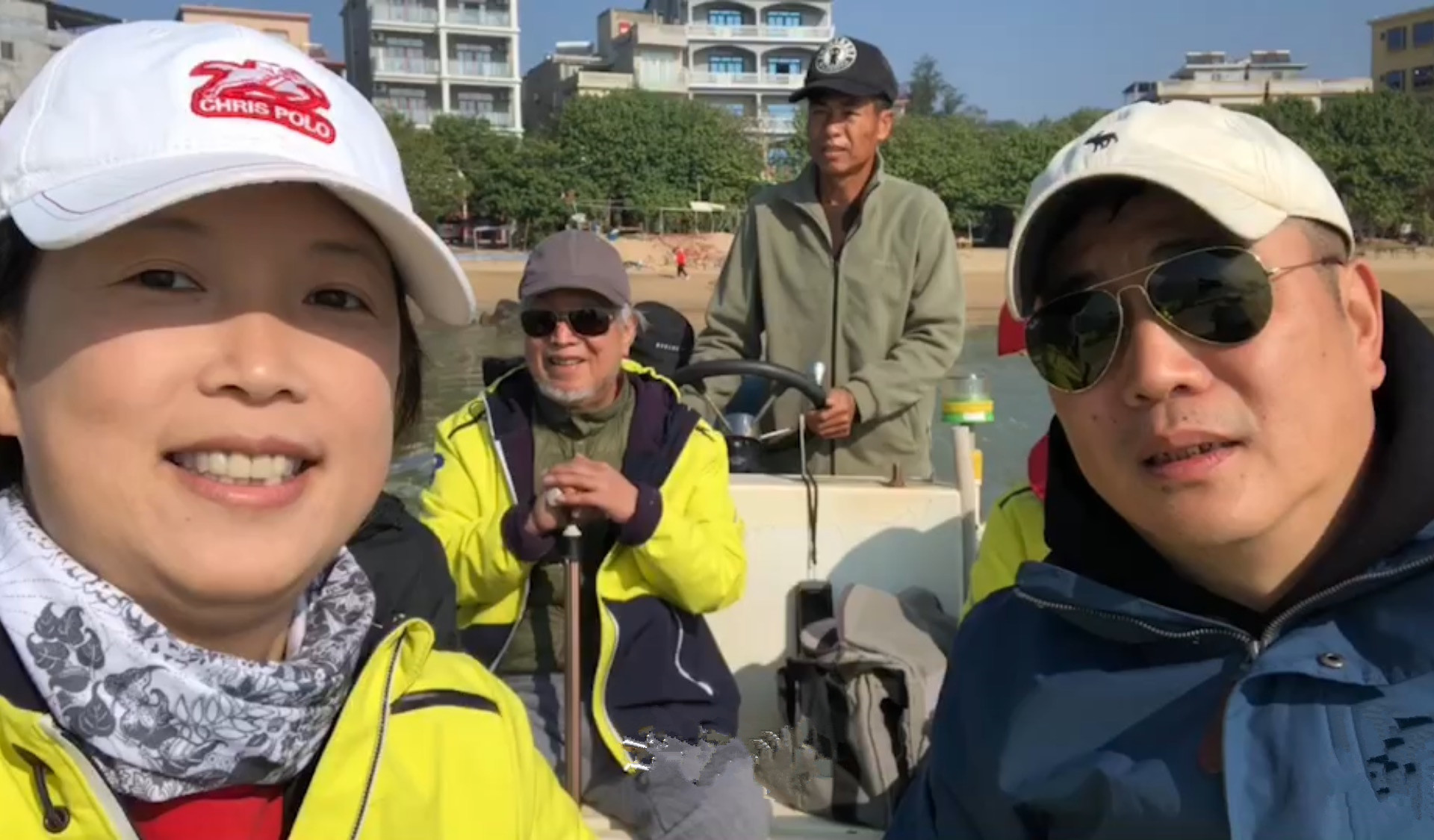
潘文石教授和女儿潘岳、女婿赵一,一家两代三口人出海观察白海豚栖息海域途中。
从推动建立保护区拯救大熊猫,到在广西崇左“拯救了一个村庄,救了一群猴”,到现在让白海豚保护与钦洲经济发展共存,潘文石环保理念也在不断发展和成长,保护海豚推进了地方水土的生物多样性和生态系统的保护,最终还是护佑人类自身。
Before coming to Qingzhou to work on the dolphins, they have also facilitated the establishment of a nature reserve to protect giant pandas, and launched a “saving a village with its monkeys” initiative in Guangxi’s Chongzuo.
In his decades of work, Professor Pan’s idea of environmental protection is also evolving. He believed that the protection of white dolphins plays a major part not only in the conservation of local biodiversity and ecosystem, but also in the safeguarding of people’s well-being.

钦州三娘湾白海豚。
从大熊猫、白头叶猴到中华白海豚 Guardian of Giant Pandas, White-headed Langurs and Chinese White Dolphins
1937年生于泰国曼谷的潘文石,是北京大学生命科学学院教授,北京大学大熊猫及野生动物保护中心主任,北京大学崇左生物多样性研究基地主任。他1961年毕业于北京大学生物系并留校任教。长期从事野生动物,尤其是大熊猫、白头叶猴、中华白海豚的研究和保护工作,从事保护工作40多年,他觉得最大的启示是:“人类不能孤独地行走于天地之间,人类应该与万物众生同生共存”。
Pan Wenshi, born in 1937 in Bangkok, Thailand, is now a professor at the School of Life Sciences at Peking University, director of the Giant Panda and Wildlife Conservation Center at Peking University and of the Peking University Chongzuo Biodiversity Research Base. He stayed in the Peking University to teach after he graduated from the Department of Biological Sciences (now the School of Life Sciences) of the university in 1961. Professor Pan has devoted most of his time and effort to the research and protection of giant pandas, white-headed langurs and Chinese white dolphins.“Human beings alone will never survive. They have to coexist with all other living beings” --- this is what Professor Pan has come to realized after over four decades of preservation work.
潘文石教授的野外科考生活保护始于1980年的秦岭,为了留住熊猫的自然栖息地,他曾从200多米高的山崖摔下受重伤。基于自已多年的研究成果,他建议国家停止了大熊猫集中人工饲养的计划,并最终在秦岭南坡原先大熊猫的自然栖息地里建立新的长青自然保护区。
Professor Pan’s field researches began in 1980 in the Qinling Mountainsin northwestern China. He was seriously injured after an accidental fall from a cliff of more than 200 meters height while working on a plan to retain the natural habitat of giant pandas. After years of research, he made a proposal to the government to end programs about raising pandas in captivity. Eventually, it led tothe new Changqing National Nature Reserve that was established in the pandas’ original natural habitat on the southern slopes of the Qinling Mountains.
不过,设立大熊猫自然保护区,却给潘文石以很大的震动。因为国家建立保护区,停止了伐木,保护区附近的华阳镇衰落了,当地老百姓的生活变得萧条。他也第一次开始反思野生动物保护思路,开始把人的生活作为保护工作中重要的考量因素。
However, the establishment of the giant panda nature reserve gave Professor Pan a big shock. The establishment has caused the local logging work to be suspended, which led the development of the nearby Huayang Town to aneconomic decline, so were the life of the local residents . For the first time, Professor Pan began to wonder if there were better ways to wildlife preservation which would include local people’s life as an integrated project.
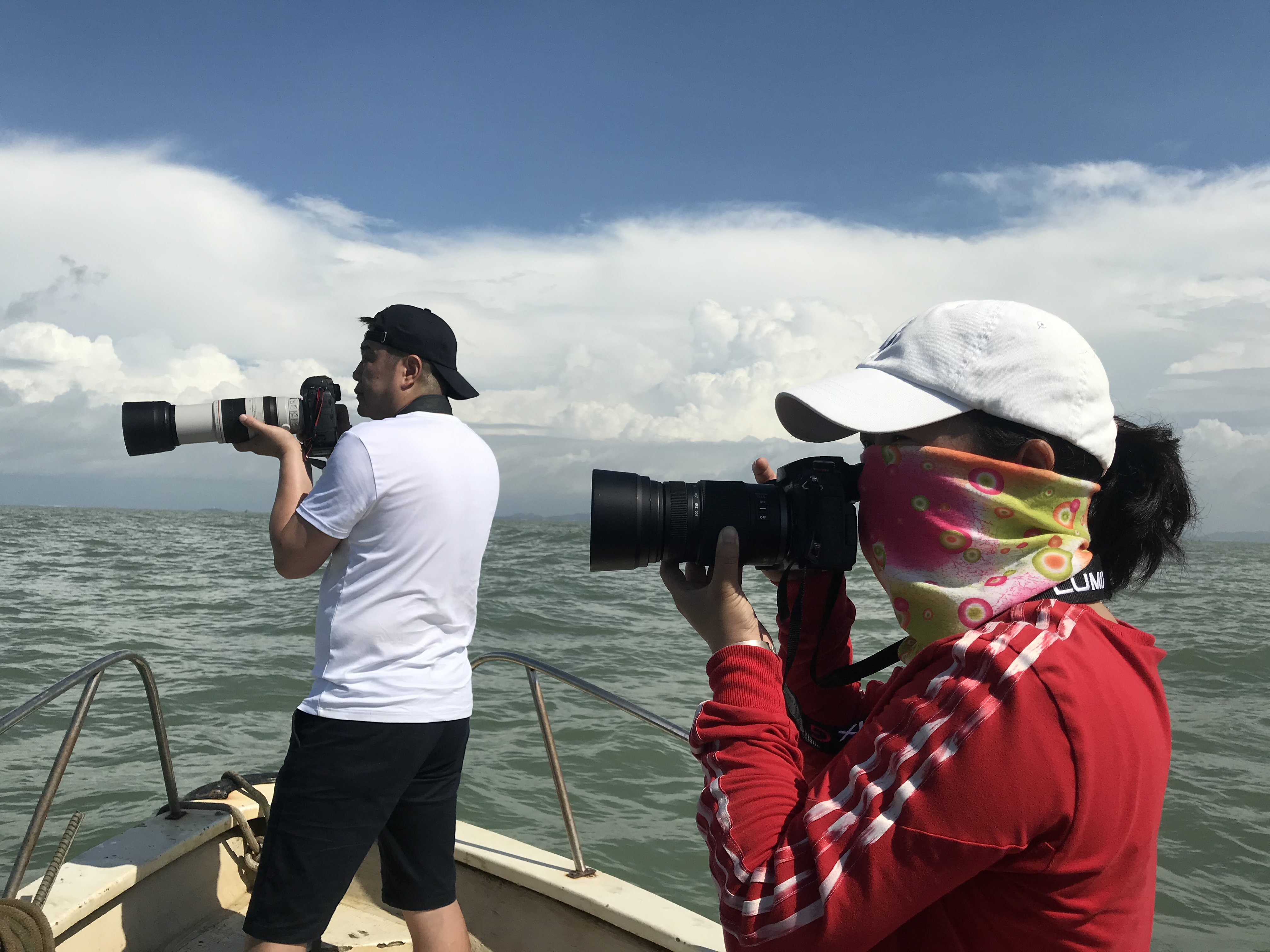
潘岳、赵一在三娘湾海域观察白海豚。
潘文石与广西的联系,缘于白头叶猴。这是一种生活在喀斯特山地区的美丽的猴子,也被公认为世界25种最濒危的灵长类动物之一,在中国被列为一级保护动物,仅有广西崇左70—80平方公里的石山上生存着4个种群的白头叶猴。
Professor Pan’s connection with Guangxi started with the white-headed langurs, beautiful monkeys living in karst mountain areas. They are one of the 25 most endangered primates in the world, and listed as a first-class protected animal in China. There are only four cohorts of white-headed langurs living in the 70 to 80 square kilometers of stone mountains in Chongzuo, Guangxi.
由于当地条件艰苦,科研经费紧张,潘文石常常饿得头晕眼花,难以入眠。然而就是在这里,他创新性地更新了动物保护思路,实现“拯救了一个村庄,救了一群猴”的成果。老百姓的生活得到改善,白头叶猴也从1996年的100只左右增长到现在的900只左右。潘文石的团队逐渐探索出一条兼顾珍稀物种、生物多样性保护和当地人民生存发展的有效途径。
Due to the difficult local conditions and insufficient research funding, Professor Pan could not afford enough food, and was too hungry to sleep at night. It was right in this place and under such tough conditions that he proposed and experimented his new idea on animal protection, and made “saving the village with its monkeys” possible. With his efforts, local people’s life has improved, and so is the population of white-headed langurs, which has increased from about 100 in 1996 to about 900 now. Step by step, Professor Pan’s team has found an effective way to balance the need for protection of biodiversity and local economic development.
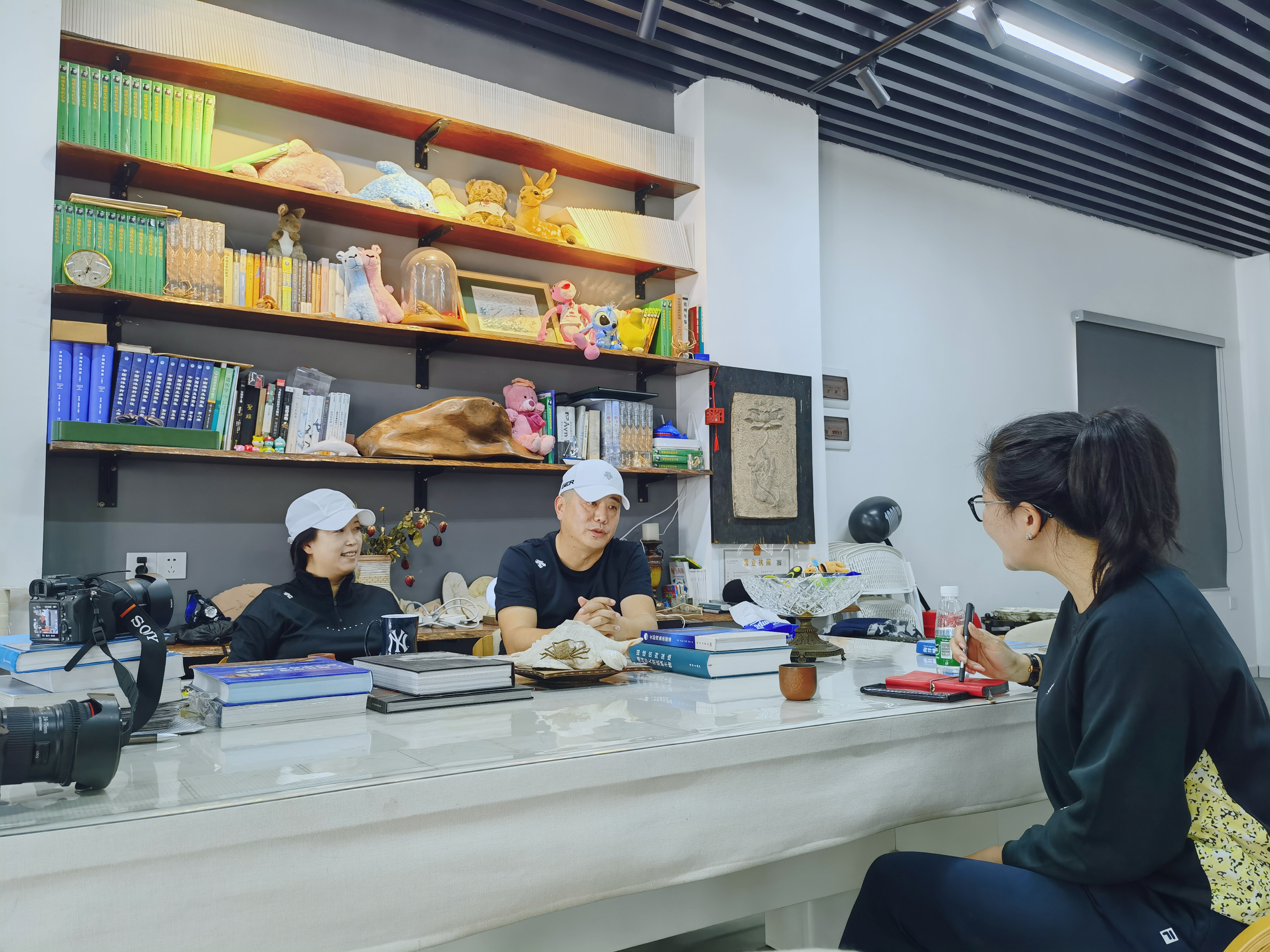
赵一、潘岳向本报记者分享与广西结缘的故事。
最美三墩路:划出一条生态屏障线 The Spectacular Sandun Road: a Solid Ecological Barrier
在广西钦州三娘湾,一条全长约18公里的三墩公路将海面一分为二,西面是繁华的深水港口,东面维持原始浅海湿地原貌,中华白海豚自在游曳。这条被誉为“广西最美海上公路”也是钦州经济发展的生态底线,划出临港大工业与白海豚栖息地的生态屏障。
In Qinzhou’s Sanniang Bay, the 18-kilometer-long Sandun Road runs across the bay and divides it into two parts. On the west sits a bustling deep-water port, and on the east lies the primitive shallow sea wetland, where Chinese white dolphins ride on the waves freely. This road, known as “the most spectacular across the sea in Guangxi”, is also the ecological bottom line of Qinzhou’s economic development, serving asan ecological barrier for the habitat of white dolphins from port-related industries.
时间倒回2003年,钦州提出“大工业、大港口、大旅游”口号,为了找到白海豚请潘教授团队来考察。2004年,潘文石教授小组开始落户三娘湾,在捉襟见肘的艰苦条件下开始研究海豚。2005年,潘教授建议将钦州港规划向西移,把东边浅海区域留给白海豚,迅速得到政府认可。2009年,经过5年的观察,海豚数量初步统计大概96只,潘教授建议修建三墩路,划出底线,实现区域分离。
Back in 2003, Qinzhou proposed to build “well-developed industries, vibrant port, and modern tourism” and invited Professor Pan’s team for research in order to find the white dolphins. In 2004, Professor Pan and his team moved their research to Sanniang Bay and began to study white dolphins despite all the difficulties. In 2005, he proposed to move the Qinzhou Port project westward, leaving the shallow sea area in the east as white dolphins habitats. His proposal was quickly approved by the government. After 5 years of observation, Professor Pan has made the preliminary estimation that there were 96 white dolphins in 2009. As a Professor Pan suggested to build Sandun Road as an ecological barrier to separate these two areas.

钦州三娘湾白海豚。
2012年,潘岳及丈夫赵一放弃在北京的事业,转身投入野生物动保护,在钦州成立NGO,募资并组建团队,并出版学术专著。最终在政府、潘文石教授小组以及当地渔民的共同努力下,三娘湾海域恢复洁净,中华白海豚数量显著回升。
In 2012, Pan Yue and her husband, Zhao Yi, gave up their career in Beijing and joined her father in the career path to wildlife preservation. They raised funds and set up an NGO in Qinzhou, published academic papers on white dolphin protection. Eventually, with the joint efforts from the government, Professor Pan’s team and local fishermen community, the sea area of Sanniang Bay was clean again, and the population of Chinese white dolphins recovered significantly.
“你看那个,小船一过,成群的小鱼飞出水面,一片一片跟下雨一样”,潘岳说,历经十几年对白海豚生活环境的保护,其实是保护生物多样性和生态系统,保护人在这儿有一个安全的生存的地方。
“Look there, groups of small fish jump out of the water once a boat surfaced the water. It looks just like rain,” Pan said that after dedicating more than ten years to this work, she has come to realize that protecting the living environment for white dolphins is, in fact, to preserve the biodiversity and ecosystem, giving all locals a safe place to live.
然而,过去的钦州,在海豚没有得到保护之前,有一段时间,这里工业发展和经济发展比较混乱的。由于过度捕鱼,过度的人工养殖,造成这里鱼类种类的数量下降,老百姓生活过得并不好。然而十几年过去后,由于保护白海豚,生活环境恢复平衡,当地渔民,早上起来几个小时回来打个百十来斤鱼,充分享受到保护环境的红利。老百姓有个顺口溜:“海豚在,鱼就在,鱼在,我们就踏实;海豚在,客人就在,客人在,我们就能挣更多的钱。”
In the past, before the dolphins preservation project, Qinzhou has been through a time when the industrial development and economic development here was rather uncoordinated. Due to overfishing and excessive artificial fish farming, the number of fish species here declined and the people could no longer made a living out of fishing. However, after more than ten years, the protection of white dolphins has helped restore balance to the environment. Now local fishermen, who get up in the morning for a few hours of fishing, can bring home over a hundred pounds of fish, fully enjoying the dividends of environmental protection. The local people have a jingle that “Dolphins we can see, meaning fish in the sea. giving our life ease; Dolphins in the sea, tourists come to see, and makes us rich.”

大港口-海天一色,工业与生态共存-广西钦州保税港区。 刘世旭 摄
如今,钦州初步实现白海豚与人类经济发展两个生态系统的区隔,白海豚保护与大工业发展取得共赢。这里的白海豚也从十多年前的96只发展到300多只,成为中国南部沿海最健康、年轻、有希望的种群。同时,10年间钦州GDP从不足300亿元跻身“千亿元俱乐部”。
Nowadays, Qinzhou has initially separated the two ecosystems of white dolphins and economic development, with win-win results in the protection of white dolphins and industrial development. The population of white dolphins has grown from 96 over a decade ago to more than 300, making them the healthiest, youngest and most promising cohort along the southern coast of China. In the meantime, the GDP of Qinzhou has risen from less than 30 billion yuan to the “rank of over 100 billion yuan” in a decade.
在潘岳和丈夫赵一眼中,“网红最美三墩公路的美不在于鬼斧神工的建造,而是潘文石教授对经济发展和环境保护取得共赢的路径探索,是人与自然和谐相处的标志。”
In the eyes of Pan Yue and her husband Zhao Yi, “the beauty of Sandun Road does not lie in the architecture, but in Professor Pan’s exploration of win-win paths for economic development and environmental protection. It is a symbol of harmony between man and nature.”
来到广西始于爱 Coming to Guangxi Because of Love
如果说保护大熊猫、白头叶猴,潘文石教授是“孤身”上路,那么在广西钦州,女儿女婿加入白海豚保护工作,已经84岁高龄他也终于“后继有人”。从2010年开始,如今常年在三娘湾跟踪研究白海豚的潘岳和丈夫赵一已经成为行家里手,多年来,他们的科研团队对白海豚生存地进行了系统的考察,探索出现代工业化浪潮下中华白海豚的生存之路,并带动当地渔民主动协助开展调研和保护工作。
Professor Pan was alone when he set foot on this path to protecting giant pandas and white-headed langurs, but now his “successors have finally come forth” when he was 84 as his daughter and son-in-law joined him in this path to protecting white dolphins in Qinzhou. Pan Yue and her husband Zhao Yi have grown to become quite an expert by tracking and researching white dolphins in Sanniang Bay all year round since 2010. Over the years, their research team has conducted systematic research on the habitat of white dolphins, explored the way of survival for Chinese white dolphins against modern industrialization, and led local fishermen to take the initiative to help with the research and preservation.

美景如画园博园。 韦嘉铭 摄
在来钦州之前,潘岳和赵一在北京事业成功。在多次见证潘文石教授一路艰辛后,备受感动和鼓舞,开始思考人类与自然的关系,并在2010年毅然放弃事业,选择在茫茫大海上漂泊守护中华白海豚。
Before coming to Qinzhou, Pan Yue and Zhao Yi had a successful career in Beijing. But they were inspired by Professor Pan’s efforts , and began to ponder on the relationship between man and nature. In 2010, the couple decided to give up their career and venture to the vast sea to protect the Chinese white dolphins.
习惯了大城市生活的他们,一开始面对艰苦的条件极不适应。“以前确实很艰苦,晚上铺个席子就住在沙滩上;没钱搭船的时候,给游客做讲解员、随渔民打渔的间隙观察海豚。这儿的科研工作是从当导游开始的。”赵一跟记者分享早年潘教授和学生们的“趣事”,他们对生命发自内心的爱和行动打动了我们,看到他们那么难,就不由自主的想要帮助他们,也希望通过我们的加入能使研究组的工作和生活条件有所改善。
Accustomed to cosmopolitan life, they found it hard to adapt to the tough conditions at first. “Everything was really hard back then. We slept on the beach with a mat at night. And when we couldn’t afford the boat tickets for work, we worked as tour guides for tourists and observed dolphins as the fishermen were fishing. The real scientific research here started from being a tour guide.” Zhao Yi shared with the reporter the “interesting stories” of Professor Pan and his students in the early years.
“We were moved by their heartfelt love for life and their actions. Seeing how difficult things were, we really wanted to help, and we hoped that our participation could improve the working and living conditions for the research team.
谈起自己与赵一的选择,潘岳没有觉得自己牺牲了什么,也没有觉得自己有多伟大。“因为父亲对野生动物长年驻守在保护一线的热爱,我们才有机会来广西看看,没想到这一看就看了十几年,被父亲对动物保护的热爱和执着所感动,最终从一个旁观者,加入其中成为参与者”。
Speaking about their choice, Pan Yue did not think that decision was an act of greatsacrifice. She said “It was because of my father’s strong love for wildlife and dedication to their conservation at the front line that we had the opportunity to come to visit Guangxi. We did not expect this visit to last for more than a decade. We were moved by my father’s love for and dedication to animal protection, and finally, we joined him in this work instead of just being bystanders.”
“是爱情的力量促使我下了决心来到加入野生物保护之路”。赵一从不避言自己对潘岳的爱。然而当他来三娘湾,他真正的走进潘教授的世界,一起工作,感受到他对生命的态度。
“It was the magic of love that helped me make up my mind to join the work of wildlife preservation.” Zhao Yi never shies away from talking about his love for Pan Yue. However, it was when he came to Sanniang Bay that he truly stepped into Professor Pan’s world. Working with his father-in-law, Zhao has felt his love for life.

华谊化工。 刘宇翔 摄
潘岳对这群生活在三娘湾的白海豚如数家珍:哪条小海豚新出生的,今日出海遇到的近期出生的小开开、而2019年出生的小龅牙已经快两岁了,现在还在妈妈身边,但是它已经很大了,已经可以独立了。
Pan Yue knows all about the dolphins living in Sanniang Bay, including the new- born babies, for example, the cute Kaikai, whom they met at sea today, and Bucktooth born in 2019, who is almost two years old and still with his mother even he is old enough to live independently.
深入三娘湾海域,经常可见多种颜色的中华白海豚群追逐嬉戏。在赵一看来,钦州白海豚是一个独特的地理种群,且是沿海最健康、年轻、有希望的种群。栖息地里的生物多样性丰富,中华白海豚便能进入良好的繁殖状态。
Deep into the sea area of Sanniang Bay, Chinese white dolphins in different colors are often seen chasing and playing. Zhao Yi considers the white dolphins in Qinzhou a unique local cohort, and the healthiest, youngest and most promising one along the coast of China. Rich biodiversity in the habitat will help the Chinese white dolphins stay in a good breeding condition.
“我们日常的工作就是出海收集一手的资料,拍照、录像、GPS定位,以及监测海域的气候环境、采集水样,再调查中华白海豚的分布和数量。”潘岳说,虽然很辛苦,但是很安心满足。
“Our daily ruotine includes going out to sea to collect first-hand data, taking photos and recoding, marking GPS positions, monitoring the climatic circumstance of the sea, collectingwater samples, and then investigate the distribution and number of Chinese white dolphins.” Pan Yue said it is a difficult task, but it is very reassuring and rewarding.
大工业与白海豚同在 Industrial Development Goes with White Dolphins
“他说最值得炫耀的就是白海豚保护,因为白海豚生活在中国经济发展的最前沿,所有的保护工作你要在最难的地方做”。赵一说,这是潘文石的骄傲。
“He once said the best part of the work is the preservation of white dolphins, because they live at the forefront of China’s economic development, therefore you have to make sure the conservation doesn’t contradict with local economy development, which makes the biggest challenge .” Zhao Yi said Professor Pan felt really proud of the work here.
作为一个新兴的海港城市,钦州处在大工业、大港口、大养殖、大旅游的建设热浪中,经济发展跟环境保护是矛盾最突出的地方。潘文石的科研团队以与政府合作的方式,在保证城市发展的同时保护钦州白海豚。
As an emerging seaport city, Qinzhou is in the midst of the boom of building well-developed industries, vibrant port, modern farming and tourism, and the contradiction between economic development and environmental protection has emerged as economy grows . Professor Pan’s research team has worked with the government to protect white dolphins in Qinzhou while sustaining the city’s development.

广西钦州-醉美石油城。 任晓丹 摄
经有关部门及专家研究论证后,钦州港三墩片区规划布局港航物流、石化、修造船等产业,并注重平衡好与“三墩路”东侧自然浅海生态系统间的关系,并同步开展环境影响评价、数模物模论证、海洋灾害风险评价及对白海豚生存环境影响研究等多项研究论证,确保规划布局与海洋生态环境平衡协同发展。
After studies and discussions by relevant departments and experts, the planning for Sandun Area of Qinzhou Port has taken into consideration of port and logistics, petrochemical, shipbuilding and other industries, with a focus on balancing the relationship with the natural shallow sea ecosystem on the east side of Sandun Road. In parallel, researches on environmental impact, mathematical and physical model demonstration, marine disaster risk and impact on the living environment of white dolphins have been carried out to ensure the balanced and coordinated development of the industry planning and marine environment.
“潘文石教授带领团队从保护大熊猫、白头叶猴到中华白海豚,这几十年是从单一物种的保护到人与自然和谐相处路径的探索,也是世界自然保护运动的一个缩影。保护野生动物就是保护生物多样性,保证人类社会可持续发展。”赵一说。
“Professor Pan has been leading his team from the protection of giant pandas and white-headed langurs to the preservation of Chinese white dolphins. In the past decades, the team has advanced from protecting a single species to exploring a path for harmonious coexistence between man and nature, which is also a miniature of the world’s nature conservation efforts. To protect wildlife is to protect biodiversity and ensure sustainable development of human society,” said Zhao Yi.
近年来,钦州市立足区位及众多国家级平台叠加优势,大力发展石化、装备制造、造纸、能源、粮油加工等临港大工业,建成投产中国石油千万吨炼油、金桂林浆纸一体化、国投钦州电厂等重大项目,并成功引进华谊钦州化工新材料一体化基地、桐昆北部湾绿色石化一体化产业基地、恒逸高端绿色化工化纤一体化基地等重大产业项目,逐渐形成临港大工业集聚态势,创造了“白海豚与大工业同在”的奇景,实现了物质文明与生态文明的同频共振。
In recent years, Qinzhou, by leveraging its geographical and policy advantages with multiple national platforms, has been vigorously developing petrochemical, equipment manufacturing, paper making, energy, grain and oil processing and other port-related industries. The city has completed and put into operation such major projects as 10-million-ton level oil refinery under China National Petroleum, Jin Guilin pulp and paper integration program, and Qinzhou power plant under the State Development and Investment Corporation. Besides, it has successfully introduced major industrial projects, including Huayi Qinzhou Integrated Base for Chemicals and New Materials, Tongkun Beibu Gulf Integrated Industrial Base for Green Petrochemical, and Hengyi Integrated Base for High-end Chemicals and Chemical Fiber. Hence, Qinzhou is gradually forming a large industrial cluster around the port, creating the spectacle of “Industrial Development Goes with White Dolphins” and realizing the parallel advancement of material progress and ecological civilization.
现如今,工业与白海豚并存的“钦州模式”在全球处于领先地位,得到了公认的认可。潘文石团队正计划将“钦州模式”辐射到珠海,以取得新的突破。
Today, the “Qinzhou Model”, in which industrial development goes with white dolphin preservation, is leading the world in ensuring both economic development and wildlife protection, and has been widely recognized. Professor Pan’s team is planning to promote the Qinzhou Model to Zhuhai for new breakthroughs.
“每一个物种都有它在自然群落里继续生存的权利,人类如果不顾长远的利益,继续肆意践踏在长期进化过程中跟我们同舟共济的伙伴,一定会陷入恶劣环境所导致的贫困状态之中,这个是我们要推行和传播的一种新的伦理。”赵一表示。
“Every species has the right to survive in the natural community. If human disregards long term interest and continue to trample on speices alongside the process of evolutionary, would surely fall into poverty caused by harsh environment. This is a new ethic that we want to practice and promote.” said Zhao Yi.