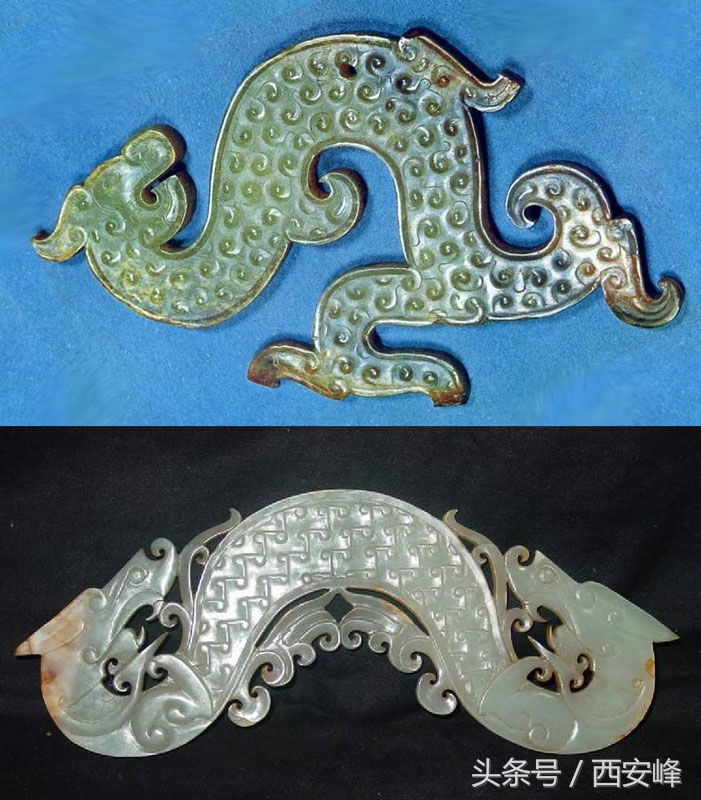
战国S龙
Warring States dragon pendants
(top: authentic; bottom: modern copy in nephrite jade).
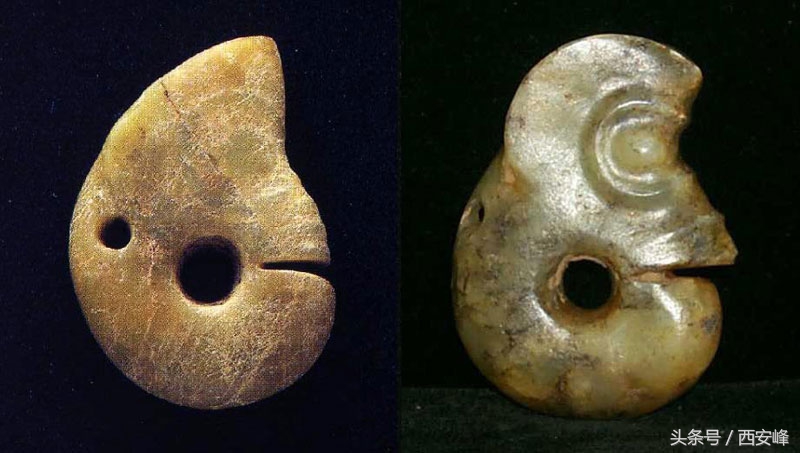
红*猪山**龙对比
Hongshan period pig-dragon ornaments
(left: authentic, courtesy of J. J. Lally Co.; right: modern copy in nephrite jade).
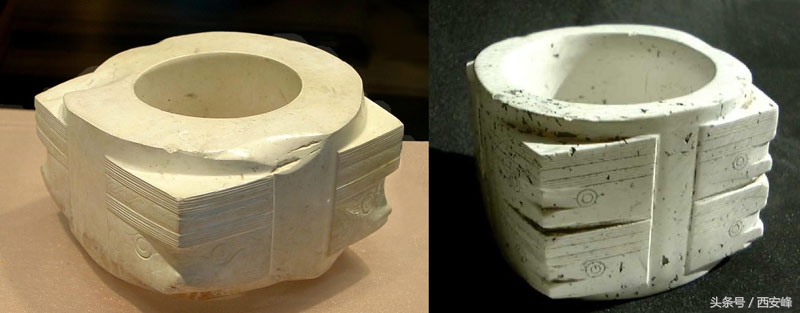
良渚玉琮
Liangzhu period ritual congs (ts’ungs)
(left: authentic; right: modern copy in altered serpentine).
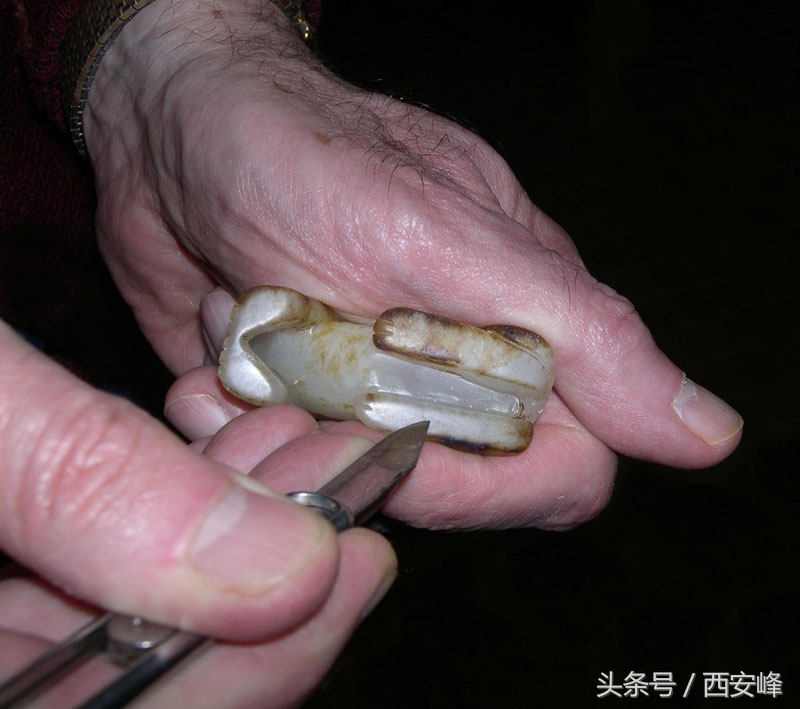
硬度测试
Performing a “scratch” test for hardness.
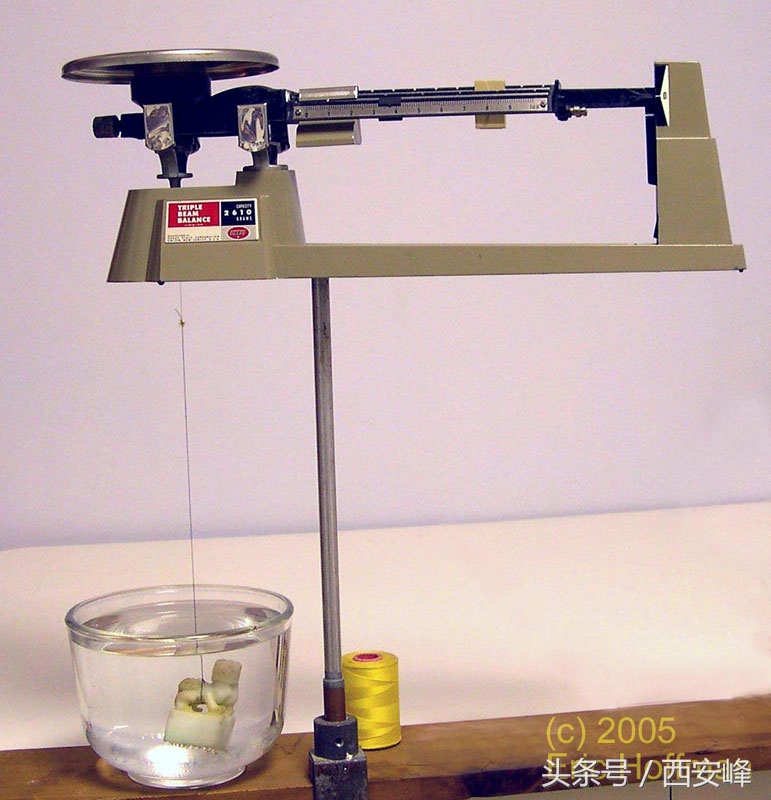
比重实验
Conducting a specific gravity test.
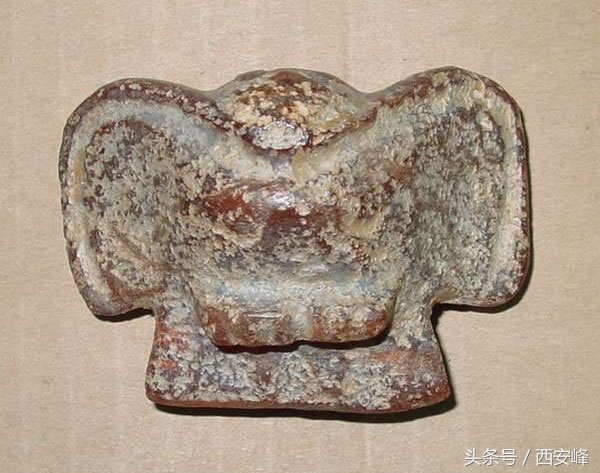
红山仿品
“Hongshan” jade bird pendant, a typical acid-frosted reproduction.
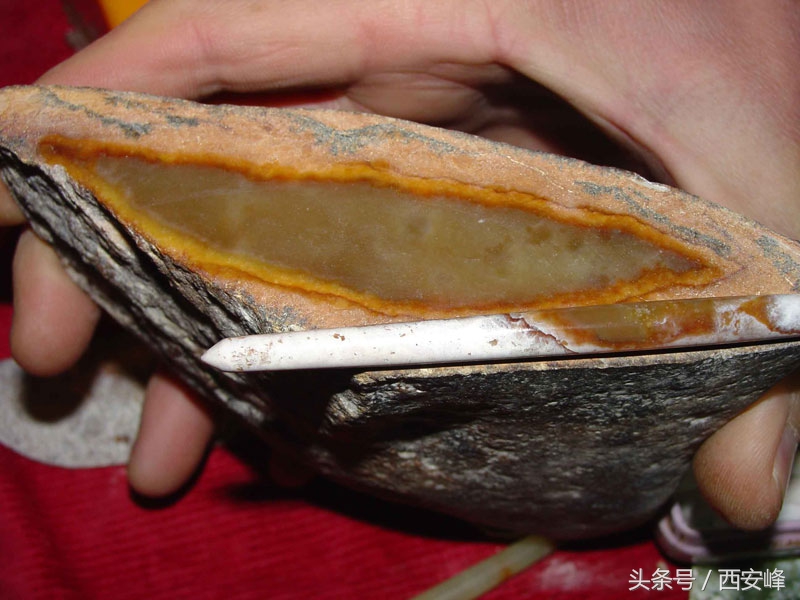
“Neolithic” awl altered to white and the raw nephrite it was carved from.
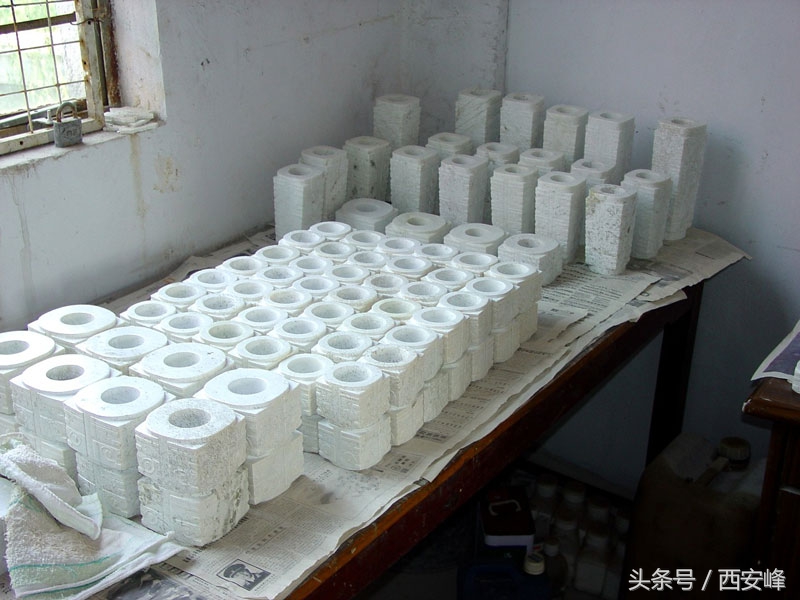
中国批量生产的良渚玉琮仿品
Chinese factory producing Liangzhu cong copies in pseudojade.
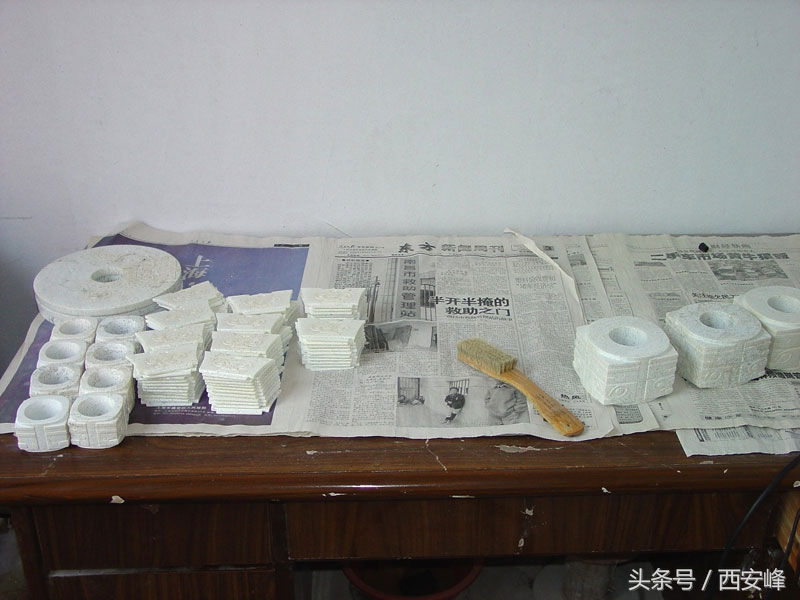
Copies of Liangzhu bi discs, pendants, and congs in process.
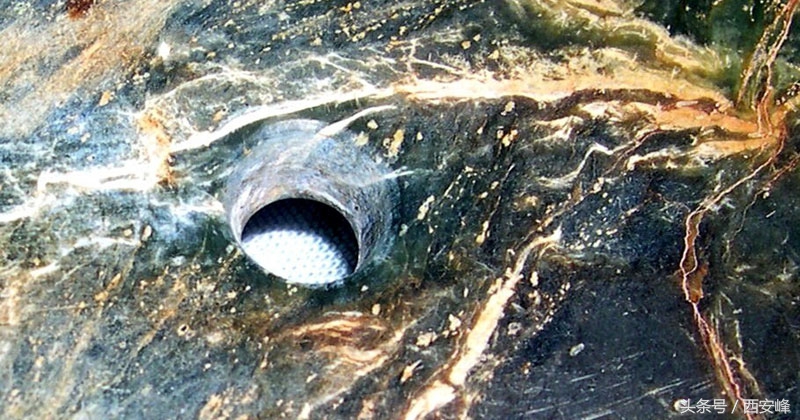
Closeup of machine drilled hole in allegedly Neolithic fu axe.
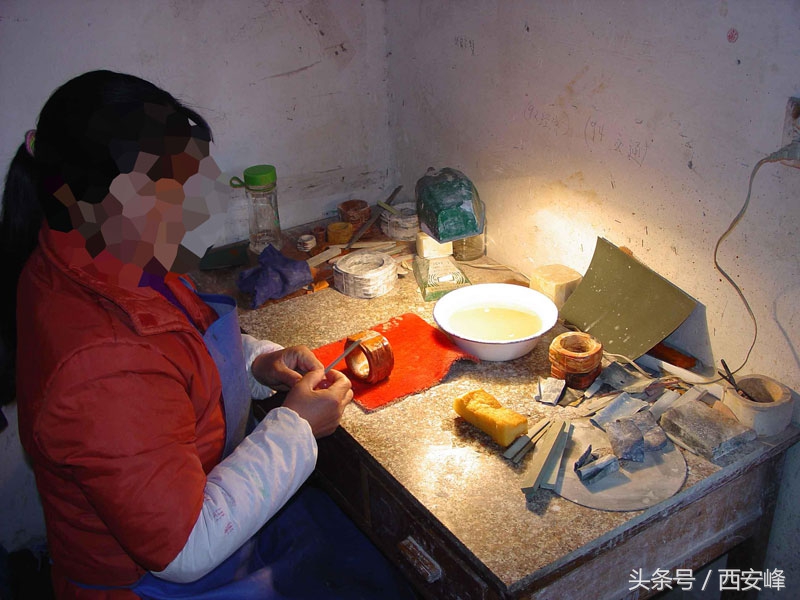
仿品古玉抛光
Final polishing steps in a factory producing nephrite reproductions.
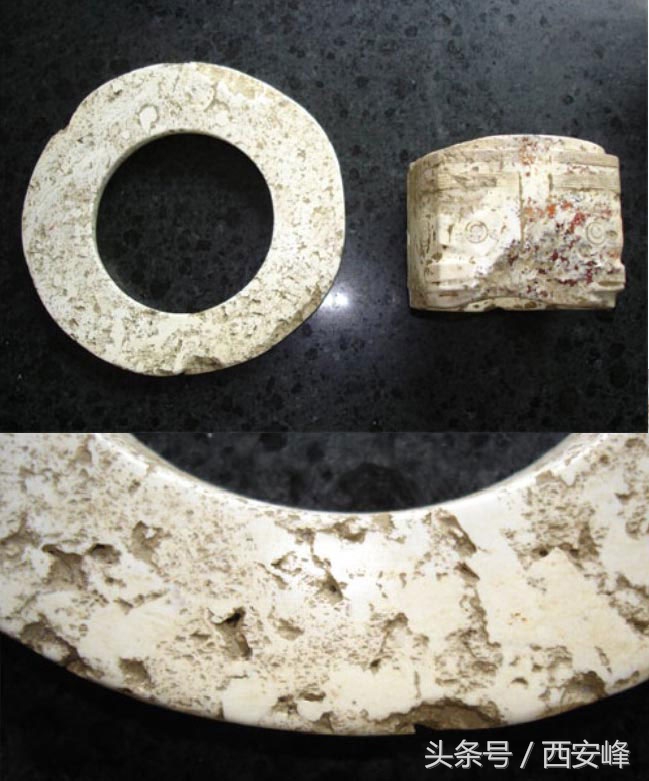
Two better-grade Liangzhu reproductions in nephrite jade.
Bottom: close-up of artificially induced pitting and alteration in the jade ring.
Technical Considerations
Although no truly objective, scientific test exists for dating jade, technical analysis can be less subjective than stylistic, art-historical methods. A careful study of the tooling methods used to produce the carved jade is perhaps the single most reliable method of dating ancient jades.
Jades are not really “carved” like wood. They have always been worked by a laborious process of abrasion. The abrasives used by the ancients were barely harder than the jade itself, beginning with quartz sand and progressing through the millennia to crushed garnets and powdered corundum. In the pre-metal period, string-cutting and stone “files” were used, and holes were bored by bamboo charged with sand. In the Shang period (roughly 1300 BC), bronze tools became available to drive the abrasive powders. By the Warring States period (475–221 BC), tiny iron tools allowed magnificent detail work. The collector should make a careful study of the cutting, carving, and hole-drilling techniques used in each period, examining known museum examples, preferably under 10x magnification.
Observe whether the piece was worked with care or with haste. In the old days, jade was considered too precious a material to waste on anything less than perfect workmanship. A craftsman beginning a jade carving knew he was settling in for months, or even years, of work before it would be completed.
Aside from tooling considerations, the jade material itself can provide technical clues. Is it jade or a pseudojade? Ancient carvings in stones other than nephrite are of course known, but in general a pseudojade carving should raise a red flag. Assuming the material is nephrite, is it of a type typical of the period claimed? Each period had types and colors of jade for which it was noted, and other types that were never seen in that era. Advanced chemical analysis can even identify the source of the raw material, which helps narrow down the era it was carved.
Questions to ask include:
• Is the method of bulk cutting and shaping appropriate to the period claimed? For example, is the thickness of flat pieces absolutely uniform (indicating modern diamond saws), or uneven?
• Is the method of cutting surface decorations appropriate to the period claimed?
• Is there evidence of using faster (harder) abrasives than were available in the period claimed, or of using electrically powered tools? Fully rotating cutting wheels replaced the traditional bidirectional treadle lathe in the late 1800s. Fast-cutting carborundum became available in the early 20th century. Even harder diamond tools, electrically driven, became widespread around 1950. These fast-cutting tools and abrasives leave tell-tale marks and often produce sloppy work and over-shooting of lines.
• Is the method of drilling holes consistent with the period claimed? Holes can be extremely revealing.
Much can be learned from studying the surface finish, in other words, the “feel” of the piece. Is the polish appropriate to the period claimed? In the old days careful polishing with slow abrasives created a “soft and satiny” finish quite different from modern diamond polishing. And the old-time craftsman took the time to polish every nook and cranny. Is there a surface patina of fine scratches from handling and use? Are edges sharp and raw, or are they worn smooth from much handling? Has the piece been intentionally sandblasted to imitate pitting? Is there a residue of modern abrasive or polish materials?
“Alteration” of the jade’s surface, due to “weathering” or other environmental exposure, is a controversial topic. Authentic jades from thousands of years ago will often look fresh and bright; many a recently made fake may look distressed and ancient. It is worth noting whether the jade has been dyed (as revealed by examination under a 10x lens). Is there an odor of paint or varnish? Dyeing jade was relatively uncommon prior to the Ming dynasty (1368–1644). Tomb jades will sometimes show an opaque white alteration (erroneously called “calcification”) that fake-makers often attempt to imitate using strong acids or alkalies or intense heat. These “acid dipped” fakes are produced in vast quantities to sell to the gullible. Sometimes the fake is encrusted with soil to imply that it was excavated (and to make examination of the workmanship more difficult). Viewing and handling authentic examples can teach you to recognize these shams.
In evaluating ancient jade, the collector should be alert to two more possibilities. First, a modern fake-maker might use fast-cutting modern tools to rough out a piece, and then do the final detailing by slower handwork. Second, it is not unheard of for a genuine but insignificant older jade to be reworked into a more saleable object.