
分享兴趣,传播快乐,
增长见闻,留下美好。
亲爱的您,
这里是LearingYard学苑!
今天小编为大家带来知识打卡(一百四十三)
欢迎您的用心访问!
本期推文阅读时长大约8分钟,请您耐心阅读。
Share interest, spread happiness,
increase knowledge, and leave beautiful.
Dear you,
this is the LearingYard Academy!
Today, the editor brings you knowledge punch cards (143)
Welcome your visit!
This tweet usually takes about 8minutes to read. Please be patient and read.
1.内容提要
本期将继续阅读东南大学潘红全学者的文章:《考虑消费者行为的直播电商生鲜供应链决策研究》。上期阅读了文章中制造直播电商的运作流,本期将对直播电商中消费者购买决策行为进行阅读学习,了解直播电商中消费者的行为会受到哪些因素的影响。
In this issue, we will continue to read the article by Hongquan Pan, a scholar from Southeast University: A Study on Fresh Supply Chain Decision Making for Live E-Commerce Considering Consumer Behavior . In the last issue, we read the article on the operational flow of manufacturing live e-commerce, and in this issue, we will read and learn about the consumer purchase decision behavior in live e-commerce and understand what factors affect consumer behavior in live e-commerce.
本期内容将从思维导图、精读内容和知识补充三部分展开。
In this issue, we will start from three parts: mind map, intensive reading content and knowledge supplement.
2.思维导图
3.精读内容
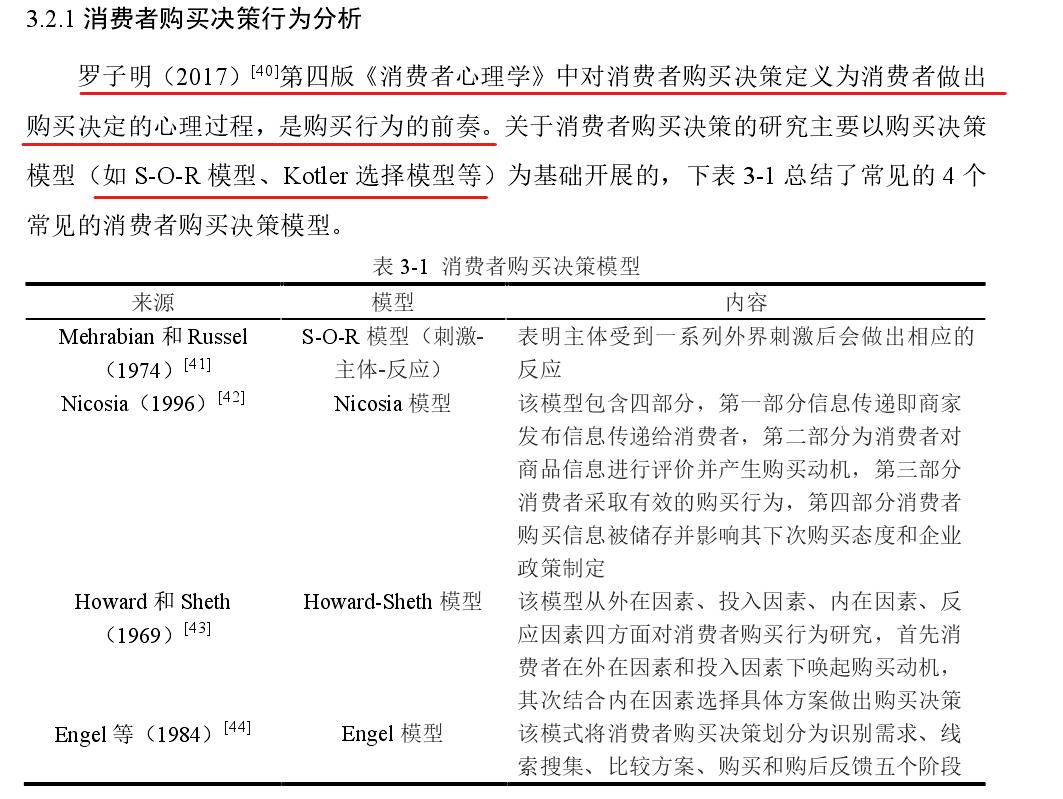
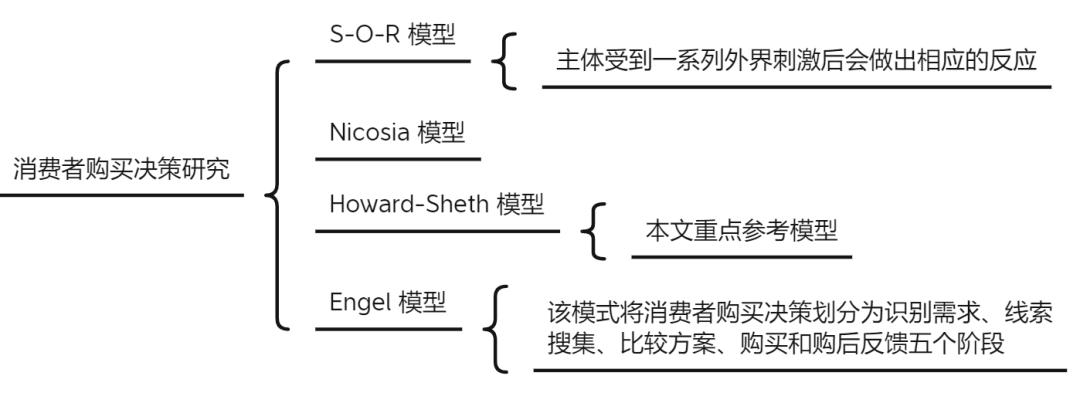
文章指出消费者购买决策是“消费者做出购买决定的心理过程,属于购买行为的前奏。”目前关于消费者购买决策的分析主要采用购买决策模型进行研究,包含S-O-R 模型、Nicosia 模型、Howard-Sheth 模型、Engel 模型。下面依次描述者四种模型:
(1)S-O-R 模型即主体受到一系列外界刺激后会做出相应的反应 ;
(2)Nicosia 模型,该模型包含四部分,第一部分信息传递即商家发布信息传递给消费者,第二部分为消费者对商品信息进行评价并产生购买动机,第三部分消费者采取有效的购买行为,第四部分消费者购买信息被储存并影响其下次购买态度和企业政策制定 ;
(3)Howard-Sheth 模型,该模型从外在因素、投入因素、内在因素、反应因素四方面对消费者购买行为研究,首先消费者在外在因素和投入因素下唤起购买动机,其次结合内在因素选择具体方案做出购买决策 ;
(4)Engel 模型,该模式将消费者购买决策划分为识别需求、线索搜集、比较方案、购买和购后反馈五个阶段。
The article points out that consumer purchase decision is "the psychological process by which consumers make a purchase decision and is a prelude to purchase behavior." At present, the analysis of consumer purchase decision mainly uses purchase decision models, including the S-O-R model, Nicosia model, Howard-Sheth model, and Engel model. The four models are described in the following order:
(1) S-O-R model, in which the subject responds to a series of external stimuli;
(2) Nicosia model, which consists of four parts: the first part is information transfer, i.e., the merchant releases information to the consumer, the second part is the consumer's evaluation of the product information and the purchase motivation, the third part is the consumer's effective purchase behavior, and the fourth part is the consumer's purchase information is stored and influences his or her next purchase attitude and corporate policy making;
(3) Howard-Sheth model, which is a four-way study of consumer buying behavior from extrinsic factors, input factors, intrinsic factors and response factors, firstly, consumers evoke purchase motivation with extrinsic factors and input factors, and secondly, they choose specific solutions to make purchase decisions with intrinsic factors;
(4) Engel model, which divides consumer purchase decision into five stages: identifying needs, collecting clues, comparing options, purchasing and post-purchase feedback.
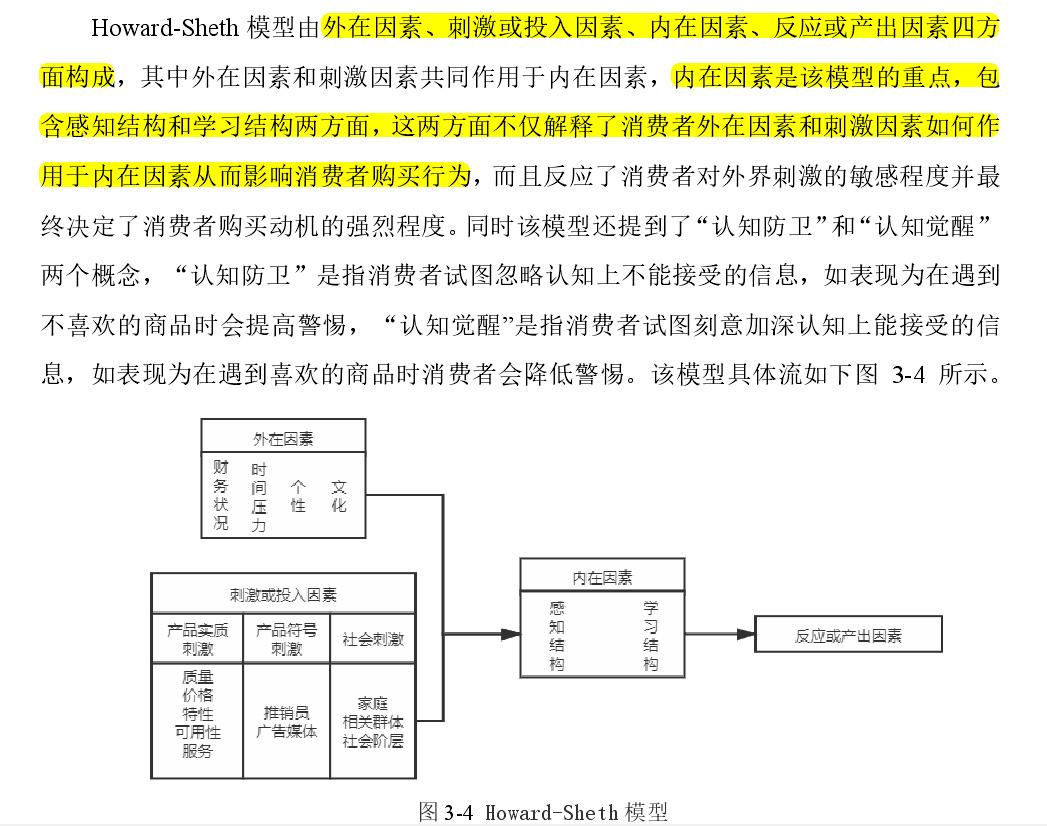
基于上述四种模型,文章将重点选取Howard-Sheth模式作为本章消费者购买决策支撑理论。
Howard-Sheth 模型包含四个方面:①外在因素;②刺激或投入因素;③内在因素;④反应或产出因素。
外在因素指财务情况、时间压力、消费者个性、以及文化等;投入因素则指产品本身的实质(质量、价格、特性等)对消费者的刺激、产品符号的刺激(推销员、广告媒体)、以及社会刺激(家庭、相关群体等)。外在因素和投入因素会共同作用于内在因素。内在因素是该模型的重点,包含感知结构和学习结构两方面,这两方面不仅解释了消费者外在因素和刺激因素如何作用于内在因素从而影响消费者购买行为,而且反应了消费者对外界刺激的敏感程度并最终决定了消费者购买动机的强烈程度。
Based on the above four models, the article will focus on the Howard-Sheth model as the supporting theory for consumer purchase decision in this chapter.
The Howard-Sheth model consists of four aspects: (1) extrinsic factors; (2) stimulus or input factors; (3) intrinsic factors; and (4) response or output factors.
Extrinsic factors refer to financial situation, time pressure, consumer personality, and culture; input factors refer to the stimulation of consumers by the substance of the product itself (quality, price, features, etc.), the stimulation of product symbols (salesmen, advertising media), and social stimulation (family, related groups, etc.). Extrinsic and input factors will work together on intrinsic factors. Intrinsic factors are the focus of the model and consist of both perceptual and learning structures, which not only explain how consumers' extrinsic and stimulus factors act on intrinsic factors and thus influence their purchase behavior, but also reflect how sensitive consumers are to external stimuli and ultimately determine the intensity of their purchase motivation.
4.知识补充
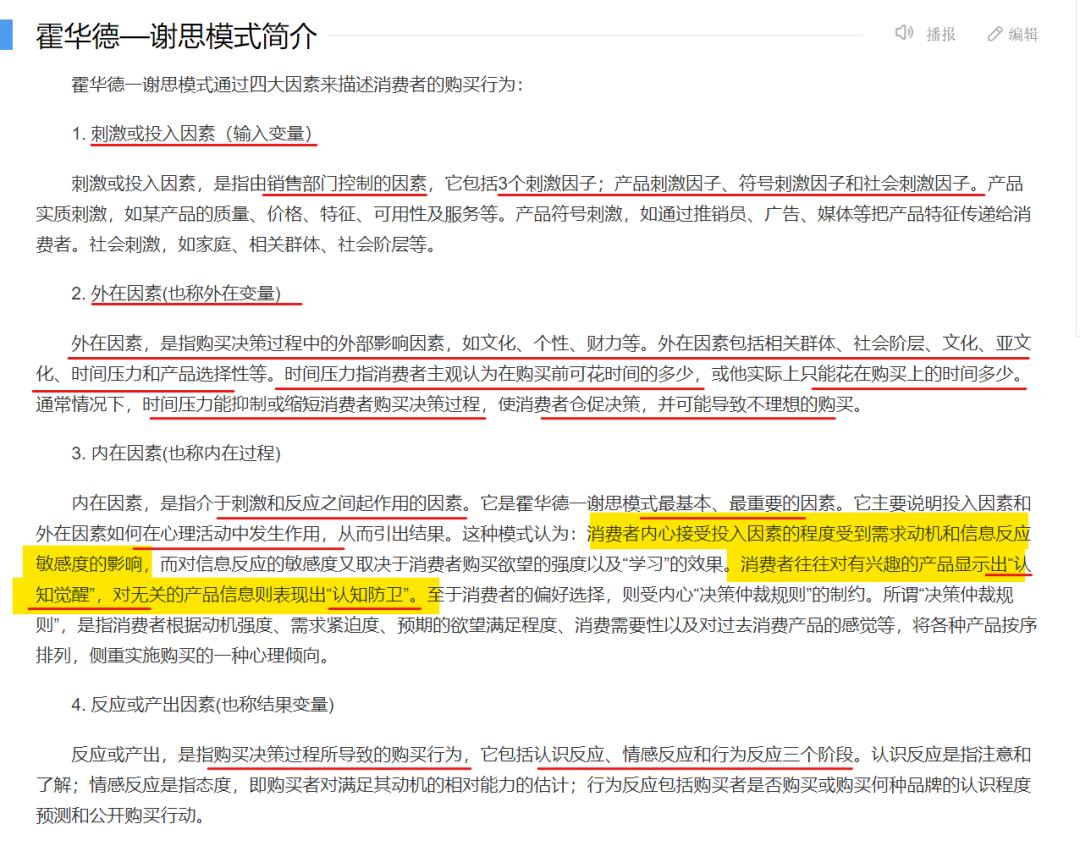
Howard-Sheth 模型是通过①外在因素;②刺激或投入因素;③内在因素;④反应或产出因素来了解消费者的购买行为。
刺激或投入因素可看作输入变量,是指由销售部门控制的因素,包括3个刺激因子:(1)产品实质刺激:如某产品的质量、价格、特征、可用性及服务等;(2)产品符号刺激:通过推销员、广告、媒体等把产品特征传递给消费者;(3)社会刺激,如家庭、相关群体、社会阶层等。
外在因素是指购买决策过程中的外部影响因素,如当地文化、消费者个性以及自身财力的影响,也包含相关群体、社会阶层、文化、亚文化、时间压力和产品选择性等的影响。
内在因素则指介于投入和外在之间,是最基本、最重要的因素,能够说明投入因素和外在因素如何引起消费者的心理活动,并发生作用,出现最后的结果。
产出因素,也称结果变量,是指购买决策过程所导致的消费者的购买行为。这一过程包括三个阶段:认识反应-情感反应-行为反应。认识反应:注意和了解产品;情感反应:购买者对满足其动机的相对能力的估计;行为反应:消费者是否购买或购买何种产品的认识程度预测和购买行动。
Howard-Sheth model is to understand consumers' purchasing behavior by (1) extrinsic factors; (2) stimulus or input factors; (3) intrinsic factors; and (4) response or output factors.
Stimulus or input factors can be regarded as input variables, which are factors controlled by the sales department and include three stimulus factors: (1) product substance stimulus: such as quality, price, features, availability and service of a product; (2) product symbolic stimulus: product features are conveyed to consumers through salesmen, advertisements, media, etc.; and (3) social stimulus, such as family, related groups, social class, etc.
Extrinsic factors refer to external influences in the purchase decision process, such as local culture, consumer personality and the influence of their own financial resources, and also include the influence of related groups, social class, culture, subculture, time pressure and product selectivity.
Intrinsic factors, on the other hand, are the most basic and important factors between inputs and extrinsics, and can explain how input and extrinsic factors cause consumers' mental activities and act to produce the final result.
Output factors, also known as outcome variables, refer to the consumer's purchase behavior resulting from the purchase decision process. This process consists of three stages: awareness response - emotional response - behavioral response. Awareness response: attention and knowledge of the product; affective response: the buyer's estimate of the relative ability to satisfy his motivation; behavioral response: prediction of the consumer's level of awareness of whether or not to buy or what brand to buy and overt purchase action.
今天的分享就到这里了。
如果您对今天的文章有独特的想法,
欢迎给我们留言,
让我们相约明天,
祝您今天过得开心快乐!
That's it for today's sharing.
If you have a unique idea about today’s article,
welcome to leave us a message,
Let us meet tomorrow.
I wish you a nice day!
参考资料:谷歌翻译、百度百科;
参考文献:
[1]潘红全.《考虑消费者行为的直播电商生鲜供应链决策研究》[D].东南大学,2021.
本文由LearningYard学苑整理并发出,如有侵权请在后台留言!