Unit 1 Topic 1电子课本




Unit 1 Topic 1同步翻译
Unit 1 Making New Friends交新朋友Topic 1 Welcome to China!欢迎来到中国!
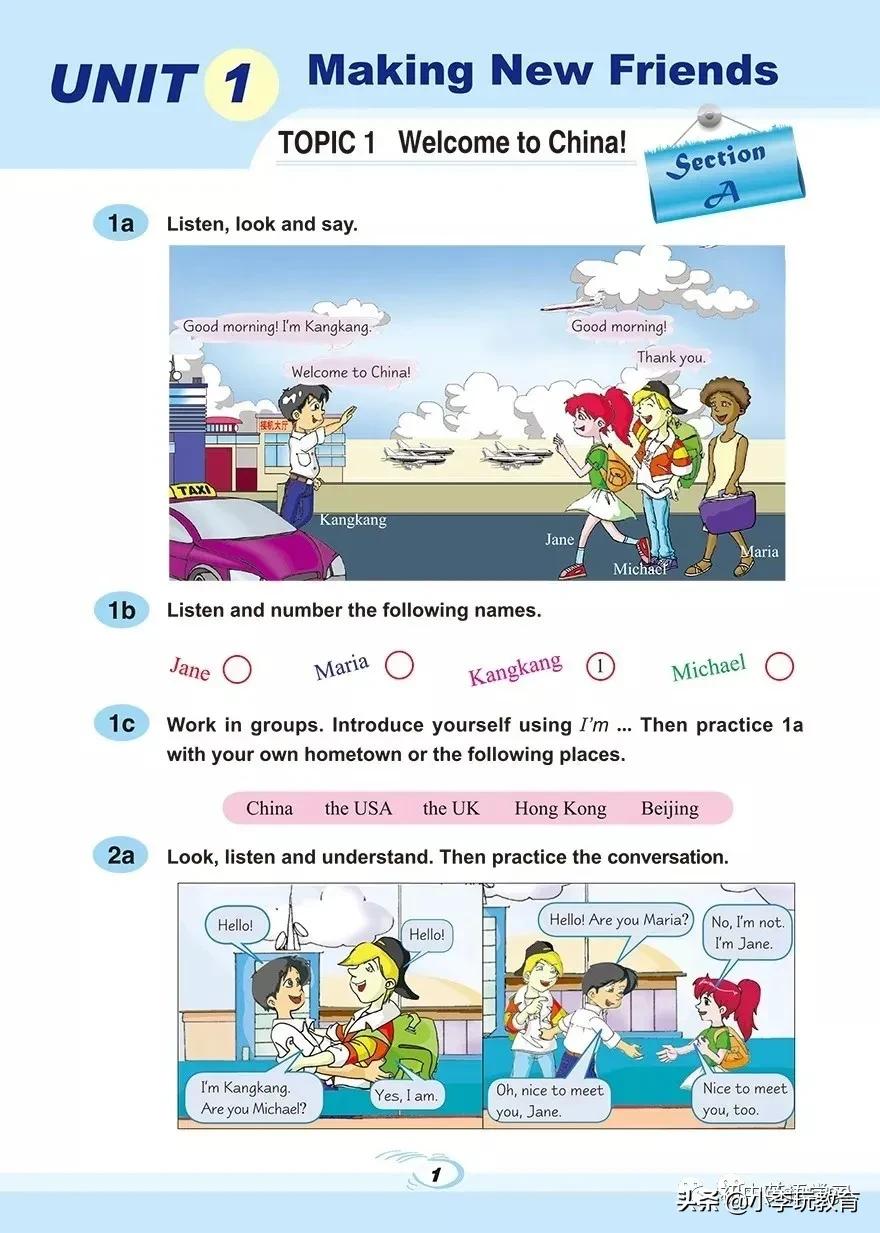
2a-1.Hello!你好! Hello!你好!I’m Kangkang.Are you Michael?我是康康。你是迈克吗? Yes,I am.是的,我是。
2a-2.Hello!Are you Maria?你好!你是玛丽娜吗? No,I’m not. I’m Jane.不,我不是。我是简。Oh, nice to meet you, Jane. 哦。很高兴见到你,简。 Nice to meet you, too. 我也很高兴见到你。
2a-3.Hi,Maria! 你好,玛丽娜! Hi,Kangkang.你好,康康!Welcome to China! 欢迎来到中国! Thanks.谢谢!
Section B - 1aGood morning, Mr. Brown! Nice to see you.早上好,布朗先生!很高兴见到你。 Good morning, Maria! Nice to see you, too.早上好,玛丽娜!我也很高兴见到你。Mom,this is my teacher,Mr. Brown.Mr.Brown,.this is my mom.妈妈,这是我的老师,布朗先生。布朗先生,这是我的妈妈。How do you do?你好! How do you do?你好!
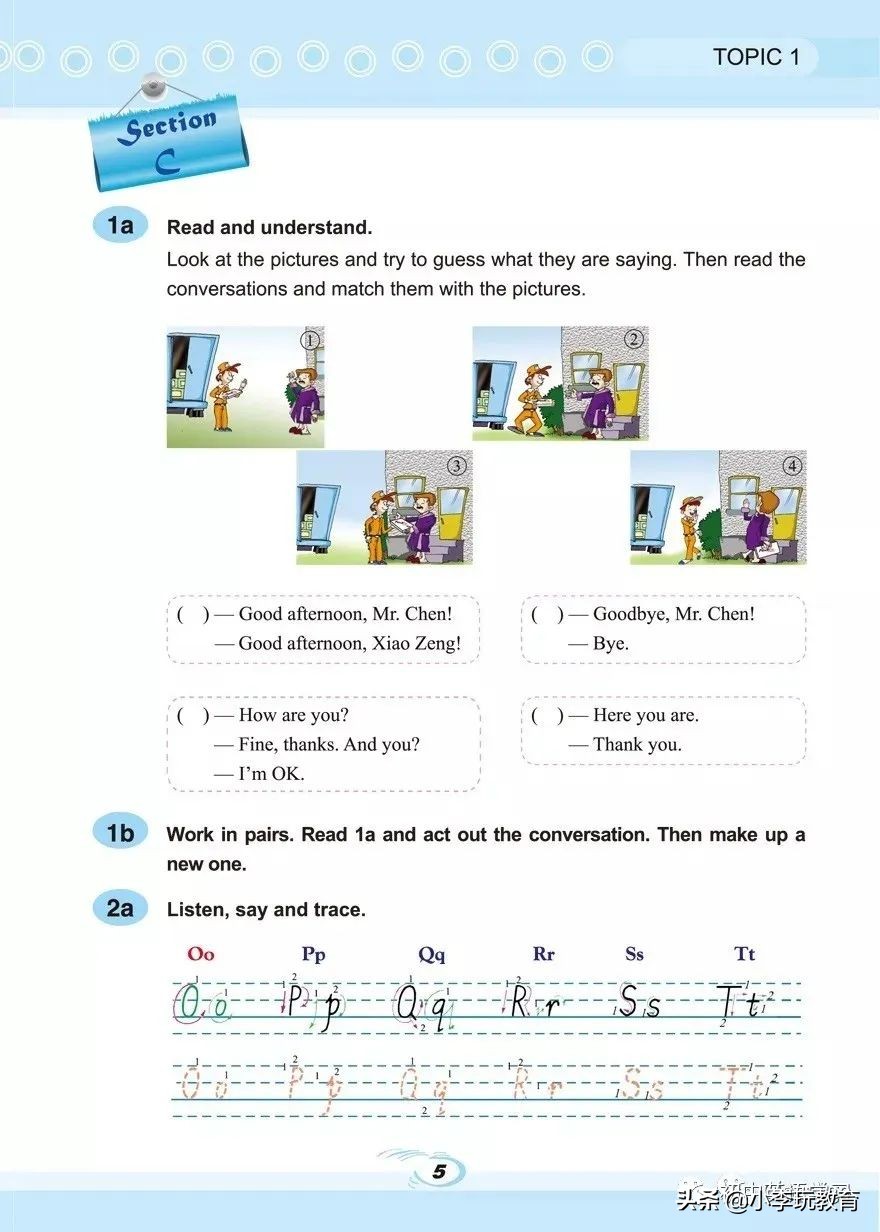
Section C- 1aGood afternoon, Mr. Chen!陈先生,下午好!Good afternoon, Xiao Zeng!小曾,下午好!How are you?你好吗?Fine, thanks. And you?很好,谢谢。你呢?I'm OK.我很好。Here you are.给你。Thank you.谢谢。Goodbye, Mr. Chen!陈先生,再见。Bye.再见。
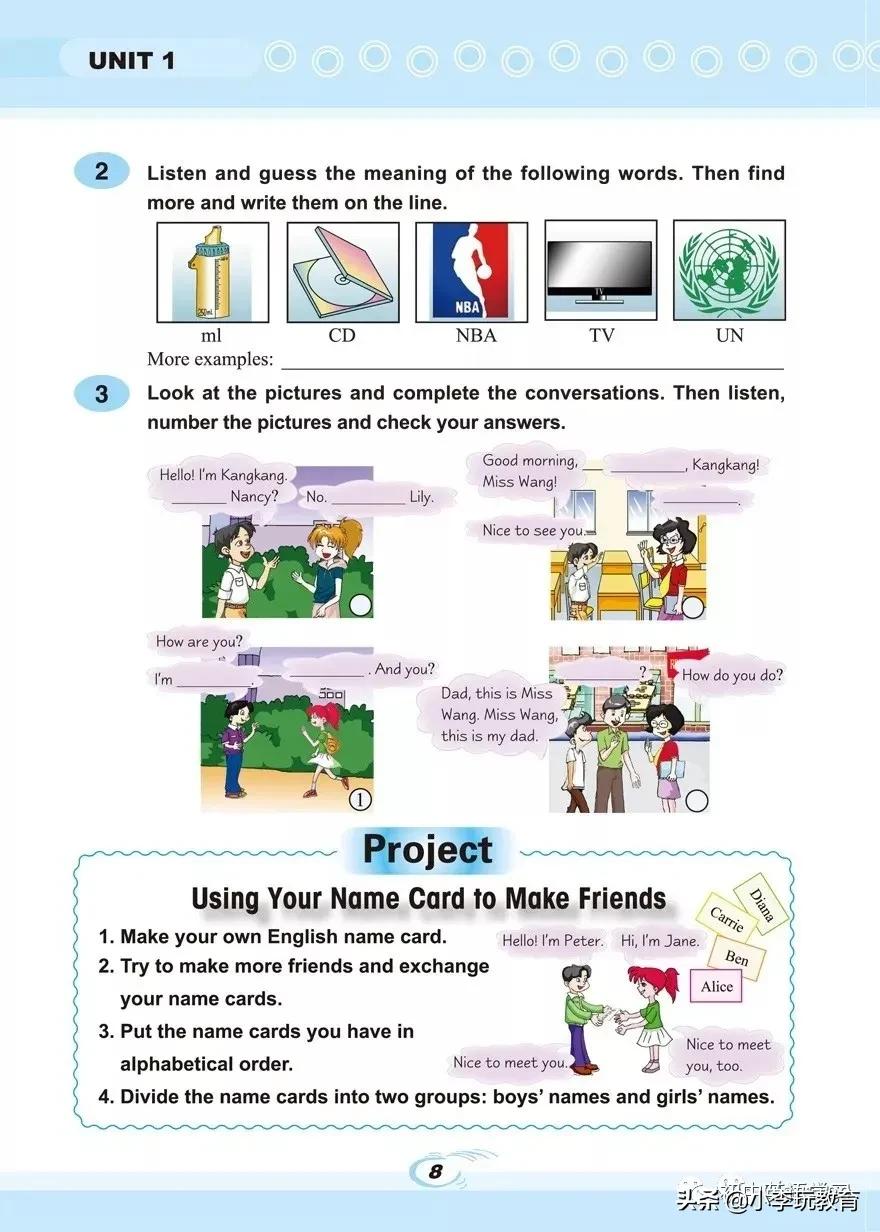
Section D - 3How are you?你好吗?Fine, thanks. And you?我很好,谢谢。你呢?I'm okay.我也很好。Good morning, Miss Wang!早上好,王老师。Good morning, Kangkang!早上好,康康!Nice to see you.见到你很高兴。Nice to see you too.见到你我也很高兴。Hello! I'm Kangkang.你好,我是康康。Are you Nancy?你是南希?No. I'm Lily.不是。我是莉莉。Dad, this is Miss Wang.爸爸,这是王老师。Miss Wang, this is my dad.王老师,这是我爸爸。How do you do?你好!How do you do?你好!

Unit 1 知识梳理
【重点短语】
1. good morning/ afternoon / evening 早上/下午/晚上好
2. glad / nice to meet / see you 见到你很高兴
3. welcome to + 地点 欢迎来到……
4. let’s + v 让我们做……
5. stand up 起立
6. sit down 坐下
7. this is... 这是……
8. thanks = thank you 谢谢
9. see you = see you later = goodbye 再见
10. ID number 身份证号码
11. be from=come from 来自
12. in English 用英语
【重要句型】
1. ---What’s your name? ---My name is Sally.
2. ---Where are you from? ---I’m from China.
---Where do you come from? ---I come from China.
3. ---Where is he/ she from? ---He/She is from Japan.
4. ---What’s this/ that in English? --- It’s a/ an…
5. ---What’re these/ those in English? ---They’re…
6. ---How do you spell it? ---E-R-A-S-E-R, eraser.
7. ---Can you spell it? ---Yes, M-A-P, map.
8. —How old are you/ is he/ are they?
—I’m/ He is/ They are eleven.
9. —What’s your telephone number?
—It’s 4567967.
10. —What class/ grade are you in?
—I’m in Class Ten, Grade Seven.(注意大小写)
11. Good morning/ afternoon/ evening.
12. —Hello!/Hi! —Hello!/Hi!
13. —Nice/Glad to see/meet you. —Nice/Glad to see/meet you, too.
14. —Welcome to China/my home. —Thanks.
15. —How do you do? —How do you do?
16. —How are you? —Fine, thank you. And you? —I’m OK.
17. —See you then/ later. —See you.
18. —Goodbye. —Bye.
19. —Thank you. —You’re welcome./That’s OK./Not at all.
【重点语法】
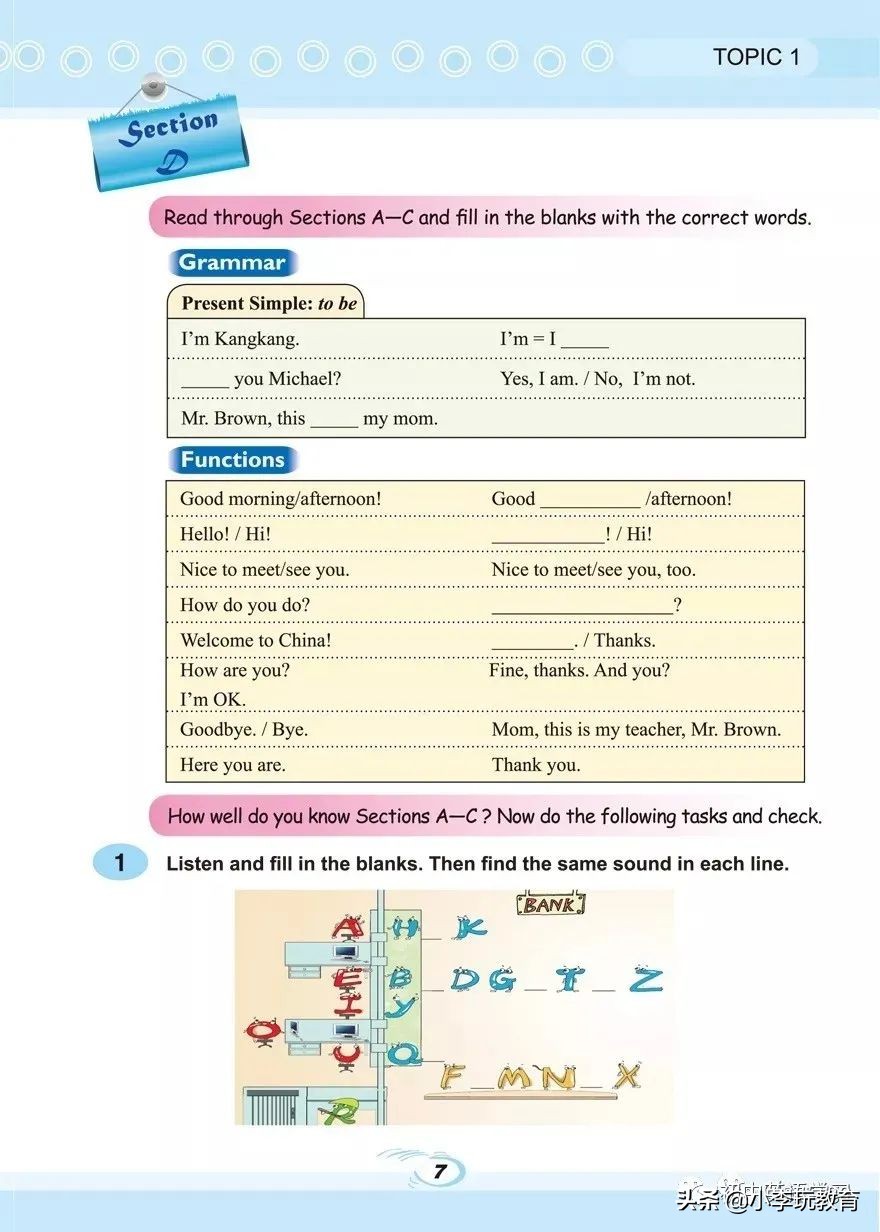
1. 元音字母:Aa Ee Ii Oo Uu
包含有以下元音的字母:
[e] Aa Hh Jj Kk
[i:] Ee Bb Cc Dd Gg Pp Tt Vv
[aɪ] Ii Yy
[ju:] Uu Qq Ww
[e] Ff Ll Mm Nn Ss Xx Zz
2. 大小写
句首字母,人名,地名,称呼语,专有名词,星期的首字母要大写,引人注意。
• Look!Is that Jane?
• He comes from Hubei, China.
• Mr. Wang, this is my mom.
• —What class are you in?
—I’m in Class Ten, Grade Seven.
• On Sunday, we go to the West Hill for a picnic.
3. Be动词的用法
• 我用am,你用are,is用于他、她、它,单数用is,复数就用are。
• 含be动词的陈述句变否定句在be后加not,变一般疑问句将be提前。
• 一般疑问句的肯定回答:Yes, 人称代词+ be;否定回答:No, 人称代词+be + not。
如:---They are teachers. ---They are not teachers.
---Are they teachers? ---Yes, they are./ No, they aren’t.
4. 不定冠词、定冠词和and的用法
(1)不定冠词a, an的用法
a /an 都表示“一,一个”,a 用在以辅音音素开头的单词前,如:a book; a desk; an 用在以元音音素开头的单词前,如:an apple / an orange/ an English book;/ an English boy/ an old man;/an actor/ an English teacher/ an office worker.
(2)the是定冠词,表特指,单复数前面都可用
• We are in the same class.
• The girl in a pink skirt is Jane.
• Where is the book?
• This isn’t my bike. The blue one is mine.
(3) and的用法
• 数字相加看做单数:Two and three is five.
• 颜色相加也是单数: Black and white is gray.
• 人和事物相加是复数:Lucy and Lily are sisters. The pen and the eraser are Jane’s.
5. 可数名词单数变复数
(1)规则变化
① 一般在名词词尾加-s,如:car---cars; photo---photos; toy---toys; boy---boys
② 以s, x, ch, sh结尾的词,在词尾加--es,如:box---boxes; bus--buses
③ 以辅音字母+y结尾,变y为i再加es,如:baby--babies; family--families
4)以fe结尾,变fe为v再加es,如:knife--- knives
(2)不规则变化
如:foot---feet; man---men; woman---women; snowman---snowmen;
(3)集体名词:people, clothes, police, family
(4)成双出现的名词:shoes, pants(trousers), gloves, eyes, ears
6. 一词多义
An orange(桔子)is orange(橙色的).
--END--
来源公众号:初中英语学习