二分法查找相对于顺序查找,有较高的效率,但前提条件是一个排好序的数组。排序的方法很多,其中效率较高的是快速排序方法:
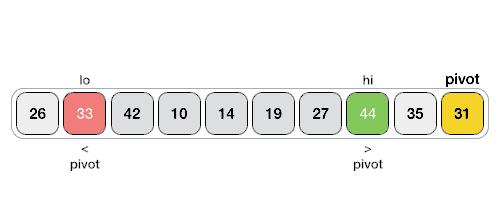
实例代码如下:
先是产生一个随机数组,然后快速排序,最后是二分法查找:
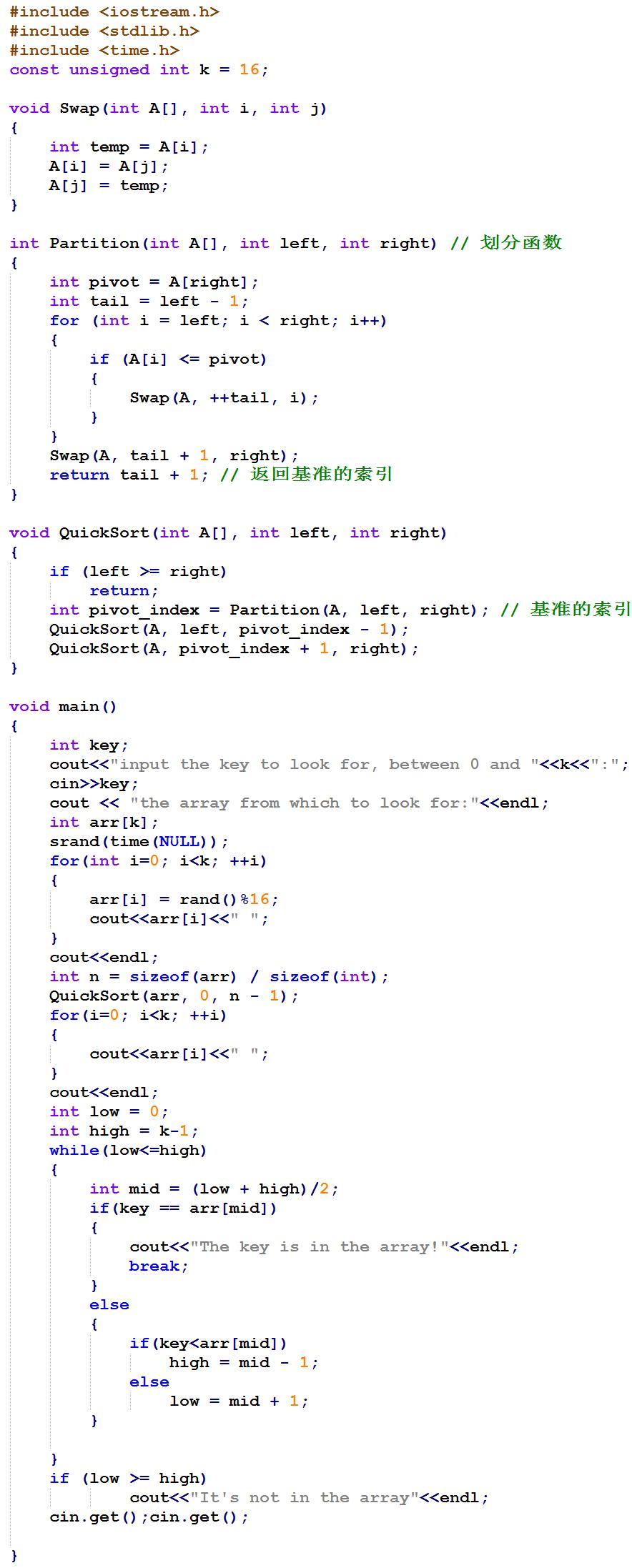
运行结果:
input the key to look for, between 0 and 16:12
the array from which to look for:
7 15 15 7 4 2 8 11 1 14 7 10 12 10 14 3
1 2 3 4 7 7 7 8 10 10 11 12 14 14 15 15
The key is in the array!
我们知道,如果是k个元素的数组,对于顺序查找,时间复杂度是n,而二分法查找的时间复杂度只有:
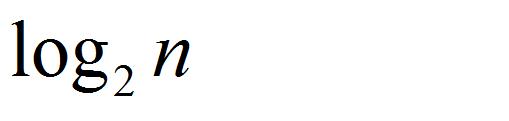
如一个16个元素的数组,对于顺序查找,最坏的情况是需要比较16次,而用二分法查找,最坏的情况比较4次即可确认。
附代码:
#include <iostream.h>
#include <stdlib.h>
#include <time.h>
const unsigned int k = 15;
void Swap(int A[], int i, int j)
{
	int temp = A[i];
	A[i] = A[j];
	A[j] = temp;
}
int Partition(int A[], int left, int right) // 划分函数
{
	int pivot = A[right];		// 这里每次都选择最后一个元素作为基准
	int tail = left - 1;		// tail为小于基准的子数组最后一个元素的索引
	for (int i = left; i < right; i++) // 遍历基准以外的其他元素
	{
		if (A[i] <= pivot)		// 把小于等于基准的元素放到前一个子数组末尾
		{
			Swap(A, ++tail, i);
		}
	}
	Swap(A, tail + 1, right);
	// 最后把基准放到前一个子数组的后边,剩下的子数组既是大于基准的子数组
	// 该操作很有可能把后面元素的稳定性打乱,所以快速排序是不稳定的排序算法
	return tail + 1; // 返回基准的索引
}
void QuickSort(int A[], int left, int right)
{
	if (left >= right)
		return;
	int pivot_index = Partition(A, left, right); // 基准的索引
	QuickSort(A, left, pivot_index - 1);
	QuickSort(A, pivot_index + 1, right);
}
void main()
{
	int key;
	cout<<"input the key to look for, between 0 and "<<k<<":";
	cin>>key;
	cout << "the array from which to look for:"<<endl;
	int arr[k];
	srand(time(NULL));
	for(int i=0; i<k; ++i)
	{
		arr[i] = rand()%16;
		cout<<arr[i]<<" ";
	}
	cout<<endl;
	int n = sizeof(arr) / sizeof(int);
	QuickSort(arr, 0, n - 1);
	for(i=0; i<k; ++i)
	{
		cout<<arr[i]<<" ";
	}
	cout<<endl;
	int low = 0;
	int high = k-1;
	while(low<=high)
	{
		int mid = (low + high)/2;
		if(key == arr[mid])
		{
			cout<<"The key is in the array!"<<endl;
			break;
		}
		else
		{
			if(key<arr[mid])
				high = mid - 1;
			else
				low = mid + 1;
		}

	}
	if (low >= high)
			cout<<"It’s not in the array"<<endl;
	cin.get();cin.get();
}
-End-