青花瓷(blue and white porcelain),又称白地青花瓷,常简称青花,是中国瓷器的主流品种之一,属釉下彩瓷。青花瓷是用含氧化钴的钴矿为原料,在陶瓷坯体上描绘纹饰,再罩上一层透明釉,经高温还原焰一次烧成。钴料烧成后呈蓝色,具有着色力强、发色鲜艳、烧成率高、呈色稳定的特点。原始青花瓷于唐宋已见端倪,成熟的青花瓷则出现在元代景德镇的湖田窑。明代青花成为瓷器的主流。清康熙时发展到了顶峰。明清时期,还创烧了青花五彩、孔雀绿釉青花、豆青釉青花、青花红彩、黄地青花、哥釉青花等衍生品种。
藏品介绍
中文名称:青花博古纹碗
英文名称:Blue and white Bo Gu grain bowl
类别:瓷器
规格:一件
品相:美品
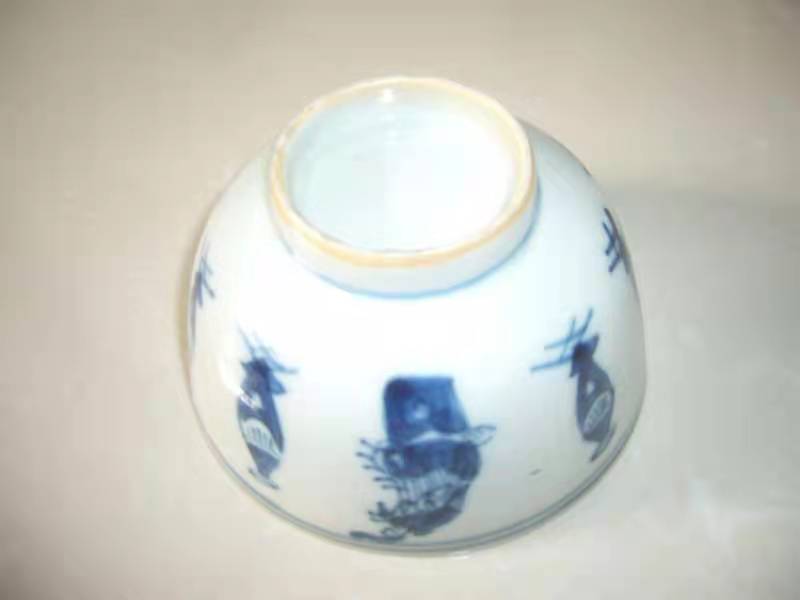
这件青花画的主题就是博古纹,欣赏古代雅物的乐趣体现其上。
博古纹是中国传统装饰纹样的一种。中国北宋大观中,徽宗命王黼等编绘宣和殿所藏古器,成《宣和博古图》三十卷。后人因将图绘瓷、铜、玉、石等各种古器物的画,叫做“博古”。也有添加花卉、果品作为点缀的。在各种工艺品上常用这种题材作为装饰图案。寓意清雅高洁。
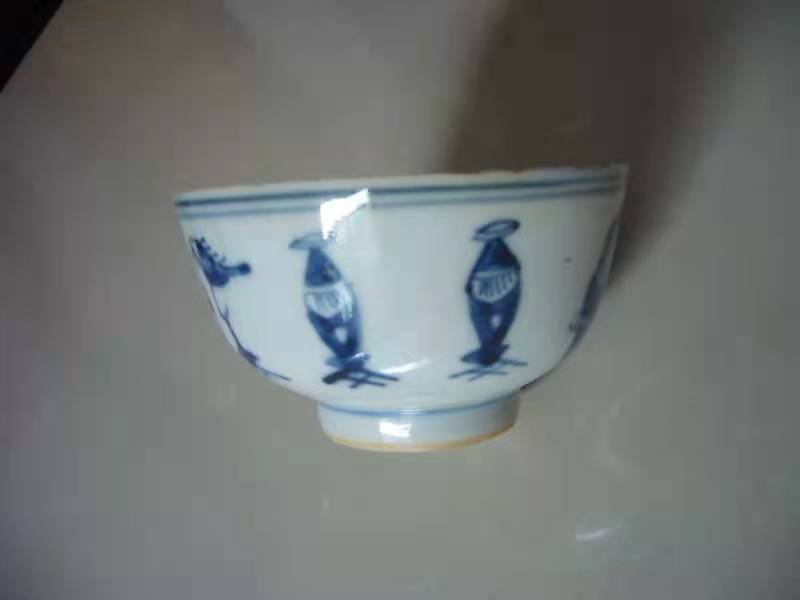
可以看到画面中画的几个盘口瓶,口缘像盘子一般,细颈,下部内收,有如亭亭玉女,十分耐赏。
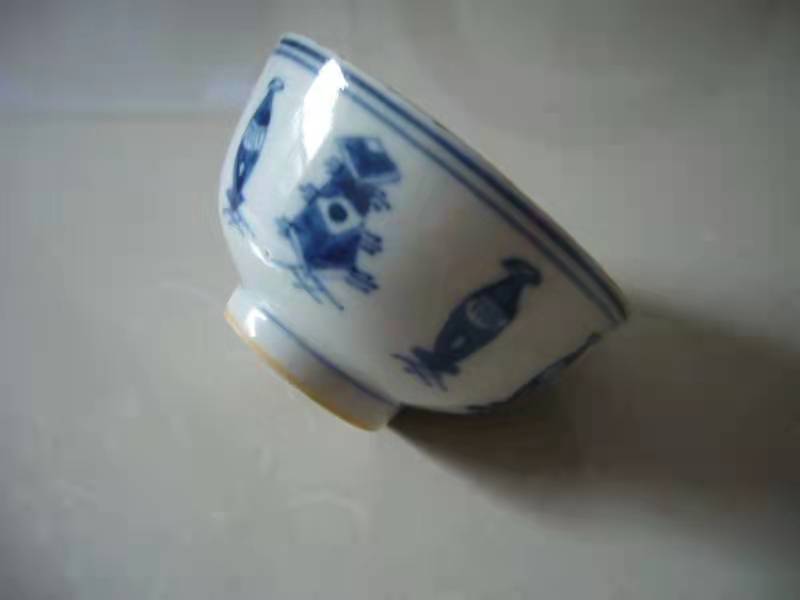
釉面光泽莹润,青花出现晕散,一青花双圈为边界,底足边缘可见明显的发黄,是由于瓷胎中含有微量的铁元素,长时间氧化所致,年代感十足,为开门老瓷器。
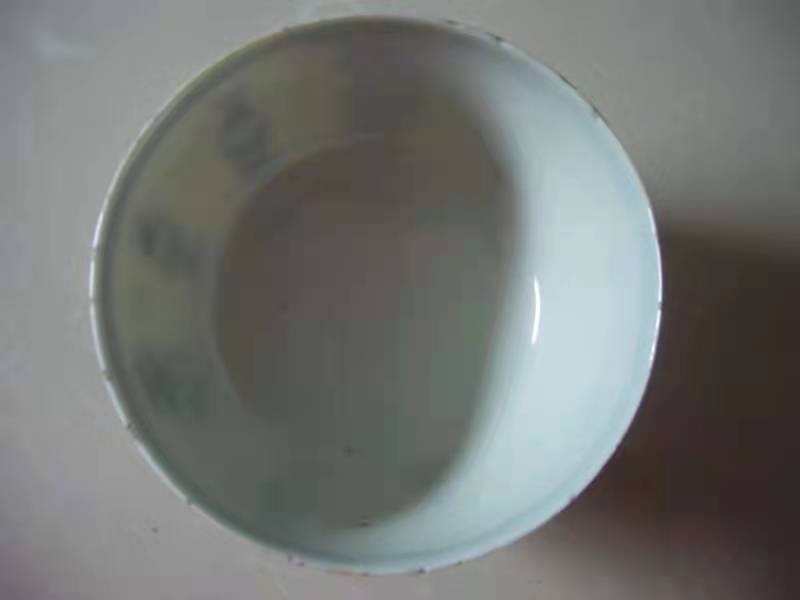
口缘有多个小磕缺,反应其流通痕迹,磕缺的不规则形,注定其开门的特征。
这件青花,画面颜色深浅不一,青花晕散明显,画面极其生动自然,不管从任何角度欣赏都是古韵十足,青花瓷是能最好表现泼墨山水画的瓷器,这是其它瓷器所做不到的,所以青花瓷最具中国风,最能体现中国山水画艺术的最好载体,china这个单词大家都知道是中国的意思,可是最早这个单词的意思就是瓷器,因为当时中国被称之为瓷器之国,可见我国瓷器的影响之大,已经成为对外的一张艺术名片了,而当时出口瓷最多的就是青花瓷,这件青花瓷开门见老,画工精美,综上所述是一件十分难得的馆藏级藏品,可谓是千金易得,一宝难求。
哥窑”名列宋代五大名窑,在陶瓷史上有举足轻重的地位。哥窑胎多紫黑色、铁黑色、也有黄褐色。釉为失透的乳浊釉,釉面泛一层酥光,釉色以炒米黄、灰青多见,釉面大小纹片结合。
作为五大名窑之一的哥窑,随着文献资料的不断发现和考古资料的不断充实,对哥窑的认识已渐趋清晰。然而;由于缺乏同代文献,且后代文献常是一鳞半爪,零零碎碎,有的还互相矛盾,仍无法揭开层层面纱,呈现它的真实面目。虽然数十年来与哥窑相关的考古实物资料不断增多,并且也依据这些实物资料解决了一些悬而未决的问题,但在惊喜之后,蓦然回首,人们发现,这些实物资料以及由此而得出的结论往往与文献记述无法对应,有些甚至南辕北辙。因此,哥窑问题依然迷雾重重。
藏品介绍
中文名称:哥窑百极碎浅口洗
英文名称:The kiln is washed in shallow water
类别:瓷器
规格:一件
品相:美品
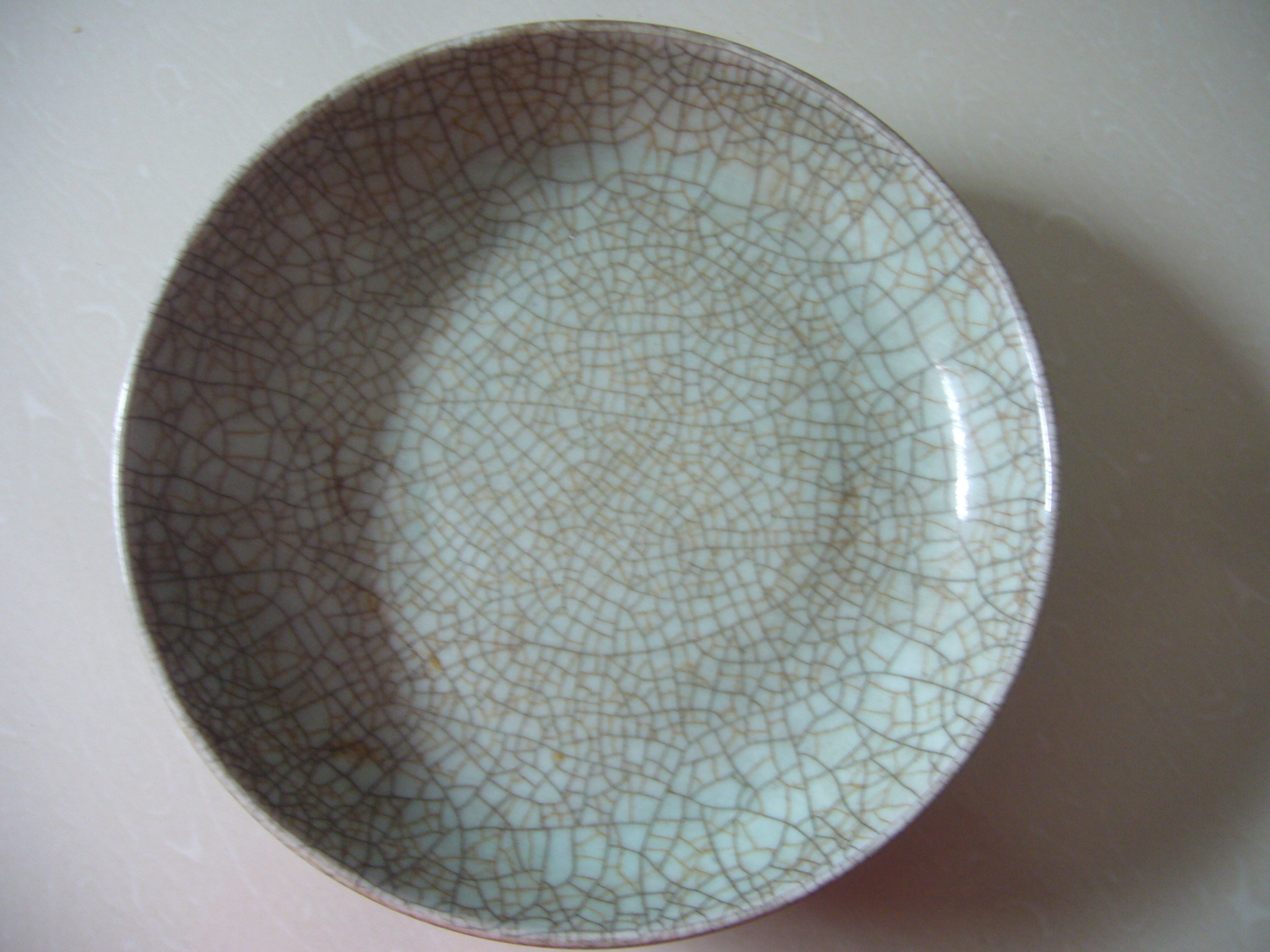
所谓百级碎,意思就是如冰裂般或钢化玻璃碎裂时的纹理,但不会碎裂。这种土沁痕迹是由于玉在地底常年受热受冷等原因造成,类似瓷器中的哥窑。非常稀少罕见,玩家前辈告知,好好的盘个几周,冰裂纹就可盘到看不出,听着挺神奇的。
这件哥窑金丝铁线特征极其明显,典型,釉面有如酥油一般的润感,古韵十足,端庄大气,是难得的馆藏级藏品。
“金丝铁线”:哥窑瓷器釉面裂纹的专有称谓。传世哥窑瓷器的釉层肥腴,开细碎片纹。纹路分两种:一种是釉裂形成大开片的黑色纹路,俗称“铁线”;另一种是釉裂形成小开片的金黄色纹路,俗称“金丝”,合而即有“金丝铁线”之美称。其形成的原因是由于坯体与釉的膨胀系数不同,在窑内冷却的过程中釉因收缩率大而开裂。
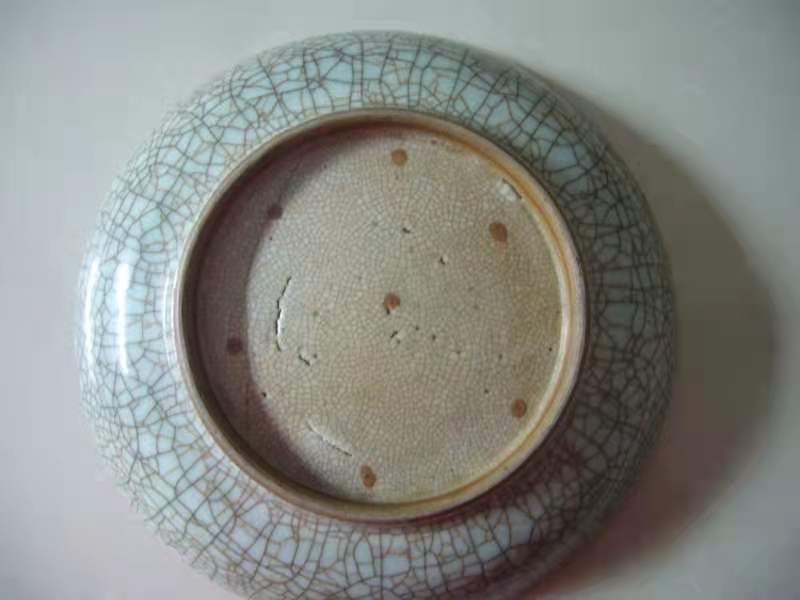
圈足氧化发黄,是瓷土中微量铁元素长时间氧化所致,由于宋朝瓷器的瓷土不是使用的高龄土,所以窑温不需要很高,烧出来的瓷器没有后期的紧实,底足可以看到有一种酥感,其釉面有如酥油一般的温润,底部留下七个圆点的支烧痕迹。
哥窑作为五大名窑之一,在电视剧正阳门下突出哥窑的地位,更是超越了汝窑器,是各大拍卖公司压轴重器,只有宋代哥窑,不远千里,斥巨资也要拿到手,因为目前的哥窑器是比大熊猫还稀有了,是瓷器收藏中的至宝,可谓是千金易得,一宝难求。
昌化鸡血石是中国特有的珍贵宝石,具有鸡血般的鲜红色彩和美玉般的天生丽质 ,历来与珠宝翡翠同样受人珍视,以“国宝”之誉驰名中外。清乾隆年所修《浙江通志》曾记载:“昌化县产图章石,红点若朱砂,亦有青紫如玳瑁,良可爱玩,近则罕得矣。
昌化鸡血石产于浙江省临安市昌化西北的“浙西大峡谷”源头的玉岩山。
冻石,简称“冻”。是用于雕刻工艺品和印章的材料,晶莹润泽,可分为多种冻石。冻石也可理解为冷冻的石头。透明或半透明肉冻状的块状叶蜡石、地开石。按色调分为白冻、乌冻、黄冻、粉冻、灰冻、黑白彩、黄白彩等。
藏品介绍
中文名称:大红袍鸡血石印章
英文名称:Da Hong Pao chicken blood stone seal
类别:杂项
规格:一方
品相:美品
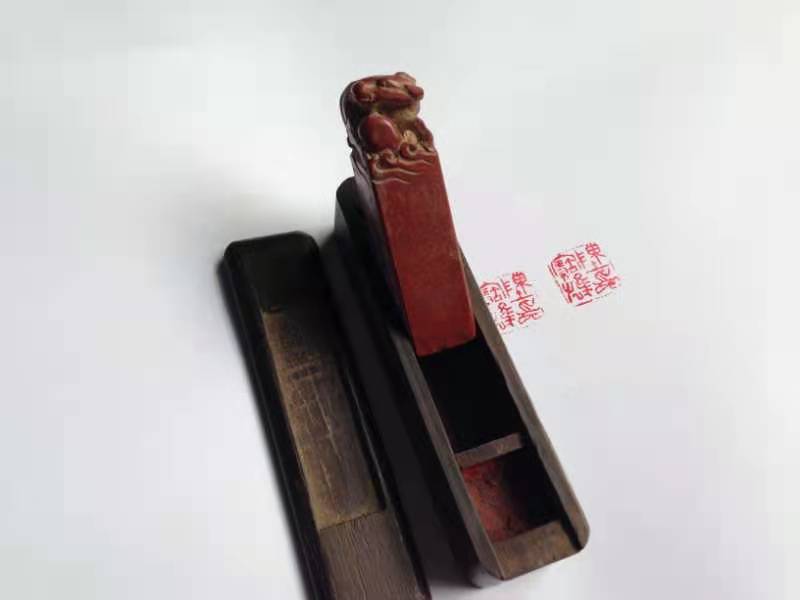
我们把含百分之70以上血量的称之为大红包,为顶级鸡血石,而鸡血冻又是鸡血石中极为罕见的,我们知道物质到了一定的年份,质地就会发生变化,所谓千万年成石亿年成玉,这点通过树化玉就能很好的体现,冻石就是已经达到了玉化的级别,呈现半透明,有如果冻一般,美艳动人。
昌化的鸡血石是中国特有的名贵石种之一,具有艳丽鲜红如鸡血般的色彩和亮晶如美玉般的光泽,被誉为“国宝”而驰名中外,是中国四大名石之一。
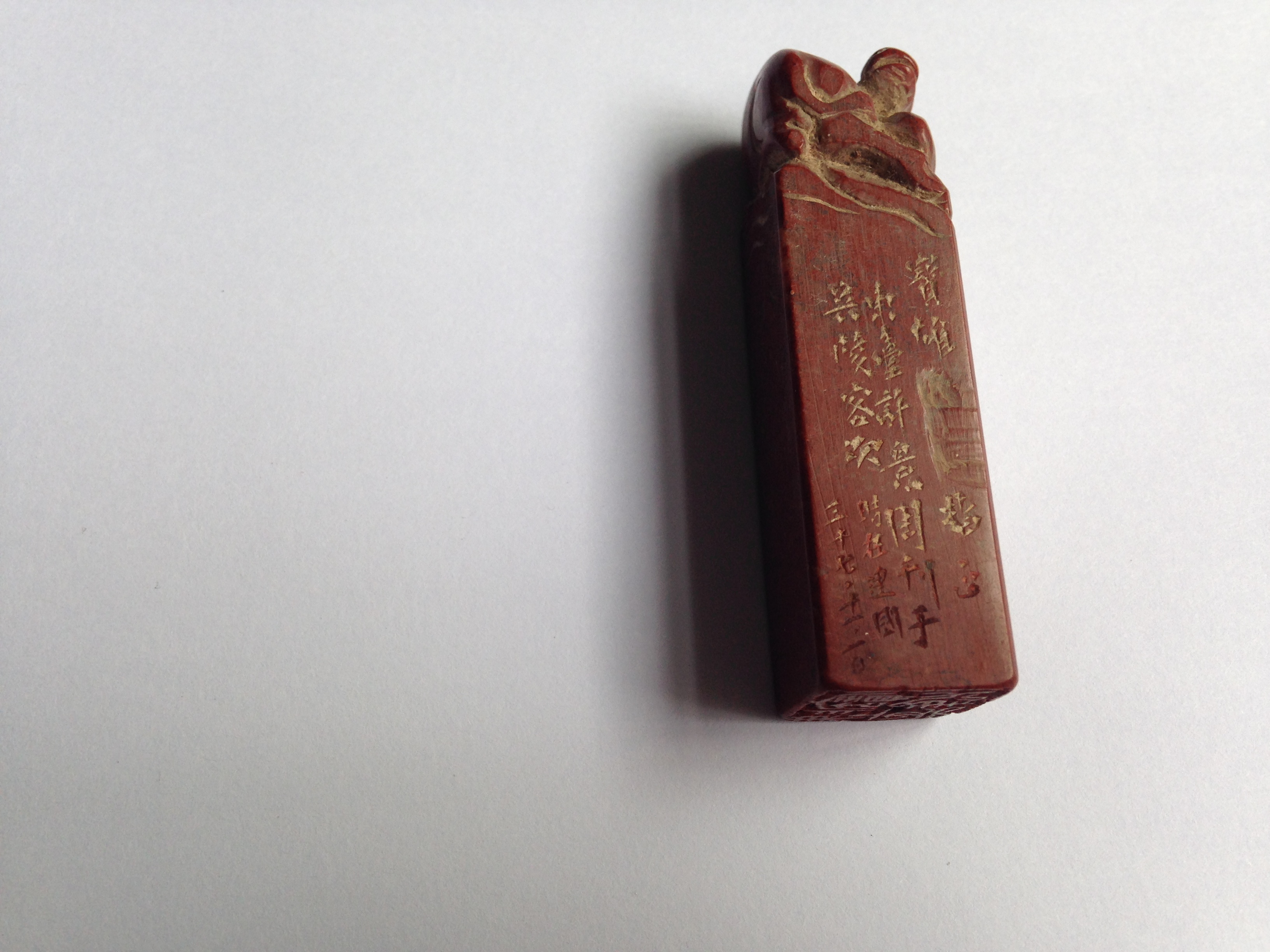
可以看到此鸡血石的血,有如初干枯后鸡血,年代感十足,整体遍布红色,鸡血石害怕阳光长期照射,会导致血色发黑,而这枚鸡血石印章的血色十分红艳,为顶级的鸡血石,且含血量在百分之70以上,是不择不扣的大红包鸡血石印章。
可见顶部几乎被血色笼盖,我们看鸡血石章料就是要看几面有血,而六面都有血的是十分罕见的,更别说血量如此之足,而顶部红色也有着鸿运当头之意,其鸡血石也寓意着(石)时来运转。
昌化鸡血石的工艺用途主要是制作印章、雕刻工艺品和原石欣赏等。在众多印石中,昌化鸡血石是中国“印石三宝”之一,并以撩人的美姿,赢得“印石皇后”之誉,为中国印文化的发展作出了独特的贡献;同时又为我国的玉雕工艺创造了“鸡血”巧雕的独特流派,其作品以“瑰丽、高雅、精巧、多”著称。
在评选中国国石中,昌化鸡血石具备了“四性”:独有性——据我国地质部门的调查和各国地质文献的记载,世界其他国家尚未发现此类矿产;奇特性——形、色即奇异,又特别,十分罕见;观赏性——形、色、纹理及质地美丽无比,百玩难舍,从中获益;文化性——在传统文化中有一席之地,皇帝宠爱,布衣珍惜。
昌化鸡血石在1999年以来的历次中国国石评选中,均为首选国石之一。宝玉石专家称昌化鸡血石为“中华瑰宝”。
这方鸡血石印章,无磕,无残,品相完美,为名人印章,鸡血石表现为朱砂红,其章面文字刀刻痕迹明显,表面有氧化包浆,年代感十足,目前市场上鸡血石极其稀缺,而名人老鸡血石印章更是罕见,具有着极高的收藏价值。
英文翻译:Blue and white porcelain, also known as white blue and white porcelain, is often referred to as blue and white porcelain. It is one of the mainstream varieties of Chinese porcelain, and belongs to underglaze color porcelain. Blue and white porcelain is made of cobalt ore containing cobalt oxide as raw material, which is decorated on the ceramic body, then covered with a layer of transparent glaze, and fired by a high temperature reduction flame. Cobalt material is blue after burning, with strong coloring, bright hair color, high burning rate and color stability. The original blue and white porcelain appeared in The Tang and Song dynasties, while the mature blue and white porcelain appeared in the Hutian kiln of Jingdezhen in the Yuan Dynasty. The blue and white of Ming Dynasty became the mainstream of porcelain. It reached its peak during the Kangxi period of qing Dynasty. In the Ming and Qing Dynasties, it also created blue-and-white colorful, malachite-green glaze blue-and-white, soya-green glaze blue-and-white, blue-and-white red, yellow-ground blue-and-white, blue-and-white and other derivative varieties.
The collection is introduced
Chinese name: blue and white Bo Gu grain bowl
English name: Blue and White Bo Gu Grain Bowl
Category: Porcelain
Specification: one piece
Appearance: Beautiful
The theme of this blue and white painting is ancient grain, which is reflected in the pleasure of appreciating ancient elegant objects.
Bogu pattern is a kind of traditional Chinese decorative pattern. In The Daguan of the Northern Song Dynasty, King Huizong appointed Wang Zebu and others to compile the ancient artifacts stored in xuanhe temple and make the book Of Xuanhe Bogu in six volumes. Later generations of painting porcelain, copper, jade, stone and other ancient artifacts of the painting, called "bo Gu". Also have to add flowers, fruit as an ornament. This theme is often used as a decorative pattern on various crafts. The implication is elegant and noble.
You can see the picture of the painting of a few bottles, mouth edge like a dish, thin neck, lower adduction, like a graceful, very appreciative.
The glaze is shiny and smooth, and the blue and white flowers appear dizzy and scattered. A blue and white double circle is the boundary, and the bottom foot edge is obviously yellow, which is caused by the long time oxidation of the porcelain fetus due to the trace iron element in the porcelain fetus. It is very old porcelain for opening the door.
Mouth edge has a number of small knock, reflecting its circulation trace, knock missing irregular shape, doomed its characteristics of opening.
This blue and white, the picture color shades, blue and white halo powder, picture extremely vivid and natural, no matter from any Angle to appreciate is a sensibility, blue and white porcelain is the best performance splash-ink landscape painting of China, it is the other porcelain can't do, so most Chinese wind of blue and white porcelain, most can reflect the best carrier of Chinese landscape painting art, China this word is the meaning of the Chinese is known to all, but the meaning of this word is the earliest porcelain, because the country is referred to as Chinese porcelain, is our country the influence of China, has become a foreign art card, at a time when export porcelain is blue and white porcelain, To sum up, this blue and white porcelain is a rare collection with exquisite painting. It can be said that it is a treasure that is easy to get and hard to find.
Ge Kiln is one of the five famous kilns in the Song Dynasty, and has a pivotal position in the history of ceramics. Ge Kiln fetus more purplish black, iron black, there are also yellow-brown. Glaze is opaque glaze, glazed with a layer of crisp light, the glaze color to fried rice yellow, gray and green, the size of the glaze grain combined.
As one of the five famous kilns, Ge Kiln, with the continuous discovery of literature and the continuous enrichment of archaeological data, the understanding of Ge Kiln has gradually become clear. However; Due to the lack of literature of the same generation, and the later generations of literature is often a claw, piecemeal, and some are contradictory, still can not uncover the layers of the veil, to show its true face. Associated with elder brother kiln although decades of archaeological data, and also on the basis of these data to solve some pending issues, but after a surprise, suddenly look back, it has been found that these materials and the conclusion which often cannot corresponding with documentary, some even opposite. As a result, the question of Kao remains shrouded in mystery.
The collection is introduced
Ge Yao Baiji shallow-mouth wash
4. The kiln is washed in shallow water
Category: Porcelain
Specification: one piece
Appearance: Beautiful
The so-called hundred level broken, meaning such as ice or tempered glass cracks when the texture, but not broken. The soil-ooking trace is caused by the fact that the jade is heated and cooled in the ground all the year round, which is similar to the Ge kiln in porcelain. Very rare, the player senior told, a good dish for a few weeks, ice cracks can be disk to see, sounds pretty amazing.
The features of this gold wire of Ge Kiln are very obvious, typical, the glaze is as nourishing as ghee, full of ancient charm, dignified atmosphere, is a rare collection level.
"Gold wire and iron wire" : the name of glaze crack in Ge Kiln porcelain. Handed down ge Kiln porcelain glaze layer fat, open finely grain. There are two kinds of grain: one is the black grain formed by the crack of glaze, commonly known as "iron wire"; The other is the golden grain formed by the cracks of the glaze, commonly known as "gold wire", which is called "gold wire". The reason for its formation is that the expansion coefficient of the blank body is different from that of the glaze, and the glaze cracks due to the large shrinkage rate during the cooling process in the kiln.
Yellow ring foot oxidation, trace iron in China clay is caused by oxidation for a long time, because of the song dynasty porcelain porcelain clay instead of using the ripe old age of soil, so don't need high kiln temperature, burn out porcelain is not tight, in the late late enough to see there is a feeling of crisp, its glaze as warm as ghee, leaving seven dots at the bottom of the burn marks.
Elder brother kiln as one of five ancient jun in the TV series under the qianmen outstanding elder brother kiln status, but also beyond your kiln, jack axis is the auction company, only the elder brother of the song dynasty kiln, miles, denounce is gigantic endowment also want to take it, because the brother kiln is much more than a giant panda is a rare, is the treasure in porcelain collection, be a daughter is easy, the treasure is hard to find.
Changhua chicken blood stone is a unique precious stone in China. It has the bright red color like chicken blood and the natural beauty like beautiful jade. It has always been cherished by people as well as jewelry and jadeite, and is known as "national treasure" at home and abroad. In the year of Qianlong in the Qing Dynasty, it was recorded in "Zhejiang Tongzhi" that: "Changhua County produced signet stones, red dots such as cinnabar, also have purple like tortoiseshels, good and lovely play, it is rare near.
Changhua jixue stone is produced in the northwest of Changhua, Lin 'an city, Zhejiang Province, the source of the "West Zhejiang Grand Canyon" Yuyan Mountain.
Frozen stone, referred to as "frozen". It is used for carving handicrafts and seals. It is crystal and moist and can be divided into a variety of frozen stones. Frozen stone can also be understood as frozen stone. Transparent or semitransparent fleshy - shaped block pyrophyllite, diolithite. Press tonal cent is white jelly, wu Jelly, yellow jelly, powdery jelly, gray jelly, black and white color, yellow and white color.
The collection is introduced
Chinese name: Da Hong Pao Chicken blood stone seal
Da Hong Pao Chicken Blood Stone Seal
Category: Miscellaneous
Specification: One party
Appearance: Beautiful
We call containing more than seventy percent HP big red envelopes, as the top stones, and chicken blood frozen is extremely rare in the stone, we know that the material in a certain year, quality of a material will change, the so-called thousand Wan Niancheng stone in jade, this through the jade tree can be a very good reflected, frozen stone is has reached the level of jade, transparent, like a jelly man, beautiful and moving.
The chicken blood stone in Changhua is one of the unique rare stones in China. It has the bright color like chicken blood and the luster like bright crystal like beautiful jade. It is known as "national treasure" and is one of the four famous stones in China.
Can see the blood stone, chicken blood, after have the same dry s feels dye-in-the-wood, overall in red, bloodstone fear long sunlight, lead to color black, and with the seal of this stone color is red, stone for the top, and the blood in more than seventy percent, is not choose the travel big red envelope stone seal.
Visible top is almost covered by the blood cage, we see jixue stone material is to see a few sides have blood, and six sides have blood is very rare, not to mention the amount of blood so sufficient, and the top red also has the meaning of great fortune, its Jixue stone also implies (stone) turn of fortune.
Changhua jixue stone is mainly used for making seals, carving crafts and appreciating raw stones. Among the many inscriptions, changhua jibloodstone is one of the "three treasures of Inscriptions", and won the reputation of "Queen of Inscriptions" with its tantalizing beauty, making a unique contribution to the development of Chinese inscriptions; At the same time for China's jade carving craft to create "chicken blood" a unique school of artistic carving, its works to "magnificent, elegant, exquisite, more" known.
In the selection of China's national stone, changhua jixue stone has "four characteristics" : unique -- according to the survey of China's geological department and geological records of various countries, no other countries have found this kind of mineral resources; Odd characteristics - shape, color is strange, but also special, very rare; Ornamental - the shape, color, texture and texture of the beautiful, a hundred play hard to give up, from the benefits; Culture - there is a place in the traditional culture, the emperor dote on cloth treasure.
Changhua jixue stone has been selected as one of the first choice in the selection of China's national stones since 1999. Precious jade stone experts called changhua jixue stone "Chinese treasure".
This chicken blood stone seal has a perfect appearance and is a famous person's seal. It is vermillion red, with obvious carving marks on the seal surface and oxidized pulp on the surface, which makes it very old. At present, chicken blood stone is extremely rare in the market, and the old celebrity chicken blood stone seal is even more rare, with high collection value.