
分享兴趣,传播快乐,增长见闻,留下美好。
亲爱的您,
这里是LearningYard学苑!
今天小编为大家带来《考虑保鲜努力与增值服务的生鲜电商供应链的协调与信息共享》信息共享对供应链决策影响。
欢迎您的用心访问!
本期推文阅读时长大约5分钟,请您耐心阅读。
Share interest, spread happiness,
increase knowledge, and leave beautiful.
Dear you,
this is the LearingYard Academy!
Today I bring you "Coordination and information sharing in fresh produce e-commerce supply chains considering preservation efforts and value-added services" The impact of information sharing on supply chain decisions.
Welcome your visit!
The reading time of this tweet is about 5 minutes, please read it with patience.
本期推文通过思维导图,精读内容,知识补充三个板块,展示博士论文《考虑保鲜努力与增值服务的生鲜电商供应链的协调与信息共享》信息共享对供应链决策影响,请读者跟着小编一起来学习吧!
This issue tweets through three panels of mind map, intensive reading content, and knowledge supplement to showcase the PhD thesis "Coordination and information sharing in fresh produce e-commerce supply chains considering preservation efforts and value-added services" Information sharing impact on supply chain decision making, readers are invited to follow the editorial!
01
思维导图
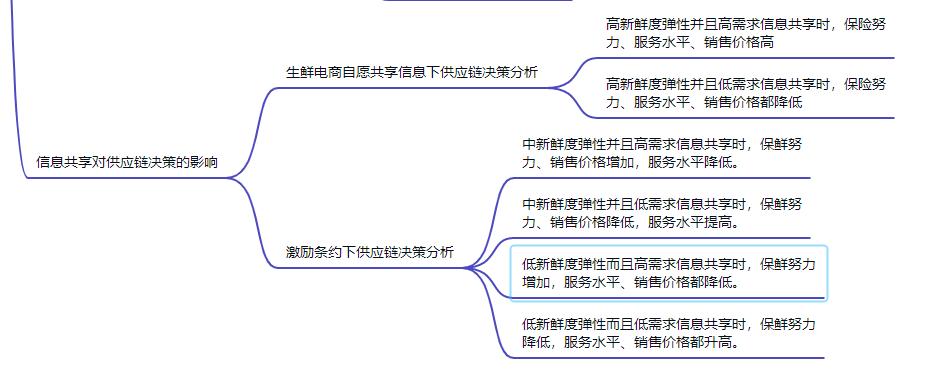
本次推文将介绍此论文的生鲜电商供应链的信息共享对供应链决策影响,思维导图如下:
This tweet will present this thesis on the impact of information sharing on supply chain decisions in the fresh produce e-commerce supply chain, with the following mind map:
02
精读内容
本期推文针对生鲜电商自愿信息共享情况与契约激励下生鲜电商信息共享情况下信息共享决策对供应链的决策影响进行了研究。
当新鲜度弹性处于一个较高的水平时,生鲜电商会自愿进行信息共享。基于此,作者又考虑了生鲜电商将高、低需求预测信息传递给供应商的情况。研究的方法就是将信息共享的决策与分散系统的决策进行大小比值。
This tweet examines the impact of information sharing decisions on supply chain decisions in the case of voluntary information sharing by fresh produce e-merchants and in the case of information sharing by fresh produce e-merchants under contractual incentives.
When the freshness elasticity is at a high level, fresh produce e-merchants voluntarily share information. Based on this, the authors also consider the case where fresh produce e-merchants pass on high and low demand forecast information to suppliers. The methodology of the study was to size the decision to share information to that of the decentralised system.
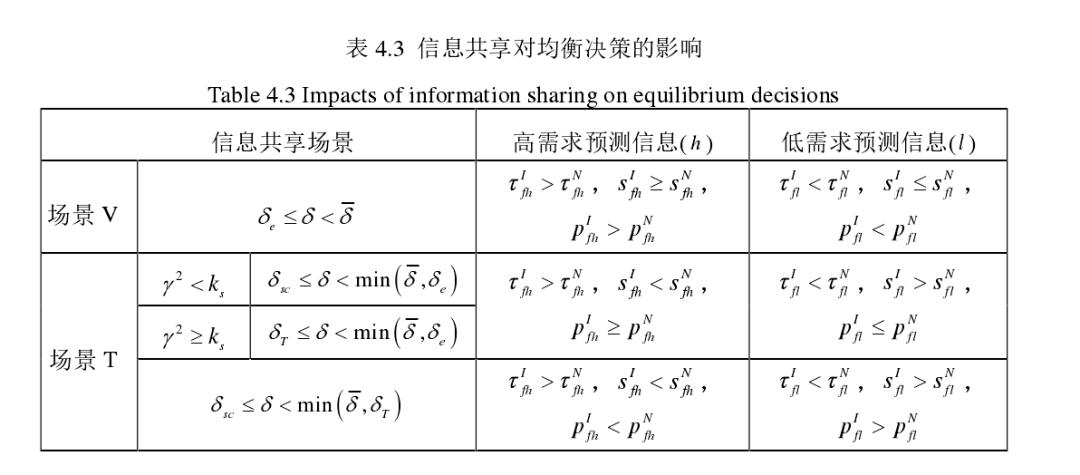
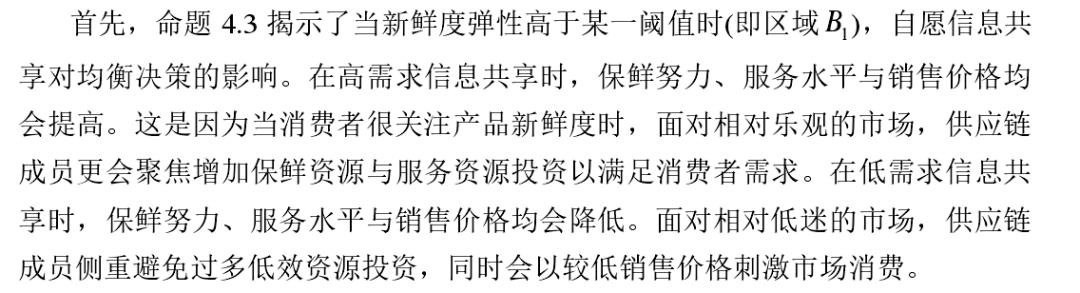
首先在高新鲜度弹性,高需求预测的情况下,保鲜努力、服务水平、销售价格升高。这是因为面对乐观的市场,供应链成员会聚焦保鲜和服务资源满足客户需求,同时也会带动成本的上升,引起销售价格的上涨。然后在高新鲜度弹性,低需求预测的情况下,保鲜努力、服务水平、销售价格都降低。这是因为面对低迷市场,供应链成员会减少资源投资,会实行低价刺激市场需求。
Firstly in the case of high freshness elasticity and high demand forecasts, preservation efforts, service levels and selling prices rise. This is because in the face of an optimistic market, supply chain members will focus their preservation and service resources on meeting customer demand, while also driving up costs and causing higher selling prices. Then with high freshness elasticity and low demand forecasts, preservation efforts, service levels, and selling prices are lower. This is because in the face of a depressed market, supply chain members will invest less resources and will implement low prices to stimulate market demand.
随后,作者研究了激励下生鲜电商信息共享情况下信息共享决策对供应链的决策,并根据新鲜度临界值,分为了中等新鲜度情况和低新鲜度情况。
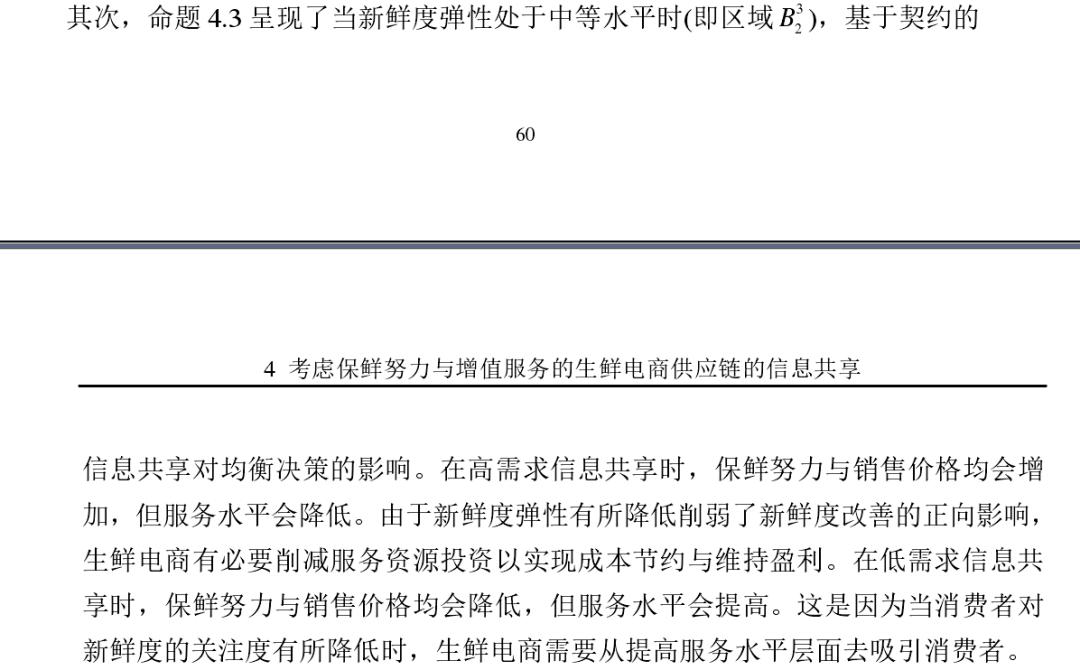
然后在中等新鲜度弹性,高需求预测的情况下,保鲜努力、销售价格增加,服务水平降低。原因是新鲜度弹性下降时,供应链成员会降低服务水平节约成本。在中等新鲜度弹性,低需求预测的情况下,保鲜努力、销售价格降低,服务水平提高。原因是对新鲜度关注低,需要提升服务水平刺激消费者需求。
The authors then examine the information sharing decisions on the supply chain under the incentive fresh produce e-commerce information sharing scenario and divide it into a medium freshness case and a low freshness case, based on the freshness threshold.
Then in the medium freshness elasticity case with high demand forecasts, freshness effort, selling price increases and service levels decrease. The reason for this is that when the freshness elasticity decreases, supply chain members will reduce their service levels to save costs. With medium freshness elasticity and low demand forecasts, preservation effort, selling price decreases and service levels increase. The reason for this is low freshness concern and the need to increase service levels to stimulate consumer demand.
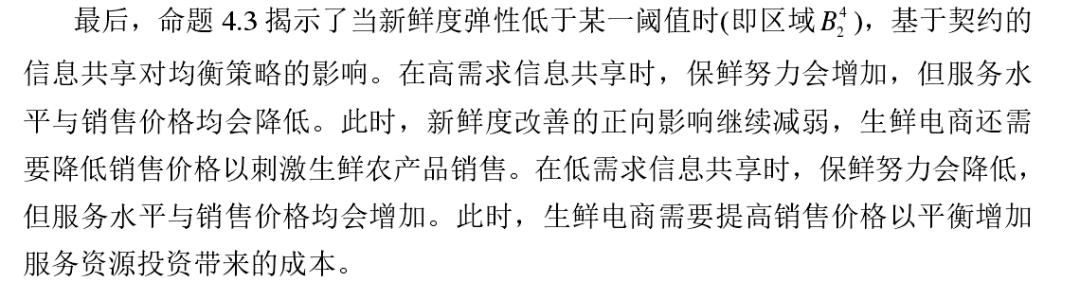
最后一部分,研究了低新鲜度弹性,高需求下的情况,发现保鲜努力增加,服务水平、销售价格都降低。这是因为新鲜度的正向影响弱,生鲜电商需要通过降低价格刺激需求。而在低新鲜度弹性,低需求下保鲜努力降低,服务水平、销售价格都升高。这是因为供应链成员需要提升价格弥补刺激需求的服务成本。
In the final section, the low freshness elasticity, with high demand, is examined and it is found that the freshness effort increases and service levels and selling prices decrease. This is because the positive effect of freshness is weak and fresh produce e-commerce needs to stimulate demand by reducing prices. In contrast, at low freshness elasticity, freshness preservation effort decreases under low demand, and service levels and selling prices increase. This is because supply chain members need to raise prices to compensate for the service costs of stimulating demand.
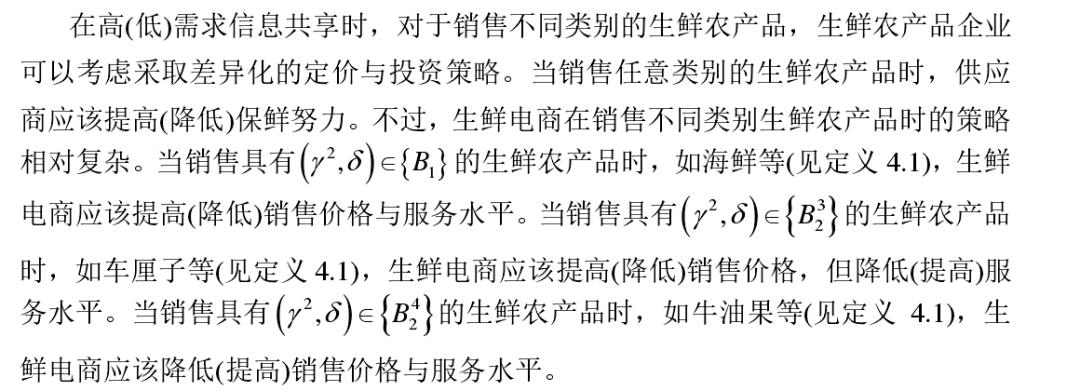
在结尾部分,作者基于研究对现实生鲜产品的生鲜电商进行了建议。
In the concluding section, the authors make recommendations for fresh produce e-commerce for realistic fresh produce based on their research.
03
知识补充
文章研究了生鲜供应链,而对对于新鲜度要求高的产品需要使用到冷藏运输,那么冷藏运输的成本构成有哪些呢?
固定成本:车辆购置费用。折旧费用:通常为5年。人工费用:驾驶员工资及管理费用。年检及保险费用。
变动成本— 燃油费:冷链运输因涉及到制冷,油耗通常要高于普通运输车辆。而制冷耗油量也与箱外温度和货品特性有关系,通常每百公里油耗在15L至25L之间。路桥费。维修保养费。
税费: 运输服务增值税税费。
The article examines the fresh produce supply chain and the need to use refrigerated transport for products that require high levels of freshness, so what are the cost components of refrigerated transport?
Fixed costs: vehicle acquisition costs. Depreciation costs: usually 5 years. Labour costs: driver's wages and overheads. Annual inspection and insurance costs.
Variable costs - fuel costs: cold chain transport usually consumes more fuel than ordinary transport vehicles because of the refrigeration involved. Refrigeration fuel consumption is also related to the temperature outside the container and the characteristics of the goods, usually between 15L and 25L per 100km. Road and bridge costs. Repair and maintenance costs.
Taxes: VAT on transport services.
今天的分享就到这里了。
如果您对今天的文章有独特的想法,
欢迎给我们留言,
让我们相约明天。
祝您今天过得开心快乐!
That's it for today's sharing.
If you have a unique idea about today’s article,
welcome to leave us a message,
let us meet tomorrow.
I wish you a nice day !
参考资料:DeepL翻译,知乎,百度
参考文献:刘墨林. 考虑保鲜努力与增值服务的生鲜电商供应链的协调与信息共享[D].重庆大学,2020.
本文由LearningYard学苑整理发出,如有侵权请在后台留言!
LearningYard学苑
文字 | clear
排版| clear
审核| Goldfish