Nüshu:China’s Secret Female-only Language
女书:中国神秘的女性专属语言
Throughout history, women in rural Hunan Province used a coded script to express their most intimate thoughts to one another. Today, this once-“dead” language is making a comeback.
历史上,一些湖南乡村地区女性曾使用一种加密的文书来传递她们之间最隐秘的想法。现在,这个曾经“死亡”的语言正在重生。
China’s south-eastern Hunan province is a dramatic jigsaw puzzle of precipitous sandstone peaks, deeply incised river valleys and fog-shrouded rice paddy fields. Mountains cover more than 80% of the area, leaving many isolated hillside hamlets to develop independently of one another. It was here, hidden amongst the rocky slopes and rural river villages where Nüshu was born: the only writing system in the world created and used exclusively by women.
地处中国西南的湖南省地形复杂,峭壁深渊犬牙交错,梯田周围云雾环绕。部分地区的山地占据了80%的陆地面积,使得很多山间小村有机会相对独立发展。正是在这片群山环绕、碧水流过的乡村中,诞生了世界上唯一被女性创造、且仅被女性使用的文字——女书。
Meaning “women’s script” in Chinese, Nüshu rose to prominence in the 19th Century in Hunan’s Jiangyong County to give the ethnic Han, Yao and Miao women. Some experts believe the female-only language dates to the Song dynasty (960-1279) or even the Shang Dynasty more than 3,000 years ago. The script was passed down from peasant mothers to their daughters and practiced among sisters and friends in feudal-society China during a time when women, whose feet were often bound, were denied educational opportunities.
女书在中文里的意思是“女性的文字”,于19世纪时在湖南江永县的汉族、瑶族及苗族女性中盛行一时。一些专家认为这种只有女性使用的语言可以追溯到宋朝(公元960年-1279年)甚至3000多年前的商朝。在封建时期,中国妇女往往要缠足并被剥夺接受教育的机会,这种文字是一代代由农民母亲传授给她们的女儿而流传下来的,并在姐妹和朋友间互相练习。

Many of these women were illiterate, and to learn Nüshu, they would simply practise copying the script as they saw it. Over time, Nüshu gave rise to a distinct female culture that still exists today.
因为很多女性都是文盲,为了学习女书,她们看到这种文字便抄写下来练习。逐渐地,女书也发展成为一种存续至今的独特女性文化。
Remarkably, for hundreds or possibly even thousands of years, this unspoken script remained unknown outside of Jiangyong, and it was only learned of by the outside world in the 1980s.
值得一提的是,几百年甚至数千年来,这个秘密的文字一直不为江永县之外所知,外界直到1980年代才知道这种文字。
Today, 16 years after the last known fluent native “speaker” of this ancient code passed away, this little-known written language is experiencing something of a rebirth. The centrepiece of its revival is in the tiny village of Puwei, which is surrounded by the Xiao river and only accessible via a small suspension bridge.
现在距离最后一位可以使用口语流利表达这套古老密码的本地使用者过世已经16年了,但这个不为人知的书面文字却在经历重生,而重生的中心之地是被潇河环绕、只有一座小吊桥通往外界的小村庄浦尾。
According to Puwei resident Xin Hu, Nüshu was once widely spoken in the four townships and 18 villages closest to Puwei. After experts found three Nüshu writers in the 200-person village in the 1980s, Puwei became the focal point for Nüshu research. In 2006, the script was listed as a National Intangible Cultural Heritage by the State Council of China, and a year later, a museum was built on Puwei Island, where Xin began working as one of seven interpreters or “inheritors” of the language, learning to read, write, sing and embroider Nüshu.
据浦尾村村民胡欣(音译)说,女书曾经被其周边4个镇、18个村的女性广泛使用。专家1980年代在这个200多人的村庄发现了3名能书写女书的人之后,浦尾村便成了女书研究的重点地区。2006年,女书被列为中国国务院列为非物质国家文化遗产。一年后,浦尾岛上还建起了一座博物馆。胡欣也在这里以七位女书翻译员(或称“传承人”)之一的身份工作,学习阅读、书写女书,并用女书唱歌以及刺绣。
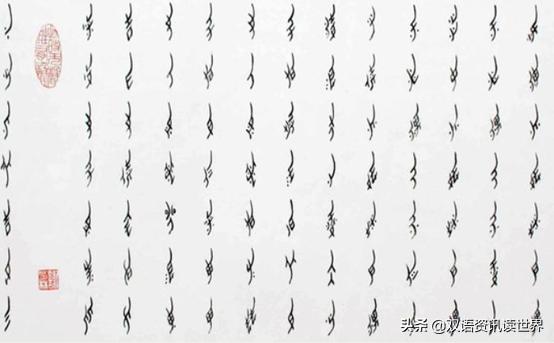
Nüshu is a phonetic script read right to left that represents an amalgamation of four local dialects spoken across rural Jiangyong. Each symbol represents a syllable and was written using sharpened bamboo sticks and makeshift ink from the burnt remains left in a wok. Influenced by Chinese characters, its style is traditionally more elongated with curved, threadlike strokes sloping diagonally downwards and was sometimes referred to as “mosquito writing” by locals because of its spindly appearance.
女书是一种融合了江永县乡村地区四种口音的表音文字,从右至左阅读。每一个符号代表一个音节,通过尖锐的竹棍以及利用锅底灰制成的简易墨水书写。受汉字影响,女书字体风格一般狭长而弯曲,细长的笔画向下倾斜。因其细长纺锤形的外表,女书有时候被形容为“长脚蚊”。
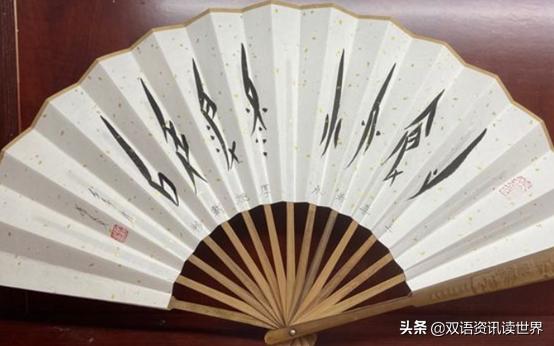
Nüshu provided a way for women to cope with domestic and social hardships and helped to maintain bonds with friends in different villages. Convivial words of friendship and happiness were embroidered in Nüshu on handkerchiefs, headscarves, fans or cotton belts and exchanged. Though Nüshu wasn’t spoken, women at social gatherings sang and chanted songs or poems that varied from nursery rhymes to birthday tributes to personal regrets or marriage complaints using Nüshu phrases and expressions. Older women often composed autobiographical songs to tell their female friends about their miserable experiences or to promote morality and teach other women how to be good wives through chastity, piety and respect.
女书为当地女性提供了一种工具,使得她们能够克服家庭以及社会上的重重障碍,与在各村庄的朋友维持联系。她们在手帕、头巾、扇子和腰带上绣上各种祝福友谊和幸福的文字,并互相交换。虽然不会公开用女书交谈,但当地女性在各种社交场合会通过童谣、生日贺词、个人忏悔乃至对婚姻的吐槽等形式来歌唱或吟诵女书歌曲和诗词。年长女性还会通过带有自传性质的歌曲,向友人倾诉其悲惨的经历,或者教导其它女性如何通过贞洁、孝顺以及尊敬来做一个好妻子。
Though Nüshu is now understood as a means of communication for women who had not been afforded the privileges of reading and writing in Chinese, it was originally believed to be a code of defiance against the highly patriarchal society of the time. Historically, it was not socially acceptable for Chinese women to openly talk about personal regrets, the hardships of agricultural life or feelings of sadness and grief. Nüshu provided an outlet for the women and helped to create a bond of female friendship and support that was of great importance in a male-dominated society.
虽然现在被当做被剥夺了教育权利而无法阅读和书写汉字的女性用于交流的工具,但其最初据信是作为一种反抗当时社会家族制度的密码。在中国历史上,女性一般不被允许公开讨论个人的遗憾、农作生活的不易或表达悲伤及不幸,女书为这些女性提供了一个宣泄口,并帮助她们建立女性间友谊及互助的纽带,这在当时男性主导的社会里对她们而言非常重要。
Women who created this strong bond were known as “sworn sisters” and were typically a group of three or four young, non-related women who would pledge friendship by writing letters and singing songs in Nüshu to each other. While being forced to remain subservient to the males in their families, the sworn sisters would find solace in each other’s company.
其中一些关系特别要好的女性会结为“金兰姐妹”,一般由三到四名非亲属关系的女性通过使用女书书写誓言并互相对唱后结成。虽然在家庭里还需要服从男性领导,但这些金兰姐妹可以通过彼此的陪伴找到一丝慰藉。
In 2000, a Nüshu school opened in Puwei, and Xin decided to follow her mother and sister there to study. She now teaches Nüshu writing to students, guides visitors around the museum and has become the face of the language, embarking on publicity trips across Asia and Europe.
2000年时,浦尾村开设了一个女书学校,胡欣决定像她的母亲和姐姐一样去那里学习。现在,胡欣已经是学校的老师,负责教授女书的书写,以及带领游客游览博物馆。目前胡欣已经成为这个语言的门面担当,并多次出席亚洲及欧洲的相关公开活动。
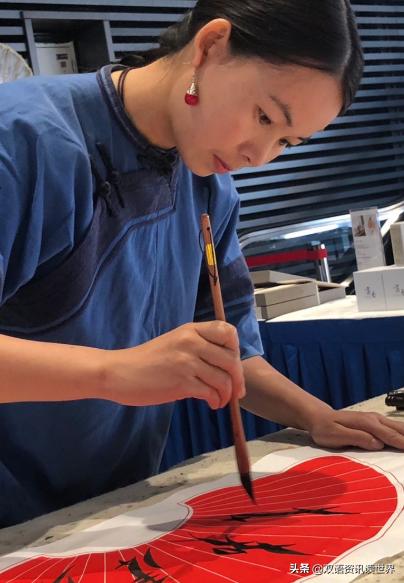
“Some inheritors have learned from their grandmothers since they were young, like our oldest Nüshu heir He Yanxin, who is in her 80s,” Xin said. “People like it because they think this culture is very unique and want to learn and understand [it].”
“一些传承人是小时候跟着她们的祖母学习女书的,例如今年80多岁的最年长女书传承人何严欣(音译),”胡欣介绍说,“人们喜欢女书是因为她们认为这种文化非常独特,因此想学习和理解女书。”
But why the script originated and flourished in this remote part of China remains a mystery.
但为何这种文字是在中国这片边远之地诞生及兴盛,仍是一个谜。
“I think it has to do with a constellation of factors that exist in many places in southern China; non-Han peoples, sinicization (the process of assimilating non-ethnically Chinese communities under Chinese influence), remoteness,” said Cathy Silber, professor of Chinese at Skidmore College in New York who first learned of Nüshu in 1986 and has been researching and writing about it ever since. Silber spent months living with Yi Nianhua, one of the last writers of Nüshu in 1988-89, translating Yi’s work into standard Chinese and giving lectures on the subject.
对于这个问题,纽约斯基德摩学院中文教授凯茜回答说:“我认为这可能涉及到多重因素,这些因素在中国南部较为常见:少数民族、汉化(指非汉族的少数民族被中国文化同化的过程),偏远之地。”
凯茜自从1986年开始学习女书以来,便一直致力于研究及创作女书相关文献。她曾和中国最后一批女书写作者易年花(音译)在1988-89年一起生活了数月,将易的作品翻译成标准中文,并公开教授女书。
Today, much of what we know about Nüshu is due to the work of male researcher Zhou Shuoyi, who heard about the script in the 1950s after his aunt was married off to a man who lived in a village with Nüshu speakers. Zhou began researching the coded language for the Jiangyong Cultural Bureau in 1954, but when Mao Zedong’s Cultural Revolution erupted in the 1960s, Zhou’s work became targeted by the state.
不过今天我们能够知悉女书,很大程度要上要归功于一位男性研究员周守义(音译)。他在1950年代从嫁到有女书使用者村落的姑姑那里知道了这种文字后,自1954年其便开始在江永县文化局研究这个神秘的语言。不过他的工作在文`革期间受到了干扰。
“I was labelled a ‘rightist’ because of the research I had done on the language,” Zhou recalled to China Daily in 2004. “They burned all of my research files, and I was sent to the labour camp and wasn't released until 1979, after spending 21 years there.”
“因为研究女书,我曾被列为‘*派右**’,我所有的研究资料都被烧毁,自己也被送去劳改,被关了21年,直到1979年才被释放。”周在2004年接受中国日报采访时回忆道。
As part of the Revolution, China’s communist leaders were keen on eradicating the country’s feudal past and anyone found using Nüshu was denounced. And as women began to receive more formal education in the 1950s, the language further declined. But after his release, Zhou continued translating the script tirelessly into Chinese. In 2003, a year before his death and that of the last surviving fluent native “speaker”, Yang Huanyi, Zhou published the first Nüshu dictionary, helping to elevate and promote its significance around the world. Today, Zhou remains the only male to have ever mastered the female-only script.
作为反封建的一部分,当时任何学习女书的人都会被批斗。加上新中国成立后,女性可以接受正常的教育,这门语言就进一步衰落了。不过周守义被释放后,还是坚持不懈地将女书翻译成汉字。2003年,周守义及最后一位能流利使用女书的杨欢宜(音译)去世的前一年,他出版了第一部女书字典,进一步提升了女书在世界上的重要性。今天,周守义仍然是唯一一位掌握了这门女性独家文字的男性。
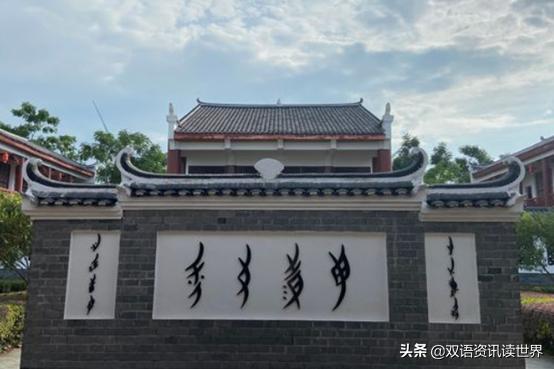
Flanked by the Xiao river, the elegant Nüshu Garden and museum features a classroom and exhibition halls. Videos, paintings and cultural exhibits adorn the walls, while embroidery and calligraphy classes provide hands-on opportunities for cultural connection. The museum itself has recently been expanded and hosts an annual festival featuring poems and songs performed in Nüshu.
女书园及博物馆两侧有潇水环绕,这里已成为女书教学及展览的场所:大厅墙上装饰着图画等文化产品,并有视频介绍。而刺绣及书法教室则向大众提供了亲自接触这个文化的机会。博物馆最近进行了扩建,并举办了展示女书诗歌及歌曲表演的年度文化节。
Today, original Nüshu artefacts are rare, as many were destroyed during the Revolution. But recent years have seen an increase in its representation in the form of film, symphony and literature. Additionally, young women across Jiangyong are now learning the script at the museum. There were 20 students enrolled in a summer course this year, and inheritors like Xin have started teaching online classes via the popular Chinese app WeChat.
现在存世的女书真迹已经非常稀少,因为很多已毁于文·革。不过近些年女书创作的电影、音乐和文学作品越来越多。此外,江永县的很多年轻女性可在这座博物馆学习女书。今年的暑期班就有20人报名,由胡欣等传承人通过微信等方式进行线上教学。
Liming Zhao, a leading scholar in the study of Nüshu, recently taught a course on the subject at Tsinghua University in Beijing. According to her, the role of Nüshu has evolved.
研究女书的著名学者赵莉明(音译)最近在北京的清华大学教授女书课程,她认为女书的作用已经变化了。
“Since the death of Yang Huanyi, [Nüshu] has entered the post-women's-calligraphy era. It is not inherited and used naturally but is deliberately studied and used for business and tourism. Of course, this is also a kind of preservation and inheritance.”
“杨欢宜去世后,女书便不再作为女性书写的工具,它不再是传统的自然传承,学习和使用女书主要是为了商业和旅游目的。不过,这也算是一种保护和传承了。”
Today, Liming believes that Nüshu remains an empowering means to appreciate women’s beauty and strength.
赵教授现在仍然认为女书还是一项欣赏女性美丽与坚韧的重要途径。
“[Nüshu] has completed her historical mission – a cultural tool for lower-class working women who did not have the right to education to write languages,” Liming said. “Now she only leaves beautiful calligraphy, wisdom and brave spirit to future generations.”
她说:“女书曾经作为被剥夺教育权利底层女性间沟通的文化工具,它已经完成了这项历史使命,但女书留下的那些漂亮的书法、以及智慧和勇气,还可以传递给后世。”