广东、广西地区和越南都属于东南亚文化圈,具有相似的历史文化渊源,但并不是同种同源关系。广东、广西地区和越南的居民虽然有着一些相似的习俗、语言和文化传统,但是在历史上,这些地区的人们也有着不同的祖先和历史背景。
根据历史记录,广东、广西地区和越南都曾被不同的王朝和政权所统治和影响,各自有着独特的历史和文化发展。例如,广西在汉代属于南越国的领土,而广东在唐代则是岭南节度使的势力范围,而越南则历经了不同的朝代和政权的统治。
因此,尽管广东、广西地区和越南具有一定的历史文化联系和渊源,但并不是同种同源关系。这些地区的文化和历史发展都具有自己独特的特点和风格。但有些越南网友并非这样认为,他们在美国论坛站上发起这样一个话题: 为什么广东人失去了他们的越南根,被中国的汉人同化? 这个话题也是引起不少国内外网友的回复,让我们看看各位海外网友是怎么说的吧。
论坛话题:为什么广东人失去了他们的越南根,被中国的汉人同化?

美籍广东网友的观点
This question is so wrong it's funny.
这个问题错得很可笑。
First off we did not come out of Kinh people, we do not have vietnamese roots, we share roots with vietnamese people.
首先,我们不是来自京族人,我们没有越南血统,我们和越南人民有共同的根。
Nanyue was conquered by the Han dynasty and some of its people mixed extensively with Han people and joined the Han nation almost fully assimilating, these are the Yue Chinese. Then there is those who were remained as their people, they are Kinh, but the concept of a Vietnamese nation that is separate from China was started by the Trung sisters (Who were Tai, a group even further from Kinh than Han.)
南越被汉朝征服,其中一些人与汉人广泛融合,几乎完全同化,加入了汉族,这些就是越族。还有一些人仍然是他们的人民,他们是京族人,但从中国分离出来的越南民族的概念是由Trung姐妹提出的(她们是泰人,一个比汉族更远离京族的群体)。
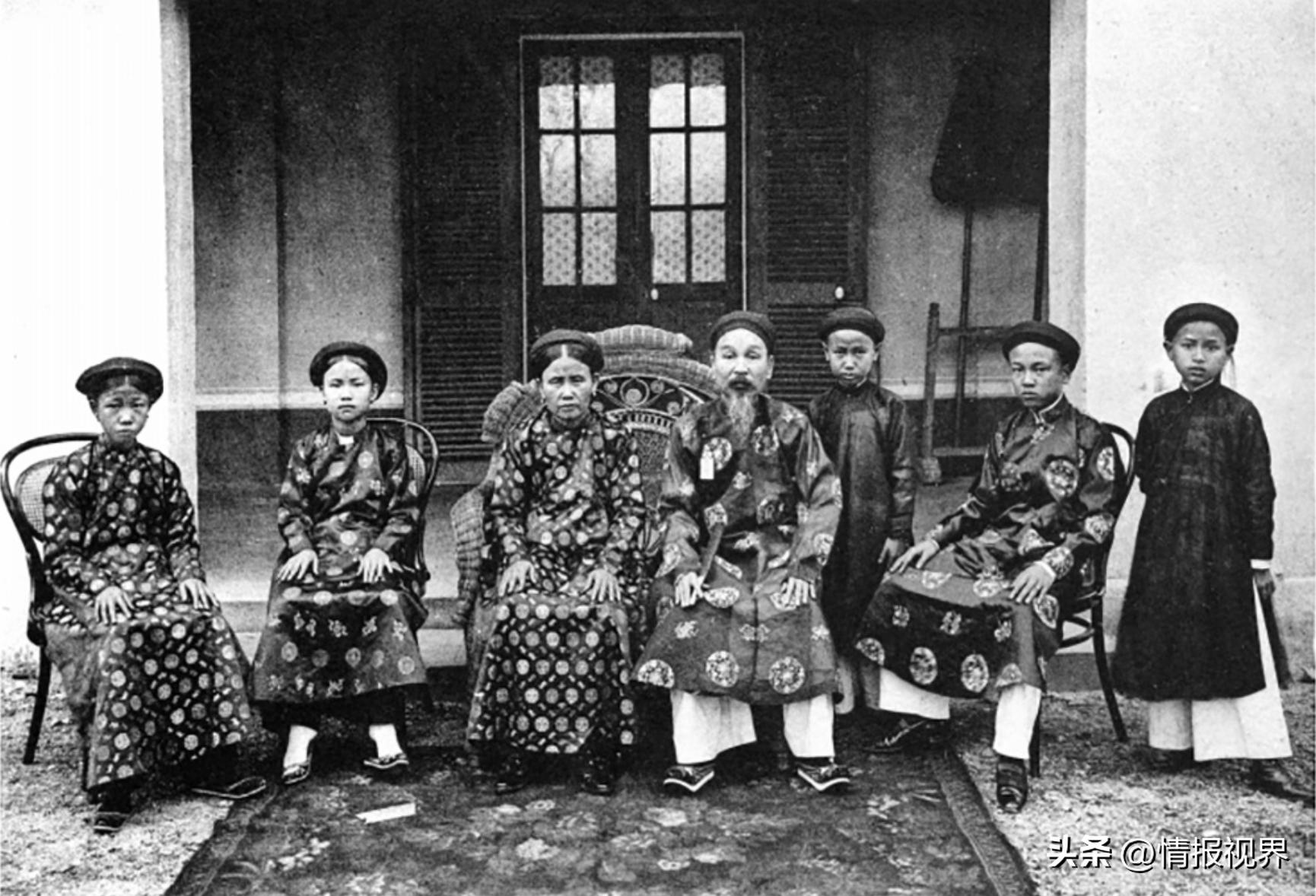
镜头下的古代越南
And in addition, Yue and Han people were closely related from the start anyway, this is why Vietnamese southern dialects of Chinese sound like Middle Chinese despite Han people being from Henan.
此外,越人和汉人从一开始就密切相关,这就是为什么尽管汉人来自河南,但越南南方的汉语方言听起来像中古汉语。

越南网友的观点
In order to make such idiotic claim you have to prove that vietnamese are actually part of the bai yue people first.
为了做出如此愚蠢的声明,你必须首先证明越南人实际上是百越人的一部分。
Bai yue simply means that they're are a lot of different tribes who lived in south china, and even today there are alot of ethnic minorities in southern china and they have nothing to do with vietnamese kinh at all.
百越的意思是,他们是生活在中国南方的许多不同的部落,即使在今天,中国南方也有许多少数民族,他们与越南族人完全没有关系。
Cantonese people and most of the southerners are the results of assimilation of native tribes into han Chinese population, the more numerous han immigrants slowly absorbed the southern natives that were fewer in numbers, native people who refused to be assimilated then withdrew to the places with few han Chinese immigrants usually in the mountains.
广东人和大多数南方人都是本土部落被汉族人口同化的结果,越来越多的汉族移民慢慢吸收了数量较少的南方土著,拒绝被同化的土著则撤退到汉族移民较少的地方,通常是在山区。
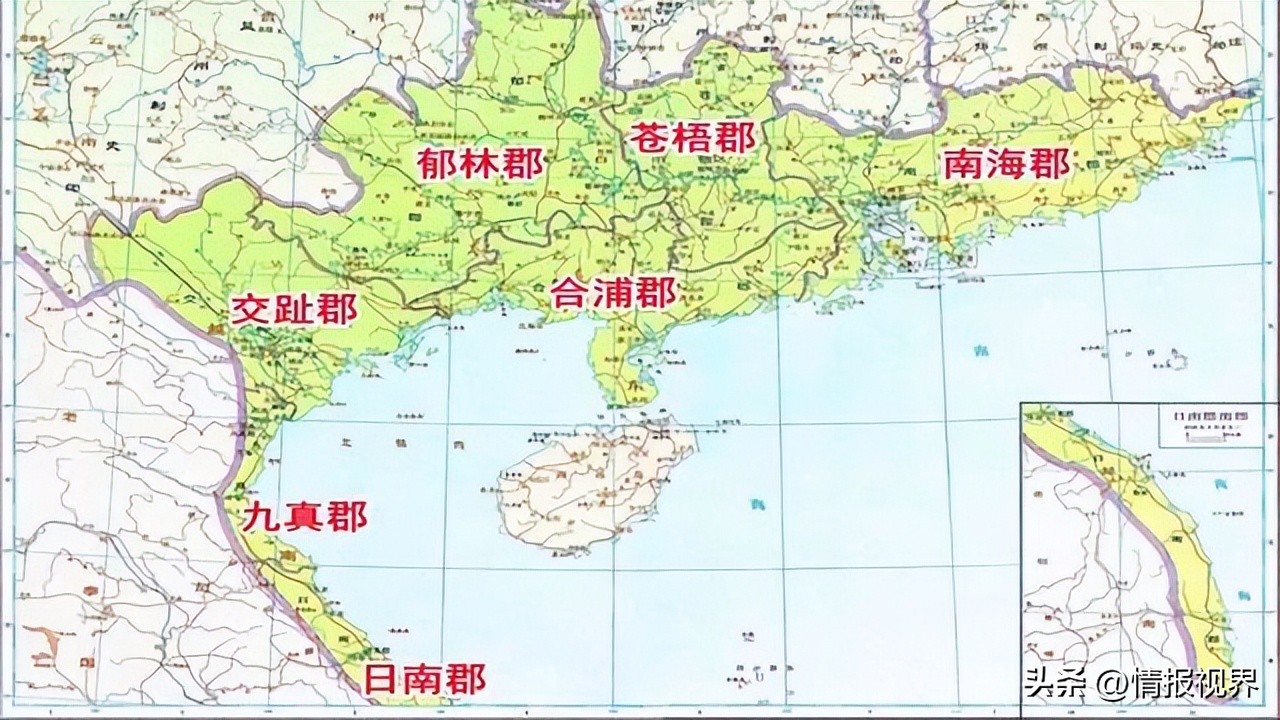
汉代越南交趾 九真 日南三郡
The similar process happened again in Taiwan when han immigrants came to the island.
当汉族移民来到台湾时,类似的过程再次发生在台湾。
And looking at the ethnic minorities in southern china today, we can conclude that the claim thay bai yue people were vietnamese are purely BS vietnamese have always been native to Vietnam, southern China was populated by different kind of people and their descendants are still here today none of them speaks viet like language, kradaic languages on the other hand is common among the minorities as well as several kind of tibeto burman languages
看看今天中国南方的少数民族,我们可以得出结论,白越人是越南人的说法纯粹是胡扯,越南人一直是越南的原住民,中国南方居住着不同种类的人,他们的后代今天仍然在这里,他们中没有一个人说类似越南的语言,另一方面,克拉达语在少数民族中普遍存在,藏缅族的一些语言也是如此。
This is the distribution of vietic langue, as we can see all of them are in southeast asia, none in china
这是越南语言的分布,我们可以看到他们都在东南亚,没有一个在中国。

美国网友的观点
The Cantonese are mixed race. China was up to Zhejiang, and no further south. That was original pure Han Chinese territory.
广东人是混血。中国一直到浙江,不能再往南了。那原来是纯汉人的领土。
With time and the pressures of an increasing population and limited resources in pre-modern society, the Han Chinese became the warring race and expanded in all four directions under Emperor Han Wudi, in a series of wars known as the war of the four winds, basically the biggest project in Chinese history that defined the nation.
随着时间的推移和前现代社会中人口增长和资源有限的压力,汉人成为了一个交战的种族,在汉武帝的统治下,在一系列被称为四风之战的战争中,汉人向四个方向扩张,基本上是中国历史上定义这个国家的最大工程。
By marching into Pyongyang in the Korean Peninsula and far south into modern day Hanoi in Vietnam, the Han Empire brought its culture (and its genes) to all corners of the expansion. The arrival of the new masters over the Austroasiatic subjects in the south blurred the lines between what was Chinese-Chinese and Yue culture. Yue people were a simple folk, and so we incorporated Han Chinese invader culture with ours, to create Yue-Chinese culture.
汉帝国进军朝鲜半岛的平壤,并向南进入今天的越南河内,将其文化(和基因)带到了扩张的各个角落。南方奥地利臣民的新主人的到来模糊了华夏文化和越文化之间的界限。越人是一个简单的民族,所以我们将汉人侵略者的文化融入我们的文化,创造了越族文化。
Today, the Cantonese people are the offspring of that syncretic culture. A simple, frail-looking people who accepted suzerainty of the Han and focused on what matters most, that is personal advancement and community life. Genetically, the Zhuang and the Yao people are the original Yue tribes that retreated deep into Guangxi and Guizhou and are the least Sinicized or remain un-Sinicized. There are also other Austroasiatic-Vietic tribes and those count also as members of the Baiyue who resisted full assimilation.
今天,广东人就是这种融合文化的后代。一个简单、虚弱的民族,他们接受了汉朝的宗主国,专注于最重要的事情,那就是个人进步和社会生活。从基因上讲,壮族和瑶族是最初的越族部落,他们撤退到广西和贵州,是最不汉化或仍然没有汉化的。还有其他的南亚-维提部落,这些部落也被认为是百越族的成员,他们反对完全同化。
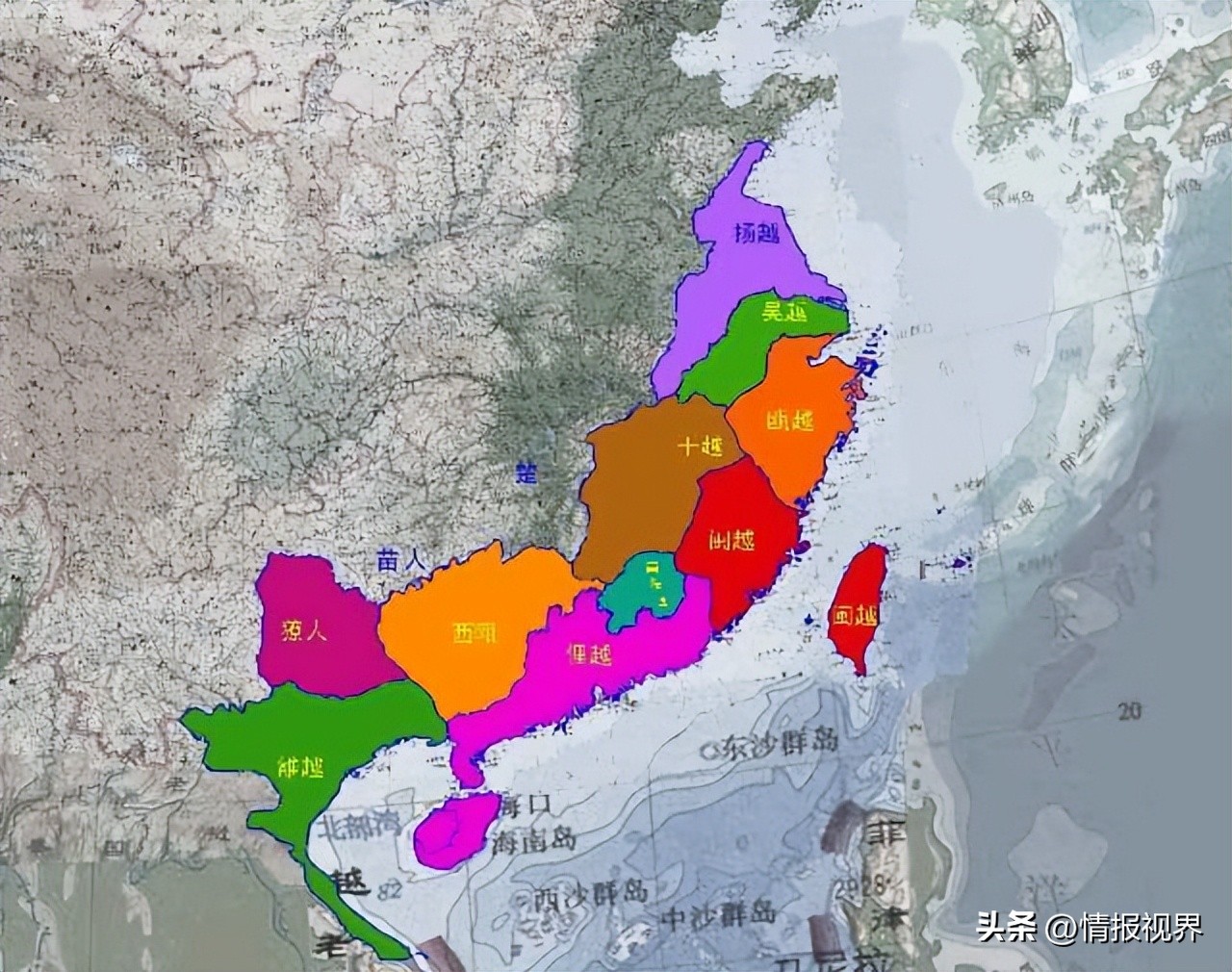
古百越地图
The evidence is in the percentage of native words in their language. For most of these tribes, it is around 50% native and 50% borrowed. The Cantonese are the Yue people who met the original Han halfway in terms of assimilation and adoption of culture. We have 99% of our language from Han and the remainder 1% is native Yue. There are some Wumao Quorans here in denial, who discredit it by saying that the Han borrowed the Yue words and so that invalidates the distinction of the Cantonese language from the Han Chinese language, and I think that is doing an offensive injustice to the past experiences of the Cantonese who had to live with the discrimination.
证据是他们语言中母语的百分比。对于这些部落中的大多数来说,大约50%是本地的,50%是借来的。广东人是在同化和接受文化方面中途遇到原始汉人的越人。我们的语言99%来自汉人,其余1%是本地越人。这里有一些五毛人否认这一点,他们说汉人借用了越语,从而使粤语与汉语的区别无效,我认为这是对广东人过去不得不忍受歧视的经历的冒犯性不公正。
The Chaozhou people (Teochew) of Guangdong, are Han Chinese refugees from the later wars and troubles of the Central Plains 衣冠南渡(yì guān nán dù). By traditional custom, the Chaozhou people are prohibited to marry the Cantonese people, even when they live in the same province, because of our different ethnic origins and purpose of existence. We Cantonese are an accommodating lot, as you can see we don’t evict even the very people who hate us from our own land.
潮州人(潮州)的广东,是汉族难民从后来的战争和麻烦的中原衣冠南渡(yì guān nán dù)。根据传统习俗,潮州人禁止与广东人通婚,即使他们生活在同一个省份,因为我们的民族渊源和存在目的不同。我们广东人很随和,正如你所看到的,我们甚至不把讨厌我们的人赶出自己的土地。
However, this is not to say that the Cantonese are a monolithic ethnicity created by the mix of Han + Yue either. There are Cantonese like me, who have paternal genetic origin from Siberia, which makes no sense, unless I descended from invaders myself too! However, ethnicity is a social construct, so something happened somewhere in the past where my ancestor was accepted into the Cantonese community.
然而,这并不是说广东人是一个由汉越混合而成的单一民族。有像我这样的广东人,他们的父系基因来自西伯利亚,这说不通,除非我自己也是入侵者的后代!然而,种族是一种社会结构,所以在过去的某个地方发生了一些事情,我的祖先被接受进入广东社区 。

四川网友的观点
The question is ill-informed and based on misunderstandings.
这个问题是无知的,是基于误解的。
Baiyue means a hundred Yue, or if you prefer, a hundred Viets. The Baiyue are not a singular people, but a Han-centric term referring to all the Southern peoples, from the Yangtze delta all the way down to modern day Vietnam. Baiyue included multiple language families, from Tai-Kadai, to Austronesian,and Austroasiatic.
百越的意思是一百个越,或者你更喜欢,一百个越南。百越不是一个单一的民族,而是一个以汉族为中心的术语,指从长江三角洲一直到现代越南的所有南方民族。百越语包括泰-卡代语、南岛语和南亚语等多个语系。
The etiology of the term Baiyue 百越 originate from the Kingdom of Yue 越國, located in present day Zhejiang, just south of the Yangtze delta. Modern day people in this region descended from native Austronesians and Sinitic speaking Han populations that have migrated over millenia from the Central Plains.
百越的词源起源于越國,位于今天的浙江,长江三角洲以南。这一地区的现代人是南岛人和汉族人的后裔,他们经过千年从中原迁移而来。
The Cantonese Kingdom of Nanyue (南越) based in modern day Guangzhou, was founded by Han general and his military garrison, but ruled over natives that most likely spoke Tai-Kadai. Its very name is Han-centric, a southern version of the original 越 farther up north. Over the years, the Cantonese Yuet was replaced by the character 粵, to distinguish it from the original 越.
广东南越王国(南越)位于今天的广州,由汉族将军和他的*队军**驻军建立,但统治的土著很可能说泰-卡岱语。它的名字是以汉族为中心的,是原来的越更北的南方版本。多年来,粤语的“月”被“粵”所取代,以区别于原来的“越”。
Vietnam, also under Han-Chinese rule for a millenia, shares many cultural features with Cantonese, including some Han genetic influence. However, the native population was a mixture of Tai-Kadai and Austroasiatic peoples, with eventual Austroasiatic linguistic dominance. Traditionally called Annam (安南), Vietnam asked the Qing emperor for permission to rename itself南越, but was denied given this was the same name as the ancient Kingdom of Nanyue. Instead, Vietnam was bestowed its present day name 越南.
同样在汉人统治下千年的越南,与粤语有许多共同的文化特征,包括一些汉族基因的影响。然而,当地人口是Tai-Kadai和南亚人的混合体,最终南亚语言占主导地位。传统上被称为安南(安南),越南请求清朝皇帝允许将自己改名为南越,但被拒绝,因为这与古代的南越王国同名。相反,越南被赋予了今天的名字越南。

美籍华人的观点
No. Because the “Vietnamese” identity did not exist back then. This is like saying Koreans are just descended from Han Chinese because Koreans have >70% ancestry from Neolithic Yellow River populations that are genetically most similar to modern-day northern Han Chinese. Or even more annoyingly, the Quora question that gets spammed every day non-stop: “Are the Japanese descended from Koreans?”
不。因为“越南人”身份在当时并不存在。这就像说韩国人只是汉人的后裔,因为韩国人有70%的祖先来自新石器时代黄河人口,在基因上与现代北方汉族最相似。或者更让人恼火的是,Quora上每天都有人不停地提问:“日本人是韩国人的后裔吗?”
Vietnamese irredentists who bring up the Nanyue kingdom as some type of “proof” that the Cantonese (I assume you mean Yue-speaking Guangdong Han) and Vietnamese were once the same people make no sense because Nanyue was established by a Han Chinese man from Hebei. Like, Hebei is literally the place where the Sino-Tibetan languages originated lmaoo. Plus, the archaeology and records show that there were many different ethnic groups that lived in the region of Nanyue.
越南民族统一主义者提出南越王国作为某种“证据”,证明广东人(我想你指的是说粤语的广东汉人)和越南人曾经是同一民族,这是毫无意义的,因为南越是由一个来自河北的汉人建立的。比如,河北是汉藏语的发源地。此外,考古和记录表明,有许多不同的民族生活在南越地区。
I will say one thing though: Both the Cantonese and Vietnamese have very strong genetic affinities with Kra-Dai people (who also have a connection to Austronesians). This makes the Vietnamese one of the genetic outlier populations of Austroasiatic speakers, and the Yue-speaking Guangdong Han a genetic outlier population compared to most other Han Chinese…except for Hainan and Guangxi Han who are even more “southern”. People just focus on Guangdong the most because it’s more famous.
我想说的是:广东人和越南人都与克拉代人有很强的基因亲缘关系(克拉代人也与南岛人有联系)。这使得越南人成为南亚语系的基因异常人群之一,而说粤语的广东汉人与大多数其他汉族相比是基因异常人群,除了海南和广西的汉人,他们更“南方”。人们最关注广东,因为它更有名。
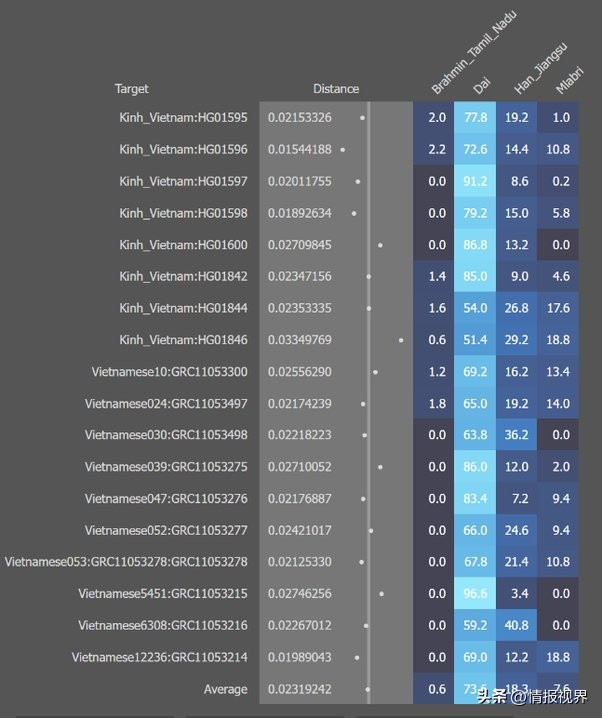
HOWEVER…genetically speaking, the Cantonese and Vietnamese are closer to many other ethnic groups before they are close to each other. The Cantonese have much more genetic affinity for Hmong-Mien people (like the She and Miao) than the Vietnamese do. While the Vietnamese still have some shared ancestry with more “typical” Austroasiatic populations like Mlabri, Khmer, and Mon. The Cantonese have a much higher level of northern East Asian ancestry than Vietnamese do, usually around double the average of what Vietnamese have. Some Vietnamese also have a low amount of southern Indian ancestry (did that come from the Khmer and Chams?)…Cantonese people don’t have Indian ancestry at all.
然而……从基因上讲,广东人和越南人在彼此接近之前与许多其他民族更接近。与越南人相比,广东人对苗族(如佘族和苗族)的基因亲和力要高得多。尽管越南人仍然与麦克雷、高棉和孟等更“典型”的南亚人有一些共同的祖先。广东人的东亚北部血统比越南人高得多,通常是越南人平均血统的两倍左右。一些越南人也有少量的南印度血统(那是来自高棉和占美吗?)……广东人根本没有印度血统。
What’s actually pretty strange is that the Dai-like groups who make up most of the Vietnamese ancestry today genetically swamped out the original Vietic speaking people of northern Vietnam. Modern Kinh Vietnamese do not seem to have much genetic relationship to early Bronze Age populations of Vietnam but the Vietnamese still speak an Austroasiatic language instead of a Kra-Dai one...
实际上非常奇怪的是,如今占越南血统大部分的代族在基因上淹没了越南北部最初的维提语人。现代Kinh越南人似乎与早期青铜时代的越南人口没有太多的遗传关系,但越南人仍然说一种南亚语言,而不是Kra-Dai语言……
Han-like ancestry is widespread among Vietnamese but some Vietnamese have considerably higher levels of Han-like ancestry because they have more recent Han Chinese ancestry - which they may be aware of since there is an ethnic Han Chinese presence in Vietnam even today (mostly Cantonese people lol).
汉族血统在越南人中很普遍,但一些越南人有更高水平的汉族血统,因为他们有更近的汉族血统——他们可能意识到了这一点,因为即使在今天越南也有汉族存在(主要是广东人,哈哈)。
Vietnamese people have diverse appearances but IMO most Vietnamese people look quite Dai-like, others more Han-like, and others more Khmer-like. You can have a look at this G25 model of Vietnamese people.
越南人有各种各样的外表,但在我看来,大多数越南人看起来很像傣族人,其他人更像汉人,其他人更像高棉人。你可以看看这个越南人的G25模型。

美籍华裔的观点
First of all, you need to clearly define what you call the rules of Vietnamese origin.
首先,你需要清楚地定义你所谓的越南血统规则。
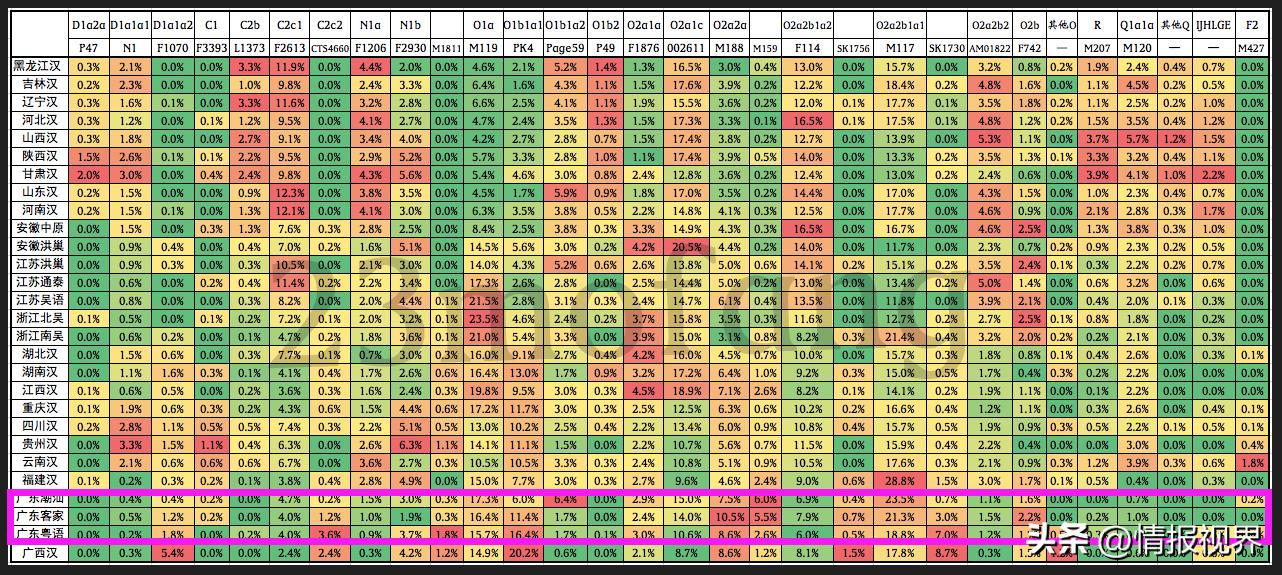
On the Y chromosome, there are three types in Guangdong: Hakka, Chaoshan and Guangfu:
在Y染色体上,广东人有客家、潮汕、广府三种类型:
The highest proportion of DNA in Y chromosome were o2-m117, o1a-m119, o2-002611, 01b-pk4
Y染色体中DNA比例最高的依次为o2-m117、o1a-m119、o2-002611、01b-pk4。
1、O2a2b1a2-M117。 Here we mainly refer to F5, about 7000 years old, which accounts for about 15% of the Han nationality, and may be the founder of the primitive Sino Tibetan elements and the han nationality.
1、O2a2b1a2-M117。这里主要指F5,距今约7000年,约占汉族的15%,可能是原始汉藏元素和汉族的奠基人。
2. O1a-m119 is a typical DNA in southern China, mainly distributed in Zhejiang Province, which is closely related to Liangzhu culture.
2. O1a-m119是典型的中国南方DNA,主要分布在浙江省,与良渚文化密切相关。
3. O2-002611 is mainly distributed in North and East China, and some branches are concentrated in Hunan and its surrounding areas. Probably (at least some of them) are related to the ancient Dongyi people.
3.O2-002611主要分布在华北和华东地区,部分分支集中在湖南及其周边地区。很可能(至少有一部分)与古代东夷人有关。
4. O1-pk4 may have originated in Hunan and Jiangxi, but it is the main branch of Kra–Dai and South Asian languages users. I think this one is probably the closest to what you call the Vietnamese origin, but this one seems to be closer to the Kra–Dai people rather than the Vietnamese. After all, Cantonese language has about 15% of the Kra–Dai words at the bottom of language.
4. O1-pk4可能起源于湖南和江西,但它是克拉傣语和南亚语言使用者的主要分支。我认为这个可能是最接近你所说的越南起源,但这个似乎更接近克拉代人,而不是越南人。毕竟,粤语中大约有15%的喀代语词汇位于语言的底层。
You said that the Cantonese had forgotten their Vietnamese origin. This is not reflected in the genetic test, because most of the people in Guangdong may never speak Vietnamese
你说广东人已经忘记了他们的越南血统。这在基因检测中没有反映出来,因为广东的大多数人可能从来不会说越南语。
写在最后: 当说广东人已经失去他们的越南根源,并被同化为中国汉族时,这是不准确的。广东人,又称为粤语人或粤族人,是中国广东和广西省的一个民族群体,他们有着独特的文化认同和传统。
虽然数个世纪以来,广东人和越南人之间进行了文化交流和通婚,但需要注意的是,两个群体拥有不同的语言、习俗和传统。此外,广东人在中国不同地区的迁移和定居历史悠久,这也促进了他们的文化多样性和适应性。
值得一提的是,民族认同的概念是复杂多样的,可以受到语言、宗教、血统和历史经验等各种因素的影响。