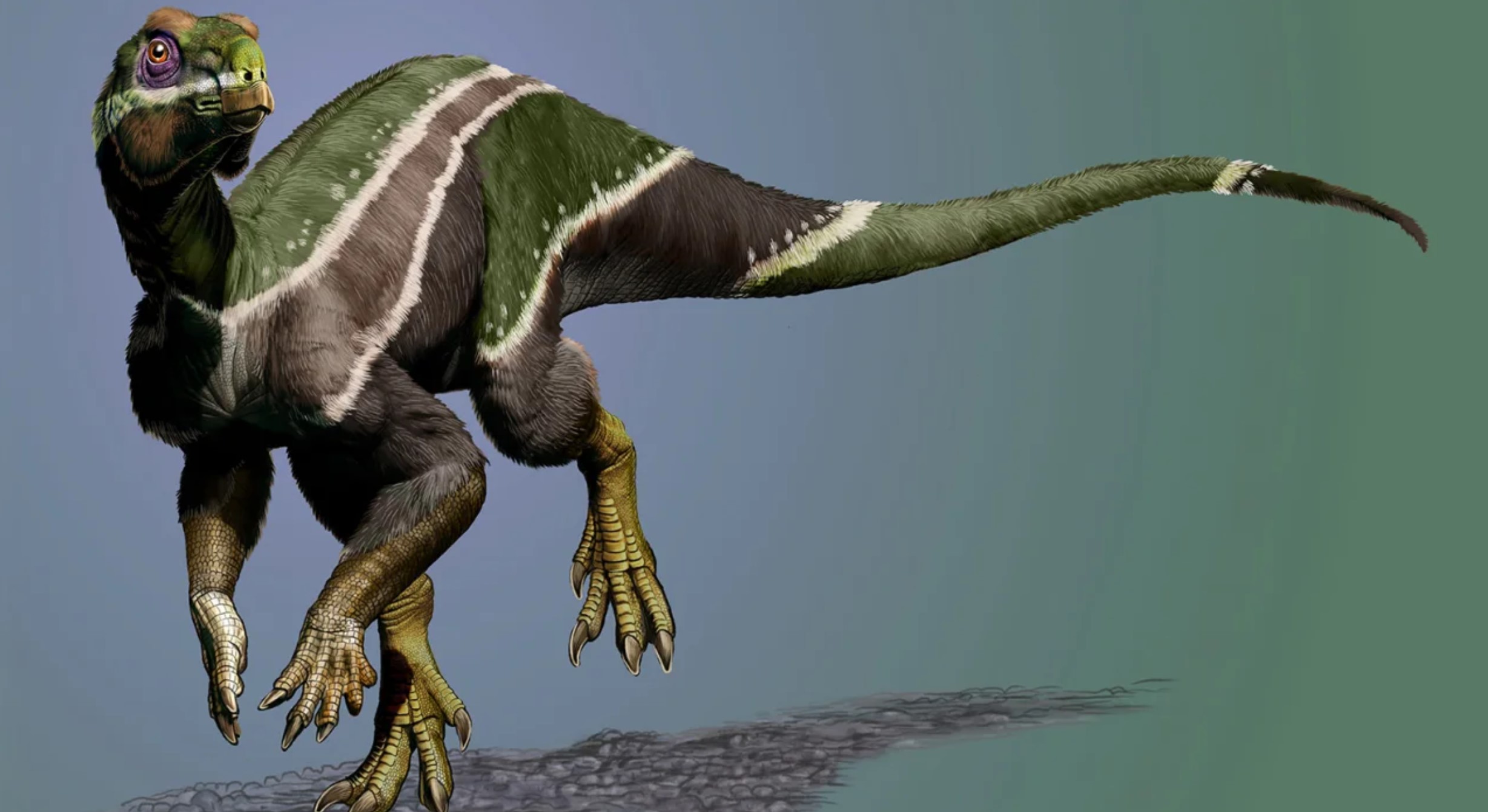
About 100 million years ago in what is now Utah, a 10-foot-long (3-meter-long) cousin of duck-billed dinosaurs pulverized tough plant stems and leaves with its robust teeth and powerful jaws.
It probably was too busy chewing to notice that the once-familiar world around it was transforming. But for the scientists who recently described this newfound species, its fossils offer clues about life during the middle of the Cretaceous Period (145 million to 66 million years ago), as rising air temperatures and sea levels reshaped leafy habitats on land.
The plant-eater was an early ornithopod — a group of mostly bipedal herbivorous dinosaurs. By the Cretaceous’ end, ornithopods had become the era’s most successful vegetarians, including duck-billed hadrosaurs, sometimes called “cows of the Cretaceous,” and crested Parasaurolophus, among others.
Ornithopods first appeared during the Jurassic (201.3 million to 145 million years ago) and though early species were once common across North America, populations dwindled and died out as Earth warmed. These new fossils provide evidence that some early lineages persisted despite the changing climate, researchers reported June 7 in the journal PLOS One.
Analysis of the bones surprised them — the animal appeared to be a close relative of rhabdodontomorphs, a type of ornithopod previously known almost entirely from European fossils.
大约1亿年前,在现在的犹他州,一种长10英尺(3米)的鸭嘴龙的*亲近**用其强壮的牙齿和强劲的颌骨粉碎坚硬的植物茎和叶子。
它可能太忙于咀嚼而没有注意到周围的世界正在发生变化。但对于最近描述的这种新发现的物种的科学家来说,它的化石提供了关于白垩纪中期(1.45亿到6600万年前)生活的线索,当时不断上升的气温和海平面正在改变陆地上的森林栖息地。
这种食草动物是早期的鸟脚类动物,这是一组大多数是二足的草食恐龙。到白垩纪末期,鸟脚类动物已成为这一时代最成功的素食动物,包括鸭嘴龙,有时被称为“白垩纪的牛”,以及有冠状物的帕拉萨乌罗卢斯等。
鸟脚类动物最早出现在侏罗纪(2.013亿至1.45亿年前),虽然早期物种曾经在北美广泛分布,但随着地球变暖,种群逐渐减少并灭绝。这些新的化石提供了证据,表明一些早期的谱系尽管气候变化,但仍然存在,研究人员在6月7日的《PLOS One》杂志上报告说。
对骨骼的分析使他们感到惊讶-这种动物似乎是鸟脚类动物的一种*亲近**,先前几乎完全来自欧洲化石的一种鸟脚类动物。
Cousin [ˈkʌzn] - a relative with whom one shares a grandparent or great-grandparent. 表示堂兄弟姐妹或远亲的意思。
Duck-billed [ˈdʌk-bɪld] - having a broad, flat snout resembling that of a duck, as in some dinosaurs. 具有鸭嘴形状的意思,如恐龙。
Pulverized [ˈpʌlvəraɪzd] - reduce to fine particles. 将...粉碎成细粉末的意思。
Robust [rəʊˈbʌst] - strong and healthy; vigorous. 强壮的,有力的。
Jaws [dʒɔːz] - each of the upper and lower bony structures in vertebrates forming the framework of the mouth and containing the teeth. 颚,指脊椎动物口腔的上下颚骨架。
Transforming [trænsˈfɔːmɪŋ] - make a thorough or dramatic change in the form, appearance, or character of. 彻底改变的意思。
Fossils [ˈfɒsɪlz] - the remains or impression of a prehistoric organism preserved in petrified form or as a mold or cast in rock. 化石,指古生物的遗骸或印迹,以石化形式或在岩石中形成模具或铸型保存。
Clues [kluːz] - a piece of evidence or information used in the detection of a crime or solving of a mystery. 线索,指用于犯罪侦查或解决谜团的证据或信息。
Rising [ˈraɪzɪŋ] - increasing in amount or intensity. 增加的,指数量或强度上的增加。
Air temperatures [eə ˈtemprətʃəz] - the degree or intensity of heat present in the atmosphere. 空气温度,指大气中存在的热度程度或强度。
Sea levels [siː ˈlevəlz] - the average level of the sea's surface. 海平面,指海洋表面的平均水平。
Reshaped [riːˈʃeɪpt] - give a new form or shape to. 重新塑造的,给予新的形态或形状。
Leafy [ˈliːfi] - having many leaves or much foliage. 多叶的,指具有许多叶子或大量的叶子。
Herbivorous [hɜːˈbɪvərəs] - feeding on plants. 食草的,指以植物为食的动物。
Dinosaurs [ˈdaɪnəsɔːz] - a fossil reptile of the Mesozoic era, often reaching an enormous size. 恐龙,指中生代时期的一种化石爬行动物,常常达到巨大的体型。
Successful [səkˈsesfʊl] - accomplishing an aim or purpose. 成功的,达成目标或目的的。
Hadrosaurs [ˌhædrəˈsɔːz] - a duck-billed dinosaur of the late Cretaceous period, with a complex series of teeth for grinding up tough vegetation. 鸭嘴龙,指晚白垩世时期的一种恐龙,具有复杂的牙齿,可磨碎坚硬的植物。
Populations [ˌpɒpjʊˈleɪʃənz] - all the inhabitants of a particular town, area, or country. 人口,指特定城镇、地区或国家的所有居民。
Lineages [ˈlɪniɪdʒɪz] - a sequence of species each of which is considered to have evolved from its predecessor. 系谱,指一系列被认为是从前任进化而来的物种。
European [jʊərəˈpiːən] - relating to or characteristic of Europe or its inhabitants. 欧洲的,指与欧洲或其居民有关或具有特征的。