分享兴趣,传播快乐,增长见闻,留下美好!
亲爱的您,这里是Learning Yard学苑。
今天大亭为大家带来我的“营销组合理论”,欢迎您的访问!
Share interest,spread happiness ,
increase knowledge and leave beautiful.
Dear you,this is the Learing Yard Academy!
Today, Dating will brings you
“Marketing mix Theory”,
Welcome your visit!
一、基于企业视角的4P理论
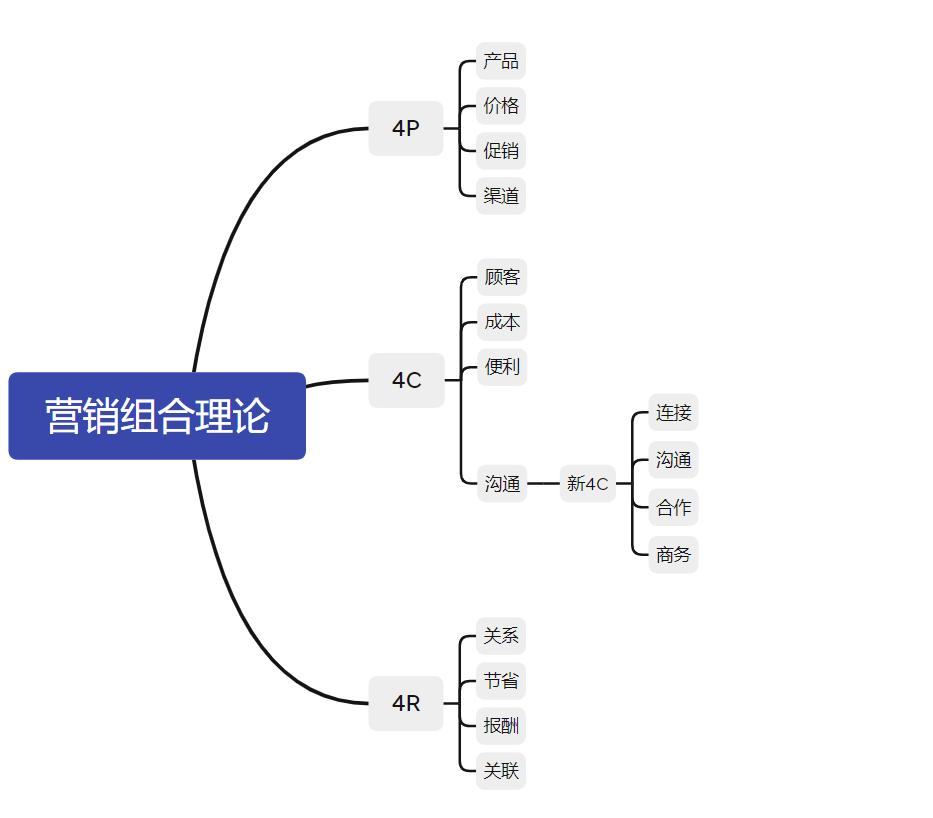
4P即product(产品),price(价格),promotion(促销),place(渠道)。
产品:包含核心产品、形式产品、期望产品、实体产品和延伸产品。广义的产品可以是有形的实体,也可以是无形的服务、技术、知识或智慧等。
价格:产品定价。企业以盈利为目标,所以定价要兼顾销售效率和企业效益,使得产品买卖更加有利可图。价格不仅与产品本身相关联,也与品牌的附加内涵和价值相关联,与市场的供求关系相关联。
促销:营销者向消费者传递有关本企业及产品的各种信息,说服或吸引消费者购买其产品,以达到扩大销售量的目的的一种活动。
渠道:产品从生产方到消费者终端所经历的销售路径。普通消费品会经过代理商、批发商、商场或零店的环节。B2B模式中也可能采取厂家对厂家的直接销售或选取代理商的中间销售模式。
Products: including core products, formal products, expected products, physical products, and extended products. Broadly defined products can be tangible entities or intangible services, technologies, knowledge, or wisdom.
Price: Product pricing. Enterprises aim for profitability, so pricing should balance sales efficiency and corporate efficiency, making product buying and selling more profitable. Price is not only related to the product itself, but also to the added connotation and value of the brand, and to the supply and demand relationship in the market.
Promotion: An activity in which marketers convey various information about their company and products to consumers, persuade or attract them to purchase their products, in order to expand sales.
Place: The sales path that a product experiences from the production side to the consumer end. Ordinary consumer goods will go through the process of agents, wholesalers, shopping malls, or retail stores. The B2B model may also adopt a direct sales model from manufacturers or an intermediate sales model of selecting agents.
二、基于客户视角的4C理论
4C分别指代Customer(顾客)、Cost(成本)、Convenience(便利)和Communication(沟通)。
顾客:研究客户需求,发现其真实需求,再来制定相应的需求战略﹐以影响企业的生产过程。根据马斯洛的需求层次理论,顾客需求从基本的产品需求向更高的心理需求满足的层次发展,因此,企业不仅要做产品,还要通过创建品牌核心价值,营造新型生活方式,实现顾客在社会认同、生活品位等层次需求的满足。
成本:顾客购买和使用产品所发生的所有费用的总和。包括时间成本、学习成本、机会成本、精神成本等。
便利:企业在制定策略时要更多地考虑顾客的方便,而不是企业自己的方便。要通过售前、售中和售后服务让顾客享受到购物的便利。
沟通:强调企业和顾客在整个过程中的双向互动,并在参与互动的过程中,实现信息的传递以及情感的联络。
Customer: Study customer needs, discover their true needs, and then develop corresponding demand strategies to influence the production process of the enterprise. According to Maslow's hierarchy of needs theory, customer needs develop from basic product needs to higher levels of psychological satisfaction. Therefore, enterprises not only need to produce products, but also create brand core values, create new lifestyles, and meet customer needs at levels such as social identity and lifestyle taste.
Cost: The sum of all expenses incurred by customers for purchasing and using products. Including time cost, learning cost, opportunity cost, spiritual cost, etc.
Convenience: When formulating strategies, enterprises should consider the convenience of customers more than their own convenience. Customers should enjoy the convenience of shopping through pre-sales, sales, and after-sales services.
Communication: Emphasis is placed on the two-way interaction between the enterprise and customers throughout the entire process, and in the process of participating in the interaction, information transmission and emotional connection are achieved.
三、基于利益共同体视角的4R理论
4R 理论即关系(Relationship)、节省(Retrenchment)、关联(Relevancy)、报酬(Rewards)四要素。
4R理论从更长远的角度来看待企业与顾客之间的交易行为,不仅强调企业同顾客建立长久持续的关系,实现顾客生命价值最大化,而且注重利益相关者之间的关系,强调企业同供应商、中间商、竞争者、政府、员工之间的关系,把传统营销单向、单赢的交易关系改变为交互、多赢的营销关系。
The 4R theory takes a longer-term perspective on the transaction behavior between enterprises and customers, emphasizing not only the establishment of long-term and sustainable relationships between enterprises and customers to maximize customer life value, but also the relationship between stakeholders, emphasizing the relationship between enterprises and suppliers, intermediaries, competitors, government, and employees, and transforming traditional business practices The one-way and single win trading relationship has changed to an interactive and multi win marketing relationship.
四、新4C理论
新4C理论”,即:Connection(连接)、Communication(沟通)、Commerce(商务)、Co-Operation(合作)。极致的场景和引起共鸣的内容可以让品牌人格化。在社交媒体环境下,鲜活的品牌人格更容易打动消费者,黏性社群和人际连接可以帮助企业实现精准传播,进而创造消费者价值和企业价值。消费者价值指通过场景和内容实现实物和心理上的价值;企业价值指通过社群和连接实现绑定社群和口碑传播的价值。 Extreme scenes and resonant content can personalize the brand. In a social media environment, a vibrant brand personality is more likely to impress consumers, and sticky communities and interpersonal connections can help businesses achieve precise communication Broadcast, thereby creating consumer value and enterprise value. Consumer value refers to the realization of physical and psychological value through scenarios and content; Enterprise value refers to the value of binding communities and word-of-mouth communication through communities and connections.
今天的分享就到这里了,如果您对文章有独特的想法,
欢迎给我们留言。让我们相约明天,祝您今天过得开心快乐!
That's it for today's sharing. If you have a unique idea about the article.
please leave us a message.Let us meet tomorrow ,
I wish you a happy day today!