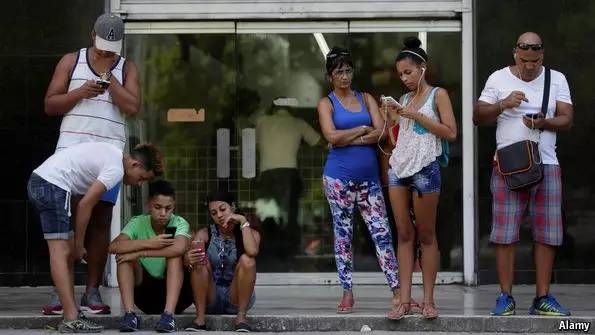
CUBANS, like citizens of most countries in the digital age, are familiar with app stores. But theirs have actual doors, windows and counters. Los Doctores del Celular, a mobile-phone repair shop a few blocks from Havana’s Malecón seaside promenade, is one example. Inside, a Super Mario effigy, kitted out with lab coat and stethoscope, keeps vigil while technicians transfer apps to customers’ smartphones via USB cables attached to the shop’s computers. Although the United States’ embargo on Cuba makes it hard to buy apps and other services online, “Cubans are quickly picking up on app culture,” says Jorge-Luis Roque, a technician. A bundle of 60-70 apps costs $5-10. Customers delete the ones they don’t want.
与数字化时代大多数国家的民众一样,古巴人也很熟悉手机应用商店。不过他们的手机应用商店有门窗和柜台。距离哈瓦那海滨大道几个街区远的Los Doctores del Celular手机修理店就是这么一家店。店里立着一座超级马里奥的雕像,穿着白大褂,挂着听诊器,一副警惕的表情。技术人员通过USB数据线把商店的电脑里的应用传客户的智能手机上。虽然美国对古巴的禁运让古巴人很难上网购买应用和其他服务,不过,技术员Jorge-Luis Roque说:“古巴人正在快速熟悉手机文化”。5到10美元就能买 60至70 个应用套装。顾客可以根据自己的需求进行删减。
The bricks-and-mortar app store is an ingenious Cuban response to digital deprivation. The island has some 300 public Wi-Fi hotspots, up from none two years ago. But connections are slow and, especially by Cuban standards, expensive; they normally cost $1.50 an hour. Adhering to the American embargo, app publishers like Apple and Google block downloads in Cuba. Music lovers can browse the iTunes store, but cannot buy songs or apps; Cubans can get the free apps on Google Play, but not the ones that cost money.
这种实体应用店的存在是古巴人应对无法上网的机智办法。古巴两年前一个公共 WiFi 热点也没有,现在大概有 300 个 。不过,网速非常慢,价格也非常昂贵:通常每小时是 1.5 美元。根据美国对古巴的禁运要求,谷歌和苹果等应用发布商都屏蔽古巴*载下**应用。歌迷能浏览iTunes商店,不能购买歌曲或应用;古巴人只能*载下**Google Play上免费应用,付费的无法*载下**。
Mr Roque and his colleagues compensate for such faulty connections with human ones. With relatives abroad and access to their credit cards, they can download apps using “virtual private networks”, which can fool app publishers into thinking that they are communicating with, say, Miami. Los Doctores del Celular then sell these on to the shop’s customers. The clients’ phones come from relatives overseas, the black market or Revolico, a website that lists services and second-hand goods for sale.
Roque和同事们运用人工操作来弥补这种无法上网*载下**的弊端。他们利用海外亲戚及亲戚的信用卡,使用 “虚拟专用网络”*载下**应用,这种办法可以让应用发布发商认为他们正在与(比如说)迈阿密人交易。然后,Los Doctores del Celular商店将这些应用卖给顾客。顾客的手机来自海外亲戚,*市黑**或者列有各类服务及二手货的Revolico网站。
Among the most popular apps are Facebook Messenger and WhatsApp, cheaper ways of staying in touch with families living abroad than texting or calling. “We have a very large population of app-literate grannies,” says Mr Roque. Cubans like apps that require little memory or connectivity. Imo, a video and messaging app that can operate with low bandwidth, is a favourite. Students are customers for offline versions of Wikipedia and apps that specialise in biology, maths and other academic subjects. Taxi drivers rely on offline navigation apps like Maps.me.
最受古巴消费者欢迎的应用是 Facebook Messenger 和 WhatsApp,因为和海外亲戚联系的时候用这些应用比发短信或打电话要便宜。Roque说:“我们这里很多老太太都精通应用。”古巴消费者喜欢内存小或联网要求低的应用。Imo是一款网速慢也能运行的视频短信聊天app,深受消费者的喜欢。学生们会买离线的维基百科和专门针对生物,数学和其他学科的应用。出租车司机会买类似Maps.me.的导航应用。
Cubans are creators as well as consumers of apps. Isladentro, a directory of services offered by small businesses, is updated monthly and hand-delivered on USB sticks to 100 mobile-phone repair shops. The app’s digital listings, which incorporate photos, reviews and maps, are a big improvement over promotional flyers, says Indhira Sotillo, who manages the listings. These were expensive and messy, and “we all ended up with little pieces of paper everywhere”, she says.
古巴人不仅购买应用,还开发应用。Isladentro是小企业服务目录清单,每周更新一次,存到USB硬盘里,再送到100个手机修理店。负责管理这个目录的Indhira Sotillo称,目录中有图片,点评和地图,相比发宣传单来推广服务进步很多。她表示,发宣传单成本高,很麻烦,最后还全都会变成废纸。
Isladentro’s imagery is crude by Retina Display standards: maps are low resolution and photos are compressed. That is because the data has to be stored on the phone rather than in the hard-to-reach cloud. Cuban-made apps are thus as thrifty with bytes as the locals are with cash. Isladentro’s developers reduced the memory it occupies from 890 megabytes to 240, says Ms Sotillo.
按Retina显示屏标准, Isladentro的图像非常粗糙:地图分辨率很低,照片是压缩过的。因为这些数据只能储存在手机里,内存有限,无法使用到云盘。因此,古巴本土的应用占用内存少,一如当地人尽量少地随身携带现金一样。Sotillo称, Isladentro上的开发才是把内存从890兆减到240兆。
Such expedients may be less necessary if data start to flow faster. Cuba’s communist government is letting that happen, but cautiously. It says the Malecón will become a 6km-long (four-mile) Wi-Fi hotspot. In December it reached a deal with Google to put servers in Cuba. That should speed up connections to Google’s services, which account for roughly half of Cuba’s internet traffic. There is talk of introducing mobile data. That would make downloading apps easier, though it would not solve the problem of the embargo or the absence of local credit cards. Neither Cuba’s government nor the Trump administration is in a hurry to free Cubans’ access to data. Until they do, Los Doctores del Celular will remain a bricks-and-mortar app store.
数据传输更快的话,这种实体应用商店的折中办法可能就没那么必要。古巴政府正在采取行动建设网络,但是很谨慎。政府表示将会在滨海大道建设覆盖6公里的Wi-Fi热点区。去年12月古巴同谷歌公司达成协议,允许谷歌在古巴安装服务器。这样古巴网民就能更快接触到谷歌提供的服务,古巴大约一半的网络流量都消耗在谷歌上。据传还会要引进移动数据网。虽然解决不了禁运或者没有当地信用卡的问题,不过会使得*载下**应用更容易一些。现在古巴政府和特朗普方面都不急于采取措施让古巴人早日能自由上网。在他们无动于衷之前,Los Doctores del Celular依旧是一家实体应用商店。
编译:郭娜
审校:覃思晓
编辑:翻吧君
来源:经济学人
翻吧·与你一起学翻译
微信号:translationtips
长按识别二维码关注翻吧