10,000-year-old massacre suggests hunter-gatherers went to war

图1 肯尼亚北部图尔卡纳湖附近出土的一个男子头骨,他的头骨已经被打碎。
(译者注:地球上还活着的人属于人科 Hominidae ,人属 Homo ,智人 种 晚期智人亚种 Homo sapiens sapiens 。地球上的动物,通常每个科有很多个属,每个属有很多个种。例如猫科有15个属39个种。但人只有一个种!这是因为其他的人种都灭绝了!人类多次走出非洲,但7万年前这一次与之前的任何一次都不同。我们7万年前走出非洲的祖先拥有超强的艺术创造力和超强的战力。他们横扫欧亚大陆,直达美洲以及各个岛屿。他们所向披靡,无坚不摧,赶尽杀绝。在此期间,地球上的物种,如猛犸象、剑齿虎等,以前所未有的速度灭绝!其他人种或亚种如弗洛勒斯岛的“霍比特人”或欧洲的尼安德特人也消失了。)
*力暴**和战争一直伴随着人类社会,但最早的*力暴**和战争或者群体之间的冲突原因通常并不清楚。在全新世早期,狩猎及采集者等群体内的*力暴**经常出现。
2012年,考古学家在图尔卡纳湖(Lake Turkana) 附近(Nataruk)发现了至少27人的骨骸。他们没有被掩埋,暴露于风雨之中。其中12具的骨骸比较完整。其他人的骨骸则是散乱缺失的。这12具较完整的骨骸中,有10具可以确认是死于*力暴**。比如像上图那样的钝器击伤,或者头上及脖子的锋利刀伤以及箭伤等。
更恐怖的是,有几具骨骸显示他们死的时候是被*绑捆**起来的。
经过研究,考古学家认为有证据表明这是一场战争类型的大*杀屠**,是一个群体系统地有组织地杀害另一个群体的成员。
本来,这样的大*杀屠**在人类史上并不是那么稀奇。但Nataruk这个地方非常古老。放射性碳同位素测年的结果表明这场大*杀屠**发生在1万年以前。这一时期Nataruk这个地方的人还处在狩猎--采集时期,那时这里的人还没有定居建立村落。而考古学家通常认为史前的狩猎--采集时期并不会发生有组织的系统的战争,因为那个时候他们并没有固定的土地和粮食存储,而固定的土地和粮食存储容易引发战争。
鉴于这个新发现,考古学家有两种解释:1当时这里的人可能有一定的定居生活;2 有组织的战争的确可能发生在狩猎--采集时期。
到底哪一个答案是正确的,还有待于进一步的考古发掘和研究。
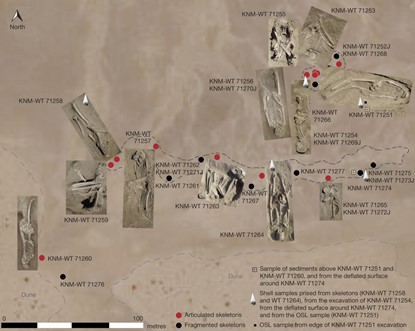
图2 骨骸发现地点。黑色圆点代表碎片骨骸(15人),红色圆点代表完整骨骸(12人)。
-------------------------------------
原新闻稿:DOI: 10.1126/science.aae0259
论文原件:Nature 529, 7586
-----------D英语学习------------
词汇:
massacre: 大*杀屠**
archaeologists: 考古学家
elements: 自然力;暴风雨
obsidian: 黑曜岩
prehistoric: 史前的
英文原文:
10,000-year-old massacre suggests hunter-gatherers went to war
In 2012, archaeologists stumbled across something disturbing in Nataruk, near Lake Turkana in Kenya: the remains of at least 27 people, unburied and exposed to the elements. Twelve were relatively complete skeletons, whereas the others were a jumble of bones. Out of those best preserved, the archaeologists could tell 10 had died violent deaths—five from blunt-force trauma to the head (pictured), and five from sharper wounds to the head and neck, likely from arrows. The hand position of a couple of the bodies suggested they had been bound when they died. The archaeologists determined that they were likely looking at evidence of warfare, in which one group of people systematically killed members of another. A massacre like this one wouldn’t be that unusual, except for one thing: The Nataruk site is really old. Based on radiocarbon dates from shells near the skeletons as well as an examination of tools from Nataruk and nearby sites—including some obsidian blades still embedded in the skeletons— the massacre occurred about 10,000 years ago , the team reports online today in Nature. This is back when people around Nataruk were still living in hunter-gatherers bands, rather than in settled communities. The problem? Many anthropologists believe that prehistoric hunter-gatherers didn’t engage in the kind of systematic warfare on display at Nataruk, because they didn’t have land or stores of food to fight over. The team proposes two explanations: Either the Nataruk people lived a more settled lifestyle than scientists thought, or organized warfare arose much earlier. The only way to know for sure, the scientists say, is to find evidence of more prehistoric massacres.