#头条创作挑战赛#
1.线程创建 pthread_create
#include <pthread.h>
int pthread_create(pthread_t *restrict tidp,const pthread_attr_t *restrict attr,void *(start_rtn)(void*),void *restrict arg)
返回值:成功返回 0 否则返回错误编号
//void* 标识通用类型
- 参数
- tidp:线程标识符指针
- attr: 线程属性指针
- start_rtn:线程运行函数的起始地址
- arg:传递给线程运行函数的参数
- 新创建线程从start_rtn函数的地址开始运行
- 默认情况下不能保存新线程和调用线程的执行顺序,但是可以人工干预。
此时代码pthread_create中的参数arg为 50单个参数
#include<stdio.h>
#include<stdlib.h>
#include<pthread.h>
#include<math.h>
//定义线程运行函数
void* th_fn(void* arg) {
    //void* arg 传过来的int类型的数值 要用需要强制转换成int
    int distance = (int)arg;
    for (int i = 1; i < distance; i++) {
        printf("&lx run %d\n", pthread_self, i);
        //int time = (int)(drand48() * 10000);//产生随机数 drand48只有在Linux下才有
        Sleep(5);//阻塞5毫秒
    }
    return (void*)0;
}
int main(void) {

    //用于接收线程是否创建成功的返回值
    int err;
    //定义线程标识符rabbit turtle
    pthread_t rabbit, turtle;

    //创建rabbit线程
    if ((err = pthread_create(&rabbit, NULL, th_fn, (void*)50)) != 0) {
        perror("pthread_create error");
    }

    //创建turtle线程
    if ((err = pthread_create(&turtle, NULL, th_fn, (void*)50)) != 0) {
        perror("pthread_create error");
    }

    //阻塞10秒  如果不阻塞,因为三个线程不知道谁先进行,可能会有主线程做完整个进程就结束了,剩余两个进程不会再走
    //Sleep(10);

    //后面会详细介绍
    //pthread_join是主控线程调用的,表示自己会阻塞
    //直到rabbit线程结束  主控线程方可运行
    pthread_join(rabbit, NULL);
    pthread_join(turtle, NULL);
    //输出的是主控线程的ID
    printf("control thread id:%lx\n", pthread_self());
    printf("finished!\n");
    return 0;
}
此时代码pthread_create中的参数arg为 一个结构体RaceArg
#include<stdio.h>
#include<stdlib.h>
#include<pthread.h>
#include<math.h>
//定义结构体
typedef struct{
    char name[20];//姓名
    int time;//休眠时间
    int start;//开始地点
    int end;//结束地点
}RaceArg;
//定义线程运行函数
void* th_fn(void* arg) {
    //void* arg 传过来具体参数是结构体指针 要用需要强制转换成结构体
    RaceArg *r = (RaceArg*)arg;
    //取值
    int i = r->start;
    for (; i <= r->end; i++) {
        printf("%s(%lx) running %d\n", r->name,pthread_self, i);
        //int time = (int)(drand48() * 10000);//产生随机数 drand48只有在Linux下才有
        Sleep(r->time);//阻塞5毫秒
    }
    return (void*)0;
}
int main(void){

    //用于接收线程是否创建成功的返回值
    int err;

    //定义线程标识符rabbit turtle
    pthread_t rabbit, turtle;

    //结构体赋值
    RaceArg r_a = {"rabbit",(int)(drand48() * 10000),20,50};
    RaceArg t_a = {"turtle",(int)(drand48() * 10000),10,60};

    //创建rabbit线程,并给与赋值
    if ((err = pthread_create(&rabbit, NULL, th_fn, (void*)&r_a)) != 0) {
        perror("pthread_create error");
    }

    //创建turtle线程,并给与赋值
    if ((err = pthread_create(&turtle, NULL, th_fn, (void*)&r_t)) != 0) {
        perror("pthread_create error");
    }

    //阻塞主线程,等待rabbit和turtle线程结束
    pthread_join(rabbit, NULL);
    pthread_join(turtle, NULL);
    //输出的是主控线程的ID
    printf("control thread id:%lx\n", pthread_self());
    printf("finished!\n");
    return 0;
}
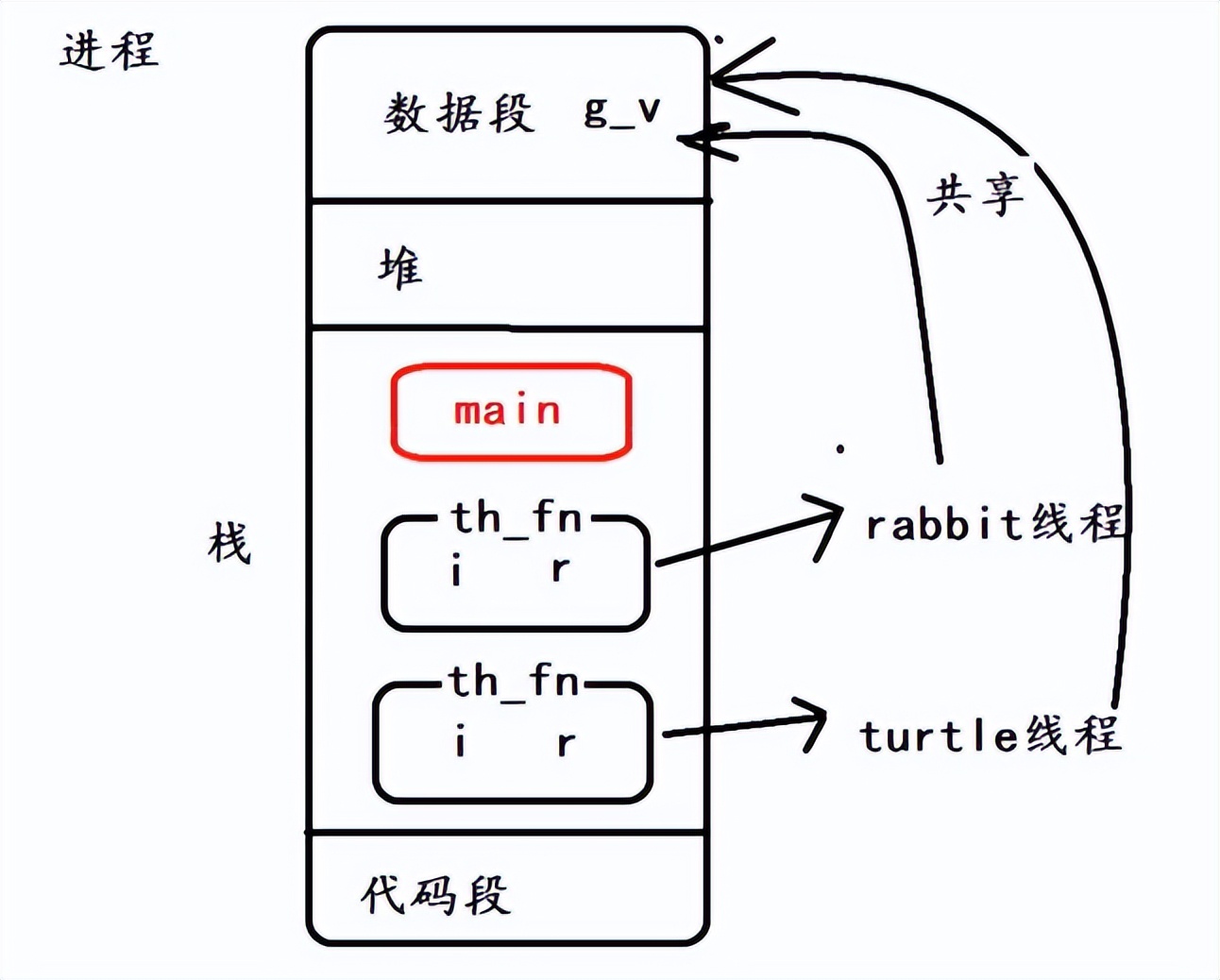
注意: 以上面代码为例,每个线程之间的 局部变量 是 互不影响 如:int i或者指针 r都是每个线程自己数据不会相互影响,但是如果是 全局变量 ,就是 共享数据 。