请家长朋友牢记:现代英语60%以上的单词有拉丁语和希腊语根源。在科学上,90%以上的单词源自拉丁语和希腊语。
读懂英语科技著作的核心任务是认识几百个源自拉丁语和希腊语的常用构词部件(相当于汉语的偏旁部首)。
请家长朋友认真思考一个问题:
如果,我们的孩子10岁,最多到13岁,就能读懂英语原版教材,并利用它们学习数理化和生物,是不是真的有可能在高考中取得超出绝大多数同龄人的成绩?
如果您认为有可能,那就值得试一试。
就算没有成功,也不会有什么大的损失。
最多也就是浪费一些学英语的时间。
归根结底,我们的任务是帮助孩子用最短的时间读懂英语原版教材。
如果能成功,就可以为孩子至少节省人生中最宝贵的十年时间。
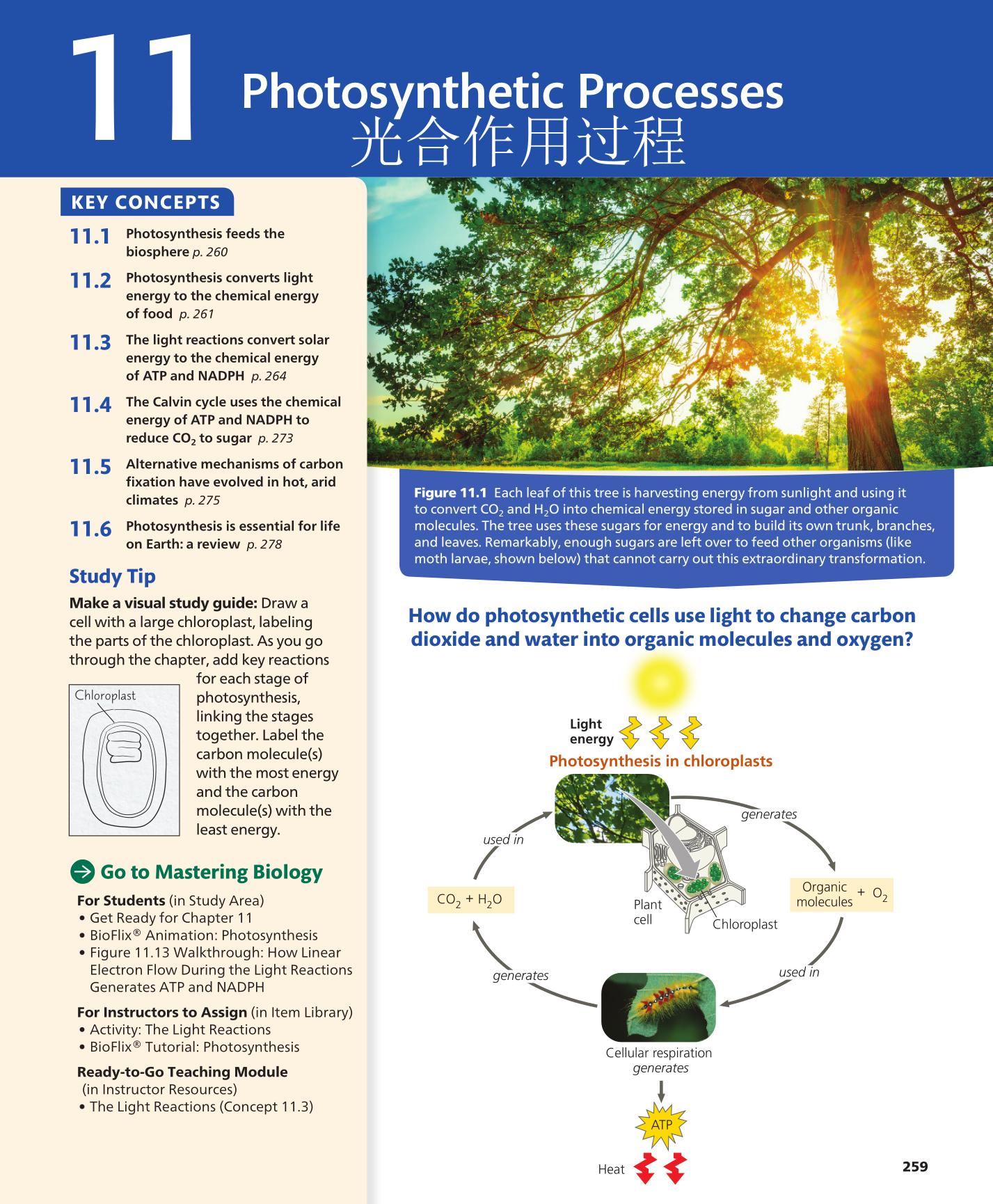
特别推荐家长朋友和孩子一起利用最新的英语原版的生物教材开始学习英语。

在国外,除了有特别的原因,卖不掉的书是不可能再版的。
一本书出到第12版,基本上可以判定它是畅销不衰的。
【英语】edition[iˈdiʃən]n.1. 版, 版本, 版次2. (书、报刊等的)一次发行量3. 复制; 翻版; 很相似的人[物]
the first edition第一版, 初版
a two-volume edition两卷本
the edition of 1951 1951年版
edition time(=press time)报纸截稿时间(即印刷开始的时间)
拆解:ed+i+tion。
请家长朋友一定要牢记:英语至少有6337个单词用到法语名词后缀-tion,源自拉丁语-tio名词的宾格。
也就是说,记忆英语单词edition的重点是认识拉丁语词根ed-。
请家长朋友大概了解一下词源:
edition (n.)
early 15c., "version, translation, a form of a literary work;" 1550s, "act of publishing," from French édition or directly from Latin editionem (nominative editio) "a bringing forth, producing," also "a statement, account," from past-participle stem of edere "bring forth, produce," from ex "out" (see ex-) + -dere, combining form of dare "to give" (from PIE root *do- "to give"). "It is awkward to speak of, e.g. 'The second edition of Campbell's edition of Plato's "Theætetus"'; but existing usage affords no satisfactory substitute for this inconvenient mode of expression" [OED].
我们可以大概了解:这里的ed-中的e-源自拉丁语前缀ex-,相信绝大多数孩子都学习过excuse me(请原谅)。
建议至少再顺便熟悉exit(退出),exist(存在),exercise(练习)。
因为,它们都用到拉丁语前缀ex-。
在拉丁语中ex也是一个介词。
请家长朋友大概熟悉一下。
【拉丁语】ex prep. out of, from; by reason of; according to; because of, as a result of;
而ed-中的d则源自拉丁语表“给”的动词dare。
【拉丁语】do:do, dare, dedi, datus v. give; dedicate; sell; pay; grant/bestow/impart/offer/lend; devote; allow; make;
在拉丁语词典中,通常列出动词的4种主要变化形式。
拉丁语的do相当于英语的I give,意思是“我给”。
其中的-o是表“第一人称单数”尾缀。
我们可以大概了解:拉丁语动词dare的过去分词是datus,由da-和后缀-tus构成。
建议大家以玩的心态学习一下法语单词dation。
【法语】dation[dasjɔ~]n.f. [法] 付给,付与;指定,选定
拆解:da+tion。
在此基础上,我们再学习一下法语的形容词dative。
【法语】dative 1. adj.f 【法律】指定的,选定的:tuteur~指定临护人2.adj.f【语言】与格
拆解:da+tive。
前面,我们很多次提醒家长朋友牢记:
1、英语至少有6337个单词用到法语名词后缀-tion。
2、英语至少有715个单词以-tive结尾。绝大多数是经由法语源自拉丁语。
英语用法语单词dative表“与格”。
【英语】dative[ˈdeitiv]n. 【语】与格; 与格形式adj.1. 【语】与格的2. 【律】(物品等)可随意赠与他人的
拆解:da+tive。
相信,到这里您已经明白:“与格”的“与”就是给予的意思。
印欧语系语言的与格,通常作间接宾语,也就是“给予的对象”。
请家长朋友尽量能多花点时间认真读读下面截图中的内容。

请家长朋友牢记:英语中,除了be,动词的现在式只有主语是第三人称单数时有变化,其它的都没有变化。
也就是说,英语中的动词现在式绝大多数情况和不定式同形。
这是由于历史的原因:中古英语时期,法语是英国的官方语言,英语只有中下层使用,语法有了很大简化。
而在拉丁语中,根本不可能出现现在式和不定式同形的情况。
说英语语法复杂的人一定是不了解拉丁语常识。
家长朋友稍微了解一些拉丁语语法常识,孩子学习英语、法语、德语、意大利语、西班牙语根本就不存在什么复杂的问题。
英语中的-al源自拉丁语形容词后缀-alis。
【英语】global[ˈɡləubəl]adj.1. 球形的, 球状的; 球面的2. 全球的, 世界的3. 总括的, 普遍的, 综合的, 全局的; 全面的
take a nonstop global flight作一次环绕世界一周的不着陆的飞行
the global output of a factory一个工厂的总产量
the global sum(=total sum)总计
拆解:glob+al。
词源:
global (adj.)
1670s, "spherical," from globe + -al (1). Meaning "worldwide, universal, pertaining to the whole globe of the earth" is from 1892, from a sense development in French. Global village first attested 1960, popularized, if not coined, by Canadian educator Marshall McLuhan (1911-1980).
【英语】globe[ɡləub]n.1. 球; 球体, 球状物2. [theglobe]地球; 世界3. 天体; 行星; 太阳4. 地球[天体]仪5. 球状玻璃器皿[灯罩]; 灯泡6. 【解】眼球7. (象征君主权力的)小金球
a celestial globe天球仪
a terrestrial globe地球仪
the globe地球
the whole habitable globe全世界
拆解:glob+e。
词源:globe (n.)
late 14c., "a large mass;" mid-15c., "spherical solid body, a sphere," from Old French globe (14c.) and directly from Latin globus "round mass, sphere, ball" (also, of men, "a throng, crowd, body, mass"), which is related to gleba "clod, lump of soil" (see glebe) and perhaps also to glomus "a ball, ball of yarn."
Sense of "the planet earth," also "map of the earth or sky drawn on the surface of an artificial sphere" are attested from 1550s. Meaning "globe-shaped glass vessel" is from 1660s. "A globe is often solid, a sphere often hollow. The secondary senses of globe are physical; those of sphere are moral." [Century Dictionary].
事实上,是古法语把拉丁语globus的-us变化为e,就成了globe。
英语实际上是使用了法语中的形式。
只要您愿意,就可以在认识英语单词的基础上顺便掌握相应的拉丁语、法语、德语、意大利语、西班牙语单词。
【德语】Globus [der] pl.Globussen 球。地球。世界。地球仪。
拆解:glob+us。
德语是直接使用拉丁语中的形式。
只是,德语所有名词首字母均大写。
我们大概学习一下:
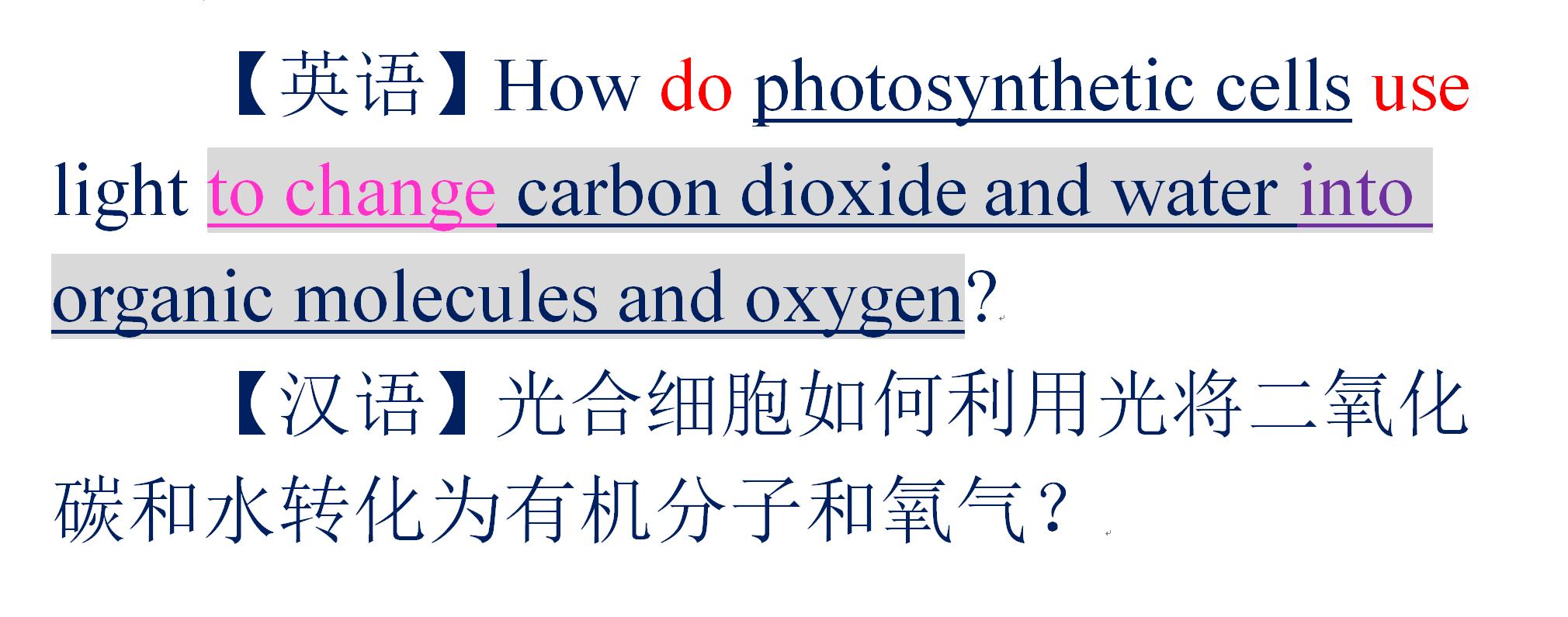
对于绝大多数的孩子来说,photosynthetic都是一个非常复杂的“专业单词”。
请大家做3次深呼吸,然后再继续。
事实上,地球上根本就不存在真正意义上的“专业单词”。
家长朋友完全可以利用photosynthetic和photosynthesis这样的单词向孩子戳破“专业单词”的神话。
相信绝大多数的孩子都可以十分轻松地掌握英语单词photo(照片)。
【英语】photo[ˈfəutəu]n.(pl. photos)[口]照片(photograph的缩略式)
take a photo(自己来)拍照
have[get] one's photo taken请人给自己拍照
have a photo taken with sb.和某人合影
make a photo of摄下...的图象
adj. 照相的, 摄影的
拆解:phot+o。
请牢记:phon-表“声音”,phot-, phos-表“光”,phy-表“自然”,phyl-表“种族”,phyt-表“植物”,phor-,pher-表“携带”。
请家长朋友牢记:英语至少有4731个单词用到ph。基本上都源自希腊语。
事实上,古典拉丁语用ph、th、ch这样的组合改写希腊字母φ、θ、χ。
其中的h表“送气”。
在古希腊语中,φ、θ、χ汉语拼音的p、t、k。
家长朋友最好能帮助孩子牢记这个希腊字母和读音。
请特别注意:英语、法语、德语中的ph都读[f]。
去掉photo-,我们就可以得到synthetic。
【英语】synthetic[sɪn'θetɪk]n. 合成物质adj. 综合的; 假想的, 虚构的; 合成的, 人造的; 虚伪的
拆解:syn+the+tic。
请牢记:
1、英语中,源自希腊语的前缀syn-对应源自拉丁语的con-,表“共同,在一起”。
2、-tic是形容词后缀,对应的名词后缀是-sis。
我们只要重点记忆:这里的the-表“放置”。
我们可以轻松了解这里的th源自希腊字母θ。
英语中,希腊语源单词中的th通常就读[θ],也就是θ在现代希腊语中的读音。
【英语】synthesis[ˈsɪnθɪsɪs]n. syntheses 1. 综合2. 综合物3. 〈化〉合成
拆解:syn+the+sis。
词源:synthesis (n.)
1610s, "deductive reasoning," from Latin synthesis "collection, set, suit of clothes, composition (of a medication)," from Greek synthesis "composition, a putting together," from syntithenai "put together, combine," from syn- "together" (see syn-) + tithenai "to put, to place," from reduplicated form of PIE root *dhe- "to set, put." From 1733 as "a combination of parts into a whole." Earlier borrowed in Middle English as sintecis (mid-15c.). Plural syntheses.
我们可以大概了解:PIE(原始印欧语)的*dh在古希腊语中变化为θ,读汉语拼音中的t。在现代希腊语中变化为读[θ],对应英语单词think(认为),thank(感谢),thesis(论文)中th的读音。
请注意:认识希腊字母的孩子记忆希腊语单词非常简单。
强烈建议家长和孩子一起大概熟悉一下拉丁语和希腊语相应单词。
【拉丁语】synthesis:synthesis, synthesis n. f. dinner-service; set of matching articles;
拆解:syn+the+sis。
拉丁语中实际上保留了希腊语前缀和词根的拼写形式。
【希腊语】σύνθεση n. collation, composition, writing, configuration, setting, synthesis
拆解:συν(syn)+ θε(the)+σ(s)+η(e)。
【英语】thesis[ˈθiːsis]n. (pl. -ses[-:si:z])1. 论题;【逻】命题, 课题2. 毕业[学位]论文3. 论点;【哲】(黑格尔辩证法中“正”, “反”, “合”的)正4. [ˈθesis] [诗]抑音节, 弱音节; (古希腊、罗马诗中的)扬音节;【音】强声部
拆解:the+sis。
【希腊语】θέση n. capacity, status, Job, class, thesis, condition, exposure, site, situation, place, position, station, post, seat, standing, stead
拆解:θε(the)+σ(s)+η(e)
【作业】把下面的英语句子翻译成汉语。
【英语】Photosynthesis converts light energy to the chemical energy of food.
请家长朋友牢记:光合作用是维持生命的最重要功能。
如果我们的孩子能通过英语教材了解一些最基本、最重要的科技常识,学习数学、物理、化学、生物都是一种文明的享受。