告别枯燥,60秒学会一个Python小例子。奔着此出发点,我在过去1个月,将平时经常使用的代码段换为小例子,分享出来后受到大家的喜欢。
今天我完整梳理一遍,总结到这里。很感谢这段时间,有3个小伙伴为此库所做出的贡献。
一、基本操作
1 链式比较
i = 3
print(1 < i < 3)  # False
print(1 < i <= 3)  # True
2 不用else和if实现计算器
from operator import *


def calculator
(a, b, k):
    return {        '+': add,        '-': sub,        '*': mul,        '/': truediv,        '**': pow    }[k](a, b)
calculator(1, 2, '+')  # 3
calculator(3, 4, '**')  # 81
3 函数链
from operator import (add, sub)


def add_or_sub
(a, b, oper):
    return (add if oper == '+' else sub)(a, b)
add_or_sub(1, 2, '-')  # -1
4 求字符串的字节长度
def str_byte_len
(mystr):
    return (len(mystr.encode('utf-8')))
str_byte_len('i love python')  # 13(个字节)
str_byte_len('字符')  # 6(个字节)
5 寻找第n次出现位置
def search_n
(s, c, n):
    size = 0
    for i, x in enumerate(s):        if x == c:            size += 1
        if size == n:            return i    return -1

print(search_n("fdasadfadf", "a", 3))# 结果为7,正确
print(search_n("fdasadfadf", "a", 30))# 结果为-1,正确
6 去掉最高最低求平均
def score_mean
(lst):
    lst.sort()    lst2=lst[1:(len(lst)-1)]    return round((sum(lst2)/len(lst2)),2)
score_mean([9.1, 9.0,8.1, 9.7, 19,8.2, 8.6,9.8]) # 9.07
7 交换元素
def swap
(a, b):
    return b, a
swap(1, 0)  # (0,1)
二、基础算法
1 二分搜索
def binarySearch
(arr, left, right, x):
    while left <= right:        mid = int(left + (right - left) / 2); # 找到中间位置。求中点写成(left+right)/2更容易溢出,所以不建议这样写

        # 检查x是否出现在位置mid
        if arr[mid] == x:            print('found %d 在索引位置%d 处' %(x,mid))            return mid
            # 假如x更大,则不可能出现在左半部分
        elif arr[mid] < x:            left = mid + 1 #搜索区间变为[mid+1,right]
            print('区间缩小为[%d,%d]' %(mid+1,right))
        elif x<arr[mid]:            right = mid - 1 #搜索区间变为[left,mid-1]
            print('区间缩小为[%d,%d]' %(left,mid-1))
    return -1
2 距离矩阵
x,y = mgrid[0:5,0:5]list(map(lambda xe,ye: [(ex,ey) for ex, ey in zip(xe, ye)], x,y))[[(0, 0), (0, 1), (0, 2), (0, 3), (0, 4)], [(1, 0), (1, 1), (1, 2), (1, 3), (1, 4)], [(2, 0), (2, 1), (2, 2), (2, 3), (2, 4)], [(3, 0), (3, 1), (3, 2), (3, 3), (3, 4)], [(4, 0), (4, 1), (4, 2), (4, 3), (4, 4)]]
三、列表
1 打印乘法表
for i in range(1,10): for j in range(1,i+1): print('{0}*{1}={2}'.format(j,i,j*i),end="\t") print()
结果:
1*1=11*2=2 2*2=41*3=3 2*3=6 3*3=91*4=4 2*4=8 3*4=12 4*4=161*5=5 2*5=10 3*5=15 4*5=20 5*5=251*6=6 2*6=12 3*6=18 4*6=24 5*6=30 6*6=361*7=7 2*7=14 3*7=21 4*7=28 5*7=35 6*7=42 7*7=491*8=8 2*8=16 3*8=24 4*8=32 5*8=40 6*8=48 7*8=56 8*8=641*9=9 2*9=18 3*9=27 4*9=36 5*9=45 6*9=54 7*9=63 8*9=72 9*9=81
2 嵌套数组完全展开
from collections.abc import *


def flatten
(input_arr, output_arr=None):
    if output_arr is None:        output_arr = []    for ele in input_arr:        if isinstance(ele, Iterable): # 判断ele是否可迭代
            flatten(ele, output_arr)  # 尾数递归
        else:            output_arr.append(ele)    # 产生结果
    return output_arr
flatten([[1,2,3],[4,5]], [6,7]) # [6, 7, 1, 2, 3, 4, 5]
3 将list等分为子组
from math import ceil


def divide
(lst, size):
    if size <= 0:        return [lst]    return [lst[i * size:(i+1)*size] for i in range(0, ceil(len(lst) / size))]
r = divide([1, 3, 5, 7, 9], 2) # [[1, 3], [5, 7], [9]]
4 生成fibonacci序列前n项
def fibonacci
(n):
    if n <= 1:        return [1]    fib = [1, 1]    while len(fib) < n:        fib.append(fib[len(fib) - 1] + fib[len(fib) - 2])    return fib
fibonacci(5)  # [1, 1, 2, 3, 5]
5 过滤掉各种空值
def filter_false
(lst):
    return list(filter(bool, lst))
filter_false([None, 0, False, '', [], 'ok', [1, 2]])# ['ok', [1, 2]]
6 返回列表头元素
def head
(lst):
    return lst[0] if len(lst) > 0 else None

head([])  # None
head([3, 4, 1])  # 3
7 返回列表尾元素
def tail
(lst):
    return lst[-1] if len(lst) > 0 else None

print(tail([]))  # None
print(tail([3, 4, 1]))  # 1
8 对象转换为可迭代类型
from collections.abc import Iterable


def cast_iterable
(val):
    return val if isinstance(val, Iterable) else [val]
cast_iterable('foo')# foo
cast_iterable(12)# [12]
cast_iterable({'foo': 12})# {'foo': 12}
9 求更长列表
def max_length
(*lst):
    return max(*lst, key=lambda v: len(v))
r = max_length([1, 2, 3], [4, 5, 6, 7], [8])# [4, 5, 6, 7]
10 出现最多元素
def max_frequency
(lst):
    return max(lst, default='列表为空', key=lambda v: lst.count(v))
lst = [1, 3, 3, 2, 1, 1, 2]max_frequency(lst) # 1
11 求多个列表的最大值
def max_lists
(*lst):
    return max(max(*lst, key=lambda v: max(v)))
max_lists([1, 2, 3], [6, 7, 8], [4, 5]) # 8
12 求多个列表的最小值
def min_lists
(*lst):
    return min(min(*lst, key=lambda v: max(v)))
min_lists([1, 2, 3], [6, 7, 8], [4, 5]) # 1
13 检查list是否有重复元素
def has_duplicates
(lst):
    return len(lst) == len(set(lst))
x = [1, 1, 2, 2, 3, 2, 3, 4, 5, 6]y = [1, 2, 3, 4, 5]has_duplicates(x)  # False
has_duplicates(y)  # True
14 求列表中所有重复元素
from collections import Counter


def find_all_duplicates
(lst):
    c = Counter(lst)    return list(filter(lambda k: c[k] > 1, c))
find_all_duplicates([1, 2, 2, 3, 3, 3])  # [2,3]
15 列表反转
def reverse
(lst):
    return lst[::-1]
reverse([1, -2, 3, 4, 1, 2])# [2, 1, 4, 3, -2, 1]
16 浮点数等差数列
def rang
(start, stop, n):
    start,stop,n = float('%.2f' % start), float('%.2f' % stop),int('%.d' % n)    step = (stop-start)/n    lst = [start]    while n > 0:        start,n = start+step,n-1
        lst.append(round((start), 2))    return lst
rang(1, 8, 10) # [1.0, 1.7, 2.4, 3.1, 3.8, 4.5, 5.2, 5.9, 6.6, 7.3, 8.0]
四、字典
1 字典值最大的键值对列表
def max_pairs
(dic):
    if len(dic) == 0:        return dic    max_val = max(map(lambda v: v[1], dic.items()))    return [item for item in dic.items() if item[1] == max_val]
max_pairs({'a': -10, 'b': 5, 'c': 3, 'd': 5})# [('b', 5), ('d', 5)]
2 字典值最小的键值对列表
def min_pairs
(dic):
    if len(dic) == 0:        return []    min_val = min(map(lambda v: v[1], dic.items()))    return [item for item in dic.items() if item[1] == min_val]

min_pairs({}) # []

r = min_pairs({'a': -10, 'b': 5, 'c': 3, 'd': 5})print(r)  # [('b', 5), ('d', 5)]
3 合并两个字典
def merge_dict2
(dic1, dic2):
    return {**dic1, **dic2}  # python3.5后支持的一行代码实现合并字典

merge_dict({'a': 1, 'b': 2}, {'c': 3})  # {'a': 1, 'b': 2, 'c': 3}
4 求字典前n个最大值
from heapq import nlargest

# 返回字典d前n个最大值对应的键


def topn_dict
(d, n):
    return nlargest(n, d, key=lambda k: d[k])
topn_dict({'a': 10, 'b': 8, 'c': 9, 'd': 10}, 3)  # ['a', 'd', 'c']
5 求最小键值对
d={'a':-10,'b':5, 'c':3,'d':5}min(d.items(),key=lambda x:x[1]) #('a', -10)
五、集合
1 互为变位词
from collections import Counter
# 检查两个字符串是否 相同字母异序词,简称:互为变位词


def anagram
(str1, str2):
    return Counter(str1) == Counter(str2)
anagram('eleven+two', 'twelve+one')  # True 这是一对神器的变位词
anagram('eleven', 'twelve')  # False
六、文件操作
1 查找指定文件格式文件
import os


def find_file
(work_dir,extension='jpg'):
    lst = []    for filename in os.listdir(work_dir):        print(filename)        splits = os.path.splitext(filename)        ext = splits[1] # 拿到扩展名
        if ext == '.'+extension:            lst.append(filename)    return lst
find_file('.','md') # 返回所有目录下的md文件
七、正则和爬虫
1 爬取天气数据并解析温度值
素材来自朋友袁绍
import requests
from lxml import etree
import pandas as pd
import re
url = 'http://www.weather.com.cn/weather1d/101010100.shtml#input'

with requests.get(url) as res:    content = res.content    html = etree.HTML(content)
通过lxml模块提取值,lxml比beautifulsoup解析在某些场合更高效
location = html.xpath('//*[@id="around"]//a[@target="_blank"]/span/text()')temperature = html.xpath('//*[@id="around"]/div/ul/li/a/i/text()')
结果:
['香河', '涿州', '唐山', '沧州', '天津', '廊坊', '太原', '石家庄', '涿鹿', '张家口', '保定', '三河', '北京孔庙', '北京国子监', '中国地质博物馆', '月坛公园', '明城墙遗址公园', '北京市规划展览馆', '什刹海', '南锣鼓巷', '天坛公园', '北海公园', '景山公园', '北京海洋馆']
['11/-5°C', '14/-5°C', '12/-6°C', '12/-5°C', '11/-1°C', '11/-5°C', '8/-7°C', '13/-2°C', '8/-6°C', '5/-9°C', '14/-6°C', '11/-4°C', '13/-3°C'
, '13/-3°C', '12/-3°C', '12/-3°C', '13/-3°C', '12/-2°C', '12/-3°C', '13/-3°C', '12/-2°C', '12/-2°C', '12/-2°C', '12/-3°C']
df = pd.DataFrame({'location':location, 'temperature':temperature})print('温度列')print(df['temperature'])
正则解析温度值
df['high'] = df['temperature'].apply(lambda x: int(re.match('(-?[0-9]*?)/-?[0-9]*?°C', x).group(1) ) )df['low'] = df['temperature'].apply(lambda x: int(re.match('-?[0-9]*?/(-?[0-9]*?)°C', x).group(1) ) )print(df)
详细说明子字符创捕获
除了简单地判断是否匹配之外,正则表达式还有提取子串的强大功能。用()表示的就是要提取的分组(group)。比如:^(\d{3})-(\d{3,8})$分别定义了两个组,可以直接从匹配的字符串中提取出区号和本地号码
m = re.match(r'^(\d{3})-(\d{3,8})
, '010-12345')print(m.group(0))print(m.group(1))print(m.group(2))

# 010-12345

# 010

# 12345
如果正则表达式中定义了组,就可以在Match对象上用group()方法提取出子串来。
注意到group(0)永远是原始字符串,group(1)、group(2)……表示第1、2、……个子串。
最终结果
Name: temperature, dtype: object    location temperature  high  low
0         香河     11/-5°C    11   -5

1         涿州     14/-5°C    14   -5

2         唐山     12/-6°C    12   -6

3         沧州     12/-5°C    12   -5

4         天津     11/-1°C    11   -1

5         廊坊     11/-5°C    11   -5

6         太原      8/-7°C     8   -7

7        石家庄     13/-2°C    13   -2

8         涿鹿      8/-6°C     8   -6

9        张家口      5/-9°C     5   -9

10        保定     14/-6°C    14   -6

11        三河     11/-4°C    11   -4

12      北京孔庙     13/-3°C    13   -3

13     北京国子监     13/-3°C    13   -3

14   中国地质博物馆     12/-3°C    12   -3

15      月坛公园     12/-3°C    12   -3

16   明城墙遗址公园     13/-3°C    13   -3

17  北京市规划展览馆     12/-2°C    12   -2

18       什刹海     12/-3°C    12   -3

19      南锣鼓巷     13/-3°C    13   -3

20      天坛公园     12/-2°C    12   -2

21      北海公园     12/-2°C    12   -2

22      景山公园     12/-2°C    12   -2

23     北京海洋馆     12/-3°C    12   -3
2 批量转化驼峰格式
import re

def camel
(s):
    s = re.sub(r"(\s|_|-)+", " ", s).title().replace(" ", "")    return s[0].lower() + s[1:]

# 批量转化


def batch_camel
(slist):
    return [camel(s) for s in slist]
batch_camel(['student_id', 'student\tname', 'student-add']) #['studentId', 'studentName', 'studentAdd']
八、绘图
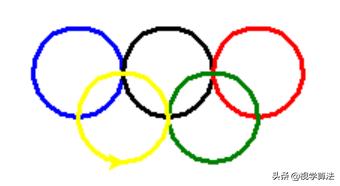
1 turtle绘制奥运五环图结果:
2 turtle绘制漫天雪花结果:

3 4种不同颜色的色块,它们的颜色真的不同吗?

4 词频云图
import hashlib
import pandas as pd
from wordcloud import WordCloudgeo_data=pd.read_excel(r"../data/geo_data.xlsx")words = ','.join(x for x in geo_data['city'] if x != []) #筛选出非空列表值
wc = WordCloud(    background_color="green", #背景颜色"green"绿色
    max_words=100, #显示最大词数
    font_path='./fonts/simhei.ttf', #显示中文
    min_font_size=5,    max_font_size=100,    width=500  #图幅宽度
    )x = wc.generate(words)x.to_file('../data/geo_data.png')

八、生成器
1 求斐波那契数列前n项(生成器版)
def fibonacci
(n):
    a, b = 1, 1
    for _ in range(n):        yield a        a, b = b, a + b
list(fibonacci(5))  # [1, 1, 2, 3, 5]
2 将list等分为子组(生成器版)
from math import ceil


def divide_iter
(lst, n):
    if n <= 0:        yield lst        return
    i, div = 0, ceil(len(lst) / n)    while i < n:        yield lst[i * div: (i + 1) * div]        i += 1

list(divide_iter([1, 2, 3, 4, 5], 0))  # [[1, 2, 3, 4, 5]]
list(divide_iter([1, 2, 3, 4, 5], 2))  # [[1, 2, 3], [4, 5]]
九、keras
1 Keras入门例子
import numpy as np
from keras.models import Sequential
from keras.layers import Dense
data = np.random.random((1000, 1000))labels = np.random.randint(2, size=(1000, 1))model = Sequential()model.add(Dense(32,                activation='relu',                input_dim=100))model.add(Dense(1, activation='sigmoid'))model.compile(optimize='rmsprop', loss='binary_crossentropy',              metrics=['accuracy'])model.fit(data, labels, epochs=10, batch_size=32)predictions = model.predict(data)
欢迎关注和贡献
要想查看更多小例子,欢迎关注这个Python小例子库:
https://github.com/jackzhenguo/python-small-examples