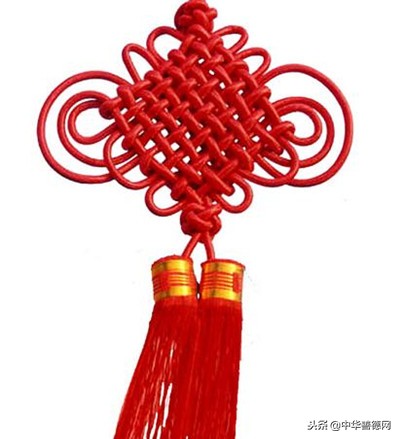
Chinese knot is a kind of plaiting article with unique Chinese feature. The feeling and wisdom it has is a profile of Chinese ancient civilization. It is originated from knots of weaving on cloth and became a kind of decoration at present.
In Zhou Dynasty, Chinese knot were often tied to jade carried by people. In Warring period, bronze wares have Chinese knot on them too. Until Qing Dynasty, Chinese knot really became a folk art popular among common people. In today, it is often used in decoration at home or gift given by friends and relatives or carried as articles for personal adornment.
During the very early period of Chinese cultural development, the ancestors had worshiped the immortals. Rope, pronounced as ‘Sheng’, shared a similar pronunciation with the word for gods (“Shen” in Chinese),and when written, it looked like a dragon, an auspicious animal in Chinese culture; knots, in Chinese ‘jie’,means vigor, harmony, and unification .Therefore, this unique Chinese knots artwork has been a popular gift for thousands of years and embodies best wishes. People wore it in the beginning as a decorative addition to clothing, and later, used it to decorate their houses. Though the weaving techniques are complicated, ropes, in hands of a deft craftsman appear effortless moving the shuttle in between the rows of ropes. A Chinese knot is usually symmetrical in structure and colorful with jade or porcelain beads. This no doubt adds more jubilation to any festive atmosphere.
中国艺术丨造型优美献吉祥:中国结
中国结是一种中国特有的手工编织工艺品,它身上所显示的情致与智慧正是中华古老文明中的一个侧面。它原本是由旧石器时代的缝衣打结,后推展至汉朝的仪礼记事,再演变成今日的装饰手艺。
周朝人随身的佩戴玉常以中国结为装饰,而战国时代的铜器上也有中国结的图案,延续至清朝中国结才真正成为了盛传于民间的艺术。 当代多用来装饰室内、亲友间的馈赠礼物及个人的随身饰物。因为其外观对称精致,可以代表中国悠久的历史,符合中国传统装饰的习俗和审美观念,故命名为中国结。
中国结由于年代久远,其历史贯穿于人类史始终,漫长的文化沉淀使得中国结渗透着中华民族特有的、纯粹的文化精髓,富含丰富的文化底蕴。在中国文化发展的最初期,祖先崇拜神仙。绳,发音为“生”,与中文的“神”有相似的发音,书写的时候,它看起来像一条巨龙,是中国文化中的吉祥动物。结,在中文中“结”,意味着活力、和谐及统一。因此,这种独特的中国结作品几千年来一直是受欢迎的礼物,体现了良好的祝愿。虽然编织技术是复杂的,在灵巧的工匠手中绳索的移动毫不费力。中国结通常是对称的结构,配有丰富多彩的玉器或瓷器珠子,这无疑为任何节日气氛增加了更多的喜庆感觉。